The Best Disc Golf Bags and Backpacks
A disc golf bag is the one piece of gear you touch on every single hole. You'll sling it on and off two dozen times a round, dig through it for a putter while your group waits, and hang it on a fence post in the rain. So the things that matter aren't flashy. Can you reach your putter without setting the bag down? Do the straps still feel fine on hole 16? Does the zipper survive a wet October? Capacity gets all the marketing attention, but access and comfort are what you'll actually notice.
Here's the honest part: no bag in this category solves the weight problem. Twenty discs weigh roughly eight pounds before you add water, and no amount of padding changes that. Cheap bags skimp on the frame, so the load sags and pulls at your shoulders. Expensive bags carry it better but cost real money and still weigh what they weigh. Water resistance is another soft spot — most of these shells shrug off drizzle, but none of them are dry bags, and a long downpour will get through the zippers eventually.
We also want to be clear about what this guide covers. These are carry bags, not carts, and the lineup here skews toward the sub-20-disc range that most players actually need. We think that the Dynamic Discs Combat Ranger is the best disc golf bag for most people, and that the Discmania Fanatic Go is the one to buy if you want backpack organization without the extra bulk and weight.
Everything we recommend

Room for a full bag of discs and the comfort to carry it

Nearly the same capacity in a lighter, slimmer package

A light, well-organized tote for players carrying ten discs

A no-frills backpack from the sport's most familiar brand
At a glance
| Product | Disc Capacity | Material | Price | |
|---|---|---|---|---|
| Dynamic Discs Combat Ranger Disc Golf BackpackTop pick | 20+ Discs | — | $149.99On sale |
| Discmania Fanatic Go Disc Golf BackpackRunner-up | 18 Discs | 600D Oxford/PVC | $24.99On sale |
 | Latitude 64 Slim Shoulder BagAlso consider | 8-10 Discs | 600D HEX Nylon | $19.99 |
| Innova Discover Pack Backpack Disc Golf BagAlso great | 15 Discs | — | $26.23 |
| Fade Gear Crunch Box Disc Golf BagBudget pick | 10-12 Discs | 600D Polyester | $25.99 |
How we picked
Capacity that matches you. We compared stated disc capacities against how many discs players actually carry: 8 to 12 for beginners, 12 to 18 for recreational players, and 18 to 25-plus for competitive amateurs. Bags had to be honest about which group they serve.
Carrying comfort. We read manufacturer specs on frames, padding and strap adjustability, and weighed owner feedback themes about shoulder fatigue on long rounds. Structured backpacks with an internal frame moved to the front of the list.
Putter access. A dedicated top-load putter pocket makes disc access meaningfully faster during play than a side-load design. We treated it as a strong plus on any bag holding more than 12 discs.
Materials and weather. We looked for 600-denier polyester or nylon shells, reinforced bases, and water-resistant finishes described in the specifications. Sealed or heavy-duty zippers matter most for players in wet or humid climates.
Brand support. We favored established disc golf brands with retail presence and published warranty terms, since a bag you'll carry for years should come from a company you can still reach in a few years.
Top pickOn sale
Room for a full bag of discs and the comfort to carry it
Dynamic Discs Combat Ranger Disc Golf Backpack
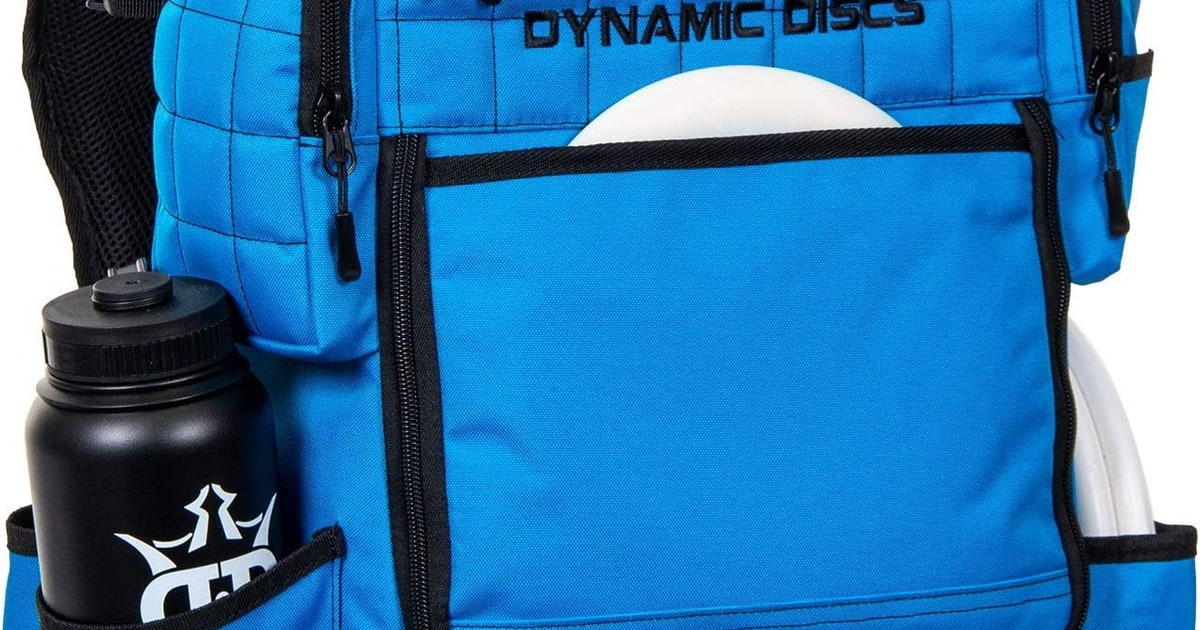
The Combat Ranger holds 18-plus discs in a structured main compartment, with a top pocket for putters and a 32-ounce bottle holder on the side. It's the bag to buy if your collection has outgrown a shoulder tote and you're playing full rounds most weekends.
$149.99fromAmazonList priceThis is the capacity most players eventually land on. Competitive amateurs typically carry 18 to 25 discs per round — drivers, fairways, mids and putters — and the Ranger sits right in that range with 18-plus in the main compartment plus room for extras. If you're a few years into the sport, your collection has probably crept past what a tote holds. This bag absorbs that growth without forcing you into a tour-level pack you don't need yet.
The top compartment is the feature you'll appreciate most, and it's easy to overlook on a spec sheet. Putters live up top, which means you flip open one flap and grab one. No unzipping the main pocket, no shuffling discs around while your card waits. Side-access putter pockets work fine, but on a busy course the top-load design just moves faster.
Dynamic Discs sells a lot of these, and the Ranger line consistently ranks among the top-selling disc golf backpacks at Infinite Discs, the largest dedicated disc golf retailer in the US. That matters more than it sounds like it should. High-volume bags get years of owner feedback, which means design problems surface and get addressed. Buying a popular bag from an established brand is a boring choice, and boring is what you want in a bag.
The bottle holder is sized for a real water bottle. A 32-ounce insulated bottle fits, which rules out the frustration of a holder that only takes a slim plastic one. If you play summer rounds on an exposed course, that's the difference between carrying enough water and rationing it by hole 12.
Flaws but not dealbreakers
It's a big bag, and it feels like one when it's loaded. Empty it's manageable, but pack 20 discs, a full bottle and a towel and you're carrying real weight on your shoulders. Players who mostly walk nine holes after work may find it's more bag than the round calls for.
The strap system is padded and comfortable, but it doesn't have the rigid internal frame and load-lifter hardware that hiking-derived packs use. On steep, hilly courses with a lot of elevation change, the load sits farther from your back than it would on a framed pack. It's fine on flat terrain. It's noticeable on a mountain course.
Runner-upOn sale
Nearly the same capacity in a lighter, slimmer package
Discmania Fanatic Go Disc Golf Backpack
The Fanatic Go holds up to 18 discs with a separate top pocket for two putters, wrapped in a 600D polyester shell with PVC reinforcement on the base and sides. It's the pick if you want backpack organization without carrying a bag the size of a small suitcase.
$24.99fromAmazonList priceThe appeal here is restraint. Discmania built the Fanatic Go around a slimmer silhouette than most 18-disc backpacks, and the difference shows up on your back rather than in the numbers. You get the same core setup — main compartment, dedicated top putter pocket, bottle holder, tall side pocket — in a body that doesn't sprawl. For a lot of players that trade is worth more than five extra disc slots.
The side pocket is genuinely useful, which is rarer than it should be. It runs about seven inches tall, so a phone, keys and a wallet all sit upright instead of getting lost in a shallow pouch. If you've ever finished a round and realized your car key migrated under 18 discs, you'll understand why this matters.
Material choice is sensible for the price. The 600D polyester Oxford shell with PVC panels on the front, sides and base is the standard construction for bags in this range, and the water-resistant finish handles drizzle without complaint. Six millimeters of foam padding with breathable mesh sits against your back. It's not technical hiking hardware, but it's honest, durable stuff.
You'll also notice the difference walking. A lighter bag with a narrower profile swings less as you move, which keeps your balance steadier on uneven ground and through wooded fairways. That's a small thing on hole 3 and a real thing on hole 17.
Flaws but not dealbreakers
The slim build that makes it comfortable also caps what you can stuff into it. If your collection is heading past 20 discs, or you like carrying a jacket, snacks and a rangefinder alongside them, you'll bump into the limit faster than with our top pick.
The top pocket holds two putters, not three or four. Players who carry a deep putter stack for different wind conditions will end up storing some in the main compartment, which partly defeats the point of quick top access.
Budget pick
A light, well-organized tote for players carrying ten discs
Fade Gear Crunch Box Disc Golf Bag
The Crunch Box holds 10 to 12 discs in a durable 600-denier polyester canvas shell, with a two-putter pocket, insulated drink pocket and a padded adjustable strap. It's the right first bag if you're still building a collection and don't want to overspend.
$25.99fromAmazonMost beginners don't need a backpack yet, and this is the bag that admits it. If you own eight or ten discs, a 20-disc pack is dead space you carry up every hill. The Crunch Box holds 10 to 12 and weighs about a pound empty. You'll notice how little it asks of you on a casual nine.
For a simple tote, the organization is unusually thought through. There's a two-putter pocket, a marker disc pocket, a towel clip, a scorecard pocket and a pencil pocket — plus two zippered pockets, one of them large. Fade Gear clearly built this around how a round actually goes rather than around a feature list.
The insulated drink pocket takes a one-liter bottle, which is more than most totes at this level manage. Combined with the 600-denier canvas and water-resistant finish, you get a bag that handles a rainy round and a muddy fence post without much fuss. This is a shell built to be dragged around.
There's a practical upgrade path baked in. Buy this, play a season, and if your collection grows past a dozen discs you move up to a backpack — and the Crunch Box still earns its keep for practice sessions, putting practice in the yard, or as the bag you hand a friend who's trying the sport for the first time.
Flaws but not dealbreakers
It's a shoulder bag, so all the weight lands on one side. That's fine for 10 discs on a flat course. Load it up and walk a hilly 18 and you'll be switching shoulders every few holes.
There's no frame, so the bag slouches when it isn't full. Discs shift around and can be slower to pull cleanly than in a structured backpack with defined slots.
Also great
A no-frills backpack from the sport's most familiar brand
Innova Discover Pack Backpack Disc Golf Bag
The Innova Discover Pack holds 15 discs and uses an internal U-frame to keep its shape under load, with a large zippered pocket and an adjustable drink holder. It's a straightforward step up from a tote for players who don't want to overthink the purchase.
$26.23fromAmazonThe internal U-frame is the part worth paying attention to. Without a frame, a loaded backpack sags into a soft lump and the weight drifts away from your spine. The U-frame keeps the bag upright and the discs stacked in place, so your load stays where it belongs. On a bag at this level, that's the structural feature that separates a real backpack from a sack with straps.
Fifteen discs is a genuinely sensible middle number. It's more than a beginner needs and less than a tournament player carries, which makes it a good fit for the recreational player who's settled into a bag of favorites. You're not paying for capacity you'll never fill.
Innova is the most recognized name in disc golf, and that has practical value beyond the logo. The brand's gear turns up in every pro shop and starter kit in the country, so if something goes wrong you're dealing with a company that isn't going anywhere. For a first backpack, that stability counts.
The layout is deliberately plain: one large zippered pocket, an adjustable drink holder, and the main compartment. There's no dedicated top putter pocket and no accessory sprawl. Some players want a pocket for everything. Others just want to grab the bag and go, and this one suits that instinct.
Flaws but not dealbreakers
The missing top putter pocket is the real trade-off. You'll be reaching into the main compartment for putters, which is slower than the top-load setup on our top pick and runner-up. Over a full round, those seconds add up into a low-grade annoyance.
Padding and strap hardware are basic compared with the pricier packs here. Carrying 15 discs is fine. If you tend to overload a bag with jackets, snacks and a heavy bottle, the straps will remind you about it.
Who this is for
This guide is for anyone who carries their discs by hand, in a shoulder bag they've outgrown, or in a hiking pack that doesn't hold discs well. If you're new and own fewer than a dozen discs, a light tote is the honest answer and you can skip straight to our budget pick. If you play weekly and your collection has crept past 15, a structured backpack will change how the back nine feels. And if you already own a bag you like, capacity is the only reason to replace it — a bag that fits your current collection and hasn't torn is a bag that's doing its job.
We're covering carry bags only. Disc golf carts, rolling bags and dedicated cart-conversion frames are a different purchase with different trade-offs, and they aren't here. This lineup also skews toward the 10-to-20-disc range, so touring pros hauling a full tournament kit will want to look at higher-capacity tour packs than anything reviewed below. Players who walk steep, wooded courses should read the flaws sections closely — frame stiffness matters more on hills than any spec sheet suggests.
How we picked
We built the shortlist around five things. Capacity: the stated disc count had to line up with a real player type, whether that's a beginner with eight discs or an amateur carrying twenty. Comfort: we prioritized bags with an internal frame, genuine shoulder padding and adjustable straps, since a sagging load is what wrecks the back nine. Access: a top-load putter pocket beats digging through the main compartment, and we treated it as close to essential on larger bags. Durability: 600-denier shells, reinforced bases and heavy-duty zippers are the baseline for a bag that lives outdoors in the rain. Support: we stuck with established brands that publish warranty terms and are easy to reach.
Other disc golf bags and backpacks worth considering
If you want the lightest possible bag for quick rounds: The Latitude 64 Slim Shoulder Bag ($19.99) — The Latitude 64 Slim Shoulder Bag holds 8 discs in the main compartment and up to 10 with the outer pockets, in a 600D HEX nylon shell that's barely two inches deep. It's built for practice sessions, short courses and travel, and it rests flat against your side instead of swinging. You get an adjustable strap, a zippered pocket for small items and a drink holder — and that's it. What you give up is everything a backpack offers: capacity, two-shoulder weight distribution, and any real room for a jacket or snacks. For a full 18 with a growing collection, it's not enough bag. For a quick nine with your five favorite discs, it's exactly right.
The competition
Here's what our research turned up rather than everything sold today. The disc golf bag market has expanded fast alongside the sport — UDisc has logged more than 12,000 US courses, up from roughly 7,000 five years earlier — and dozens of brands now make competent packs. The listing below didn't lose on quality. It just isn't a bag.
Care and maintenance
Bags fail at the zippers and the base, in that order, so treat both well. After a wet round, unzip every pocket and let the bag dry open rather than tossing it in a car trunk — trapped moisture is what turns a damp shell into a musty one. Brush dried mud off the base before it grinds into the fabric, and rinse the drink pocket occasionally so it doesn't hold a spill. If a zipper starts catching, clean the teeth with an old toothbrush and rub a little wax or silicone lubricant along the track; forcing a gritty zipper is how you break the pull. Don't leave a loaded bag standing in direct summer sun for days at a time, since UV exposure fades and weakens polyester over the years. Handled this way, a decent bag lasts many seasons.
Questions we get
How many discs should my disc golf bag hold?
Match capacity to your collection, not your ambitions. Beginners do fine with 8 to 12 discs, recreational weekend players tend to settle around 12 to 18, and competitive amateurs typically carry 18 to 25 across drivers, fairways, mids and putters. Buying far more capacity than you need means hauling empty space up every hill.
What's the difference between a disc golf tote and a backpack?
A tote hangs from one shoulder and usually holds 8 to 12 discs, which keeps it light and quick to grab. A backpack spreads the weight across both shoulders and often uses an internal frame, so it stays comfortable at 15 to 25 discs. Backpacks have become the standard for anyone carrying more than a dozen discs, and UDisc's player survey found they're the most common style among people who play more than once a week.
Are backpacks worth it for casual players with only a few discs?
Not necessarily. If you own fewer than a dozen discs and play a casual nine, a tote weighs less and costs less, and you won't miss the extra pockets. The upgrade pays off once your collection grows past what a single shoulder can comfortably carry — which for most players happens sooner than they expect.
What should I look for if I play in the rain a lot?
Start with the shell: a 600-denier polyester or nylon fabric with a water-resistant finish handles drizzle well. Look for a reinforced or PVC base, since that's the part that sits in wet grass, and prefer heavy-duty zippers, which resist grit and water better than lightweight ones. No disc golf bag is waterproof, so pack a towel in a sealed bag if you play through real downpours.
Can I use a regular hiking backpack instead?
You can, but it's a downgrade in practice. Hiking packs don't have vertical disc slots, so discs stack flat and you'll dig for the one you want on every throw. They also lack the top putter pocket and drink holder placement that make a round flow. The frame and straps may be better, but the layout isn't built for the sport.
How long does a disc golf bag typically last?
A well-made bag from an established brand should hold up for many seasons of regular play. Failures usually start at the zippers and the base panel rather than the fabric itself, so construction quality in those spots predicts lifespan better than denier count. Drying the bag after wet rounds and keeping the zipper tracks clean adds meaningfully to its life.
Why you should trust us
For this guide:
- We compared manufacturer specifications, listing details and published capacity claims across every bag in this lineup.
- We read owner feedback themes about strap comfort, zipper durability and putter access, and weighed them against what each brand publishes.
- We drew on published industry data from the PDGA and UDisc to understand how many discs players actually carry and which bag styles they favor.
- We read owner reviews on every listing, weighted toward the critical ones, because that is where the recurring failures show up.
- We have a systematic way of automatically fetching the latest prices, so the numbers on this page stay current.
- This is a research-focused guide, so the team may not own every product listed — though we often do own the top winners, which gives us extra context for the recommendations.
- We don't accept free products, and the retailer commission never changes which product we recommend.
Sources
Best Disc Golf Bags — Infinite Discs Blog, Infinite Discs
Best Disc Golf Bags Buyer's Guide — UDisc, UDisc
State of Disc Golf 2024 Annual Report, UDisc
PDGA Membership & Growth Statistics, Professional Disc Golf Association (PDGA)
Grip EQ AX5 In-Depth Review — Disc Golf Review Man, Disc Golf Review Man
Prodigy Disc Apex 4 Official Specs & Product Page, Prodigy Disc (Manufacturer)
Dynamic Discs Ranger Backpack Official Product Page, Dynamic Discs (Manufacturer)
Grip EQ About / Craftsmanship & Warranty Policy, Grip EQ (Manufacturer)
Huk Lab Trespass Bag Official Product Page, Huk Lab (Manufacturer)
Best Disc Golf Bags for Every Budget — Disc Golf Alchemist, Disc Golf Alchemist
Disc Golf Course Directory & Growth Data, UDisc
Disc Golf Bags Buyer's Guide — Disc Golf United, Disc Golf United
Amazon product listings and owner reviews for all 5 products
Manufacturer specification pages for each product
Some passages in this guide may be paraphrased with AI help. Prices are refreshed automatically.
More like this.
Continue exploring lifestyle reviews and recommendations.

The Best Disc Golf Starter Sets
Disc golf is easy to start and hard to shop for. A course near you is probably free, the rules take five minutes to learn, and one afternoon is usually…

The Best Sleeping Bags for Camping and Backpacking
A sleeping bag is the one piece of camping gear you notice at 3 a.m. When it's right, you don't think about it at all. When it's wrong, you spend the…

The Best Gym Bags And Workout Backpacks
A gym bag spends its life getting abused. You stuff damp clothes into it, drop it on a locker room floor, sling it over one shoulder on a crowded train,…

The Best Duffel Bags for Travel and Weekenders
A duffel is the bag you grab when a suitcase feels like too much. Three days at a friend's place, a Friday flight straight from the office, a weekend at…

The Best Insulated Lunch Bags for Work
A lunch bag has one job: keep your food at a safe temperature until you actually get to eat it. Everything else - pockets, straps, a clip that hooks onto…

The Best Bug Out Bags
A bug out bag is the part of your emergency kit that leaves the house with you. The power's out for a week, the wildfire map shifts, the county says go - …