The Best Bug Out Bags
A bug out bag is the thing you hope stays in the closet. But when a hurricane knocks out power for a week, or a wildfire gives you twenty minutes to leave, the difference between a packed bag and a good intention is enormous. The job is simple: hold three days of water, food, first aid, light and shelter, and stay comfortable on your back while you walk or drive somewhere safer. Some bags come empty and let you build the kit yourself. Others show up already stocked. Both approaches work.
Here's the part nobody solves for you: water. The standard guidance is a gallon per person per day, which means a two-person, three-day supply weighs roughly fifty pounds. No backpack carries that plus everything else. Every pre-built kit here gives you a starter supply of pouches and some purification tablets, and then hands the problem back to you. So whichever bag you buy, plan on adding a squeeze or straw-style filter and knowing where the nearest water is.
The other honest caveat is that a bag you can't carry isn't a bag. Aim for ten to twenty percent of your body weight loaded, which for most adults lands somewhere in the twenties. We think that the 5.11 Tactical RUSH 72 2.0 is the best bug out bag for most people, and that the Uncharted Supply Co. SEVENTY2 Pro is the one to buy if you want a complete kit that arrives ready to grab and go.
Everything we recommend

The most room and the toughest fabric, if you'll fill it yourself

Everything already packed, in a bag that actually keeps water out

Complete coverage for two people, with no assembly at all
A first aid and tools pouch that clips onto any bag you own

The mainstream two-person kit with long-lasting food and a crank radio
At a glance
| Product | Person/Day Coverage | Weight | Price | |
|---|---|---|---|---|
| 5.11 Tactical BackpackTop pick | 72 Hr | 5.5 lbs | $189.99 |
| Uncharted Supply Co. The SEVENTY2 Pro 2-PersonAlso great | 2P / 72 Hr | 16 lbs | $629 |
 | GORUCK Rucker 4.0 20L Black - PurposeAlso consider | — | 3.8 lbs | $255 |
 | Condor Outdoor Products 3 Day Assault PackAlso in lineup | 3 Day | 3 lbs | $109.46On sale |
| Sustain Supply 70490Budget pick | 2P / 72 Hr | 10.65 lbs | $75.90On sale |
| EVERLIT 250 Pcs Survival First Aid KitAlso great | — | — | $39.95 |
| Ready America 72 Hour Deluxe Emergency KitRunner-up | 2P / 3 Day | 2 lbs | $82.99On sale |
How we picked
Capacity and days. We compared stated volumes against what a realistic 72-hour load actually requires, using 30 to 40 liters as the floor for one person and 50 to 65 liters for two people or a seven-day solo build. Anything smaller we treated as a get-home bag, not a bug out bag.
Fabric and build. We read spec sheets for denier ratings and construction details, treating 1000D nylon as the benchmark and anything under 500D as a caution for a primary load-bearing pack. Owner reports of fraying, seam failure or zipper trouble weighed heavily.
Carry comfort. We looked for padded, load-bearing shoulder straps and a hip belt, since a belt moves a real share of the weight onto your hips and extends how far you can walk. Published reviews and owner feedback about shoulder pain under load helped sort the claims from the reality.
What's actually inside. For pre-built kits we checked the food's calorie count and stated shelf life, whether water filtration was included, and how complete the first aid component was. Piece counts alone told us nothing.
Expandability. We favored bags with external MOLLE webbing, because one base pack that reconfigures for a car breakdown, an evacuation and a longer scenario is worth more than three specialized bags.
Top pick
The most room and the toughest fabric, if you'll fill it yourself
5.11 Tactical Backpack
The RUSH 72 2.0 is a 55-liter tactical pack built from 1050D nylon, with MOLLE webbing over most of the exterior and a sleeve for a hydration bladder. It arrives empty, so you decide what goes in — which is the point.
$189.99fromAmazonFifty-five liters is the sweet spot for a real 72-hour kit. That's enough for one person's three-day load with room left over, or a tight two-person setup. You won't be playing Tetris with a headlamp and a first aid kit. Owners who've packed it for travel and deployments consistently describe it as huge — big enough that it won't fit under an airplane seat, which tells you something about the volume.
The 1050D nylon is a real step up from what most consumer packs use. Plenty of bags in this space run 500D or 600D polyester, which is fine until you load it heavy and get caught in the rain. Denier isn't everything, but it's the closest thing to a durability shorthand you'll find on a spec sheet. Owners who've hauled this pack through the Middle East and years of daily commuting report it holding shape without fraying.
MOLLE webbing turns one bag into three configurations. Your needs change between a car breakdown, a three-day evacuation and a week away from home. With webbing across the exterior, you clip on a medical pouch, a radio holster or a water bottle carrier and swap them out later. 5.11's Tier System accessories attach without modification. That flexibility is worth more than any fixed pocket layout.
The organization inside is genuinely useful, not just numerous. There's a padded laptop sleeve that most preppers repurpose for maps, insurance copies and backup batteries — flat things you want protected and findable. The hydration sleeve fits a 3L bladder so you can drink without opening the main compartment. In a stressful moment, knowing exactly where something lives matters more than you'd think.
Flaws but not dealbreakers
It's empty, and that's the whole catch. The pack is one line item; the gear inside is many more. If you don't enjoy researching water filters and food bars, you'll end up with a great bag and a half-finished kit. Buy this only if you'll actually do the work of filling it — otherwise a pre-built kit that exists today beats a perfect kit you never finished.
No padded hip belt on the base model. A proper hip belt moves a meaningful share of the load off your shoulders, which is what lets you walk miles instead of blocks. At 55 liters you can pack heavy enough to want one. Budget for the accessory belt if you plan on long distances on foot.
It looks tactical, and sometimes that's a downside. Black nylon covered in webbing signals that you're carrying something worth having. In a crowded evacuation or a shelter, blending in has its own value. If that worries you, a plainer pack is the better call.
Also great
Everything already packed, in a bag that actually keeps water out
Uncharted Supply Co. The SEVENTY2 Pro 2-Person
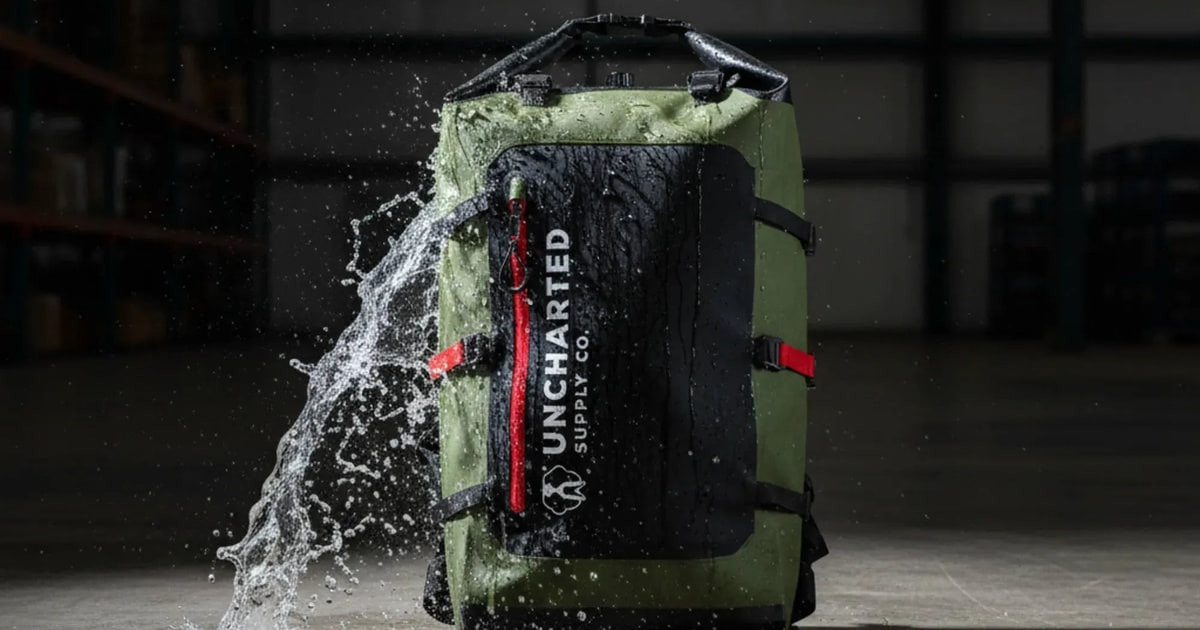
The SEVENTY2 Pro is a two-person, 72-hour system with more than sixty tools already inside a welded, roll-top waterproof pack. First responders helped choose the contents, and the interior is screen-printed with icons so you can find things fast.
$629fromAmazonYou don't have to decide anything, which is the real product. The most dangerous minutes in an emergency are the ones spent figuring out what to grab. This kit covers water filtration, food, fire, shelter and first aid in one closed container, chosen by people who work emergencies for a living. Owners repeatedly describe the same feeling after unpacking it: less anxiety about a local crisis.
The waterproofing is genuine, not a marketing word. The roll-top closes with welded seams rather than stitching, so the interior insert stays dry in conditions that soak a water-resistant pack. If your realistic scenario is a flood, a hurricane or a bag riding in a truck bed, that construction matters more than any single tool inside.
The color-coded interior is smarter than it sounds. Icons and instructions are printed right on the pockets, so someone who's never inventoried the bag can still find the whistle or the tourniquet. If your household includes people who won't study the contents ahead of time — teenagers, houseguests, a partner who leaves this to you — that design choice does real work.
The gear list includes the things budget kits skip. A quality water filter, a multi-tool, and lighting beyond one cheap flashlight. Cheap kits pad their piece counts with duplicate bandages and leave out filtration entirely, which is the single most common gap. Owners note the components feel like real gear rather than throwaway filler.
Flaws but not dealbreakers
It's the most expensive thing here by a wide margin. You're paying for curation and a waterproof shell, and if you'd genuinely enjoy building your own kit, you can assemble something comparable for less around a bag like the RUSH 72 2.0. The value case rests entirely on your time being worth more than the difference.
The first aid kit is basic for a premium system. Owners who've gone through it describe a serviceable but entry-level assortment — fine for scrapes and blisters, thin for anything serious. Plan on upgrading it with a tourniquet and better trauma supplies if that's a concern.
Support and shipping have been sore spots. Delivery takes several days, so this isn't something to order with a storm already on the forecast. And some buyers report slow responses when they've needed help after the sale, which is worth knowing before you commit.
Budget pickOn sale
Complete coverage for two people, with no assembly at all
Sustain Supply 70490
The Sustain Supply 2-Person kit covers two adults for three days with long shelf-life food, purified water pouches, first aid, lighting, protective gear and tools. Everything arrives organized in a grab-and-go backpack sized for a closet, office or trunk.
$75.90fromAmazonList priceA complete kit that exists beats a perfect one you're still building. That's the entire argument for this bag, and it's a good one. If you've been meaning to put a kit together for two years and haven't, this ends the project in one purchase. Every category emergency managers point to — food, water, first aid, light, tools — is already covered.
It's built for two people, which is the household most kits ignore. Couples and roommates usually end up either over-buying a family kit or under-buying a solo one. The supplies here are portioned for two adults across three full days, so you're not doing math on how far the food bars stretch.
The organized layout pays off exactly when you need it. Everything has a spot in the pack, so you're not dumping contents on the floor looking for a bandage by phone light. That sounds minor. During a power outage with a stressed household, it isn't.
At about ten pounds packed, one person can carry it comfortably. It stores easily in an apartment closet, under a desk or in a trunk, and it's light enough that grabbing it on the way out the door doesn't require a decision. Weight is the quiet reason emergency kits get left behind.
Flaws but not dealbreakers
The gear is functional, not tactical-grade. The flashlight, the tools and the bag itself are built to a price. They'll work, but this isn't equipment you'd choose for repeated real-world use, and there's no MOLLE webbing for expanding it later.
The water runs out on day three, with nothing to make more. Pouches only, no filter. That's the standard gap across pre-built kits, and it's the first thing you should fix. Add a squeeze filter or a straw-style one and you've closed the biggest hole in this kit for very little weight.
Stock has been thin and there's almost no owner history to lean on. This listing hasn't accumulated much feedback yet, so the picture is built from the contents list rather than years of buyer reports. If you want a pre-built kit with a long track record behind it, the Ready America kit is the safer bet.
Also great
A first aid and tools pouch that clips onto any bag you own
EVERLIT 250 Pcs Survival First Aid Kit
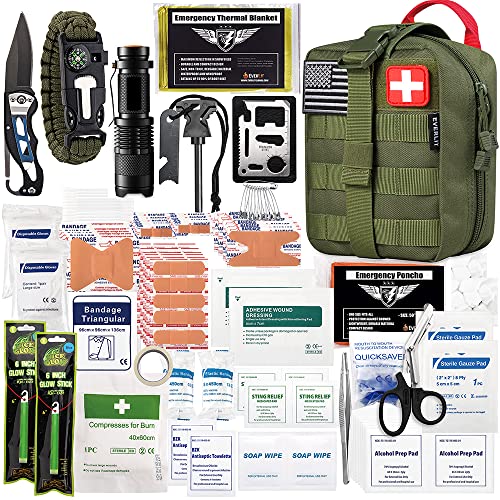
The EVERLIT kit packs 250 first aid and survival items into a 1000D nylon MOLLE pouch that weighs about two pounds. It's not a standalone bug out bag — it's the medical and tools layer you attach to one, or stash in a glovebox.
$39.95fromAmazonIt solves the problem of stocking several kits at once. Most households need coverage in more than one place: the car, the office, the hall closet. This is light enough and small enough to buy a few and put one everywhere, which is a far better outcome than one perfect bag you're never near when something happens.
The pouch itself is built better than the category norm. It's 1000D water-resistant nylon with taped seams and three large compartments plus internal straps — the same fabric standard you'd find on serious tactical gear. Owners who are picky about medical supplies consistently praise the bag's construction even when they're skeptical of individual components.
MOLLE compatibility makes it a companion to every other pack here. Clip it to the RUSH 72 2.0, the Condor or the Blitz 30 and you've added organized first aid and tools without opening the main compartment to get at them. Two pounds barely moves the needle on a loaded pack's weight budget.
The first aid contents go beyond scrapes. There's an abdominal pad and larger dressings alongside the usual bandages, so it handles bleeding that a drugstore kit won't. The survival side adds a mylar blanket, a flashlight, a compass-and-whistle paracord bracelet, a fire starter and glow sticks.
Flaws but not dealbreakers
There's no food and no water, so it can't stand alone. If you buy this expecting a bug out bag, you'll be disappointed. It's a supplement, and it's honest about that once you read past the piece count.
Two hundred fifty pieces is a marketing number. A lot of that count is individual bandages and duplicate small items. Judge it on what's actually useful — the trauma dressings, the tools, the pouch — not the headline figure.
A few small components run cheap. Owners have flagged the flashlight battery in particular as something to check and replace before you stow the kit. Worth ten minutes of your time when it arrives.
Runner-upOn sale
The mainstream two-person kit with long-lasting food and a crank radio
Ready America 72 Hour Deluxe Emergency Kit
The Ready America Deluxe kit stocks two people for three days around Red Cross guidance, with Coast Guard-approved 2,400-calorie food bars and a hand-crank power station that runs a radio, flashlight, charger and siren. It's the least tactical-looking option here.
$82.99fromAmazonList priceThe food is the best-documented part of any kit on this list. Two 2,400-calorie Coast Guard-approved bars with a five-year shelf life from manufacture, plus water pouches rated the same. Expired food discovered mid-emergency is the classic pre-built kit failure, and a five-year clock means a check every couple of years rather than an annual scramble.
The hand-crank power station covers the gap nobody plans for. It combines a radio, flashlight, phone charger and siren, and it doesn't depend on batteries you forgot to rotate. When cell service goes down and the power's out, a working radio is how you find out whether to stay or go. Owners report picking up a clear signal right away.
The 33-piece first aid kit is more complete than the count suggests. It includes wound cleaning solution alongside bandages, which is the difference between covering a cut and actually treating it. There's also a stainless multi-tool with pliers, knife and screwdriver.
It doesn't look like prepper gear, and that helps. This is the kit you can keep at an office, hand to a parent, or store in a car without explaining yourself. Owners frequently describe it as light enough for a smaller adult to carry comfortably, which is the practical reason kits get used instead of abandoned.
Flaws but not dealbreakers
The water supply is the weak spot, and it's not close. Six pouches of roughly four ounces each is a starting resource for two people over three days, not a solution. Purification tablets are included, which assumes you can find water to treat. Add storage containers and a filter.
No MOLLE webbing means no expansion. What's in the bag is what you get. If you want to grow this into a seven-day system, you'll be adding a second bag rather than pouches.
The bag is a carrier, not a backpack you'd want to walk far in. It's fine for grabbing and driving, or a short walk to a shelter. For miles on foot with a heavy load, the shoulder straps and lack of a real hip belt will let you know.
Who this is for
Buy a bug out bag now if you live somewhere that hurricanes, earthquakes, wildfires or ice storms are a normal part of life — or if you'd need more than a few minutes to gather essentials in the dark. Apartment dwellers without a car arguably need one most, since evacuating on foot or by transit means everything you take has to fit on your back. If you have kids, spread the weight around: two adult packs plus light day packs for the children, each with snacks, a comfort item and a contact card.
This guide covers backpack-based kits for roughly three days away from home, plus the empty tactical packs you'd build one around. It doesn't cover long-term food storage, generators, water barrels or vehicle-mounted systems, and it isn't a shelter-in-place guide. If you already own a capable hiking pack with a real hip belt, you may not need a new bag at all — you may just need to fill it and add a MOLLE first aid pouch to the outside.
How we picked
We built this guide from spec sheets, published reviews and the themes running through owner feedback. Capacity: 30 to 40 liters for one person over three days, 50 to 65 for two people or a longer solo build. Fabric: 1000D nylon is the benchmark, and we treated anything under 500D as a warning sign for a bag meant to carry a heavy load in bad weather. Carry comfort: padded straps are the minimum, and a hip belt is what lets you cover distance without wrecking your shoulders. Contents: for pre-built kits we wanted high-calorie food with a stated multi-year shelf life, a complete first aid component, and honesty about water — none of them include filtration. Expandability: MOLLE webbing lets one bag serve as a car kit, an evacuation pack and a week-long system.
Other bug out bags worth considering
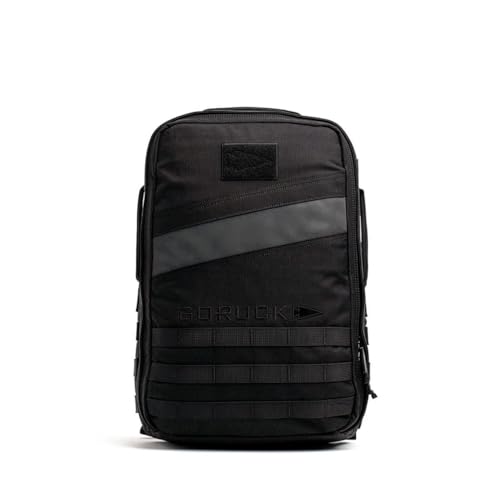
If you want a get-home bag that doubles as gym equipment: The GORUCK Rucker 4.0 20L Black - Purpose ($255) — The GORUCK Rucker 4.0 is a 20-liter pack built for rucking, with an elevated pocket that keeps weight plates high and stable on your back rather than sagging at the bottom. The shoulder straps use two densities of foam heat-laminated together, so they don't flatten out under load the way single-layer straps do — owners who switched from ordinary backpacks describe the shoulder pain simply going away. It scales to 75 pounds for training and carries a lifetime guarantee, the strongest coverage in this lineup. What you give up is space. Twenty liters won't hold a standalone three-day kit for anyone, so treat it as the bag under your desk or in your trunk for walking home, not the one you evacuate the household with. It's also the priciest thing here per liter, and the plates cost extra.
The competition
These are the bags our research surfaced across the price range, not a census of everything sold. The lineup skews toward well-known tactical brands and the pre-built kits that show up most often in emergency preparedness roundups. Plenty of capable hiking packs and regional kit makers aren't here.
The Condor Outdoor Products 3 Day Assault Pack ($109.46) — The Condor 3 Day Assault Pack is the best entry point into tactical bags. You get MOLLE webbing, a seven-pocket layout, hydration compatibility for a 2L or 3L bladder, and a removable waist belt for a fraction of what the 5.11 costs. Owners who've packed it for field use describe cramming in an improbable amount of gear. It lost to the RUSH 72 2.0 on materials — the fabric is functional rather than exceptional, and it isn't meant for sustained loads much above 25 to 30 pounds. Some owners note it feels thin out of the box, though it holds up better than first impressions suggest. Choose it if you're building your first kit, stocking a second bag for a vehicle, or want to learn what you actually need before spending more.
Keeping your kit ready
A bug out bag goes stale if you ignore it. Check yours twice a year — pinning it to the daylight saving clock changes works well. Each time, swap out anything expired, test the flashlight and replace its batteries, confirm medications are still good, and update documents like insurance cards and contact lists. Kits with five-year food and water buy you longer between full rotations, but batteries and medications don't follow that clock. Every couple of years, take everything out and repack it. You'll find gear you've forgotten and gaps you've grown into, and the act of repacking is how you remember where things live. One more test: if you can't grab the bag and be out the door in about a minute, it isn't ready yet.
Questions we get
What should I put in a bug out bag for 72 hours?
The standard baseline is water at a gallon per person per day, three days of food, a battery or hand-crank radio, a flashlight, a first aid kit, a whistle, dust masks, sanitation supplies, local maps and a phone charger. Add a water filter, some cash, copies of critical documents, a multi-tool and a fire starter. The pre-built kits here cover most of that out of the box. Filtration is the gap in all of them.
What's the difference between a bug out bag, a go bag and a get-home bag?
A bug out bag is a full three-day-and-up system for leaving home. A go bag is a lighter 24- to 48-hour version built for speed. A get-home bag lives in your car or under your desk with just enough to walk home — the GORUCK Rucker 4.0 is built for exactly that. Knowing which scenario you're preparing for tells you which product category to shop.
How heavy should a packed bug out bag be?
Aim for 10 to 20 percent of your body weight for anything involving walking. A 160-pound adult should stay in the 16 to 32 pound range. Twenty to 25 pounds is achievable with careful gear selection and covers genuine three-day needs. Trained soldiers carry more, but a training load and a day-three evacuation load are not the same thing.
Can I use a regular hiking backpack instead?
Yes, with a couple of caveats. A 40- to 60-liter hiking pack with a padded hip belt and adjustable torso length makes a fine base, and it'll often carry better than a tactical pack. The limitations are the lack of MOLLE webbing for modular pouches and, on lighter models, thinner fabric that struggles under sustained heavy loads. Load it up and walk with it before you need it, and clip a first aid pouch to the outside.
What's the best bug out bag for a family of four?
Distribute rather than centralize. Two adults each carrying a large pack like the RUSH 72 2.0 gives you real combined capacity, and a pre-built kit like the Ready America adds food and water without extra research. Keep each adult under 20 percent of their body weight. Give kids their own light day packs with snacks, a comfort item and a card with family contact information.
Does MOLLE webbing actually matter?
It matters if you expect your needs to change, which they will. MOLLE lets you attach and remove medical pouches, bottle carriers and radio holsters without modifying the bag, so one pack can serve as a car kit, a three-day evacuation bag and a longer-term system. If you're buying a single pre-built kit and never touching it again, you won't miss it.
Why you should trust us
For this guide:
- We compared manufacturer spec sheets across all eight listings for capacity, fabric denier, weight and included contents.
- We read published preparedness coverage and federal and Red Cross guidance on what a 72-hour kit needs to contain.
- We read through owner feedback for each product, looking for repeated themes around strap comfort, fabric durability, contents quality and post-purchase support.
- We read owner reviews on every listing, weighted toward the critical ones, because that is where the recurring failures show up.
- We have a systematic way of automatically fetching the latest prices, so the numbers on this page stay current.
- This is a research-focused guide, so the team may not own every product listed — though we often do own the top winners, which gives us extra context for the recommendations.
- We don't accept free products, and the retailer commission never changes which product we recommend.
Sources
Survival Kit Supplies — American Red Cross: 1 gallon of water per person per day guideline and comprehensive kit supply recommendations, American Red Cross
Best Bug Out Bag Backpacks — Outdoor Gear Lab: field testing showing padded hip belts transfer 20-30% of pack weight from shoulders to hips during extended carry, Outdoor Gear Lab
Emergency Preparedness and You — CDC: disaster kit guidance and health-focused emergency supply recommendations from the Centers for Disease Control and Prevention, Centers for Disease Control and Prevention
Severe Weather Preparedness — National Weather Service: weather emergency preparedness guidelines and go-kit recommendations for hurricane, tornado, and flood scenarios, National Weather Service / NOAA
Amazon product listings and owner reviews for all 7 products
Manufacturer specification pages for each product
Some passages in this guide may be paraphrased with AI help. Prices are refreshed automatically.
More like this.
Continue exploring lifestyle reviews and recommendations.

The Best Mosquito Traps and Backyard Bug Zappers
Mosquitoes aren't a problem you solve in an afternoon. A biting female lives a few weeks, lays hundreds of eggs in a bottle cap's worth of water, and…

The Best Bug Repellents
A good bug repellent is the difference between sitting outside until the fireflies come out and going inside at seven. It's also, in tick country, a…

The Best Wireless Earbuds for Working Out
Workout earbuds live a hard life. They get soaked in sweat, yanked out by a hoodie, bounced around during sprints, and dropped on rubber gym flooring more…

The Best Pull-Out Cabinet Organizers
A base cabinet is mostly dead space. You've got 22 inches of depth, and you can comfortably reach maybe 14 of them. Everything past that turns into a…

The Best Insulated Lunch Bags for Work
A lunch bag has one job: keep your food at a safe temperature until you actually get to eat it. Everything else - pockets, straps, a clip that hooks onto…

The Best Duffel Bags for Travel and Weekenders
A duffel is the bag you grab when a suitcase feels like too much. Three days at a friend's place, a Friday flight straight from the office, a weekend at…