The Best Wireless Earbuds for Working Out
Workout earbuds live a hard life. They get soaked in sweat, yanked out by a hoodie, bounced around during sprints, and dropped on rubber gym flooring more than anyone wants to admit. So the things that matter most aren't the things that sell earbuds in a store. You need a fit that holds through burpees, a water rating that survives a hot yoga class, and enough battery to get through a week of training without a nightly charge. Sound quality matters too, but it's rarely the thing that makes you return a pair.
Here's the honest part: no pair does everything. Ear hooks that lock in during box jumps get in the way of a beanie or a helmet strap. Strong noise cancellation is wonderful in a weight room and genuinely unsafe on a road run. Bone conduction keeps you aware of traffic but gives up bass and isolation. And sweat is brutal on electronics — a meaningful share of owners across every brand here report one bud failing after a year or so of heavy use. Buy with that in mind.
We also can't make the fit decision for you, because ear shape varies wildly and the same bud that locks into one person's ear falls out of another's after a single step. What we can do is narrow the field to the designs with the best odds and the sturdiest water protection. We think that the Jabra Elite 8 Active is the best wireless earbud for working out for most people, and that the Beats Powerbeats Pro 2 is the one to buy if you want ear hooks and you're on an iPhone.
Everything we recommend
The most weatherproof pick, with no hooks to fuss with

Hooks that don't budge, plus heart rate from your ears

Hooks, ANC and huge battery, without the premium price

For running outside, hearing traffic beats hearing bass

The quietest gym possible, if you can live with IPX4
At a glance
| Product | Battery Life | Water Resistance | Price | |
|---|---|---|---|---|
| Jabra Elite 8 Active - BlackTop pick | — | — | $449.94 |
| Beats Powerbeats Pro 2 - Wireless NoiseRunner-up | 45 Hours | IPX4 | $249 |
 | Beats Fit Pro True Wireless Noise CancellingAlso in lineup | — | — | $98On sale |
| SHOKZ OpenRun Pro 2 Bone Conduction BluetoothAlso great | 12 Hours | — | $179.95 |
| Bose QuietComfort Ultra EarbudsUpgrade pick | 6 Hours | IPX4 | $299 |
 | SAMSUNG Galaxy Buds3 ProAlso consider | 5-8 Hours | Water Resistant | $133.99 |
 | Soundcore Sport X20 by Anker Noise CancellingAlso consider | — | Everything-Proof | $79.99On sale |
| JLabBudget pick | 68+ Hours | IP66 | $60On sale |
How we picked
Water protection. We read manufacturer specifications against the IEC 60529 standard and treated IPX4 as the floor, with IP66 or better strongly preferred. Anything a heavy sweater or a rainy-day runner would push past got weighted down.
Fit security. We compared published stability testing from PCMag and Wirecutter's sport panel with owner feedback about buds falling out, and favored hooks, wings and grip coatings over plain silicone tips.
Noise control. We looked at RTINGS.com's measured attenuation figures rather than marketing claims, and required a usable transparency or ambient mode alongside any noise cancellation.
Battery and charging. We read spec sheets alongside SoundGuys' published continuous playback drain results, setting six hours per charge and roughly 24 hours total with the case as the practical minimum for daily training.
Long-term reliability. We read owner feedback for repeated failure patterns — a dead bud, a case that stops charging, a cracked hook — because sweat exposure is what actually ends most workout earbuds.
Top pick
The most weatherproof pick, with no hooks to fuss with
Jabra Elite 8 Active - Black
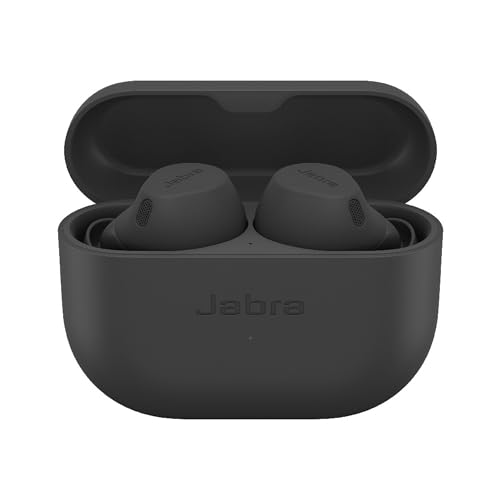
The Elite 8 Active pairs an IP68 rating with a grippy coating that holds the bud in place without hooks or wings. You get adaptive noise cancellation for the weight room and a transparency mode for road runs, in a shape that fits under a hat or helmet.
$449.94fromAmazonIP68 is the reason to start here. That rating means dust-tight and submersible to about 1.5 meters for half an hour, which is a different category of protection from the IPX4 that covers most earbuds. If you sweat heavily, train outside in the rain, or take these into a steamy hot-yoga room, that margin matters. You can rinse them under a tap after a session instead of wiping them and hoping.
The fit approach is what sets these apart from the hook designs below. Jabra's ShakeGrip coating gives the bud surface some tack, so it holds position through jump rope and heavy sets without anything wrapping your ear. That means no fight with sunglasses, no pressure point under a bike helmet, and no awkward routine getting them in when your hands are chalky.
RTINGS.com measured the noise cancellation on the Gen 2 version at roughly -32.5dB at 1kHz. In practice that's enough to flatten treadmill motor hum, HVAC drone, and most of the chatter around the squat racks. Flip to the ambient mode outdoors and you get your surroundings back — a switch you should make every single time you leave the building.
A word of caution on fit, since it cuts both ways. Owner feedback splits here: most people find these lock in better than anything they've worn, but a real minority say the buds are simply too small for their ears and fall out immediately, even on the largest tip. There's no hook as a backup. If you've had trouble with tip-only earbuds before, buy from a seller with an easy return path.
Flaws but not dealbreakers
Reliability is the recurring complaint. A meaningful share of owner reports describe one bud — often after roughly a year — starting to distort, cutting in and out, and eventually going silent, or a bud that stops charging in the case. That pattern shows up across sweat-exposed earbuds generally, but it comes up often enough here that we'd register the warranty and keep the receipt.
There are no ear hooks, so this is the least secure of our picks for genuinely explosive movement. For sprint intervals and plyometrics, the hook designs are a safer bet.
Runner-up
Hooks that don't budge, plus heart rate from your ears
Beats Powerbeats Pro 2 - Wireless Noise
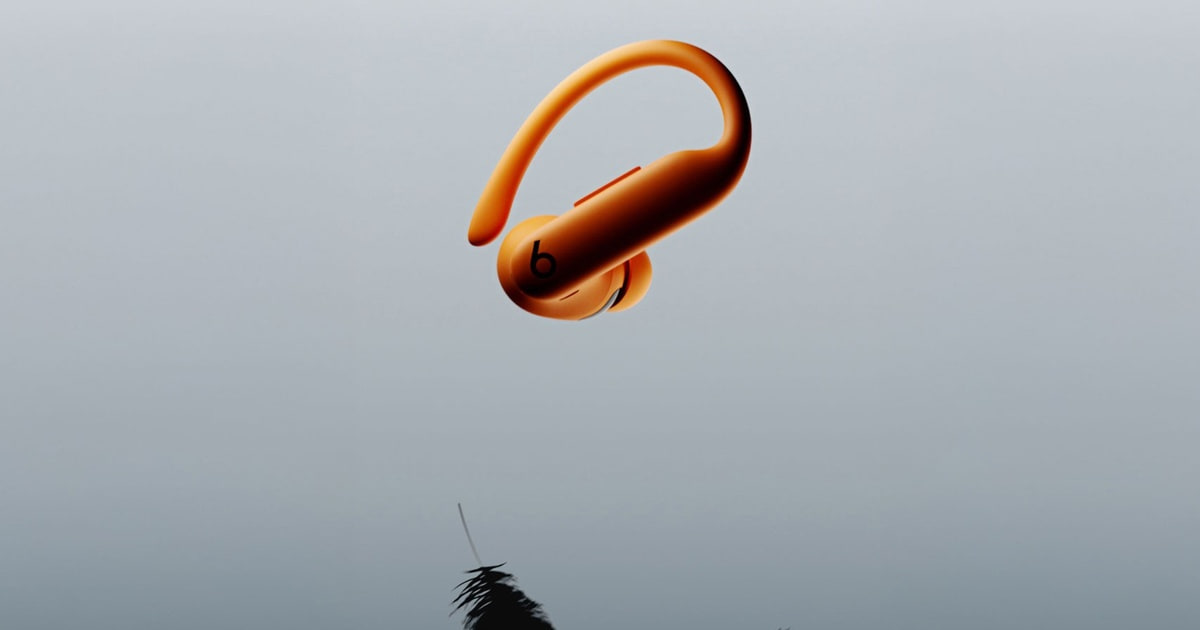
Powerbeats Pro 2 wraps a soft hook over each ear, so the buds stay put through sprints and heavy lifts. Built-in heart rate sensors let you train by effort without a chest strap, and the Apple H2 chip handles instant pairing and device switching.
$249fromAmazonIf you've ever lost a bud mid-workout, hooks are the answer. Beats says it put in 1,500 hours of fit development across different ear shapes, and owners back that up — the most common note in feedback is that these are the most secure earbuds people have worn, including from folks with small ears who couldn't keep the Beats Fit Pro in during jump rope. Wirecutter's own sport panel found hook-style buds needed zero reseats over a treadmill sprint protocol, while tip-only buds needed two or three.
The heart rate sensors are the sleeper feature. Built-in optical sensors read your pulse more than 100 times a second, so you can run a zone-based session without strapping anything to your chest or wearing a watch. If you've been putting off structured training because of the gear, this removes a step. It works on Android too, through the Beats app.
Battery is generous. Beats quotes up to 45 hours total with the case, which for most people is a full week of daily sessions and then some. The case charges wirelessly — a first for Beats — and a five-minute top-up buys about 90 minutes of playback, which covers the morning you forgot to plug in.
The tradeoff is comfort over long stretches. Some owners find the hook and bud combination sits awkwardly in the ear and gets tiring past an hour or two. And a few people report the sound arriving flat until they run the personalized audio setup a couple of times. Worth doing on day one.
Flaws but not dealbreakers
The water rating is IPX4, not IP68. That covers sweat and rain fine, but don't take these near a pool or rinse them under a faucet.
Feedback on sound is genuinely split. Several owners who love the fit describe the tuning as underwhelming next to other Beats models, and the microphone gets called merely okay for calls. The hooks also make these the bulkiest option here in a pocket.
Beats does not state a warranty term in the listing information we have.
Budget pickOn sale
Hooks, ANC and huge battery, without the premium price
JLab
The JLab Epic Air Sport ANC 3 gives you ear hooks, three ANC modes, and more than 12 hours per bud — features usually reserved for pricier earbuds. It's the pair to buy when you'd rather not worry about damaging something expensive.
$60fromAmazonList priceFor high-contact training, cheaper is often smarter. If you play pickup basketball, do CrossFit, or train somewhere your buds might get stepped on, spending less removes a whole category of anxiety. These give up surprisingly little for that: rotating-free ergonomic ear hooks sized to fit small ears, hybrid ANC with three modes, and an IP66 rating that shrugs off sweat and spray.
The battery is the standout number. JLab claims more than 12 hours per earbud and 68-plus hours total with the case, which is more than double what several of the premium picks here manage. Charge it Sunday and you're unlikely to think about it again all week. The case takes USB-C or wireless, so whatever cable you already have works.
The driver setup is more ambitious than the price suggests: a Knowles balanced armature paired with a dynamic driver, plus LDAC on Android and AAC on iPhone. The JLab app adds EQ, ANC mode switching, and a built-in interval timer — a genuinely useful touch if you run structured rounds and don't want to juggle a second app mid-set.
Multipoint pairing means these hold a connection to your laptop and your phone at once. That's more useful than it sounds if you take a call between sets or work out at home between meetings.
Flaws but not dealbreakers
Durability is the real worry. This pair carries the weakest owner sentiment in our lineup, with a pattern of complaints about a bud dying somewhere between one month and one year, and hooks that crack where they wrap the ear. The two-year warranty helps, but plan to use it.
Several owners describe the ear hooks as stiff and not especially flexible, which makes them fiddly to get on if you're wearing glasses. The on-bud controls also draw complaints for slow, imprecise response.
JLab backs these with a two-year warranty.
Also great
For running outside, hearing traffic beats hearing bass
SHOKZ OpenRun Pro 2 Bone Conduction Bluetooth
The OpenRun Pro 2 sits on your cheekbones and leaves both ear canals completely open, so you hear cars, cyclists and voices at full volume. Dual drivers add real bass, and the titanium band stays locked for 12 hours per charge.
$179.95fromAmazonIf you train on roads or trails, buy these instead. Nothing else here keeps you as aware of what's around you, because nothing is in your ears at all. Bone conduction transducers press against your cheekbones and route sound through bone, so traffic, bike bells and footsteps reach you unaltered. Shokz frames this as a safety design, and it's the single strongest argument for the whole category.
Earlier bone conduction headphones were thin and bass-light. Shokz addressed that here by adding an air conduction driver alongside the bone conduction one, and owners coming from in-ear buds consistently say these sound better than they expected — while also noting they're not a match for a sealed earbud. That's a fair trade for the awareness, but go in knowing it.
The fit is a different proposition from earbuds. A nickel-titanium memory-wire band wraps behind your head and hooks over both ears, and at just over an ounce it doesn't bounce. Runners who've fought with buds falling out describe this as the fix. It also means no ear fatigue on long sessions, which matters more than you'd think on a two-hour run.
Call quality is a real strength. Dual wind-resistant microphones with AI noise reduction filter out most background sound, including wind at speeds up to about 15 mph. If you take calls on your run or ride, that's the difference between being understood and being asked to repeat yourself.
Flaws but not dealbreakers
Maximum volume is limited. Because your ears stay open, loud environments — a busy road, a windy day, a spin class — can swamp the music. Owners upgrading from the previous generation commonly flag volume as the disappointment.
There's no noise cancellation, by design. These are the wrong choice for a weight room where you want to disappear into your playlist, and the headband makes them awkward with certain helmets and hats.
Upgrade pick
The quietest gym possible, if you can live with IPX4
Bose QuietComfort Ultra Earbuds
Bose's QuietComfort Ultra Earbuds have the strongest noise cancellation here by a wide margin, plus CustomTune, which measures your ear and adjusts the sound to it. Nine tip-and-band combinations let you dial in a fit that holds.
$299fromAmazonNothing else in this guide gets close on noise cancellation. RTINGS.com's testing puts these in the top tier for mid-frequency isolation, cutting more than 95% of energy in the 100–1,000Hz band — which is where clanging plates, HVAC rumble and gym chatter live. If your goal is to make a crowded weight room disappear, this is the pair.
CustomTune is the other reason to spend up. The earbuds send a tone into your ear, measure how it comes back, and adapt both the cancellation and the EQ to your ear's actual shape. Bass reaches you the way the mix intended instead of leaking past a bad seal. It happens automatically each time you put them in, so there's nothing to configure.
Fit comes from nine combinations of eartips and stability bands, and owners who take the time to find their combination report a snug hold with no slipping during movement. That's a more manual process than Jabra's grip coating or a hook, but it also means more people can find something that works.
These double as your everyday earbuds better than anything else here. Immersive Audio spatializes music so it sounds like it's coming from outside your head, and the SpeechClarity mics handle calls well. If you want one pair for the gym, the plane and the office, this is the one that stretches furthest.
Flaws but not dealbreakers
The IPX4 rating is the catch, and it's a real one for a workout pick. That's splash and sweat resistance only — no rinsing, no submersion, and less margin if you're a heavy sweater in a hot room.
Battery life is short at up to six hours, and the earbuds are physically large. Owners repeatedly call out the bulk and awkward ergonomics, and the companion app draws complaints for behaving badly offline. These also cost the most here by a wide margin.
Who this is for
This guide is for anyone who works out with music in their ears and has gotten tired of reseating a bud every few minutes or worrying about sweat killing an expensive pair. It covers true wireless earbuds and one bone conduction headphone built for training. If you mostly listen at a desk or on flights, look at general-purpose earbuds instead — the priorities are different, and you'd be paying for water protection and hooks you don't need.
If you already own workout earbuds that stay put and still hold a charge, there's no urgent reason to replace them. The clearest upgrades are moving from an IPX4 pair to an IP68 one if you sweat heavily or train in the rain, moving from tip-only buds to hooks if you keep losing them mid-set, or switching to bone conduction if you run on roads. We don't cover over-ear headphones, swim-specific players with onboard storage, or wired options here.
How we picked
Water protection: we treated IPX4 as the minimum and preferred IP66 or better, judged against the IEC 60529 standard rather than marketing language. Fit security: we leaned on published stability testing from PCMag and Wirecutter's sport panel plus owner reports of buds falling out, and favored hooks, wings and grip coatings. Noise control: we relied on RTINGS.com's published attenuation numbers and required a real ambient mode for outdoor safety. Battery and charging: spec sheets and SoundGuys' drain testing set the bar at six hours per charge and roughly 24 hours with the case. Reliability: we read owner feedback for repeated failure patterns, because sweat is what usually ends a workout earbud's life.
Other wireless earbuds for working out worth considering
If you want ear hooks without spending much: The Soundcore Sport X20 by Anker Noise Cancelling ($79.99) — The Soundcore Sport X20 has the most adjustable fit here — the hooks rotate up to 30 degrees and extend about 4mm, so you can set them to your ear rather than hoping the shape matches. Anker's SweatGuard sealing is built specifically to keep sweat away from the internals, and BassUp with 11mm drivers gives you the thumping low end that carries a set. Adaptive ANC handles a loud gym reasonably well. It gives up the measured cancellation of the Bose and the IP68 rating of the Jabra, and a recurring owner complaint involves random unpairing mid-session. But for a hook design that costs a fraction of the Powerbeats, it's a lot of earbud.
If you're deep in the Samsung ecosystem: The SAMSUNG Galaxy Buds3 Pro ($133.99) — The Galaxy Buds3 Pro pair best with a Galaxy phone, where they unlock 360 Audio, the SSC HiFi codec at 24-bit/96kHz, and real-time AI translation. Bluetooth 5.4 with LE Audio helps them hold a connection in a crowded gym where dozens of devices compete for airtime, and the IPX7 rating covers immersion to about a meter — better sweat headroom than the Bose or the Powerbeats. The catches are real, though: the blade-style stem design has no hook or wing, so it's the least secure pick for explosive movement, and battery runs five to eight hours per charge with only about 18 hours total. This particular listing is an international model without domestic warranty coverage.
The competition
Here's what our research surfaced, not everything on the market. These are the remaining earbuds we looked at closely enough to rule out, along with who might still reasonably pick them.
The Beats Fit Pro True Wireless Noise Cancelling ($98) — The Beats Fit Pro is a genuinely good sport earbud, and PCMag's stability testing scored its tri-point wingtip system 8.7 out of 10 during jump-rope and burpee simulations — close enough to hook designs to matter. The flexible wings are more comfortable than hooks under a hat, and the H1 chip makes iPhone pairing instant. It lost to the Powerbeats Pro 2 mainly on security: owners with smaller ears specifically describe these working loose during running and jump rope, where the hooks hold. This particular listing is also a renewed unit rather than new, and buyers report off-brand replacement tips in the box and cosmetic blemishes. If you want Apple integration in a smaller, hook-free package and you know wings work in your ears, it's still worth a look.
Care and fit
Sweat is salty, and salt is what corrodes contacts and charging pins. Wipe your earbuds and the inside of the case with a dry cloth after every session, and let both air out before you snap the lid shut — sealing damp buds into a closed case is the fastest way to kill them. Pull the silicone tips off every couple of weeks, rinse them in warm water, and dry them fully before reseating. On fit: the tip size that feels comfortable sitting still is often too small for training, so size up until you get a light seal and a slight tug when you pull. If a bud works loose mid-set, try a different tip before assuming the design is wrong for your ears. And if your pair carries a warranty, register it — sweat-related failures tend to show up around the one-year mark.
Questions we get
Is IPX4 enough for workout earbuds, or do I need IP68?
IPX4 handles sweat and light rain, which is fine for most gym sessions. IP68 means fully dust-tight and submersible to about 1.5 meters for 30 minutes, so you can rinse the buds under a tap and train outside in real weather. If you sweat heavily, do hot yoga, or run in the rain, the extra protection is worth paying for.
What's the best earbud for HIIT and box jumps?
Hooks. Wirecutter's sport panel found tip-only earbuds needed two to three manual reseats per 30-minute sprint session, while hook designs needed none. The Powerbeats Pro 2 is the strongest hook option here, and the Soundcore Sport X20 or JLab Epic Air Sport ANC 3 get you the same mechanism for less.
Are bone conduction headphones better than earbuds for running outside?
For safety, yes. The Shokz OpenRun Pro 2 leaves both ear canals fully open, so you hear traffic, cyclists and voices at normal volume. The trade is weaker bass, no isolation, and a maximum volume that struggles on a windy or busy road. For treadmill and weight-room use, a sealed earbud with good cancellation is the better tool.
Is it safe to run outside with noise cancellation on?
No, and we'd treat that as a firm rule. Cancellation is designed to remove exactly the low-frequency sounds an approaching car makes. Every earbud here with ANC also has a transparency or ambient mode — switch to it the moment you step outside, or use bone conduction instead.
Can I swim laps with wireless earbuds?
Not with these. Even IP68 covers brief submersion in still water, not repeated laps, and Bluetooth barely travels through water anyway — your phone on the pool deck won't hold a connection. Lap swimmers need a dedicated waterproof player with onboard music storage.
Which of these has the longest battery for marathon training?
The JLab Epic Air Sport ANC 3, by a good margin: more than 12 hours per earbud and 68-plus hours total with the case. The Powerbeats Pro 2 comes next at up to 45 hours total, with a five-minute charge buying about 90 minutes of playback. Both clear a long run with room to spare.
Why you should trust us
For this guide:
- We compared manufacturer specifications for every earbud here against the IEC 60529 standard so the IP ratings mean the same thing across brands.
- We read published measurements and testing from RTINGS.com, SoundGuys, PCMag, Wirecutter and Consumer Reports covering noise cancellation, battery drain and fit stability.
- We read through owner feedback for each product looking for repeated themes — buds working loose, hardware failing after months of sweat exposure, connection drops — rather than isolated complaints.
- We read owner reviews on every listing, weighted toward the critical ones, because that is where the recurring failures show up.
- We have a systematic way of automatically fetching the latest prices, so the numbers on this page stay current.
- This is a research-focused guide, so the team may not own every product listed — though we often do own the top winners, which gives us extra context for the recommendations.
- We don't accept free products, and the retailer commission never changes which product we recommend.
Sources
Best Workout Headphones and Earbuds — Wirecutter, Wirecutter
Best Running Headphones 2026 — Tom's Guide, Tom's Guide
Best Wireless Earbuds for the Gym — SoundGuys, SoundGuys
Best Sport Earbuds 2026 — PCMag, PCMag
Best Earbuds for Working Out — Engadget, Engadget
Jabra Elite 8 Active Gen 2 In-Depth Review — RTINGS.com, RTINGS.com
Bose QuietComfort Ultra Earbuds Review — RTINGS.com, RTINGS.com
Best Bone Conduction Headphones 2026 — Wareable, Wareable
Samsung Galaxy Buds3 Pro Review — TechRadar, TechRadar
Best Earbuds for Running — Consumer Reports, Consumer Reports
Amazon product listings and owner reviews for all 8 products
Manufacturer specification pages for each product
Some passages in this guide may be paraphrased with AI help. Prices are refreshed automatically.
More like this.
Continue exploring electronics reviews and recommendations.

The Best Noise-Cancelling Wireless Earbuds
Good noise cancelling changes how a commute feels. The train rumble drops away, an airplane's engine drone turns into a soft hush, and the open-plan…

The Best Noise-Canceling Wireless Earbuds
Noise-canceling earbuds earn their keep in the boring moments. The drone of a plane cabin at cruising altitude. A neighbor's leaf blower during your…

The Best Wireless Earbuds
Wireless earbuds have quietly become the thing you reach for more than any other gadget. You wear them on the bus, on a work call, while loading the…

The Best Noise-Cancelling Wireless Earbuds
Good noise cancellation changes what a commute feels like. The subway rumble drops away, the plane engine turns into a distant hush, and the guy on…

The Best Bug Out Bags
A bug out bag is the thing you hope stays in the closet. But when a hurricane knocks out power for a week, or a wildfire gives you twenty minutes to…

The Best Pull-Out Cabinet Organizers
A base cabinet is mostly dead space. You've got 22 inches of depth, and you can comfortably reach maybe 14 of them. Everything past that turns into a…