The Best Noise-Cancelling Wireless Earbuds
Good noise cancellation changes what a commute feels like. The subway rumble drops away, the plane engine turns into a distant hush, and the guy on speakerphone two rows back stops being your problem. Earbuds do this with tiny microphones that listen to the world and generate an opposing signal, and the best of them now do it well enough to rival over-ear headphones. But the gap between the top few and everything else is real, and it shows up exactly where you need it most — on planes, on trains, in an open-plan office.
Here's the honest part: no earbud cancels everything. Low rumble disappears easily. Voices don't. Physics makes high-frequency sound — a crying baby, a keyboard, a barista calling names — much harder to cancel, so every pair here leaks some of it through. Turning ANC on also costs you battery, usually 20 to 35 percent by published testing. And the fit matters as much as the circuitry. If the tip doesn't seal your ear canal, even the best ANC chip is working uphill.
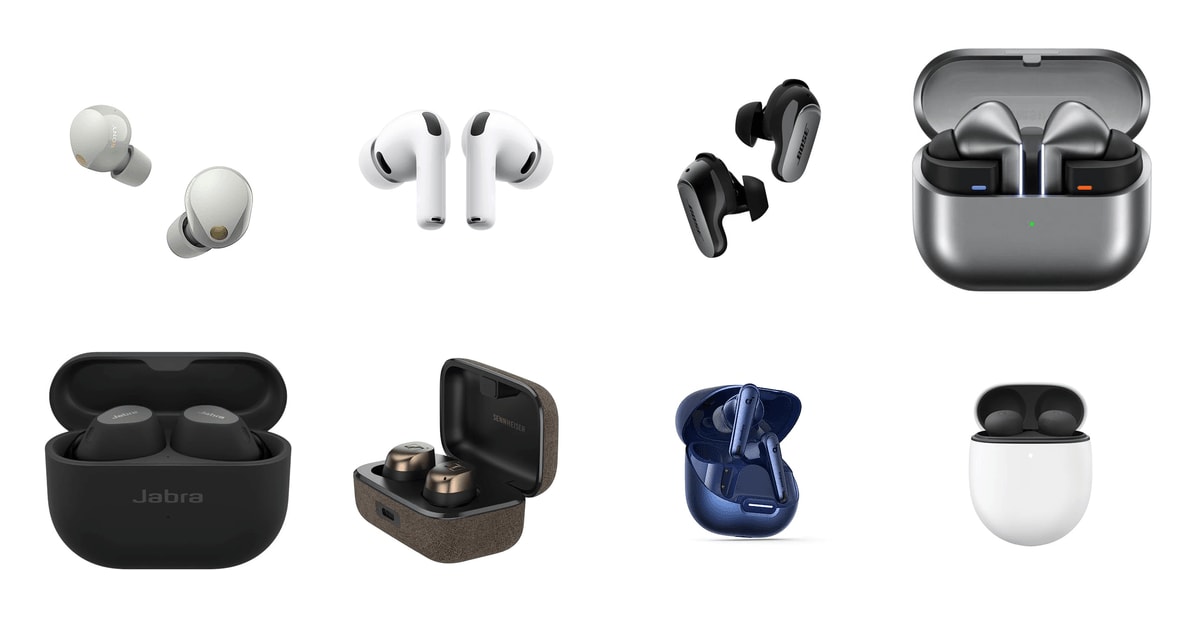
We read lab measurements, manufacturer specs and a lot of owner feedback to sort out which pairs earn the money. We think that the Bose QuietComfort Ultra Earbuds are the best noise-cancelling wireless earbuds for most people, and that the Sony WF-1000XM5 are the ones to buy if you want the strongest cancellation of office chatter and hi-res Android audio.
Everything we recommend

The quietest pair here, especially against engine drone

Better against voices and office noise, with hi-res Android audio
The obvious answer if your phone is an iPhone

Most of the quiet for a fraction of the outlay

The smartest pair here, if you live inside Google's apps
Prices as of Oct 22, 7:36 AM PT · Details
At a glance
| Product | Battery Life | Noise Reduction | Price | |
|---|---|---|---|---|
| Sony WF-1000XM5 Premium Noise Cancelling Truly WirelessRunner-up | 8 Hrs (24 W/ Case) | — | $248 |
| Apple AirPods Pro 3 Wireless Earbuds withAlso great | 8 Hrs W/ ANC | 2x More Than Pro 2 | $199 |
| Bose QuietComfort Ultra EarbudsTop pick | Up To 6 Hours | — | $299 |
 | SAMSUNG Galaxy Buds3 ProAlso in lineup | 5-8 Hrs (ANC) | — | $134.32 |
 | Sennheiser Momentum True Wireless 4 Smart EarbudsAlso consider | Up To 30 Hours | — | $290 |
| Soundcore by Anker Liberty 4 NC WirelessBudget pick | 10H/50H | Up To 98.5% | $55.99 |
| Google Pixel Buds Pro 2 - WirelessUpgrade pick | — | 2x More Than Before | $229 |
Prices as of Oct 22, 7:36 AM PT · Details
How we picked
Measured cancellation. We leaned on published lab measurements, particularly RTINGS.com's anechoic chamber data, to compare attenuation by frequency band rather than by marketing claim. A pair had to be strong in at least one band that matters daily — low rumble or mid-range voices.
Fit and seal. Seal contributes as much to real isolation as the ANC circuitry, so we prioritized earbuds with multiple tip sizes or an adjustable stabilizer. Owner feedback about fit failures weighed heavily against a product.
Battery with ANC on. Published testing shows cancellation cuts playback by 20 to 35 percent, so we looked for a rated 6 hours or more with ANC engaged. Case capacity mattered for anyone flying long-haul.
Codecs and pairing. We checked which high-resolution codecs each pair supports and whether multipoint Bluetooth is included, since two-device switching is now a baseline expectation at this level.
Calls and transparency. For remote workers, we compared microphone counts, wind rejection and published call-quality scoring such as SoundGuys' Mean Opinion Score. We also weighed how natural each passthrough mode sounds when someone speaks to you.
Top pick
The quietest pair here, especially against engine drone
Bose QuietComfort Ultra Earbuds
These block low-frequency noise better than anything else we researched, which is exactly what you want on a plane or a subway platform. CustomTune calibrates the cancellation to your ear each time you put them in, and nine tip-and-band combos mean most people can get a real seal.
$299fromAmazonPrices as of Oct 22, 7:36 AM PT · Details
If your noise problem is rumble, this is the pair to buy. RTINGS.com lab measurements put the QuietComfort Ultra Earbuds at the top of their ANC rankings, with standout attenuation below 200Hz. That's the band where jet engines and subway cars live. Owners who fly a lot say the same thing in their own words — planes, city streets and coffee shops all just go quiet.
Bose's CustomTune is the feature that actually justifies its marketing name. Every time you seat the buds, they send a quiet tone into your ear canal and adjust both the cancellation and the EQ to your ear's geometry, per Bose, in about 200 milliseconds. Ears differ enormously. That calibration is why these tend to work well for people who've had bad luck with one-size ANC before.
You also get a genuine fit system rather than a bag of tips. Nine combinations of umbrella-shaped tips and stability bands cover a wide range of ear shapes, and the bands hug the outer ear so the buds don't creep loose. Since seal contributes as much to isolation as the ANC circuitry does, this is not a minor detail — it's most of the reason these measure so well.
The rest is well-rounded rather than class-leading. Immersive Audio pushes the soundstage out in front of you instead of parking it between your ears, and it's genuinely pleasant for movies. SpeechClarity uses noise-rejecting mics for calls, and you can take a call on one bud. The IPX4 rating covers sweat and rain, so a walk home in drizzle won't kill them.
Flaws but not dealbreakers
Battery is the weak spot. Bose rates these at up to 6 hours with ANC on, which trails most of the picks here and means a long-haul flight will need a case top-up. Owners also describe the buds and case as physically large — they stick out of your ears and they bulge in a pocket.
The app has irritated more than a few owners, particularly the fact that some controls become awkward when your phone is in airplane mode. And a meaningful share of feedback flags connectivity hiccups early on, which usually settle after a firmware update but shouldn't need to.
Runner-up
Better against voices and office noise, with hi-res Android audio
Sony WF-1000XM5 Premium Noise Cancelling Truly Wireless
Sony's QN2e processing is the strongest we found against mid-range noise — the chatter, HVAC hum and keyboard clatter of an office. Add LDAC support and the smallest battery penalty from switching ANC on, and these make a lot of sense for Android listeners.
$248fromAmazonPrices as of Oct 22, 7:36 AM PT · Details
Bose wins below 200Hz. Sony wins above it. RTINGS.com measured 35 to 40dB of attenuation in the 250Hz–2kHz band, the best mid-range figure in their database at publication, and that band is where human voices and building ventilation sit. If your daily noise is an open-plan office rather than a runway, that difference is the one that matters.
Android users get the most out of these. LDAC carries roughly three times the data of standard Bluetooth audio, so if you're streaming from a compatible phone you're hearing more of the file than AAC would give you. iPhone owners are capped at AAC no matter what the earbuds support, so this advantage simply doesn't apply to them — worth knowing before you pay for it.
Battery holds up better than you'd expect with cancellation running. Sony rates 8 hours per charge and 24 with the case, and PCMag's testing found the XM5 posted the smallest ANC battery penalty of the models they measured, around 18 percent against a typical 20 to 35 percent. Three minutes in the case buys you about an hour of listening, which covers the moment you realize you forgot to charge.
They're also much smaller than the XM4 they replaced, and the lighter body sits more comfortably for long stretches. Sony's app is the deepest here — full EQ, adjustable ANC, adaptive modes that shift by location. If you like tinkering, you'll get more out of these than out of anything else on this list.
Flaws but not dealbreakers
The owner feedback on these is genuinely mixed, more so than for any other pick. A recurring complaint from XM4 upgraders is that cancellation feels weaker to them than the older model, despite the lab numbers, and fit is the likely culprit — several describe having to press the buds in hard to get the bass and seal.
Long-term battery reports are a concern too. Some owners describe cells fading within a year or two, and Sony's repair path for a failed bud rarely pencils out against buying new. That's not unique to Sony, but it comes up often enough here to mention.
Also great
The obvious answer if your phone is an iPhone
Apple AirPods Pro 3 Wireless Earbuds with
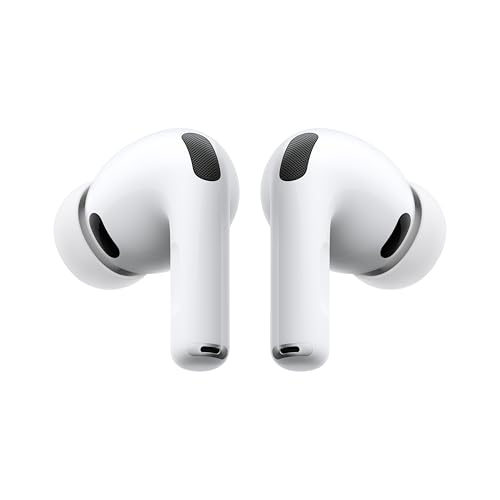
Apple claims these remove up to twice the noise of AirPods Pro 2, and the H2 chip's Adaptive Audio blends cancellation and passthrough on the fly. Five tip sizes and heart-rate sensing round out a pair that's hard to beat if you're already in Apple's world.
$199fromAmazonPrices as of Oct 22, 7:36 AM PT · Details
The reason to buy these is everything around the audio. Switching between your iPhone, iPad and Mac happens without you touching a menu. Spatial Audio with head tracking works across Apple apps. Live Translation and the Hearing Aid feature only exist here. None of that shows up on a spec sheet comparison, and all of it is why Apple households stop shopping at this point.
The cancellation is now genuinely competitive, not just convenient. Apple's published specs put it at up to 2x the noise removal of AirPods Pro 2, and the H2 chip processes Adaptive Transparency 48,000 times a second — fast enough to clamp a sudden siren without muting the rest of the world. Owners coming from first-generation AirPods Pro describe the difference as startling.
Fit got a real upgrade. There are five tip sizes now, including a very small one, and the new acoustic architecture is tuned around that tighter seal. Since seal drives isolation as much as the electronics do, more sizes means more people who actually get the advertised performance. If earbuds usually fall out of your ears, start here.
Battery is rated at up to 8 hours with cancellation on, or 10 in Transparency using the Hearing Aid feature. Heart-rate sensing across 50 workout types is a strange thing to find in earbuds, but if you run without a watch, it's genuinely useful.
Flaws but not dealbreakers
Owner feedback repeatedly describes the bass as lighter than Beats-style tuning, and some hear an unevenness — treble forward on one side, bass on the other. If you want thump, these aren't the pair.
There's no LDAC or aptX here, so Android users get AAC and lose most of what makes these special anyway. And a small but consistent group of owners reports the ear tips being noticeably occlusive if you sing or talk a lot, since your own voice booms in the sealed canal.
Budget pick
Most of the quiet for a fraction of the outlay
Soundcore by Anker Liberty 4 NC Wireless
Anker's Liberty 4 NC blocks far more noise than its price suggests, with adaptive cancellation that adjusts to your ear canal and 10 hours per charge. It won't match Bose on a plane, but it embarrasses earbuds costing several times as much.
$55.99fromAmazonPrices as of Oct 22, 7:36 AM PT · Details
This is the pair that makes the expensive ones a harder sell. SoundGuys and Head-Fi community testing consistently rank the Liberty 4 NC ahead of every other budget ANC earbud, matching what flagship models managed a few years ago. Anker's own figure is 98.5 percent noise reduction. Take the marketing number with salt, but the independent verdict backs the general point.
Battery is the other headline. Anker rates 10 hours per charge and 50 with the case, which is roughly double what the Bose manages per bud. If you fly, that's the difference between arriving with music and arriving without it. Wireless charging on the case is a nice touch at this tier, and LDAC support means Android listeners aren't stuck with basic Bluetooth audio.
The dual-driver setup — an 11mm custom-tuned driver handling the heavy lifting — produces sound that's fuller and more detailed than the price implies. HearID 2.0 runs a quick hearing profile and builds an EQ curve around it, and there are 22 presets if you'd rather just pick one. The app is more capable than it has any business being.
Adaptive ANC 2.0 recalculates in real time based on both your ear canal and the noise around you, which is the same broad idea behind Bose CustomTune and Google's Silent Seal. It's not as refined here. But it's the reason these hold up when you move from a quiet train car to a loud platform.
Flaws but not dealbreakers
The included ear tips are the weak link. Several owners returned these over fit and poor isolation, and third-party tips would likely have fixed it. Budget accordingly for a set of foam or silicone replacements.
Maximum volume runs lower than some people expect, which is a real annoyance if you listen loud or use these in genuinely noisy places. And this particular listing is a renewed unit, so you're buying refurbished stock rather than new.
Upgrade pick
The smartest pair here, if you live inside Google's apps
Google Pixel Buds Pro 2 - Wireless
Silent Seal 2.0 adjusts cancellation 1,000 times a second, five times faster than the previous generation, so it keeps up when a train door opens. Gemini works hands-free even in a busy café, and the twist-to-adjust stabilizer locks them in during workouts.
$229fromAmazonPrices as of Oct 22, 7:36 AM PT · Details
Speed is the differentiator. According to The Verge, Silent Seal 2.0 adjusts the cancellation 1,000 times per second, up from 200Hz on the original Pixel Buds Pro. That matters in the moments when noise changes abruptly — a car window rolling down, a subway door opening, a bus pulling away. Fixed-mode cancellation lags in those moments. These don't.
The fit system is clever and underrated. A twist-to-adjust stabilizer lets you lock the buds tight for a run or back them off for a four-hour flight, which is a genuinely different approach from swapping tips. Owners consistently call these the most comfortable pair they've worn for long stretches, and the adjustment is why.
Gemini integration is the real reason to pick these over the Sony or Bose. Hands-free voice commands work reliably in a loud café, and Conversation Detection drops you into transparency the moment you start talking to someone. If you already lean on Google Assistant for lists, reminders and quick questions, having it this responsive in your ears is a meaningful daily upgrade.
Sound holds its own too. The 11mm drivers and a dedicated high-frequency chamber give you real bass without smearing the treble, and spatial audio with head tracking is included. Owners who care about fidelity describe a rolloff at the very top of the range, but almost nobody hears above 15kHz anyway.
Flaws but not dealbreakers
Non-Pixel Android phones are where the trouble starts. A recurring thread in owner feedback is software and driver friction on other handsets — dropped features, awkward pairing, updates that don't land cleanly. On a Pixel these are excellent. Off one, it's a gamble.
Cancellation is strong but not Bose-strong. Owners flying with these describe a clear reduction rather than the near-silence over-ear headphones give you, so if flights are your main use case, the QuietComfort is the better spend.
Who this is for
Buy a pair here if noise is a daily problem rather than an occasional one — you commute by train or bus, you fly often, or you share a room with people who talk while you work. If you just want music on a quiet walk, cancellation is an expensive feature you'll leave off, and a good pair of non-ANC earbuds will sound better for the money. Runners and gym-goers should check the water rating and the fit system carefully; a bud that shifts every twenty steps is worse than no bud at all.
This guide covers true wireless in-ear models with active cancellation. It doesn't cover over-ear headphones, which still block more noise than any earbud, or open-fit buds that deliberately let the world in. One thing worth knowing before you commit: published long-term testing suggests these batteries drop to roughly 80 percent of original capacity after 400 to 500 full charge cycles — two to three years for a daily commuter. Plan on replacing rather than repairing.
How we picked
We compared specifications, published lab measurements and recurring themes in owner feedback across the lineup. Cancellation: published attenuation figures by frequency band, since low rumble and mid-range voices are cancelled very differently, with strength required in at least one band that people actually encounter. Fit: multiple tip sizes or an adjustable stabilizer, because seal drives isolation as much as the electronics do. Battery: a rated 6 hours or more with cancellation engaged, given the 20 to 35 percent penalty published testing shows. Codecs and pairing: high-resolution codec support where it's usable, plus multipoint Bluetooth as a baseline. Calls: microphone count, wind rejection and published voice-clarity scoring. Transparency: how natural speech sounds coming through, since a distorted passthrough is one you'll never use.
Other noise-cancelling wireless earbuds worth considering
If you want the best sound quality above all: The Sennheiser Momentum True Wireless 4 Smart Earbuds — The Sennheiser Momentum True Wireless 4 is the audiophile's answer here. It supports aptX Lossless at up to 1Mbps — CD-quality 16-bit/44.1kHz over Bluetooth — on Snapdragon Sound-compatible Android phones, which almost nothing else manages. Battery is rated at 30 hours with the case, and it's LE Audio and Auracast ready. Owners with small ears report unusually good fit. What you give up is cancellation: it's competent rather than class-leading, and owners describe even the strongest setting as merely okay against loud environments. Warranty service has also drawn real complaints.
The competition
This is what our research surfaced, not a census of everything on the market. Earbuds get replaced constantly, and a pair that isn't here may simply not have appeared in the lab measurements and review coverage we drew on.
The SAMSUNG Galaxy Buds3 Pro — The Samsung Galaxy Buds3 Pro is the tightest fit for a Samsung Galaxy phone specifically. The blade-tip design improves the passive seal, 360 Audio with head tracking is included, and Galaxy AI adds real-time translation and voice optimization. Rated playback runs 5 to 8 hours depending on cancellation use, with 18 hours from the case. It lost to our picks on two counts: those AI features need a Samsung handset to work at all, and this listing is an international model without domestic warranty coverage. Owners upgrading from the Buds2 Pro also report shorter battery life and weaker microphone pickup for lower voices. If you own a recent Galaxy phone and want the deepest integration, it's still a reasonable buy.
Fit, care and getting the most quiet
Start with the tips. Try every size in the box, including the ones you assume are too big — most people under-size and then blame the cancellation. A correct seal feels slightly occluded and your own voice sounds a little boomy. If the stock tips still leak, third-party foam tips are cheap and often fix isolation completely. Wipe the mesh screens with a dry brush every couple of weeks, since earwax buildup muffles sound and can trigger a false transparency reading. Don't store the case in a hot car; heat is the fastest way to kill a lithium cell. And update the firmware when the app prompts you. Cancellation algorithms genuinely improve over a product's life, and a pair that disappointed you at launch may be noticeably better a few updates in.
Questions we get
Are Sony or Bose earbuds better for noise cancellation?
It depends on the noise you're fighting. Bose measures best below 200Hz, which covers airplane engines and subway rumble, while Sony measures best in the 250Hz–2kHz band where voices and office ventilation sit. Frequent flyers should take the Bose. Office workers and bus commuters will likely prefer the Sony.
Do noise-cancelling earbuds work without playing music?
Yes. Cancellation is an active process that runs independently of playback, so you can put them in, switch it on and sit in relative quiet. Battery drains slower without audio, though not dramatically. Plenty of people use them purely as earplugs for focused work.
Do budget noise-cancelling earbuds actually block out noise?
The good ones do now. Independent testing puts the Anker Liberty 4 NC ahead of every other budget option and roughly level with flagship models from a few years back. You'll still lose ground to the Bose on low-frequency drone. But the gap is far smaller than the price difference suggests.
What does multipoint Bluetooth mean, and do I need it?
Multipoint lets a pair stay connected to two devices at once — your laptop and your phone, say — so a call can interrupt a video without you re-pairing anything. It's now standard on most earbuds above the budget tier. If you work from a computer and carry a phone, you'll use it constantly.
What's the difference between active noise cancellation and passive isolation?
Passive isolation is just physical blocking — the ear tip sealing your canal. Active cancellation adds microphones that listen to incoming sound and generate an opposing waveform to erase it. The two work together, and the passive part matters more than people expect. A poor seal undermines even the best cancellation circuitry.
How long will the batteries last before they degrade?
Published long-term testing suggests most ANC earbud batteries fall to about 80 percent of original capacity after 400 to 500 full charge cycles. For someone charging once a day, that's roughly two to three years. Replacement is usually more practical than repair, so factor that into what you're willing to spend.
Why you should trust us
For this guide:
- We compared published lab measurements from RTINGS.com, PCMag and SoundGuys alongside each manufacturer's own specifications for cancellation, codec support and rated battery life.
- We read owner feedback across all eight products, looking for repeated themes around fit, long-term battery health and app reliability rather than isolated complaints.
- We read owner reviews on every listing, weighted toward the critical ones, because that is where the recurring failures show up.
- We have a systematic way of automatically fetching the latest prices, so the numbers on this page stay current.
- This is a research-focused guide, so the team may not own every product listed — though we often do own the top winners, which gives us extra context for the recommendations.
- We don't accept free products, and the retailer commission never changes which product we recommend.
Sources
Best Wireless Earbuds 2026 — RTINGS.com, RTINGS.com
The Best Noise-Canceling Earbuds — Wirecutter, Wirecutter (NYT)
Best Noise-Cancelling Earbuds 2026 — The Verge, The Verge
Best True Wireless Earbuds 2026 — TechRadar, TechRadar
Best Earbuds for Phone Calls 2026 — SoundGuys, SoundGuys
Sony WF-1000XM5 Full Review — RTINGS.com, RTINGS.com
Bose QuietComfort Ultra Earbuds Review — RTINGS.com, RTINGS.com
Best Noise-Canceling Earbuds — PCMag, PCMag
Best Budget Noise-Cancelling Earbuds 2026 — SoundGuys, SoundGuys
True Wireless Stereo Earbuds Market Forecast 2025–2030 — Grand View Research, Grand View Research
Apple AirPods Pro (2nd Generation) — Apple Newsroom, Apple
Amazon product listings and owner reviews for all 7 products
Manufacturer specification pages for each product
Some passages in this guide may be paraphrased with AI help.
Product prices and availability are accurate as of the date/time indicated and are subject to change. Any price and availability information displayed on Amazon.com at the time of purchase will apply to the purchase of this product.
More like this.
Continue exploring electronics reviews and recommendations.

The Best Noise-Cancelling Wireless Earbuds
Good noise cancelling changes how a commute feels. The train rumble drops away, an airplane's engine drone turns into a soft hush, and the open-plan…

The Best Noise-Canceling Wireless Earbuds
Noise-canceling earbuds earn their keep in the boring moments. The drone of a plane cabin at cruising altitude. A neighbor's leaf blower during your…

The Best Noise-Cancelling Headphones for Focus and Deep Work
Most of us don't get to pick where we work. The open-plan office hums, the espresso machine shrieks, and the guy two desks over takes every call on…

The Best Noise Canceling Earbuds
Noise canceling earbuds earn their keep in a handful of specific moments. The rumble of a subway car. An open-plan office where three people type like…

The Best Wireless Earbuds
Wireless earbuds have quietly become the thing you reach for more than any other gadget. You wear them on the bus, on a work call, while loading the…

The Best Wireless Earbuds for Working Out
Workout earbuds live a hard life. They get soaked in sweat, yanked out by a hoodie, bounced around during sprints, and dropped on rubber gym flooring more…