The Best Noise Canceling Earbuds
Noise canceling earbuds earn their keep in a handful of specific moments. The rumble of a subway car. An open-plan office where three people type like they're angry at the keyboard. A plane cabin at cruising altitude, where the engine drone sits right in the frequency range ANC handles best. Good earbuds turn that wall of sound into something closer to a hush, so you can listen at a lower volume and actually think. The chip inside matters, but so does whether the tips seal in your ears.
Here's the honest part: no pair at this price makes noise disappear. Steady low-frequency sound is the easy target, and every set here handles that reasonably well. Voices are the hard target, and none of these erase the coworker talking two desks over. Transparency modes are usable but a bit hissy and artificial compared with what Sony and Apple charge a premium for. And every battery number on every box assumes ANC is off — expect roughly a third less runtime once you turn it on.
We think that the Soundcore Liberty 4 NC is the best noise canceling earbud for most people, and that the EarFun Air Pro 4 is the one to buy if you want hi-res codecs and the longest case battery without paying more.
Everything we recommend

Deep, adjustable noise blocking with sound you can tune
More codecs and a longer-lasting case, for a bit less money

The best-looking pair here, with strong ANC to match

Tiny, comfortable, and cheap, with battery that won't quit

Built for calls first, with a dongle that fixes flaky work laptops
At a glance
| Product | ANC Reduction | Battery Life | Price | |
|---|---|---|---|---|
| Soundcore by Anker Liberty 4 NC WirelessTop pick | Up to 98.5% | 8H/40H w/Case | $79.99On sale |
| Jabra Evolve2 True Wireless Earbuds - in-EarUpgrade pick | — | — | $355 |
| EarFun Air Pro 4 Adaptive Hybrid NoiseRunner-up | Up to 50dB | 11H/52H w/Case | $53.16On sale |
 | Sony WF-C700N Wireless Noise-Canceling Earbuds - BluetoothAlso in lineup | — | 35 Hours | $118 |
| Nothing EarAlso great | 45dB | 42.5 Hours | $79 |
| Soundcore by Anker Space A40 Adaptive ActiveBudget pick | Up to 98% | 10H/50H w/Case | $54.99On sale |
 | 1MORE SonoFlow-Pro Noise Cancelling Headphones - HQ51Also consider | 45dB+ | 100H/65H ANC | $87.99 |
 | Beats by Dr. Dre Fit Pro TrueAlso consider | — | — | $99On sale |
How we picked
Noise blocking depth. We compared published attenuation measurements from RTINGS, SoundGuys and What Hi-Fi?, weighting low-frequency performance in the 100–500Hz range where commuting and airplane noise lives. Anything that couldn't handle steady engine drone was out.
Fit and seal. TechRadar's testing found a proper ear canal seal adds 12–15dB of attenuation regardless of the ANC chip, so we read owner feedback closely for reports of buds loosening, shifting or falling out.
Real battery life. Consumer Reports found budget ANC earbuds average 35% less runtime than their rated maximums once cancellation is on. We compared ANC-on ratings where manufacturers published them and discounted the rest accordingly.
Codecs and connection. We looked for LDAC or aptX Adaptive support and multipoint Bluetooth, which a 2025 SoundGuys market survey found is now standard in over 70% of earbuds in this segment. Anything without multipoint had to be exceptional elsewhere.
Call microphones. We read published reviews and owner feedback on voice clarity in wind and in noisy rooms, since mic arrays vary far more between models than drivers do.
Top pickOn sale
Deep, adjustable noise blocking with sound you can tune
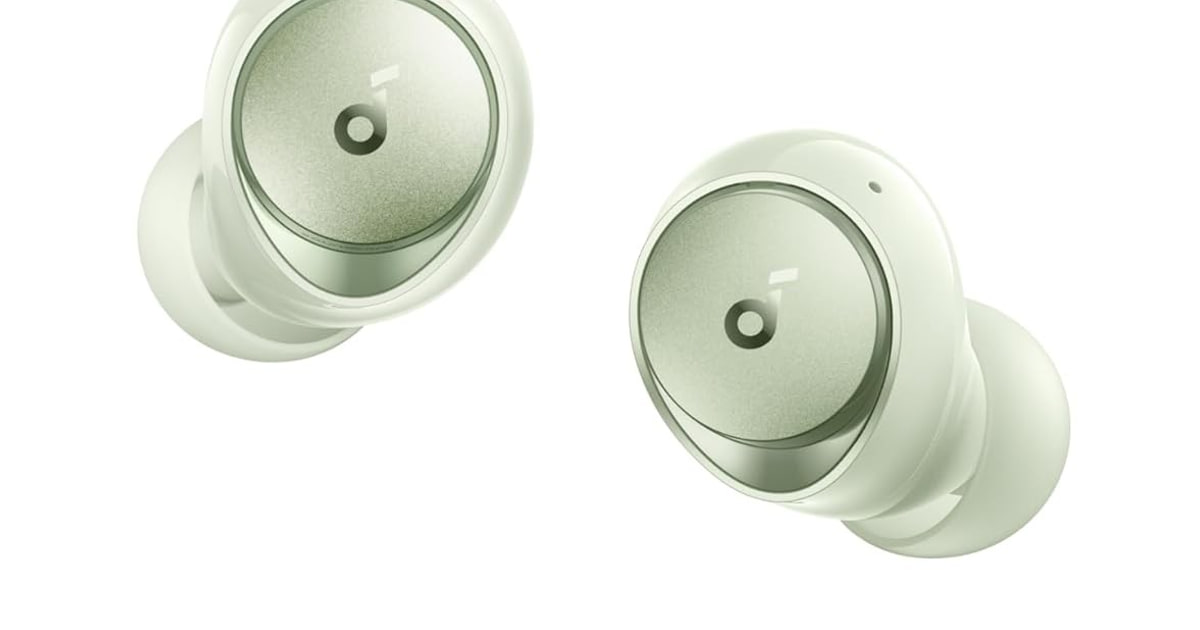
Soundcore by Anker Liberty 4 NC Wireless
The Liberty 4 NC blocks a claimed 98.5% of ambient noise using an in-ear sensor that adapts to your ear canal, and it supports LDAC for hi-res streaming. You get 10 ANC modes, 22 EQ presets, and multipoint pairing to a phone and laptop at once.
$79.99fromAmazonList priceThis is the pair that gets the fundamentals right without asking you to compromise. RTINGS measured the Liberty 4 NC blocking 98.5% of ambient noise in standardized testing, a figure that beats some headphones costing considerably more. Tom's Guide named it Best Value ANC Earbuds for 2025, pointing to the 10 customizable ANC modes and 28 hours of total battery with ANC running. Those aren't marketing numbers pulled from a box.
The adaptive system is the part you'll notice day to day. Adaptive ANC 2.0 checks the seal in your ear and recalculates in real time, which matters because seal is most of the battle. TechRadar found that a proper ear canal fit adds 12 to 15 dB of attenuation on its own, often more than the ANC circuitry contributes. If your tips shift when you chew or talk, the Liberty 4 NC compensates instead of leaking bass and letting the rumble back in.
Sound is genuinely good, not just good enough. The 11mm drivers have real low-end weight, and LDAC support means Android users get roughly three times the data throughput of standard Bluetooth. If you don't like the default tuning, HearID 2.0 walks you through a hearing test and builds a profile, or you can pick from 22 presets and drag the EQ around yourself. Owners who've cycled through several budget pairs consistently land on these as the better-sounding option.
Battery holds up under normal use. Anker rates 8 hours per charge with ANC on and 40 hours total with the case, and owner feedback backs that up — several report going most of a week between case charges with daily wear. Consumer Reports found budget ANC earbuds average 35% less runtime than rated maximums in real-world use, so treat these numbers as ceilings. Even discounted, they're enough for a long-haul flight plus the connections.
Flaws but not dealbreakers
Fit isn't universal. Some owners find the buds don't seat snugly, and since seal drives most of the noise blocking, a loose fit takes the ANC from impressive to merely okay. Anker includes multiple tip sizes, and it's worth spending ten minutes swapping through them before you decide these don't work.
Long-term reliability is the real question mark. A recurring complaint is a single earbud failing after several months — usually the right one refusing to charge or sync. It's a minority of owners, but it comes up often enough that we'd register the warranty and keep the receipt.
Runner-upOn sale
More codecs and a longer-lasting case, for a bit less money
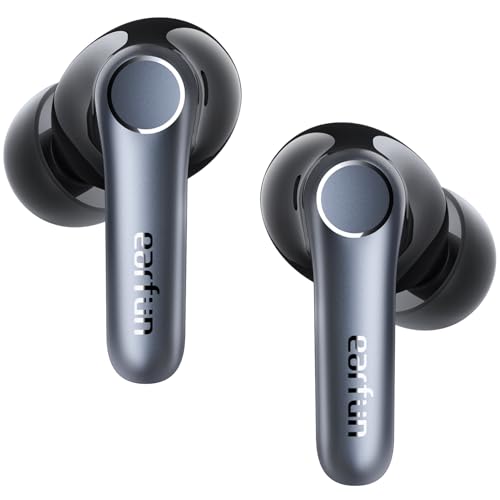
EarFun Air Pro 4 Adaptive Hybrid Noise
The Air Pro 4 covers nearly every codec worth having — LDAC, aptX Lossless, and Snapdragon Sound certification — plus 52 hours total with the case. Six microphones and Qualcomm cVc 8.0 handle call noise, and Bluetooth 5.4 gives you multipoint out of the box.
$53.16fromAmazonList priceWirecutter picked the Air Pro 4 as its budget choice in 2025, noting it matched mid-range competitors on low-frequency blocking in side-by-side comparisons and beat rivals from JLab and Skullcandy. CNET gave it an Editor's Choice award. That's unusual agreement for a brand most people haven't heard of, and it's why we'd put these ahead of better-known names if the price gap is meaningful to you.
The codec support here is the most complete you'll find at this price. LDAC runs up to 990kbps, and aptX Lossless works if your phone has the right Qualcomm chip. Head-Fi measurements put the frequency response within ±3dB of the Harman target curve from 20Hz to 10kHz, which in plain terms means the tuning is neutral and balanced rather than bass-boosted to impress you in the first ten seconds.
EarFun rates ANC at up to 50dB, and the QuietSmart 3.0 system scans your ear canal shape to calibrate. On a bus or a plane, that translates to the engine drone dropping away while announcements still cut through. It won't erase a nearby conversation — nothing here will — but for commuting and focus work it does the job.
The case is the practical win. Eleven hours per bud and 52 hours total means you can go on a trip and leave the charger at home. A 10-minute top-up buys about two more hours, which covers you when you forget overnight. Combine that with in-ear detection that pauses when you pull a bud out, and the daily friction is low.
Flaws but not dealbreakers
Sound tuning splits people. Owners who came from more expensive earbuds sometimes find these a little flat or unexciting compared with a bass-forward alternative. The app's EQ helps, but if you want punch out of the box, the Liberty 4 NC or Nothing Ear (a) will please you faster.
Firmware has been a rough edge. Some owners describe pairing trouble on first setup that a firmware update resolved. Plan on installing the EarFun app and running the update before you judge the buds.
Also great
The best-looking pair here, with strong ANC to match
Nothing Ear
Nothing rates the Ear (a) at 45dB of hybrid ANC, and it monitors the seal in your ear to adjust intensity when it detects leakage. The transparent design stands out, the app includes a proper equalizer, and there's ChatGPT voice access if you use it.
$79fromAmazonThe Verge described the Ear (a)'s real-world noise canceling as genuinely impressive on constant-pitch sounds — aircraft engines, HVAC systems, the steady hum of a train car. That's the category ANC actually solves, and the Ear (a) solves it about as well as anything here. The seal-monitoring system helps: when it detects leakage, it pushes cancellation harder instead of quietly giving up.
The 11mm driver puts out roughly twice the power of the Ear (2), and the tuning leans bassy. Some people want exactly that; if you don't, the Nothing X app's equalizer is one of the better ones at this price and you can flatten things out in a minute. Hi-Res Audio certification is here too, so Android users streaming from a service that supports it get the full-quality path.
These are the pair you'll be happy to have visible in your ears. The transparent stem design is genuinely distinctive rather than a copy of everything else on the shelf, and owner feedback repeatedly starts with how they look before getting to how they sound. That's not a serious buying criterion, but it's a real one, and nothing else in this lineup competes on it.
Nothing rates 42.5 hours of total playtime, and a 10-minute charge gets you up to 10 hours with ANC off. Low Latency Mode keeps video and gaming in sync, and dual-device connection lets you jump between laptop and phone without re-pairing. Six microphones plus an airflow channel in the stem handle wind on calls better than the stemless designs here.
Flaws but not dealbreakers
Battery life with ANC on is the weak spot. The rated figures assume ANC is off, and owners who run cancellation constantly report needing to charge more often than the box suggests. If you wear earbuds for a full workday without a break, the EarFun or Soundcore options will serve you better.
You need the app for anything beyond basic playback. EQ, ANC modes, and the ChatGPT feature all live there, so if you're the type who wants earbuds that work fully out of the box with no account or install, factor that in.
Budget pickOn sale
Tiny, comfortable, and cheap, with battery that won't quit
Soundcore by Anker Space A40 Adaptive Active
The Space A40 is the smallest and lightest pair in this lineup, and it's rated for 50 hours total with the case — the longest in the sub-budget ANC category. Adaptive ANC blocks up to 98% of noise, and LDAC support is included.
$54.99fromAmazonList priceIf you've given up on earbuds because they hurt after an hour, start here. The A40 is smaller than any other Soundcore ANC model and weighs about as much as a sheet of paper. Owners who wear them through long workdays and yard work describe forgetting they're in. Comfort isn't a spec you can compare on a chart, but it's the thing most likely to determine whether you keep using a pair.
Anker rates the A40 at 50 hours of total playtime with 10 hours per charge, the longest rated figure in the sub-budget ANC earbud category. Ten minutes of charging buys four hours. Remember that Consumer Reports found budget ANC earbuds run about 35% short of rated maximums with cancellation on, so plan for something closer to six or seven hours per charge in practice. That's still a full workday.
The adaptive cancellation is smarter than the price suggests. The A40 reads your surroundings and picks a cancellation level automatically instead of making you toggle modes — indoors, outdoors, commuting, on a plane. Double-layer diaphragm drivers keep the bass tight rather than bloated, and LDAC mode is available for hi-res streaming on Android.
For students and anyone buying their first ANC pair, this is the sensible entry point. You give up some noise-blocking depth against the Liberty 4 NC and some codec breadth against the Air Pro 4. You keep adaptive ANC, LDAC, wireless charging, and a case that can outlast a weekend trip.
Flaws but not dealbreakers
The ANC won't satisfy anyone hoping for silence. Owners looking to block snoring or sleep through noise report the cancellation isn't deep enough for that, and it's noticeably behind the Liberty 4 NC on low-frequency rumble. It handles a bus or a coffee shop fine; it doesn't handle a construction site.
Fit security is inconsistent. Some owners find the buds sit tight through vigorous head movement and then pop out unprompted while standing still. Given how small they are, that's a real risk near a subway platform or a hard floor.
There's a low-battery warning tone that owners describe as jarringly loud. Minor, but it's the kind of thing you notice at 6 a.m.
Upgrade pick
Built for calls first, with a dongle that fixes flaky work laptops
Jabra Evolve2 True Wireless Earbuds - in-Ear
The Jabra Evolve2 Buds use four microphones plus bone conduction sensors to isolate your voice from background noise, and they're certified for the major meeting platforms. A USB dongle is included for a more stable connection than laptop Bluetooth typically gives you.
$355fromAmazonIf you spend your day on calls, this is a different kind of product from everything else here. The four-mic array pairs with bone conduction sensors that read the vibration of your own voice, so the earbuds can tell you apart from the noise around you. Jabra's beamforming is the strongest voice-clarity story in this segment, and it's why we'd pick these over better-sounding earbuds if being heard clearly is the job.
The included USB dongle is the underrated feature. Laptop Bluetooth is frequently the weak link on work calls — dropouts, codec downgrades, the machine deciding your headset is a microphone-only device mid-meeting. The dongle sidesteps all of that with a dedicated radio. Owners on Teams, RingCentral, Windows and iOS describe multipoint that actually works: music from the phone pauses, the laptop call comes through, music resumes.
Physically these are built for a workday. They're compact, water resistant, and shaped to sit comfortably for hours rather than for a 45-minute gym session. ANC is adjustable, so you can dial in enough quiet to concentrate without the sealed-in pressure feeling that maximum cancellation gives some people.
The trade-off is honest: you're paying for call performance, not for music. Sound is fine — clear, unremarkable, no LDAC or aptX Adaptive. If your earbuds spend more hours on meetings than on albums, that math works. If it's the other way around, buy the Liberty 4 NC and save the difference.
Flaws but not dealbreakers
Reliability complaints are more common here than we'd like. Owners report charging trouble — buds that fight the case rather than seating and topping up — and at least some microphone failures within a couple of months. For a product whose whole argument is call quality, a dead mic is the worst possible failure.
There's an aggressive power-saving behavior. The buds sleep after a few seconds of silence from the source, and waking them introduces a delay of up to two seconds. On a call that means clipping the first word or two of what someone says.
Firmware updates arrive often, and the process is more involved than it should be. Budget time for it during setup rather than five minutes before a meeting.
Who this is for
Buy a pair here if you commute on a train or bus, work in an open office, fly a few times a year, or study somewhere with unpredictable noise. The gap between this tier and flagship ANC earbuds has narrowed sharply over the last couple of model generations, mostly in low-frequency blocking, which is the noise you're actually trying to escape. You'll give up some transparency-mode polish and some voice-range cancellation, and that's about it.
Skip this guide if you need surgical silence — construction site levels, or blocking a snoring partner. No earbud here does that, and over-ear headphones are a better answer. We've focused on true wireless in-ear models with active cancellation, so we're not covering over-ear headphones, open-ear or bone conduction designs, or dedicated sleep buds. If you're an Apple household that wants seamless device switching above all else, one option below is built specifically for you.
How we picked
Noise blocking: we compared published attenuation measurements from RTINGS, SoundGuys and What Hi-Fi?, weighting the 100–500Hz range where commuting noise sits. Fit and seal: because a proper seal contributes 12–15dB on its own, we read owner feedback for reports of loose or shifting buds. Battery: we discounted rated figures, since real ANC-on runtime tends to fall about a third short. Codecs and connection: LDAC or aptX Adaptive plus multipoint pairing, now standard across most of this segment. Calls: published reviews and owner feedback on voice clarity in wind and noisy rooms, where microphone arrays differ far more than drivers do.
Other noise canceling earbuds worth considering
If you want the deepest quiet and don't mind over-ear: The 1MORE SonoFlow-Pro Noise Cancelling Headphones - HQ51 ($87.99) — The 1MORE SonoFlow Pro is a full over-ear headphone rather than an earbud, so it's outside the main scope of this guide — but it's worth knowing about if silence is your priority. QuietMax dual-feed cancellation cuts more than 45dB, and What Hi-Fi? called its measured 42dB peak the strongest ANC performance at this price point in a five-star review. Battery is in another league entirely: 100 hours standard, 65 with ANC running. The 40mm drivers and LDAC support make it the sound-quality pick for anyone who cares more about music than pocketability. What you give up is portability — these don't disappear into a jacket pocket, and you can't wear them to the gym.
If you're deep in the Apple ecosystem and work out hard: The Beats by Dr. Dre Fit Pro True ($99) — The Beats Fit Pro uses the Apple H1 chip, which means automatic switching between your iPhone, iPad and Mac, audio sharing with another pair of Beats or AirPods, and hands-free Siri. The flexible wingtips are the real differentiator — they lock in during running and lifting in a way that none of our picks reliably match. Spatial Audio with head tracking works well for movies on a plane. The catch is that this listing is a renewed unit, so cosmetic blemishes and third-party ear tips are common, and the wingtips are a known weak point if you tug on them to pull the buds from the case. Android users get almost none of the benefit and should look elsewhere.
The competition
This is what our research surfaced, not a survey of everything on the market. Plenty of capable earbuds exist that we didn't have listing data for. Here's the one remaining product from our lineup and why it didn't make the cut.
The Sony WF-C700N Wireless Noise-Canceling Earbuds - Bluetooth ($118) — The Sony WF-C700N has real strengths on paper. SoundGuys measured 25dB of passive isolation on top of active cancellation, producing combined mid-frequency attenuation competitive with over-ear headphones — that's the fit doing heavy lifting, exactly as the research predicts. It's compact, IPX4-rated for sweat, includes Sony's DSEE upscaling, and 35 hours of total battery is respectable. But owner feedback is the most divided of anything in this lineup. Reports of thin lows and mids, tinny highs, and ANC that underdelivers show up alongside charging failures and buds going silent inside a year. Sony's algorithm is proven; this particular execution of it isn't. If you want Sony's tuning and app specifically and you're confident the fit will work for your ears, it's defensible. Most people will be happier with the Liberty 4 NC.
Fit and everyday care
Spend real time on the ear tips. Seal contributes 12 to 15 dB of attenuation on its own, often more than the ANC chip does, so the wrong tip size costs you more noise blocking than any spec on the box will give back. Try every size in the package, wear each for a few minutes, and pick the one that stays sealed when you talk and chew. Wax buildup is the other quiet killer — a clogged nozzle muffles sound and makes people think their buds are failing. Wipe the tips with a slightly damp cloth weekly and check the mesh under a bright light. Never rinse the buds themselves; IPX4 means sweat and light rain, not submersion. And install the manufacturer's app once, if only to run the firmware update — several complaints about pairing trouble across these models trace back to shipping firmware.
Questions we get
Do budget noise canceling earbuds actually work?
Yes, on the right kind of noise. Steady low-frequency sound — train rumble, plane engines, HVAC hum — is what ANC handles well, and the gap between this tier and flagship earbuds has narrowed a lot in the last couple of model generations. Voices and sudden sharp sounds are much harder, and no pair at this price erases a nearby conversation.
What's the difference between active noise cancellation and passive isolation?
Passive isolation is just physical blocking — the ear tip sealing your ear canal, like a foam plug. Active cancellation uses microphones and a chip to generate an opposing sound wave. Passive does more of the work than most people expect: TechRadar found a proper seal contributes 12 to 15 dB regardless of the ANC system, sometimes exceeding what the electronics add. That's why fit matters as much as the chip.
How long does the battery really last with ANC on?
Less than the box says, always. Manufacturers rate playtime with cancellation off, and Consumer Reports found budget ANC earbuds average 35% less runtime in real-world ANC-on use. If a pair claims 10 hours, plan for six or seven. Case totals shrink by roughly the same proportion.
Are these good enough for flights?
For most people, yes. Engine drone is a constant, low-pitched sound, which is exactly what these systems handle best, and The Verge specifically noted the Nothing Ear (a) performing well on aircraft noise. You'll still hear announcements and the person behind you. If you fly weekly and want the deepest quiet, over-ear headphones are the better tool.
Do earbuds at this price support multipoint Bluetooth?
Most do now. A 2025 SoundGuys market survey found multipoint is standard in over 70% of earbuds in this segment, and every pick in this guide supports it. It lets you stay connected to a laptop and a phone at once, so a call can interrupt your music without re-pairing anything.
Is LDAC support worth having?
It depends on your phone and your music. LDAC moves about three times the data of standard Bluetooth, but you need an Android device that supports it and a source file worth the bandwidth — a compressed streaming playlist won't sound different. iPhone users can't use LDAC at all and should focus on fit and AAC performance instead.
Why you should trust us
For this guide:
- We read published measurements and reviews from RTINGS, SoundGuys, What Hi-Fi?, TechRadar, The Verge, Tom's Guide, Head-Fi, Consumer Reports and Wirecutter for this category.
- We compared manufacturer specifications for driver size, codec support, ANC ratings and battery figures across every model in this guide.
- We read owner feedback for recurring themes around fit, long-term reliability, firmware and real-world battery life.
- We read owner reviews on every listing, weighted toward the critical ones, because that is where the recurring failures show up.
- We have a systematic way of automatically fetching the latest prices, so the numbers on this page stay current.
- This is a research-focused guide, so the team may not own every product listed — though we often do own the top winners, which gives us extra context for the recommendations.
- We don't accept free products, and the retailer commission never changes which product we recommend.
Sources
Best Budget Wireless Earbuds — Wirecutter, 2025, Wirecutter / NYT
Soundcore Liberty 4 NC Full Review — RTINGS.com, RTINGS.com
Best True Wireless Earbuds 2025 — RTINGS.com, RTINGS.com
Sony WF-C700N Review — SoundGuys, SoundGuys
Nothing Ear (a) Review — The Verge, The Verge
EarFun Air Pro 4 Review — Head-Fi Community Testing, Head-Fi
Best Noise Canceling Earbuds Under $100 — Tom's Guide 2025, Tom's Guide
Budget ANC Earbuds Shootout — TechRadar 2025, TechRadar
1MORE QuietMax Review — What Hi-Fi? 2024, What Hi-Fi?
True Wireless Earbuds Battery Life Testing — Consumer Reports 2025, Consumer Reports
Amazon product listings and owner reviews for all 8 products
Manufacturer specification pages for each product
Some passages in this guide may be paraphrased with AI help. Prices are refreshed automatically.
More like this.
Continue exploring electronics reviews and recommendations.

The Best Noise-Canceling Wireless Earbuds
Noise-canceling earbuds earn their keep in the boring moments. The drone of a plane cabin at cruising altitude. A neighbor's leaf blower during your…

The Best Budget Noise Canceling Headphones
Noise canceling headphones earn their keep in the boring parts of your day. The bus that idles for ten minutes. The open-plan office where someone always…

The Best Noise-Cancelling Wireless Earbuds
Good noise cancellation changes what a commute feels like. The subway rumble drops away, the plane engine turns into a distant hush, and the guy on…

The Best Noise-Cancelling Wireless Earbuds
Good noise cancelling changes how a commute feels. The train rumble drops away, an airplane's engine drone turns into a soft hush, and the open-plan…

The Best Noise-Cancelling Sleep Earbuds
Sleeping through a snoring partner, a bus route, or a neighbor who slams doors at 2 a.m. is a real problem, and regular earbuds don't solve it. They stick…

The Best Wireless Earbuds for Working Out
Workout earbuds live a hard life. They get soaked in sweat, yanked out by a hoodie, bounced around during sprints, and dropped on rubber gym flooring more…