The Best Noise-Canceling Wireless Earbuds
Noise-canceling earbuds earn their keep in the boring moments. The drone of a plane cabin at cruising altitude. A neighbor's leaf blower during your morning standup. The subway car that squeals through every turn. Good ANC doesn't make those sounds vanish, but it flattens them into something you stop noticing, and that's the whole point. What matters day to day isn't peak noise reduction on a chart. It's whether the buds stay comfortable for three hours, connect to your laptop without a fight, and let your voice through on a call.
Here's the honest part: no earbud does everything. The ones with the strongest cancellation tend to seal your ear tightly, which some people find fatiguing after an hour. The ones that sound best on Android are hobbled on an iPhone, because iOS caps you at AAC no matter what codec the box advertises. Battery claims assume moderate volume and drop when you push it. And every pair here uses tiny lithium cells that degrade over a couple of years. Owner feedback across brands points to the same ending: the case or a single bud gives out first.
We looked at what published reviews, manufacturer specs and long-term owner reports agree on, then sorted the lineup by who each pair actually suits. We think that the Sony WF-1000XM5 is the best noise-canceling wireless earbud for most people, and that the Bose QuietComfort Ultra Earbuds (2nd Gen) are the ones to buy if you wear earbuds for hours at a stretch and want the quietest, most comfortable seal you can get.
Everything we recommend

The most complete package, if the small fit works for you

The quietest, comfiest pick for hours-long wear

Most of the flagship experience for a fraction of the outlay
Three-device multipoint and reference-grade sound, at a cost

The Galaxy pick, and the one that survives a downpour
At a glance
| Product | Price | |
|---|---|---|
| Sony WF-1000XM5 Premium Noise Cancelling Truly WirelessTop pick | $278On sale |
 | Apple AirPods ProAlso in lineup | $155On sale |
| Bose QuietComfort Ultra EarbudsRunner-up | $249.99On sale |
| SAMSUNG Galaxy Buds3 ProAlso great | $133.99 |
 | Jabra Elite 10 - Titanium BlackAlso consider | $344.94 |
 | Nothing EarAlso consider | $79 |
| Soundcore Liberty 4 Pro by Anker NoiseBudget pick | $129.99On sale |
| Technics EAH-AZ80-A Premium Hi-Fi True Wireless BluetoothUpgrade pick | $149.99On sale |
How we picked
Cancellation that works. We weighted independent isolation measurements, especially in the 500Hz–2kHz vocal range where office chatter and transit announcements are most distracting. Low-frequency rumble is easy to block; midrange voices separate the good from the great.
Codecs and sound. We checked which codecs each pair actually supports, since LDAC's 990 kbps ceiling is roughly triple standard SBC and only matters on Android. Driver architecture mattered too, as coaxial and hybrid designs generally keep bass from swallowing vocals.
Battery you can plan around. We compared manufacturer playback claims with ANC enabled against what published reviews reported, and treated anything under six hours as a real constraint. Fast-charge behavior counted, because it's what rescues you on the way out the door.
Fit and durability. We looked at tip and wing options, housing size, and IP ratings, treating IPX4 as the floor for workouts. Owner feedback about long-term battery decline and case failures shaped how we ranked otherwise similar pairs.
Calls and multipoint. We favored earbuds with multi-microphone arrays and documented wind-noise handling, since most people take calls in loud rooms. Multipoint to at least two devices was a baseline expectation on anything premium.
Top pickOn sale
The most complete package, if the small fit works for you
Sony WF-1000XM5 Premium Noise Cancelling Truly Wireless
Sony's flagship pairs class-leading cancellation with LDAC Hi-Res streaming and a genuinely tiny housing. It's the pair we'd hand to someone who commutes, takes calls, and wants one set of buds to cover everything without thinking about it.
$278fromAmazonList priceSony's noise cancellation is still the benchmark for the middle frequencies that actually bother you. RTINGS measures the WF-1000XM5 among the highest-scoring true wireless earbuds it has ever put through its isolation test, with particularly strong attenuation between 500Hz and 2kHz. That's the range where office chatter and announcements live. Low rumble is easy for any ANC system. Voices are hard, and this is where the XM5 pulls ahead of most of the field.
The engine behind it is Sony's QN2e processor, a dual-chip design that splits the work: one chip handles cancellation, the other handles audio decoding. Because those jobs run in parallel, you don't pay for strong ANC with muddier sound. That matters on Android especially, where LDAC pushes up to 990 kbps, roughly three times the bandwidth of standard SBC. If you stream Hi-Res files or lossless from a Galaxy or Pixel, you'll hear more space around instruments.
Sony rates these at 8 hours with ANC on and 24 hours total with the case, figures that reviewers at Tom's Guide, RTINGS and What Hi-Fi have consistently matched. Three minutes on the charger buys you about an hour of playback. That's the spec that saves you when you realize the case is dead as you're walking out the door. Real-world battery drifts lower at high volume, and owners a year in report noticeably shorter sessions.
The XM5 is dramatically smaller than the pair it replaced, which is the single biggest quality-of-life upgrade here. They sit flush enough that you can lie on your side with one in. If you have small ear canals or you've bounced off bulkier flagships, this is the pair most likely to disappear. Sony includes foam-style tips in several sizes, and getting the seal right is what unlocks the cancellation.
Flaws but not dealbreakers
The seal is everything, and not everyone gets one. Owner feedback splits sharply here: people who land the right tip describe excellent isolation, while others say they have to press the buds into place to get bass at all. If you can't hold a seal, both the ANC and the low end collapse, and you'll think you got a defective pair.
Longevity is the recurring complaint. A meaningful share of owners report battery decline within a year or two, and Sony's repair path is expensive enough that most people just replace the buds. Some upgraders from the previous generation also feel the cancellation took a small step back in raw strength, even though the measured performance is strong.
They're the pricier end of the lineup, and Android users get more out of them than iPhone users do. On iOS you lose LDAC entirely and stream over AAC, which erases one of the main reasons to pay up.
Runner-upOn sale
The quietest, comfiest pick for hours-long wear
Bose QuietComfort Ultra Earbuds
Bose builds these around comfort and isolation rather than spec-sheet breadth. CustomTune measures your ear canal on insertion and tunes both EQ and cancellation to it, and the stability bands keep them planted through a long flight.
$249.99fromAmazonList priceNine combinations of ear tips and stability bands sounds like marketing until you've spent a workday in earbuds that don't quite fit. Bose gives you umbrella-shaped tips to seal the canal and separate bands that hug the ear's outer ridge. The result is a pair you can wear through a transatlantic flight without the ache that a tight seal usually causes. For people who wear buds four or five hours a day, this is the differentiator.
CustomTune is the rare feature that earns its name. On insertion, the earbuds play a brief tone, measure how your specific ear canal responds, then adjust EQ and ANC parameters in real time. Every ear is shaped differently, so a single factory tuning is always a compromise. Bose sidesteps that. Owners consistently describe the cancellation as the best they've used in an earbud, particularly on planes and busy streets.
Immersive Audio spatializes your music so it seems to sit in front of you rather than between your ears. It's not a gimmick you'll use constantly, but it makes long podcast or movie sessions less claustrophobic. Bose also lets you dial cancellation up or down directly, including off entirely to stretch battery, without hunting through mode menus. SpeechClarity handles calls, filtering wind and background noise around your voice.
You give up codec breadth to get all this. There's no LDAC here, so Android users lose the Hi-Res path that the Sony offers. Bose rates roughly 6 hours of playback, shorter than most of this lineup. If your day is a single long flight, that's fine. If it's a full workday of calls, you'll be dipping into the case.
Flaws but not dealbreakers
They're physically large. Several owners flag the bulk and the awkward ergonomics, and the case is chunky enough to notice in a jeans pocket. If you want something discreet, look at the Sony instead.
The app is a weak point. Owners report it behaving poorly in airplane mode, which is exactly when you most want to adjust settings on a flight. Battery life is also the shortest here, and the IPX4 rating means sweat and rain are fine but a dropped bud in a sink is not.
Budget pickOn sale
Most of the flagship experience for a fraction of the outlay
Soundcore Liberty 4 Pro by Anker Noise
Soundcore's Liberty 4 Pro uses a coaxial two-driver setup and seven sensors for adaptive cancellation, plus a touch display on the case. It closes most of the gap to the premium pairs, and the battery numbers beat all of them.
$129.99fromAmazonList priceBudget ANC has stopped being a compromise, and this is the clearest proof. The Liberty 4 Pro packs six sound sensors plus a barometric pressure sensor and re-evaluates your environment roughly three times a second. On a plane or a train, owners consistently describe the quiet as close to what they've heard from far pricier buds. It won't quite match the Sony in the vocal range, but the distance is smaller than the price gap suggests.
The driver architecture is unusual at this level. Soundcore's enhanced ACAA design puts a 10.5mm bass driver and a titanium-coated tweeter in one housing with a digital crossover, an approach normally reserved for much more expensive earbuds. That split lets the tweeter handle detail while the woofer does the heavy lifting, and the practical upshot is bass that doesn't smear over vocals. Anker's app gives you deep EQ control if the stock tuning runs warm for you.
Battery is the quiet win here: about 10 hours per charge and 40 with the case, roughly double what the Bose manages. A five-minute top-up returns about four hours. The case has a touch bar and small display so you can swipe through ANC levels without pulling out your phone. Six microphones plus a wind-noise algorithm handle calls, and owners who take a lot of them rate the results well.
Where it lands short is polish. The touch controls on both the buds and the case are sensitive enough that people trigger them by accident, and multipoint pairing takes more fiddling than it should. Owners describe having to toggle Bluetooth off on one device to get the second connected. Once it's set up it holds, but the setup is not seamless.
Flaws but not dealbreakers
Reliability is the real risk. Owner reports include cases that stop charging one bud and controls that go unresponsive, and the case battery draws more complaints than the buds themselves. Anker's customer service gets consistently good marks, which softens the blow, but you may need to use it.
The touch-sensitive surfaces are a mixed blessing. Reaching into a bag or adjusting a bud can change your ANC mode or pause your music. If you hate accidental input, the physical simplicity of the Bose or Sony will suit you better.
Upgrade pickOn sale
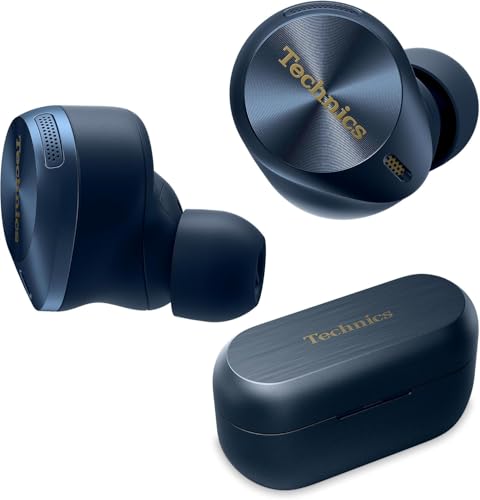
Three-device multipoint and reference-grade sound, at a cost
Technics EAH-AZ80-A Premium Hi-Fi True Wireless Bluetooth
Technics builds the EAH-AZ80 for people juggling a laptop, a phone and a tablet. It holds Bluetooth connections to all three at once, supports LDAC, and its 10mm free-edge driver is the most detailed-sounding in this lineup.
$149.99fromAmazonList priceThree-device multipoint is the reason to buy these, and almost nothing else offers it. Most earbuds cap out at two simultaneous connections, even flagships at the same price. If your day involves a work laptop, a personal phone and a tablet, that limit means constant re-pairing. The AZ80 just holds all three. A Teams call comes through while your phone stays connected, and you don't touch a menu.
The sound is the other draw. Technics has spent six decades on audio hardware, and the 10mm free-edge dynamic driver here produces the kind of separation and texture that audiophile-leaning listeners notice immediately. LDAC support means Android users get the full Hi-Res path. Owners who also own Sony and Sennheiser flagships regularly rank these at or near the top for pure detail.
Calls are handled by JustMyVoice with eight MEMS microphones, and the concha-fit foam tips do real work: they conform to the outer ear rather than just plugging the canal, which spreads pressure and keeps them stable through a long stretch. The case charges wirelessly on any Qi pad, which is a small thing that stops mattering only after you've had it.
Cancellation is strong but not the strongest here. If ANC is your single priority, the Sony and Bose both edge it out. The AZ80 is a sound-and-connectivity pick that happens to cancel noise well, not the other way around. Buy it for the three-device juggling and the driver, not for silence on a red-eye.
Flaws but not dealbreakers
Durability is the concern that keeps coming up. Multiple owners report going through more than one set, and at least one describes a short drop killing both the case and the buds. For the most expensive pair here, that's hard to swallow, and reported service experiences have been uneven.
The case is large, and the buds are not subtle in the ear. There's also no meaningful water-resistance story compared with the Samsung, so heavy sweat sessions aren't what these are for.
Also great
The Galaxy pick, and the one that survives a downpour
SAMSUNG Galaxy Buds3 Pro
Samsung's Galaxy Buds3 Pro carry an IPX7 rating and lean hard on Galaxy AI features like real-time interpretation. On a Samsung phone they're the most integrated option here; on anything else you lose the best parts.
$133.99fromAmazonIPX7 is the highest water-resistance rating in this lineup, and it changes what you can do with them. The buds withstand submersion in a meter of fresh water for half an hour, versus IPX4 on the Sony and the Bose, which only covers splashes and sweat. If you run in the rain, sweat heavily, or have ever put earbuds through the wash by accident, that margin is the difference between an annoying story and a replacement purchase.
The Galaxy integration is deep. Bluetooth 5.4, Samsung's SSC HiFi and UHQ codecs for 24-bit/96kHz audio, 360 Audio with head tracking, and AI-driven real-time language interpretation all key off a Samsung phone. Pair them with a Galaxy device and they behave the way AirPods behave on an iPhone: instant, invisible, no menus. Super Wideband microphones with AI noise reduction handle calls well in loud rooms.
Battery is the soft spot. Samsung rates 5 to 8 hours depending on whether ANC is on, and up to 18 hours with the case, the lowest total here. Owners upgrading from the previous generation frequently say battery got worse, not better. If you're out all day without a chance to charge, the Soundcore or Technics will serve you better.
The blade-style stem design is polarizing but functional, and the buds sit securely for workouts. Just know what you're buying: this is a Samsung accessory first. On an iPhone, or even a non-Samsung Android phone, you lose the codecs, 360 Audio and the AI features, and what's left is a good but unremarkable earbud.
Flaws but not dealbreakers
Some owners with lower-pitched voices report having to speak up to be heard on calls, and playback controls draw complaints for being fiddlier than the previous generation. Neither is a dealbreaker, but they're daily irritations.
This particular listing is an international model sold without domestic warranty coverage. If you want a warranty path, that's worth knowing before you buy.
The value proposition collapses off Samsung hardware. If you're not on a Galaxy phone, there's no reason to choose these over the Sony.
Who this is for
Buy now if you commute, fly, take a lot of calls, or work somewhere loud enough that you're already turning your music up to cover it. Those are the situations where good ANC pays for itself daily. If you mostly listen at home in a quiet room, you'll get more out of spending the same money on open-back headphones, and cancellation will just be a feature you leave off. And if your current earbuds still hold a charge through your day, there's no urgency here. Improvements between generations are real but incremental.
This guide covers in-ear true wireless earbuds with active noise cancellation, which is a narrower category than it sounds. We're not covering over-ear headphones, open-ear or bone-conduction designs, wired in-ears, or earbuds without ANC. We also don't compare prices or track deals. If you're shopping mainly on ecosystem fit, note that iOS caps you at AAC regardless of which pair you choose, so codec advertising like LDAC and LHDC is only meaningful to Android users.
How we picked
We built the shortlist around what published reviews, manufacturer specifications and long-term owner feedback consistently agree on. Cancellation: independent isolation measurements in the 500Hz–2kHz vocal range, where ambient noise is most distracting, rather than raw low-frequency rumble blocking. Sound and codecs: documented codec support and driver architecture, with LDAC and similar Hi-Res paths weighted for Android users only. Battery: rated playback with ANC on, cross-checked against published review figures, with anything under six hours treated as a real limitation. Fit and durability: ear tip and stability options, housing size, and IP ratings at IPX4 or better, informed by owner reports of long-term battery and case failures. Calls and connectivity: multi-microphone arrays with wind handling, plus multipoint to at least two devices as a baseline on any premium pair.
Other noise-canceling wireless earbuds worth considering
If you want strong cancellation without spending much: The Nothing Ear ($79) — The Nothing Ear (a) is the mid-range pair we'd point most people toward if the Soundcore doesn't appeal. It claims 45dB of hybrid cancellation and continuously monitors the seal between the bud and your ear, dialing intensity up when it detects leakage — a smart fix for the fit problem that undermines cheaper ANC. An 11mm driver gives it more bass authority than its size suggests, and the Nothing X app includes a proper equalizer plus voice-enabled ChatGPT access. Playtime runs to 42.5 hours with the case, and 10 minutes of charging buys about 10 hours with ANC off. What you give up: the build feels less substantial than the flagships, and some owners report battery capacity fading faster than they expected. The transparent design is either the appeal or the reason you'll skip it.
If your day is mostly calls: The Jabra Elite 10 - Titanium Black ($344.94) — The Jabra Elite 10 is built around voice, and it shows. MultiSensor Voice combines bone-conduction sensors — which pick up the vibration of your own speech through your skull — with a six-microphone array, so it can separate your voice from a noisy café in a way microphone-only systems can't. Jabra developed the approach for enterprise headsets before adapting it here, and that heritage is the whole pitch. Dolby Atmos spatial audio comes along for the ride. Owners praise the pairing speed, clarity and volume, though some find the buds sit a little loose in the ear. Very few people have reviewed this specific listing, so we'd weigh Jabra's broader reputation for call quality more heavily than the feedback on this page.
The competition
This is what our research surfaced, not a census of everything on the market. Noise-canceling earbuds turn over quickly, and plenty of solid pairs — including newer models from brands already represented above — simply weren't in this lineup. Treat the entry below as a note on why one specific listing didn't make the cut, rather than a verdict on the product line as a whole.
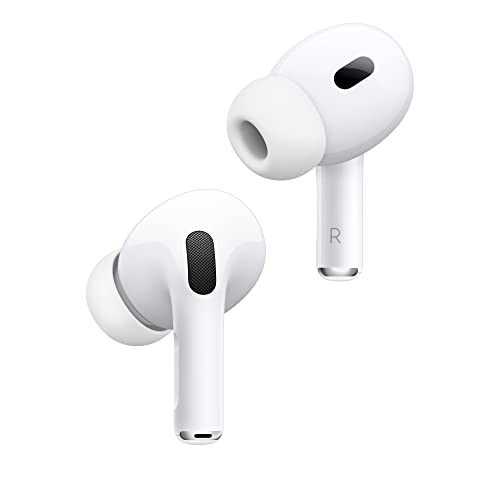
The Apple AirPods Pro ($155) — The Apple AirPods Pro (2nd generation) remain the obvious answer for anyone deep in the Apple ecosystem. The H2 chip handles Adaptive Transparency and Personalized Spatial Audio, and iCloud switching between an iPhone, iPad and Mac is close to instant — nothing on Android matches how little you have to think about it. Tom's Guide's benchmark put them in a statistical tie with the Sony at the top of its ANC rankings. Apple rates them at 6 hours with ANC on and 30 hours with the MagSafe case. Two things kept them out of the picks. This is a renewed listing rather than a new unit, and it isn't Apple-certified — owners report units arriving without the full set of ear tips, which matters a great deal when fit determines cancellation. And on Android you lose Adaptive Transparency and seamless switching, which is most of what you're paying for. If you're on an iPhone and comfortable with refurbished hardware, they're still excellent.
Fit, care and getting the most from ANC
Fit does more for noise cancellation than any chip. Try every tip size in the box, including ones you assume are too large — a snug seal is what blocks noise passively, and ANC only handles what leaks past it. If your bass sounds thin, that's a seal problem, not a driver problem. Wipe the mesh screens with a dry brush every couple of weeks, since earwax buildup muffles the sound and can confuse the inward-facing microphones ANC depends on. Don't leave the case baking in a hot car; heat is the fastest way to shorten lithium battery life, and case failure is the most common ending for every pair here. Install firmware updates when the companion app offers them, because manufacturers routinely improve cancellation and multipoint stability after launch. And store the buds in the case rather than a pocket, where lint packs into the nozzle.
Questions we get
Do noise-canceling earbuds work without playing music?
Yes. Active cancellation runs independently of playback, so you can put the buds in, turn ANC on, and sit in relative quiet. It's genuinely useful for focused work or sleeping on a plane. Just know that ANC alone drains the battery, so a silent session still costs you playtime.
What's the difference between active noise cancellation and passive noise isolation?
Passive isolation is physical: the ear tip seals your canal and blocks sound the way an earplug does. Active cancellation uses microphones to sample incoming noise and generates an inverted signal to cancel it electronically. ANC works best on steady low-frequency sound like engine drone, while passive isolation handles sudden higher-pitched noise better. You need both, which is why fit matters so much.
Is LDAC worth it, and who actually benefits?
LDAC transmits up to 990 kbps, roughly three times standard SBC, which enables 24-bit/96kHz audio over Bluetooth. On a compatible Android phone with high-quality source files, the extra detail is audible on good earbuds. But iOS caps you at AAC no matter which earbuds you buy, so iPhone users get nothing from it. If you're on an iPhone, ignore codec marketing entirely and shop on fit and cancellation.
What should I look for in earbuds for the gym?
IPX4 is the practical floor — it covers sweat and light rain. If you sweat heavily or train outdoors, IPX7 gives you real margin, and the Samsung Galaxy Buds3 Pro is the only pair here that reaches it. Beyond water resistance, prioritize a secure fit with wing tips or stability bands, and keep transparency mode handy so you can hear someone approaching.
How much battery life should I expect?
Plan for 6 to 10 hours per charge with ANC on, and 18 to 40 hours total with the case. Manufacturer figures assume moderate volume, so expect less if you listen loud. Fast charging matters more than the headline number for most people — a five-minute top-up on several of these pairs returns several hours of playback.
Can I use these for Zoom and Teams calls?
Yes, and multipoint Bluetooth is the feature that makes it painless, since it lets the buds stay connected to your laptop and phone at once. The Technics EAH-AZ80 handles three devices simultaneously, which is rare. For call clarity specifically in a noisy room, the Jabra Elite 10's bone-conduction sensing is the most purpose-built approach in this lineup.
Why you should trust us
For this guide:
- We read manufacturer specification sheets for every pair here, focusing on rated battery life with ANC enabled, codec support and IP ratings.
- We compared published measurements and rankings from RTINGS, Tom's Guide and What Hi-Fi, particularly their noise-isolation results across frequency ranges.
- We reviewed recurring themes in owner feedback — seal and fit difficulties, long-term battery decline, and case failures — and let those patterns shape the flaws we flag.
- We read owner reviews on every listing, weighted toward the critical ones, because that is where the recurring failures show up.
- We have a systematic way of automatically fetching the latest prices, so the numbers on this page stay current.
- This is a research-focused guide, so the team may not own every product listed — though we often do own the top winners, which gives us extra context for the recommendations.
- We don't accept free products, and the retailer commission never changes which product we recommend.
Sources
Best Wireless Earbuds — RTINGS.com, RTINGS.com
The Best Noise-Canceling Earbuds — Wirecutter (NYT), Wirecutter
Best Noise-Canceling Earbuds 2026 — Tom's Guide, Tom's Guide
Best Wireless Earbuds 2026 — PCMag, PCMag
Best Noise-Cancelling Earbuds 2026 — What Hi-Fi, What Hi-Fi
Best Wireless Earbuds — CNET, CNET
Sony WF-1000XM5 Full Review — RTINGS.com, RTINGS.com
Bose QuietComfort Ultra Earbuds Review — TechRadar, TechRadar
Jabra Elite 10 Review — SoundGuys, SoundGuys
Apple AirPods Pro 2 Review — The Verge, The Verge
Technics EAH-AZ80 Review — What Hi-Fi, What Hi-Fi
Best Budget Wireless Earbuds — SoundGuys, SoundGuys
Amazon product listings and owner reviews for all 8 products
Manufacturer specification pages for each product
Some passages in this guide may be paraphrased with AI help. Prices are refreshed automatically.
More like this.
Continue exploring electronics reviews and recommendations.

The Best Noise Canceling Earbuds
Noise canceling earbuds earn their keep in a handful of specific moments. The rumble of a subway car. An open-plan office where three people type like…

The Best Noise-Cancelling Wireless Earbuds
Good noise cancelling changes how a commute feels. The train rumble drops away, an airplane's engine drone turns into a soft hush, and the open-plan…

The Best Noise-Cancelling Wireless Earbuds
Good noise cancellation changes what a commute feels like. The subway rumble drops away, the plane engine turns into a distant hush, and the guy on…

The Best Budget Noise Canceling Headphones
Noise canceling headphones earn their keep in the boring parts of your day. The bus that idles for ten minutes. The open-plan office where someone always…

The Best Wireless Earbuds
Wireless earbuds have quietly become the thing you reach for more than any other gadget. You wear them on the bus, on a work call, while loading the…

The Best Wireless Earbuds for Working Out
Workout earbuds live a hard life. They get soaked in sweat, yanked out by a hoodie, bounced around during sprints, and dropped on rubber gym flooring more…