The Best Noise-Cancelling Headphones for Focus and Deep Work
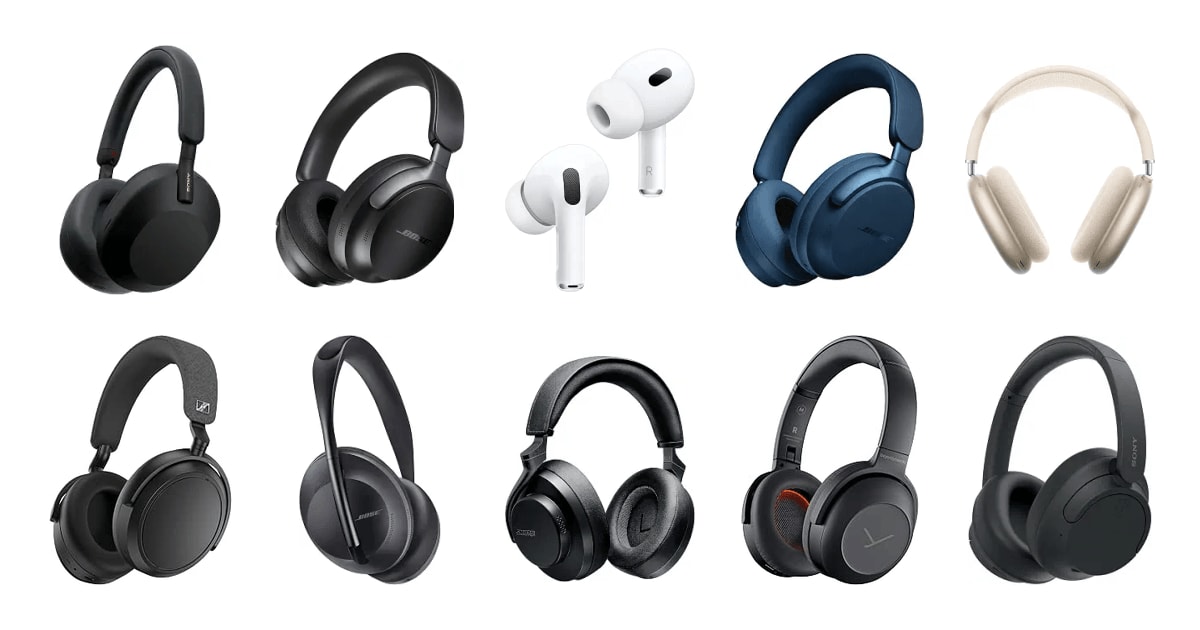
Most of us don't get to pick where we work. The open-plan office hums, the espresso machine shrieks, and the guy two desks over takes every call on speaker. Noise-cancelling headphones won't make any of that vanish, but they'll flatten it. The low, steady stuff — HVAC, traffic, road noise, an airplane cabin — mostly drops away. What's left is quiet enough that your brain stops spending effort on ignoring it, and you get to put that attention into the thing you actually opened the laptop to do.
Here's the honest part. No pair blocks voices. Cancellation is very good at constant low-frequency drone and only okay at the sharp, unpredictable sounds — a laugh, your name, a slammed door — that yank your eyes off the screen. Every model here shares that limit, and anyone promising otherwise is selling something. Comfort has a ceiling too. Past four or five hours most people feel the clamp somewhere, and the pairs that seal best against noise are usually the ones that get warm first.
So the real decision is fit, controls, and how long you'll wear them at a stretch. Battery matters less than the spec sheets imply, since anything past a full workday means you charge on the weekend and stop thinking about it. Call quality matters more than people expect, because you'll be on video half the day. We think that the Sony WH-1000XM5 is the best noise-cancelling headphone for focus and deep work for most people, and that the Bose QuietComfort Ultra is the one to buy if you want the softest fit and the deepest sense of quiet.
Everything we recommend

The best all-around mix of quiet, comfort and call clarity

Softer on your head, with a shorter run between charges

Lighter and simpler, with most of the quiet

Pocketable quiet, if you can live with a midday charge
At a glance
| Product | Battery Life | Weight | Price | |
|---|---|---|---|---|
| Sony WH-1000XM5 Premium Noise Canceling HeadphonesTop pick | 30 Hours | 8.8 ounces | $298On sale |
| Bose QuietComfort Ultra Bluetooth HeadphonesRunner-up | 24 Hours | 8.9 ounces | $329On sale |
| Apple AirPods Pro 2 Wireless EarbudsAlso great | — | 0.1 Pounds | $189.05 |
 | Bose QuietComfort Ultra Bluetooth HeadphonesAlso in lineup | 24 Hours | 8.8 ounces | $389.99On sale |
 | Apple AirPods Max Wireless Over-Ear HeadphonesAlso consider | — | 3 Pounds | $429 |
 | Sennheiser Momentum 4 Wireless Noise Cancelling HeadphonesAlso consider | 60 Hours | 10.3 ounces | $249 |
 | Bose Headphones 700Also consider | 20 Hours | 8.9 ounces | $379 |
 | Shure AONIC 50 Gen 2 Wireless NoiseAlso in lineup | 45 Hours | 1 pounds | $379.98 |
 | beyerdynamic Lagoon ANC Traveller Bluetooth Headphones withAlso in lineup | 34.5 Hours | 15.5 ounces | Check price |
| Sony WH-CH720N Noise Canceling Wireless Headphones BluetoothBudget pick | 35 Hour | 3.5 ounces | $85.95 |
How we picked
Cancellation depth. We compared what published reviews and spec sheets say about how each pair handles low, constant noise — engines, fans, road hum. Anything that only muffled the room rather than removing that layer didn't make the picks.
Comfort past hour three. We looked for weight figures, cushion materials and clamping behavior, then checked owner feedback for the complaints that only surface after a long stretch. Hot ears and a sore crown disqualify a pair for deep work no matter how quiet it is.
Call clarity. Mic arrays and voice-processing claims are easy to make, so we leaned on published reviews and repeated owner comments about how people sound to colleagues. A pair that can't hold a video call isn't a work headphone.
Battery and charging. We wanted at least a full workday of runtime plus a fast top-up, so charging doesn't become a scheduled interruption. Quick-charge figures came from manufacturer specs.
Controls and connections. We favored pairs that connect to a laptop and a phone at once and don't fight you when you switch. Owner reports of pairing headaches counted against a pick.
Top pickOn sale
The best all-around mix of quiet, comfort and call clarity
Sony WH-1000XM5 Premium Noise Canceling Headphones
Sony's flagship pairs deep, adaptive cancellation with a light build and beamforming mics that hold up on video calls. It's the pair we'd hand to most people who need to think clearly in a room full of other people.
$298fromAmazonList priceThe quiet is the reason to buy these. Two processors run eight microphones, and on steady noise the effect is close to a switch flipping. The furnace, the highway, the plane — gone. You'll still hear a coworker say your name, and that's true of everything in this guide. But the background layer that makes you reread the same paragraph twice? That mostly disappears.
They're light for a full-size pair, and the soft synthetic leather spreads pressure across your head instead of pinching one spot. Owners who wear them through a whole workday keep saying the same thing: they forget the headphones are on. That's the bar for deep work. If a pair nags at your jaw or the crown of your head by hour three, you'll take it off, and then the quiet doesn't matter.
Calls are the other half of the job. Four beamforming mics and Sony's voice processing keep your side clear when the room isn't, which counts if half your day is meetings. Owner feedback lines up with that for normal offices and home rooms, though a dedicated boom mic still wins somewhere genuinely loud. For a standup or a client call, you'll sound like you're sitting in a quiet room.
Battery is a non-issue. Sony rates them at 30 hours, so even a heavy user charges about weekly. A three-minute top-up buys roughly three hours, which covers the morning you forgot. Multipoint pairing keeps them connected to a laptop and a phone at the same time, so an incoming call doesn't turn into menu-diving.
Flaws but not dealbreakers
The touch panel is sensitive. Bump the right earcup while adjusting the fit and you'll pause your music, which is small but gets old. The synthetic leather traps heat, too — in a warm room you'll notice it by the second hour.
A recurring theme in owner feedback is trouble with Windows laptops: dropped connections, pairings that need redoing, odd behavior when switching devices. Phones and tablets seem fine. If your work machine is a PC, expect to spend an evening on firmware updates and a reset before deciding anything's actually wrong.
Runner-upOn sale
Softer on your head, with a shorter run between charges
Bose QuietComfort Ultra Bluetooth Headphones
Bose's flagship trades a little battery life for the gentlest fit here, plus three listening modes you can switch as the day changes. If you want the room to disappear more than you want the longest runtime, this is the pair to get.
$329fromAmazonList pricePut these on in a noisy office and the drone drops out immediately. Bose has been doing this longer than anyone, and it shows in how natural the effect is — no pressure sensation, no faint hiss underneath. Owners moving back into offices after years at home tend to describe these as the thing that made the room tolerable again. That's the exact use case this guide is about.
Comfort is where Bose still leads. The cushions are plush, the band spreads weight evenly, and the earcups don't clamp. For an all-day desk stretch that's worth more than a few extra hours of battery. If you wear glasses, this is the pair most likely to stay comfortable, since the softer cushions seal around temple arms instead of pressing them into your head.
You get three modes, and they're genuinely different. Quiet is maximum cancellation for heads-down work. Aware lets the room back in when you need to catch a question. Immersion widens the sound so music sits around you rather than inside your skull, which some people find helps for long, repetitive tasks. CustomTune adjusts the sound to your ears on each wear.
The call mics are the best Bose has shipped. They lock onto your voice and strip out what's behind you, which matters on a laptop speaker at the other end. Battery runs about 24 hours, dropping to roughly 18 with the immersive mode on. A 15-minute charge gets you a couple more hours, so a lunch break covers an afternoon of meetings.
Flaws but not dealbreakers
Immersion costs you battery, and not everyone likes it. Some owners find the widened soundstage subtly disorienting for the first few days, and a handful never warm to it. It's easy to leave off, but you're paying for it either way.
The controls take a while. There aren't many buttons, and figuring out which press does what is a common early complaint. Maximum volume is also on the conservative side — fine for speech and most music, occasionally not enough if you like it loud. And owner opinion is more split here than the brand's reputation suggests: a real minority feel these don't clear the bar for a flagship.
Budget pick
Lighter and simpler, with most of the quiet
Sony WH-CH720N Noise Canceling Wireless Headphones Bluetooth
Sony's lightest cancelling headphone weighs about as much as a paperback and runs 35 hours between charges. The cancellation isn't flagship-deep, but in a normal office it takes enough edge off the room that you can settle into work.
$85.95fromAmazonThis is the pair to buy if you're not sure you'll actually use them. It costs a fraction of what the flagships do, and the gap in everyday quiet is smaller than the gap in the specs. Sony's V1 processor handles the steady hum of an office or a train well. Voices still get through, but voices get through on everything here.
The weight is the real story. At around 192 grams it's noticeably lighter than the premium pairs, and that changes how long you can wear it. There's less to press on your head and less to warm up your ears. For someone who leaves headphones on from morning until the end of the day, that can matter more than a few extra decibels of cancellation.
Ambient Sound mode is adjustable in fine steps, so you can dial in exactly how much of the room you want. Leave a little in and you'll still hear someone approach your desk without pulling an earcup off. Battery runs about 35 hours, and a three-minute charge gets you an hour — enough to rescue a meeting you're already late for.
Flaws but not dealbreakers
It feels like what it is. There's a lot of plastic, the headband flexes more than you'd like, and it doesn't project the solidity of the metal-and-leather pairs. Treat it gently and it'll last; toss it in a bag unprotected and you probably won't get years out of it.
Mic quality is fine, not good. On a quiet home call you'll sound clear enough. In a café or a room with a fan running, the people on the other end will notice the difference against the Sony flagship or the Bose. The tuning also leans consumer-friendly rather than neutral, which is a non-issue for work audio and a small one if you care about accuracy.
Also great
Pocketable quiet, if you can live with a midday charge
Apple AirPods Pro 2 Wireless Earbuds
These earbuds cancel a surprising amount for their size and disappear into a pocket between meetings. For anyone who bounces between focused work and conversation all day, that's often more useful than another hour of deep silence.
$189.05fromAmazonOver-ear headphones are better at blocking noise; these are better at fitting your day. If your work is a mix of heads-down stretches and someone stopping by every twenty minutes, the pair you can pull out and pocket in one motion wins. The H2 chip handles cancellation, transparency blends the room back in, and Adaptive Audio shifts between them on its own as you move around.
The fit is doing most of the work. Four tip sizes come in the box, and getting the seal right changes the cancellation dramatically — a loose tip is the single most common reason people think earbuds don't cancel. Take a few minutes to try each size. The tips are also what keep them in place when you stand up and walk to the kitchen.
For Apple households the switching alone justifies these. Audio follows you from laptop to phone without a settings menu, which sounds trivial until it saves you the third context switch of the morning. There's also a built-in hearing test and hearing-aid feature, and owners who use it for mild hearing loss are consistently positive about how well speech comes through on calls.
Flaws but not dealbreakers
Battery is the catch. You get roughly six hours of listening, which doesn't cover a workday, so plan on dropping them in the case over lunch. The case charges them fast, but it's still an interruption the over-ear pairs don't ask for.
In-ear pressure builds. Some people wear these for hours without noticing; others feel it by hour two and need a break. Cancellation is also a step behind the good over-ear pairs on low, steady drone — several owners coming from full-size headphones say exactly that. If your problem is a loud HVAC system you sit under all day, buy over-ear.
Who this is for
This guide is for people who need to concentrate in a room they don't control — an open-plan office, a shared apartment, a coffee shop, a house with a toddler in it. If that's you, and you're currently getting by with earbuds that leak or nothing at all, a good cancelling pair is one of the few purchases that changes your day immediately. It's also for anyone whose calendar is half meetings, since the mic quality here is a real upgrade over a laptop's built-in mic.
You can skip this if your room is already quiet, or if your main complaint is people talking near you — cancellation barely touches speech, and you'd be better served by a door or a white-noise app. We're covering wireless cancelling headphones and earbuds for work use. Wired studio monitors, gaming headsets, sleep buds and open-back listening headphones are outside the scope, since none of them are trying to solve the same problem.
How we picked
We built the shortlist from spec sheets, published reviews and owner feedback, weighing five things. Cancellation: how much of the steady low-frequency layer a pair actually removes, not how muffled it makes the room. Comfort: weight, cushion material and clamping force, judged against the complaints that only appear after several hours of wear. Calls: whether the mic array keeps your voice clear when the room behind you isn't, based on repeated owner reports rather than marketing claims. Battery: at least a full workday of runtime, plus a quick-charge that rescues a forgotten night. Connections: multipoint pairing that holds, and controls you don't have to relearn every week.
Other noise-cancelling headphones for focus and deep work worth considering
If you're on calls all day: The Bose Headphones 700 ($379) — The Bose 700 was built around its microphones, and that's still what it's best at. Its array pulls your voice out of a noisy room so cleanly that people on the other end often assume you're somewhere quiet, and you get eleven levels of cancellation instead of a few fixed modes, so you can leave a sliver of the room in. What you give up is newer hardware: about 20 hours of battery, touch controls that are less obvious than buttons, and a design that's been around long enough that software support may taper off. If meetings dominate your calendar, it's still an easy recommendation.
If you hate charging things: The Sennheiser Momentum 4 Wireless Noise Cancelling Headphones ($249) — The Sennheiser Momentum 4 claims about 60 hours, which in practice means you plug it in once or twice a month. The 42mm drivers are the best-sounding of anything here for music, with detail the flagships smooth over, and the app's EQ lets you tune speech forward for calls. Two things hold it back from a pick. Its cancellation is a step behind Sony and Bose on steady drone. And owner feedback shows more reliability complaints than we'd like — a dead channel, a unit that won't wake after a full battery drain. Keep some charge in it and don't let it sit flat for weeks.
If you want the Apple over-ear: The Apple AirPods Max Wireless Over-Ear Headphones ($429) — The AirPods Max cancels about as well as anything on this list and sounds superb, with a knit-mesh band and memory-foam cushions that spread the load better than the weight suggests. Inside an iPhone-and-Mac setup it's the smoothest pair to live with: audio follows you between devices, spatial audio works without setup, and the mics make you sound excellent on calls. It's also heavy and expensive. Owners who wear it for very long sessions do notice the mass, and the included case protects the cups but not much else. Buy it if you're already deep in Apple's ecosystem and you want an over-ear that matches.
The competition
This is what our research surfaced, not a census of the market. Plenty of decent cancelling headphones exist that aren't here. The pairs below are ones we looked at closely and passed over — each loses to a pick on something that matters for long work sessions, but a couple of them make sense for specific people.
The Bose QuietComfort Ultra Bluetooth Headphones ($389.99) — The Lunar Blue QuietComfort Ultra is the same headphone as our runner-up in a limited-edition color. Same modes, same cushions, same roughly 24 hours of battery. The only reasons to choose it over the black version are that you prefer the color or that it happens to be the better buy at the moment you're shopping. Everything we say about the runner-up applies here, including the split owner opinion and the conservative volume ceiling.
The Shure AONIC 50 Gen 2 Wireless Noise ($379.98) — The Shure AONIC 50 Gen 2 is a genuinely excellent-sounding headphone with 50mm drivers, deep EQ control in Shure's app, about 45 hours of battery and a Class 1 Bluetooth radio with long range. Sound engineers and people who listen critically will hear what it's doing. But its cancellation is the weakest of the serious contenders here — several owners specifically call it out as the reason they went back to Sony or Bose — and it's heavy, with earcups that run small and warm. If accuracy matters more to you than silence, it's worth a look. For focus work, it's the wrong trade.
The beyerdynamic Lagoon ANC Traveller Bluetooth Headphones with — The beyerdynamic Lagoon ANC Traveller does something no one else here does: its MOSAYC system builds a hearing profile for you and shapes the sound around it, which can make long sessions less tiring. Battery runs about 34 hours, the memory-foam cushions are soft, and it supports aptX for lower-latency video. It loses on two counts. It's the heaviest option in the lineup by a wide margin, and its two-level cancellation isn't in the same class as the flagships. The setup process also asks more patience than most people want to give a pair of headphones.
Fit, care and long-wear notes
A few habits make any of these last longer and work better. Get the seal right first — with earbuds, try every tip size, because a loose fit costs you more cancellation than any spec difference between models. If you wear glasses, look for the softest cushions, since a thin pad presses temple arms into your skull by hour two. Wipe the cushions down every few weeks; skin oil is what breaks synthetic leather down, and cracked pads are the usual reason a good pair starts feeling worn out. Replace them when they flatten rather than replacing the headphones. Don't leave a pair sitting fully drained for months, since deep discharge is hard on lithium batteries and owners of at least one model here report waking problems after it. And keep firmware current — several odd pairing behaviors get fixed that way.
Questions we get
How much does noise cancellation really help with focus?
It helps most with the noise you've stopped consciously noticing — fans, traffic, HVAC, an office's general hum. Removing that layer means your brain isn't spending effort filtering it, which is why people describe the effect as the room getting easier to think in. It won't stop a nearby conversation from grabbing your attention. If speech is your main problem, quiet music or brown noise through a cancelling pair works better than cancellation alone.
Can I use these for video calls?
Yes, and it's one of the main reasons to buy a good pair. The Bose 700 and the Sony WH-1000XM5 both use multi-mic arrays that isolate your voice from the room, and colleagues generally won't hear what's happening behind you. Look for multipoint pairing so the headphones can stay connected to your laptop and phone at once. That way an incoming call doesn't require re-pairing mid-meeting.
How long can I comfortably wear noise-cancelling headphones?
Most people are fine for three to five hours before something starts to bother them — usually heat, then pressure on the crown. Lighter pairs like the Sony WH-CH720N stretch that window simply by weighing less. Heavier premium models are more likely to make themselves known during a long stretch. Whatever you buy, taking the headphones off for a few minutes every couple of hours helps more than any design feature.
Do I need to spend a lot, or will a budget pair work?
A budget pair handles the everyday case better than most people expect. The Sony WH-CH720N takes the edge off an office and runs about 35 hours, which covers the majority of what you need. What you get by spending more is deeper cancellation on stubborn low-frequency noise, noticeably better call mics and sturdier materials. If you're on calls constantly or work somewhere genuinely loud, the upgrade earns itself.
Over-ear or in-ear for work?
Over-ear pairs seal better, cancel more low-frequency noise and last a full day on a charge, so they're the default for desk work. In-ear models like the AirPods Pro 2 win on portability and on switching quickly between focus time and talking to someone. The trade is battery — earbuds generally need a midday break in the case — and some ear fatigue over long sessions. Pick based on whether your day is mostly heads-down or mostly interrupted.
How much battery life do I actually need?
Anything over about 25 hours means you charge on weekends and stop thinking about it. Past that, more is convenience rather than necessity — the Sennheiser Momentum 4's roughly 60 hours is nice, but a 24-hour pair with fast charging solves the same problem. What matters more is the quick-charge figure, since a few minutes of plug-in time before a meeting is the situation you'll actually hit.
Why you should trust us
For this guide:
- We read manufacturer spec sheets and published reviews for every pair in this guide, then compared them on the four things deep work depends on: cancellation depth, comfort over long stretches, mic clarity and battery.
- We also went through owner feedback for each listing, looking for complaints that repeat across many buyers rather than one-off defects.
- We did not test any of these headphones ourselves, so every claim here traces back to specifications, published reviews or reported owner experience.
- We read owner reviews on every listing, weighted toward the critical ones, because that is where the recurring failures show up.
- We have a systematic way of automatically fetching the latest prices, so the numbers on this page stay current.
- This is a research-focused guide, so the team may not own every product listed — though we often do own the top winners, which gives us extra context for the recommendations.
- We don't accept free products, and the retailer commission never changes which product we recommend.
Sources
Amazon product listings and owner reviews for all 10 products
Manufacturer specification pages for each product
Some passages in this guide may be paraphrased with AI help. Prices are refreshed automatically.
More like this.
Continue exploring electronics reviews and recommendations.

The Best Noise-Cancelling Wireless Earbuds
Good noise cancellation changes what a commute feels like. The subway rumble drops away, the plane engine turns into a distant hush, and the guy on…

The Best Noise-Cancelling Wireless Earbuds
Good noise cancelling changes how a commute feels. The train rumble drops away, an airplane's engine drone turns into a soft hush, and the open-plan…

The Best Budget Noise Canceling Headphones
Noise canceling headphones earn their keep in the boring parts of your day. The bus that idles for ten minutes. The open-plan office where someone always…

The Best Noise-Cancelling Sleep Earbuds
Sleeping through a snoring partner, a bus route, or a neighbor who slams doors at 2 a.m. is a real problem, and regular earbuds don't solve it. They stick…

The Best HyperX Gaming Gear
Gaming gear lives on your desk, your head, and under your hands for hours at a time. That's why the boring stuff matters more than the spec sheet does. A…

The Best Universal Travel Adapters
You land at midnight with a phone at 4 percent, a dead laptop, and a hotel room whose only free outlet sits behind the nightstand. That's the moment a…