The Best Wireless Charging Car Phone Mounts
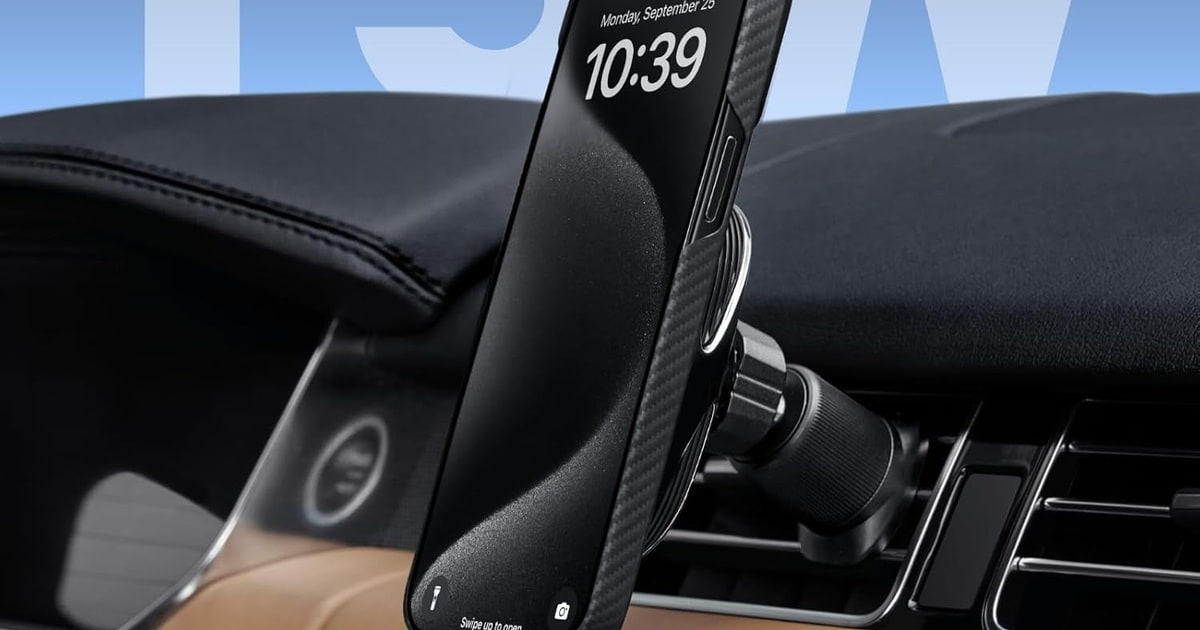
Plugging in a cable every time you get in the car is a small annoyance that compounds. A magnetic mount fixes it. You snap the phone on, it sits at eye level for navigation, and it charges while you drive. The technology's finally caught up, too: MagSafe and Qi2 both push 15 watts, which is enough to gain battery while Maps, music and a hotspot all run at once. Weak mounts haven't gone away, though. They just charge slower than your phone drains, and you won't notice until you're low.
Here's what nobody advertises. No wireless car mount holds its rated speed for long. Charging makes heat, car interiors get hot, and phones throttle when they warm up, so a 15-watt mount can quietly slide to 7.5 watts within about fifteen minutes on a summer afternoon. Almost none of them include the car adapter you need to hit full speed, either. And a case thicker than about 3mm — or one with a metal wallet plate in it — blocks wireless charging outright, no matter which mount you buy.
So the right pick depends on your phone and your roads. iPhone owners in hot places want active cooling. Android owners want Qi2, not MagSafe magnets. Anyone who drives gravel wants suction instead of a vent clip. We worked through spec sheets, published reviews and owner feedback for the whole lineup to sort that out. We think that the ESR MagSafe Car Mount Charger with CryoBoost is the best wireless charging car phone mount for most people, and that the Belkin MagSafe Car Vent Mount Pro is the one to buy if you already own a good USB-C car adapter and want the slimmest mount possible.
Everything we recommend

A cooling fan that keeps charging fast when the cabin bakes

The slimmest, cleanest vent mount, if you own an adapter

Full-speed magnetic charging with one big install catch

Qi2 for Android and iPhone alike, plus NFC shortcuts

Suction and magnets built for washboard gravel roads
At a glance
| Product | Max Wattage | Mount Type | Price | |
|---|---|---|---|---|
| ESR for MagSafe Car Mount Charger withTop pick | 36W | — | $35.99 |
| Belkin MagSafe Car Vent Mount ProRunner-up | — | Vent | $29.99 |
 | iOttie Easy One Touch 5 Cup HolderAlso in lineup | — | Cup Holder | $29.99 |
 | Anker Magnetic Wireless ChargerAlso consider | — | — | $64.99 |
 | Spigen VacuumLock Magnetic Magsafe Car MountAlso in lineup | — | Dashboard | $24.99 |
| pitaka for Qi2 MagSafe Car Mount ChargerUpgrade pick | 15W | Vent | $59.99 |
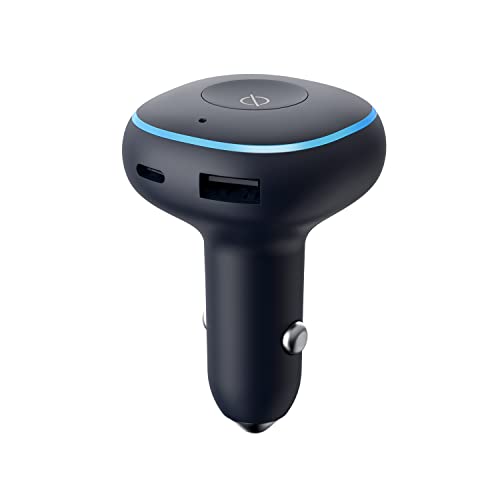 | iOttie Aivo Boost Alexa-Built In Car ChargerAlso in lineup | — | — | $35.23 |
| ANDERY Only for iPhone Magsafe Car MountAlso great | 15W | Suction | $31.32On sale |
| LISEN 15W MagSafe Car Mount ChargerBudget pick | 15W | — | $16.99On sale |
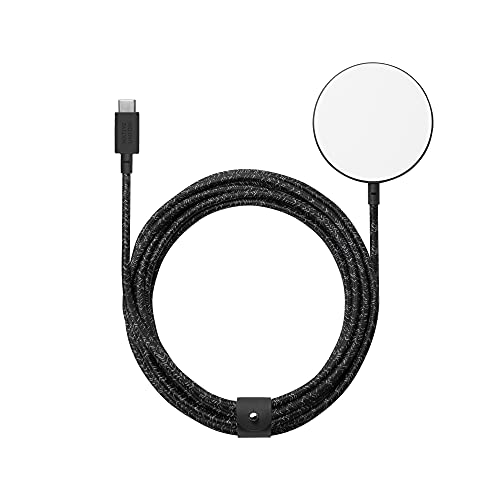 | Native Union Snap Magnetic Wireless ChargerAlso in lineup | 15W | — | $49.99 |
 | UWDFH Wireless Car ChargerAlso consider | 15W | Clamp | $26.99 |
How we picked
Charging standard. We separated true MagSafe and Qi2 mounts, which hit 15 watts, from standard Qi mounts stuck at 5 to 10 watts. Anything that can't outpace the drain from navigation, screen and cellular data didn't get a pick.
Heat and throttling. Spec sheets rarely mention it, but owner feedback and published reviews both point at charge rates falling in hot cabins. We gave weight to active fans and real heat sinks over bare charging coils.
What's in the box. A 15-watt mount plugged into an old USB port charges at a trickle. We checked whether each product includes a suitable adapter and cable, because that's the most commonly overlooked cost.
Grip and stability. We compared rated magnetic force, suction capacity and mount type, then cross-checked against what owners report on rough roads. Phones sliding under braking is the complaint that shows up most.
Phone and case fit. We read each listing's compatibility claims against current iPhone, Galaxy and Pixel magnetic support, and noted case thickness limits, since anything over about 3mm kills wireless charging.
Top pick
A cooling fan that keeps charging fast when the cabin bakes
ESR for MagSafe Car Mount Charger with
This is the rare wireless car mount that ships with the adapter it actually needs, so full-speed magnetic charging works the moment you plug it in. A small fan blows across the back of your phone, which keeps the charge rate from sagging on hot days.
$35.99fromAmazonThe fan solves a problem every other mount ignores. Wireless chargers hit their rated wattage right up until the phone gets warm, then quietly back off to 7.5 watts or 5. ESR's CryoBoost pushes air across the back of the phone to keep it under that threshold. If you park outside in July, that's the difference between gaining battery on a drive and slowly losing it while Maps runs.
You don't have to buy anything else. The box includes a 36W QC 3.0 car adapter and a USB-C cable, which is exactly the spec 15W MagSafe charging needs. Most competing mounts leave that out, and plugging one into your car's old USB port drops you to trickle speeds. Once you add the adapter you'd have to source separately, the math usually favors the ESR anyway.
The magnets hold on bad pavement. ESR rates the lock at 1,400 grams of holding force, and owners consistently report the phone staying put over speed bumps and expansion joints. The ball joint swivels a full 360 degrees, so you can flip to landscape for navigation and back to portrait for a call without loosening a knob. It snaps on one-handed at a stoplight.
It covers more phones than most MagSafe mounts. ESR lists the iPhone 12 through 17 series plus the Galaxy S25 and S26 lines when you use a magnetic case. That's useful in a household with one iPhone and one Android. You still need magnets on the Android side, but the compatibility list beats the Apple-only competition here.
Flaws but not dealbreakers
The fan makes noise. It's faint — roughly a laptop at idle — and it vanishes the moment music or the AC comes on. In a silent cabin you'll hear it, though, and some owners find it annoying enough to mention. It's not a dealbreaker, but if you drive in quiet, know it's there.
It's bulkier than a slim vent mount. The fan housing has to live somewhere. In a small car with narrow vents, the ESR sits further out from the dash than something like the Belkin, and it blocks more airflow than a bare magnetic puck would.
Without magnets, it's just a holder. An Android phone with no magnetic case gets zero wireless charging from this thing. Check that your case is magnetic before you buy, not after.
Runner-up
The slimmest, cleanest vent mount, if you own an adapter
Belkin MagSafe Car Vent Mount Pro
Belkin's vent mount is the most refined piece of hardware here — slim, precise, and built around MagSafe-grade magnets. You supply the USB-C car adapter, which keeps the mount itself small enough to disappear into most dashboards.
$29.99fromAmazonIt's built to Apple's MagSafe spec rather than to a lookalike magnet ring. That matters more than it sounds. Magnet placement and coil alignment are what let an iPhone pull the full 15 watts instead of settling for slow standard Qi. With generic magnetic mounts you're trusting the manufacturer got the geometry right. Here you aren't guessing.
The cable clip is the detail you'll notice every day. A built-in clip routes the charging cable along the vent slat instead of letting it swing loose across your center stack. It's a small thing. But it's the difference between a tidy dash and a cable you keep batting out of the way when you reach for the climate controls.
The ball joint doesn't drift. You set an angle and it stays there, trip after trip, which is where cheap mounts usually fail first. Portrait for a call, landscape for navigation, and it locks firmly in both. Owners who've had sloppier mounts sag over time single this out as the reason they'd buy Belkin again.
It takes up almost no room. This is the mount to pick if you drive something compact and hate clutter. There's no fan housing, no folding arm, no suction pad. Belkin even includes a microfiber cloth, which sounds like filler until you realize dust and skin oil on the magnet face genuinely weaken the grip.
Flaws but not dealbreakers
There's no adapter in the box. You'll need a USB-C car charger rated at 20 watts or more to see full speed. If you already have one, fine. If you don't, buying both puts you past what the ESR bundle costs, which is the main reason this one is the runner-up and not the top pick.
No cooling of any kind. In a hot climate it'll throttle like every other passive mount. Park in shade, run the AC, and you're fine most of the year; leave it in an Arizona parking lot at noon and expect the charge rate to drop.
Android gets the short end. Belkin designed this around iPhones and official MagSafe cases. An Android phone with a magnetic case will stick and charge, but at standard Qi speeds rather than 15 watts.
Budget pickOn sale
Full-speed magnetic charging with one big install catch
LISEN 15W MagSafe Car Mount Charger
This is the budget option that doesn't cut the part that matters — it still charges at a full 15 watts. A passive heat sink handles the warmth instead of a fan, and the base sticks to your dash, so you get one shot at placement.
$16.99fromAmazonList priceYou get genuine 15-watt magnetic charging for far less than the mounts above it. That's rare at this end of the market, where most listings advertise MagSafe compatibility and then deliver slow Qi. LISEN supports the iPhone 12 through 17 series, the Pixel 10 line, and Galaxy S24 through S26 phones with magnetic cases. Broad coverage for a cheap mount.
The heat sink is what separates it from bare-coil junk. LISEN calls it Tora-TC, which is marketing language for a chunk of metal doing real work. Cheap mounts without one heat up and throttle within minutes. This one won't match an active fan in a baking car, but for a mild climate and a normal commute it holds up.
You can mount it two ways. The kit includes both an adhesive dashboard base and a vent clip that handles blades up to 4.5mm thick. If your dash is all texture and seams, the vent option saves the purchase. That flexibility is unusual at this price tier and worth knowing before you assume you're stuck with the sticker.
The dashboard position keeps your vents free. Blowing cold air past a phone that's already warm is the best passive cooling you have. A dash-mounted charger leaves the vents doing their job, which partly offsets the lack of a fan — as long as you place it where the airflow actually reaches.
Flaws but not dealbreakers
The adhesive is a one-shot deal. Peel it up to reposition and it never grips as well again. Owners who rushed the install are the ones reporting the mount sliding later. Measure, dry-fit, and think about where the phone sits in your peripheral vision before you commit.
It only bonds to smooth, flat surfaces. Leather, textured plastic and anything near a seam or curve won't hold. Plenty of modern dashboards are exactly that, so check your car before you order.
No adapter included. You'll need a PD 18W-plus or QC 3.0 car charger to see the full speed the listing advertises. Plug it into an old USB-A port and you've bought a slow charger.
Upgrade pick
Qi2 for Android and iPhone alike, plus NFC shortcuts
pitaka for Qi2 MagSafe Car Mount Charger
The PITAKA is the one Qi2-certified mount in this lineup, which means a compatible Android phone charges at the same 15 watts an iPhone does. NFC chips in the face can launch an app the second you snap the phone on.
$59.99fromAmazonQi2 is the entire reason to spend up here. MagSafe is Apple's protocol; Qi2 is the open version of the same thing at the same 15 watts. If your household runs an iPhone and a Galaxy or Pixel, this is the mount that charges both at full speed instead of forcing you to keep two chargers in one car.
The magnets are the strongest of any charging mount here. PITAKA rates the attachment at 1.8kg, and the practical result is that the phone feels bolted on rather than stuck on. Owners who drive rough roads with a vent mount usually complain about the phone shifting under braking. That's not the complaint this one draws.
The NFC shortcuts sound gimmicky and aren't. Snap the phone into place and your navigation app opens on its own, before you've touched the screen. There are three switchable zones, so you can set one for maps, one for music, one for whatever routine you run. It saves a few taps every single trip.
The ball head is unusually versatile. It's a 17mm universal swivel that fits a wide range of vent styles, rotates a full 360 degrees, and detaches so you can move the cradle onto a bike or motorcycle mount. If you own more than one vehicle, that's real flexibility.
Flaws but not dealbreakers
No adapter, and Qi2's full speed depends on one. PITAKA is explicit that 15 watts only happens with a 20-watt-or-better source. Budget for a USB-C car charger on top of an already expensive mount.
Setup takes real time. The NFC shortcuts need the PITAKA app and some fiddling before they do anything useful, and your phone has to have NFC enabled. If you just want a mount that charges, you're paying for a feature you'll never configure.
It's among the most expensive options here and it's still a vent mount. There's no fan, so it throttles in heat like everything else, and it clips to a vent blade rather than bracing against the dash. For an iPhone-only household, the ESR or Belkin gets you more for less.
Also greatOn sale
Suction and magnets built for washboard gravel roads
ANDERY Only for iPhone Magsafe Car Mount
If your drive includes potholes, gravel or a job site, this is the mount to get. A three-layer nano-gel suction cup and 22 N55 magnets grip far harder than any vent clip here, and it still charges wirelessly at 15 watts.
$31.32fromAmazonList priceThe holding numbers are in a different class. ANDERY claims 78 pounds of suction capacity and 2,400 grams of magnetic force, and says the design survived 5,000 vibration cycles. Marketing numbers deserve some salt. But owners who drive unpaved roads back up the general picture: the phone stays where you put it.
Suction beats a vent clip when the road gets bad. Vent blades flex, and a heavy phone on a long lever arm works a clip loose over time. A rotating-lock vacuum cup braces against a flat dash or windshield instead, which is a fundamentally more rigid connection. Delivery drivers and anyone hauling a trailer will feel the difference.
It folds down to about half its footprint. The 210-degree dual-axis metal arms collapse against the base, so it isn't sitting there like a robot arm when you're not using it. The base rotates a full 360 degrees on top of that, which helps in trucks and SUVs where the dash sits low relative to your eyeline.
It's rated for the temperature swings a work vehicle sees. ANDERY lists an operating range from well below zero to well above what a parked car reaches in summer. If your truck lives outside year-round, that's more reassuring than a vent mount that softens and sags in heat.
Flaws but not dealbreakers
It's the biggest mount here. All that suction and metal adds up, and on a small dashboard it's visually loud. If you want something discreet, look at the Belkin instead.
No cooling, mounted where the sun hits. A dash or windshield position puts the phone in direct sunlight, which is the worst possible case for thermal throttling. Combine that with a passive mount and hot-climate drivers should expect the charge rate to fall on long afternoon drives.
No adapter, and it's aimed squarely at iPhones. ANDERY builds this around MagSafe. Android phones need a magnetic case to attach at all, and you'll still need to supply a USB-C car charger for full speed.
Who this is for
Buy one of these if you use your phone for navigation and you're tired of the cable dance. The payoff is real for anyone whose phone loses charge on a commute — a 15-watt magnetic mount gains battery while Maps runs, where a slow Qi pad just slows the bleed. It's also worth it if you have a magnetic case already, since that's the only thing standing between you and one-handed snap-and-go.
Skip these if you run a thick rugged case, a battery case or a wallet case with a metal plate. None of them charge through that, and no mount will fix it. This guide covers mounts that hold a phone in a car, so we've focused on charging speed, grip and heat rather than on desk chargers or in-dash upgrades. Two products in this lineup turned out to be neither mounts nor wireless chargers, and we've said so rather than pretending otherwise.
How we picked
We started from spec sheets and worked outward. Charging standard: MagSafe or Qi2 for a real 15 watts, standard Qi only when nothing better fit the use case. Heat: an active fan or a genuine heat sink, since owner reports and published reviews agree that charge rates fall in a hot cabin. What's included: whether the box has the 20-watt-plus adapter that full speed requires, or whether you're buying that separately. Grip: rated magnetic force, suction capacity and mount type, checked against what owners say happens on bad pavement. Fit: honest phone compatibility and case-thickness limits, because a mount that won't charge through your case is just a holder.
Other wireless charging car phone mounts worth considering
If you want a complete kit and a long warranty: The Anker Magnetic Wireless Charger ($64.99) — Anker's MagGo 613 arrives with everything — the magnetic mount, a two-port car charger and a five-foot USB-C to USB-A cable — plus a 24-month warranty behind it. It's the pick if you're outfitting a new car from scratch and don't want to think about parts. The 134-degree angle range is wider than most, which helps in trucks and SUVs where the vents sit awkwardly low. It costs more than the ESR bundle, though, and there's no active cooling, so it throttles in heat like any passive mount. The always-on glow ring that helps you find the charging spot in the dark is a nice touch nobody else here offers.
If you don't want to buy a magnetic case: The UWDFH Wireless Car Charger ($26.99) — The UWDFH clamps rather than sticks. Tap the trigger and the arms close on whatever phone you're holding — any case, any brand, no magnets required — which makes it the practical choice for Android owners who haven't bought into Qi2. One button rotates the phone 90 degrees between portrait and landscape, and an LED confirms charging started so you don't have to squint at the screen. What you give up is speed. The 15-watt figure applies only to specific older LG phones; Galaxy owners get 10 watts and iPhone owners 7.5, which barely outruns navigation drain. Cases thicker than 5mm won't fit, and you'll need a QC 3.0 adapter for even those speeds.
The competition
These are the products our research turned up alongside the picks, not a survey of everything for sale. Two of them are excellent at what they do — they just don't charge a phone wirelessly, which is what this guide is about. If magnetic charging isn't actually your priority, read on, because one of them might suit you better than anything above.
The iOttie Easy One Touch 5 Cup Holder ($29.99) — The iOttie Easy One Touch 5 is a mechanical cup holder mount with no wireless charging at all — you plug a cable in like it's 2015. That's why it isn't a pick here. But it's the most stable mount in this lineup by a wide margin, because the twist-lock base braces against the cup holder walls rather than a vent blade. The arms close automatically on any phone between 2.3 and 3.5 inches wide, case and all, so thick rugged cases are no problem. Choose it if you drive rough roads, use a heavy case, or carry an older Android phone with no magnetic support. The tradeoffs are giving up a cup holder and looking down at your phone instead of ahead.
The Spigen VacuumLock Magnetic Magsafe Car Mount ($24.99) — The Spigen VacuumLock has 20 N52 magnets and a dual vacuum-seal gelpad that grips a dashboard or windshield hard and peels off without leaving residue — a genuinely good design that happens to have no charging coil inside. It aligns your phone; it doesn't power it, so you still run a cable to the phone itself. This is the trap to watch for in this whole category: MagSafe compatible and wireless charging are not the same claim. If you already have a cable you like and just want a clean, reusable dash mount that folds flat and moves between cars, it's a strong choice. The suction can loosen when the dash gets extremely hot.
Installation notes
Where you put the mount matters as much as which one you buy. Vent clips ride high and keep your eyes near the road, but they block airflow — exactly what you don't want when the mount is already heating your phone. Dashboard mounts leave the vents free and give you more angles, though suction and adhesive both weaken as the dash bakes. If you're using an adhesive base, clean the surface with alcohol first, press for a full minute, and leave it overnight before you hang a phone on it. Wipe the magnet face now and then, too. Dust and skin oil cut holding force more than people expect. And route the cable before you commit to a spot.
Questions we get
What's the difference between MagSafe, Qi2 and regular Qi?
Regular Qi delivers 5 to 10 watts and relies on you lining the coils up by hand, so efficiency wanders. MagSafe is Apple's 15-watt standard, which uses a magnet ring to guarantee alignment every time on the iPhone 12 and newer. Qi2 is the open version of the same idea at the same 15 watts, and it works on Android phones with compatible cases. In a car the gap is stark: 7.5 watts often can't keep up with Maps, Spotify and cellular data at once, while 15 watts genuinely gains you battery.
Do these work with thick phone cases?
Up to roughly 3mm, yes. Past that — most rugged cases, all battery cases, most wallet cases — charging efficiency falls off a cliff or stops completely. Magnetic mounts have a second problem: metal in a case, including a magnetic wallet insert, blocks charging even through thin material. If you're attached to a heavy case, the iOttie cup holder mount with a wired charger is the honest answer.
Can a car mount drain my battery faster than it charges?
At standard Qi speeds of 5 to 7.5 watts, absolutely, and it's a common complaint. Navigation, screen brightness, GPS and cellular data together can pull 7 to 10 watts, so the phone loses ground while the charging icon says otherwise. At 15 watts through MagSafe or Qi2, that doesn't happen — you'll finish the drive with more battery than you started. It's the single best argument for spending up.
Do I need a special car adapter?
Yes, and it's the most overlooked part of the purchase. MagSafe and Qi2 both need a USB-C adapter with Power Delivery rated at 20 watts or more to reach 15 watts. Standard 10-watt Qi needs QC 3.0 or equivalent. Old USB-A adapters and the built-in 12-watt ports in many cars will hold you at 5 watts no matter what the mount is rated for. The ESR CryoBoost is the only product here that includes a suitable adapter.
Can I use a MagSafe mount with an Android phone?
As a holder, yes — add a magnetic ring or buy a magnetic case and it'll stick fine. For charging, no, not at full speed. An Android phone on a MagSafe charger falls back to standard Qi, typically 5 to 10 watts depending on the handset. For 15-watt wireless charging on Android you need a Qi2-certified mount like the PITAKA and a Qi2-compatible case for your specific model.
Which mount type is most secure on rough roads?
Cup holder mounts win outright, because they brace against the vehicle's own structure instead of clipping to a plastic vent blade. Among mounts that also charge, high-force suction designs beat vent clips on bad pavement — the ANDERY's suction and magnet ratings are the most aggressive in this lineup. Vent clips are fine for normal roads and much better for eye-level viewing. If you're regularly on gravel or off-road, go with the ANDERY or the iOttie.
Why you should trust us
For this guide:
- We read the manufacturer spec sheets for every product in this lineup and compared charging standards, magnet and suction ratings, and exactly what each box includes.
- We went through published reviews and owner feedback looking for repeat complaints — adhesive that lets go, fans that hum, phones that shift under braking, charge rates that fall off in heat.
- We checked each listing's compatibility claims against current iPhone, Galaxy and Pixel magnetic charging support rather than taking the marketing copy at face value.
- We read owner reviews on every listing, weighted toward the critical ones, because that is where the recurring failures show up.
- We have a systematic way of automatically fetching the latest prices, so the numbers on this page stay current.
- This is a research-focused guide, so the team may not own every product listed — though we often do own the top winners, which gives us extra context for the recommendations.
- We don't accept free products, and the retailer commission never changes which product we recommend.
Sources
Best Wireless Car Chargers 2026, Wirecutter
Best Car Phone Mounts (2026), PCMag
Best MagSafe Car Mounts, 9to5Mac
Best Wireless Charging Car Mounts, Tom's Guide
Wireless Charging Standards Explained: Qi vs Qi2 vs MagSafe, How-To Geek
Amazon product listings and owner reviews for all 11 products
Manufacturer specification pages for each product
Some passages in this guide may be paraphrased with AI help. Prices are refreshed automatically.
More like this.
Continue exploring electronics reviews and recommendations.

The Best Magnetic Car Phone Mounts
A phone mount is one of those small purchases you either forget about or curse daily. You reach for it a dozen times a drive - snapping the phone up for…

The Best Motorcycle Phone Mounts
Your phone is your GPS, your music player, and the thing that tells you where the next gas station is. On a motorcycle, it also sits a few inches from an…

The Best Wireless Charging Pads and Stands
Wireless charging isn't about speed. It's about the small friction you stop noticing: no fumbling for a cable in the dark, no worn-out port on a…

The Best Car Battery Maintainers and Trickle Chargers
A car battery doesn't usually die all at once. It fades over a winter of sitting, or over a summer of two-mile trips to the grocery store, and then one…

The Best Phone Tripods and Ring Lights
Good video comes down to two boring things: your phone has to hold still, and your face has to be lit. That's it. Everything else - the camera in your…

The Best Monitor Arms and Desk Mounts
Your monitor's factory stand puts the screen at one height, one angle, and one spot on the desk. That's fine until you actually work there all day. A…