The Best Car Battery Maintainers and Trickle Chargers
A car battery doesn't usually die all at once. It fades over a winter of sitting, or over a summer of two-mile trips to the grocery store, and then one morning the starter just clicks. A battery maintainer prevents that. You plug it in, clip it to the terminals, and it keeps the battery topped off for as long as you leave it connected. If you own a motorcycle, a convertible you drive in June, a riding mower, or a second car that mostly sits, this is cheap insurance against a battery you'd otherwise replace early.
Here's the honest part: no maintainer will save a battery that's already toast. Plenty of them advertise desulfation or recovery modes, and those modes do sometimes bring back a battery that's been sitting flat for a few months. But a battery with a shorted cell or badly shed plates isn't coming back, and no amount of pulsing will change that. These tools are preventive. Buy one before the battery dies, not after, and you'll get years more out of every battery you own.
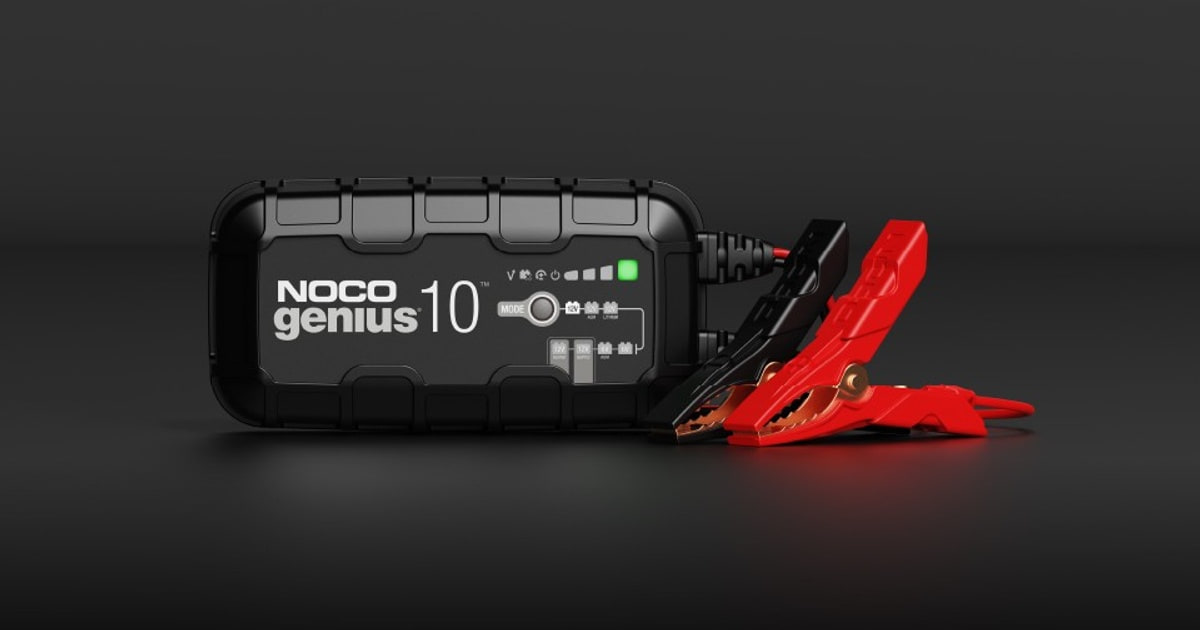
The other thing to sort out is amperage, because it's the spec that decides whether you're buying a charger or a maintainer. A one-amp unit will hold a motorcycle battery all winter but takes days to refill a dead car battery. A ten-amp unit refills that car battery overnight but is more than a tiny powersports battery needs. We think that the NOCO GENIUS10 is the best car battery maintainer for most people, and that the Battery Tender Plus is the one to buy if you just need a simple set-and-forget unit for seasonal storage.
Everything we recommend

Enough power to charge, gentle enough to leave connected

Plug it in for the winter and forget it exists

Smart charging for small batteries, at a fraction of the size

The gentlest long-term care for a modern AGM battery

The safe pick for a modern bike with sensitive electronics
At a glance
| Product | Amperage | Voltage | Price | |
|---|---|---|---|---|
| SupplyMount GENIUS10 - Aftermarket Replacement 10A BatteryTop pick | 10A | 6V/12V | $176.97 |
| Battery Tender Plus 12V 1.25 AMP CarRunner-up | 1.25A | 12V | $58.95 |
| NOCO GC040 Universal EVA Protection Case forBudget pick | 1A | 6V/12V | $24.95 |
| Tecmate TecMate Optimate 1 DuoAlso great | 0.6A | 12V/12.8V | $52.95 |
| CTEK - 40-206 MXS 5.0 Fully AutomaticUpgrade pick | 4.3A | 12V | $94.99On sale |
How we picked
Right amps for the job. We compared rated output against the batteries each unit targets, using the standard guidance that charge current should stay near ten percent of a battery's amp-hour rating. Units had to be honest about whether they charge, maintain, or both.
Chemistry support. We read spec sheets to confirm which chemistries each charger handles — flooded, AGM, gel, EFB, calcium, and LiFePO4 all want different voltages. Anything that could damage a battery by guessing wrong was out.
Safe to leave connected. Every pick has to move to a float or pulse maintenance mode automatically so it can stay plugged in for months. We ruled out dumb trickle chargers that push current regardless of state of charge.
Protection and build. We looked for reverse-polarity protection, short-circuit protection, spark-free connections, and a case rated for wherever the charger will live. Sealed cases mattered more for garage and marine use.
Owner-reported durability. We read owner feedback for patterns in early failures, unclear indicators, and cable length complaints. Long-run reports of units still working after many years counted heavily.
Top pick
Enough power to charge, gentle enough to leave connected
SupplyMount GENIUS10 - Aftermarket Replacement 10A Battery
The GENIUS10 is a real charger and a long-term maintainer in one box. It handles 6-volt and 12-volt batteries across every common chemistry, refills a big battery overnight, then settles into a float mode you can leave plugged in for months.
$176.97fromAmazonIt's the one unit that covers almost every battery you own. NOCO builds the GENIUS10 for 6-volt and 12-volt lead-acid batteries — flooded, AGM, gel, SLA, VRLA — plus lithium LiFePO4. So the same box works on your truck, your wife's SUV, the lawn tractor, the boat, and the 6-volt battery in a prewar classic. If you're managing more than two vehicles, that flexibility is worth more than any single feature here.
Ten amps is the sweet spot between charging and maintaining. A depleted 75Ah car battery comes back overnight rather than over a long weekend. That matters when you discover a dead battery on a Saturday and want to drive on Sunday. Once the battery hits full, the unit drops to a low-current maintenance mode on its own. You don't have to unplug it or switch modes, and owners routinely leave these connected all season.
The thermal sensor is the quiet feature that saves batteries. Lead-acid batteries need different charging voltages in a January garage than in a July one, and chargers that ignore that either undercharge in the cold or cook the electrolyte in the heat. NOCO builds temperature compensation into the GENIUS10 so the charge voltage tracks conditions. If your garage swings from below freezing to sweltering, this is the difference between a battery that lasts five years and one that lasts three.
Force Mode gets you out of the dead-battery dead end. Most smart chargers refuse to start on a battery below a couple of volts — they see nothing connected and throw an error. The GENIUS10 charges from as low as 1 volt normally, and Force Mode lets you override the detection gate entirely to work on a battery that's read zero. Owners repeatedly describe reviving batteries they'd written off, which is often cheaper than a replacement.
It's built to live where you'd actually keep it. The case is sealed against dust and water, so a damp detached garage, a shed, or a dock locker won't corrode it. It's also spark-proof and reverse-polarity protected, which matters if you're clipping leads onto terminals in a dark corner. Several owners have kept theirs running for years without a hiccup.
Flaws but not dealbreakers
Ten amps is more than a tiny powersports battery wants. The rule of thumb is that charge current shouldn't exceed about ten percent of a battery's amp-hour rating. On a 2Ah scooter or lawn-tractor battery, that math doesn't work in your favor, and you're better off with the GENIUS1. For anything above roughly 20Ah, this isn't a concern.
The instructions are the weak spot. A recurring complaint from owners is that the packaging arrives with almost nothing explaining what the LED sequences mean, so figuring out which mode you're in takes a trip to the manual online. There's also no numeric display — no percentage, no time-to-full — just indicator lights. It works fine once you learn it, but the first hour is more guesswork than it should be.
A handful of owners report early failures. Most people run these for years without trouble, but a minority describe a unit quitting inside the first year. The warranty process seems to go smoothly for those who use it, so the practical cost is a few weeks without a charger rather than a lost purchase.
NOCO covers the GENIUS series with a three-year warranty.
Runner-up
Plug it in for the winter and forget it exists
Battery Tender Plus 12V 1.25 AMP Car
The Battery Tender Plus does one job — holding a 12-volt battery at full charge for months — and it's been doing it well for decades. Its four-stage program moves to a float mode you can leave connected indefinitely, and the quick-disconnect harness makes reconnecting a ten-second job.
$58.95fromAmazonSimplicity is the whole point. There are no modes to pick and no chemistry to select. You clip it on in October, you unclip it in April, and the bike starts. The four-step program handles initialization, bulk charging, absorption, and float on its own, and a two-color LED tells you which side of full you're on. If you want a tool your father-in-law can use without a phone call, this is it.
The quick-disconnect harness is better than it sounds. You bolt the fused ring terminals to the battery posts once and route the pigtail somewhere reachable — under the seat, behind the bumper. After that you never touch the battery again. On a motorcycle where getting to the terminals means pulling the seat, or on a classic car with a battery buried under the trunk floor, that's the difference between maintaining the battery monthly and not bothering.
It has the longest track record here by a wide margin. Classic car clubs and motorcycle storage guides have defaulted to this thing for over two decades, and owner feedback backs that up: people describe running the same unit for a decade or more, buying second and third ones, and keeping several going across a garage full of vehicles. Reliability over that span is hard to fake.
It's small enough to travel with you. Under a pound and roughly the size of a deck of cards plus the cord. It fits in a saddlebag, a toolbox drawer, or the trunk of a car you're taking to a show. Owners keep them in RVs and side-by-sides for exactly that reason.
Flaws but not dealbreakers
At 1.25 amps, it's a maintainer and nothing more. Refilling a fully depleted 75Ah car battery would take the better part of three days. If your battery is already flat, you need a real charger first — this unit is for holding a healthy battery healthy, not for rescue work.
No lithium mode and no 6-volt support. LiFePO4 batteries need a different charge profile than this analog circuit can produce, so if your bike or car came with a lithium battery, look elsewhere. Same for a vintage 6-volt system. Both NOCO units handle those cases.
There's no desulfation or recovery program. If a battery has been sitting flat long enough to sulfate, the Battery Tender Plus won't attempt to bring it back. It'll charge what's chargeable and float it, which is fine for prevention but useless for repair.
Deltran backs the Battery Tender Plus with a ten-year manufacturer's warranty and lifetime customer support.
Budget pick
Smart charging for small batteries, at a fraction of the size
NOCO GC040 Universal EVA Protection Case for
The GENIUS1 shrinks NOCO's charging smarts into something that fits in a glove box. One amp is exactly right for a motorcycle, ATV, or mower battery, and it handles lithium and 6-volt systems that cheaper maintainers can't touch.
$24.95fromAmazonIt's the least expensive way to get genuine smart charging with lithium support. Most budget maintainers are 12-volt lead-acid only. This one covers 6-volt and 12-volt, flooded, AGM, gel, SLA, VRLA, and LiFePO4, and it picks the right profile automatically. If you've got a modern bike with a lithium battery and a vintage one with a 6-volt system, this handles both.
One amp is the correct rate for the batteries most people store. A motorcycle battery in the 8 to 20Ah range wants roughly one amp for safe unattended charging. That's precisely what this delivers. It'll hold that battery all winter without any risk of overcharging, and you can leave it connected indefinitely.
It's genuinely pocket-sized. Under a pound, about the footprint of a phone. It disappears into a saddlebag or a glove compartment, which means it can go with you rather than living on a garage shelf. Owners keep them stashed in cars they rarely drive so the charger is already there when the battery isn't.
It shares the GENIUS10's core protections. Spark-proof connections, reverse-polarity protection, and the same temperature-compensating charge logic. Owners report reviving batteries that had been sitting dead for months — slowly, but successfully — including in genuinely brutal cold.
Flaws but not dealbreakers
One amp is painfully slow on anything large. Recovering a 100Ah battery from a low state can take days of continuous charging. Above roughly 30Ah this stops being practical as a primary charger. Treat it as a maintainer and a slow top-off tool, and buy the GENIUS10 if you need to actually refill something big.
No Force Mode. Unlike its bigger sibling, it won't override the low-voltage gate on a battery that's read essentially zero. If your battery is that far gone, you'll need to bump it with a jump pack first or use a different charger.
Documentation is thin here too, and the ratings run a touch lower than the rest of this group. Owners note the missing printed instructions and occasional units that stop working. It's still the most popular charger in this lineup by a wide margin, but the failure reports are more common than with the Battery Tender or the CTEK.
NOCO covers the GENIUS series with a three-year warranty.
Upgrade pickOn sale
The gentlest long-term care for a modern AGM battery
CTEK - 40-206 MXS 5.0 Fully Automatic
The CTEK MXS 5.0 runs an eight-step program with a reconditioning stage and a patented pulse maintenance mode instead of a constant float. European service departments have used these for years, and it's the most careful option here for an expensive AGM start-stop battery.
$94.99fromAmazonList pricePulse maintenance is easier on a battery than constant float. Rather than parking the battery at a fixed voltage for months, the MXS 5.0 rests it, checks open-circuit voltage, and delivers current only when it's actually needed. That reduces water loss in flooded batteries and heat buildup in sealed AGM cells — the two things that age a stored battery fastest.
It's built around AGM and start-stop batteries, which are the expensive ones. If you drive a late-model European car, your battery is likely AGM or EFB, cycles constantly in city traffic, and costs a lot to replace. CTEK's eight-step program includes a dedicated reconditioning stage for exactly those batteries. Owners with BMWs and other European cars consistently point to it as the thing that kept them from being sold a new battery.
The status feedback is the clearest in this group. Each step in the sequence gets its own indicator, and the manual explains what every one means. You can walk past it and know whether it's bulk charging, analyzing, or holding. That sounds minor until you've stared at a single blinking LED wondering whether anything is happening.
4.3 amps is enough for real charging without being aggressive. It covers batteries from small motorcycle sizes up through big car and light-truck batteries, and it'll bring a depleted one back overnight. That's a genuinely useful middle ground — faster than a pure maintainer, gentler than a ten-amp unit on a smaller battery.
It's built for cold-weather use. Temperature compensation is baked into the algorithm, and CTEK specifically points at cold-climate drivers. If your car sits outside through a northern winter, that adjustment is doing real work every night.
Flaws but not dealbreakers
It's 12 volts only, with no lithium mode. No 6-volt vintage support, and no LiFePO4 profile. If you've got a lithium battery in a bike or a 6-volt system in a classic, this is the wrong charger and one of the NOCO units is the right one.
It's splash-resistant, not weatherproof. CTEK rates it as splash and dustproof, which is fine for an attached garage but a step below the GENIUS10's sealed case. For a damp shed, a dock box, or anywhere it might get genuinely wet, buy the NOCO instead.
The clamp cables are short. A common owner complaint is that the leads don't reach comfortably on larger vehicles or when the outlet isn't close to the battery. Plan on an extension cord, or use the included ring terminals for a permanent connection instead.
CTEK backs the MXS 5.0 with a five-year warranty.
Also great
The safe pick for a modern bike with sensitive electronics
Tecmate TecMate Optimate 1 Duo
The OptiMate 1 Duo is a specialist: a 0.6-amp maintainer that switches between 12-volt lead-acid and 12.8-volt lithium and is designed to sit on a modern motorcycle without upsetting its electronics. It's slow on purpose, and that's the point.
$52.95fromAmazonLow output is a feature on a CAN-bus motorcycle. Contemporary bikes network their control modules together, and chargers that draw too much current at startup can wake that system and throw fault codes you'll need a dealer to clear. The OptiMate's 0.6-amp output stays under that threshold. If you've ever come back to a stored bike and found a warning light you didn't cause, that's the problem this solves.
Manufacturers endorse it, which is unusual for a charger. TecMate lists recommendations from Honda, Yamaha, Kawasaki, KTM, and Husqvarna, along with lithium battery makers including Antigravity, Super-B, and Earth-X. That's not marketing fluff for the target buyer — it means you can leave the charger connected during storage without the dealer arguing about your battery warranty later.
It handles both chemistries with a real recovery routine. The Duo designation means 12-volt lead-acid (AGM, gel, standard, starter, deep-cycle) and 12.8-volt lithium. On startup it runs a diagnostic and attempts to recover a sulfated battery before it starts charging normally, then tells you plainly if the battery is beyond saving rather than pretending to charge it.
It leaves the battery connected safely for months. TecMate designs it for continuous connection, including protection against the parasitic drain from a bike's own always-on circuitry. Owners describe leaving it on anytime they're not riding, sometimes for years, and starting on the first crank.
Flaws but not dealbreakers
0.6 amps means you need patience. This will not rescue a car battery, and even on a motorcycle battery a full recovery takes overnight or longer. Owners are blunt about it: fine if you're not in a hurry, frustrating if you are.
It costs more than its output suggests. You're paying for the CAN-bus safety and the brand's motorcycle credentials, not for charging speed. If your bike is older and simpler, the GENIUS1 does the same maintenance job for less.
The case is dustproof for indoor use only, and the cord can be short. It's not built for an outdoor storage spot, and owners with recessed or covered outlets note they needed an extension to reach. Plan the location before you buy.
Who this is for
Buy one of these if any vehicle you own sits for more than two weeks at a stretch. That's a motorcycle in winter, a convertible, a boat, an RV, a riding mower, a classic car, a backup generator, or a second car that only comes out on weekends. It's also worth it if your daily driver only ever does short trips, because a two-mile run to the store doesn't put back what starting the engine took out. Lead-acid batteries lose a few percent of their charge every day just sitting, and a month of that is enough to start damaging the plates.
You can skip it if you drive a single car regularly and it starts fine — the alternator is already doing this job. This guide covers plug-in maintainers and smart trickle chargers for 6-volt and 12-volt batteries in cars, bikes, and powersports vehicles. It doesn't cover jump starters, solar maintainers, big shop chargers on wheels, or 24-volt commercial equipment. And no maintainer here will fix a battery with a dead cell; if yours won't hold a charge overnight off the charger, buy a new battery.
How we picked
Amperage match: We checked each unit's rated output against the batteries it's sold for, holding to the guideline that charge current should sit near ten percent of amp-hour capacity, and we were clear about which units charge versus which only maintain. Chemistry support: Spec sheets had to confirm which battery types each charger handles, since flooded, AGM, gel, EFB, and LiFePO4 all need different voltages and the wrong profile can ruin an expensive battery. Unattended safety: Every pick automatically transitions to float or pulse maintenance so you can leave it connected for a season without cooking anything. Protection and build: Reverse-polarity and short-circuit protection, spark-free connections, and an enclosure rated for the place you'll actually keep it. Owner-reported durability: We read through owner feedback looking for repeated complaints — early failures, opaque indicator lights, cables that don't reach — and for the long-run reports that separate a good charger from a lucky one.
The competition
This is what our research surfaced across the mainstream maintainer market, not a census of every charger sold. Each of the five units here earned a place as a pick, because the category is unusually well sorted — the main brands each own a clear niche, and the differences between them come down to amperage, chemistry support, and where you plan to keep the thing rather than to quality gaps. If none of these fit your situation, the specs to compare on any alternative are rated output, supported chemistries, whether it has a true automatic float mode, and its enclosure rating.
Installation and use notes
Connect a maintainer any time a vehicle will sit for more than two weeks. If a vehicle goes into storage regularly, spend ten minutes installing the ring-terminal pigtail rather than using the clamps — bolt the fused leads to the posts, route the connector somewhere you can reach without pulling a seat or opening the hood, and after that plugging in takes seconds. Clean corrosion off the terminals first; a fuzzy post makes for a bad connection and confusing indicator lights. Always connect to the battery before plugging into the wall, and unplug from the wall before disconnecting. Keep the charger itself off the floor and out of standing water unless its case is rated for it, and check the lights every few weeks so a tripped breaker doesn't go unnoticed all winter.
Questions we get
What's the difference between a trickle charger and a battery maintainer?
A dumb trickle charger pushes a constant low current no matter what the battery needs, so leaving one connected for weeks can overcharge and cook a full battery. A maintainer watches the voltage and only adds current when it drops, then holds steady in a float or pulse mode. Every unit in this guide is a smart maintainer. For anything unattended, that's what you want.
Can I leave a maintainer connected all winter?
Yes, with any of the picks here. They all move to a low-current float or pulse mode once the battery is full and stay there safely, which is exactly what they're designed for. Basic dumb trickle chargers are a different story and shouldn't be left on for more than a day or two. Before you buy anything not on this list, confirm it has an explicit automatic float mode.
What's the best maintainer for a motorcycle stored over winter?
For a modern bike with CAN-bus electronics, the OptiMate 1 Duo is the safest choice because its low output stays below the threshold that triggers fault codes. For an older or simpler bike, the NOCO GENIUS1 does the same maintenance job for less and adds lithium and 6-volt support. Both include SAE pigtails so you can wire the connection once and forget it.
What about a classic car with a 6-volt battery?
The NOCO GENIUS10 is the pick, since it has a dedicated 6-volt mode with the correct charge voltage for vintage lead-acid batteries. The GENIUS1 also supports 6 volts and works well for smaller batteries. The Battery Tender Plus and the CTEK MXS 5.0 are both 12-volt only and should never be connected to a 6-volt system.
Will a smart charger work on a completely dead battery?
Usually not without help — most smart chargers need to detect a couple of volts before they'll start, and below that they just throw an error. The GENIUS10 gets around this with Force Mode, which overrides the detection gate and begins a careful low-current recovery on a battery reading near zero. With other chargers, briefly connecting the dead battery in parallel with a good one or a jump pack is often enough to get it above the threshold.
Do AGM and lithium batteries need a special charger?
Yes. AGM batteries need bulk voltage capped around 14.7V and a proper absorption stage, and the higher equalization voltages some older chargers produce will destroy the plate separators. Lithium LiFePO4 batteries need a constant-current, constant-voltage profile and no desulfation pulses at all. Both NOCO units detect chemistry and apply the right profile, the OptiMate 1 Duo switches between lead-acid and lithium, and the CTEK handles AGM and EFB but has no lithium mode.
Why you should trust us
For this guide:
- We read the manufacturer specifications for every charger here, comparing rated output, supported chemistries, voltage support, and enclosure ratings side by side.
- We reviewed published coverage of battery maintainers and reference material on lead-acid charging, sulfation, and temperature compensation to understand which specs actually affect battery life.
- We read through owner feedback for each unit, looking for recurring themes around durability, unclear indicators, cable length, and how these chargers behave over multi-year use.
- We read owner reviews on every listing, weighted toward the critical ones, because that is where the recurring failures show up.
- We have a systematic way of automatically fetching the latest prices, so the numbers on this page stay current.
- This is a research-focused guide, so the team may not own every product listed — though we often do own the top winners, which gives us extra context for the recommendations.
- We don't accept free products, and the retailer commission never changes which product we recommend.
Sources
Best Battery Charger and Maintainer, Popular Mechanics
Best Battery Trickle Chargers, Car and Driver
Best Car Battery Chargers, AutoWeek
NOCO GENIUS10 Review, The Drive
Best Car Battery Maintainers, Motor Trend
Car Battery Maintainer Buying Guide, Consumer Reports
CTEK MXS 5.0 Review, Road & Track
Battery University: How to Charge a Lead-Acid Battery, Battery University
Amazon product listings and owner reviews for all 5 products
Manufacturer specification pages for each product
Some passages in this guide may be paraphrased with AI help. Prices are refreshed automatically.
More like this.
Continue exploring electronics reviews and recommendations.

The Best Car Battery Jump Starters
A dead battery almost never happens at a convenient time. It's the school run, the grocery-store parking lot at dusk, or a driveway on the first genuinely…

The Best Wireless Charging Car Phone Mounts
Your phone is the navigation system in most cars now. It's also the thing that dies fastest when you're running maps, music and CarPlay on a long drive. A…

The Best Solar Power Banks and Portable Chargers
A charger you carry outside has one job: keep your phone alive when there's no outlet for days. That sounds simple until you're three nights into a trip…

The Best Wireless Charging Pads and Stands
Wireless charging isn't about speed. It's about the small friction you stop noticing: no fumbling for a cable in the dark, no worn-out port on a…

The Best Windshield De-Icer Sprays
Scraping a frozen windshield is a miserable way to start a day. A de-icer spray shortcuts it: you soak the glass, wait a few seconds, and push the slush…

The Best Car Stereo Head Units
Your factory stereo is probably the oldest piece of technology you touch every day. Replace it and you get wireless Apple CarPlay or Android Auto, a…