The Best Solar Power Banks and Portable Chargers
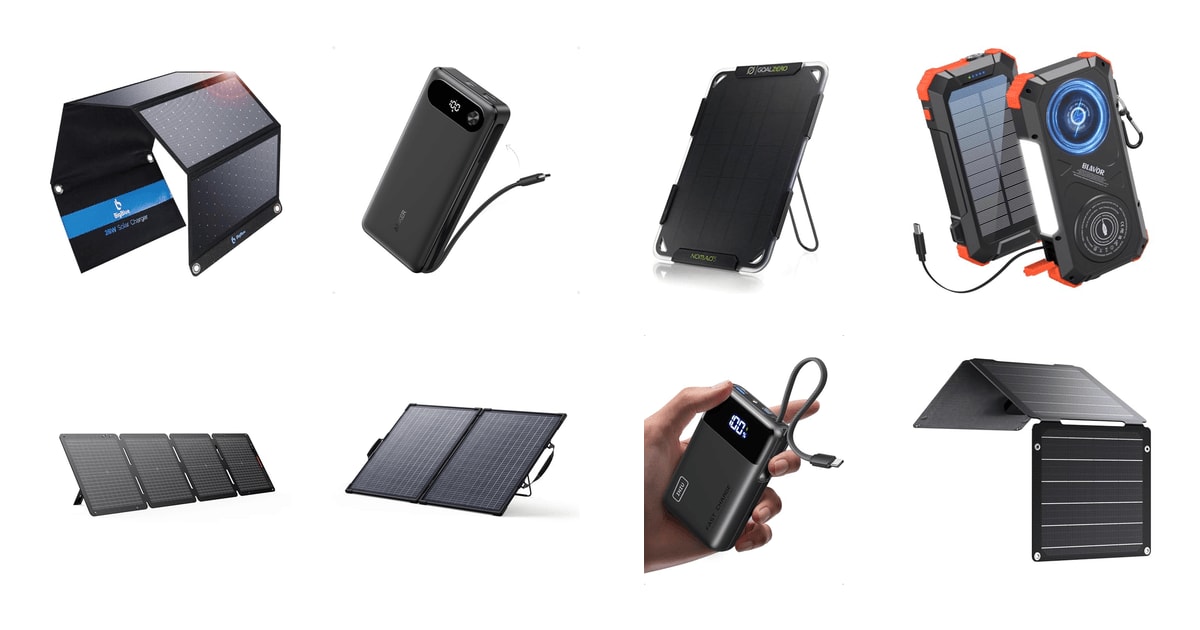
A charger you carry outside has one job: keep your phone alive when there's no outlet for days. That sounds simple until you're three nights into a trip with a dead headlamp battery and a map you can't open. The gear splits into two camps. Foldable panels make power from daylight but store none of it, and power banks store plenty but make none. Most people who spend real time off-grid end up carrying one of each, and the pairing works better than any all-in-one.
Here's the part the packaging won't tell you. A panel almost never hits its rated wattage, because that number comes from a lab with perfect sun and a cool panel. Wirecutter puts real-world output at roughly 50 to 70 percent of the rating, and Tested.com found that panels baking above 122°F lose another 15 to 20 percent to heat. Solar is a trickle, not a fill-up. Plan on a panel earning back a phone's worth of charge over an afternoon, not over lunch.
So we read the spec sheets, the published lab measurements and the patterns in owner feedback, and we looked for chargers that hold up when the sun goes thin and the weather turns. We think that the BigBlue 28W High-Efficiency Solar Panel Charger is the best solar charger for most people, and that the BigBlue SolarPowa 20 is the one to buy if you count every ounce and expect to get rained on.
Everything we recommend

Fast enough in real sun, and it still works under clouds

Lighter and better sealed, with a little less power

Two days of phone power in a soda-can-sized brick

Base-camp wattage with a five-year warranty behind it

The battery to pair with a panel, or to carry instead
At a glance
| Product | Battery Capacity | Max Output | Price | |
|---|---|---|---|---|
| BigBlue 28W High-Efficiency Solar Panel Charger withTop pick | — | 28W | $74.96 |
| Anker Power BankAlso great | 20,000mAh | 87W | $65.99On sale |
 | Goal Zero Nomad 5 Solar PanelAlso in lineup | — | 5W | $59.95 |
 | BLAVOR Solar Power Bank Built-in Retractable CableAlso in lineup | 20,000mAh | 20W | $44.99On sale |
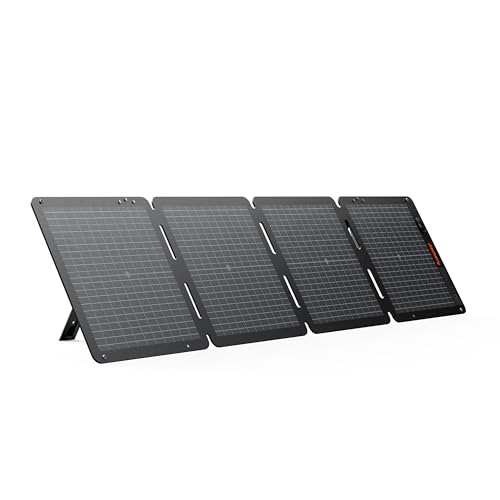 | Jackery SolarSaga 100W Air Solar PanelAlso consider | — | 100W | $299 |
| Anker SOLIX PS100 Bifacial Portable Solar PanelUpgrade pick | — | 100W | $249.99 |
| INIU Portable ChargerBudget pick | 20,000mAh | 45W | $28.49On sale |
| 21W Solar Panel Charger BigBlue SolarPowa 20Runner-up | — | 21W | $39.99 |
How we picked
Real output, not ratings. We weighed published lab measurements and field results over box wattage, because real-world output typically lands at 50 to 70 percent of the rating. Panels that reviewers measured near their spec moved to the front.
Low-light performance. Sun is unreliable, so we favored monocrystalline and N-type cells, which run 15 to 20 percent more efficient than polycrystalline under clouds. Owner feedback from genuinely gray places carried extra weight here.
Ports and wattage. For power banks, we required at least 45 watts over USB-C PD, the floor for charging a laptop. For panels, we looked for multiple ports so one panel can serve a group.
Weather and durability. We checked stated IP ratings against surface materials and owner reports of failures after repeated use. IP67 or IP68 was a strong plus for anything going near water.
Weight and packability. Spec sheets gave us folded dimensions and weight, and we set different bars for backpacking gear and base-camp gear. A panel too heavy to carry is a panel you leave home.
Top pick
Fast enough in real sun, and it still works under clouds
BigBlue 28W High-Efficiency Solar Panel Charger with
This is a foldable three-panel charger, not a battery, so it needs daylight and something to charge. But it makes more usable current than anything else that packs this small, and it keeps trickling power on gray days when cheaper panels give up entirely.
$74.96fromAmazonFor a panel you can strap to a pack, this one simply makes more power. BigBlue rates it at 28 watts with 25.4 percent conversion, and Outdoor Gear Lab's field work took a dead iPhone to 80 percent in about two hours of direct noon sun. That's roughly the pace of a slow wall charger. For a device running on nothing but daylight, that's plenty.
Three ports matter more than they sound like they should. You get two USB-C and one USB-A, each capped near 5V/3A, about 4.8 amps combined. So a phone, a headlamp battery and a power bank can all drink at once instead of taking turns all afternoon. Owners on multi-day trips tend to use it exactly that way, and it's the reason a single panel covers a whole group.
Cloudy weather is where cheap panels fall apart, and this one hangs on. Monocrystalline cells run 15 to 20 percent more efficient than polycrystalline in low light, according to Outdoor Gear Lab, and owners describe real charging happening under solid overcast on the Alaskan coast. You won't top off a phone in an hour that way. You'll get meaningful power, which is the whole point of carrying a panel.
It folds to about 11 by 6 inches and weighs a pound and a half, so it rides on the outside of a pack without much complaint. Carabiners come in the box. The polymer face shrugs off rain, fog and grit better than the plasticky panels you'll see for less, and there's a small LED that tells you at a glance whether the sun angle is actually working for you.
Flaws but not dealbreakers
Heat is the real enemy, and this panel isn't immune. Lay it flat on a hot rock or a car hood and output slides as the surface bakes — several owners describe exactly that fade over a long afternoon. Prop it so air can move underneath, and re-aim it every hour or so.
It's rated IP44, which covers rain and splashes but not a dunk, and the USB junction box isn't sealed the way the panel face is. A handful of owners also report ports getting unreliable after a few dozen outings. If you expect to get genuinely soaked, the SolarPowa 20 below is the safer buy.
Runner-up
Lighter and better sealed, with a little less power
21W Solar Panel Charger BigBlue SolarPowa 20
The SolarPowa 20 gives up seven watts and a port compared with our top pick, and gains an IP68 rating and a few ounces of pack weight back. If you hike in wet country or count grams, that's a trade worth making.
$39.99fromAmazonIt folds to about the size of a paperback and weighs 1.32 pounds, and the included hooks let it hang off a pack lid while you walk. That's the whole pitch. You charge as you move instead of stopping to set up, and by camp your power bank has taken on a useful amount of juice without you thinking about it once.
The IP68 rating is the reason to pick this over the 28-watt model. BigBlue uses a PVDF surface here rather than the usual PET, which resists corrosion and weather far better and roughly doubles the expected panel life. If your trips involve creek crossings, sea kayaks or the kind of afternoon storm that soaks everything strapped outside your pack, that construction earns its keep.
Two ports, USB-A and USB-C, split about 4.2 amps total at 5 volts, and the monocrystalline cells convert up to 24.7 percent. Owners consistently report pulling 2.3 to 2.4 amps in bright sun, enough to refill two 10,000 mAh banks over the course of a day. That's the realistic use case: feed batteries during daylight, then charge your phone from those batteries at night.
Flaws but not dealbreakers
Twenty-one watts is genuinely less power, and you feel it under clouds or low winter sun. Some owners report far less output than the rating suggests in less-than-ideal conditions, which is normal for the whole category but still disappointing if you bought expecting 21 watts.
There's no ammeter display here, so you're guessing at sun angle instead of reading it. And like every bare panel, it stores nothing — leave it plugged into a phone and a passing cloud can interrupt the charge mid-session.
Budget pickOn sale
Two days of phone power in a soda-can-sized brick
INIU Portable Charger
The INIU holds 20,000 mAh, pushes 45 watts over USB-C, and carries its own braided cable so you can't leave it behind. It's noticeably smaller than most banks this size, and it costs a fraction of what a solar setup runs.
$28.49fromAmazonList priceMost people asking about solar chargers actually just need a bigger battery. A weekend of phone use, a couple of tablet top-offs, a flight with no seat power — a 20,000 mAh bank covers all of it and never once cares whether the sun is out. INIU claims about four full phone charges or two tablet charges, and owner reports line up with that.
The size is the trick. INIU squeezes the cell into a frame roughly 30 percent smaller than typical 20,000 mAh banks, at about 11.5 ounces. It fits a jacket pocket. Forty-five watts takes an iPhone from 20 to 76 percent in half an hour, and the capacity sits under the TSA carry-on limit, so it flies with you without a conversation at the gate.
The built-in braided USB-C cable is rated past 10,000 bends and doubles as a carry handle, which sounds like marketing until you've dug through a bag for a cable in the dark. There's a flashlight, and it charges three devices at once. Owners who've dropped it down staircases and cracked the shell report it still working fine, which says something about the construction.
Flaws but not dealbreakers
Forty-five watts is enough for phones, tablets and a MacBook Air, but it's the floor for laptop charging — a hungrier 16-inch laptop will charge slowly or not at all while you're using it. Our Also great pick handles that better.
There's no solar anything here, so if you're gone longer than two days with no outlet, this is a battery that eventually dies. And a meaningful slice of owner feedback describes units failing early, so register it and keep an eye on it during the return window.
Upgrade pick
Base-camp wattage with a five-year warranty behind it
Anker SOLIX PS100 Bifacial Portable Solar Panel
The SOLIX PS100 is a 100-watt bifacial panel built to feed a power station, not a phone. It's sealed to IP68, framed in aluminum, and light enough at about seven pounds that one person can carry and set it up alone.
$249.99fromAmazonThis is the panel for a campsite, a van or a hurricane closet — not a backpack. Consumer Reports found that foldable monocrystalline panels charged devices two to three times faster than all-in-one solar banks, and at 100 watts you're well past the trickle. Pair it with a power station and you can actually run a fridge, a CPAP or a laptop off the sun for days.
Bifacial cells collect light off the back surface too, which Anker says adds up to 10 percent more output over reflective ground like sand, snow or a concrete pad. The N-type cells convert north of 25 percent and hold up better as the panel heats, which is exactly where most panels lose their advantage. One owner with a meter clocked 93 percent of rated output on a hazy day.
The warranty is the quiet reason to spend up here. Anker covers the PS100 for five years and rates it for a 10-year service life, backed by an aluminum frame and an IP68 seal that tolerates rain and mud. The Verge has ranked Anker the most consistently reliable power bank brand across three straight years of testing, with failure rates under 2 percent. That track record is worth something on gear you'll leave outside.
Flaws but not dealbreakers
It terminates in XT60i solar cables, which means it's built to charge a power station, not your phone. There's no USB port on it. If you don't already own a compatible battery, this is half a purchase.
Folded, the panel surfaces face outward rather than tucking against each other, and owners note that leaves the cells exposed in a crowded trunk. It also measures over 40 inches on the long side folded, so it lives in a vehicle, not a pack.
Anker backs the PS100 with a five-year warranty and rates the panel for a 10-year lifespan.
Also greatOn sale
The battery to pair with a panel, or to carry instead
Anker Power Bank
This Anker holds 20,000 mAh and pushes 87 watts across three ports, with 65 watts available to a single device. That's enough to charge a laptop at full speed, and it refills itself in about an hour and a half.
$65.99fromAmazonList priceIf you carry a laptop, this is the bank to buy. Most solar power banks cap USB-C output around 18 to 22 watts, which Wirecutter notes is nowhere near the 45-watt minimum a laptop needs. This one does 65. Tom's Guide found a 20,000 mAh, 65-watt bank takes a 13-inch MacBook Pro from empty to full in roughly 90 minutes — that's wall-charger territory from something in your bag.
It's the natural partner for a panel. Park it in the sun connected to the BigBlue during the day, then charge your phone and laptop from it after dark. That two-piece setup beats every all-in-one solar bank we looked at, because the battery is sized properly and the panel is sized properly instead of both being compromised into one shell.
The built-in USB-C cable is rated past 10,000 bends, and the 20,000 mAh capacity clears TSA carry-on rules. At about 15.5 ounces it's not light, but it's shaped like a thick phone rather than a brick. Owners report charging four flagship phones on one fill, which matches the claimed capacity better than most banks manage.
Anker's reliability record does most of the arguing here. The Verge put the brand's failure rate below 2 percent across three consecutive years of evaluation, and the 18-month warranty means a dud gets replaced rather than argued about. For gear you're depending on in a tent or an airport, that consistency matters more than a few extra watts.
Flaws but not dealbreakers
It's the heaviest of the three banks here and it costs meaningfully more than the INIU for capacity you may not use. If you only ever charge a phone, you're paying for headroom that sits idle.
The first full charge takes a long stretch on a low-wattage adapter, and several owners were caught out by that overnight wait. Use a 65-watt charger and it fills in about an hour and a half; use a phone brick and you'll be waiting all night.
Anker includes an 18-month warranty.
Who this is for
Buy a panel if you're off-grid longer than about two days with no outlet — thru-hiking, van life, overlanding, or a stretch without power at home. Buy a power bank instead if you're gone a weekend, flying, or working out of cafes. Most people are honestly in the second group, and a good bank costs less and works at night. If you're somewhere in between, carry a small bank and a small panel and let the panel feed the bank all day.
This guide covers foldable solar panels and portable USB battery packs. It doesn't cover power stations — the cooler-sized batteries that run a fridge or a CPAP — though two of our panels are built to feed one. We also skipped rigid roof-mount panels and anything requiring permanent installation. If you're outfitting a whole rig for a week off-grid, a power station plus a 100-watt panel is the setup, and that panel is here.
How we picked
Real output: we trusted measured results from published lab and field reviews over rated wattage, since panels usually deliver 50 to 70 percent of their spec. Low light: we favored monocrystalline and N-type cells, which hold a 15 to 20 percent efficiency edge under clouds. Ports and wattage: power banks had to clear 45 watts over USB-C PD to charge a laptop, and panels needed enough ports to serve more than one device. Weather: we read IP ratings alongside surface materials and owner reports of early failures. Weight: we set separate bars for what you carry on your back and what rides in a vehicle.
Other solar power banks and portable chargers worth considering
If you already own a Jackery Explorer power station: The Jackery SolarSaga 100W Air Solar Panel ($299) — The SolarSaga 100W Air is the panel Jackery built for its own batteries, and staying in one ecosystem saves you cable headaches. It's bifacial with 23 percent PERC cells, IP68 rated, and at seven pounds it's about 27 percent lighter than a standard 100-watt panel — it folds smaller than a sheet of A2 paper. PCMag measured 88.3 watts from Jackery's 100-watt SolarSaga in standardized lab conditions, well above the category average. Two caveats: it won't work with the Explorer 300 series because of a voltage mismatch, and owners point out you can find comparable wattage for less from other brands. Anker's PS100 offers a longer warranty for similar money and weight.
The competition
These are the other chargers our research surfaced, not a census of everything for sale. Both are decent products that lost to a pick for specific reasons, and either could still be the right call depending on how you'll use it.
The BLAVOR Solar Power Bank Built-in Retractable Cable ($44.99) — The BLAVOR Solar Power Bank packs a 20,000 mAh cell, a 20-watt USB-C port, a retractable USB-C cable, magnetic wireless charging, a camping lantern and a three-mode flashlight into one rugged, rubber-cornered brick. As a power bank it's genuinely good, and owners on fishing and hunting trips like having the light built in. The solar is the problem. TechRadar clocked roughly 50 hours of direct sun to fill a 10,000 mAh Blavor solar bank from the panel alone, and this one holds twice that. Treat the solar as an emergency trickle, not a charging method. Wireless charging also loses about 10 percent efficiency versus a cable, per Tom's Guide. Buy it if you want one rugged do-everything device and you'll normally charge it from a wall.
The Goal Zero Nomad 5 Solar Panel ($59.95) — The Goal Zero Nomad 5 is the lightest thing here at well under a pound, with monocrystalline cells, a rugged enclosure and a built-in kickstand for aiming. It's genuinely pleasant to use and it pairs neatly with Goal Zero's Flip banks. But five watts is five watts. Owners describe it working well in bright sun and struggling otherwise, and it has only a single USB-A output, so there's no USB-C and no charging two things at once. Some report units failing after a couple of outings. If your only goal is trickling a headlamp battery or a fitness tracker on a sunny trip and every ounce counts, it makes sense. For a phone, get more panel.
Setup and care
Aim matters more than wattage. Point the panel straight at the sun rather than flat at the sky, and re-aim it every hour or so as the sun moves — a badly angled 28-watt panel makes less than a well-aimed 21. Keep air moving underneath it, because a panel baking on a hot rock or a car hood can lose 15 to 20 percent of its output to heat alone. Charge a power bank rather than your phone directly. Clouds interrupt charging, and phones often won't resume on their own, while a bank just takes whatever it gets. Wipe dust and pollen off the face, since a hazy surface costs you real current. And don't try to charge through a window; glass eats most of what you're after.
Questions we get
Do solar power banks actually work, or is the charging too slow to be useful?
All-in-one solar power banks are mostly a backup, not a charging method — the panel is tiny, and filling a large cell from it alone can take dozens of hours of direct sun. Separate foldable panels are a different story. Consumer Reports found foldable monocrystalline panels charged devices two to three times faster than all-in-one banks, and a 21- to 28-watt panel can put a real dent in a phone over an afternoon.
Can a solar charger charge a laptop?
Not directly, in most cases. Wirecutter notes that most solar banks cap USB-C output at 18 to 22 watts, and a laptop needs at least 45 watts over USB-C Power Delivery. The way to do it is a two-piece setup: use the panel to charge a high-wattage bank like our Also great pick, then charge the laptop from that bank.
How many watts of solar do I need to charge a phone quickly?
Figure on 20 to 30 watts for a phone at a reasonable pace. Outdoor Gear Lab's field work took a dead iPhone to 80 percent in about two hours on a 28-watt panel in direct noon sun. Under clouds or a bad angle, expect that to stretch considerably, since real output usually lands at 50 to 70 percent of the rating.
Is 10,000 or 20,000 mAh better for a week of camping?
Go with 20,000 mAh. A 10,000 mAh bank at typical conversion efficiency delivers roughly two to three full phone charges, which is a long weekend at most. Twenty thousand doubles that, still clears TSA carry-on limits, and gives a solar panel something worth filling during the day.
What does an IP67 or IP68 rating actually get me?
Both mean fully dust-tight and safe to submerge briefly — IP68 tolerates deeper or longer immersion than IP67. In practice, either handles rain, spray and a dropped panel in a puddle. A lower IP44 rating, like our top pick's, covers splashes and drizzle but not a dunk, and the port housing is usually the weak spot regardless of the rating.
Are monocrystalline panels worth paying more for?
Yes, if you'll ever charge in less than perfect weather. Monocrystalline cells run 15 to 20 percent more efficient than polycrystalline in low light and overcast conditions, according to Outdoor Gear Lab. Since clouds and low sun angles are exactly when you need output most, that edge shows up on real trips. Nearly everything worth buying today is monocrystalline anyway.
Why you should trust us
For this guide:
- We read manufacturer spec sheets for every panel and bank here, and compared their rated wattage against measured output published by PCMag, Consumer Reports, Outdoor Gear Lab, Tom's Guide and Tested.com.
- We reviewed reliability reporting from The Verge and Wirecutter on power bank brands and on how far real-world solar output falls short of rated figures.
- We read through owner feedback for recurring themes — heat-related output fade, port failures and how slowly all-in-one solar banks refill — and used those patterns to shape the flaws and caveats above.
- We read owner reviews on every listing, weighted toward the critical ones, because that is where the recurring failures show up.
- We have a systematic way of automatically fetching the latest prices, so the numbers on this page stay current.
- This is a research-focused guide, so the team may not own every product listed — though we often do own the top winners, which gives us extra context for the recommendations.
- We don't accept free products, and the retailer commission never changes which product we recommend.
Sources
Best Solar Chargers 2025 — Wirecutter (New York Times), Wirecutter
Best Portable Chargers and Power Banks 2025 — RTINGS.com, RTINGS.com
Solar Charger Reviews and Ratings — Consumer Reports, Consumer Reports
Best Solar Panel Chargers Tested — Outdoor Gear Lab, Outdoor Gear Lab
Best Power Banks 2025 — Tom's Guide, Tom's Guide
Best Portable Solar Panels 2025 — PCMag, PCMag
Solar Charger Efficiency Testing — Tested.com, Tested.com
Portable Charger Reviews 2025 — The Verge, The Verge
Best Solar Power Banks — TechRadar, TechRadar
Goal Zero Nomad Series Review — Backpacker Magazine, Backpacker Magazine
USB-C Power Delivery Explained — Wirecutter, Wirecutter
Portable Power Market Report 2025 — Grand View Research, Grand View Research
Amazon product listings and owner reviews for all 8 products
Manufacturer specification pages for each product
Some passages in this guide may be paraphrased with AI help. Prices are refreshed automatically.
More like this.
Continue exploring electronics reviews and recommendations.

The Best Travel Power Banks
A power bank earns its place in your bag on the day everything goes wrong. The gate agent announces a three-hour delay, every outlet along the wall is…

The Best Lithium Jump Starter Power Banks
A dead battery almost never happens at a convenient moment. It happens in a parking garage at 11 p.m., or on the first genuinely cold morning of the year,…

The Best Portable Solar Generators for Emergencies
A power outage is boring right up until it isn't. The fridge stays cold for a few hours, then it doesn't. The phones drain, the router dies, and if…

The Best Portable Power Stations for Camping
A power station is the quiet fix for the two things that actually annoy you at a campsite: a cooler that has to keep working, and phones that die by…

The Best Portable Generators for Power Outages
When the lights go out, you don't need to power your whole house. You need the fridge to stay cold, a few lamps on, phones charged, and maybe a CPAP…

The Best Wireless Charging Pads and Stands
Wireless charging isn't about speed. It's about the small friction you stop noticing: no fumbling for a cable in the dark, no worn-out port on a…