The Best Portable Generators for Power Outages
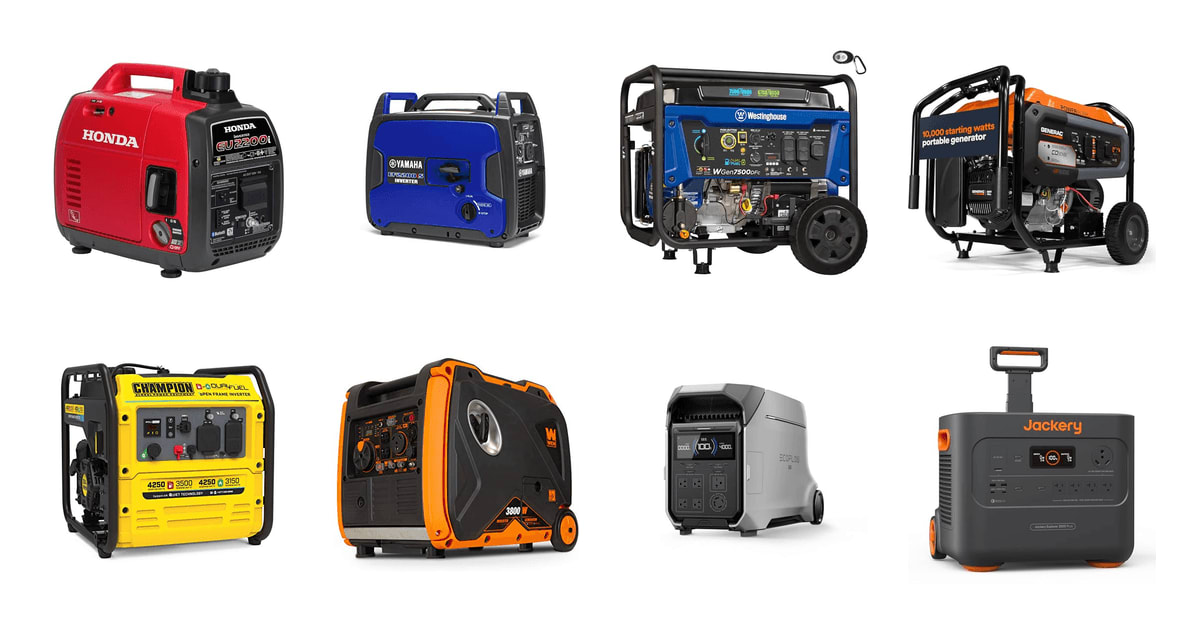
When the lights go out, you don't need to power your whole house. You need the fridge to stay cold, a few lamps on, phones charged, and maybe a CPAP machine running all night. A portable generator does that, and the good ones do it quietly enough that you can sleep. The rest is arithmetic. Add up what you actually need to run, size up for the surge when a compressor kicks on, and buy a little more capacity than you think you need.
None of these is a simple appliance. Gas models have to run outside, well away from windows and doors — the CPSC ties an average of 85 non-fire carbon monoxide deaths a year to portable generators, mostly when people ran them in a house or an attached garage. They need oil changes, fresh fuel and stabilizer between storms. Battery units skip all of that, but they run down and need something to refill them. And every one of these is heavy. There's no model here you'll enjoy moving.
So the right pick comes down to how much you need to run and how much noise you can live with. A small inverter covers a fridge, lights and electronics quietly. A big dual-fuel unit backs up a well pump and a window AC. A battery station is the only one you can safely run indoors. We think that the Honda EU2200i is the best portable generator for power outages for most people, and that the Yamaha EF2200iS is the one to buy if you want a little more running power and a longer stretch between refills.
Everything we recommend

Quiet, clean power and the best odds of starting years from now

Nearly the same quiet reliability, with a little more headroom
Twice the output of the little inverters, for a lot less money

Enough power for a well pump and a window AC, if you can move it

The only one here you can safely run indoors
At a glance
| Product | Rated Watts | Weight | Price | |
|---|---|---|---|---|
| Honda EU2200i 2200 Watt Inverter GeneratorTop pick | 2200W | 51 lbs | $1,199 |
| YAMAHA EF2200iS Inverter GeneratorRunner-up | 2200W | 55.2 lbs | $1,302.38 |
| Westinghouse 9500 Peak Watt Dual Fuel HomeUpgrade pick | 7500W | 202.1 lbs | $949 |
 | Generac 10Also in lineup | 8000W | 112 lbs | $1,049 |
 | Champion Power EquipmentAlso consider | 3500W | 79 lbs | $695 |
| WEN Super Quiet 3800-Watt RV-Ready Portable InverterBudget pick | 3400W | 99.2 lbs | $699.99 |
| EF ECOFLOW DELTA Pro 3 Portable PowerAlso great | 4000W | 115 lbs | $2,799On sale |
 | Jackery Explorer 2000 Plus Portable Power StationAlso consider | 3000W | 62 lbs | $899 |
How we picked
Real running watts. We compared rated running watts against the loads people actually name during outages: a fridge, a freezer, a sump or well pump, lights and a window AC. Published guidance from This Old House sets the floor for whole-house capability.
Clean power. We favored inverter models, since laptops, routers and CPAP machines need total harmonic distortion under about 3%. Where independent lab measurements existed, they counted for more than marketing language.
Fuel and runtime. We looked at tank size, quoted runtimes at quarter and half load, and whether a model can also burn propane, which stores for years and stays available when gas stations lose power.
Noise you can live with. We compared manufacturer decibel ratings at quarter and rated load, since a difference of ten decibels sounds about twice as loud and decides whether a generator can run overnight in a neighborhood.
Safety and starting. We gave weight to carbon monoxide shutoff systems, low-oil shutdown and electric start, and we leaned on Consumer Reports' owner-satisfaction data for how these machines hold up over five years.
Top pick
Quiet, clean power and the best odds of starting years from now
Honda EU2200i 2200 Watt Inverter Generator
The EU2200i is a small inverter generator that runs a fridge, lights, a router and a CPAP machine without waking the neighborhood. It also has the strongest record here for starting after a long stretch in the garage, which is what you want from a machine you use twice a year.
$1,199fromAmazonReliability is the whole point of a generator, and Honda's is the best documented here. Consumer Reports' owner-satisfaction survey put the five-year major repair rate for Honda and Yamaha inverters under 5%, against 18 to 22% for budget conventional brands. Wirecutter's long-term reporting found the EU2200i started on the first or second pull after a year and a half in storage with stabilizer in the tank. That's the number that matters at two in the morning during a storm.
Noise is the other thing you'll notice immediately. Honda rates the EU2200i at 48 dB(A) at quarter load and 57 dB(A) at rated load, about the level of a quiet conversation. A conventional generator of the same output runs 65 to 75 dB(A), which your ears read as roughly four times louder. If your houses sit close together, that gap decides whether you can run it overnight without an argument.
The tank holds just under a gallon, and Honda quotes 3.2 to 8.1 hours on it depending on load. Tom's Guide clocked 8.1 hours at a quarter load on less than a gallon, where similar conventional units averaged 5.8. Eco Throttle is why: the engine drops its speed when you're only asking it for a fridge and a couple of lamps. Less fuel burned, less noise, fewer trips to the gas can.
Inverter power is clean enough for the electronics you actually care about. Inverter generators keep harmonic distortion low, so a laptop, a router, a smart TV or a CPAP machine sees something close to what the wall gives it. CO-MINDER watches carbon monoxide levels and shuts the engine down before they get dangerous. Honda's Bluetooth app lets you check fuel and stop the unit from inside, which beats standing in the rain to do it.
Flaws but not dealbreakers
Twenty-two hundred starting watts doesn't go far. You'll cover a refrigerator, lights, a modem and phone charging, plus maybe a small window unit if nothing else is running. A well pump, a sump pump and an air conditioner at the same time are out of reach. You can pair two EU2200i units for double the output, but that means buying a second generator and a parallel cable.
It's gasoline only, so after a regional storm you're hunting for fuel at stations that may have no power to pump it. There's no electric start — you pull a cord. And it's the most expensive way here to get 2,200 watts, by a wide margin.
The EU2200i comes with a three-year residential warranty.
Runner-up
Nearly the same quiet reliability, with a little more headroom
YAMAHA EF2200iS Inverter Generator
The EF2200iS is Yamaha's answer to the Honda, and it lands in nearly the same place: quiet, clean and well built. It runs a bit longer at low load and has a standard RV outlet, so it's the better buy if you'll take it camping about as often as you'll need it at home.
$1,302.38fromAmazonYamaha and Honda are the two brands the reliability data actually favors. The same Consumer Reports survey grouped them together with major repair rates under 5% over five years, while budget conventional brands ran four times higher. Choosing between them is mostly a question of which panel you'd rather use in the dark. Yamaha's illuminated LED display shows voltage, output and hours at a glance, day or night.
The extra output is small, but it's real. Yamaha rates the EF2200iS at 2,200 watts, a bit above the Honda's continuous figure, and published numbers put it near 10.5 hours at a quarter load. That can be the difference between getting up to refuel and sleeping through. The 79cc engine and Smart Throttle drop the revs when demand falls, the same way Honda's Eco Throttle does.
The standard RV outlet keeps mattering in small ways. Plug a travel trailer straight in without hunting for an adapter, then use the same unit at home for the fridge and a box fan. The Smart Dial handles choke, run and stop with one knob, so there's one less thing to get wrong with cold hands. A DC outlet is there for charging a battery.
Yamaha's muffler work puts it in the same quiet class as the Honda, close enough that most people won't hear a difference from across a yard. At 55 pounds it's a few pounds heavier, which you'll feel on stairs and nowhere else. Both are a two-person carry if you're going any real distance.
Flaws but not dealbreakers
Like the Honda, this is a small machine. Twenty-two hundred watts covers essentials and nothing more, and there's no propane option, so your outage plan depends on gasoline you stored ahead or gasoline you can find afterward. It's pull start only.
The listing doesn't mention a carbon monoxide shutoff, and the Honda has one. That's not a reason to run either machine indoors — you never should — but it's a layer of protection you're giving up for no obvious gain.
Budget pick
Twice the output of the little inverters, for a lot less money
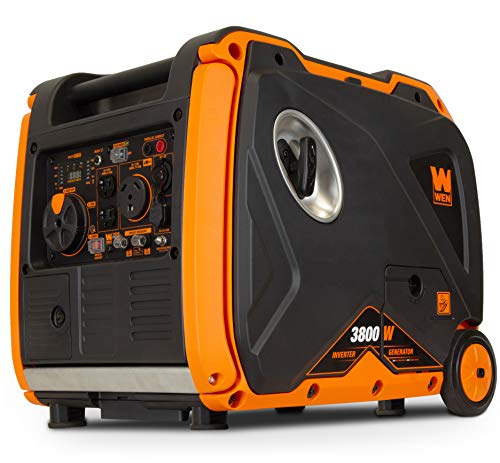
WEN Super Quiet 3800-Watt RV-Ready Portable Inverter
The WEN 56380i makes 3,800 surge and 3,400 rated watts with clean inverter power, an RV outlet and electric start. It costs a fraction of what the Honda does and covers a lot more of your house, as long as you don't need to carry it far.
$699.99fromAmazonThis is the size most people should actually be shopping at. Thirty-four hundred running watts handles a refrigerator, a chest freezer, lights, your router and a laptop, with room left for a sump pump cycling on and off. The small Hondas and Yamahas make you choose between those. This one mostly doesn't, and it's still an inverter, so nothing you plug into it is at risk.
Independent lab measurement put the 56380i's total harmonic distortion under 1.2% at half load, well below the 3% line generally considered safe for laptops, smart TVs and CPAP machines. That's clean power from a machine that costs a fraction of the Honda. The digital panel shows load, fuel and hours, so it's easy to see how close you're running to the limit.
WEN quotes about 8.5 hours at half load from the 212cc engine. The fuel shutoff lets you burn the carburetor dry before storage, which is the single best habit for a machine that sits unused eleven months of the year. A gummed carburetor is the most common reason a stored generator won't start, and that switch is how you avoid one.
It's RV ready too, with a TT-30R outlet next to two household receptacles, a 12V DC socket and a USB port. So the generator that backs up your fridge in January runs a travel trailer in July without an adapter. Electric start means you're not yanking a cord in the rain, and two units can run in parallel if you outgrow one.
Flaws but not dealbreakers
It weighs close to 100 pounds, double the Honda. Getting it from the garage to the driveway is a two-person job or a hand truck job, and that's worth sorting out before the storm rather than during it.
The warranty runs two years, shorter than the three you get from Honda, Westinghouse and Champion. WEN's long-term reliability record also isn't as well documented as Honda's or Yamaha's. And it's gasoline only, with no propane option.
The 56380i comes with a two-year warranty.
Upgrade pick
Enough power for a well pump and a window AC, if you can move it
Westinghouse 9500 Peak Watt Dual Fuel Home
The Westinghouse makes 7,500 running watts on gasoline and 6,750 on propane, with a 30-amp twist-lock outlet that ties into a transfer switch. It's the pick if you want the house to feel close to normal during a multi-day outage and you have somewhere to park 200 pounds.
$949fromAmazonThis is the first size that backs up a house instead of a room. Seventy-five hundred running watts covers a well pump, a sump pump, a refrigerator, a freezer, a window air conditioner and lights all at once. This Old House puts the practical floor for that kind of load near 5,000 watts and warns that most homeowners underestimate their starting watts by 30 to 40%. The headroom here absorbs that mistake.
Popular Mechanics ran it on a load bank at its full 9,500-watt peak for four hours with no voltage sag, while several budget conventional units dropped 8 to 12% under peak load. Sag is what makes a motor stall and a compressor overheat. It shows up in exactly the moment you're asking the generator to do the most, which is why the margin is worth paying for.
Dual fuel is the feature that saves outages. Gasoline goes stale in months and vanishes from stations when the power's out across a whole county. Propane keeps for years in the tank sitting next to your grill. CNET's fuel comparison found propane burns 10 to 15% less energy-equivalent per hour and produces measurably less carbon monoxide. You give up roughly a tenth of the peak output on propane. Take the trade.
The details are right, too. Push-button electric start with a remote key fob lets you fire it up from the porch. The L14-30R twist-lock feeds a transfer switch or interlock kit, which is the only safe way to get power into your panel. Low-oil and CO shutdowns, a digital hour meter, a fuel gauge and a 6.6-gallon tank round it out.
Flaws but not dealbreakers
It weighs about 202 pounds, which puts it in a different category of hassle. This isn't a generator you bring to a campsite. It lives in the garage and gets moved twenty feet to the driveway, and you should figure out how you'll do that before you need to.
It's a conventional generator, not an inverter, so the power is dirtier than what the Honda, Yamaha, WEN or Champion put out. Run anything sensitive through a surge protector or a small UPS. It's loud, too — conventional units this size sit around 65 to 75 dB(A). And under heavy load you'll burn something like half a gallon to a gallon of fuel an hour, which adds up fast across three days.
Westinghouse backs it with three years of limited service, labor and parts coverage.
Also greatOn sale
The only one here you can safely run indoors
EF ECOFLOW DELTA Pro 3 Portable Power
The DELTA Pro 3 is a 4,096Wh battery with a 4,000-watt inverter, 120/240V output and no exhaust at all. You can run it in a bedroom next to a CPAP machine, and it takes over in about ten milliseconds when the grid drops.
$2,799fromAmazonList priceNo fuel means no carbon monoxide, and that changes where you're allowed to put it. Every gas generator on this page has to sit well outside, away from windows and doors, in whatever weather caused the outage. This one sits in the hallway. EcoFlow rates it as low as 30 dB, quiet enough to sleep beside. If someone in your house runs oxygen equipment or keeps refrigerated medication, that settles it.
The switchover is the other reason to want it. Ten milliseconds is fast enough that a desktop, a router, a NAS or a CPAP never registers that the grid went away. Put your essential circuit behind it and outages stop being events you scramble for. You get a notification on your phone and keep working.
Capacity used to be where batteries lost, and this one pushes back hard. 4,096Wh keeps a fridge going for a couple of days on its own, and you can stack extra packs up to 48kWh. The 4,000-watt output handles a 240V load like a well pump, and X-Boost stretches it to 6,000 watts for stubborn starts. Solar, a wall outlet or even a gas generator can refill it.
The cells are LFP in an IP65-rated pack, which is the chemistry you want in something that sits near full charge for months between uses. EcoFlow covers it for five years. There's no oil to change, no carburetor to drain and no stabilizer to remember to buy in the fall.
Flaws but not dealbreakers
A battery only holds what you put into it. Run a window AC alongside the fridge and 4,096Wh disappears in well under a day. Without solar panels, which are sold separately, or a generator to top it off, a three-day outage means rationing hard: fridge, phones, medical gear and not much else.
It's expensive, more than most of the gas generators here, and it weighs 115 pounds. Portable means a handle and a hand truck, not a carry. Expansion batteries add up quickly, both in cost and in the space they take up.
EcoFlow covers the DELTA Pro 3 with a five-year warranty.
Who this is for
Buy one if you lose power more than occasionally and something in your life can't wait it out: food in the freezer, a sump pump in a wet basement, a home office, a CPAP machine, insulin in the fridge. The EIA reports the average American customer now goes without power for more than seven hours a year, the highest figure on record, with weather-driven outages up 78% over the previous decade. If your outages are short and rare and you have a gas stove and a cooler, you may not need one at all.
This guide covers portable generators and portable power stations you set up yourself and put away afterward. It doesn't cover permanently installed standby generators, which are wired to your panel, run on natural gas or a buried propane tank, and start on their own — those cost far more and need an electrician and a permit. It also doesn't cover the transfer switch or interlock kit itself, which you'll need if you want to power circuits in your panel rather than running extension cords. That part is a licensed-electrician job.
How we picked
Running watts: we matched rated continuous output to the loads people name during real outages — fridge, freezer, sump or well pump, lights, a window AC — and used published guidance on how badly homeowners underestimate surge. Clean power: we favored inverters and independent harmonic distortion measurements, since anything under about 3% is safe for laptops, smart TVs and CPAP machines. Fuel: we counted dual-fuel capability heavily, because propane stores for years and gasoline disappears after a regional storm. Noise: we compared decibel ratings at quarter and rated load, where ten decibels is the difference between a machine you can run overnight and one your neighbors will complain about. Safety: we looked for CO shutoff, low-oil shutdown and electric start, and weighed five-year repair-rate data on how these hold up.
Other portable generators for power outages worth considering
If you want dual fuel in something one person can move: The Champion Power Equipment ($695) — Champion's 4250/3500-watt inverter runs on gasoline or propane, weighs 79 pounds and sits near 64 dBA — quieter than a conventional unit of the same output. Champion quotes up to 22 hours on gasoline at 3,500 running watts, and about 21 hours on propane at 3,150. Output stays under 3% THD, so laptops and medical gear are fine, and you get an RV 30-amp outlet, two household plugs and two USB ports. It's louder than the Honda and Yamaha, and it can't approach the Westinghouse for whole-house loads. But it's the most flexible mid-size unit here, with a three-year warranty and Economy Mode for light loads.
If you want indoor-safe backup that's easier to move: The Jackery Explorer 2000 Plus Portable Power Station ($899) — The Jackery Explorer 2000 Plus holds 2,042Wh and puts out 3,000 watts — about half the EcoFlow's capacity, in a package that's 50 pounds lighter. Sixty-two pounds is still heavy, but one determined person can manage it. It charges fully in around two hours from a wall outlet or from six 200-watt solar panels, and it expands to 12kWh with add-on batteries, or 24kWh if you parallel two units. LFP cells and app monitoring match what EcoFlow offers. It doesn't advertise 240V output, though, so a well pump or any 240V circuit is off the table, and the smaller battery means less cushion on day three.
The competition
This is what our research surfaced, not a census of everything for sale. Generators move in and out of stock constantly, and after a storm the mid-size shelf fills with near-identical units from brands nobody has reliable long-term data on. Here's the one that made the shortlist but didn't make the cut.
The Generac 10 ($1,049) — Generac's 10,000 starting / 8,000 running watt gas generator is the closest thing here to our upgrade pick, and on paper it wins on several counts: more starting watts, PowerRush for motor loads, push-button start with recoil backup, COSense shutdown, a 7.9-gallon tank good for about 10 hours at half load or 15 at quarter, and 90 fewer pounds to wrestle. What it doesn't have is propane. That's the whole reason the Westinghouse takes the spot — gasoline is the fuel that runs out first after a regional outage, and propane sits in your garage for years without going bad. If you keep fuel on hand year-round and you'd rather have Generac's service network behind you, this is a fair swap.
Fuel, storage and safe setup
Run any gas generator outdoors only, at least twenty feet from windows, doors and vents, with the exhaust pointed away from the house. The CPSC ties an average of 85 carbon monoxide deaths a year to portable generators, mostly units placed in a garage or a few feet from an opening. An open garage door doesn't make it safe. Never refuel a hot engine — the NFPA counts roughly 900 generator-related home fires a year, most of them from refueling or from a unit parked against something flammable. Between outages, keep stabilizer in the tank, run the carburetor dry if your model has a fuel shutoff, change the oil on schedule, and start the thing every few months. You want to learn about a problem on a sunny afternoon, not during a storm.
Questions we get
What size portable generator do I need during an outage?
Add up what you need running at once. A typical refrigerator pulls about 200 watts running and 800 to start, a window AC around 1,440, and lights maybe 200 — call it 2,500 running watts minimum. If you also want a sump pump or a well pump, This Old House recommends at least 5,000 watts, because most people underestimate their starting loads by 30 to 40%.
What's the difference between running watts and starting watts?
Running watts is what an appliance draws continuously. Starting watts, sometimes called surge watts, is the brief spike when a motor or compressor kicks on, and it can be two to three times higher. Anything with a motor — fridge, freezer, pump, air conditioner — needs that headroom, so size the generator to the surge, not the steady draw.
Are inverter generators worth it over conventional ones?
For most households, yes. Inverters produce cleaner power, generally under 3% total harmonic distortion, which is what laptops, smart TVs and CPAP machines need. They're also dramatically quieter and burn less fuel at light loads because the engine throttles down. Conventional generators still make sense when you need a lot of watts for less money and you're mainly running motors and heaters.
How far from the house does a generator need to be?
At least twenty feet from any window, door or vent, with the exhaust aimed away from the building. Never in a garage, breezeway, crawlspace or under a deck, even with the door open. Carbon monoxide is odorless and it accumulates. Put a battery-powered CO alarm on every level of the house before you ever run one.
Do I need a transfer switch to connect a generator to my house?
If you want to power circuits in your electrical panel — furnace, well pump, hardwired lights — then yes, you need a transfer switch or a panel interlock kit installed by a licensed electrician. Plugging a generator into a wall outlet backfeeds the grid and can kill a lineworker. Without one, you're limited to running heavy-duty extension cords from the generator to individual appliances, which is legal and fine for a fridge and a few lamps.
Can a battery power station get me through a three-day outage?
It can, but only if you're disciplined or you have solar. A 4,096Wh unit like the DELTA Pro 3 runs a fridge, lights, a router and medical equipment for a couple of days, and expansion batteries push that further. Add air conditioning or electric cooking and it drains in hours. Pair it with solar panels or a gas generator for recharging if you want it to last a full multi-day outage.
Why you should trust us
For this guide:
- We read manufacturer spec sheets for all eight of these machines and compared their outlet configurations, fuel options, decibel ratings, quoted runtimes and warranty terms side by side.
- We drew on published runtime, noise, harmonic distortion and load-bank results from Tom's Guide, Popular Mechanics, CNET, Bob Vila and Wirecutter, plus Consumer Reports' owner-satisfaction data on five-year repair rates.
- We leaned on CPSC and NFPA figures, along with recurring themes in owner feedback about starting, storage and fuel, to shape the safety guidance and the flaws we call out.
- We read owner reviews on every listing, weighted toward the critical ones, because that is where the recurring failures show up.
- We have a systematic way of automatically fetching the latest prices, so the numbers on this page stay current.
- This is a research-focused guide, so the team may not own every product listed — though we often do own the top winners, which gives us extra context for the recommendations.
- We don't accept free products, and the retailer commission never changes which product we recommend.
Sources
Best Portable Generators — Wirecutter, The New York Times, Wirecutter
Portable Generator Ratings & Reliability — Consumer Reports, Consumer Reports
Generator-Related Carbon Monoxide Poisoning — CPSC, U.S. Consumer Product Safety Commission
Portable Generator Testing & Reviews — Popular Mechanics, Popular Mechanics
Best Generators for Home Backup Power — This Old House, This Old House
Portable Generator Reviews & Buying Guide — CNET, CNET
Best Portable Generators 2026 — Tom's Guide, Tom's Guide
EcoFlow Delta Pro 2 Review — Bob Vila, Bob Vila
Generator Safety Tips — National Fire Protection Association (NFPA), NFPA
Honda EU2200i Owner's Manual & Specs, Honda Power Equipment
WEN 56380i Super Quiet 3800W Review — Garage Wire, Garage Wire
Power Outage Statistics and Trends — U.S. Energy Information Administration, U.S. Energy Information Administration (EIA)
Amazon product listings and owner reviews for all 8 products
Manufacturer specification pages for each product
Some passages in this guide may be paraphrased with AI help. Prices are refreshed automatically.
More like this.
Continue exploring home reviews and recommendations.

The Best Portable Solar Generators for Emergencies
A power outage is boring right up until it isn't. The fridge stays cold for a few hours, then it doesn't. The phones drain, the router dies, and if…

The Best Solar Power Banks and Portable Chargers
A charger you carry outside has one job: keep your phone alive when there's no outlet for days. That sounds simple until you're three nights into a trip…

The Best Portable Power Stations for Camping
A power station is the quiet fix for the two things that actually annoy you at a campsite: a cooler that has to keep working, and phones that die by…

The Best Cordless Power Tool Combo Kits
A combo kit is how most people start a cordless collection, and the choice sticks around longer than you'd think. You're not really buying a drill and an…

The Best Power Strips With USB Ports
Look at your desk or your nightstand and count what's plugged in. A laptop, a phone, maybe a monitor, a lamp, earbuds, a tablet that's permanently at 12…

The Best Power Towers for Home Gyms
A power tower earns its floor space by doing three things you can't easily do anywhere else at home: pull-ups, dips, and hanging knee raises. Those three…