The Best Portable Solar Generators for Emergencies
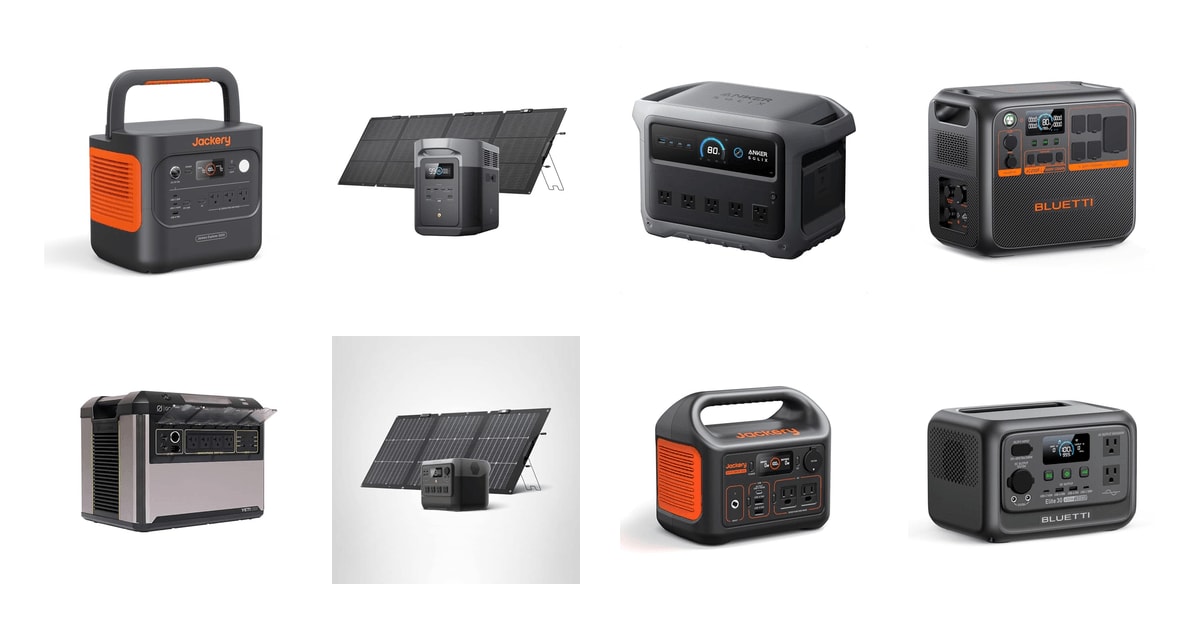
A power outage is boring right up until it isn't. The fridge stays cold for a few hours, then it doesn't. The phones drain, the router dies, and if someone in your house sleeps with a CPAP, the stakes climb fast. A portable solar generator is really just a big battery in a box with outlets on the front, and that's the point — you can run it inside the house without venting anything, and you can top it back up from the sun when the grid stays down. It's the difference between waiting out a storm and white-knuckling it.
Here's the honest caveat: none of these will run your whole house, and the capacity number on the box isn't what you actually get. Inverters waste some energy converting battery power to wall power, so plan on roughly 85 to 90 percent of the rated watt-hours reaching your devices. Solar recharging is slower than the marketing suggests, too. Panels hit their rated output only in direct, overhead sun, and a cloudy day after a hurricane can stretch a claimed three-hour recharge into most of a day. Buy for a few critical devices, not for normal life.
We looked at capacity, real output, battery chemistry, recharge speed and how much weight you'd actually have to carry down a flight of stairs. We think that the Jackery Explorer 2000 v2 is the best portable solar generator for most people, and that the Anker SOLIX C1000 Gen 2 is the one to buy if you want serious output in something you can carry with one hand.
Everything we recommend

Enough power for the fridge, light enough to move alone

Half the capacity, but you can carry it with one hand

Cheap insurance for the router, the laptop and a phone

More capacity, more outlets, and room to grow later
At a glance
| Product | Capacity | Output | Price | |
|---|---|---|---|---|
| Jackery Explorer 2000 v2 Portable Power StationTop pick | 2042Wh | 2200W | $899On sale |
 | EF ECOFLOW DELTA 2 Max Solar GeneratorAlso consider | 2048Wh | 2400W | $1,299 |
| Anker SOLIX C1000 Gen 2 Portable PowerRunner-up | 1,024Wh | 2,000W | $669 |
| BLUETTI AC200PL Portable Power Station 2304Wh 2400WUpgrade pick | 2304Wh | 2400W | $949.99On sale |
 | Goal Zero Yeti 1500 Portable Power StationAlso consider | — | 2,000W | $1,499.95 |
 | EF ECOFLOW Solar Generator RIVER 2 ProAlso consider | 768Wh | 1600W | $569 |
 | Jackery Explorer 300 Portable Power StationAlso in lineup | 292Wh | 300W | $259On sale |
| BLUETTI Elite 30 V2 Portable Power StationBudget pick | 288Wh | 600W | $279.99On sale |
How we picked
Real usable capacity. We compared rated watt-hours against published discharge testing, which consistently shows units delivering 85 to 93 percent of their nameplate capacity at moderate draw. We favored units where the gap between rated and usable was small and well documented.
Output and surge headroom. Continuous AC wattage decides what you can plug in at all, and surge wattage decides whether a compressor or motor starts. We looked for at least 600W continuous on small units and 2,000W on the larger ones, with pure sine wave output throughout.
Battery chemistry. We only considered LiFePO4 units. Manufacturer specs and published chemistry comparisons put lithium iron phosphate at 3,000 to 10,000 cycles versus 500 to 1,000 for older NMC cells, and LiFePO4 tolerates months of idle storage far better.
Recharge speed. A generator you can refill in an hour before a storm is worth more than one that takes five. We compared published AC and solar recharge times and gave weight to units supporting dual charging from wall and panels at once.
Weight you'd carry. We treated weight as a hard constraint rather than a footnote, since evacuation means moving the unit yourself. We noted where a spec sheet's portability claims matched owner accounts of actually carrying it.
Top pickOn sale
Enough power for the fridge, light enough to move alone
Jackery Explorer 2000 v2 Portable Power Station
The Explorer 2000 v2 holds 2,042Wh and pushes 2,200W across three AC outlets, which covers a refrigerator, a CPAP, and a pile of phones through a multi-day outage. At 39.5 pounds, it's the rare 2kWh unit one person can carry upstairs.
$899fromAmazonList priceThis is the sweet spot between capacity and something you can actually pick up. Most power stations in the 2kWh range weigh 70 pounds or more, which means they live wherever you set them down. Jackery claims the Explorer 2000 v2 is 41 percent lighter and 34 percent smaller than typical LiFePO4 units at this capacity. In practice you can move it from the kitchen to the bedroom without help, and you can get it into a car if you have to leave.
Two thousand watt-hours is the number that matters for outages. A standard refrigerator draws 100 to 200W, so you're looking at roughly 10 to 20 hours of fridge runtime depending on inverter losses and how often you open the door. A CPAP runs far longer than that — well past a couple of nights. And 2,200W of continuous output means you're not rationing which appliance gets plugged in.
The recharging story is what makes this a storm unit rather than a camping unit. Jackery rates it at 0 to 80 percent in 66 minutes on AC, or a full charge in 102 minutes using an emergency mode in the app. With 400W of panels, solar takes about six hours. That means when the forecast turns bad, you can top it off before the lights go out instead of hoping you charged it last month.
The LiFePO4 chemistry is the quiet reason to trust this thing. Lithium iron phosphate cells hold up for thousands of cycles instead of the several hundred you'd get from older NMC packs, and they tolerate sitting at partial charge for months. That matters more than it sounds, because an emergency unit spends most of its life doing nothing in a closet. Jackery rates the battery for up to ten years.
It's also quiet, which sounds like a luxury until you're running it overnight next to a bedroom. Jackery lists a silent charging mode below 30 decibels, and the fan ramps based on temperature rather than running flat out. Owners consistently mention how little noise it makes compared to the gas generator it replaced. There's a 20-millisecond UPS switchover too, so a desktop or a router doesn't blink when the grid drops.
Flaws but not dealbreakers
The rated capacity and the usable capacity aren't the same, and at least one technically inclined owner has argued the gap is wider than it should be once idle drain is factored in. Any power station loses some energy to the inverter and to just being switched on. If you leave it powered up with nothing plugged in, it'll slowly drain itself. Turn the AC output off when you're not drawing from it.
Firmware has been a sore spot. Owners have reported that solar charging can pulse or drop out on the original firmware version, fixed by a software update that Jackery hasn't done a great job publicizing. Check the app for updates when you unbox it, not in the middle of a storm. Bluetooth pairing is also inconsistent enough that a few owners mention having to reconnect.
Thirty-nine pounds is light for this capacity but it's still thirty-nine pounds. If you're picturing grabbing this on the way out the door alongside a bag and a kid, be realistic about that.
Jackery rates the Explorer 2000 v2's LiFePO4 battery for up to ten years of service life.
Runner-up
Half the capacity, but you can carry it with one hand
Anker SOLIX C1000 Gen 2 Portable Power
The Anker SOLIX C1000 Gen 2 packs 1,024Wh and 2,000W of output into a 25-pound box, which is a remarkable power-to-weight ratio. It recharges to full in about 49 minutes on AC, so you can prep it fast when a storm is coming.
$669fromAmazonNothing else here gives you this much output per pound. Two thousand watts of continuous AC — 3,000W peak — from a unit under 25 pounds means you can run a coffee maker, a space heater on low, or a full desk setup without thinking about it. Anker says the Gen 2 is 14 percent smaller and 11 percent lighter than comparable models. If you live in an apartment or you're planning around an evacuation, that difference is the whole argument.
The tradeoff is capacity. At 1,024Wh, this holds about half of what our top pick does, which puts a refrigerator in the five-to-eight-hour range rather than overnight. FEMA suggests planning for 72 hours of backup for essential devices, and a unit this size covers a CPAP for roughly 20 hours and phones dozens of times over. It's enough for the critical stuff, not enough to pretend nothing happened.
Recharging is genuinely fast. Anker rates a full recharge at 1,600W in 49 minutes with HyperFlash enabled through the app, and 1.8 hours from 600W of solar. Owners of the Gen 2 back this up, describing full recharges in under an hour. That speed changes how you use it — you can run it down, plug it in during a brief grid restoration, and be back at full before the next outage.
For medical devices, the sub-10-millisecond UPS switchover is the spec to care about. Plug a CPAP into the C1000 with the unit plugged into the wall, and when the power drops the machine doesn't notice. Owners who use it exactly this way report multiple nights of CPAP runtime on a single charge. Anker rates the cells for 4,000 cycles to 80 percent capacity.
Flaws but not dealbreakers
A thousand watt-hours goes quickly if you're running anything with a heating element or a compressor. Owners who bought it expecting to power a coffee maker or a full-size fridge for long stretches tend to be the ones wishing it lasted longer. It recharges fast enough that this is manageable when you have sun or intermittent grid power — less so during a long, cloudy outage.
Some of the best features live behind the app. The 1,600W ultrafast recharge isn't the default, and you'll need to enable it, which is one more thing to figure out before you need it rather than during. A previous generation had power-on issues that Anker has since addressed, so make sure you're buying the Gen 2.
Anker rates the C1000 Gen 2 battery to retain at least 80 percent capacity after 4,000 cycles.
Budget pickOn sale
Cheap insurance for the router, the laptop and a phone
BLUETTI Elite 30 V2 Portable Power Station
The Bluetti Elite 30 V2 holds 288Wh and puts out 600W continuous, enough to keep a router, a laptop and phones alive through a short outage. At 9.5 pounds it fits in a go-bag or a car trunk without much thought.
$279.99fromAmazonList priceThink of this as a UPS with a much bigger battery. Owners overwhelmingly use it that way — plugged into a router and modem so the internet stays up when the grid doesn't, or under a desk keeping a laptop and monitor running through a work call. The 10-millisecond switchover means nothing reboots. For a lot of people, that's the actual emergency scenario, not powering a refrigerator.
Six hundred watts of continuous output is unusually generous for a battery this small. Most units in the 300Wh class cap out around 300W, which rules out anything with a motor or a heating element. The Elite 30 V2 doubles that, and a power lifting mode pushes to 1,500W for stubborn loads. You still can't run a fridge for long on 288Wh, but you're not blocked by the inverter.
It charges fast enough to be useful on short notice: Bluetti rates 0 to 80 percent in 45 minutes and full in 70 minutes on a 380W wall charge. That's the difference between remembering it the night before a storm and remembering it an hour before. It also takes solar and car charging, so a long outage doesn't strand it.
At 9.5 pounds this is the one that actually goes in the bug-out bag or lives in the trunk year-round. LiFePO4 cells handle the temperature swings of a car better than older chemistry, and they hold a charge sitting idle for months. Owners use it for car camping, running electric blankets and fans overnight, and it comes back for the next trip.
Flaws but not dealbreakers
Two hundred and eighty-eight watt-hours is genuinely small. It won't run a refrigerator for a meaningful stretch, and anything with a compressor or heating coil will empty it in under an hour. Buy this knowing it's for electronics and small devices, not for keeping food cold.
Bluetti's warranty support has drawn complaints. At least one owner has described the company declining to honor the five-year global warranty advertised on its own site. That's a single account, not a pattern we can quantify, but it's worth factoring in when you're buying something meant to sit unused for years before you need it.
Upgrade pickOn sale
More capacity, more outlets, and room to grow later
BLUETTI AC200PL Portable Power Station 2304Wh 2400W
The Bluetti AC200PL holds 2,304Wh and delivers 2,400W across four AC outlets, with a 30A RV port and expansion up to 8,448Wh. It's the pick if you want one unit that handles home backup and an RV without compromise.
$949.99fromAmazonList priceExpandability is the real reason to spend up here. The AC200PL starts at 2,304Wh and takes external batteries to reach a maximum of 8,448Wh. That's a different category of backup — days of refrigeration rather than hours. You can buy the base unit now and add capacity when the budget allows, which beats replacing a smaller station later.
The port selection is the most complete in this lineup. Four 2,400W AC outlets, a 30A TT-30 RV port, a 48V DC port for charging an RV battery bank, a car port, two 100W USB-C PD ports and two USB-A — eleven in total. If you're running an RV in summer and a house in winter, one box covers both. The 30A outlet in particular is what lets you plug a trailer straight in.
Solar input goes up to 1,200W, which is the highest here, and that changes what off-grid recharging looks like. Bluetti rates a full solar charge at 1.9 to 3.8 hours with a large enough array. Owners running four 200W panels report sustained input in the 600W range on good days, keeping an RV's essentials topped up without touching the gas generator. AC recharge hits 80 percent in about an hour.
Pure sine wave output across all four outlets matters if you're powering anything sensitive. Medical equipment, newer refrigerators with variable-speed compressors and audio gear all prefer clean power, and modified sine wave can damage them over time. With 2,400W continuous, a microwave or a window air conditioner is on the table.
Flaws but not dealbreakers
It weighs 72 pounds. This is a set-it-and-leave-it unit — you'll want a cart or a second person to move it, and it's not something you grab during an evacuation. If portability is a real requirement, look at our top pick instead.
The AC200PL has a thin ownership record compared to the rest of this lineup, and among the accounts that exist, at least one owner reports a unit failing within five months and unhelpful support afterward. Bluetti's broader track record is decent, but there's less accumulated evidence here than for the Jackery or Anker units.
Bluetti rates the AC200PL's LiFePO4 cells for 3,000-plus cycles, which it describes as roughly a ten-year lifespan.
Who this is for
Buy one of these if you lose power more than once a year and there's something in your house that can't wait it out — food in the fridge, a CPAP, a home office, a sump pump during heavy rain. They're also the right call if a gas generator isn't practical for you. Gas units can't run indoors or in a garage at all, and carbon monoxide from portable generators kills hundreds of people a year in the US according to CDC data. A battery unit has no exhaust, so you can run it in the middle of the living room.
Skip these if you're trying to keep a whole house running through a multi-day outage. Even the largest unit here won't carry central air, an electric range, or a well pump for long, and if that's your requirement you want a standby generator wired to the panel. This guide covers self-contained battery power stations that pair with portable solar panels — not roof-mounted solar, not home battery walls, not gas or propane inverter generators. Some of these ship with a panel and some don't, so check what's in the box before you count on solar recharging.
How we picked
We weighed the specs that decide whether a unit gets you through a real outage. Usable capacity: published discharge testing shows real-world output landing around 85 to 93 percent of rated watt-hours, so we compared nameplate figures against measured results where they existed. Output: continuous wattage determines what you can run and surge wattage determines what will start, and pure sine wave is non-negotiable for medical devices. Chemistry: LiFePO4 only, because 3,000-plus cycles and good idle-storage behavior matter for something that sits in a closet for months. Recharge speed: we favored units that refill in an hour or two on AC and support solar and wall charging at the same time. Weight: we treated it as a real constraint, because during an evacuation you're the one carrying it.
Other portable solar generators for emergencies worth considering
If you want a bundle with a panel included and room to expand: The EF ECOFLOW DELTA 2 Max Solar Generator ($1,299) — The EcoFlow Delta 2 Max ships with a 220W solar panel, holds 2,048Wh and expands to 6,144Wh with two extra batteries. It combines up to 1,000W of solar with AC input to reach 80 percent in 43 minutes, which is the fastest charging claim in this group. Fifteen outlets and 2,400W of output — 3,400W with X-Boost — cover nearly anything in a house. What you give up is portability: at 71 pounds it stays where you put it. Owners also note the included panel is fiddly to set up and reposition, which is true of most portable panels but worth knowing before you plan around it.
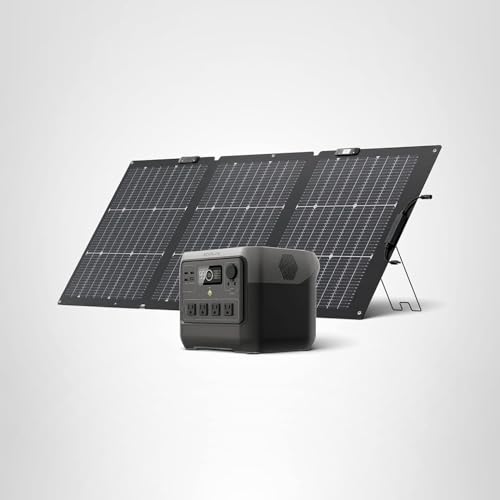
If you want a car kit that includes solar: The EF ECOFLOW Solar Generator RIVER 2 Pro ($569) — The EcoFlow River 2 Pro bundles a 768Wh station with a 160W panel and weighs 17.2 pounds, which makes it the easiest unit here to keep in a trunk. Published discharge testing found it delivered 714Wh of usable power from its 768Wh rating at a moderate draw — about 93 percent, among the better efficiency figures in this class. It handles 800W continuous, enough for a fridge for several hours or a sump pump in a pinch. But 768Wh is a short runway for anything demanding, and owners who expected it to carry heavy sustained loads have been disappointed.
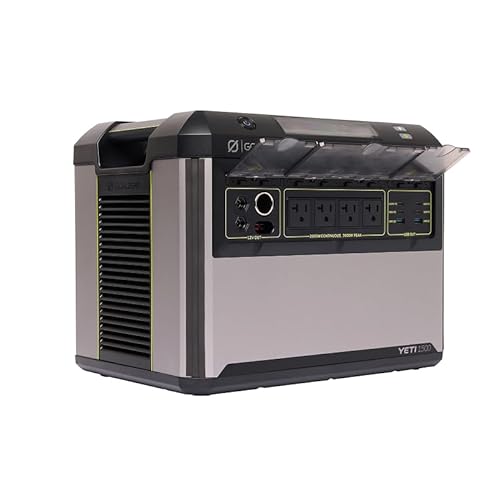
If you want a rugged case and a deep accessory ecosystem: The Goal Zero Yeti 1500 Portable Power Station ($1,499.95) — The Goal Zero Yeti 1500 has an aluminum housing, rubber bumpers and an IPX4 weather-resistance rating, plus vibration testing for rough roads — it's built more for the back of a truck than a closet. A 2,000W inverter with 3,600W surge covers fridges and power tools, and it charges to 80 percent from a wall outlet in under an hour. Goal Zero's panel and battery-tank lineup makes it a good long-term off-grid base. The catch is a thin and mixed ownership record, including reports of unexplained error codes and Bluetooth pairing that doesn't stay connected.
The competition
This is what our research surfaced among widely available portable solar generators — not a complete map of the market. Brands in this category refresh models constantly, and a unit that looks identical on paper may be a generation behind or ahead. The one below didn't make the picks, but it isn't a bad product.
The Jackery Explorer 300 Portable Power Station ($259) — The Jackery Explorer 300 is a 292Wh unit weighing about 7.5 pounds, with 300W of continuous output and 600W surge across two AC outlets, a 100W USB-C PD port and a car port. It's been around long enough to accumulate an enormous and consistently positive ownership record, and the newer LiFePO4 version is rated for over 4,000 cycles. We picked the Bluetti Elite 30 V2 over it in the budget slot because that unit doubles the continuous output at nearly the same capacity and weight, which opens up devices the Explorer 300 can't start. If you value the longer track record and Jackery's support reputation over raw output, this is still a sensible go-bag choice.
Living with one of these
A solar generator that's dead when you need it is furniture. Charge it to full every three to six months even if you haven't used it — LiFePO4 handles idle storage well, but no chemistry survives being left flat. Update the firmware through the manufacturer's app when you first unbox it, since several units in this category have shipped with solar-charging bugs fixed by later versions. Store it somewhere climate-controlled rather than an uninsulated garage, and turn the AC output off when nothing is plugged in, because the inverter draws power just sitting there. When bad weather is forecast, top it off early and consider running solar and wall charging together if your unit supports it. And confirm which panels your model actually accepts before you need them — connectors and voltage limits vary by brand.
Questions we get
What size solar generator do I need for a power outage?
Start by listing what genuinely can't wait: a refrigerator, a medical device, phones, a router. A 1,000Wh unit covers a CPAP for roughly 20 hours plus dozens of phone charges, which fits FEMA's guidance to plan for 72 hours of essential backup. If you want the fridge included, you want 2,000Wh or more, since a fridge draws 100 to 200W continuously.
Can a portable solar generator run a refrigerator?
Yes, if the inverter is big enough to handle the compressor's startup surge and the battery is large enough to matter. A typical fridge pulls 100 to 200W while running, so a 2,000Wh generator gets you roughly 10 to 20 hours after inverter losses. Opening the door less and running the fridge in cycles rather than continuously will stretch that considerably.
What's the difference between LiFePO4 and standard lithium-ion?
LiFePO4 — lithium iron phosphate — lasts 3,000 to 10,000 charge cycles before dropping to 80 percent capacity, while older NMC lithium-ion cells manage 500 to 1,000. LiFePO4 also runs cooler, is more thermally stable, and tolerates sitting partially charged for months. For a unit that lives in a closet waiting for an emergency, it's the only chemistry we'd recommend.
Can I use one of these indoors during a storm?
Yes, and that's a major reason to choose one over a gas generator. Battery power stations produce no exhaust and no carbon monoxide, so you can run one in a bedroom or living room. Gas generators kill hundreds of people a year in the US from carbon monoxide poisoning, per CDC data, and should never run in a garage or near an open window.
How long does solar recharging actually take?
Longer than the spec sheet suggests, usually. A 2,000Wh unit paired with a matched panel array typically needs four to ten hours of good sun, and manufacturer figures assume direct overhead light with panels angled correctly. Clouds, haze and winter sun angles can easily double that. Pair the unit with the panel wattage its manufacturer recommends, and treat solar as a way to extend runtime rather than a fast refill.
Can I charge one while using it?
Most modern units support pass-through charging, so you can run devices and recharge at the same time. Several also allow dual charging from solar and a wall outlet simultaneously, which is the fastest way to top off before an incoming storm. Check your specific model's manual, since pass-through behavior and input limits vary by brand.
Why you should trust us
For this guide:
- We compared manufacturer specifications for capacity, continuous and surge output, solar input limits and published recharge times across every unit in this guide.
- We read published reviews and standardized discharge testing from outlets including Tom's Guide, PCMag and RTINGS to understand how rated capacity compares with real-world usable output.
- We reviewed owner feedback themes for each product to identify recurring problems — firmware bugs, app connectivity, warranty support — that spec sheets don't surface.
- We read owner reviews on every listing, weighted toward the critical ones, because that is where the recurring failures show up.
- We have a systematic way of automatically fetching the latest prices, so the numbers on this page stay current.
- This is a research-focused guide, so the team may not own every product listed — though we often do own the top winners, which gives us extra context for the recommendations.
- We don't accept free products, and the retailer commission never changes which product we recommend.
Sources
Best Portable Power Stations 2026 — Wirecutter, Wirecutter
Best Solar Generators 2026 — CNET, CNET
Best Solar Generators Tested by Bob Vila — BobVila.com, Bob Vila
Portable Power Station Reviews & Ratings — RTINGS.com, RTINGS.com
Best Solar Generators for Home Backup — Forbes Home, Forbes Home
Emergency Power Planning Guide — Ready.gov / FEMA, FEMA / Ready.gov
Portable Solar Generator Comparison Lab Tests — Tom's Guide, Tom's Guide
EcoFlow Delta 2 Max Full Review — Outdoor Gear Lab, OutdoorGearLab
Jackery Explorer 2000 Pro Specs & Review — PCMag, PCMag
Bluetti AC200P Long-Term Review — Clean Energy Reviews, Clean Energy Reviews
Solar Generator Buyer's Guide — Popular Mechanics, Popular Mechanics
Amazon product listings and owner reviews for all 8 products
Manufacturer specification pages for each product
Some passages in this guide may be paraphrased with AI help. Prices are refreshed automatically.
More like this.
Continue exploring lifestyle reviews and recommendations.

The Best Portable Generators for Power Outages
When the lights go out, you don't need to power your whole house. You need the fridge to stay cold, a few lamps on, phones charged, and maybe a CPAP…

The Best Solar Power Banks and Portable Chargers
A charger you carry outside has one job: keep your phone alive when there's no outlet for days. That sounds simple until you're three nights into a trip…

The Best Outdoor Solar Garden Lights
Solar garden lights solve a problem that used to mean digging a trench. You want the front walk lit so nobody trips on the step, or the back fence lit so…

The Best Solar Attic Fans
Your attic is the hottest room in the house, and nobody lives in it. On a clear summer afternoon the air up there can push past 150°F, and that heat…

The Best Foam Surfboards for Beginners
A foam surfboard is the closest thing surfing has to an insurance policy. The deck is soft, the rails are soft, and when the board comes back at you in…

The Best Outdoor Deck Boxes
A deck box does one boring job well: it keeps your cushions dry and off the ground. That matters more than it sounds. Wet cushions take two days to dry,…