The Best Portable Power Stations for Camping
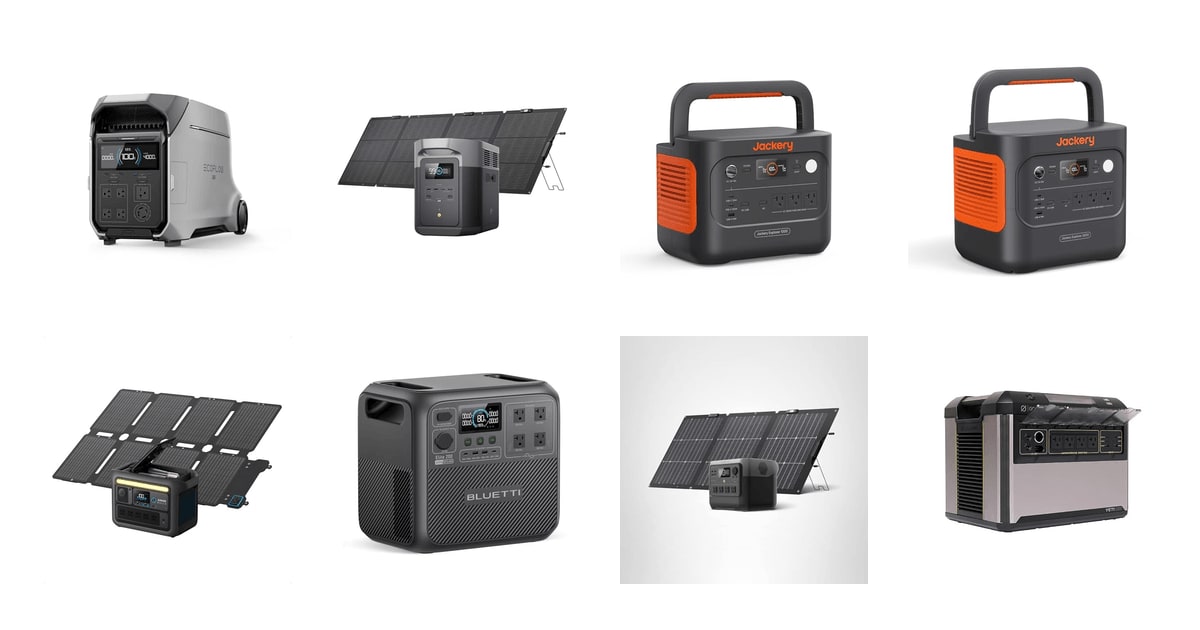
A power station is the quiet fix for the two things that actually annoy you at a campsite: a cooler that has to keep working, and phones that die by dinner. There's no pull cord, no gas can rattling around in the trunk, no exhaust drifting into the tent. You plug things in the way you would at home. And the practical math is simpler than the spec sheets suggest — a typical car-camping weekend pulls somewhere around 200 to 400 watt-hours a day, which a 1kWh station covers for two or three nights.
Here's the honest catch: none of these do everything. The models with enough capacity to run a cooler for a long weekend and still handle a coffee maker are heavy, and the light ones give up the headroom you'd want for anything with a heating element. Cold hurts too. Below roughly 14°F, RTINGS.com's cold-temperature battery data shows stations losing 20 to 30 percent of usable capacity, so fall trips and high-altitude sites need padding. Rated capacity is a ceiling, not a promise.
You also can't shop these purely on watt-hours. Inverter efficiency, standby draw, surge headroom and how fast the thing refills from a wall outlet all change what you actually get out of a charge. That's where the spread between similar-looking models shows up. We think that the Jackery Explorer 1000 v2 is the best portable power station for camping for most people, and that the Bluetti Elite 200 V2 is the one to buy if you need two full days of power without rationing.
Everything we recommend

Enough power for a long weekend, light enough to carry alone

Twice the capacity and real cooking power, at twice the weight
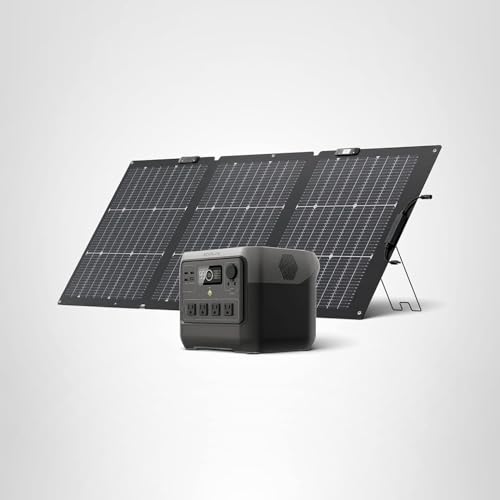
Light enough to actually carry, small enough to fit anywhere

Whole-camp power that also runs your house in an outage

A compact kit with camp lights and a panel already in the box
At a glance
| Product | Capacity (Wh) | AC Output (W) | Price | |
|---|---|---|---|---|
| EF ECOFLOW DELTA Pro 3 Portable PowerUpgrade pick | 4096Wh | 4000W | $3,699 |
 | EF ECOFLOW DELTA 2 Max Solar GeneratorAlso consider | 2048Wh | 2400W | $1,299 |
| Jackery Explorer 1000 v2 Portable Power StationTop pick | 1070Wh | 1500W | $559 |
 | Jackery Explorer 2000 v2 Portable Power StationAlso consider | 2042Wh | 2200W | $999 |
| Anker SOLIX C800X Portable Power Station andAlso great | 768Wh | 1,200W | $449.99 |
| BLUETTI Elite 200 V2 Portable Power StationRunner-up | 2073.6Wh | 2600W | $899On sale |
| EF ECOFLOW Solar Generator RIVER 2 ProBudget pick | 768Wh | 1600W | $539On sale |
 | Goal Zero Yeti 1500 Portable Power StationAlso in lineup | — | 2,000W | $1,499.95 |
How we picked
Capacity that fits real trips. We started from published load figures — a 12V compressor cooler at 40 to 60 watts, a CPAP at 30 to 60 watts a night — and looked for stations that cover two to three nights without a recharge. That put the 768Wh to 2,000Wh range at the center of the guide.
LFP chemistry only. Lifecycle data aggregated by RTINGS.com shows LFP cells holding over 80 percent capacity past 3,500 cycles against 500 to 800 for NMC. Every pick here uses LFP, because a station you camp with a dozen times a year should outlast the vehicle you carry it in.
Weight you'll accept. We compared manufacturer weights against the realistic distance from a parking spot to a campsite. Anything over roughly 50 pounds got evaluated as a vehicle-based unit rather than something you carry, and we say so in each entry.
Charge speed and solar input. We checked stated wall-charge times and maximum solar input wattage rather than vague solar compatibility claims. Published figures show most 1kWh-class stations now reaching 80 percent in under an hour from a wall outlet, so anything slower had to justify itself.
Output headroom. Continuous AC wattage and surge rating determine whether you can run a kettle or just charge phones. We read spec sheets and owner feedback for reports of tripped inverters on common camp appliances, and we flag every ceiling in the picks.
Top pick
Enough power for a long weekend, light enough to carry alone
Jackery Explorer 1000 v2 Portable Power Station
The Explorer 1000 v2 packs 1,070Wh and a 1,500W inverter into 23.8 pounds, which is about the sweet spot for car camping. It'll run a 12V cooler overnight, keep a CPAP going, and refill from a wall outlet in around an hour.
$559fromAmazonFor most campers, 1,070Wh is the number that matters. A 12V compressor cooler like a Dometic CFX or a BougeRV averages 40 to 60 watts, which Outdoor Life's figures put at roughly 15 to 20 hours of runtime from a station this size. Add phones, a headlamp charge and a string of lights and you're still looking at two nights before you need sun or a wall outlet. That covers the trip most people actually take.
The 23.8-pound weight is the part you'll notice at the campsite. You can carry it from the trunk to the picnic table one-handed, set it down, and not think about it again. Heavier stations get parked wherever you first put them down. This one moves with you — under the awning when it rains, into the tent vestibule at night, back in the car in the morning.
Charging is fast enough that you stop planning around it. Jackery's app has an emergency mode that takes it from empty to full in about an hour; the default is 1.7 hours, which is gentler on the cells. Plug it in while you pack the car and it's ready before you are. There's also a 30dB quiet charging mode if you're topping up overnight next to a tent.
The LFP cells are why this is a ten-year purchase and not a three-year one. Jackery rates them for 4,000 cycles to 70 percent capacity. Compare that to the 500 to 800 cycles typical of NMC chemistry in RTINGS.com's aggregated lifecycle data. If you camp twenty weekends a year, you'll be replacing your tent before you replace this. Owner reports back it up — people running these for years without noticeable fade.
Ports are sensible rather than exhaustive: three pure sine wave AC outlets, two USB-C (one at 100W), a USB-A, and a 12V car port. That 100W USB-C handles a laptop directly, no AC adapter and no inverter losses. The 1,500W continuous rating with a 3,000W surge covers a small fridge or an electric kettle, though not both at once.
Flaws but not dealbreakers
The 1,500W ceiling is real. An induction burner or a high-draw space heater will trip it, and if you're the kind of camper who wants to cook electric, you want the Bluetti instead. Coffee makers are borderline — many draw 1,200W and will work, but they'll drain a meaningful chunk of the battery in ten minutes.
There's no expansion. What you buy is what you get, so if your power needs grow — a second cooler, a partner who also uses a CPAP — you're buying a second station rather than adding a battery module. That's a genuine limitation compared to the Bluetti and the larger Jackery.
Jackery rates the Explorer 1000 v2 battery for over 4,000 cycles and a projected ten-year lifespan.
Runner-upOn sale
Twice the capacity and real cooking power, at twice the weight
BLUETTI Elite 200 V2 Portable Power Station
The Elite 200 V2 holds 2,073Wh and pushes 2,600W continuous, which is enough for an induction burner or an electric kettle without thinking about it. Its 10W standby draw is unusually low, so it doesn't quietly bleed off charge between trips.
$899fromAmazonList priceTwo nights becomes four. That's the practical difference here — with roughly 2,000 usable watt-hours you can run a cooler continuously, charge everyone's devices, and still run a small appliance without doing arithmetic. For a base camp you're not moving for a few days, this is the more comfortable choice.
The 2,600W continuous output changes what you can cook. Most 1kWh-class stations top out around 1,500W, which rules out induction burners and most electric kettles. The Elite 200 V2 handles them, with a 3,900W lifting mode for the surge when a motor or heating element kicks on. If your camp cooking involves anything other than a propane stove, this is the tier you need.
Bluetti's low standby consumption deserves attention because it's the spec nobody checks. At around 10W idle, the Elite 200 V2 wastes far less sitting in your garage between trips than typical competitors. One owner of the larger Jackery flagged idle losses eating into their real-world capacity — that's the exact problem this design targets. If your station lives unused for weeks at a time, it matters.
Turbo mode refills it from empty to 80 percent in about an hour at 1,800W AC input. Standard mode does a full charge in 1.6 hours. There's also a silent mode for overnight topping up. The cells are automotive-grade LiFePO4 rated for over 6,000 cycles, which is more headroom than most people will ever use.
Flaws but not dealbreakers
At 53 pounds it's a two-handed lift, and awkward at that. You'll want it in the trunk near the tailgate, not buried under gear. Backpackers and anyone hiking gear from a parking lot should look elsewhere entirely.
Some owners note that the app's charging controls take a bit of learning — you're managing charge ceilings and discharge floors to protect battery life, which is more fiddling than the Jackery asks of you. It's not difficult, just not invisible.
Bluetti rates the automotive-grade LiFePO4 cells for over 6,000 cycles and projects a 17-year lifespan at everyday use.
Budget pickOn sale
Light enough to actually carry, small enough to fit anywhere
EF ECOFLOW Solar Generator RIVER 2 Pro
At 17.2 pounds with 768Wh, the RIVER 2 Pro is the one you'll bring on trips where you'd leave a bigger station home. It ships with a 160W solar panel, which makes it a complete off-grid kit rather than a battery you still need to accessorize.
$539fromAmazonList priceWeight is the feature. Wirecutter's comparative analysis singled out the RIVER 2 Pro at 17.2 pounds as unusually light for its 768Wh capacity, and that number is what makes it different in practice. You can carry it in one hand along with a chair. Motorcycle campers, cyclists and anyone loading a small hatchback will find room for it where a 40-pound station wouldn't fit.
768Wh is genuinely enough for a solo camper or a couple. Two or three nights of CPAP use — Popular Mechanics puts a non-humidified machine at 30 to 60W a night — plus phone and headlamp charging. Owners report multiple nights of astrophotography gear, and several run CPAPs with a DC adapter to skip inverter losses entirely. Skip the AC outlet where you can and the runtime stretches noticeably.
The included 160W panel is the part that makes this a kit. It folds flat, has a kickstand case, and converts up to 22 percent, which EcoFlow puts at roughly 4.8 hours for a full recharge in good sun. For a multi-day trip where you're parked in an open site, that's a self-sustaining loop. You don't have to research panels and connectors separately.
The 800W AC output is the honest limit, though X-Boost stretches it to 1,600W for some resistive loads. LFP cells rated for over 3,000 cycles mean this isn't a disposable purchase despite costing far less than the bigger picks. It's the smallest sensible station here, not a compromised one.
Flaws but not dealbreakers
800W rules out a lot. No electric kettle, no induction burner, no space heater. A small compressor cooler and device charging is the honest scope, and if you push beyond that you'll be frustrated rather than merely limited.
The panel needs attention. Solar output depends heavily on angle, and owners of similar kits describe repositioning throughout the day to keep harvest up. If you leave it flat on the picnic table and walk away, you'll get a fraction of the rated input.
EcoFlow includes a 5-year service term with the RIVER 2 Pro.
Upgrade pick
Whole-camp power that also runs your house in an outage
EF ECOFLOW DELTA Pro 3 Portable Power
The DELTA Pro 3 holds 4,096Wh and puts out 4,000W across 120V and 240V, expandable to 48kWh. It's a home backup system that happens to have a handle, and at 115 pounds it's for RVs, trailers and driveways rather than tent sites.
$3,699fromAmazonThis is the pick for people whose camping is really van life or trailer life. 4,096Wh runs a rooftop air conditioner, a residential fridge and everything else for a couple of days without solar. The 240V split-phase output means RV appliances that need it will actually work, which is rare in a portable unit. Consumer Reports found 67 percent of owners buy these primarily for camping — this is the model that also covers the 21 percent buying for outages.
At 115 pounds, portability means it has wheels and handles, not that you'll carry it. Plan on it living in one place: an RV bay, a trailer, the back of a truck. Two people can lift it into a vehicle. One person cannot. If you're tent camping and hauling gear from a parking spot, this is the wrong tool and the Jackery is the right one.
Expansion is the long game. You can scale to 48kWh with additional batteries or smart generators, and there are seven charging methods including EV charging stations. Owners describe running a refrigerator for well over two days on the base unit alone during outages. If you're building a system rather than buying an appliance, this is the platform with the most room to grow.
X-Quiet technology keeps it at around 30dB, which is genuinely quiet for something this size — you can sleep near it. The automotive-grade LFP cells sit in an IP65-rated pack, and the 10ms switchover makes it a real uninterruptible supply for anything you can't have blink off.
Flaws but not dealbreakers
Owner feedback includes a meaningful minority reporting system faults and difficult warranty support. It's not the majority experience, but the failures people describe are total rather than partial, and getting them resolved has frustrated some buyers. That's worth weighing on a purchase this size.
Charge rate control is limited. Some owners want finer control over input wattage when they're feeding it from a constrained source like a small generator or a weak circuit, and the unit doesn't always let them dial it down.
EcoFlow covers the DELTA Pro 3 with a 5-year warranty.
Also great
A compact kit with camp lights and a panel already in the box
Anker SOLIX C800X Portable Power Station and
The SOLIX C800X pairs 768Wh and 1,200W output with a 100W IP67 solar panel and built-in three-mode camping lights. It's the most campsite-specific design here, and it recharges to 80 percent in 2.3 hours on solar alone.
$449.99fromAmazonThe built-in lights sound like a gimmick until you're setting up in the dark. Three modes, mounted on the unit, no separate lantern to find or charge. Owners consistently call it out as the thing they didn't expect to use and then used constantly. It's a small design decision that reflects someone thinking about camping specifically rather than home backup.
1,200W from a 24-pound box is more headroom than the RIVER 2 Pro offers at similar capacity. SurgePad pushes it to 1,600W for startup loads, and there are ten ports, so you're not juggling adapters when four people want to charge at once. If you want the compact class but keep bumping into the RIVER 2 Pro's 800W ceiling, this is the fix.
Solar recharge is quick — up to 300W of input takes it to 80 percent in about 2.3 hours. The included panel is 100W and IP67 rated, so a surprise shower won't end your trip. Owners note real-world harvest from that panel runs well below its rating in imperfect conditions, which is true of every panel but worth expecting.
One quirk shows up repeatedly in owner feedback: the unit doesn't reliably detect AC loads under about 20 watts. A phone charger left plugged into the AC outlet may not register. Use the USB ports for small devices and it's a non-issue, but it'll confuse you the first time.
Flaws but not dealbreakers
It's a newer listing with less accumulated owner history than the Jackery or EcoFlow options, so long-term reliability patterns aren't established yet. The reports that exist are positive, but there aren't many of them.
At 24 pounds for 768Wh, it's heavier than the RIVER 2 Pro for the same capacity. You're paying that weight for the extra output and the lights, which is a reasonable trade — just not a free one.
Who this is for
This guide is for people who drive to a campsite and want the cooler, the lights and the phones handled without a gas generator. That covers weekend car campers, van and trailer owners, CPAP users who won't sleep without their machine, and anyone in a campground where generators are restricted or banned. It's also for households who want one purchase to serve both camping and a power outage, which is how a large share of owners actually use these.
It's not for backpackers. Even the lightest station here is 17 pounds, which is more than most people's entire base weight — if you're carrying gear on your back, you want a solar-charged battery bank instead. It's also not for whole-home backup as a primary purpose; that's a different guide with different products. And we've limited this to complete stations, not panels or accessories bought separately.
How we picked
We built the shortlist around a few things that actually change your trip. Capacity: enough watt-hours for two to three nights of a cooler plus device charging, which puts the practical range between roughly 768Wh and 2,000Wh. Chemistry: LFP cells only, since published lifecycle data puts them at five to seven times the cycle life of NMC. Weight: we treated anything past about 50 pounds as a vehicle-bound unit and said so plainly. Charge speed: stated wall-charge times to 80 percent, plus maximum solar input in watts rather than vague solar-ready claims. Output: continuous AC wattage and surge headroom, because that's what decides whether your kettle works. Ports: enough AC, USB-C PD and 12V to skip the adapter pile.
Other portable power stations for camping worth considering
If you want 2kWh in the smallest possible box: The Jackery Explorer 2000 v2 Portable Power Station ($999) — The Jackery Explorer 2000 v2 fits 2,042Wh into 39.5 pounds, which is about 14 pounds lighter than the Bluetti at similar capacity. Jackery claims it's 41 percent lighter and 34 percent smaller than typical 2kWh LiFePO4 stations, and the dimensions bear that out — it's roughly a 10-inch cube. You give up some output, at 2,200W against the Bluetti's 2,600W, and a few owners report that idle power loss cuts into effective capacity more than they expected. One also flagged that a firmware update is needed for solar charging to behave properly, which Jackery hasn't communicated well. If weight per watt-hour is your priority, though, nothing else here matches it.
If you want a proven platform with panels included: The EF ECOFLOW DELTA 2 Max Solar Generator ($1,299) — The DELTA 2 Max bundles 2,048Wh with a 220W solar panel and hits 80 percent in 43 minutes when you combine solar and AC input — the fastest figure in this group. It's expandable to 6kWh with extra batteries, runs at 30dB, and has 15 outlets, which is more than anyone needs and occasionally exactly right. At 71 pounds it's the heaviest thing here short of the DELTA Pro 3, and the LFP cells are rated for 3,000 cycles rather than the 4,000-plus of the newer picks. Owner sentiment on this platform is unusually consistent, which counts for something.
The competition
This is what our research surfaced, not a survey of everything on the market. Portable power station lineups turn over quickly, and manufacturers refresh models faster than most review sites can keep up. The products below were shortlisted and then lost out to a pick for specific reasons.
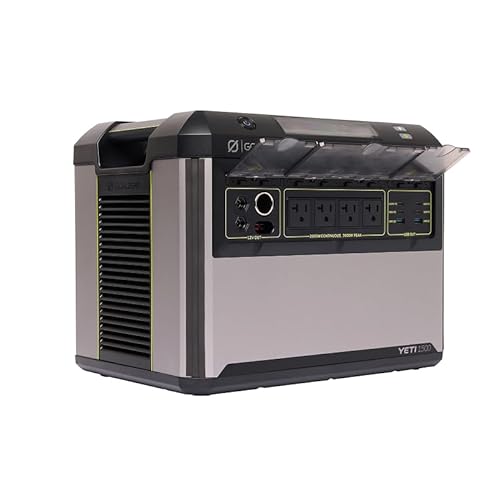
The Goal Zero Yeti 1500 Portable Power Station ($1,499.95) — The Goal Zero Yeti 1500 has the most rugged build here — aluminum casing, rubber bumpers, IPX4 weather resistance, port shields against rain and mud, and vibration testing for washboard roads. Its 2,000W inverter with 3,600W surge is generous, it charges to 80 percent in under an hour, and there's a 140W USB-C port. Tom's Guide's lab work on Goal Zero's inverter design found unusually low conversion losses, which is a real advantage over a long weekend. What holds it back is thin owner history and a recurring complaint about Bluetooth pairing that doesn't persist, meaning you re-pair your phone each time you want the app. A few buyers also describe error codes that support couldn't explain. If you camp on rough roads and in bad weather and you don't care about the app, it's still a defensible choice — we'd just want to see more accumulated feedback first.
Getting the most from your station
Two habits do most of the work. First, don't store it full or empty — most manufacturers suggest parking it around 50 to 80 percent between trips and topping it up before you leave, which slows the calendar aging that happens regardless of use. Second, plan for cold. Below roughly 14°F, expect 20 to 30 percent less usable capacity, so a fall or high-altitude trip needs padding in your estimates. Keep the station in a sleeping bag stuff sack or inside the vehicle overnight rather than exposed. At the site, give it a few inches of clearance for airflow, keep it out of direct afternoon sun, and run small devices off USB rather than AC — the inverter costs you energy every time it converts.
Questions we get
What size power station do I need for a weekend camping trip?
A typical car-camping day pulls 200 to 400 watt-hours once you count a cooler, phones and lights. That makes a 1kWh station the practical sweet spot for two to three nights before you need sun or a wall outlet. If you're running an appliance with a heating element, or camping with more than two people, step up to the 2kWh class.
How many watt-hours do I need to run a mini-fridge while camping?
A 12V compressor cooler like a Dometic CFX or BougeRV averages 40 to 60 watts, which Outdoor Life's numbers put at roughly 15 to 20 hours of runtime from a 1,024Wh station. A household mini-fridge on AC draws considerably more, since you're also paying inverter losses. For a full weekend with a cooler plus everything else, plan on 1kWh minimum and 2kWh if you'd rather not think about it.
Can a portable power station run a CPAP machine while camping?
Yes, and it's one of the most common reasons people buy one. A non-heated, non-humidified machine draws roughly 30 to 60 watts a night, so Popular Mechanics puts a 500Wh station at about 8 to 16 hours of runtime — two to three nights. Turn off the humidifier and heated tube, and use a DC adapter instead of the AC outlet if your machine supports it. Skipping the inverter meaningfully extends how many nights you get.
What's the difference between LFP and NMC batteries?
LFP, or lithium iron phosphate, lasts far longer and runs cooler. Lifecycle data aggregated by RTINGS.com shows LFP holding over 80 percent capacity past 3,500 cycles against 500 to 800 for NMC. NMC is lighter and cheaper to make, which is why it persists in budget units. For anyone camping more than a dozen times a year, LFP is the better long-term buy — every pick in this guide uses it.
How long does solar charging actually take?
It depends entirely on maximum solar input wattage, not on whether a station is labeled solar-compatible. A station accepting 900W of input can refill from empty in around 2.5 to 3 hours in strong summer sun; one capped at 100 to 200W will take most of a day. Check the maximum input figure against the panel array you own, and expect real-world harvest well below rated numbers unless you're repositioning panels through the day.
How cold is too cold for a portable power station?
Most stations keep working well below freezing but lose usable capacity as temperatures drop. RTINGS.com's cold-temperature data shows a 20 to 30 percent reduction below 14°F, which matters for fall and high-altitude trips. Many units also refuse to charge below a certain temperature even though they'll still discharge. Store it inside your vehicle or in an insulated bag overnight and let it warm before charging.
Why you should trust us
For this guide:
- We compared manufacturer specifications for every station here — capacity, continuous and surge output, weight, charge times and maximum solar input — against the load figures published for common camping appliances.
- We read published reviews and lab findings from RTINGS.com, Tom's Guide, PCMag, Popular Mechanics and Outdoor Life on battery chemistry, inverter efficiency and cold-weather capacity loss.
- We reviewed owner feedback across all eight listings for recurring themes — idle power draw, app reliability, solar harvest in imperfect conditions and warranty support — and reflected those patterns in the flaws and competition sections.
- We read owner reviews on every listing, weighted toward the critical ones, because that is where the recurring failures show up.
- We have a systematic way of automatically fetching the latest prices, so the numbers on this page stay current.
- This is a research-focused guide, so the team may not own every product listed — though we often do own the top winners, which gives us extra context for the recommendations.
- We don't accept free products, and the retailer commission never changes which product we recommend.
Sources
Best Portable Power Stations 2026 — Wirecutter, Wirecutter / NYT
Portable Power Station Reviews & Lab Tests — RTINGS.com, RTINGS.com
Best Portable Power Stations for Camping — Outdoor Life, Outdoor Life
Best Portable Power Stations Tested — Tom's Guide, Tom's Guide
Best Portable Power Stations — PCMag, PCMag
Best Portable Power Stations — Popular Mechanics, Popular Mechanics
Portable Power Stations Buying Guide — Consumer Reports, Consumer Reports
Best Portable Power Stations — The Verge, The Verge
EcoFlow Delta 3 Pro Official Specifications, EcoFlow
Jackery Explorer 2000 Plus Official Specifications, Jackery
Amazon product listings and owner reviews for all 8 products
Manufacturer specification pages for each product
Some passages in this guide may be paraphrased with AI help. Prices are refreshed automatically.
More like this.
Continue exploring electronics reviews and recommendations.

The Best Solar Power Banks and Portable Chargers
A charger you carry outside has one job: keep your phone alive when there's no outlet for days. That sounds simple until you're three nights into a trip…

The Best Portable Generators for Power Outages
When the lights go out, you don't need to power your whole house. You need the fridge to stay cold, a few lamps on, phones charged, and maybe a CPAP…

The Best Portable Grills for Camping and Tailgating
A portable grill lives a hard life. It rides in a trunk, gets set up on a picnic table that wobbles, and has to make dinner before everyone gets cranky.…

The Best Portable Camping Stoves
A camping stove is the difference between a hot dinner and a cold bag of trail mix. It's also one of the few pieces of gear you'll use every single day of…

The Best Portable Camping Chairs
A camping chair is one of those things you don't think about until you're standing around a fire with nowhere to sit. Then it's the best thing in your…

The Best Portable Camping Toilets
A camping toilet earns its keep at 2 a.m., when it's raining and the campground bathroom is a quarter mile away. That's really the whole pitch. You want…