The Best Wireless Charging Pads and Stands
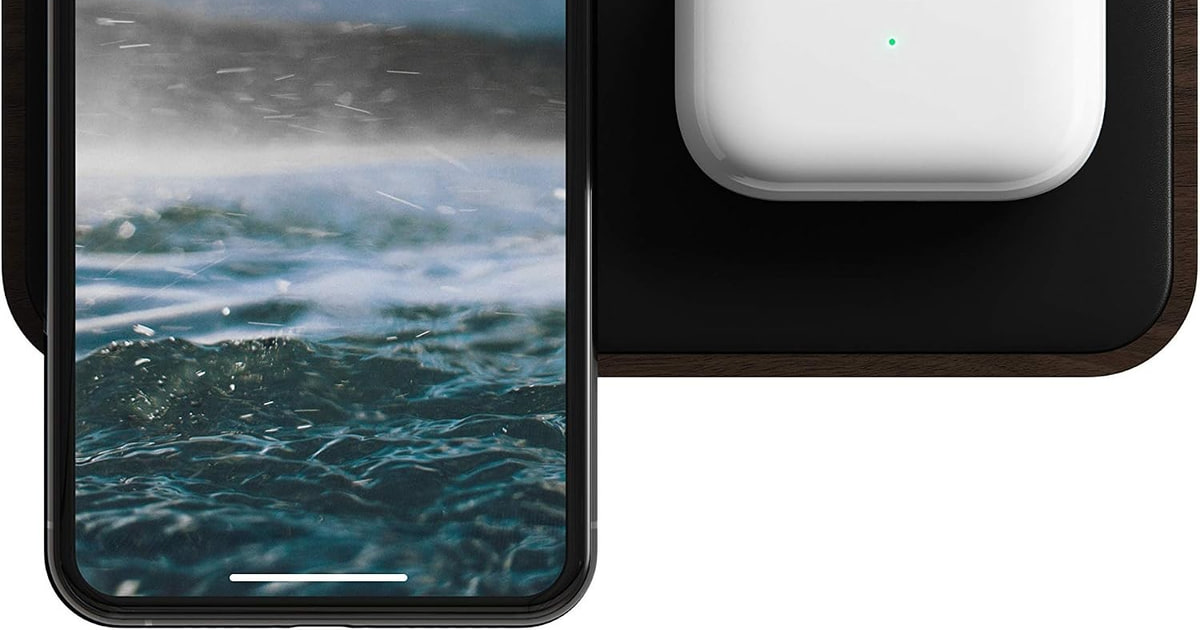
Wireless charging isn't about speed. It's about the small friction you stop noticing: no fumbling for a cable in the dark, no worn-out port on a three-year-old phone, no tangle of cords on the nightstand. You set the phone down and it charges. The good pads make that gesture reliable — the magnets grab, the coil aligns, the light comes on. The bad ones leave you at 40% in the morning because the phone slid half an inch off center overnight.
Here's the honest caveat: every wireless charger is slower and hotter than a cable. Wireless charging generates roughly 8 to 15 degrees Celsius more surface heat than wired charging, according to RTINGS.com, and that heat can trigger your phone's thermal throttling and cut effective speed by as much as 20% in a warm room. CNET puts a basic 5W Qi pad at three and a half to four hours for a full iPhone charge. No pad here fixes that. You're trading minutes for convenience.
The other thing worth knowing before you shop: Apple Watch fast-charging isn't standard on 3-in-1 pads, and Samsung phones only hit their top speed on Samsung's own hardware. Both catch people out. We think that the Apple MagSafe Charger (2nd Generation) is the best wireless charger for most people, and that the ESR MagSafe Charger Stand with CryoBoost is the one to buy if you want to charge your phone, watch, and AirPods from one plug.
Everything we recommend
The fastest way to charge an iPhone without a cable

Three Apple devices, one plug, and a fan to keep things cool
Basic Qi charging that just works, for a lot less

Folds to the size of a baseball and still charges three things
At a glance
| Product | Devices Charged | Max Wattage | Price | |
|---|---|---|---|---|
| Anker 313 Qi-Certified 10W Fast Wireless ChargerBudget pick | — | 10W | $18.99On sale |
| ESR MagSafe Charger Stand w/CryoBoostRunner-up | 3-in-1 | 15W | $76.99 |
| Anker MagGo UFO 3-in-1 MagSafe Compatible Qi2Also great | 3-in-1 | 15W | $69.99On sale |
 | Belkin BoostCharge Pro 15W 3-In-1 Wireless MagSafeAlso consider | 3-in-1 | 15W | $120.65 |
| Apple MagSafe ChargerTop pick | — | 25W | $39.99On sale |
 | Samsung Official 15W Wireless Charger Duo [2022]Also consider | Dual Device | 15W | $44.95 |
 | Nomad Base StationAlso in lineup | 4 Devices | 10W | $79 |
 | Mophie 3-in-1 Travel Charger with MagSafe -Also consider | 3-in-1 | 15W | $25On sale |
How we picked
Real charging speed. We compared manufacturer wattage claims against measured results from published reviews, because rated wattage and delivered wattage often diverge. Anything advertising 15W that reviewers clocked well below it didn't make the cut.
Magnetic alignment. Flat Qi pads lose 30 to 40% efficiency when the coil is off center, per the Wireless Power Consortium, so we favored Qi2 and MagSafe designs for anything above the budget tier. Non-magnetic pads had to justify themselves on price and reliability instead.
Apple Watch certification. For 3-in-1 stations we checked whether the watch charger is officially certified for fast charging rather than a generic coil. Certification is what keeps a watch charging quickly and keeps it working after a watchOS update.
Heat handling. RTINGS.com measured 8 to 15 degrees Celsius more surface heat from wireless charging than wired, enough to trigger phone throttling. We looked for active cooling or thermal design, and for owner reports of phones running hot overnight.
What's in the box. A charger that needs a 30W adapter you don't own isn't a complete product. We noted which units include a power adapter and cable and which quietly assume you'll supply your own.
Top pickOn sale
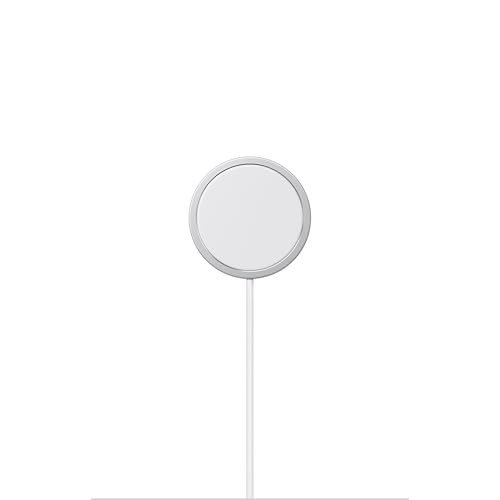
The fastest way to charge an iPhone without a cable
Apple MagSafe Charger
Apple's second-generation MagSafe puck pushes up to 25W to an iPhone 16 or later, roughly 67% more than the original. It's a single-device charger with no stand and no frills, and it's the one to get if you just want your phone topped off fast.
$39.99fromAmazonList priceIf you own a recent iPhone, this is the speed ceiling. Apple rates the second-generation MagSafe Charger at up to 25W on iPhone 16 and later, up from the 15W cap on the original puck. CNET puts that at roughly an hour and a half for a full charge, against three and a half to four hours on a basic 5W Qi pad. That's the biggest single jump wireless charging has made in years.
The catch is the power adapter, and it's a real one. You need a 30W or better USB-C brick to see 25W, and Apple doesn't include one. If you've got an old 20W cube in a drawer, this charger will run at a slower speed and you'll never know the difference until you compare. Budget for the adapter as part of the purchase, not an optional extra.
It's a puck on a cable. That sounds like a knock but it's actually why we like it. There's no stand to fail, no hinge to snap, no fan to whine, no second coil to split power with. Owners report it holding up for years, and the magnets grip hard enough that you can pick the phone up one-handed and the puck comes with it. The 2-meter version gives you room to actually use the phone while it charges.
It's certified for Qi2.2 and standard Qi, so it works with any iPhone from the 8 onward and with AirPods cases that charge wirelessly. Older iPhones won't hit 25W — that's a 16-and-later feature — but they'll charge at their normal MagSafe or Qi rate. Android phones will charge on it too, slowly, at basic Qi speeds, and the magnets won't stick to anything that isn't MagSafe.
Flaws but not dealbreakers
You're paying an Apple premium for what is, in performance terms, a commodity. 9to5Mac's analysis found that Qi2-certified pucks from Anker and ESR now match Apple's own MagSafe charger in measured iPhone charging speeds. The 25W tier is genuinely Apple's for now, but if you're on an iPhone 15 or older you're buying the logo and the build quality, not extra watts.
It charges one thing. If your nightstand also holds an Apple Watch and a pair of AirPods, you'll need two more plugs, and the outlet situation gets ugly fast. That's the whole argument for the 3-in-1 pads below.
The cable is permanently attached. Owners mention chewed and damaged cords, and there's no swapping in a replacement — a bad cable means a new charger.
Runner-up
Three Apple devices, one plug, and a fan to keep things cool
ESR MagSafe Charger Stand w/CryoBoost
The ESR stand charges an iPhone at a certified 15W, an Apple Watch at fast-charge speed, and AirPods on a third pad, all from one outlet. A small fan under the phone plate fights the heat that normally slows wireless charging down.
$76.99fromAmazonThis is the pad for a nightstand that currently holds three cables. Your phone snaps to the front at Qi2's full 15W, the watch clips to a certified magnetic puck, and the AirPods sit on a flat spot at the base. One plug replaces three. If you're the person who charges an Apple Watch every night and keeps forgetting to plug in the AirPods, that alone is worth the swap.
The Apple Watch charger here is the part that matters. ESR's watch puck is officially certified, which sounds like marketing until you understand the alternative. Plenty of 3-in-1 pads use a generic coil that charges a watch slowly and can break with a watchOS update. Certified ones don't. Wirecutter has pointed to exactly this certification as the deciding factor between otherwise identical 3-in-1 stations.
The fan is a genuine feature, not a gimmick. Wireless charging runs 8 to 15 degrees Celsius hotter than wired, per RTINGS.com, and once an iPhone gets warm it throttles — you can lose up to 20% of your effective speed in a warm room. ESR's CryoBoost pulls that heat away, and owners who watch battery temperature notice the difference. If your desk gets afternoon sun, this is the pick.
The phone sits upright at an angle rather than lying flat, which turns it into a small bedside clock and works with StandBy on modern iPhones. It's also a more useful position for glancing at notifications while you work. The magnetic lock is rated at 1,000 grams of hold, enough that a bump on the desk won't drop your phone.
Flaws but not dealbreakers
ESR's build quality gets mixed reports. Several owners describe the phone-holding mechanism snapping within a couple of years, and the AirPods pad is finicky enough that some people fuss with placement to get it charging. The company has a good reputation for making returns right, but a charger that needs customer service isn't the same as one that doesn't.
It's a desk object, not a travel one. The stand doesn't fold, and the assembled footprint takes real space. Take the Anker or the Mophie below if you want something that goes in a bag.
The fan makes a faint noise. It's quiet enough that most people stop noticing it, but if you're sensitive to any sound in a bedroom, sleep on it before you commit.
ESR covers this stand with a 12-month protection plan and offers lifetime customer support.
Budget pickOn sale
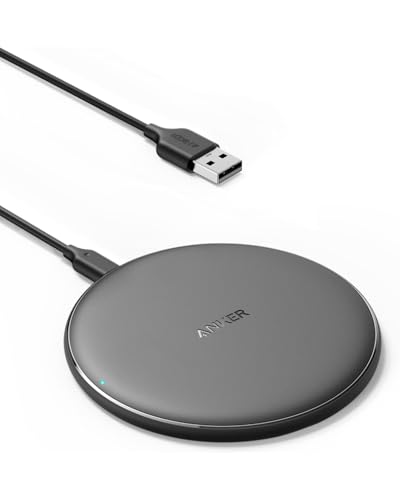
Basic Qi charging that just works, for a lot less
Anker 313 Qi-Certified 10W Fast Wireless Charger
Anker's 313 pad is a plain plastic disc that pushes 10W to Samsung phones, 7.5W to iPhones, and 5W to earbuds. It skips magnets, stands, and extra coils entirely — and it's been the default cheap recommendation for years for good reason.
$18.99fromAmazonList priceNot everyone needs Qi2. If you set your phone down at bedtime and pick it up eight hours later, the difference between 7.5W and 25W is a number you'll never experience. This pad charges a phone overnight, costs a small fraction of what the MagSafe pucks do, and works with basically anything that supports Qi — Android, iPhone, wireless earbuds, an old phone you keep as a backup.
It has a genuine track record. Owners report units still running daily after four and five years, which is unusual in a category where hinges snap and coils die. There's very little in this thing to fail: no fan, no magnets, no folding parts. Plain hardware tends to outlast clever hardware.
It charges through most cases up to about 5mm thick, so you don't need to strip your phone every night. The exception is anything with metal or magnetic attachments — a pop socket, a card wallet with a steel plate, a magnetic mount ring. Those block the coil, and you'll get a charger that lights up but doesn't charge.
Placement is the trade-off you're accepting. Without magnets, you have to land the phone roughly centered, and flat Qi pads lose 30 to 40% efficiency to coil misalignment, according to the Wireless Power Consortium. Most nights that means a slightly slower charge. Some nights it means waking up at 60%.
Flaws but not dealbreakers
No magnets means no forgiveness. Owners describe the phone charging most of the time but not always, and that occasional miss is the reason to pay more for a Qi2 pad if a dead phone in the morning would actually ruin your day.
AirPods can be fussy on it. The case is small and light, and getting it centered on a pad sized for a phone takes more attention than it should.
It ships with a Micro USB cable and no wall adapter, which is a dated combination. You'll want to check that you have a spare brick and the right cable before it arrives.
Anker includes an 18-month warranty.
Also greatOn sale
Folds to the size of a baseball and still charges three things
Anker MagGo UFO 3-in-1 MagSafe Compatible Qi2
Anker's MagGo UFO collapses into a compact puck for a bag, then unfolds into a 15W Qi2 station for iPhone, Apple Watch, and AirPods. It ships with a 40W adapter and cable, which almost nothing else in this guide does.
$69.99fromAmazonList priceThis is the one to pack. It folds down to roughly the size of a baseball, which means it lives in a laptop bag or a carry-on pocket instead of taking up a packing cube. Unfolded, it charges the same three devices as a full desk station. If you travel more than a few times a year, the calculation is simple: one small object replaces three cables and two bricks.
Anker includes a 40W USB-C adapter and a five-foot cable in the box. That sounds like a small thing until you price out the alternative — Apple's MagSafe puck and Samsung's Duo both leave you to source your own brick, and an underpowered one silently caps your charging speed. Here it's handled.
Speeds are real Qi2. Anker rates it at 20% on an iPhone 15 Pro in 15 minutes and 30% on an Apple Watch Series 9 in 22 minutes. Anker also certifies its Apple Watch charging for fast-charge mode, roughly 0 to 80% in 45 minutes — a feature most inexpensive 3-in-1 pads skip because they lack the required dedicated 5W watch coil.
Folded a certain way, the phone sits in landscape for StandBy mode, which turns a hotel nightstand into a clock and a photo frame. Owners who bought one for travel frequently end up buying a second for home, which is a decent signal about how it holds up in daily use.
Flaws but not dealbreakers
The folding hinge is the thing to watch. Anything with moving parts eventually gets loose, and a charger that folds is structurally less durable than one that doesn't. Owners haven't flagged this as a widespread problem, but it's the obvious failure point.
The compact footprint makes device placement tighter than on a full-size stand. Everything has its spot, and there's not much room to be sloppy about it.
As a permanent desk fixture it's fine but unremarkable. If the charger is going to sit in view all day, the ESR stand or the Nomad below look considerably better.
Anker covers the MagGo UFO with a 24-month warranty.
Who this is for
Buy a wireless charger if you're tired of plugging in — at a desk, on a nightstand, or in a hotel room where you'd rather carry one object than four cables. It's also worth it if your phone's charging port is worn or already failing; several owners in this category bought a MagSafe puck precisely because the port on their iPhone stopped working. And if you own an Apple Watch and AirPods alongside your phone, a 3-in-1 station is the single easiest way to clean up a nightstand.
Skip it if what you actually want is speed. Wired charging is faster, cooler, and cheaper, and no pad here closes that gap. Tom's Guide timed the Belkin 3-in-1 taking about 58 minutes to get a depleted iPhone 15 Pro to 50% — roughly 25% behind a 20W wired charger doing the same job. This guide covers pads, stands, and multi-device stations for phones, watches, and earbuds. It doesn't cover portable battery packs, car mounts, or charging cases.
How we picked
We built the shortlist around a handful of things that actually change your morning. Speed: rated wattage matters less than what reviewers measured, so we cross-checked manufacturer claims against published testing. Alignment: flat Qi pads shed 30 to 40% efficiency to off-center placement, which is why Qi2 magnets are worth paying for above the budget tier. Apple Watch certification: it's not standard on 3-in-1 stations, and an uncertified watch coil charges slowly and can break after an OS update. Heat: wireless runs 8 to 15 degrees Celsius hotter than wired, and a throttled phone is a slow phone. Included hardware: a 25W charger paired with a 20W brick you already own isn't a 25W charger.
Other wireless charging pads and stands worth considering
If you want the safe, proven Apple-ecosystem station: The Belkin BoostCharge Pro 15W 3-In-1 Wireless MagSafe ($120.65) — The Belkin BoostCharge Pro 3-in-1 has been the default recommendation in this category for years, and Wirecutter named it a top pick two years running specifically for its Apple Watch fast-charge certification. It's Apple-certified MagSafe at 15W, the base is heavy enough that you can lift the phone off one-handed without the whole thing moving, and it looks like something Apple would sell. The trade-off is durability: a meaningful number of owners report the iPhone charging pad dying after roughly six months to a year, with the watch and AirPods sections still working. Belkin's two-year warranty and its connected-equipment coverage take some of the sting out of that, and replacements do get honored. It's also large and expensive next to the ESR and the Anker, both of which do the same three jobs.
If you're on a Galaxy phone and want its actual top speed: The Samsung Official 15W Wireless Charger Duo [2022] ($44.95) — Samsung's Wireless Charger Duo is the pick for Galaxy owners, and the reason is a handshake. PCMag found the Duo hitting its advertised 15W with a Galaxy S24 Ultra while third-party Qi pads on the same phone capped out at 10W — a 33% gap that comes down to Samsung's proprietary Fast Wireless Charge 2.0 protocol, which non-Samsung pads can't negotiate. It charges a phone and a Galaxy Watch or Buds side by side, and there's a built-in fan for heat. Two warnings. It doesn't include a wall adapter despite what some buyers expect, and you'll need a fairly beefy one to hit 15W. And Galaxy Watch charging can be awkward with a solid band — owners often switch to a strap that unclips on one side so the watch will lie flat.
If you want a travel 3-in-1 with a hard case: The Mophie 3-in-1 Travel Charger with MagSafe - ($25) — Mophie's 3-in-1 Travel Charger folds flat into a protective case and includes both a USB-C cable and a 30W adapter, so it's genuinely a complete kit in one zip pouch. It's MFi certified, charges an iPhone at 15W, and has dedicated spots for the watch and AirPods. Owners like it on trips and mention devices staying cooler on it than on other pads. The reason it isn't the travel pick is durability: several people report the center panel detaching after about a year, which is exactly the wrong failure for something that lives in a bag. The Anker MagGo UFO does the same job, packs smaller, and carries a longer warranty.
The competition
This is what our research surfaced, not a map of everything on the market. Wireless chargers turn over quickly, and there are competent pads from brands we didn't look at here. Below is the one remaining unit we considered and why it didn't earn a spot.
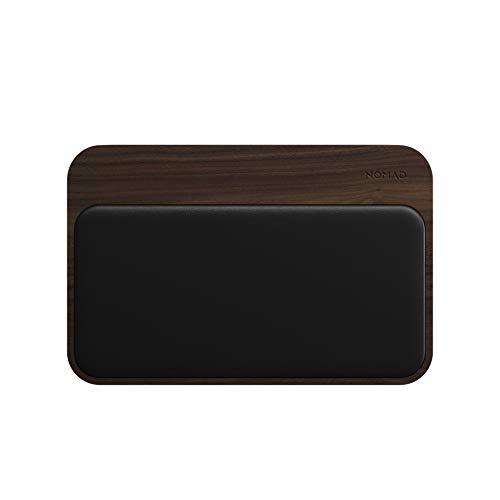
The Nomad Base Station ($79) — The Nomad Base Station Walnut Hub Edition is the best-looking charger in this guide by a wide margin — real walnut, a different grain on every unit, and USB-A and USB-C PD ports so it can top off four devices at once. On a desk where the charger is part of the decor, nothing else here competes. But it's a pre-Qi2 design running dual 10W coils with no magnets, so you're back to placing the phone precisely and accepting the alignment losses that come with flat pads. Owner reports are the bigger problem: complaints about slow charging out of the box and about units failing within two to three months come up often enough that we can't recommend it over the picks. Buy it if the walnut is the point and you'll accept the risk; otherwise the Nomad name is doing more work here than the hardware.
Getting the most out of a wireless charger
Two things fix most wireless charging complaints. First, check your power adapter. A 25W MagSafe charger on a 20W brick charges at less than 25W, and nothing on screen tells you — Apple's second-gen puck needs 30W or better, and Samsung's Duo needs a substantial one too. Second, look at your case. Most pads charge through plastic or silicone up to about 5mm, but anything with a metal plate, a card wallet, or a magnetic mount ring blocks the coil entirely. Beyond that: keep the pad out of direct sun and off soft surfaces like a bed, since trapped heat makes your phone throttle and charge slower. And if a phone regularly shows 60% in the morning on a non-magnetic pad, it's a placement problem, not a broken charger.
Questions we get
What's the difference between MagSafe and Qi2?
Qi2 is an open standard that borrows Apple's magnetic alignment technology under license, so a Qi2 charger snaps to your iPhone the same way a MagSafe one does and delivers a guaranteed 15W. MagSafe is Apple's own branded version of that idea. In practice they're close enough that 9to5Mac's analysis found Qi2 pucks from Anker and ESR matching Apple's own charger in measured iPhone speeds. The one real gap right now is the 25W tier on iPhone 16 and later, which Apple's second-generation charger reaches and standard Qi2 doesn't.
Can I use a MagSafe charger with a Samsung or Android phone?
It'll charge, but slowly and without the magnets. Most Android phones support basic Qi, so the phone will draw around 5 to 10W once you get it centered, and the magnets won't grip because there's no magnet ring inside the phone. Galaxy owners are better off with Samsung's own charger, which negotiates Fast Wireless Charge 2.0 and hits 15W — PCMag measured third-party pads stuck at 10W on the same phone.
Does an Apple Watch charge on a regular Qi pad?
No. Apple Watch uses its own magnetic charging system, not standard Qi, so a plain pad won't do anything for it. That's why 3-in-1 stations have a separate puck for the watch. And not all of those pucks are equal: fast charging requires a specific certified coil, which is why we call out certification on the ESR, Anker, and Belkin units. Uncertified watch chargers charge slowly and can stop working after a watchOS update.
Do wireless chargers work through a phone case?
Usually. Most pads handle plastic, silicone, and leather cases up to about 5mm thick without trouble. What stops them cold is metal — a card wallet with a steel plate, a magnetic mount ring, a pop socket with a metal core. Magnetic Qi2 and MagSafe chargers also need a case with a magnet ring built in, or the hold will be weak and the phone can slide.
Is wireless charging bad for your battery long term?
The extra heat isn't ideal, and heat is what wears lithium batteries down. RTINGS.com measured wireless charging producing 8 to 15 degrees Celsius more surface heat than wired. That said, modern phones manage this themselves — they throttle when they get warm, which is exactly why wireless charging slows down on a hot day. Keep the pad out of the sun and off your bed and you're fine. Owners regularly report five years of daily wireless charging without drama.
How much slower is wireless than wired?
It depends on the pad. A basic 5W Qi pad takes roughly three and a half to four hours to fill a modern iPhone, per CNET, against about an hour and a half with a 25W MagSafe charger. Tom's Guide timed a 15W 3-in-1 taking about 58 minutes to reach 50% on a depleted iPhone 15 Pro, roughly 25% behind a 20W wired charger. Wired still wins. Wireless is about convenience, not speed.
Why you should trust us
For this guide:
- We read manufacturer specifications and certification claims for every charger here, then checked them against published measurements from RTINGS.com, Tom's Guide, PCMag, CNET, and 9to5Mac.
- We compared Wireless Power Consortium documentation on Qi2 alignment and Apple's own stated wattage figures to separate marketed speeds from delivered ones.
- We reviewed owner feedback across all eight units and weighted recurring durability themes — snapped hinges, dead charging coils, detached panels — more heavily than one-off complaints.
- We read owner reviews on every listing, weighted toward the critical ones, because that is where the recurring failures show up.
- We have a systematic way of automatically fetching the latest prices, so the numbers on this page stay current.
- This is a research-focused guide, so the team may not own every product listed — though we often do own the top winners, which gives us extra context for the recommendations.
- We don't accept free products, and the retailer commission never changes which product we recommend.
Sources
Best Wireless Chargers — Wirecutter (The New York Times), Wirecutter
Best Wireless Chargers — Tom's Guide, Tom's Guide
Best Wireless Chargers — RTINGS.com, RTINGS.com
Best Wireless Chargers — PCMag, PCMag
Best Wireless Chargers — CNET, CNET
Qi2 Standard Overview — Wireless Power Consortium, Wireless Power Consortium
iPhone 16 MagSafe 25W Announcement — Apple Newsroom, Apple
Best Wireless Chargers — TechRadar, TechRadar
ESR HaloLock 2-in-1 Wireless Charger Stand Review — Tom's Guide, Tom's Guide
Best MagSafe Chargers for iPhone — 9to5Mac, 9to5Mac
Amazon product listings and owner reviews for all 8 products
Manufacturer specification pages for each product
Some passages in this guide may be paraphrased with AI help. Prices are refreshed automatically.
More like this.
Continue exploring electronics reviews and recommendations.

The Best Wireless Charging Car Phone Mounts
Your phone is the navigation system in most cars now. It's also the thing that dies fastest when you're running maps, music and CarPlay on a long drive. A…

The Best Brake Pads
Brake pads are the one part of your car that has to work perfectly on the worst day you'll ever have behind the wheel. They're also a consumable, so most…

The Best Car Battery Maintainers and Trickle Chargers
A car battery doesn't usually die all at once. It fades over a winter of sitting, or over a summer of two-mile trips to the grocery store, and then one…

The Best Solar Power Banks and Portable Chargers
A charger you carry outside has one job: keep your phone alive when there's no outlet for days. That sounds simple until you're three nights into a trip…

The Best Ergonomic Laptop Stands
A laptop puts your screen about a foot below where your eyes want it. You lean in, your chin drops, and after a few hours your neck lets you know. A stand…

The Best Electric Fence Chargers for Livestock
An electric fence charger has one job. It has to make the wire unpleasant enough that your cattle stop leaning on it and your goats stop looking for a way…