The Best Electric Fence Chargers for Livestock
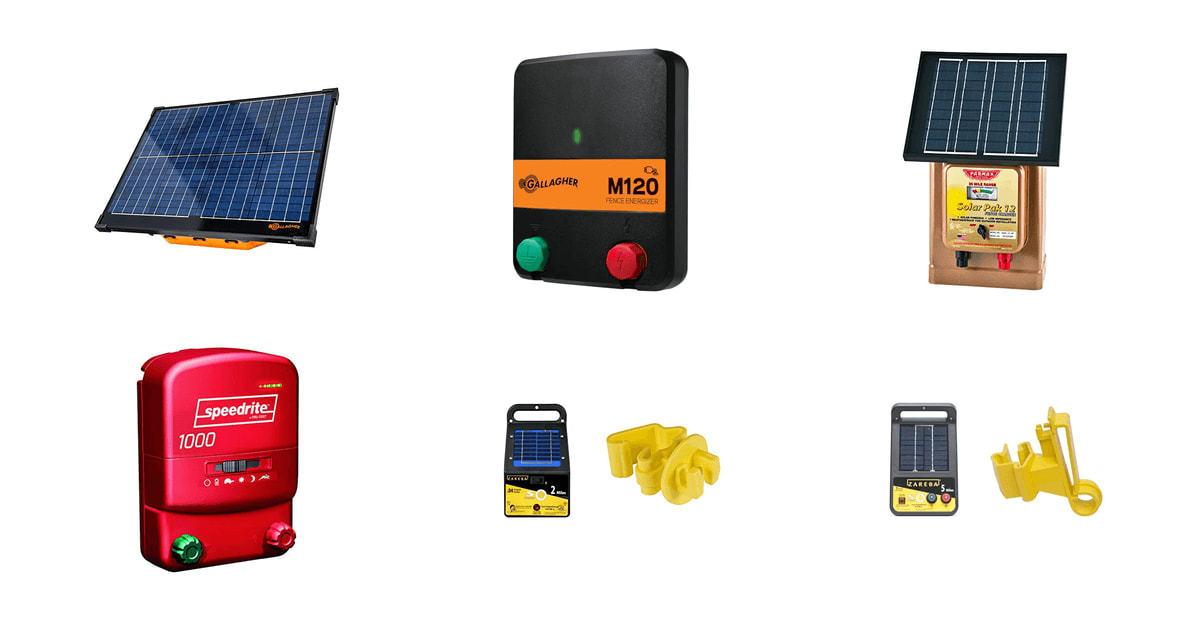
A fence charger has one job: make the wire unpleasant enough that your animals quit testing it. Get that right and you'll barely think about the fence again. Get it wrong and you'll spend Saturday walking a heifer back up the road. The charger sets the ceiling on everything else — how long a line you can run, how much grass can lean on the wire, and how hard a goat has to push before it decides the fence wins. It's also the easiest part of a fence to under-buy.
Here's the honest part: no charger fixes a bad ground. Most weak-fence complaints trace back to grounding, dry soil or a shorted wire, not to the box on the wall. Mile ratings don't help much either, because they assume a clean single wire with no weeds on it, which almost nobody has. And every unit here shares the same weakness. Let grass grow into a hot wire in July and even a strong energizer sags. You'll still need a fence tester and a weed whacker.
So shop by joules first, then by how you'll power the thing. If an outlet sits near your fence, a plug-in unit is simpler and less fussy to keep alive. If your pasture sits a half-mile from the nearest pole, solar is the only sane answer, and you'll want more panel and battery than a bright spring afternoon requires. We think that the Gallagher S400 is the best electric fence charger for livestock for most people, and that the Parmak Magnum Solar-Pak 12 is the one to buy if you want a lighter, simpler solar unit for a single-wire pasture.
Everything we recommend

Enough power for long, weedy lines, with no power pole needed

Lighter, simpler solar power, with a spottier track record

A small shock for a short fence, if you supply the battery

Plug it in and forget it, as long as your fence stays short
At a glance
| Product | Output energy | Power source | Price | |
|---|---|---|---|---|
| Gallagher S400 4.0J Solar Electric Fence ChargerTop pick | 4.0 J | Solar | $1,319.99 |
| Gallagher M120 1.2J 110V Electric Fence ChargerAlso great | 1.2 J stored | 110V AC | $130.96 |
| Parmak Magnum Solar-Pak 12 Low Impedance 12Runner-up | 3.1+ joules | Solar + 12V battery | $352.30 |
 | Speedrite 1000 UNIGIZER 1.0 Joule Fence EnergizerAlso consider | 1.4 J max stored | 12V or 110V | $179.99On sale |
 | Zareba ESP2M-Z 2-Mile Solar Low Impedance ElectricAlso in lineup | — | Solar | $93.60 |
 | Zareba ESP5M-Z Solar Powered Electric Fence ChargerAlso in lineup | — | Solar | $142.98 |
| Patriot PE5B DC Fence Charger - 5Budget pick | 0.20 J output | 6V or 12V DC | $105.04 |
How we picked
Joules, not miles. We compared the stored and output joule figures each manufacturer publishes, because mile ratings assume a clean, weed-free single wire. Anything we'd recommend for cattle or horses on multiple wires needed at least about a joule on tap.
Low-impedance design. Low-impedance energizers hold voltage better when grass and weeds touch the wire, which is the normal condition of a real pasture. We favored units that state it on the spec sheet.
Power source fit. We wanted a strong option for each situation: mains for farms with an outlet nearby, all-in-one solar for remote paddocks, and battery DC for temporary fences. Solar units needed an integrated battery or a clear battery spec.
Weather and surge. Rural installs take lightning and driving rain, so we looked for water-resistant housings and built-in lightning protection or diverters. Published reviews and owner feedback both point to surges as a common cause of early failure.
Warranty and safety. We gave weight to units with a stated multi-year warranty and a safety listing such as UL. Fence energizers sold for livestock are built to standards that cap pulse energy and timing, so a listing is a reasonable baseline.
Top pick
Enough power for long, weedy lines, with no power pole needed
Gallagher S400 4.0J Solar Electric Fence Charger
The S400 is an all-in-one solar energizer with 4 joules behind it, which is enough for most working farms. Gallagher rates it for up to 60 miles of single-wire or 20 miles of multi-wire fence in ideal conditions, and it holds voltage through light grass.
$1,319.99fromAmazonFour joules covers almost every farm that isn't a commercial ranch. That's the number to shop on, and it's the main reason this one leads. Gallagher's 60-mile single-wire and 20-mile multi-wire ratings assume a clean fence, so treat them as ceilings, not promises. The joules are what you actually feel when weeds lean on a hot wire in midsummer and the voltage has somewhere to go.
Nothing about it needs a power pole. The solar panel, the 12-volt battery and the energizer all live in one orange case with a carry handle, so a remote paddock only needs a post and a ground rod. The housing is water-resistant, lightning protection is built in, and the 360-degree mount lets you turn the panel toward the sun as the seasons shift.
If you're rotating stock, the dual power modes earn their keep. You can run fast pulses day and night when you want maximum pressure on the wire, or switch to night mode to cut output when your animals are settled. That stretches battery reserve through a stretch of gray weather, which is exactly when a solar unit usually lets you down.
Buy more charger than your current fence needs. Fence lines grow. A temporary cross-fence becomes permanent, a second paddock gets wired in, and the modest energizer that worked fine on one strand starts sagging on four. Four joules gives you headroom for that, plus the vegetation load you'll inherit by August. It also means your ground system has to be sized to match — more on that below.
Flaws but not dealbreakers
It's heavy. At 32 pounds it's the bulkiest unit here, and if your rotational grazing plan involves moving the energizer every few days, you'll notice. A two-post mount and a wheelbarrow help.
Owner feedback on big multi-wire systems is the thing to watch. On large acreages with several miles of high-tensile wire and interior pastures, some owners report the battery weakening after roughly a year of hard service, with fence readings settling lower than they'd like. That's a replaceable part, not a dead unit, but budget for it.
It's also the most expensive charger in this guide by a wide margin, which is hard to justify for a few hundred feet of garden fence or a single horse paddock.
Gallagher backs the S400 with a three-year manufacturer's warranty.
Runner-up
Lighter, simpler solar power, with a spottier track record
Parmak Magnum Solar-Pak 12 Low Impedance 12
The Magnum Solar-Pak 12 is a low-impedance solar energizer rated at 3.1-plus joules and up to 30 miles of fence, with the sealed 12-volt battery included. It's lighter than our top pick and simpler to live with, but quality control is less consistent.
$352.30fromAmazonThis is the yellow box you see bolted to a post on half the small ranches in the country, and there's a reason. It's low-impedance, it's rated at 3.1-plus joules, and the sealed 12-volt battery comes with it, so you're not shopping for parts the day it arrives. The sun charges it by day and the battery carries the fence overnight.
Most people don't need more than three joules. If you're containing cattle or horses on a single or double wire across a few hundred acres, this has the muscle for it, and the low-impedance design means a weedy stretch doesn't drag the whole line down. At 24.5 pounds it's also meaningfully easier to move than our top pick, which matters if you shift paddocks.
Owners in hard, dry country tend to like it, with one caveat that comes up again and again: it wants a real ground system. Several longtime users run three or four rods and still water the soil around them in a drought. That's not a fault of this charger specifically — it's physics — but this unit is honest enough about its power that a lazy ground shows up fast.
The weatherproof housing is meant to live outside year-round, and the whole thing is sized for large pastures rather than a chicken run. If your fence is short, you're paying for joules you'll never use.
Flaws but not dealbreakers
Quality control is the real knock. A meaningful share of owner feedback describes units arriving dented, batteries that won't hold a charge out of the box, or failures within the first season. Plenty of other owners run several of these for years without trouble, so it's luck of the draw — keep the packaging and buy somewhere with an easy return.
Some long-time Parmak owners also say the current Solar-Pak 12 doesn't feel like the one they bought a decade ago. We can't verify what changed, but it's a consistent enough theme in owner feedback to mention.
The listing doesn't state a warranty term, and there's no voltage readout on the unit, so you're relying on a handheld tester to know what your fence is doing.
Budget pick
A small shock for a short fence, if you supply the battery
Patriot PE5B DC Fence Charger - 5
The Patriot PE5B is a bare-bones low-impedance energizer that runs off a 6- or 12-volt battery and covers up to 5 miles or 20 acres. At 0.20 output joules it's modest, but it's the right size for a temporary paddock or a single-strand garden fence.
$105.04fromAmazonThis is the charger for a fence you might move next month. It weighs about a pound and a half, it's low-impedance, and it runs off any 6- or 12-volt battery you already own. For a strip-grazing wire, a short horse paddock or a vegetable patch you're protecting from deer, 0.20 output joules is enough to teach the lesson.
The number to look at is output joules, not the 5-mile rating. Output joules describe what actually reaches the wire, and 0.20 is a small, honest figure — fine for a few hundred feet of clean fence, thin for a long line with grass on it. One owner reports a tester reading well above what a comparable small solar unit managed, which fits the low-impedance design.
What you don't get is any power of its own. There's no panel and no battery in the box, so plan on a deep-cycle battery and either a small solar panel or a routine of swapping and charging. That's an extra errand, but it also means you can size the battery to your own patience.
Flaws but not dealbreakers
Twenty hundredths of a joule disappears fast. Add a second and third wire, or let summer growth touch the line, and you'll be chasing voltage. Don't buy this for sheep, goats or predator work.
There's no mains option, no display and no fault-finding feedback — just a small box and two terminals. You'll need a fence tester and the patience to walk the line when something's off. The listing states no warranty term.
Also great
Plug it in and forget it, as long as your fence stays short
Gallagher M120 1.2J 110V Electric Fence Charger
If your barn has an outlet near the fence, the Gallagher M120 is the simple answer. It stores 1.2 joules, covers up to 15 miles or 60 acres of clean fence, and includes a lightning diverter, UL approval and a three-year warranty in a one-pound box.
$130.96fromAmazonMains power solves the problem solar never fully does. There's no battery to age, no panel to wipe off, and no gray week in November that drops your fence to a tickle. Plug the M120 into a 110-volt outlet in the barn, run your lead-out wire, and the fence stays hot. For a homestead with power nearby, that's the whole argument.
It's the safest-feeling pick here on paper. The M120 is UL approved, the lightning diverter is built in to protect the electronics during a storm, and Gallagher covers it for three years. Rural installs take surges, and a diverter plus a real warranty is worth more than an extra tenth of a joule. A power-on light lets you confirm it's firing from across the room.
At 1.2 stored joules it's honest about its range: up to 15 miles or 60 acres of clean fence, which in practice means a well-maintained perimeter for cattle, horses or goats on a small farm. It shrugs off light vegetation contact. It will not carry four strands through knee-high summer grass.
Flaws but not dealbreakers
There's no voltage readout and no fault-finding display — just a power indicator — so diagnosing a short still means walking the line with a tester.
It needs shelter and an outlet. Mounting it in a barn or shed is easy, but if your fence is a quarter-mile from the nearest receptacle, you're either trenching wire or buying solar instead.
And 1.2 joules is a ceiling, not a starting point. If you expect to add paddocks or wires, step up now rather than buying this twice.
Gallagher covers the M120 with a three-year manufacturer warranty, and the unit is UL approved.
Who this is for
This guide is for anyone running electric fence to hold livestock: a couple of horses on an acre, a herd of cattle across rolling pasture, goats and sheep behind netting, or a rotational-grazing setup that moves every few days. It's also for people with no grid power at the fence line, which is why two of our four picks are solar. If you're keeping coyotes or bears away from stock, read the voltage notes below and buy more joules than your acreage suggests — predator work needs a harder hit than cattle do.
It's not a guide to fence hardware. We don't cover posts, insulators, poly wire, netting, testers or ground rods, except where a charger ships bundled with a few insulators. We also skip the very small pet and garden energizers, which don't have the output to hold livestock once vegetation loads the wire. And if your current charger ticks but your fence reads low, a new energizer probably isn't your problem — start with grounding and shorts.
How we picked
We shopped the way you should. Joules, not miles: we compared the stored and output joule figures manufacturers publish, since mile ratings assume a clean, weed-free single wire that no real pasture has. Low impedance: units that state a low-impedance design hold voltage better when grass leans on the wire, so we favored them. Power source: we picked a strong option for each case — mains where an outlet is close, all-in-one solar for remote paddocks, bare DC for temporary fences. Weather and surge: water-resistant housings and built-in lightning protection matter in rural installs, which take real abuse. Warranty and safety: a stated multi-year warranty and a safety listing such as UL moved a unit up our list.
Other electric fence chargers for livestock worth considering
If you want one energizer that runs on either mains or a battery: The Speedrite 1000 UNIGIZER 1.0 Joule Fence Energizer ($179.99) — The Speedrite 1000 Unigizer takes 12-volt or 110-volt input, so the same box can sit in the barn now and move to a battery in a remote paddock later. It stores up to 1.4 joules, covers about 10 miles or 40 acres, and lets you adjust both power and pulse speed — handy if you want to dial output down overnight or stretch a battery. You give up the integrated panel and battery of our solar picks, so off-grid use means buying those separately. It's a good fit for a mid-size farm that hasn't settled on how its fence will be powered.
The competition
This is what our research surfaced, not a map of the whole market. Gallagher, Parmak, Speedrite, Patriot and Zareba all publish enough specification detail to compare directly, and all are easy to find at farm-supply retailers. Plenty of capable energizers from other brands exist, and a few of these models come bundled with insulators, which inflates what looks like the charger's price. Here's where the rest landed.
The Zareba ESP5M-Z Solar Powered Electric Fence Charger ($142.98) — The Zareba ESP5M-Z is a 5-mile solar charger that ships with 25 poly tape T-post insulators, and it has some genuinely nice touches: a patented 360-degree mount so you can rotate the panel toward the sun, a build in the USA with full-load testing afterward, and a one-year limited warranty that includes lightning damage. What it doesn't publish is a joule figure, and Zareba's own rating drops from 5 miles in ideal conditions to 2.5 miles in light weeds — which tells you how little headroom there is. For a short, clean horse paddock away from power it's reasonable. For livestock on a weedy line, our picks hold voltage better.
The Zareba ESP2M-Z 2-Mile Solar Low Impedance Electric ($93.60) — The Zareba ESP2M-Z bundle pairs a 2-mile solar charger with 25 standard T-post insulators, and the charger puts out 0.04 joules under weed-free conditions. Zareba is upfront that it's meant for small animals and pets, with only limited cattle and horse use. That's an accurate description. Four hundredths of a joule won't survive a single tall thistle touching the wire, let alone a goat leaning into it. If you want a tidy little solar unit for a rabbit-proof garden border, fine — but it isn't a livestock energizer, and we wouldn't trust it with stock you care about.
Installation and grounding
Grounding is where most fences fail, so plan it before you mount the charger. A common manufacturer rule of thumb is roughly 3 feet of ground rod for every joule of stored energy, which means a 4-joule unit wants a serious run of rod — not one short stake by the barn wall. When you use several rods, space them about 10 feet apart and tie them together with insulated wire. Then test at the far end of the fence with a proper tester, not at the charger, because that's where a weak ground or a short gives itself away. Keep grass and brush off the bottom wire through the growing season, wipe solar panels and angle them toward the sun, and walk your connections after a storm.
Questions we get
How many joules do I need for a livestock electric fence?
Size it by wire length, number of strands and how much vegetation you expect, then add headroom. A single clean wire around a small paddock gets by on a fraction of a joule, while several miles of multi-strand pasture fence with summer growth wants multiple joules. Our top pick's 4 joules covers most working farms. Buy bigger than your fence is today, because fence lines always grow.
Are mile ratings on electric fence chargers accurate?
Not in any useful way. A mile rating is a best-case figure for a single clean wire with nothing touching it, which is not your pasture in July. Zareba's own listings show the drop plainly — one model rated for 5 miles in ideal conditions falls to 2.5 miles in light weeds. Compare the published stored or output joules instead.
How many volts does an electric fence need to hold cattle, sheep or goats?
Extension guidance commonly puts cattle and horses in the range of roughly 2,000 to 4,000 volts at the fence. Sheep, goats and predator deterrence generally need more, around 4,000 to 5,000 volts or higher, because wool, hair and thick coats insulate. Check the reading at the far end of the line with a fence tester, under real vegetation load. If you're containing goats or keeping coyotes out, buy more joules than your acreage alone suggests.
How many ground rods does an electric fence charger need?
More than most people install. A common manufacturer rule of thumb is about 3 feet of ground rod per joule of stored energy, so a multi-joule energizer may need several rods rather than one. Space them about 10 feet apart and connect them with insulated wire. Dry, sandy or rocky soil makes grounding harder, which is why owners in arid country often add rods and still wet the soil around them in a drought.
Can I use a solar fence charger in winter or a cloudy climate?
Yes, but size it for your worst month, not your best. A solar energizer's battery has to carry the fence through short days and overcast stretches, so pick a unit with generous output and a healthy battery, and keep the panel clean and angled toward the low sun. Units with a night or low-power mode help by cutting draw when stock are settled. In a genuinely dark climate, a mains charger is less worry if you can reach an outlet.
Why is my charger ticking but the fence reads low voltage?
A ticking energizer is firing, so the problem is almost always downstream. Look for a shorted wire touching a post, a broken insulator, vegetation piled on the bottom strand, or an inadequate ground system. Test at the charger terminals first, then at the far end of the fence, and walk the line in sections to find where voltage drops. Replacing the charger rarely fixes this.
Why you should trust us
For this guide:
- We compared the stored-energy and output-joule figures published on manufacturers' own spec sheets rather than relying on their mile ratings.
- We read university extension and manufacturer guidance on grounding, holding voltages for different species, and how to take a fence reading.
- We looked for recurring themes in owner feedback, especially reports about battery life, shipping damage and early failures.
- We read owner reviews on every listing, weighted toward the critical ones, because that is where the recurring failures show up.
- We have a systematic way of automatically fetching the latest prices, so the numbers on this page stay current.
- This is a research-focused guide, so the team may not own every product listed — though we often do own the top winners, which gives us extra context for the recommendations.
- We don't accept free products, and the retailer commission never changes which product we recommend.
Sources
Electric Fencing Guides - Gallagher, Gallagher (manufacturer)
Electric Fence Basics - Premier1 Supplies, Premier1 Supplies
Electric Fencing Resources - Parmak, Parmak (manufacturer)
Zareba Electric Fencing Guides, Zareba Systems
Speedrite / Tru-Test Fencing Guides, Speedrite
Electric Fencing for Livestock - University Extension Publications, Penn State Extension (search for 'electric fencing')
Electric Fencing - Oklahoma State University Extension, OSU Extension (search for 'electric fencing')
Electric Fence Energizer Safety Standard IEC 60335-2-76, IEC
Amazon product listings and owner reviews for all 7 products
Manufacturer specification pages for each product
Some passages in this guide may be paraphrased with AI help. Prices are refreshed automatically.
More like this.
Continue exploring lifestyle reviews and recommendations.

The Best Fence Post Setting Concrete
Setting a fence post is one of those jobs where the hard part isn't the post - it's the hole and what goes in it. You dig, you plumb, you brace, and then…

The Best Home EV Charging Stations
Home charging is the whole reason an EV feels easy. A 240-volt Level 2 charger adds roughly 25 to 45 miles of range an hour, so you plug in after dinner…

The Best Car Battery Maintainers and Trickle Chargers
A car battery doesn't usually die all at once. It fades over a winter of sitting, or over a summer of two-mile trips to the grocery store, and then one…

The Best Wireless Charging Car Phone Mounts
Your phone is the navigation system in most cars now. It's also the thing that dies fastest when you're running maps, music and CarPlay on a long drive. A…

The Best Solar Power Banks and Portable Chargers
A charger you carry outside has one job: keep your phone alive when there's no outlet for days. That sounds simple until you're three nights into a trip…

The Best Wireless Charging Pads and Stands
Wireless charging isn't about speed. It's about the small friction you stop noticing: no fumbling for a cable in the dark, no worn-out port on a…