The Best Fence Post Setting Concrete
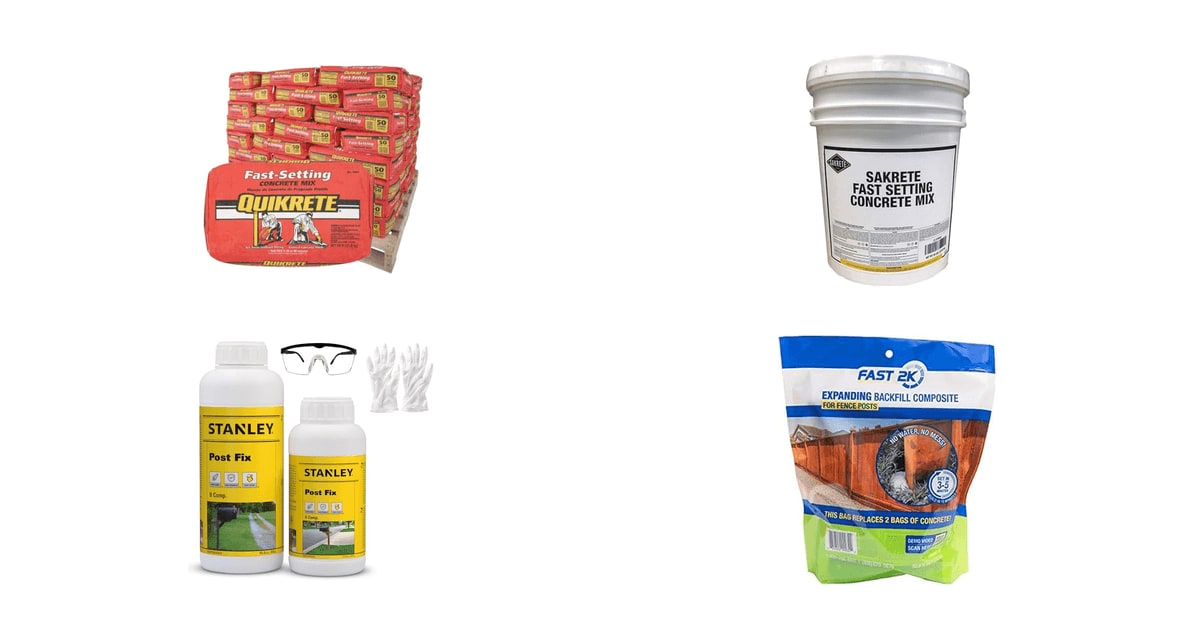
Setting a fence post is one of those jobs where the hard part isn't the post — it's the hole and what goes in it. You dig, you plumb, you brace, and then you wait. A good post-setting mix takes that waiting from a full afternoon down to something closer to a coffee break, and it does the real work of keeping a gate from sagging three winters later. Whether you're replacing a mailbox post the mail carrier clipped or running eighty feet of privacy fence, the mix in the hole decides how long the job holds.
Here's the honest part: nothing in this category is a shortcut past doing the hole right. Every product here assumes you've dug below the frost line, kept the post plumb, and braced it while things cure. Fast-setting concrete is heavy and you'll be hauling bags. Expanding foam is light but it's chemistry with a timer — mix it, and you have seconds, not minutes. And no product on this page fixes a hole that's too shallow or too narrow. Owners who report failures almost always describe a hole problem, not a mix problem.
We think that the H.B. Fuller Fast 2K Post Anchor Mix is the best fence post setting concrete for most people, and that the QUIKRETE Fast-Setting Concrete Mix pallet is the one to buy if you're setting a whole fence line and want the weight and mass of real concrete.
Everything we recommend
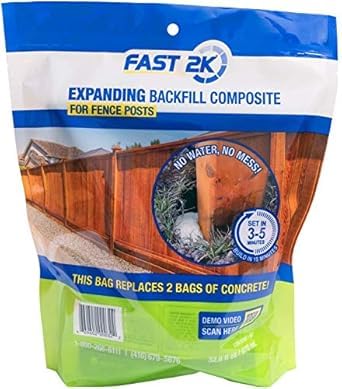
Light enough to carry, fast enough to finish in a morning
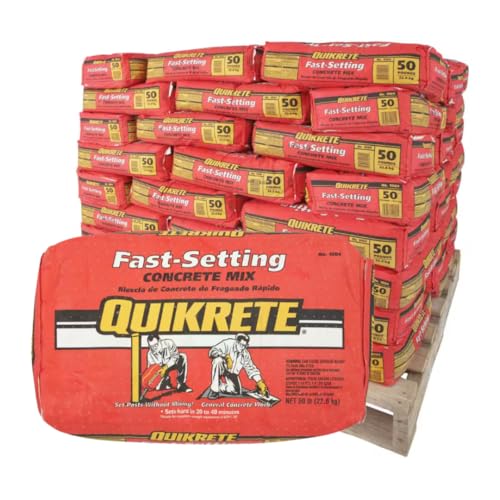
Real concrete, bought in bulk, for a whole fence line

A two-bottle foam kit that's easier to mix than the pouches
At a glance
| Product | Set Time | Weight | Price | |
|---|---|---|---|---|
| QUIKRETE Fast-Setting Concrete Mix 50lb Bulk CommercialRunner-up | 20-40 min | 50 lb | $784.73 |
 | Sakrete Concrete MixAlso consider | — | 51 lb | $59.10 |
| Stanley F996 Fence Post MixAlso great | 3-5 min | 2 lb | $24.99 |
| H.B. Fuller Fast 2K Post Anchor MixTop pick | 5 min | 2.2 lb | $27.99 |
How we picked
Set time and working window. We compared manufacturer set times against what owners describe in practice, since the gap between the two is where projects go wrong. A mix had to set fast enough to save you a day but leave enough room to correct a post that drifts.
Weight and handling. We looked at what you actually have to carry from the car to the hole. Products that let one person work alone, without a wheelbarrow or a water source, scored higher for typical homeowner jobs.
Holding power over years. We read owner feedback going back several seasons, looking for posts that stayed tight versus ones that loosened or flexed. Reports of movement under load counted heavily against a product.
Moisture and rot resistance. Wooden posts fail at the ground line first, so we favored products that shed water or bond to the post rather than trapping moisture against it. Manufacturer claims here were checked against long-term owner accounts.
Coverage per package. We compared stated yield against how much owners say they actually needed for a standard 4x4 in a proper hole. Products that routinely leave people short got flagged in the write-ups.
Top pick
Light enough to carry, fast enough to finish in a morning
H.B. Fuller Fast 2K Post Anchor Mix
The Fast 2K is a two-part expanding foam that replaces about 80 pounds of concrete with a bag you can carry in one hand. It mixes in half a minute, sets in five, and you can hang a rail on the post within the hour.
$27.99fromAmazonIf you only remember one thing about this stuff, make it the weight. A 2.5-pound bag does the job of an 80-pound sack of concrete. That difference is the whole pitch. You're not loading a pallet into your trunk, not dragging bags across a wet yard, and not hunting for a wheelbarrow and a water source. For anyone setting posts alone, or anyone with a back that files complaints, this changes the job from a chore into an errand.
The timing is aggressive and you should plan around it. The manufacturer puts mixing at 30 seconds, setting at five minutes, and buildable at 30. Owners back this up and then some — several describe the bag swelling almost immediately after they break the seal, with no time to fumble. Have your post plumb, your braces set, and a way to open the bag ready before you start. A pair of scissors in your pocket is not optional; the pouches don't tear easily by hand.
It works across a wider temperature window than most people expect, rated from -5°F to 105°F. That matters if you're doing fence repair in February after a storm took a section down, or in August when concrete wants to flash-set on you. No water, no additives, no measuring. The chemistry doesn't care that it's freezing.
The long-term reports are the strongest part of this product's case. Owners who set mailbox posts and fence posts years ago consistently describe them as immovable now. The foam is hydrophobic and bonds to the post itself, which helps against the rot that kills wooden posts from the ground line down. H.B. Fuller also states the product meets building code requirements for special foundations and load-bearing elements — worth knowing if an inspector is involved.
Flaws but not dealbreakers
One bag isn't always one post. Owners setting standard 4x4s in properly sized holes repeatedly say they wished they'd bought a second bag, and some ran short mid-pour. If your hole is a foot across and eighteen inches deep, plan on more than you think you need, and buy an extra. Running out halfway through a five-minute cure is not a recoverable situation.
It's not the right answer for heavy loads. Some owners report fence sections flexing under real pressure and going back to concrete instead. For a gate post carrying a heavy swinging gate, or anything that will take side load all day, poured concrete still has the mass advantage. This shines on line posts, mailbox posts, and light-to-moderate fence work.
The expansion is more dramatic than the pictures suggest, and it's hard to predict on the first hole. Some owners get overflow they have to trim; a few report barely any rise at all, usually in cold or oddly shaped holes. Do your first post as the practice post.
Runner-up
Real concrete, bought in bulk, for a whole fence line
QUIKRETE Fast-Setting Concrete Mix 50lb Bulk Commercial
QUIKRETE's fast-setting mix sets in 20 to 40 minutes and doesn't need pre-mixing — you pour it dry into the hole and add water. Buying it as a pallet makes sense when you're setting a dozen posts or more and don't want repeat trips.
$784.73fromAmazonThe no-mix method is what makes this practical for a long run of posts. You set the post, dump the dry mix around it, add water, and move on. There's no wheelbarrow, no hoe, no mixing station to set up and then clean. Owners confirm it behaves as advertised — pour, water, done — which is exactly what you want when post nine of fourteen is staring at you.
Concrete's advantage is mass, and mass is what a gate post needs. Foam anchors work by expanding against the sides of the hole. Concrete works by being a heavy plug in the ground. For a corner post, a gate post, or anything that gets pushed on daily, that weight is genuinely useful. Each 50-pound bag yields about 0.375 cubic feet, so you can figure your bag count before you order instead of guessing at the hole.
The 20-to-40-minute set is fast enough to keep a project moving but slow enough to be forgiving. If your post drifts out of plumb, you have a window to correct it. That's the opposite of the foam experience, and for a first-timer it's a meaningful comfort. You can walk the line, check each post with a level, and still fix what needs fixing.
It's not only a post product. The same mix handles small pads, steps, and slabs at least two inches thick, so leftover bags from a fence job go toward the next thing — a pad under a grill, a step at the shed door. Owners have used it for planters and general small pours without complaint.
Flaws but not dealbreakers
It's a pallet, and pallets are a commitment. This is 50-pound bags by the dozens, delivered to your driveway, and you have to move every one of them and keep them dry until you use them. Concrete that gets damp in storage is concrete you throw away. If you're setting three posts, this is the wrong purchase entirely.
The listing itself is inconsistent about what you get — one line says a 64-bag pallet, another says 32 bags at 1,600 pounds. Read the current listing carefully before ordering, because the difference is a lot of concrete and a lot of money either way.
Buying commodity concrete online has an obvious catch, and owners raise it constantly: the same bags are usually sitting at your local home center. The convenience of delivery is real, especially if you don't have a truck. But if you can haul it yourself, check what's down the road first.
Also great
A two-bottle foam kit that's easier to mix than the pouches
Stanley F996 Fence Post Mix
The Stanley F996 splits its two components into separate bottles instead of a divided bag, so you combine and shake rather than knead against a clock. It sets in three to five minutes and the kit includes goggles and gloves.
$24.99fromAmazonThe bottle format solves the most-hated part of foam post mixes. If you've used the two-compartment bags, you know the drill: break the internal seal, knead like mad, and hope you got it evenly mixed before it starts going off in your hands. Owners who've used both formats say the bottles are simply easier — you pour, cap, shake for twenty or thirty seconds, and pour into the hole. Less mess, less panic.
It's fast, even by foam standards. Stanley puts the set at three to five minutes. Owners describe it flowing nicely around the post and filling voids before it stiffens, which is the behavior you want in an irregular hole. The cured foam is waterproof, so it isn't holding moisture against the base of a wooden post the way wet soil does.
The kit approach makes sense for a one-off job. If you're setting a single mailbox post or a volleyball standard, you get the components and the safety gear in one box. This stuff is polyurethane chemistry and it does not come off skin easily, so the gloves aren't a throwaway inclusion.
Flaws but not dealbreakers
Expansion is the sticking point. Owners report a wide range — some get plenty of rise, others say it went from liquid to solid in three minutes having only climbed a few inches, leaving a carefully dug hole mostly empty. You can't fix that after the fact, and returning used bottles isn't really a thing. Dig a snugger hole than you think you need and keep a second kit on hand.
One kit doesn't cover a deep hole. Owners setting flagpoles or anything past a foot deep say a single kit falls well short. For a proper frost-line hole, budget two.
The included goggles and gloves don't always arrive. Multiple owners got the box without them. Not a dealbreaker, but don't plan your safety gear around the listing.
Who this is for
This guide is for anyone setting posts in dirt: fence line posts, gate posts, mailbox posts, deck anchors, a basketball pole, a flagpole. If you're replacing a few posts after a storm, or building a fence across a yard over a weekend, one of these will do the job. You should be comfortable digging to your local frost line and bracing a post while it cures — none of these products change that requirement, and skipping it is the single most common reason a post fails.
If you're pouring a footing for a structure, a deck that carries real weight, or anything an inspector will look at closely, talk to your building department before you buy foam. Some jurisdictions have opinions. And if you're pouring a driveway, a full slab, or anything structural, this isn't your guide — you want a standard concrete mix and probably a mixer. We also skipped tools, post levels, braces and diggers here; this is about what goes in the hole.
How we picked
Set time: We wanted a mix that gets you off the job in a morning, but with enough working window to fix a post that drifts out of plumb. Weight: The lighter the package, the more likely you can do the whole job alone, so we favored products that don't require hauling 80-pound sacks across a wet yard. Holding power: We leaned on owner accounts stretching back years, watching for posts that stayed tight versus ones that flexed under load. Moisture: Wood rots at the ground line first, so products that shed water or bond to the post beat ones that trap it. Coverage: We compared stated yield to what owners say they actually used, because running short mid-pour on a five-minute cure is the worst outcome here.
Other fence post setting concrete worth considering
If you want a resealable pail instead of a bag: The Sakrete Concrete Mix ($59.10) — Sakrete's fast-setting mix comes in a roughly 51-pound plastic pail rather than a paper sack, which solves a real storage problem. Leftover concrete in a bag goes hard the first time your garage gets humid; a sealed pail keeps until next spring. An owner used it to set barrier poles on a sidewalk and describes it setting up fast and holding strong, which is about what you'd expect from a fast-setting mix. The catch is that this listing is thin on detail — the bullets say almost nothing about set time or yield, and there's very little owner feedback to fill the gaps. Buy it for the container and the brand, not because you know exactly what you're getting.
The competition
Post-setting products are a small, oddly served category online. Most of what a search turns up is either commodity concrete you can buy cheaper by driving to a home center, or expanding foam kits from a handful of chemical companies. What follows is what the research surfaced worth discussing, not a complete map of the market — plenty of regional concrete brands and contractor-channel products never show up in a consumer search at all.
Installation notes
Dig deeper than feels necessary. The rule of thumb is a third of the post's above-ground height in the ground, and always below your local frost line — if you don't know it, your building department does. Make the hole wider at the bottom than the top so frost can't lift the whole plug out. Put a few inches of gravel underneath for drainage, especially with wood. Brace the post on two sides before you add anything to the hole, and check plumb one more time after; foam in particular can nudge a post as it expands. With foam, have scissors ready and the post already braced, because you'll have seconds once you mix. With concrete, crown the top slightly so water runs away from the post instead of pooling at the base.
Questions we get
Is expanding foam as strong as concrete for fence posts?
For line posts, mailbox posts and typical fence work, owners report foam holding just as well over multiple years. For gate posts and anything taking constant side load, concrete's sheer mass still has the edge, and some owners have gone back to concrete after seeing flex. If a post carries a swinging gate or heavy wind load, use concrete.
How deep should the hole be?
Plan for about a third of the post's above-ground height, and never shallower than your local frost line. A 6-foot fence post generally means a hole around 2 to 3 feet deep. Frost depth varies enormously by region, so check with your building department rather than guessing.
Do I need to mix fast-setting concrete before pouring it?
Not for post setting. With QUIKRETE's fast-setting mix you pour the dry product into the hole around the braced post and then add water, which is the whole appeal for a long fence run. For slabs and pads you'll want to mix it properly in a wheelbarrow or mixer first.
How many bags or kits do I need per post?
For foam, assume one package per post is the floor, not the answer — owners setting standard 4x4s in properly sized holes routinely wish they'd bought two. For concrete, calculate hole volume and divide by the stated yield per bag, then add one. Running short mid-pour is unrecoverable with foam.
Will foam protect a wooden post from rotting?
It helps. Both foam products here are hydrophobic and bond to the post, which keeps standing water off the section that usually fails first. It's not a substitute for pressure-treated lumber or a gravel drainage base, though. Wood in contact with soil will still eventually go.
Can I set posts in cold weather?
Foam handles it better. The Fast 2K is rated down to -5°F and doesn't need water, which is the part that freezes. Fast-setting concrete gets unreliable near freezing and cures slowly in the cold, so if you're doing storm repair in winter, foam is the safer call.
Why you should trust us
For this guide:
- We read the manufacturer specifications and listing details for every product here, comparing stated set times, yields and temperature ranges.
- We reviewed owner feedback across all four products, paying particular attention to accounts from people who came back years after installing a post.
- We compared the two foam formats — divided pouches versus separate bottles — based on how owners describe the mixing step going wrong.
- We read owner reviews on every listing, weighted toward the critical ones, because that is where the recurring failures show up.
- We have a systematic way of automatically fetching the latest prices, so the numbers on this page stay current.
- This is a research-focused guide, so the team may not own every product listed — though we often do own the top winners, which gives us extra context for the recommendations.
- We don't accept free products, and the retailer commission never changes which product we recommend.
Sources
How to Set Fence Posts in Concrete — This Old House, This Old House
Quikrete Fast-Setting Concrete Mix — Official Product Page, Quikrete
Sakrete Fast-Setting Concrete Mix — Official Product Page, Sakrete
How to Set Fence Posts — Family Handyman, Family Handyman
Best Concrete for Fence Posts — Bob Vila, Bob Vila
Sika PostFix Fence Post Mix — Official Product Data, Sika
Rapid Set Concrete Mix — Technical Data Sheet, CTS Cement / Rapid Set
How Much Concrete for Fence Posts — The Spruce, The Spruce
Quikrete 5000 High-Early Strength Concrete — Official Technical Data, Quikrete
Sakrete High Strength Concrete Mix — Official Product Page, Sakrete
How to Set a Fence Post in Concrete — HGTV, HGTV
Preventing Frost Heave in Fence Posts — University of Minnesota Extension, University of Minnesota Extension
Amazon product listings and owner reviews for all 4 products
Manufacturer specification pages for each product
Some passages in this guide may be paraphrased with AI help. Prices are refreshed automatically.
More like this.
Continue exploring home reviews and recommendations.

The Best Concrete Crack Repair Kits for Driveways
A crack in your driveway isn't just ugly. It's an open door for water, and water is what turns a hairline into a trench. Rain seeps in, freezes, expands,…

The Best Portable Concrete Mixers
Mixing concrete by hand sounds fine until bag four. Then your shoulders quit, the first batch starts stiffening, and the slab you poured in sections shows…

The Best Electric Fence Chargers for Livestock
A fence charger has one job: make the wire unpleasant enough that your animals quit testing it. Get that right and you'll barely think about the fence…

The Best Cat Trees And Scratching Posts
A cat tree isn't decoration. Scratching is how cats shed the outer sheath of their claws, stretch their backs, and leave scent marks that tell them the…

The Best Makeup Setting Sprays
A setting spray is the step that decides whether your makeup survives the day. You blend concealer for ten minutes, and by 2 p.m. it's slid into your…

The Best Bassinets for Newborns
Newborns sleep in short bursts, and for the first few months you're the one getting up. A bassinet keeps your baby within arm's reach, which is the whole…