The Best Concrete Crack Repair Kits for Driveways
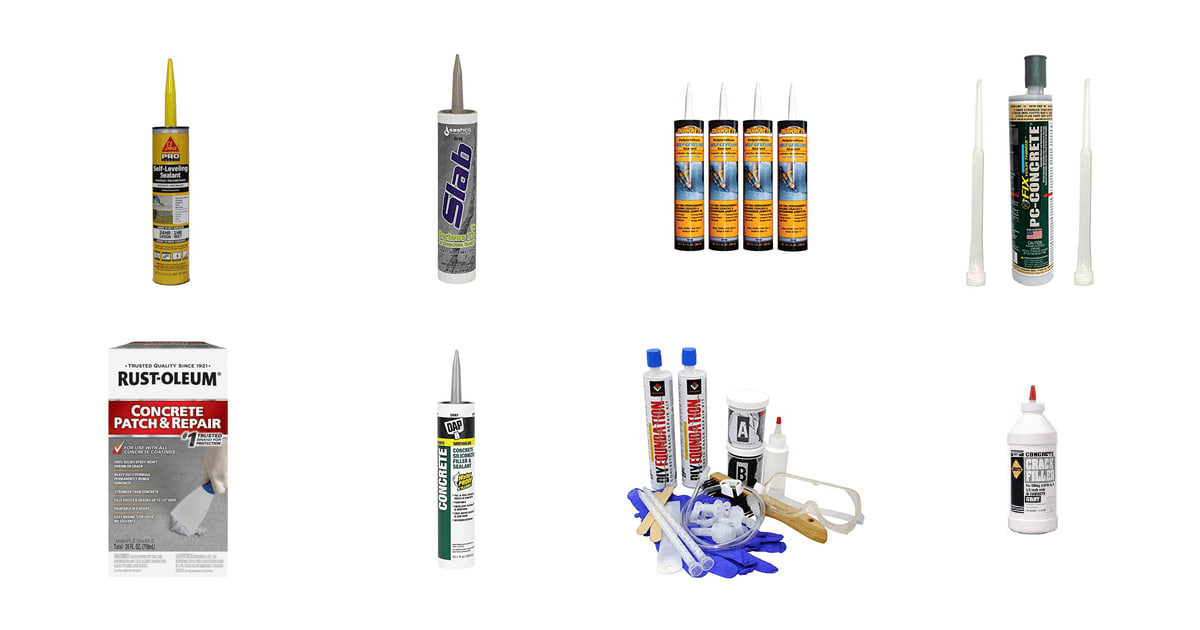
A crack in your driveway isn't just ugly. It's an open door for water, and water is what turns a hairline into a trench. Rain seeps in, freezes, expands, and pries the two slab edges a little further apart every winter. Do that a few dozen times and you've got a gap you can lose a bike tire in. Filling that crack early is about the simplest piece of home maintenance you can do, but only if you match the filler to the crack you actually have.
Here's the part nobody puts on the label: no single product handles every crack. Thin self-leveling liquids wick into hairlines beautifully and run right off a sloped driveway. Rigid epoxies bond harder than the concrete around them and then split when the slab shifts in January. Trowel-grade mortars fill a pothole but won't flex. And none of them fix a failing sub-base. If one edge of your crack sits higher than the other, you're looking at a settling problem, not a surface one.
So the honest answer starts with a tape measure and a look at your slope. Measure the widest point of the crack, note whether the driveway is flat or pitched, and check whether the two sides are still level with each other. Then pick the formula that fits. We think that the SIKA Sikaflex Self-Leveling Sealant is the best concrete crack repair kit for most driveways, and that the Sashco 16210 Slab is the one to buy if your driveway slopes or your cracks are wide enough to swallow a thinner sealant.
Everything we recommend

Pour it in, walk away, and let gravity do the tooling

Thick enough to stay put on a slope or a broken curb edge

Seals a surface crack fine, just don't expect a decade
Structural bonding strength, but only where the slab holds still

For gaps and shallow holes a cartridge can't fill
At a glance
| Product | Volume | Crack Width | Price | |
|---|---|---|---|---|
| SIKA Sikaflex Self-Leveling SealantTop pick | 10.1 fl oz | Up to 1.5 in | $10.97 |
| Sashco 16210 Slab Concrete Crack Repair SealantRunner-up | 10.5 oz | Up to 3 in | $16.84 |
 | Quikrete Gray Polyurethane Self Leveling Concrete CrackAlso in lineup | 10.1 oz | — | $44.96 |
| PC Products 72561 PC-Concrete Two-Part Epoxy AdhesiveUpgrade pick | 8.6 oz | — | $30.22On sale |
| Rust-Oleum 301012 Concrete Patch & RepairAlso great | 24 oz | — | $36.49 |
| DAP Concrete and Mortar Filler and SealantBudget pick | 10.1 oz | — | $6.69 |
 | RadonSeal Complete DIY Foundation Crack Repair KitAlso consider | 10 linear ft | Hairline | $163.99 |
 | Sakrete 60205006 Concrete Crack FillerAlso in lineup | 1 Qt x12 | — | $172.13 |
How we picked
Crack width range. We compared each manufacturer's stated maximum crack width against the three sizes homeowners actually deal with: hairline under an eighth of an inch, medium up to a half inch, and anything wider. A product that only covers one band had to be very good at it.
Flex versus rigidity. Published repair guidance is consistent that flexible polyurethane outlasts rigid filler by a wide margin in cracks that move seasonally. We weighted permanent elasticity heavily and treated rigid epoxies as specialist tools rather than general recommendations.
Slope behavior. Most driveways pitch toward the street, so we looked for whether each formula is self-leveling or non-sag and checked owner reports for sagging, running and starved beads on angled surfaces.
Cure and return to service. We read the spec sheets for tack-free time, full cure, and when you can drive on the repair, then cross-checked against owner feedback — which is where we learned that several products stay soft well past the stated window.
Coverage per unit. Cartridge size means little on its own, so we compared stated coverage against how much material owners report a real crack swallowing. Several products that look inexpensive per tube stop looking that way once you've bought four.
Top pick
Pour it in, walk away, and let gravity do the tooling
SIKA Sikaflex Self-Leveling Sealant
A single-cartridge polyurethane that flows into flat driveway cracks on its own and cures into a waterproof, permanently flexible seal. It's the least fussy way to close up cracks as wide as 1.5 inches, and it stays elastic through freeze-thaw cycles instead of cracking apart.
$10.97fromAmazonThe self-leveling part is the whole point. You cut the nozzle, run a bead down the crack, and the sealant settles into the void by itself. No spatula, no wet finger, no kneeling on the concrete smoothing a bead for twenty minutes. Owners who've used it across sidewalks and garage floors consistently describe the same thing: it flows in, finds its own level, and leaves a flush gray line. On a flat driveway, that's most of the job done for you.
Sika rates the formula for cracks up to 1.5 inches wide, which covers nearly everything short of an actual pothole. It's also a genuine polyurethane, so it stays elastic after it cures. That matters more than any other spec on this page. Your slab moves — it expands in July, contracts in January, and a rigid filler eventually loses that argument. A flexible one just stretches and goes back.
Cure timing is forgiving. It skins over tack-free in a couple of hours, so an afternoon shower won't ruin your morning's work, and it reaches full cure in under a week. After that it's waterproof, paintable, and sandable, which means you can seal or coat the driveway on top of it without the repair showing through as a stripe.
One habit worth stealing from experienced owners: for anything deeper than about a half inch, push foam backer rod into the crack first. It gives the sealant a floor to sit on so you're not pouring cartridge after cartridge into a bottomless void. It also lets the bead flex properly instead of bonding to three sides.
Flaws but not dealbreakers
A 10.1-ounce cartridge doesn't go as far as you'd expect once it's flowing into a real crack rather than sitting on top of one. That's the most common complaint from people who buy a single tube and then run out halfway down the driveway. Measure your total crack length, guess high, and buy accordingly.
The self-leveling behavior that makes it great on a flat slab works against you the moment there's a pitch. It'll creep downhill before it sets and leave you a thin, starved bead at the top and a puddle at the bottom. If your driveway drains toward the street — and most do — either work in short dammed sections or go with the Sashco instead. You'll also need a caulk gun, which isn't in the box.
Runner-up
Thick enough to stay put on a slope or a broken curb edge
Sashco 16210 Slab Concrete Crack Repair Sealant
A non-sag gel sealant built specifically for horizontal concrete, thick enough to hold its shape on a pitched driveway. Sashco rates it to span gaps up to 3 inches, and owners report it handles crumbled curb chunks and wide cracks the thinner sealants just drain out of.
$16.84fromAmazonIf your driveway has any real slope, this is the one to buy. The formula is deliberately thick — closer to a paste than a liquid — so it stays where you put it instead of migrating downhill. Owners repairing broken curb edges and vertical faces report the same thing: it doesn't run. That's the single problem our top pick can't solve, and it's a common one.
It also spans far wider gaps than most cartridge sealants. Sashco rates it to bridge openings up to 3 inches, and owner reports back that up on cracks a couple of inches across, though they note it usually takes more than one pass to bring the fill flush. The material is gritty and thick, which helps it read as concrete rather than as a shiny line of caulk once it weathers in.
Working it is genuinely easy. It's water-cleanup while wet, so a spray bottle and your finger will smooth a bead better than any tool. It takes paint well after it's fully set, and owners who've come back a year or two later report it hasn't shrunk back or split down the middle. Sashco rates it for both foot and vehicle traffic, so parking on it isn't a problem once it's cured.
Flaws but not dealbreakers
It takes its time. Owners regularly report the surface still being soft and doughy a couple of weeks in, especially on a deep fill in humid weather. It firms up eventually, but plan for it and don't panic when day three still feels tacky.
It's not permanent. The most useful owner feedback here comes from people who've used it on the same driveway for years: expect roughly three years before the repair needs a touch-up. That's fine if you'd rather do a quick annual pass than a big project, but it's less set-and-forget than a premium polyurethane.
The listing itself tells you almost nothing — no cure times, no sealer compatibility, no temperature window. You'll want Sashco's own product page open before you start.
Budget pick
Seals a surface crack fine, just don't expect a decade
DAP Concrete and Mortar Filler and Sealant
A ready-to-use gray sealant that needs no mixing and returns to service in a day. It won't match a premium polyurethane for UV stability or long-term flex, but for closing up ordinary surface cracks before winter it does the job at the lowest cost per cartridge here.
$6.69fromAmazonSometimes you just need the crack closed before the first hard freeze, and you don't want a project. This is that product. No mixing, no additives, no priming — load it, squeeze it, smooth it, done. It cleans up with water while it's still wet, which is a real convenience when you inevitably get some on your shoe.
The 24-hour return to service is the practical advantage. You can fill cracks on Saturday and park on them Sunday, which nothing else here quite matches. DAP also rates the cured filler to resist gasoline, salt, grease and oil — the four things a driveway actually gets exposed to. It takes latex or oil-based paint afterward, so it plays fine with a driveway coating.
It's the most widely stocked option on this list, which counts for something when you discover the crack on a Saturday morning. Owners who've used it repeatedly across brick, stone and concrete describe it as unglamorous and consistent. That's about right.
Flaws but not dealbreakers
The gray runs light. Owners trying to match it to darker aged concrete or brick mortar report it stands out, and dyeing it after the fact doesn't work. If color match matters to you, plan on sealing the whole surface afterward to even things out.
Squeezing it takes real hand strength. It's thick, and more than one owner has had to split a job into two sessions because their grip gave out. A good caulk gun with decent leverage helps a lot.
It doesn't have the UV stability of the Sashco or the long-term elasticity of the Sikaflex. On a south-facing driveway in full sun, expect it to need attention sooner.
Upgrade pickOn sale
Structural bonding strength, but only where the slab holds still
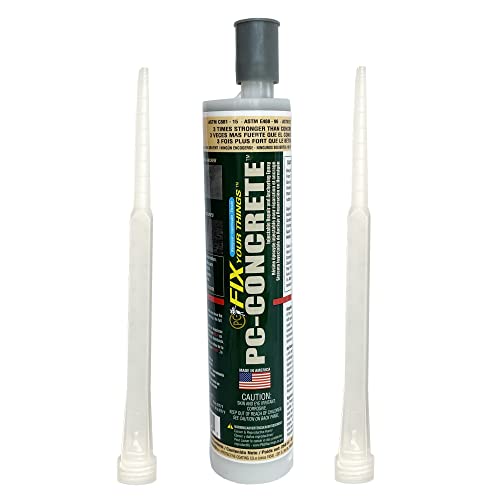
PC Products 72561 PC-Concrete Two-Part Epoxy Adhesive
A two-part epoxy paste that mixes at the nozzle and cures harder than the concrete around it. It's the right call for spalled edges and crumbling steps that carry weight, and the wrong call for any crack that opens and closes with the seasons.
$30.22fromAmazonList priceThis isn't really a crack sealant. It's a structural adhesive that happens to fill cracks. PC Products rates it for anchoring threaded rod and bolts into concrete, which tells you everything about the bond strength — owners have used it to set rebar and to reattach broken chunks of concrete steps and ornaments. If your driveway has a spalled edge crumbling under tire load, this is what puts it back together.
The dual cartridge mixes at the nozzle, so you're not eyeballing a ratio in a cup. Work time is about 20 minutes at room temperature and it's cured in roughly four hours, which is fast. It's also high-tack and moisture-resistant, so you can use it in a crack you couldn't get bone-dry — helpful on a shaded driveway or in a humid week.
The temperature range is the widest here. You can apply it anywhere from 35 to 115 degrees, and once cured it holds service from -20 up to 115. That's a lot of the year in most of the country, and it means a cool spring weekend isn't off the table.
Flaws but not dealbreakers
It cures completely rigid, and that's a genuine limitation. Use it on a crack that moves with the seasons and the epoxy will split — either down the middle or right alongside the old crack. Save it for stable structural damage and use a polyurethane everywhere else.
Getting it out of the tube is work. The self-mixing nozzle creates real back pressure, and owners regularly report sore hands and a fight with the caulk gun. Warm the cartridge a bit and use a gun with a high thrust ratio.
It's runnier than you'd expect for a paste. Owners trying to use it on walls report it sagging and needing to be pushed back up repeatedly. It's fine on horizontal work — which is what a driveway is — but don't count on it for vertical faces.
Also great
For gaps and shallow holes a cartridge can't fill
Rust-Oleum 301012 Concrete Patch & Repair
A two-part epoxy mortar in a 24-ounce kit, meant for cracks and holes rather than thin seams. It cures hard without shrinking and takes paint or coating in about eight hours, which makes it the practical choice when a crack has grown into a divot.
$36.49fromAmazonOnce a crack widens into an actual hole, sealant stops being the answer. You need fill volume, and a cartridge doesn't have it. This kit gives you 24 ounces of two-part epoxy mortar that you mix, trowel in, and level flush. Owners patching garage floors before laying down a coating consistently pick it for exactly that reason.
It cures without shrinking, which is what separates it from cheap patch compounds. A filler that pulls back as it dries leaves you a hairline seam around the edge of every repair, and water finds that seam. This one bonds and stays put. One owner reports rolling three-thousand-pound pallets over a patch repeatedly without it failing.
The eight-hour window to paint or coat is the scheduling win. Fill in the morning, coat in the evening, park on it the next day. Rust-Oleum also calls it low-odor and rates it for indoor use, so it's equally at home on a garage floor as on the driveway apron.
Flaws but not dealbreakers
Trowel work is a skill, and this demands more of it than squeezing a tube. Mix small batches — owners who try to do a large area in one go report the epoxy setting up before they've finished spreading it. Work in sections.
It stays tacky longer than the label suggests. Several owners report stepping on a patch an hour in and leaving a print. It smooths back down with a wet finger, but rope the area off.
Getting a flush, level finish often takes a second pass after the first one settles. Budget for that rather than assuming one application is done.
Who this is for
This guide is for homeowners with a concrete driveway, garage floor, walk or patio that has developed visible cracks, and who'd rather spend an afternoon fixing them than call someone. If your cracks are surface-level, under about a half inch, and the two sides are still level with each other, everything here is well within your ability with a caulk gun and an hour of prep.
It's not for you if the crack shows vertical displacement — one edge higher than the other — by more than a quarter inch, if multiple parallel cracks have opened across the full width of the slab, or if a previous repair has already reopened. Those are symptoms of a failing sub-base, and no filler addresses them. The slab will keep sinking underneath whatever you put on top. Get a slab-lifting or mudjacking estimate first. We also don't cover asphalt driveways here; asphalt needs a rubberized filler, not any of these.
How we picked
We built the list around the questions that actually decide a repair. Crack width: we matched each manufacturer's rated maximum against hairline, medium and wide cracks, since a product used outside its band fails no matter how good it is. Flexibility: published repair guidance strongly favors permanently elastic polyurethane over rigid filler in any crack that moves with the seasons, so we treated epoxies as specialist tools. Slope: self-leveling formulas are wonderful on flat slabs and useless on pitched ones, so we checked owner reports for sagging and starved beads. Cure time: we compared stated tack-free and drive-ready windows against what owners report in practice, which is often longer. Coverage: we looked at how much material a real crack swallows rather than at cartridge size alone.
Other concrete crack repair kits for driveways worth considering
If water is getting through, not just in: The RadonSeal Complete DIY Foundation Crack Repair Kit ($163.99) — The RadonSeal kit is a different category of repair. Instead of sitting on the surface, its low-viscosity two-part urethane is injected into the crack and expands inside it, filling voids you can't see or reach from above. It's built for basement walls and crawl spaces, and owners with cracks that had leaked for decades report them going completely dry afterward. The kit includes everything — ports, mixing gear, eye protection. For a driveway, it only makes sense if you suspect sub-surface voiding or active water intrusion, and it costs far more than a cartridge of sealant. It's also messy work, and the urethane can over-expand in a very fine crack if you're heavy on the trigger.
The competition
This is what our research surfaced in the driveway crack repair category, not a census of everything on the shelf. A few products here are perfectly good but lost to a pick on availability, packaging or price structure rather than on how they perform in a crack.
The Quikrete Gray Polyurethane Self Leveling Concrete Crack ($44.96) — Quikrete's Gray Polyurethane Self Leveling Sealant is a fine formula and the one most DIYers will spot first, because Quikrete owns shelf space at every big home center in the country. It's a genuine self-leveler — owners confirm it flows the way it claims and handles hairline to quarter-inch cracks without mixing. The problem is the listing, not the product. Buyers repeatedly report ordering a multi-pack and receiving a single tube, and the online price is a steep markup over what the same cartridge costs on a store shelf. Buy it in person and it's a solid choice. Buy it here and you're overpaying for a product our top pick beats on crack width anyway.
The Sakrete 60205006 Concrete Crack Filler ($172.13) — Sakrete's Concrete Crack Filler is a thin-pour liquid that penetrates hairline cracks well and is designed to sit under Sakrete's Flo-Coat resurfacer, so it makes sense as step one of a full driveway resurfacing project. This listing, though, is a case of twelve quarts. That's a contractor quantity, and the per-quart math only works if you genuinely need all twelve. For a homeowner with a few cracks, a single cartridge from any of our picks does the job for a fraction of the outlay. If you're resurfacing the whole slab with the matching Sakrete system, it's worth a look; otherwise buy individual quarts locally.
Prep and application notes
Prep decides how long the repair lasts — more than the product does. Chase the crack with a cold chisel, angle grinder or oscillating tool to knock out every loose, crumbling edge, because filler bonded to a flake is just filler bonded to a flake. Blow the dust out with compressed air or a shop vac; a dusty crack won't take adhesion. Then let it dry, at least a full day after rain, and longer if the driveway is shaded. For very fine cracks, widening the groove to about a quarter inch gives the filler something to key into. Anything deeper than a half inch should get foam backer rod first, so you're sealing the top of the crack rather than trying to fill it to the bottom. Apply above 40 degrees, and not if a freeze is coming within a day.
Questions we get
What's the best crack filler for a typical driveway crack?
For flat driveways with cracks up to about an inch and a half, the SIKA Sikaflex Self-Leveling Sealant is the one to start with. It flows into the crack without tooling, cures waterproof, and stays flexible so it moves with the slab instead of splitting. It's also paintable and sandable once fully cured, so a driveway sealer will go over it cleanly.
What should I use on cracks wider than half an inch?
Step up to a trowel-grade mortar like the Rust-Oleum 301012 Concrete Patch & Repair. Cartridge sealants are designed to seal a seam, not to fill an open void, and a wide gap will just swallow tube after tube. The two-part epoxy mortar gives you real fill volume and cures without shrinking back from the edges. The Sashco Slab is a middle option — it's thick enough to bridge gaps a thin sealant can't.
Epoxy or polyurethane?
Polyurethane for almost every driveway crack. It stays permanently elastic, so it absorbs the expansion and contraction that drives freeze-thaw damage in the first place. Reach for a two-part epoxy like PC-Concrete only when the concern is structural — a spalled edge crumbling under vehicle weight, or a broken chunk that needs to be bonded back on. Epoxy cures rigid, and a rigid filler in a seasonal crack will crack itself.
Can I do this myself, or should I call someone?
Most driveway cracks are a DIY job. If the crack is under a half inch and the two sides are still level with each other, a caulk gun and some prep tools will handle it. Call a contractor when one edge sits noticeably higher than the other, when parallel cracks have opened across the whole slab, or when a previous repair has already reopened — those point to sub-base failure, and no surface filler fixes that.
How soon can I drive on the repair, and when can I seal it?
Return-to-service times vary a lot. The DAP filler is rated for 24 hours, the Rust-Oleum epoxy is coatable in about eight, and polyurethane sealants generally want several days to reach full cure. Wait for full cure before applying any driveway sealer, and check the specific product's compatibility with the sealer you plan to use. Owner reports suggest some of these stay soft longer than the label implies, so give it extra time in humid weather.
Will the repair match the color of my driveway?
Not exactly. Everything here cures gray, but the shades differ and none of them will match aged, stained concrete. The DAP in particular runs light. Weathering closes the gap over a season or two, and if uniform color matters to you, the reliable fix is to seal or coat the whole surface after the repairs cure — that evens out the appearance and adds UV and moisture protection at the same time.
Why you should trust us
For this guide:
- We read the manufacturer spec sheets and listing claims for every product here, comparing rated crack widths, cure schedules, application temperature ranges and flexibility after cure.
- We reviewed published repair guidance on how flexible and rigid fillers hold up in cracks that move seasonally, and used it to weight our recommendations.
- We read through owner feedback for each listing, looking for repeated themes around coverage, cure time, sagging on slopes and color match rather than isolated complaints.
- We read owner reviews on every listing, weighted toward the critical ones, because that is where the recurring failures show up.
- We have a systematic way of automatically fetching the latest prices, so the numbers on this page stay current.
- This is a research-focused guide, so the team may not own every product listed — though we often do own the top winners, which gives us extra context for the recommendations.
- We don't accept free products, and the retailer commission never changes which product we recommend.
Sources
Best Concrete Crack Fillers — Bob Vila, Bob Vila
Best Concrete Crack Fillers 2025 — This Old House, This Old House
Best Concrete Crack Fillers — The Spruce, The Spruce
Concrete Crack Repair Guide — Quikrete, Quikrete
How to Repair Concrete Cracks — Family Handyman, Family Handyman
Amazon product listings and owner reviews for all 8 products
Manufacturer specification pages for each product
Some passages in this guide may be paraphrased with AI help. Prices are refreshed automatically.
More like this.
Continue exploring home reviews and recommendations.

The Best DIY Windshield Repair Kits
A rock kicks off the back of a gravel truck, and a second later there's a small white star in your glass. It looks harmless. Then a cold morning and a…

The Best Portable Concrete Mixers
Concrete has a clock on it. Once water hits the bag, you've got maybe an hour to mix, place and finish before the batch goes stiff on you. That's why…

The Best Fence Post Setting Concrete
Setting a fence post is one of those jobs where the hard part isn't the post - it's the hole and what goes in it. You dig, you plumb, you brace, and then…

The Best Driveway Heating Mats
The worst part of a snowstorm isn't the snow. It's the twenty feet between your door and your car, refrozen into a gray slab by morning. A heating mat…

The Best Asphalt Driveway Sealers
Your driveway takes more abuse than any other surface on your property. Sun bakes the binder out of the asphalt, water works into hairline cracks and…

The Best Pet-Safe Ice Melts for Driveways
If you have a dog, winter changes how you think about your driveway. Every trip outside means paws pressing into whatever you spread on the ice, and then…