The Best Driveway Markers for Snow Plowing
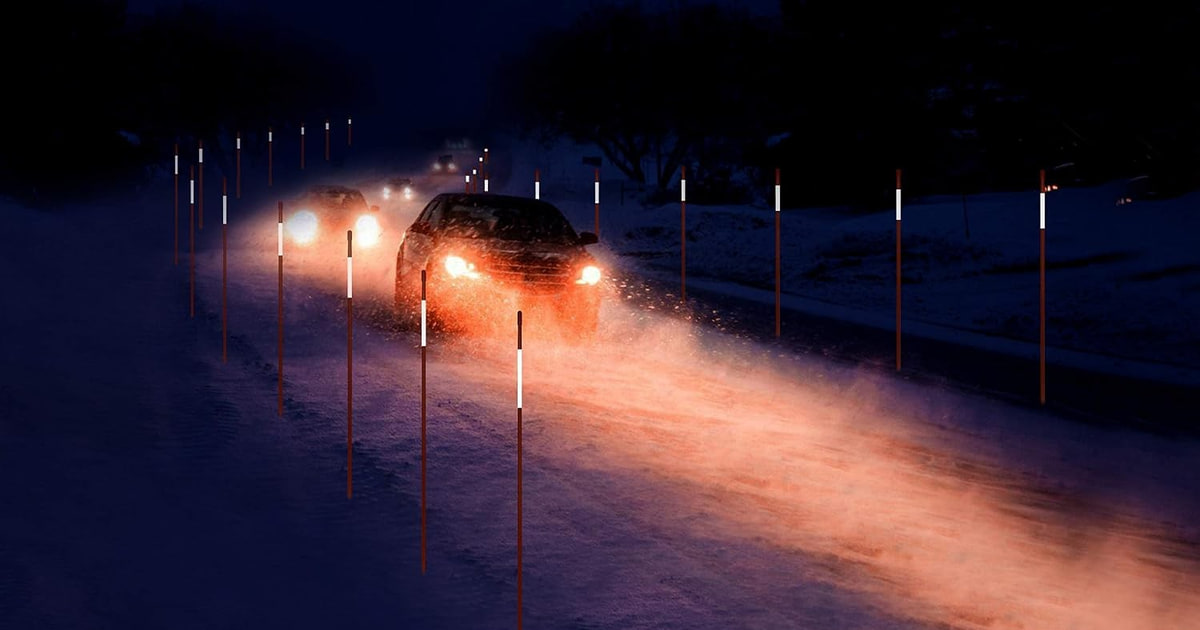
A driveway marker is a boring purchase right up until the moment it isn't. The first big storm covers your lawn edge, your sprinkler heads and that culvert you keep meaning to fill, and suddenly a plow driver is guessing where the pavement ends. Good markers stand about four feet tall, catch a headlight from a couple hundred feet out, and bend instead of snapping when a blade clips them. They also need to survive being frozen into the ground for months. That's a lot to ask of what is essentially a stick.
Here's the honest part: nothing in this category is built to last forever. Fiberglass rods develop micro-cracks after enough plow contact, reflective tape dulls in UV and road salt, and owners across nearly every brand report tape peeling or fading sooner than they'd like. Solar markers add a second failure mode — thin segmented poles that bend in wind, plus batteries that don't recover well after a run of gray days. Plan on replacing some stakes every couple of seasons and you won't be disappointed.
Most people are choosing between a bulk pack of orange fiberglass and something taller or lit up for a few problem spots. That's the right way to think about it. We think that the Anley 20 Pack 48" Reflective Driveway Markers is the best driveway marker for most people, and that the FiberMarker 48-Inch 20-pack is the one to buy if your driveway curves or your plow contractor runs a heavy truck.
Everything we recommend

Enough stakes for a typical driveway, plus the cap you need

Thicker poles and tape that works from any angle

Fifty stakes at once, if you're marking a lot of ground

The tallest option, with reflectors at three heights
At a glance
| Product | Height | Pack Quantity | Price | |
|---|---|---|---|---|
| LOMNYIY Driveway Markers ReflectorsAlso great | 50.5 Inch | 4 Pack | $15.55 |
| FiberMarker 48-Inch Reflective Driveway Makers Orange 20PcsRunner-up | 48 Inch | 20Pcs | $33.66On sale |
 | Macarrie 6 Pack Solar Driveway Markers ReflectorAlso consider | 37 Inch | 6 Pack | $39.99 |
 | Alpine Corporation 43" H Driveway Markers withAlso in lineup | 43 Inch | Set of 2 | $17.99 |
| Snow Stakes Driveway Markers Snow Plow StakesBudget pick | 48 Inch | 50 | $40.21 |
| Anley 20 Pack 48" Reflective Driveway MarkersTop pick | 48 Inch | 20 Pack | $23.59 |
 | 4ft Black Fiberglass Driveway Markers - 20Also in lineup | 48 Inch | 20 Pack | $44.99 |
How we picked
Material and cold rating. We looked for fiberglass or flexible polymer on every spec sheet, since both flex under a blade and stay usable in sub-zero cold. Rigid PVC and wood didn't make the cut, and neither material appears in this lineup.
Height above snowpack. Published guidance puts 48 inches as the floor for regions averaging two feet of snow or more. We treated anything shorter as a hazard-point marker rather than a full edge solution.
Reflective coverage. We compared tape length and placement across listings, and weighed owner reports of tape that peeled, faded or measured shorter than advertised. Wrap-around and multi-height designs scored higher for curved approaches.
Install hardware. Getting a stake into frozen soil without splitting it is the most common early failure. Packs that include a hammer cap or a protective top got credit here.
Pack size versus need. We checked whether each pack actually covers a driveway at 6-to-8-foot spacing, or whether it only makes sense for a handful of hazard points.
Top pick
Enough stakes for a typical driveway, plus the cap you need
Anley 20 Pack 48" Reflective Driveway Markers
Twenty 48-inch fiberglass stakes with eight inches of orange reflective tape each, and a hammer cap that most competitors leave out. It's the simplest complete answer for a suburban driveway, and it's the pack owners buy most often.
$23.59fromAmazonThe hammer cap is the reason this one wins. Driving a quarter-inch fiberglass rod into November soil without something protecting the top is how you split a stake before it ever marks a plow pass. Anley includes the cap in the box. FiberMarker, labworkauto and Discount Snowstakes don't, which means a rubber mallet and a scrap of wood and a lot more swearing in the cold.
Twenty stakes at the 6-to-8-foot spacing the Snow & Ice Management Association recommends covers roughly 130 to 160 feet of edge. For a lot of suburban driveways that's one side done, or both sides of a short one. If you've got 200 feet of gravel to mark, you'll want two packs. Buy more than you think you need — almost everyone underestimates this on the first order.
Each stake carries eight inches of orange tape, which is more than most competitors put on. Orange fluorescent is the right color here; it holds contrast against snow in daylight and returns headlight at night, and it beats black or white by a wide margin in flat overcast light.
Fiberglass at this diameter bends hard under a blade and springs back. That's the whole point of the material. Owners who use these to keep a plow off the lawn generally report the stakes doing exactly that job, season after season, which is why this listing moves so much volume.
Flaws but not dealbreakers
The quarter-inch diameter is the compromise. It's thinner than the 5/16-inch rods FiberMarker and Discount Snowstakes use, and owners who've had both notice — a few report stakes snapping off when a heavy snowbank pushes against them rather than a blade tapping them. If a commercial truck plows your driveway on a daily route, spend up for the thicker gauge.
The reflective tape is the other soft spot. Owner feedback includes tape that's already lifting out of the box and tape that doesn't return as much light as expected. It's fine at typical driveway distances, but don't expect road-sign brightness.
Anley doesn't publish a fixed warranty term; the listing offers direct support for any product concerns.
Runner-upOn sale
Thicker poles and tape that works from any angle
FiberMarker 48-Inch Reflective Driveway Makers Orange 20Pcs
Twenty solid fiberglass rods at 5/16-inch diameter, a full 25 percent thicker than the standard stake, with reflective tape that wraps the pole. If your driveway bends or your plow driver approaches at an angle, this is the smarter buy.
$33.66fromAmazonList pricePicture the approach to a curved driveway at night. Your headlights hit a row of stakes sideways, and a single strip of tape facing the other way returns almost nothing. FiberMarker wraps the tape so the pole reflects from any direction. On a straight driveway you'll never notice. On a curve, you will.
The extra gauge is what you're really paying for. Solid 5/16-inch fiberglass flexes without the whippy feel of thinner rods and comes back to vertical faster after a strike. Owners replacing markers that lasted two decades came back to these, which tells you something about how the material holds up when it's made properly.
The pointed tip goes into soft ground by hand in moist soil or sod, no tools needed. For rock and clay, owners have good luck with a spike or install bit to open a pilot hole first, then tapping the pole down. That's the same technique that works for any fiberglass stake.
This is also the pick for parking lots and fire lanes, not just home driveways. The orange holds up against snow glare in daylight, and the wrap-around tape means a snow crew coming from an unfamiliar direction still sees the boundary.
Flaws but not dealbreakers
No hammer cap, which is a genuine irritation in frozen ground. The listing mentions a poly cap protecting the pole, but plan on a rubber mallet and a wood block if you're installing late.
Some rods arrive with rough, unfinished patches, and owners report picking up fiberglass splinters during install. Wear gloves. That's good advice for every fiberglass stake here, but it matters more with these.
The tape is silver-grey rather than orange, and at least a few owners find it fades faster than they'd like. It's adequate in a rear-view mirror at night, not dazzling.
Budget pick
Fifty stakes at once, if you're marking a lot of ground
Snow Stakes Driveway Markers Snow Plow Stakes
A 50-pack of 48-inch fiberglass stakes rated from -22°F to 140°F, made by pultrusion so the rod thickness stays consistent end to end. It's the restock order for contractors and anyone with a long gravel drive.
$40.21fromAmazonBuying in fifties is how the per-stake cost drops. If you're marking multiple properties, a long rural driveway, or rows of anything at all, small packs get expensive fast in a way that isn't obvious until the third order. This pack solves that in one purchase.
The -22°F rating isn't marketing filler. Fiberglass stays flexible in cold that makes plastic brittle, which is the entire reason this category moved away from PVC. Fiberglass is also flame-resistant and doesn't conduct, so these are safe to put next to a gas meter or a transformer pad.
Owners use these for more than driveways — marking Christmas tree rows, property boundaries, bank poles. Same virtues apply. They go into sandy and hard dirt without much fuss, and the tapered tip and top cap make install straightforward.
Flaws but not dealbreakers
The reflective tape band is shorter than the listing implies. Multiple owners measured well under what they expected, and a smaller tape area means less headlight return. For a property line that's fine. For the mouth of a driveway you actually back out of at night, it's a real downside.
Quarter-inch rods fatigue faster under repeated commercial plow contact than 5/16-inch. Order overage into your first purchase rather than trying to reorder mid-February.
At least one owner reports receiving hollow rods with oversized plastic tips instead of the solid, machined stakes pictured. Inspect what arrives, and check the return terms before you order a large quantity.
Also great
The tallest option, with reflectors at three heights
LOMNYIY Driveway Markers Reflectors
A four-pack of 51-inch fiberglass poles that puts a reflector at the top, the middle and the lower joint instead of just one band up top. Use these at the specific spots where being seen actually matters most.
$15.55fromAmazonThree reflectors at three heights is a genuinely clever idea. LOMNYIY swapped the ordinary connectors that join pole sections for reflective ones. On a hill or a curve, where terrain can hide the top of a stake from an approaching driver, the mid-pole reflector still catches the beam. A single band up top can't do that.
At 51 inches assembled, these stand about three inches above the 48-inch standard. That margin matters by February, when a plowed bank has swallowed the bottom foot of everything else you put in the ground.
They screw together by hand in a couple of minutes, no tools. Wear gloves — the manufacturer says so, and it's sound advice for fiberglass generally.
A four-pack isn't a driveway solution, and we'd stop pretending otherwise. Put these where the stakes are highest: the gas meter, the septic riser, the culvert lip, the apex of the turn. Then run cheaper orange stakes along the rest of the edge.
Flaws but not dealbreakers
The joint between the two pole sections is the weak point, and it's a common one. Owners in the Northeast report more than half of a set breaking at that connection after a single winter, and the assembled pole feels flexible in a way that worries some people right out of the box. One owner simply left a section off and preferred the shorter, stiffer result.
Buying enough four-packs to mark a real driveway gets expensive quickly compared to a 20- or 50-pack. These are hazard markers, not edge markers.
No hammer cap, and the screw-together design means you don't want to pound on the assembled pole anyway. Open a pilot hole first.
Who this is for
Buy markers now if a plow — yours or a contractor's — touches your driveway, and especially if the edge is lawn or gravel with no curb to guide anyone. The same goes if you've got anything low and expensive along the edge: sprinkler heads, a septic riser, a drainage pipe, a stone wall. One torn-up lawn edge costs more to repair than a lifetime supply of stakes.
Skip it if your driveway is concrete with a visible curb on both sides and you clear it yourself with a walk-behind blower. You already know where the edges are. This guide covers driveway-length markers in fiberglass and solar-lit form; it doesn't cover reflective curb tape, pavement-mounted road studs, or the ground sleeves and install bits sold separately to anchor stakes in gravel.
How we picked
Material: we stuck to fiberglass and flexible polymer, since both bend under a blade and don't go brittle when it's well below zero. Height: 48 inches is the working minimum where snow totals pass two feet a year, and taller is better in the snowbelt. Reflectivity: more tape is better, and tape that works from an angle is better still, so we weighed wrap-around and multi-height designs against single bands — and against owner reports of tape peeling or measuring short. Installation: a hammer cap or protective top earns real credit, because a split stake in frozen ground is the most common way these fail on day one. Pack size: we asked whether the count actually covers a driveway at 6-to-8-foot spacing, or only a few hazard points.
Other driveway markers for snow plowing worth considering
If your driveway gets plowed before sunrise: The Macarrie 6 Pack Solar Driveway Markers Reflector ($39.99) — Reflective tape needs headlights to work. If a contractor pulls in at 4 a.m. and swings wide before his beams line up with your stakes, tape isn't doing much. The Macarrie six-pack puts a solar LED head on each pole with a four-sided lens, a steady or flashing mode, and roughly 8 to 10 hours of runtime off a sunny-day charge. What you give up is height and rigidity. At 37 inches these sit below the 48-inch standard and can vanish behind a February snowbank, and the segmented metal poles are the part owners complain about most — thin enough to bend in wind, and prone to coming apart. Some owners keep the lit heads and swap in their own poles. Use these at the entrance and at hazard points, not for the whole edge.
The competition
This is what our research turned up in this category, not a survey of everything sold. Snow stakes are a crowded, high-turnover market, and a solid product can disappear from a listing without warning. If something here isn't available when you look, the criteria above will get you to an equivalent.
The Alpine Corporation 43" H Driveway Markers with ($17.99) — The Alpine Corporation 43-inch solar markers are the simplest way to light two specific points — a gate, the mouth of a driveway, the corner of a stone wall — and the photocell handles on and off for you, so there's nothing to remember. But a two-pack marks two spots, not a driveway, and the plastic ground stake is the recurring complaint: owners report the foot or the cleat snapping during install, sometimes on the first stake, sometimes before it's fully seated. Some also find the effective above-ground height well short of 43 inches once the stake is buried, and a few report water getting in around the light head. If you like the concept, drive a piece of rebar first and slip the marker over it rather than stepping on the stake.
The 4ft Black Fiberglass Driveway Markers - 20 ($44.99) — Discount Snowstakes' 4-foot black fiberglass markers use the same heavy 5/16-inch gauge as our runner-up, so the structural argument is real — thick rods flex without whipping and come back to vertical faster after a hit. The problem is the color. A black pole with a tape band gives you nothing at dusk, in blowing snow, or in ambient light without a direct headlight beam, which is exactly when you want a marker doing its job. Orange works in all of those conditions. Owner feedback on this listing is also thin enough that we can't say much about how the tape or the rods hold up over seasons. Choose these if a neighborhood association or a commercial property spec calls for a low-visibility marker; otherwise take the orange.
Installation notes
Get your stakes in the ground in October or early November. Once soil drops below about 25°F, a mallet won't seat a fiberglass rod without cracking the tip, and you'll waste stakes learning that. For frozen or rocky ground, drive a 3/8-inch rebar spike to open a pilot hole, pull it, then set the stake and tap it with a hammer cap or a wood block over the top. Wear gloves — fiberglass splinters are a real and unpleasant hazard during assembly. Space markers every 6 to 8 feet along a straight edge, tighten to about 4 feet on gravel and around gas meters, septic risers and sprinkler heads, and pull everything in April so UV and ground moisture don't finish off the tape.
Questions we get
How tall should driveway markers be for snow plowing?
Forty-eight inches is the working minimum anywhere that averages two feet of snow a year or more. In the Great Lakes snowbelt, upper New England or the Rockies, go to 51 inches or taller — the LOMNYIY poles are the tallest here at 51 inches assembled. Anything under 36 inches can be swallowed whole by a single large storm.
Are solar driveway markers worth it?
They are if your driveway gets plowed before dawn. Reflective tape only lights up when a headlight beam hits it at roughly the right angle, so a contractor arriving at 4 a.m. and turning in wide may not see your stakes until he's on top of them. Solar LEDs are their own light source, visible from any angle. The catch is that they're shorter and their poles are flimsier, so the smart move is solar at the entrance and hazard points, fiberglass along the rest of the edge.
How many markers do I need for a 200-foot driveway?
At 6-to-8-foot spacing you're looking at 25 to 34 stakes per side, so 50 to 68 for both edges. Two 20-packs cover both sides of most driveways; a 50-pack covers one long side with room to spare. Add extra stakes for obstacles like gas meters and septic risers, which want tighter 4-foot spacing.
Will markers damage my plow blade?
Fiberglass won't. It bends on contact and springs back, which is why every stake in this guide uses it. What does damage blades is wood — it splinters into hard fragments that shred rubber cutting edges and jam snowblower augers — and rigid PVC, which shatters in deep cold. Solar markers have plastic light heads that can crack on a direct hit, so set those slightly off the blade's path.
Can I reuse fiberglass stakes next winter?
Yes, and you should. Thicker 5/16-inch rods commonly go several seasons; quarter-inch rods usually give you two or three under residential plowing. Pull them in spring, store them dry and out of the sun, and check the tape before you reinstall — tape that's gone dull or started lifting isn't returning much light anymore.
What color is easiest to see in snow?
Orange fluorescent, by a clear margin. It holds contrast against white in daylight and returns headlight at night. Yellow is a decent second. Red works on solar markers because the LED is doing the work rather than the color. Skip white entirely, and treat black poles as an aesthetic choice for well-lit commercial properties rather than a visibility one.
Why you should trust us
For this guide:
- We compared manufacturer specifications across all seven listings for pole diameter, assembled height, material, reflective tape length and stated temperature range.
- We read owner feedback for each product and looked for repeated failure modes — split connectors, bent solar poles, tape that peels or measures short — rather than one-off complaints.
- We checked pack counts against published spacing guidance from the Snow & Ice Management Association to judge whether each option can actually cover a driveway.
- We read owner reviews on every listing, weighted toward the critical ones, because that is where the recurring failures show up.
- We have a systematic way of automatically fetching the latest prices, so the numbers on this page stay current.
- This is a research-focused guide, so the team may not own every product listed — though we often do own the top winners, which gives us extra context for the recommendations.
- We don't accept free products, and the retailer commission never changes which product we recommend.
Sources
Best Driveway Markers — Bob Vila, Bob Vila
Best Driveway Markers for Snow — This Old House, This Old House
Best Driveway Markers — Family Handyman, Family Handyman
Best Driveway Markers for Snow Plowing — Popular Mechanics, Popular Mechanics
Snow & Ice Management Association — Contractor Resources and Best Practices, Snow & Ice Management Association (SIMA)
Amazon product listings and owner reviews for all 7 products
Manufacturer specification pages for each product
Some passages in this guide may be paraphrased with AI help. Prices are refreshed automatically.
More like this.
Continue exploring home reviews and recommendations.

The Best Pet-Safe Ice Melts for Driveways
If you have a dog, winter changes how you think about your driveway. Every trip outside means paws pressing into whatever you spread on the ice, and then…

The Best Driveway Heating Mats
The worst part of a snowstorm isn't the snow. It's the twenty feet between your door and your car, refrozen into a gray slab by morning. A heating mat…

The Best Asphalt Driveway Sealers
Your driveway takes more abuse than any other surface on your property. Sun bakes the binder out of the asphalt, water works into hairline cracks and…

The Best Concrete Crack Repair Kits for Driveways
A crack in your driveway isn't just ugly. It's an open door for water, and water is what turns a hairline into a trench. Rain seeps in, freezes, expands,…

The Best Snow Melting Mats for Walkways
Shoveling a walkway at six in the morning is nobody's idea of a good time, and the ice that forms afterward is worse. A heated mat sidesteps both…

The Best Roof Rakes for Snow Removal
A foot of wet snow on your roof isn't a cosmetic problem. Fresh powder weighs about 3 pounds per cubic foot, but dense, water-logged snow can hit 20…