The Best Roof Rakes for Snow Removal
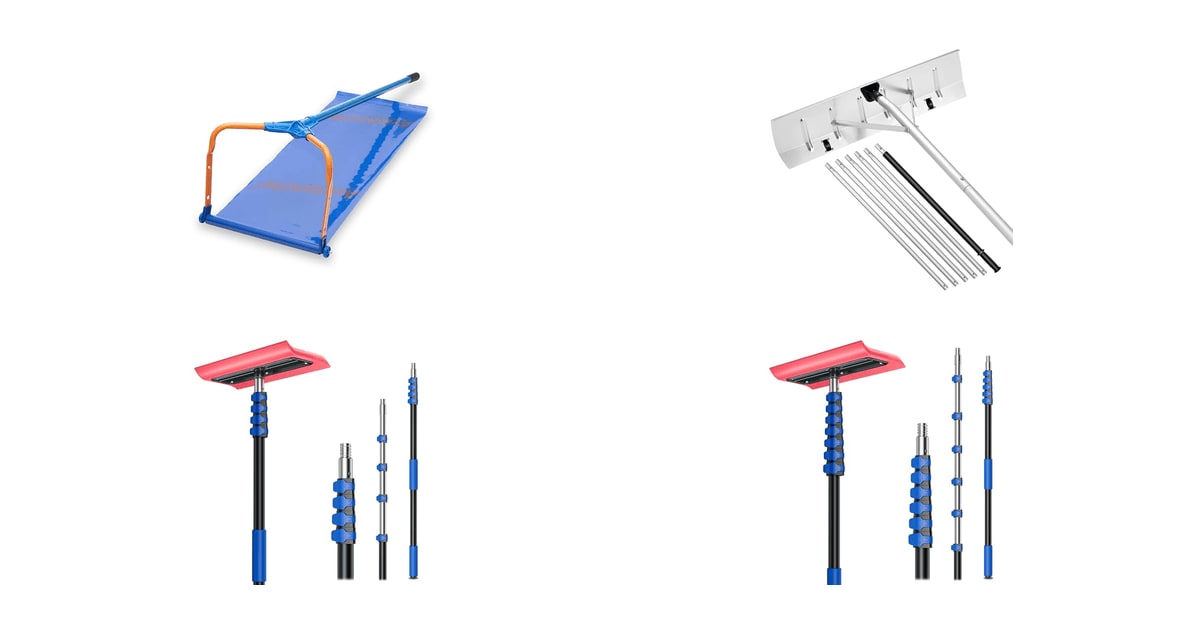
A foot of wet snow on your roof isn't a cosmetic problem. Fresh powder weighs about 3 pounds per cubic foot, but dense, water-logged snow can hit 20 pounds per cubic foot, and most modern residential roofs are engineered for only 20 to 25 pounds per square foot. Older houses often handle less. A roof rake lets you pull that load off from the ground, without a ladder and without walking on an icy slope. It's also the fastest way to break up the snowpack that feeds ice dams along your eaves.
Here's the honest part: no roof rake is pleasant to use. Every one of them is a long, awkward pole that gets heavier the farther you extend it, and snow lands on your boots and your neck the whole time. None of them will touch ice that's already frozen to your shingles — they move loose snow, and that's it. The telescoping joints and plastic blade mounts are where these tools break, and they break more often than anyone selling them admits.
We think that the Avalanche! Roof Snow Rake is the best roof rake for most people, and that the VEVOR Snow Roof Rake is the one to buy if you need more reach and a wider blade for a bigger roof.
Everything we recommend

Slides snow off instead of dragging a blade across shingles

More reach and a wider blade, but you'll feel every foot of it

A soft foam head that's safe on solar panels and car roofs
At a glance
| Product | Reach Length | Blade Width | Price | |
|---|---|---|---|---|
| Avalanche! Roof Snow RakeTop pick | 15.5 ft | 17 in | $142.27 |
| VEVOR Snow Roof RakeRunner-up | 7.5-20 ft | 26 in | $62.90 |
| Roof Rakes for Snow RemovalBudget pick | 20 ft | — | $93.99 |
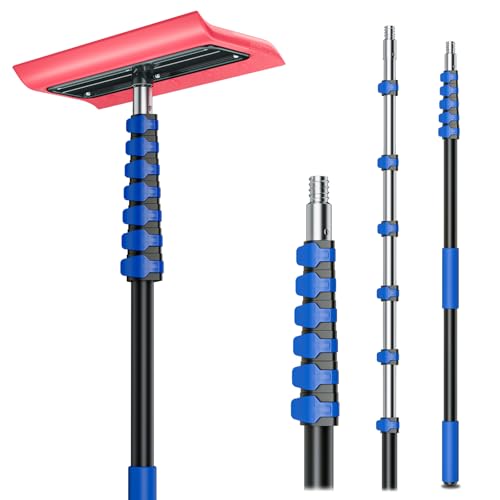 | Roof Rakes for Snow RemovalAlso consider | 30 ft | — | $129.99 |
How we picked
Reach without a ladder. We looked for poles that extend to at least 15 feet, since that clears the eaves of most single-story homes and the lower roof of a two-story from the ground. Published roundups put the useful range for residential rakes at roughly 20 to 21 feet at full extension.
Shingle protection. We favored wheeled carriages and soft blade materials, because a bare metal edge dragged down a roof strips granules off asphalt shingles. Review-site coverage credits the wheeled design with meaningfully reducing that wear.
Cold-weather joints. Aluminum stays rigid to about -40°F, while polypropylene connectors get brittle below -20°F. We checked spec sheets for pole and connector materials, and read owner feedback for reports of cracked couplings and failed locking clips.
Weight and fatigue. Total weight matters less than how a rake feels at full extension, so we weighed listed specs against owner comments about arm and shoulder fatigue. A wider blade clears more per pass but demands noticeably more effort in wet snow.
Storage and assembly. We preferred tool-free assembly and designs that collapse or break down for the off-season. Owner feedback repeatedly ties multi-season longevity to whether a rake gets stored properly rather than left outside.
Top pick
Slides snow off instead of dragging a blade across shingles
Avalanche! Roof Snow Rake
The Avalanche! uses a wheeled cutter and a 12-foot plastic slide, so snow rides down a chute instead of getting scraped toward you. Owners in the Northeast and Great Lakes come back to it season after season, and it's assembled in the USA.
$142.27fromAmazonThe wheels are the whole point. Most roof rakes are a metal blade you drag down the slope, and every pass rubs against your shingle granules. The Avalanche! rolls on 1.5-inch wheels that hold the cutter just off the surface. Behind it, a 17-inch-wide plastic slide gives the snow a slick path to the ground. You push up, the snow releases, and it slides off on its own. Less scraping, less granule loss.
It's also less work than it looks. With a conventional rake you're pulling snow toward you, over and over, and the weight lands on your arms and lower back. With this one you push once and gravity does the rest. Owners who've used both consistently say this is the easier tool on a deep, unfrozen snowpack — several describe clearing a foot of snow in a few minutes and then going next door to do the neighbor's roof.
The pole is four snap-together fiberglass sections that make a 15.5-foot reach. That's enough for the eaves of most single-story homes and the lower roof sections of a two-story from the ground. Assembly takes no tools. And because it comes apart, it stores flat in a garage rafter instead of leaning in a corner all summer. Avalanche sells extra sections if your roof needs more length.
This is the roof rake other roof rakes get compared to. It's carried more than a thousand ratings on Amazon and stays near the top of the category, which matters here — a tool you use six times a winter needs to still work in year five. Owners regularly report five-plus seasons on one unit, usually replacing the plastic slide rather than the whole thing.
Flaws but not dealbreakers
It only moves unfrozen snow. If the base of your snowpack has already welded itself to the shingles, or you're staring at a solid ice dam, this won't cut it, and forcing it is how the plastic slide tears. A few owners had the slide rip on the very first use trying to bull through packed, crusted snow.
The fiberglass poles can splinter. Cut and drilled edges leave exposed fiberglass that gives you tiny, painful splinters, so wear gloves during assembly and handling. At just over 9 pounds it's also not the lightest option here, and the sectional pole is a bit unwieldy to maneuver until you get the hang of it.
The design assumes a sloped asphalt shingle roof. On a flat or very low-slope roof there's nothing for the snow to slide down, and the whole advantage disappears.
Runner-up
More reach and a wider blade, but you'll feel every foot of it
VEVOR Snow Roof Rake
VEVOR's rake pairs a 26-inch aluminum blade with a telescoping pole that runs from 7.5 to 20 feet, and it rides on wheels to spare your shingles. It clears far more square footage per pass than a 16-inch blade, which is why it makes sense on a big roof.
$62.90fromAmazonThe extra width earns its keep on open roof sections. A 24-inch blade clears roughly 40 to 50 percent more surface per pass than a 16-inch one, and this blade is wider still. If you've got long, uninterrupted eaves — a ranch, a garage, a wide two-story face — you'll finish in noticeably fewer trips up and down the slope. On a small dormer or a cluttered roofline, that width just gets in the way.
Reach is the other reason to pick this one. The telescoping pole goes to 20 feet, well past the Avalanche!'s 15.5, so you can get at the lower roof of a two-story or a taller ranch without dragging a ladder into the snow. It also collapses down for storage, and assembly needs no tools. Wheels on the blade keep the aluminum from riding directly on your shingles.
Aluminum is the right material for a cold climate. Aluminum pole sections stay rigid down to about -40°F, while polypropylene joint connectors turn brittle and start cracking somewhere below -20°F. If you live where January mornings are genuinely dangerous, the metal build is doing real work — it's the difference between a tool that flexes and one that snaps at the coupling.
Flaws but not dealbreakers
It's heavy, and at full extension it's a workout. Owners are blunt about this: fully extended, the leverage will wear you out fast, especially in wet snow where the wide blade loads up with weight you then have to hold overhead. If you have shoulder or back trouble, this is the wrong tool.
The wheels don't help much on metal roofing. At least one owner found them ineffective on a metal roof and had to add a plastic edge guard to stop the blade from scraping. On asphalt shingles they work as intended.
It's a newer listing with a thinner track record than the Avalanche!, so there's less long-term owner feedback on how the telescoping joints hold up over several winters.
Budget pick
A soft foam head that's safe on solar panels and car roofs
Roof Rakes for Snow Removal
This Juecity rake tops out at 20 feet and uses an EVA foam blade instead of metal or hard plastic, so it won't scratch what it touches. It's the one to get if you're clearing solar panels, a metal roof, or the top of an RV.
$93.99fromAmazonThe foam head is what makes this useful. Solar panels, standing-seam metal, an RV roof, the hood of a car — these are all surfaces where an aluminum blade leaves marks you can't undo. EVA foam glides over them. The head is S-shaped, so you can push snow away or pull it toward you depending on where you're standing and how the roof drains. Owners clearing panels and vehicles are the ones who like it most.
It stores better than the sectional designs. Instead of four poles you screw together every time, this is one telescoping shaft you collapse and hang up. Owners who've owned multi-section rakes call this out as the real upgrade — you grab it, extend it, and you're working, rather than kneeling in the driveway assembling a pole. The non-slip foam grip stays manageable in thick gloves.
For light and moderate snow, it does what you need without punishing you. It's the lightest-feeling tool of the picks at full extension, and the aluminum shaft with metal connectors handles cold better than an all-plastic pole would. If you get a handful of 4- to 6-inch storms a season rather than 2-foot dumps, that's the right trade.
Flaws but not dealbreakers
The head-to-pole joint is the weak spot, and it's a real one. The mount uses plastic in a high-stress location, and multiple owners had the head break off within the first few uses. Others report the pole's locking clips failing. If you're moving heavy, wet snow, treat it gently or buy something sturdier.
There's also a handling quirk worth knowing: fully extended, if the head drops off the edge of the surface you're clearing, getting it back up over the lip takes some fiddling.
Juecity backs this rake with a one-year warranty.
Who this is for
Buy a roof rake if you live where snow piles up — the Great Lakes, New England, the Upper Midwest, the Mountain West — and especially if your roof is low-slope or you've had ice dams before. It's also the right purchase if you're a first-time homeowner heading into a real winter, or a landlord who'd rather not pay a crew to clear every unit. Professional ice dam removal is expensive, and interior water damage from one is far worse. A rake you use a few times a season pays for itself quickly.
Skip it if your roof is steep enough that snow sheds on its own, if you get a couple of light dustings a year, or if the only part of your roof that worries you is a second-story peak — no ground-level tool reaches that safely, and that's a job for a professional. This guide covers hand-operated rakes and snow removal systems you use from the ground. It doesn't cover heat cables, ice-melt products, or anything that involves getting on the roof yourself.
How we picked
We compared manufacturer spec sheets, published roundups from home and tool publications, and the themes running through owner feedback. Reach: the pole should extend to at least 15 feet so you can clear eaves without a ladder. Shingle protection: a wheeled carriage or soft blade material, so the tool rides over granules instead of scraping them off. Cold-weather durability: aluminum poles and metal connectors, since plastic joints get brittle in deep cold. Weight and fatigue: how the rake feels at full extension, not just what the box says it weighs. Storage: tool-free assembly and a design that collapses or comes apart for the off-season.
Other roof rakes for snow removal worth considering
If you want the longest possible reach: The Roof Rakes for Snow Removal ($129.99) — This is the 30-foot version of our budget pick, with the same EVA foam head and S-shaped push-pull design. The extra length gets you at roof sections a 20-foot pole can't touch. But the same weakness scales up with it: owners report the plastic head mount breaking apart in only a few inches of snow, and the extension clips failing with no easy path to replacement parts. At 30 feet the leverage on that joint is worse, not better. Consider it only if reach is the problem you absolutely must solve, and go easy on it.
The competition
This is what our research surfaced on Amazon, not a survey of everything sold. Several well-regarded roof rakes — including models from Snow Joe, Bully Tools, Garant, True Temper, Suncast and Ames — turn up constantly in published roundups but weren't part of the confirmed lineup here. If you find one of those, it's worth a look. Below are the listings we looked at that didn't earn a pick.
Care and storage
Roof rakes usually die in the garage, not on the roof. Rinse road salt and grit off the blade before you put it away, and let every section dry completely — trapped water in a telescoping pole freezes and swells the joints, and it corrodes aluminum from the inside. Break sectional poles down rather than storing them assembled, since a leaning 15-foot pole slowly takes on a bend it won't lose. Hang the pieces flat on garage hooks or rafters, out of direct sun, because UV makes plastic slides and blade mounts brittle over a summer. Before the first storm, check the locking clips and the head-to-pole connection, since that joint is where most of these tools fail. And never rake with the pole anywhere near a power line.
Questions we get
How much snow is too much — when should I use a roof rake?
The Insurance Institute for Business & Home Safety recommends clearing low-slope and flat roofs once accumulation reaches 6 inches, and steeper-pitched roofs at 12 inches or more. Wet snow is the real concern, since it can weigh up to 20 pounds per cubic foot versus about 3 for dry powder. Most roofs built to current code handle 20 to 25 pounds per square foot, and older houses often less. If your roof is old or you're unsure of its rating, clear it earlier rather than later.
What is an ice dam, and can a roof rake actually prevent it?
An ice dam forms when heat escaping your attic melts the bottom of the snowpack, and that water refreezes when it hits the cold eaves. The ridge of ice that builds up then backs water under your shingles and into the house. University of Minnesota Extension points to inadequate attic insulation and ventilation as the root cause, so the permanent fix is up there, not on the roof. But clearing the snow is the most effective thing a homeowner can do in the short term — no snow, no meltwater, no dam.
Can a roof rake damage my shingles or gutters?
Yes, if you're careless. Dragging a bare metal blade straight down asphalt shingles strips granules and shortens their life, which is exactly why the wheeled and foam-headed designs exist. Work with the slope, never against it, and leave the last inch of snow rather than scraping down to bare shingle. Stay clear of gutters and flashing entirely — they're thin, they're brittle in the cold, and a rake will bend them.
What length roof rake do I need for a two-story house?
Most telescoping roof rakes top out around 20 to 21 feet, which reaches the eaves of a single-story home and the lower roof sections of a two-story from the ground. A full second-story roof is generally out of reach for any handheld rake used safely. Don't try to solve that with a ladder in the snow — if the upper roof is the problem, hire someone.
Are wheeled roof rakes better than flat aluminum blades?
For asphalt shingles, usually yes. The wheels hold the cutting edge just off the surface so it glides over the granules instead of scraping them, and on a sloped roof the snow slides off on its own instead of being pulled toward you. Flat aluminum blades cut better through crusted snow and cost less. On metal roofing, wheels help less than you'd hope, and a foam head is the safer choice.
Is it dangerous to stand under a roof while raking snow?
It can be. When a slab of snow releases it comes down all at once, and on a two-story roof that's a serious amount of weight. Stand off to the side of where you're working, not directly under it, and never rake toward yourself while standing at the drip edge. Watch for hanging icicles too, and keep the pole well away from any overhead power lines.
Why you should trust us
For this guide:
- We read manufacturer spec sheets for every rake in this lineup, comparing pole material, blade width, extension length and assembled weight.
- We reviewed published guidance from the Insurance Institute for Business & Home Safety, the National Roofing Contractors Association and University of Minnesota Extension on snow loads and ice dam formation, alongside roundups from home and tool publications.
- We read through owner feedback for each listing, looking for recurring themes around joint failures, blade durability and how these tools hold up across multiple winters.
- We read owner reviews on every listing, weighted toward the critical ones, because that is where the recurring failures show up.
- We have a systematic way of automatically fetching the latest prices, so the numbers on this page stay current.
- This is a research-focused guide, so the team may not own every product listed — though we often do own the top winners, which gives us extra context for the recommendations.
- We don't accept free products, and the retailer commission never changes which product we recommend.
Sources
Best Roof Rakes of 2026 — This Old House Reviews Team, This Old House
Best Roof Rakes Reviewed — Bob Vila, Bob Vila
The Best Roof Rakes for Snow Removal — The Spruce, The Spruce
Best Roof Rakes — Popular Mechanics, Popular Mechanics
Ice Dams: Causes, Prevention, and Removal — Family Handyman, Family Handyman
Snow Load and Roof Safety — Insurance Institute for Business & Home Safety (IBHS), IBHS
Ice Dams: What They Are and How to Prevent Them — University of Minnesota Extension, University of Minnesota Extension
Best Roof Rakes Tested — Good Housekeeping, Good Housekeeping
Best Roof Rakes for Snow Removal — Reviewed (USA Today), Reviewed / USA Today
Facts & Statistics: Winter Storms — Insurance Information Institute, Insurance Information Institute (III)
How Much Does Ice Dam Removal Cost? — Angi Cost Guide, Angi
Preventing Roof Snow Overload — National Roofing Contractors Association (NRCA), NRCA
Amazon product listings and owner reviews for all 4 products
Manufacturer specification pages for each product
Some passages in this guide may be paraphrased with AI help. Prices are refreshed automatically.
More like this.
Continue exploring home reviews and recommendations.

The Best Winter Car Accessories for Snow and Ice Removal
Winter mornings punish the unprepared. You walk out to a windshield glazed in a quarter inch of ice, and whatever you grab from the trunk decides whether…

The Best Heat Cables for Gutters and Roofs
An ice dam starts quietly. Snow melts on the warm part of your roof, runs down to the cold overhang, and freezes into a ridge at the eave. Water then…

The Best Stump Removal Gear
A stump doesn't just sit there looking bad. It sprouts suckers, it hides in the grass and eats mower blades, and the roots keep feeding fungus into your…

The Best IPL Hair Removal Devices
Home IPL is a slow-burn purchase. You shave, you flash, you wait, and a few weeks later you notice you're shaving less. That's the whole experience. What…

The Best Waterproof Roof Cargo Bags
A soft roof bag is the simplest way to buy back space in a packed car. You strap it down, you load it, and suddenly the middle seat isn't a luggage shelf…

The Best Roof Racks and Cargo Carriers
Your roof is the only empty space left once the car is packed. Skis, a week of luggage for four, a stroller, folding chairs - it all has to go somewhere,…