The Best Heat Cables for Gutters and Roofs
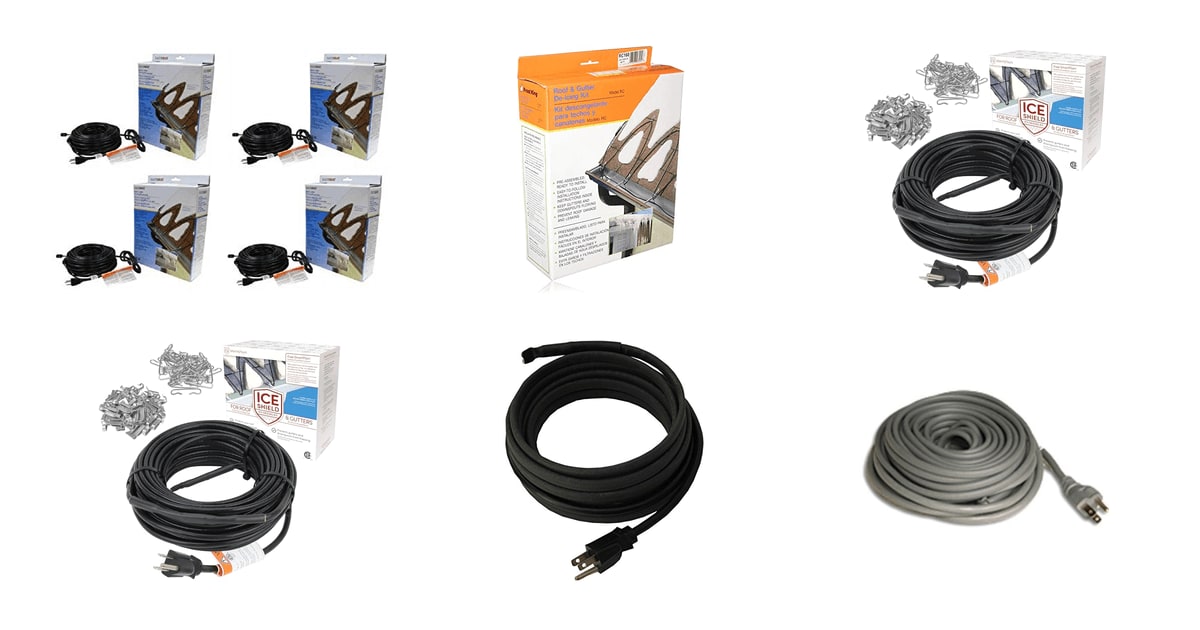
An ice dam starts quietly. Snow melts on the warm part of your roof, runs down to the cold overhang, and freezes into a ridge at the eave. Water then pools behind that ridge and works its way under the shingles. You don't see it happen. You see the stain on the bedroom ceiling in February, and the bill for the drywall in April. A heat cable's job is simple: keep one narrow channel open so meltwater always has somewhere to go.
Here's the part nobody selling cable likes to say. Heat cables manage the symptom, not the cause. The University of Minnesota Extension is blunt about it — if your attic insulation is below R-38 and air is leaking up from the house, you'll keep making ice dams, and cable just keeps the damage down. Cables also cost you electricity all winter, they're visible from the street, and manufacturers generally want them replaced every three to five years as the jacket cracks.
We looked at self-regulating and constant wattage cables, at safety listings, at watts per foot and at what owners say after a couple of hard winters. We think that the WARMBRIDGE RoofMate is the best heat cable for gutters and roofs for most people, and that the WarmlyYours Ice Shield 100 ft. is the one to buy if you'd rather open one box and find every clip and spacer already in it.
Everything we recommend

Self-regulating heat, a wide cold range, and a long cold lead

A complete kit with clips and spacers, at a cost in electricity

Plenty of cable for long eaves, with none of the electronics
Overlap-safe cable that also handles pipes and metal valleys
At a glance
| Product | Length | Wattage | Price | |
|---|---|---|---|---|
 | Easy Heat ADKS-600 120' Roof/Gutter KitAlso consider | 120 ft | — | $96.92 |
| Frost King Electric Roof Cable Kits RC160Budget pick | 160 ft | 800W | $98.27 |
| WarmlyYours Ice Shield Roof & Gutter DeicingRunner-up | 100 ft | 5 W/ft | $98.10 |
| WarmlyYours Ice Shield Roof & Gutter DeicingAlso consider | 80 ft | 5 W/ft | $85.24 |
| KING SRP126-87 Pre-Assembled Self-Regulating Pipe Trace Roof/GutterAlso great | 87.5 ft | 6W/ft | $99.95 |
 | Wrap-on 14080 80` Ft Gray Roof /Also in lineup | 80 ft | — | $69 |
| WARMBRIDGE INC RoofMate Self-Regulating Roof Heating CableTop pick | 112 ft | 7 Watts/ft | $398.37 |
How we picked
Self-regulating or not. We treated self-regulating cable as the default recommendation, since manufacturer documentation puts its energy use 30 to 50 percent below constant wattage in a moderate winter. Constant wattage still earned a place where the lower purchase price outweighs the running cost.
Safety listings. We required a UL, ETL, cUL or CSA listing for wet locations, and we noted which certifications each listing actually claims. The CPSC has tied uncertified and poorly installed cable to residential fires, so this was a pass-fail line.
Watts per foot. Residential roof cable generally runs 3 to 12 watts per linear foot. We compared each product's rated output against the length you get, since a higher-wattage cable buys you melt performance on a shaded north eave.
Length and circuit fit. We checked usable length against the rough rule of one foot of cable per one to two feet of gutter, plus downspouts. We also flagged short cold leads and circuit requirements that force an electrician into the picture.
What owners report. We read through owner feedback for recurring themes rather than one-off complaints — cable stiffness during installation, missing clips, and failures that show up in the second or third winter rather than the first.
Top pick
Self-regulating heat, a wide cold range, and a long cold lead
WARMBRIDGE INC RoofMate Self-Regulating Roof Heating Cable
The RoofMate is a self-regulating cable rated at 7 watts per foot, so it turns itself down as the eave warms and leans hard on cold nights. The 112-foot run and 10-foot cold lead cover a typical eave-and-downspout layout without an extension cord.
$398.37fromAmazonSelf-regulating is the feature worth paying for, and this is the cable that does it well. The polymer core between the conductors changes resistance with temperature, so output falls as things warm up and climbs when they don't. nVent's technical documentation puts the savings at 30 to 50 percent against constant wattage cable in a moderate winter. You're not paying to heat a gutter that's already above freezing.
At 7 watts per foot, the RoofMate runs hotter than the 5-watt kits that dominate this category. That matters on a north-facing eave that never sees sun, or on a shallow-pitch roof where the melt line sits right over the wall. The cable is rated for service down to -40°C, and Popular Mechanics has reported that self-regulating designs keep melting effectively below 20°F by ramping output rather than holding a fixed one.
The 10-foot cold lead is a small thing that saves a real headache. Most plug-in cables give you six feet, which puts your outlet exactly where it isn't. You get four extra feet of unheated cord to reach a receptacle. It wants a 120V grounded circuit with GFCI protection, 20 amps minimum — worth checking before you buy, because a shared kitchen circuit won't do.
Owner feedback skews toward durability. People in northern Minnesota describe it clearing dams and keeping downspouts open through winters that beat other cables, and the recurring word in the positive reports is heavy — thick jacket, substantial cable, not the flimsy cord you'd expect. If you plan to leave a cable up year-round through sun and freeze-thaw, that build quality is what buys you extra seasons.
Flaws but not dealbreakers
The cable is stiff. That thick jacket fights you during installation — it holds the curl from the box, resists bending into a tight zigzag, and owners report it popping back out of clips while they work. Install it on a warm afternoon, not a cold one, and unroll it in the sun for an hour first. A second pair of hands helps more here than with the softer kits.
Roof clips are sold separately, and the packaging doesn't make that obvious. Budget for clips and spacers as part of the purchase, and count them before you climb. There's also a thin thread of owner reports about a dead cable out of the box followed by a warranty replacement that never arrived, so keep your receipt and test the cable at an outlet before it goes on the roof.
Runner-up
A complete kit with clips and spacers, at a cost in electricity
WarmlyYours Ice Shield Roof & Gutter Deicing
The WarmlyYours Ice Shield 100 ft. puts out a steady 5 watts per foot and ships with the cable, a plug-in cord, clips and spacers in one box. It's cUL, CSA and cETLus listed for wet locations, and it carries a two-year warranty.
$98.10fromAmazonEverything you need is in the box. That sounds like marketing until you're on a ladder in November realizing you're twelve clips short. The kit includes the 100-foot twin-conductor cable, a six-foot NEMA 5-15 plug-in cord, installation clips and gutter spacers. For a first-time installer, that's the difference between a Saturday project and two trips to the hardware store.
The safety listings here are the most thorough of anything we looked at. It's cUL Listed, CSA Listed and cETLus Listed for wet locations, which covers you in both U.S. and Canadian jurisdictions. That's not a formality. The Consumer Product Safety Commission has tied non-listed and badly installed heat cable to residential fires, and an inspector or insurer may ask what's on the label.
This is constant wattage cable, and it holds 5 watts per foot no matter how cold it gets. There's a case for that. Output is predictable, the cable costs meaningfully less than self-regulating equivalents, and on a moderate eave in a moderate climate you don't need adaptive heat — you need an open channel. The PVC jacket uses a UV-resistant formula, which is the part that usually fails first.
The 100-foot length suits a typical two-gutter run with downspouts. Remember the sizing math: plan on roughly one foot of cable per one to two feet of gutter once you account for the zigzag on the roof and the drop down each downspout. Owners note the instructions call for two runs inside the gutter itself, which eats length faster than the box implies. Measure before you order.
Flaws but not dealbreakers
Because it doesn't self-regulate, it burns the same power on a 30-degree drizzle as it does at zero, so your winter running cost is higher than a self-regulating cable of the same length. A thermostat or a plug-in controller claws some of that back, and it isn't included.
There's a real thread in owner feedback about cables that worked through two mild winters and then quit during the first genuinely cold, snowy one — the winter you actually needed them. Test yours at the outlet each fall before the snow, and treat this as a three-to-five-year consumable rather than a permanent fixture.
The Ice Shield carries a two-year warranty.
Budget pick
Plenty of cable for long eaves, with none of the electronics
Frost King Electric Roof Cable Kits RC160
The Frost King RC160 is a pre-assembled 160-foot, 800-watt constant wattage kit that's been the default hardware-store answer for ice dams for years. It costs far less per foot than any self-regulating cable here and needs nothing but a grounded outlet.
$98.27fromAmazonIf you just need one problem eave handled without spending much, this is the cable to buy. It arrives pre-assembled and ready to install, so there's no cutting, no splicing and no terminating. You clip it into a zigzag, drop the tail down the downspout, and plug it in. Owners routinely describe getting a run up in well under an hour with a helper.
The 160-foot length is the real argument for it. That's more cable than most kits give you, at a fraction of the cost per foot, which makes it the sane choice when you're covering a long ranch eave or several short problem sections at once. At 800 watts total it works out to roughly 5 watts per foot — the same output as the mid-priced constant wattage kits.
Longevity is better than the price suggests. Repeat buyers describe running Frost King cable for years and replacing it only because they were having roof work done anyway. That's the quiet endorsement that matters in a category where the jacket is usually the thing that dies. Manufacturers across the board recommend replacing heat cable every three to five years, and cheap cable makes that cycle easy to swallow.
Flaws but not dealbreakers
The sizing worksheet confuses people, and that's the single loudest complaint. Owners measure carefully, follow the formula, and still end up with the wrong length — sometimes calling the manufacturer's help line and coming away no clearer. Measure your gutter, your downspouts and your zigzag separately, then add a margin, because coming up short means a second purchase.
It's constant wattage with no thermostat and no controller, so it runs full output the whole time it's plugged in. That's your electricity bill all winter unless you add a plug-in thermostat or remember to unplug it. Performance is also honestly mixed at the edges — for every owner who says it stopped the ice cold, there's one on a tricky roof who felt it barely warmed up.
Also great
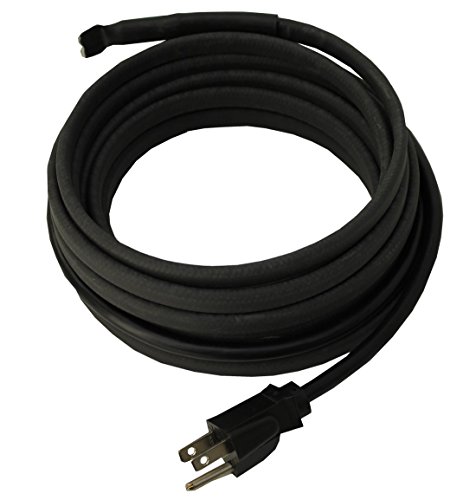
Overlap-safe cable that also handles pipes and metal valleys
KING SRP126-87 Pre-Assembled Self-Regulating Pipe Trace Roof/Gutter
The KING SRP126-87 is a self-regulating cable that won't burn out where it crosses itself, which makes it forgiving in gutter corners and roof valleys. It's pre-terminated with a plug and end splice, and it's rated for pipes as well as roofs.
$99.95fromAmazonOverlap tolerance is the feature that sets this one apart. Constant wattage cable can overheat where it doubles back on itself, so you're stuck planning every crossing. This cable won't overheat or burn out when overlapped, which takes the anxiety out of gutter corners, downspout entries and the tight turn at a valley. If your roofline is complicated, that's worth a lot.
It's the pick if your winter problem isn't only the roof. The same cable is rated for metal and plastic pipe, and owners use it on sump pump discharge lines, outdoor drains and sewer lift station piping that used to freeze solid. One buyer wrapped an outlet pipe that had frozen repeatedly and got through a colder northeastern winter without a single freeze-up. Buy one product, solve two problems.
The specs are honest and easy to plan around: 6 watts per foot at 40°F, self-regulating, 16-gauge bus wire, and freeze protection down to -40°F. It's pre-terminated with a 30-inch grounded plug and a factory end splice, so there's no kit assembly. At 87.5 feet it's sized for one long eave plus downspouts rather than a whole house.
Flaws but not dealbreakers
The instructions say not to use it with an extension cord, and that's a problem given the 30-inch lead. Almost nobody has a grounded outdoor receptacle two and a half feet from where the cable ends. You'll likely need an electrician to add a GFCI outlet in the right spot, which changes the math on what this really costs to install.
It's the least-reviewed cable of our picks, and the feedback splits. Several owners have run it trouble-free for years on metal roof valleys and drain lines. Others had it work through one winter and then fail completely the next. Test it before each season, and don't count on it as your only defense on a roof where a failure means real water damage.
Who this is for
Buy a heat cable if you get recurring ice dams, icicles curtaining your gutters, or water stains that show up every thaw. It's the right call for older houses in the Northeast, Midwest and Mountain West where the attic can't be re-insulated this season, for shallow-pitch roofs that dam at the eave, and for one stubborn north-facing section that never sees sun. Contractors buying by the reel will find the longer runs here worth pricing out.
Don't buy one expecting a cure. If your attic insulation is below R-38 or your can lights leak warm air into the roof deck, the University of Minnesota Extension's position is that air sealing and insulation come first — cable just manages what's left. This guide covers plug-in and pre-terminated cable kits for residential roofs, gutters and downspouts. It doesn't cover heated gutter guards, panel-fed commercial de-icing systems, or the standalone thermostats and controllers you might pair with any of these.
How we picked
Technology: we favored self-regulating cable, whose polymer core cuts output as temperatures rise, over constant wattage cable that heats at one fixed rate no matter the weather. Certification: every cable here carries a UL, ETL, cUL or CSA listing for wet locations, because uncertified cable has documented fire and shock risk. Output: we compared rated watts per linear foot against the length you actually get, since a shaded eave needs more heat than a sunny one. Length and wiring: we sized each cable against the rule of roughly one foot of cable per one to two feet of gutter, and flagged short cold leads and dedicated-circuit requirements. Owner feedback: we looked for repeated themes — stiff cable, missing clips, second-winter failures — rather than isolated complaints.
Other heat cables for gutters and roofs worth considering
If you need to cover a whole house in one purchase: The Easy Heat ADKS-600 120' Roof/Gutter Kit ($96.92) — The Easy Heat ADKS-600 kit ships as four separate 120-foot roof and gutter de-icing cables, which is a lot of cable in one box. That's the answer for a big footprint — several eaves, multiple downspouts, a detached garage — or for a contractor who wants one order instead of four. The catch is circuits. Four cables of that length won't share a single receptacle, so you need to plan where each one plugs in before anything goes on the roof. If you only have one problem section, this is far more cable than you'll use.
If your run is shorter than 100 feet: The WarmlyYours Ice Shield Roof & Gutter Deicing ($85.24) — The WarmlyYours Ice Shield 80 ft. is the same cable, the same 5 watts per foot, the same cUL, CSA and cETLus listings and the same two-year warranty as our runner-up — just twenty feet shorter and less expensive. Buy this one if you measured your eave and downspouts honestly and came in under 80 feet. Don't buy it to save a little and then find yourself short on the roof; running out of cable mid-zigzag means leaving a gap right where the dam forms. When you're on the line between sizes, take the longer one.
The competition
This is what our research surfaced among widely available residential heat cables, not a census of the market. Plenty of contractor-grade cable is sold by the reel through electrical suppliers and never shows up in a consumer listing, and manufacturers add and drop kit lengths constantly.
The Wrap-on 14080 80` Ft Gray Roof / ($69) — The Wrap-On 14080 is an 80-foot roof and gutter de-icing cable in gray, which is a nice change if black cable stands out against a light roof or fascia. The problem is that we have almost nothing to go on. The listing carries no feature specifications, no stated wattage per foot and no certification claim, and owner feedback is thin enough that no pattern emerges — the one substantive report describes it stopping icicle formation from snowmelt on a sunny southern exposure. That's encouraging but it isn't evidence. Given that this is a product carrying line voltage on your roof all winter, we'd rather point you to a cable with a published wattage rating and a stated safety listing. Consider it only if the gray jacket genuinely matters to you and you can confirm the certification before it goes up.
Installation notes
Install on a mild, dry day, before the first snow — cable is stiff in the cold and roofs are lethal when wet. The University of Minnesota Extension recommends a zigzag loop that reaches at least 12 inches above the interior wall line, so the melt channel starts inside the warm zone rather than at the gutter lip. Run the cable down each downspout too, or you'll melt ice into a pipe that's still frozen. Use the manufacturer's clips, never nails or staples through the jacket, and plug into a GFCI-protected circuit. Check the jacket for cracks every fall and test the cable at an outlet before it goes up. Most makers want the whole run replaced every three to five years, because UV and freeze-thaw cycling eventually split the sheath.
Questions we get
What's the difference between self-regulating and constant wattage heat cables?
A self-regulating cable has a polymer core that changes resistance with temperature, so it puts out more heat when it's cold and backs off as things warm up. Constant wattage cable delivers the same output whenever it's plugged in, no matter the weather. Manufacturer documentation puts self-regulating energy use 30 to 50 percent lower in a moderate winter. Constant wattage costs less to buy, so it makes sense on short runs or in milder climates.
How many feet of cable do I need?
The working rule is one foot of cable for every one to two feet of gutter, because the zigzag pattern on the roof uses far more length than the straight-line measurement suggests. Then add the full length of every downspout you plan to heat, plus a margin. Some kits want two parallel runs inside the gutter itself, which nearly doubles that portion. When you land between two kit sizes, buy the longer one.
Can heat cables damage my shingles or gutters?
Properly installed cable clipped to the shingle edge doesn't damage a roof in normal use, and these cables are rated for asphalt shingles as well as metal and plastic gutters. The damage comes from bad installation — nails or staples driven through the jacket, cable pinched under flashing, or overlapping constant wattage cable that overheats at the crossing. Use the clips that came with the kit, and don't improvise fasteners.
When should I install and turn on the cable each season?
Install before the first snow, while the roof is dry and warm enough to work on safely. Turn the cable on before a storm arrives rather than after ice has already formed — melting through an established dam takes far longer than preventing one. A plug-in thermostat that switches on near freezing handles this automatically and cuts your running cost.
Do heat cables work on metal roofs and metal gutters?
Yes. Every cable we recommend is rated for metal and plastic gutters, and several are explicitly rated for metal roofing and downspouts. The KING SRP126-87 goes further and is rated for metal and plastic pipe as well, which is why owners use it in roof valleys and on drain lines. If you have standing seam panels, check the manufacturer's clip options before buying, since attachment is the tricky part on metal.
How long do heat cables last?
Most manufacturers recommend replacing roof cable every three to five years. UV exposure and repeated freeze-thaw cycling crack the outer jacket, and a cracked jacket on a live cable is a shock and fire hazard. Some owners get considerably longer out of a well-shaded run, but inspect the sheath every fall and replace anything that looks chalky, brittle or split.
Why you should trust us
For this guide:
- We compared manufacturer specifications for every cable in this guide — watts per linear foot, rated temperature range, cold lead length, circuit requirements and safety listings.
- We read published guidance from the University of Minnesota Extension, the Insurance Institute for Business & Home Safety, the Consumer Product Safety Commission and nVent Raychem's technical documentation on how ice dams form and how self-regulating cable behaves.
- We read owner feedback across all seven listings for recurring themes about installation difficulty, missing hardware and failures that appear after the first winter.
- We read owner reviews on every listing, weighted toward the critical ones, because that is where the recurring failures show up.
- We have a systematic way of automatically fetching the latest prices, so the numbers on this page stay current.
- This is a research-focused guide, so the team may not own every product listed — though we often do own the top winners, which gives us extra context for the recommendations.
- We don't accept free products, and the retailer commission never changes which product we recommend.
Sources
Best Roof Heat Cables — The Spruce, The Spruce
Best Heat Cables for Gutters — Bob Vila, Bob Vila
Best Roof Heat Cables — This Old House, This Old House
Ice Dam Prevention — Insurance Institute for Business & Home Safety (IBHS), IBHS
Ice Dams — University of Minnesota Extension, University of Minnesota Extension
nVent Raychem RoofMate Technical Specifications, nVent Raychem
Best Roof Heat Cables — Family Handyman, Family Handyman
Best Heat Cables for Roofs — Popular Mechanics, Popular Mechanics
Heat Cable Safety Hazards — U.S. Consumer Product Safety Commission, U.S. Consumer Product Safety Commission (CPSC)
Roof De-Icing Cable Installation Guide — Old House Journal, Old House Journal
Amazon product listings and owner reviews for all 7 products
Manufacturer specification pages for each product
Some passages in this guide may be paraphrased with AI help. Prices are refreshed automatically.
More like this.
Continue exploring home reviews and recommendations.

The Best Pipe Heating Cables
A frozen pipe rarely announces itself. You turn the tap in the guest bathroom on a January morning, nothing comes out, and by afternoon there's water…

The Best Gutter Guards
Cleaning gutters is a lousy job. You haul a ladder around the house, scoop out a season's worth of wet leaves by hand, and then do it again a few months…

The Best Gutter Downspout Extensions
Water that lands on your roof has to go somewhere, and a downspout that dumps it at the base of the wall sends it straight into the soil against your…

The Best Roof Rakes for Snow Removal
A foot of wet snow on your roof isn't a cosmetic problem. Fresh powder weighs about 3 pounds per cubic foot, but dense, water-logged snow can hit 20…

The Best Tire Chains and Snow Traction Cables
Chains live in your trunk for years and matter for about twenty minutes. But those twenty minutes tend to happen on a dark shoulder, in falling snow, with…

The Best Gutter Cleaning Tools
Gutters only matter when they stop working. Then a storm rolls through, water sheets over the front lip, and you end up with a flooded flower bed, a damp…