The Best Pipe Heating Cables
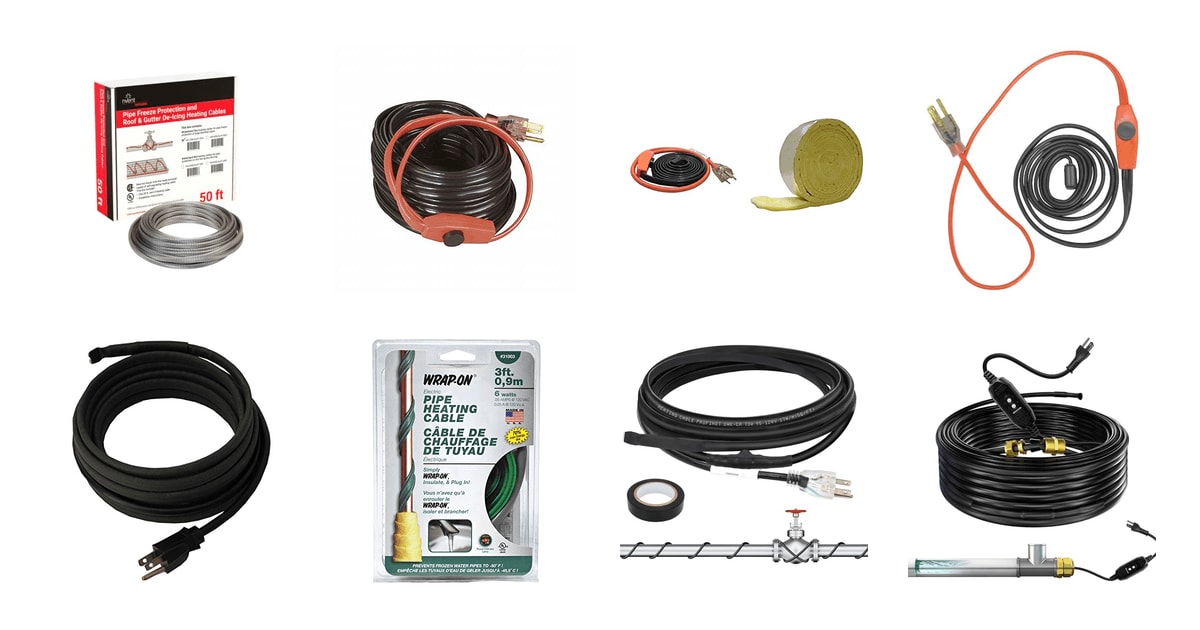
A frozen pipe rarely announces itself. You turn the tap in the guest bathroom on a January morning, nothing comes out, and by afternoon there's water running down a wall. The pipes that fail are almost always the ones nobody thinks about: the run through an unheated crawl space, the line to the outdoor spigot, the exposed section in a garage that stays a few degrees off outdoor temperature. A heating cable is a strip of resistance wire you wrap along that pipe and plug into an outlet. It's cheap insurance for a problem that gets expensive fast.
Here's the part nobody advertises. Heat tape has a real safety record problem — the Consumer Product Safety Commission ties electric pipe heating systems to roughly 2,000 house fires a year, mostly from uncertified cable, aging cracked sheathing, and constant-wattage cable that got overlapped or buried under insulation it wasn't rated for. No product in this category removes that risk entirely. You inspect the cable every fall, you follow the wrapping instructions exactly, and you replace anything that looks brittle or discolored. That's the deal.
The other constant frustration is length. These cables come in fixed sizes, and the size you need is almost never the size that's sold. Constant-wattage cable can't be shortened at all, so you buy the next length up and route the slack somewhere sensible. Self-regulating cable is more forgiving — it can be cut and it won't cook itself if it touches. We think that the Easy Heat AHB-124 is the best pipe heating cable for most people, and that the Raychem H611050 is the one to buy if you're protecting a long run in a genuinely brutal climate.
Everything we recommend

Self-regulating protection at a length most homes actually need
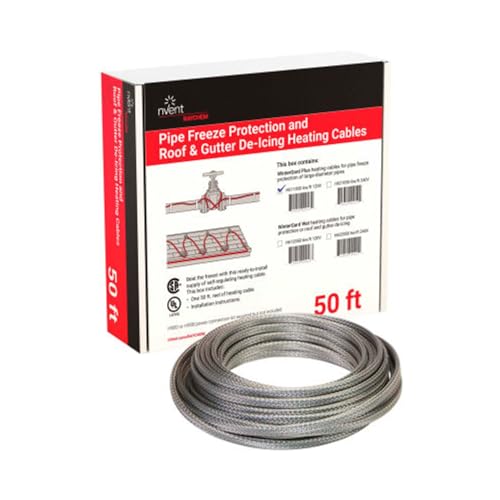
The one for long runs and genuinely brutal winters

Self-regulating tech and a thermostat, without the name-brand premium
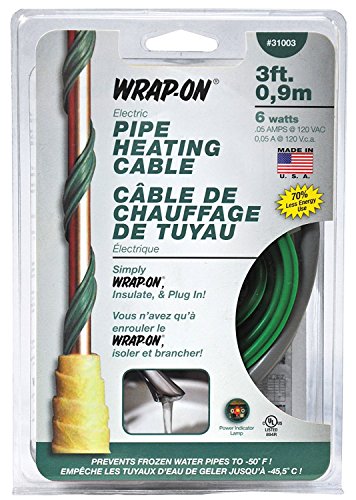
Sips power and self-tests, but only covers three feet
At a glance
| Product | Length | Watts/Ft | Price | |
|---|---|---|---|---|
| Raychem H611050 Self Regulating Heating Cable 50'Upgrade pick | 50 Ft | 6W/Ft | $345.05 |
| Easy Heat AHB-124 24' Heat CableTop pick | 24 Ft | — | $40.11 |
 | Frost King HC6A Automatic Electric Heat KitAlso in lineup | 6 Ft | 7W/Ft | $33.93 |
 | EasyHeat 6' Pipe Heating CableAlso in lineup | 6 Ft | 7W/Ft | $28.09On sale |
 | KING SRP126-150 Pre-Assembled Self-Regulating Pipe Trace Roof/GutterAlso consider | 150 Ft | — | $1,024.50 |
| Wrap-On Pipe Heating Cable - 3-FeetAlso great | 3 Ft | 2W/Ft | $44.46 |
| 12FT Self-Regulating Pipe Heating Cable with ThermostatBudget pick | 12 Ft | 5W/Ft | $20.99 |
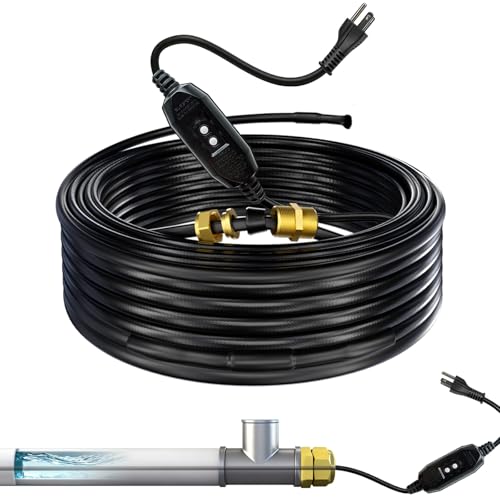 | TOPDURE Internal Pipe Heat Tape 3W/FT Self-RegulatingAlso consider | 10 Ft | 3W/Ft | $94.99 |
How we picked
Self-regulating first. We treated self-regulating construction as the default because it can't overheat when overlapped or covered, and it draws less over a season. Constant-wattage cables had to earn their spot on price, length or a specific feature.
Safety certification. We looked for a stated UL or ETL listing in the manufacturer specs and product listings, given the CPSC's documented fire numbers for heat tape. Anything without a clear certification claim we flag rather than recommend.
Temperature floor. We compared published minimum operating temperatures against real winter lows. Cables rated to -40°F or lower cover any continental U.S. climate; -20°F ratings we noted as a limitation for northern buyers.
Length and fit. We weighted whether the available lengths match common household runs — a hose bib, a crawl space stretch, an RV line — since constant-wattage cable can't be trimmed and unused cable is wasted money.
Owner failure modes. We read through owner feedback for patterns rather than one-offs: cables dying after a season, thermostats placed wrong, missing fittings. Those reports shaped the flaws we call out.
Top pick
Self-regulating protection at a length most homes actually need
Easy Heat AHB-124 24' Heat Cable
The Easy Heat AHB-124 gives you 24 feet of self-regulating cable that adjusts its own output as the pipe warms and cools. It works on water pipes, gutters and downspouts, and it's safe to bury under insulation — which is where most heat tape mistakes happen.
$40.11fromAmazonSelf-regulating cable is the safer choice, and this is the accessible version of it. Inside the jacket is a carbon polymer matrix that changes conductivity with temperature. Where the pipe is cold, that section pushes more heat. Where it's already warm, it backs off. You don't set anything and there's no controller to buy. More importantly, the cable can't run away with itself if two sections touch or if you wrap insulation over the top.
Twenty-four feet is the length that solves most real problems. A crawl space run to the water heater, a line out to a hose bib with some slack for routing to the outlet, the exposed stretch along a garage wall — all of that fits. Shorter cables force you into a single tight application. Longer ones cost real money for footage you'll coil up and never use.
Easy Heat also rates this for roof and gutter de-icing, which matters more than it sounds. If you get ice dams and frozen pipes in the same winter, you're not researching two product categories. Same cable, same outlet, different wrap. Owners of the brand's other cables consistently report they hold up across seasons, and Easy Heat has been in this business a long time.
Installation is genuinely doable on a Saturday. You run the cable along the pipe, tape it down every few inches, and plug it in. On pipe larger than about two inches you spiral it instead — measure your run, then multiply by 1.25 or so to figure out how much cable the helix eats up. The instructions cover it clearly, which isn't true of every cable here.
Flaws but not dealbreakers
Twenty-four feet is a ceiling, not a starting point. If your crawl space has three separate exposed runs, you're either buying multiple units and finding multiple outlets, or stepping up to something like the KING. Daisy-chaining heat cable is not something you should improvise.
This listing hasn't accumulated much owner feedback, so there's not a deep pool of long-term reports to draw on. The brand's track record is solid and the technology is proven, but you're leaning on that reputation rather than a pile of five-year updates from other buyers.
Upgrade pick
The one for long runs and genuinely brutal winters
Raychem H611050 Self Regulating Heating Cable 50'
Raychem's WinterGard Plus is what plumbers specify when a failure means a flooded building. It puts out 6 watts per foot at 40°F, holds up from -40°F to 150°F, and covers metal or plastic pipe up to six inches across in a single 50-foot length.
$345.05fromAmazonIf you live somewhere that hits -30°F and stays there, wattage is not a place to economize. Six watts per foot at 40°F is the high end of what residential heat cable delivers, and the -40°F floor covers the coldest stretches of the continental U.S. A 3W/ft cable in northern Minnesota is a cable you'll be replacing after a hard freeze, along with the pipe.
The self-regulating behavior here works section by section, not as a single average. The part of the cable touching a cold exterior wall pulls more current. The part running through a warmer interior stretch throttles down on its own. That's what keeps hot spots from forming when the cable loops back on itself in a tight space, and it's why the professional trade defaults to this technology for anything left unattended.
Fifty feet also puts you in different territory than the other picks. Pump houses, well lines, multi-unit buildings, long crawl space runs — jobs where you'd otherwise be splicing multiple shorter cables together and creating multiple points of failure. Property managers and contractors reach for this cable for exactly that reason.
It handles pipe up to six inches in diameter, which is well past residential supply lines. That headroom matters if you're protecting a main, an irrigation feed, or anything in an outbuilding that isn't standard half-inch copper.
Flaws but not dealbreakers
You have to buy a Power Connection Kit separately — either the hardwire version for a junction box or the plug-in version with built-in ground fault protection. It's not optional and it's not in the box. Order it at the same time or your cable sits in the garage while the forecast drops.
The rating is dry locations only. That rules out direct burial and it rules out a crawl space that pools water every spring. If your problem pipe is underground or sits in standing water, this isn't the cable, no matter how good the spec sheet reads.
It's the most expensive option here at this length, and the connection kit adds to that. For a single hose bib it's overkill you'll feel.
Budget pick
Self-regulating tech and a thermostat, without the name-brand premium
12FT Self-Regulating Pipe Heating Cable with Thermostat
The Strdfeve 12-foot cable is self-regulating with a built-in thermostat that kicks on at 37°F and shuts off at 55°F. It costs less than several constant-wattage cables here, which makes it the easiest recommendation for one exposed pipe in a moderate climate.
$20.99fromAmazonMost cables at this price are constant-wattage, and constant-wattage means you're the safety system — no overlapping, no covering it with insulation that isn't rated for it, full power draw whether it's 34°F or -10°F outside. This one uses the same self-regulating principle as the pricier picks. For a single exposed run, that's the meaningful upgrade, and here you're not paying extra for it.
The built-in thermostat handles the on-off cycle so you don't add an external controller. It wakes up at 37°F and goes back to sleep at 55°F. Over a season of mild days and cold nights, that's electricity you're not spending on a pipe that was never in danger.
Twelve feet at 5W/ft covers a lot of ordinary problems. An RV water line, a garage pipe section, a hose bib with routing slack, a short crawl space run — all comfortable. It's rated for both metal and plastic pipe, including supply and drain lines. Down to around -20°F you're fine, and foam insulation over the top pushes that further.
Placement of the thermostat is the thing to get right. Owners who report trouble usually describe a sensor that ended up somewhere warmer than the pipe it's supposed to protect. Secure it flat against the coldest part of the run and tape the whole length down every six inches or so.
Flaws but not dealbreakers
Strdfeve is a newer name with a thin field record, and some owners report the cable dying after roughly a year. That's an acceptable gamble on a garage spigot. It's a bad gamble on a crawl space that feeds the whole house while you're away for a week.
5W/ft runs out of headroom in the coldest zones. If you regularly see -20°F or lower, plan on foam insulation over the cable or move up to the Raychem.
Confirm the UL or ETL listing on the current product page before you install it. Certification is the one thing you shouldn't take on faith with heat tape from any brand.
Also great
Sips power and self-tests, but only covers three feet
Wrap-On Pipe Heating Cable - 3-Feet
The Wrap-On 31003 runs at 2 watts per foot instead of the usual 7, with a thermostat that turns on at 38°F and protection down to -50°F. A press-to-test button lets you confirm the cable actually works before winter, which nothing else here offers.
$44.46fromAmazonThree feet sounds absurd until you look at the pipe you're actually worried about. A spigot stub coming out of the ground. A short elbow where the line enters the garage. A condensate drain that freezes every January and backs up into the furnace. For those, three feet is the right amount and everything longer is coiled slack.
Two watts per foot is a third of what most cables here draw, and it's enough. Wrap-On pairs the low output with a thermostat that only energizes near freezing, so the cable is off most of the winter. Owners describe the pipe staying warm rather than hot — which is the point. You're keeping water above 32°F, not heating it.
The -50°F protection rating is the deepest in this group, and it's paired with a wide flat cable profile that makes solid contact with the pipe. Owners in Texas cold snaps and in northern winters both report the same thing: water keeps moving. It works on PVC, CPVC, copper and metal, so pipe material isn't a constraint.
The press-to-test button is a small feature with real value. Heat tape fails silently — you find out when the pipe freezes. Being able to verify the cable in October, before you need it, is worth something on a product you leave in place for years. Worth noting that some buyers report units arriving without the button, so check yours.
Flaws but not dealbreakers
This is constant-wattage despite the thermostat. Wrap it in a straight run, never overlap it, and check whether your insulation is rated to go over it. The thermostat manages when it runs, not how hot it gets.
Per-foot, three feet costs more than buying longer cable. That math only works if three feet is genuinely all you need. If you're eyeing a second pipe, buy something longer once.
Who this is for
You need heat cable if you have pipe running somewhere that isn't heated and doesn't stay above freezing — a crawl space, an attached garage, an exterior wall cavity, an outdoor spigot, an RV or a well house. If your winters bottom out around 25°F and your pipes are all inside conditioned space, you probably don't need any of this. Insulation and a dripping faucet on the coldest nights will get you through. The people who benefit most are the ones who've already had a freeze-up and know exactly which pipe it was.
This guide covers plug-in cables a homeowner can install without an electrician — the exception being the Raychem, which needs a connection kit and, in the hardwire configuration, a junction box. We don't cover bulk heat trace sold by the roll to licensed contractors, tank heaters, or enclosed well-house heaters. If you're protecting a pressure tank vessel rather than the pipes around it, you want a purpose-built tank heater, not any cable here.
How we picked
Technology: We started from self-regulating cable, since it adjusts output along its own length and won't cook itself if overlapped or covered — constant-wattage options had to justify themselves on price, size or a specific feature. Certification: We looked for a stated UL or ETL listing in the specs, because the CPSC ties roughly 2,000 house fires a year to heat tape and uncertified cable is the common thread. Cold rating: We checked published minimum temperatures against actual winter lows, treating -40°F as the safe floor for northern climates and flagging -20°F ratings as a limit. Length: We favored sizes that match real runs, since constant-wattage cable can't be trimmed. Owner patterns: We read customer feedback for repeated failure modes rather than individual complaints, and those patterns drive the flaws in each pick.
Other pipe heating cables worth considering
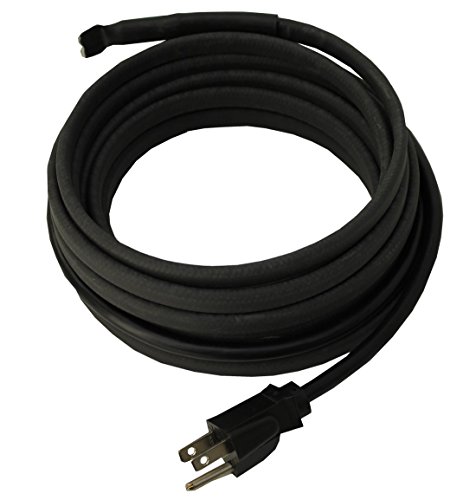
If you need to cover a run longer than 100 feet: The KING SRP126-150 Pre-Assembled Self-Regulating Pipe Trace Roof/Gutter ($1,024.50) — The KING SRP126-150 is the only cable here that handles a very long run in one piece, and it ships pre-terminated with a 30-inch cold lead and a grounded plug. No connection kit, no field splicing, no electrician. It's self-regulating, so you can overlap it around awkward pipe geometry in a well house without creating a hazard, and it holds protection down to -40°F. What you give up is flexibility on price — this only makes sense past about 80 feet, and below that the Raychem does the same job for less. Owners also note it isn't meant to run on an extension cord, so plan your outlet before you buy. And one report of a unit failing after a single winter is a reminder to test it each fall.
If the pipe you need to protect is buried or inside a wall: The TOPDURE Internal Pipe Heat Tape 3W/FT Self-Regulating ($94.99) — The TOPDURE threads inside the pipe instead of wrapping around it, which is the only option when the vulnerable section is underground, in a slab, or behind drywall. It's CSA NSF61 certified for potable water, so it's appropriate for drinking water lines, and because it heats the water directly it responds faster than a cable working through the pipe wall. The trade-offs are real: installation means feeding cable through an access fitting, the 3W/ft output is the lowest here, and some buyers report the printed markings rubbing off the jacket and a T-fitting missing from the box. Order early enough to sort out a shortfall before the cold arrives.
The competition
These are the cables our research turned up alongside the picks, not a complete map of the category. Heat tape is sold in bulk rolls through electrical distributors, in configurations that need a licensed installer, and under a long tail of unbranded listings we can't verify. What follows is why each of these didn't make it to a pick.
The Frost King HC6A Automatic Electric Heat Kit ($33.93) — The Frost King HC6A is a 6-foot, 7W/ft constant-wattage cable bundled with 25 feet of foil-backed fiberglass pipe wrap. As a first purchase it's tidy — cable and insulation in one box, plug-in installation, rated to keep water moving down to -40°F on metal or plastic pipe. Two things kept it out of the picks. The bundled wrap won't match every pipe diameter, and the constant-wattage design leaves no margin for a sloppy install: no overlapping, no folding it under the insulation, no pinching. Buy it if you want the complete job in one order and you're confident about a straight, careful wrap on a short run.
The EasyHeat 6' Pipe Heating Cable ($28.09) — The EasyHeat 6-foot cable arrives pre-assembled with a power cord and mounting hardware, puts out 7W/ft for 42 watts total, and carries a UL listing. It's the plainest thing here and there's a lot of accumulated owner feedback saying it does the job — on well-to-tank lines, RV water lines, outdoor sinks in Texas cold snaps. But it runs in a straight line along the pipe rather than spiraling, and some owners find that leaves a section of a larger pipe unprotected. It also draws full wattage whenever it's plugged in, with no thermostat. Six feet with no way to shorten it makes fit the deciding factor. Worth it if your run is short, straight, and you're replacing a cable you already know worked.
Installation and seasonal checks
Wrap the cable in a straight run along the bottom of the pipe unless the manufacturer tells you to spiral it, and tape it down every six inches or so — loose cable loses contact and stops helping. On pipe over two inches, spiral it and budget about 25 to 50 percent extra length for the wrap. Add foam pipe insulation over the top afterward; the Department of Energy notes insulation can cut required wattage by up to 40 percent, and it lowers what you spend running the cable all winter. Self-regulating cable is always safe to cover. Constant-wattage cable is only safe under insulation if the manufacturer says so. Every fall, before it gets cold, look over the full length for cracked or discolored sheathing, chewed spots and loose connections. Replace anything that looks brittle.
Questions we get
What's the difference between self-regulating and constant-wattage cable?
Self-regulating cable contains a carbon polymer core whose resistance changes with temperature, so each section puts out more heat where the pipe is cold and less where it's warm. Constant-wattage cable delivers the same output everywhere, all the time, regardless of conditions. Self-regulating is safer because overlapping won't create a hot spot, it can be cut to length in the field, and it uses less power over a season. Constant-wattage costs less upfront but has to be installed straight, never overlapped, and bought in exactly the length you need.
How many watts per foot do I actually need?
For most homes in climates that bottom out around -20°F, 3 to 5 watts per foot is enough. Below that, or in a completely uninsulated space, or where the pipe touches frozen ground, plan on 5 to 7W/ft — the Raychem's 6W/ft covers the worst of it. Adding foam insulation over the cable can cut the wattage you need by up to 40 percent per Department of Energy guidance, which makes a lower-output cable workable in colder conditions than its bare spec suggests.
Can I use heat cable on PVC or PEX without melting it?
Self-regulating cables are generally safe on PVC, CPVC and PEX because their maximum output is capped below the point where plastic is at risk. Constant-wattage cables run hotter, so check the manufacturer's compatibility list before putting one on plastic. The Easy Heat, Raychem and KING cables all document plastic pipe compatibility. The TOPDURE's NSF61 certification specifically covers going inside a potable water line.
Is it safe to leave heat tape plugged in all winter?
Yes, that's what these are designed for. Self-regulating cables with a thermostat handle continuous seasonal installation without attention. Constant-wattage cables are also meant to stay in place, but they need more care — keep them clear of debris, never folded, and never covered by insulation that isn't rated for it. Inspect every cable each fall before you energize it and replace anything with cracked or discolored sheathing.
Can heat tape really start a fire?
It can, and it does. The Consumer Product Safety Commission attributes roughly 2,000 residential fires a year to electric pipe heating systems. The recurring causes are uncertified cable, overlapped constant-wattage cable, cable buried under insulation it wasn't rated for, and old cable with degraded sheathing that nobody checked. Use a UL or ETL listed cable, follow the wrapping instructions exactly, and inspect it annually — that eliminates most of the risk.
How do I figure out how much cable to buy?
Measure the pipe run you need to protect, then add two or three feet to reach the outlet. For a straight-line wrap that's your number. If you're spiraling around pipe over two inches, multiply the pipe length by 1.25 to 1.5 to account for the helix. Self-regulating cable can be cut to your exact measurement; constant-wattage cannot, so buy the next size up and route the extra sensibly.
Why you should trust us
For this guide:
- We read manufacturer specifications and listing documentation for every cable here, comparing wattage per foot, minimum temperature ratings, pipe compatibility and stated safety listings.
- We reviewed published guidance from the Consumer Product Safety Commission on heat tape fire risk and from the Department of Energy on how insulation affects required wattage.
- We went through owner feedback for each product looking for repeated failure patterns — early burnout, thermostat placement problems, missing hardware — rather than isolated complaints.
- We read owner reviews on every listing, weighted toward the critical ones, because that is where the recurring failures show up.
- We have a systematic way of automatically fetching the latest prices, so the numbers on this page stay current.
- This is a research-focused guide, so the team may not own every product listed — though we often do own the top winners, which gives us extra context for the recommendations.
- We don't accept free products, and the retailer commission never changes which product we recommend.
Sources
CPSC Safety Alert: Electric Pipe Heating Systems — estimates approximately 2,000 residential fires annually tied to heat tape, U.S. Consumer Product Safety Commission (CPSC)
nVent Raychem Pipe Freeze Protection Technical Guide — WinterGard Plus technology rated from -40°F to 150°F for metallic and non-metallic pipes, nVent Raychem (Manufacturer)
American Red Cross: Preventing Frozen Pipes — average burst pipe water damage claim exceeds $10,000, American Red Cross
U.S. Department of Energy – Winterizing Your Home — insulation layered over heat cable can reduce required wattage by up to 40%, U.S. Department of Energy (Energy Saver)
IBHS Frozen Pipes Research — pipes in exterior walls and crawl spaces are four times more likely to freeze than interior pipes, Insurance Institute for Business & Home Safety (IBHS)
Amazon product listings and owner reviews for all 8 products
Manufacturer specification pages for each product
Some passages in this guide may be paraphrased with AI help. Prices are refreshed automatically.
More like this.
Continue exploring home reviews and recommendations.

The Best Heat Cables for Gutters and Roofs
An ice dam starts quietly. Snow melts on the warm part of your roof, runs down to the cold overhang, and freezes into a ridge at the eave. Water then…

The Best Tire Chains and Snow Traction Cables
Chains live in your trunk for years and matter for about twenty minutes. But those twenty minutes tend to happen on a dark shoulder, in falling snow, with…

The Best Heavy Duty Jumper Cables
A dead battery almost never picks a good moment. It's the grocery store lot at closing time, or your driveway on the coldest morning of the winter. Jumper…

The Best 240V Garage Heaters
A cold garage isn't just uncomfortable - it changes what you can do out there. Paint and glue won't cure below about 50°F. Batteries drain faster. And if…

The Best Patio Heaters
Fall evenings outside tend to end the same way. The sun drops, the temperature follows, and everyone drifts back indoors around eight o'clock. A patio…

The Best Electric Garage Heaters
A cold garage isn't just unpleasant. It's the reason your winter projects keep getting postponed, the reason your fingers stop working on a socket wrench…