The Best 240V Garage Heaters
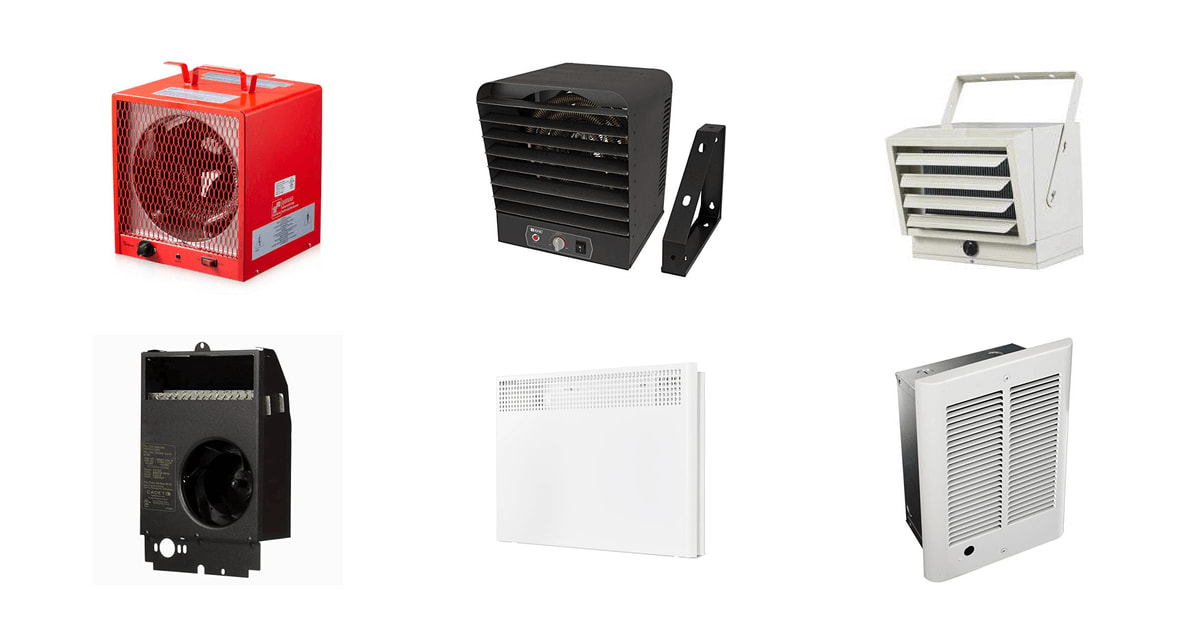
A cold garage isn't just uncomfortable — it changes what you can do out there. Paint and glue won't cure below about 50°F. Batteries drain faster. And if your fingers go numb ten minutes into an oil change, the job takes twice as long. A 240V heater is the fix for most detached and uninsulated garages, because it puts out roughly two to four times the heat of the 120V box-store unit you've been dragging around. That's the difference between taking the edge off and actually warming the room.
Here's the honest catch: none of these run on the outlet you already have. A 240V heater needs its own dedicated circuit, and the National Electrical Code (Article 424) requires that fixed electric heaters sit on a dedicated branch, with continuous load capped at 80% of the circuit rating. In practice a 5000W unit means a 30A circuit at minimum. Unless you're comfortable in your panel, that's an electrician's afternoon, and the cost of that visit can rival the heater itself. Budget for it before you shop.
Insulation matters more than wattage, too. ASHRAE load figures put an uninsulated two-car garage in Climate Zone 6 at roughly 8,000–12,000 BTU/hr, and insulating the walls and ceiling can cut that load nearly in half. Spend on foam board first if you can. We think that the Dr. Infrared Heater DR-988 is the best 240V garage heater for most people, and that the King GH2405TB is the one to buy if you want a hardwired unit with adjustable louvers and a longer track record in the trades.
Everything we recommend

The most heat for the least installation hassle

A hardwired unit heater with louvers you can aim

Enough heat for a small insulated shop, and a remote

The contractor-standard unit heater, built to outlast you
At a glance
| Product | Wattage | Weight | Price | |
|---|---|---|---|---|
| DR. INFRARED HEATER DR-988 240V Electric IndustrialTop pick | 5600W | 18 lbs | $120.99 |
| KING GH2405TB Electric Garage Heater w/Bracket andRunner-up | 5000W | 23.3 lbs | $989 |
| Fahrenheat Ceiling-Mount 5000 Watt Electric HeaterAlso great | 5000W | 28.4 lbs | $617.40 |
 | Cadet Com-Pak Electric Wall Heater Assembly OnlyAlso in lineup | 1500/1125W | 3 lbs | $97.28 |
 | Stelpro Wall Heater - 1500W 240V -Also consider | 1500W | 15.7 lbs | $284.95 |
 | Qmark CZ1512T QmarkResidential Fan Force Zonal HeaterAlso in lineup | 1500W | — | $155.99 |
| Newair Electric Garage Heater 240VBudget pick | 4800W | 12.1 lbs | $189.99 |
How we picked
Real cold-climate output. We looked for units in the 4800–5600W range, the band that ASHRAE load figures suggest for a typical uninsulated two-car garage in Climate Zone 6. We prioritized fan-forced designs, which manufacturer engineering specs rate to start at ambient temperatures far below zero.
Circuit and install reality. Every heater here needs a dedicated 240V circuit per NEC Article 424, so we noted whether a unit plugs into a receptacle or gets hardwired. Plug-in units make the electrician's job simpler and let you relocate the heater later.
Safety listings. We required UL or cUL listing and an automatic thermal cutoff. Enclosed fan-forced units with no exposed elements carry a lower fire-risk profile than the portable heaters the CPSC associates with roughly 1,700 house fires a year.
Housing and mounting. We favored steel or aluminized-steel housings, steel grilles, and included brackets for ceiling or wall mounting. Adjustable louvers earned extra credit because aiming the discharge at your work area matters more than raw wattage.
Owner-reported durability. We read owner feedback for patterns rather than one-offs, watching for repeated reports of thermostats sticking, units arriving miswired, or fans failing in the first season. Consistent failure themes disqualified a unit from a pick.
Top pick
The most heat for the least installation hassle
DR. INFRARED HEATER DR-988 240V Electric Industrial
The DR-988 puts out 5600 watts, plugs into a NEMA 6-30R outlet instead of requiring a hardwired connection, and mounts on a wall, a ceiling, or just the floor. It's the rare 240V heater you can move to a different bay when the job moves.
$120.99fromAmazonThe plug is the whole argument. Almost every other 240V unit heater here gets wired directly into a junction box, which means the heater lives where the electrician put it, forever. The DR-988 comes with a six-foot cord and a NEMA 6-30P plug. Your electrician still has to run a 30A circuit and set an outlet, but that's a simpler job — and later you can unplug the thing, move it across the shop, or take it with you when you move.
At 5600W, it's the second-most powerful heater in this lineup and the most powerful one you can realistically buy without a hardwired install. Dr. Infrared rates that at roughly 19,100 BTU/hr, which lines up with garages up to about 500 square feet in moderate cold. Owners in Montana and the upper Midwest report it holding a small insulated shop through the winter, and a few run two of them in larger metal buildings.
The thermostat dial spans 37°F to 113°F, and the fan switch gives you ON or AUTO. Leave it on AUTO and the fan cycles with the element to hold your setpoint. Set the dial near the low end and you've got a freeze-protection mode that keeps paint and adhesives from turning to sludge overnight without heating the space to shirt-sleeve temperature.
It's built like shop equipment, not living-room decor. The housing is all metal, the grille is steel, the fan blades are aluminum, and it's UL and C-UL listed with automatic overheat cutoff. Sawdust and road salt aren't going to eat it in a season. At 18 pounds it's also light enough to hang from a ceiling bracket without recruiting a second person, which is more than you can say for some of the hardwired units here.
Flaws but not dealbreakers
The built-in thermostat is the weak spot. It reads the air right at the heater's own intake, which sits inches from where the hot air recirculates, so it tends to satisfy early and cycle off while the far corner of the garage is still cold. Owners routinely work around this by leaving the unit on ON and using a separate line-voltage wall thermostat. That's an extra part and an extra bit of wiring to plan for.
It needs a specific outlet — NEMA 6-30R, 250V, 30 amp. If your garage already has a 50A welder receptacle, that's a different plug and it won't fit without an adapter or a change-out. And a few owners report weak heat out of the box, which usually traces to a miswired or undersized circuit rather than the heater, but it's worth having your electrician verify voltage at the receptacle before you blame the unit.
Runner-up
A hardwired unit heater with louvers you can aim
KING GH2405TB Electric Garage Heater w/Bracket and
King's GH2405TB is a 5000W, 240V fan-forced heater with a bracket, a built-in thermostat, and adjustable louvers that let you point the heat at your workbench. It's the pick if you'd rather mount it once and forget it.
$989fromAmazonKing is one of the brands electricians reach for by habit, and the PKB-series engineering specs from the same company rate their fan-forced units to start and run down to –40°F ambient. That's the number that matters in northern Minnesota or anywhere in Canada, because a cold-soaked heater has to actually turn on before it can warm anything. Fan-forced designs handle that starting problem better than infrared-only units, which need element warm-up time.
The adjustable louvers are a bigger deal than they sound. A ceiling-mounted heater blowing straight down heats the ceiling and your head. Angling the discharge toward the floor, or toward the side of the garage where you actually work, moves the warm air where your hands are. The high-mass steel fin heat exchanger also keeps radiating for a bit after the element shuts off, so the cycle feels smoother than a bare-element heater.
The Smart Limit Protection is a genuine safety feature, not marketing. It's a patented cutoff that trips if airflow is blocked or the unit overheats, and it won't quietly reset itself and keep running in a fault condition. Combined with the power-on and over-temp indicator lights on the front, you can tell at a glance whether the heater is calling for heat, sitting satisfied, or has faulted — useful when you're diagnosing a cold garage from the doorway.
Owners heating buildings in the 16×20 to 20×28 range report it bringing a garage past 60°F within an hour, which matches the 5000W rating. That's a reasonable ceiling on this unit's ability. It's sized for a one- or two-car garage with at least some insulation, not a barn.
Flaws but not dealbreakers
It's hardwired, so there's no unplugging it and moving it. Whatever spot you choose is the spot. Owners generally call the wiring straightforward, but several note the instructions are less clear than they should be for a job involving 240 volts — read them twice or hand them to your electrician.
Like every fan-forced garage heater, it loses the room fast when the overhead door opens. One owner heating a single-car garage found it kept up fine with the door closed and gave up entirely with it open. That's physics, not a defect, but plan on closing the door if you want the space to stay warm.
Budget pick
Enough heat for a small insulated shop, and a remote
Newair Electric Garage Heater 240V
The Newair G73 is a 4800W, 240V fan-forced heater rated for 500 square feet, with a digital thermostat and a remote control. It's the compact, less-expensive option for a one-car garage or a well-sealed shop.
$189.99fromAmazonIt's genuinely small — under 14 inches tall and about 12 pounds. That makes it easy to hang from the included bracket on a ceiling or wall, and easy to set on a bench when you need heat in one spot. Owners consistently mention being surprised by how little space it takes for a 240V unit, and a few note it's quieter than expected for its size.
The remote is the feature you'll use most. Adjusting temperature, fan speed, and timer without walking across a cold garage sounds trivial until you're under a car. Newair pairs it with a digital thermostat and a UL-certified 30-amp plug, so like our top pick it wants a dedicated 240V receptacle rather than a hardwired connection.
Set your expectations at its rating, not above. At 4800W it's the lightest-duty fan-forced unit here, and owner feedback splits cleanly along that line: people heating well-insulated 400–500 square-foot shops with the door closed are happy, and people asking it to handle a drafty two-car garage are not. One owner in Illinois keeps a 450 square-foot garage heated around the clock with it. Another found it underpowered in a standard two-car space.
Flaws but not dealbreakers
Reliability is the real concern. A meaningful share of owner feedback describes units arriving with sticking thermostats or failing to shut off, and Newair's rating distribution reflects that — this is a heater with a visible tail of one-star experiences. Plug it in and run it the week it arrives, even in July, so you're inside the return window if something's wrong.
Shipping doesn't include a cord on every unit, despite the plug-in design being a selling point, which has caught owners off guard mid-install. Confirm what's in the box before you schedule the electrician.
It's a heater to size conservatively. If your garage is uninsulated, or bigger than about 400 square feet, step up to one of the 5000W-plus units instead of hoping this one keeps up.
Also great
The contractor-standard unit heater, built to outlast you
Fahrenheat Ceiling-Mount 5000 Watt Electric Heater
The Fahrenheat FUH5-4 is a 5000W, 240V ceiling-mount unit heater with an aluminized-steel housing and a strong fan. It's the utilitarian choice that electricians have been specifying in northern garages for decades.
$617.40fromAmazonFamily Handyman has noted the FUH series turning up on contractor recommendation lists for more than a decade, and the reason is durability rather than features. The aluminized-steel housing resists corrosion in a space that sees road salt and condensation, and the two-stage thermostat design in this line gives finer control than a simple on-off dial. It's the heater you install and stop thinking about.
The fan is the standout. It moves noticeably more air than the compact units here, and that's what lets it heat a big volume — one owner reports taking a 500 square-foot garage workshop from the low 40s to the low 70s in half an hour, and another has run the same model in a 40-foot garage for seventeen years. Air movement, not just wattage, is what gets heat into the corners.
At 28.4 pounds it's the heaviest heater in this group, which tells you something about how it's built and also about the install. Plan on lag bolts into ceiling joists and a helper. Once it's up, the ceiling mount keeps it clear of the floor space you actually need for a car.
Buy this one if your priority is a heater that lasts, not a heater with a screen. There's no remote, no digital display, no Wi-Fi. Owners occasionally wish for a remote. What you get instead is a simple machine with few things that can break, from a line that HVAC contractors keep specifying because the failure rate is low.
Flaws but not dealbreakers
There's a cold-start quirk worth knowing about. Some owners report the fan won't run in heating mode until ambient temperature climbs above roughly 50°F, which makes it frustrating in a frigid space where you need heat the most. If you're starting from a 38°F basement or garage, expect a slow ramp before it settles into a rhythm.
The product listing is bare-bones, with essentially no detail beyond the model name. You'll want the manufacturer's installation sheet in hand before you start, and this is not a heater to install without either electrical experience or an electrician.
Who this is for
Buy a 240V heater if you use your garage in winter and you've already given up on a 120V portable. That's most people in Climate Zones 5 through 7 — the northern half of the country and all of Canada — with a detached garage, an uninsulated attached one, or a workshop where finishes and glues need to stay above about 50°F. DIY mechanics, woodworkers, and anyone whose hobby lives in the garage will get the most out of one. If you only need heat for twenty minutes a few times a winter, a radiant unit or a warmer coat is a cheaper answer.
Skip this category if you're renting, if your panel has no room for a new 30A double-pole breaker, or if your garage is attached, insulated, and moderately cold rather than brutally so — a ductless mini-split can hit 200–400% efficiency above about 15°F, versus the flat 100% you get from any electric resistance heater. This guide covers hardwired and plug-in 240V electric unit heaters for garages and workshops. It doesn't cover propane or natural-gas heaters, 120V portables, in-floor radiant systems, or mini-splits.
How we picked
We built the shortlist around six things. Output: enough wattage for a two-car garage in a genuinely cold climate, using ASHRAE load figures as the baseline rather than manufacturer square-footage claims. Cold starting: fan-forced designs that engineering specs rate to run well below zero, since an infrared element that won't warm up is useless in January. Circuit fit: whether the unit plugs in or hardwires, because NEC Article 424 requires a dedicated branch either way and the receptacle version is the cheaper install. Safety: UL or cUL listing, automatic overheat cutoff, and enclosed elements. Build: steel housings, steel grilles, and mounting hardware that doesn't require improvising. Owner-reported reliability: repeated themes in owner feedback about thermostats, wiring, and first-season failures.
Other 240v garage heaters worth considering
If you want silent heat in a finished, insulated shop: The Stelpro Wall Heater - 1500W 240V - ($284.95) — The Stelpro ASHC1502W is a 1500W, 240V convector — no fan, no noise at all. It heats about 150 square feet, so it's not a garage heater in the sense the rest of this guide means. But if your shop is small, finished, and insulated, and you're doing detail work where a fan roaring overhead is genuinely distracting, this is the quiet option. The built-in electronic thermostat has a backlit screen, a night setback mode, and a lock on the maximum setpoint. Stelpro covers the convector for five years and the thermostat for three, which is longer than most. What you give up is heat — you'd need three or four of these to match one unit heater, and it'll never recover a space after the overhead door opens.
The competition
This is what our research surfaced in the 240V garage-heater category, not a census of everything for sale. Several units below are perfectly good products that simply aren't built for a cold garage, and one or two lose to our picks on a specific point rather than on overall quality.
The Cadet Com-Pak Electric Wall Heater Assembly Only ($97.28) — The Cadet Com-Pak CS152 is a 1500W recessed wall heater assembly, and Cadet's Com-Pak line carries a 10-year limited warranty on some models — the longest published coverage among major residential brands. Owners love it for bathrooms and condo bedrooms, where it's quiet and unobtrusive. It loses to every pick here on the only metric a garage cares about: 1500W is roughly 5,120 BTU/hr, less than a third of what our top pick puts out. This one is also the assembly only — you'd buy a wall can, a grille kit, and a thermostat separately, and the assembly itself carries a 2-year warranty. Consider it for a small insulated workshop with an existing wall can, not a two-car garage.
The Qmark CZ1512T QmarkResidential Fan Force Zonal Heater ($155.99) — The Qmark CZ1512T is a compact fan-forced zonal wall heater with a fast-response element and a self-hold overheat limit backed by a one-time thermal fuse. Marley builds solid commercial gear, and the larger MUH line is a genuine cold-climate workhorse. But this particular unit is a 120-volt, 1500-watt residential model, not a 240V garage heater, so it doesn't belong on the same circuit conversation as our picks. Owner feedback also shows a visible cluster of element failures after a year or two. It's a reasonable choice for a cold bathroom. It won't warm a garage.
Installation notes
Get the circuit right first. Every heater here needs a dedicated 240V branch, and NEC Article 424 caps a continuous load at 80% of the breaker rating — so a 5000W unit means 30 amps minimum, not 20. Have your electrician confirm actual voltage at the receptacle or junction box before you blame a unit for weak output; a surprising share of disappointing-heat complaints trace back to wiring. Mount fan-forced units high, ideally seven to eight feet up, and angle the louvers down and toward where you work rather than straight at the floor. Keep at least the clearances the manual specifies from walls, shelving, and anything flammable. Once a season, cut power at the breaker and vacuum sawdust out of the intake grille — a clogged intake is the most common cause of a thermal cutoff tripping. And if you plan to leave the heater running unattended, use a hardwired wall thermostat rather than the unit's own dial.
Questions we get
What size 240V heater do I need for a two-car garage in a cold climate?
ASHRAE load figures put a standard uninsulated 400–500 square-foot garage in Climate Zone 6 at roughly 8,000–12,000 BTU/hr, which works out to about 2,350–3,500W at design outdoor temperature. In practice most people go bigger, in the 5000W range, so the heater recovers quickly after the door opens. If your garage is insulated, that load drops 40–50% and a 4800W unit is plenty.
Do I need an electrician to install a 240V garage heater?
Almost certainly. These heaters require a dedicated 240V circuit with a double-pole breaker, and the hardwired models connect directly to a junction box with no plug involved. Even the plug-in units need someone to run the circuit and set a NEMA 6-30R receptacle. Budget for that visit as part of the heater's real cost — it depends heavily on how far your garage is from the panel.
What's the difference between infrared and fan-forced?
Fan-forced heaters blow warm air and heat the room; infrared heaters radiate and heat objects and people directly. Popular Mechanics found fan-forced units raised ambient temperature in a 20×20 test space about 35% faster than radiant-only units of equal wattage, though the radiant units felt warmer at a lower air temperature. For a garage where the door opens, fan-forced recovers faster, which is why every one of our picks uses a fan.
Can I run a 240V garage heater on a 20-amp circuit?
Only a small one. NEC Article 424 limits a continuous load to 80% of the circuit rating, so a 20A/240V circuit tops out around 3,840W. That rules out every heater we recommend except at reduced wattage. If you're pulling new wire anyway, run 30A — the incremental cost is small and it opens up the 5000W units.
Is it safe to leave a 240V garage heater on overnight?
Permanently installed unit heaters with enclosed elements and automatic thermal cutoffs are a much lower risk than the portable heaters the CPSC links to roughly 1,700 house fires a year. All of our picks are UL or cUL listed with overheat protection. Still, keep the clearances the manual specifies, don't stack boxes near the intake, and use a wall thermostat rather than leaving the unit running wide open.
Are electric garage heaters expensive to run?
Electric resistance heating is 100% efficient by definition — every watt becomes 3.41 BTU — so the cost comes down to your kWh rate and how many hours you run it. Against propane at comparable output, electric generally comes out ahead under current fuel pricing. If your winters stay mostly above about 15°F, a mini-split will beat it outright, since heat pumps hit 200–400% efficiency in that range.
Why you should trust us
For this guide:
- We read manufacturer specification sheets for every unit here, along with published reviews from Popular Mechanics, This Old House, Family Handyman, and Bob Vila.
- We checked heater sizing against ASHRAE residential load figures and circuit requirements against NEC Article 424 rather than relying on manufacturer square-footage claims.
- We read through owner feedback for each product looking for repeated themes — thermostat behavior, cold-start problems, and first-season failures — rather than isolated complaints.
- We read owner reviews on every listing, weighted toward the critical ones, because that is where the recurring failures show up.
- We have a systematic way of automatically fetching the latest prices, so the numbers on this page stay current.
- This is a research-focused guide, so the team may not own every product listed — though we often do own the top winners, which gives us extra context for the recommendations.
- We don't accept free products, and the retailer commission never changes which product we recommend.
Sources
Best Garage Heaters — This Old House Reviews, This Old House
Best Garage Heaters of 2026 — Bob Vila, Bob Vila
Best Garage Heaters — Popular Mechanics, Popular Mechanics
Garage Heater Reviews & Buying Guide — The Spruce, The Spruce
How to Size a Garage Heater — Family Handyman, Family Handyman
Electric Heater Safety — U.S. Consumer Product Safety Commission, CPSC
ASHRAE Residential Heating Load Calculations — ASHRAE 2021 Handbook, ASHRAE
Marley Engineered Products / Qmark Product Specifications, Marley Engineered Products
King Electric Heater Product Guide & Cold Climate Specs, King Electric
Cadet Electric Heater 10-Year Warranty Documentation, Cadet
NEC Article 424: Fixed Electric Space-Heating Equipment, NFPA / National Electrical Code
DOE Residential Energy Consumption Survey (RECS) 2020 — Heating in Detached Garages, U.S. Energy Information Administration
Amazon product listings and owner reviews for all 7 products
Manufacturer specification pages for each product
Some passages in this guide may be paraphrased with AI help. Prices are refreshed automatically.
More like this.
Continue exploring home reviews and recommendations.

The Best Electric Garage Heaters
A cold garage isn't just unpleasant. It's the reason your winter projects keep getting postponed, the reason your fingers stop working on a socket wrench…

The Best Garage Floor Containment Mats
Winter doesn't stay outside. Every time you pull into the garage, your tires and wheel wells carry in slush, road salt and grit, and it all melts into a…

The Best Pegboard Organizers for Garage Walls
A garage wall is storage you already paid for, and most of us waste it. Tools end up in a drawer, a bucket, or a pile on the workbench, and you spend ten…

The Best Garage Storage Cabinets
A garage cabinet does one job better than any shelf or pegboard: it hides the mess and locks the dangerous stuff away. Open shelving turns into a dust…

The Best Garage Workbenches
A workbench is the thing your whole garage organizes itself around. Once you have a flat, solid surface at the right height, you stop working on the…

The Best Garage Wall Storage Systems
A garage fills up fast. Bikes lean against the car, bags of potting soil slump in a corner, and the snow shovel ends up wherever you dropped it in April.…