The Best Garage Wall Storage Systems
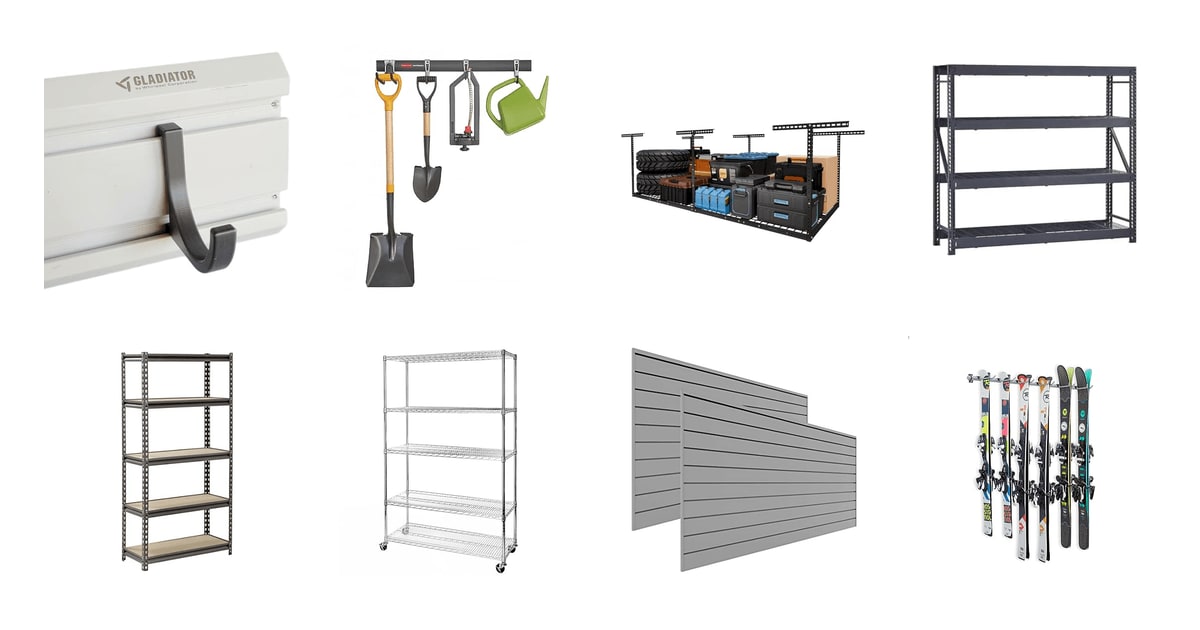
A garage fills up fast. Bikes lean against the car, bags of potting soil slump in a corner, and the snow shovel ends up wherever you dropped it in April. Getting things off the floor is the whole game, and you have three directions to work with: walls, ceiling, and vertical shelving. Which one you lean on depends on your garage. A one-car space with a low ceiling needs different answers than a two-car bay with open studs. The good news is that a few hundred pounds of capacity, mounted into studs, solves most of it.
Here's the honest part: nothing in this category is as strong as the box says once it's on your wall. Capacity ratings assume perfect installation into solid wood studs or joists, evenly distributed loads, and hardware torqued correctly. Drywall anchors alone won't hold a loaded shelf. Overhead racks need real joists and enough clearance for your garage door and opener. And every modular system locks you into its own accessories, so the hooks and baskets you add over the years are a running cost nobody mentions up front.
We also can't tell you how any of this feels to install, because we didn't install it. What follows comes from specification sheets, published reviews and the themes that show up repeatedly in owner feedback. We think that the Fleximounts 4x8 Overhead Garage Storage Rack is the best garage storage system for most people, and that the Rubbermaid FastTrack rail kit is the one to buy if your ceiling is too low or too crowded to use.
Everything we recommend

The most reclaimed floor space, if your joists cooperate

The flexible wall option when the ceiling is off-limits

Plenty of shelf for the money, as long as it stays dry

Open wire shelving that air can move through
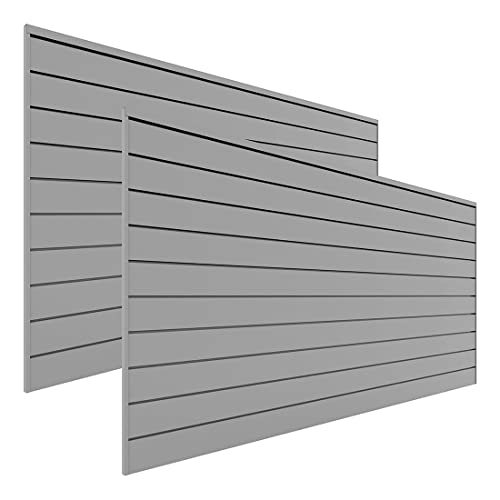
A finished wall you can rearrange whenever you want
At a glance
| Product | Mounting | Stated capacity | Price | |
|---|---|---|---|---|
 | 4-Pack - 3" Dia. J-Hook Set forAlso in lineup | — | 10 lb per hook | $21.99 |
| Rubbermaid Fasttrack Garage Organization System All-in-One RailRunner-up | — | Up to 1,750 lb | $71.50 |
| FLEXIMOUNTS 4x8 Overhead Garage Ceiling Storage RackTop pick | — | 750 lb rated | $145.98On sale |
 | Husky Industrial Duty Steel Garage Shelving UnitAlso consider | Freestanding | 2,500 lb per shelf | $399 |
| Muscle Rack UR301260PB5P-SV Silver Vein Steel StorageBudget pick | — | 4,000 lb total | $51.98 |
| Seville Classics UltraDurable Heavy Duty NSF SolidAlso great | — | 800 lb per shelf | $189.99 |
| Proslat Garage Storage PVC Slatwall Panel -Upgrade pick | Studs or over drywall | 75 lb per sq ft | $379.99 |
 | Monkey Bars Storage Wall Mounted Ski RacksAlso consider | Wall mounted | 6 pairs of skis | $91.98 |
How we picked
Stated load capacity. We compared manufacturer-rated capacity per shelf and per system across every spec sheet, and we gave weight to brands that publish both a rated figure and a tested one. We also looked for honest caveats, like capacity dropping when a unit rolls on casters.
Mounting and studs. Residential studs and joists usually sit 16 or 24 inches on center, so we checked whether each wall or ceiling system is designed to span that spacing. Anything that relies on drywall anchors alone for heavy loads didn't make the cut.
Moisture tolerance. Garages swing hot, cold and damp, so we read the fine print on finishes — powder coat, chrome plating, PVC — and noted where a manufacturer limits its rating to dry environments. Particleboard decking got flagged as a liability in humid spaces.
Accessory ecosystem. A rail or slatwall system is only as good as the hooks you can still buy for it in five years, so we favored brands with widely stocked accessories. We also noted where a manufacturer states its panels work only with its own parts.
Install difficulty. We read published reviews and owner feedback for recurring notes on tools required, one-person versus two-person assembly, and instruction quality. Systems where owners repeatedly described the same specific snag got marked down.
Top pickOn sale
The most reclaimed floor space, if your joists cooperate
FLEXIMOUNTS 4x8 Overhead Garage Ceiling Storage Rack
This 4-by-8-foot ceiling rack holds up to 750 pounds of holiday bins, camping gear and spare tires in dead space above your car. The height adjusts from 22 to 40 inches, so you can tuck it under a high ceiling or hang it low over a work zone.
$145.98fromAmazonList priceNothing else here buys back as much floor as a ceiling rack. A 4-by-8 platform is 32 square feet of storage that costs you nothing on the ground. Fleximounts rates this one at 750 pounds and says it's load-tested to 1,200. That's enough for a decade of seasonal bins, the cooler, the tent, and the tires you swap twice a year. Your walls stay free for the things you actually reach for.
The adjustable drop is the detail that makes it work in real garages. You get 22 to 40 inches of height, which means you can hang it tight to a 9-foot ceiling or drop it down in a bay where you don't need headroom. Fleximounts quotes up to 105 cubic feet of storage at the full drop. Measure your garage door's travel and your opener's rail first — that's the clearance that decides where the rack can go.
Installation is the part to take seriously. The long ceiling brackets are designed to span two joists, and six vertical posts carry the load down to the deck. The rack fits joist spacing of 24 inches or less, and if your joists run wider than that, it only works at exactly 48 inches. It can't go into a metal-framed ceiling at all. An installation template comes in the box to help you plan the layout before you drill.
Owner feedback on this rack is unusually consistent for a product this popular. The recurring themes are that it goes up solidly, that the frame doesn't sag under load, and that the integrated deck feels sturdier than racks built from a separate frame and loose wire shelf. The complaints cluster around the install taking longer than expected and needing a second person — which is true of every overhead rack.
Flaws but not dealbreakers
Putting this up is a project, not an afternoon errand. Owners regularly say it takes longer than the instructions suggest, and that a second person makes it far easier — you're holding a long steel bracket overhead while someone else drives lags. The joist requirements are strict, too: 24 inches on center or less, or exactly 48, and it won't go into a steel-framed ceiling at all.
Once it's loaded, you need a ladder to reach anything. That's fine for holiday bins and camping gear you touch twice a year. It's genuinely annoying for anything you want weekly, so keep the everyday stuff on a wall instead.
Runner-up
The flexible wall option when the ceiling is off-limits
Rubbermaid Fasttrack Garage Organization System All-in-One Rail
A single stud-mounted rail plus four hooks gets the rakes, extension cords and folding chairs off your floor in an afternoon. Rubbermaid rates the FastTrack rail at up to 1,750 pounds, and you can slide or swap accessories as your gear changes.
$71.50fromAmazonIf your ceiling is low, crossed by an opener, or finished drywall you'd rather not open up, a rail system is the move. One horizontal rail screws into your studs, and everything else hangs off it. Rubbermaid rates the rail at up to 1,750 pounds of heavy-duty steel support. This kit is deliberately small — one rail and four hooks — so it's a starter, not a finished wall.
What you're really buying is the ecosystem. FastTrack hooks, shelves, baskets and cabinets are stocked nearly everywhere, which matters more than it sounds. Five years from now, when you want a bike hook or a longer shelf, you'll find one. That's not true of every proprietary wall system. And because accessories slide along the rail, rearranging takes seconds instead of a drill.
Owners repeatedly describe this as the system that finally got the floor clear, and the word that comes up most often is easy. Several note it's a one-person job with a drill and a level, though the longer rails go faster with a second set of hands. Instructions get good marks. If home projects aren't your thing, this is the least intimidating option on this list.
The catch is scale. At about 33 inches, one rail covers a narrow slice of wall. A real garage wall takes several rails and a pile of accessories, and the per-hook cost adds up as you build out. Start by deciding what you want hanging where, then buy the pieces for that plan rather than filling the wall by default.
Flaws but not dealbreakers
This kit is a starting point, not a wall. One rail covers about 33 inches, so clearing a real garage wall means several rails plus every hook, basket and shelf bought separately. That running cost is easy to underestimate when you're looking at the starter kit.
You're also committing to Rubbermaid's track profile. Accessories are easy to find, but they're FastTrack accessories — a hook from another brand won't slide on. And a rail only helps where it runs, so a bike or ladder that doesn't line up with your studs may need a rethink.
Budget pick
Plenty of shelf for the money, as long as it stays dry
Muscle Rack UR301260PB5P-SV Silver Vein Steel Storage
Five adjustable particleboard shelves on riveted steel posts, rated at 4,000 pounds total. It's 30 inches wide and only 12 inches deep, which makes it a good fit for the narrow wall in a one-car garage where nothing else will squeeze in.
$51.98fromAmazonThis is the simplest honest way to add five shelves to a garage. Muscle Rack rates the unit at 4,000 pounds total across adjustable shelves that move in 1.5-inch increments. Assembly is boltless — the riveted beams drop into slots on the posts. At 12 inches deep it hugs the wall, so you can put it along a tight side bay and still open your car door.
Owners who've had these for years describe them holding heavy, boring loads without drama: cases of paper, canned goods, bins of hardware. The useful tip that comes up again and again is to use a rubber mallet rather than a hammer, because the rivets need persuading and a steel hammer dents the posts. Several people also mention it feels wobbly empty and tightens up once it's loaded.
The shelves are particleboard, not steel, and that's the real limit. Particleboard swells and sags if it gets damp, so this belongs on a dry wall away from the door, not under a leaky window or in a garage that sweats in summer. Many owners simply replace the decks with plywood, which is a cheap upgrade and makes the unit considerably stiffer.
Flaws but not dealbreakers
The particleboard decking is the weak spot. It swells and sags once it's damp, so this shelf wants a dry interior wall — not a spot under a window that leaks or a bay that sweats through August. Swapping the decks for plywood solves it, but that's another errand and another afternoon.
Assembly needs a rubber mallet, and owners who reach for a steel hammer dent the posts. The empty frame feels wobbly until it's loaded and squared up, which unnerves people partway through the build. And at 12 inches deep, it won't take big totes — think boxes, jars and cans, not camping gear.
Also great
Open wire shelving that air can move through
Seville Classics UltraDurable Heavy Duty NSF Solid
Five chrome wire shelves rated at 800 pounds each on leveling feet, 48 inches wide and 18 inches deep. The open deck lets air circulate and won't swell or sag, which is why wire shelving holds up where particleboard doesn't.
$189.99fromAmazonWire is the right answer for a garage that gets damp. Nothing pools on an open deck, air moves around whatever you've stored, and there's no board to swell. Seville Classics rates each shelf at 800 pounds on the leveling feet and the whole unit at 4,000 pounds. It's certified to NSF/ANSI Standard 2, the commercial food-equipment standard — which is why you see this style of rack in restaurant kitchens.
Read the fine print on the finish, though. Seville describes the chrome plating as providing corrosion resistance in dry environments, and the NSF certification is specifically for dry use. Chrome will eventually spot and pit in a garage that's genuinely wet or salty. If your garage is humid rather than soaked, you'll be fine; if road salt drips off your car all winter, expect surface rust at the joints.
The casters are handy and come with a real trade-off. On wheels, total capacity drops from 4,000 pounds to 500 — a big cut, and worth knowing before you load it up and try to roll it. Use the leveling feet for heavy storage and save the wheels for a unit you genuinely need to move.
Owners consistently report that assembly is quick and that the finish holds up in humid climates without rusting. The recurring note is to measure your ceiling: at 75 inches tall with the wheels on, it's a close call in a garage with low soffits or a sloped ceiling near the wall.
Flaws but not dealbreakers
The chrome is rated for dry use, and that's a meaningful limit in a garage. Seville ties its corrosion resistance to dry environments, and the NSF certification says the same. A bay where road salt drips off the car all winter will spot and pit the joints eventually.
Putting it on casters cuts capacity from 4,000 pounds to 500, which is a steep drop and easy to miss. Use the leveling feet for anything heavy. At 75 inches tall on the wheels, it's also a tight fit under a low soffit, so measure before you order.
Open wire decks swallow small things. Screws, fuses and loose hardware drop straight through, so plan on bins or shelf liners for the odds and ends.
Upgrade pick
A finished wall you can rearrange whenever you want
Proslat Garage Storage PVC Slatwall Panel -
Two 8-by-4-foot PVC slatwall sections cover 64 square feet and hold up to 75 pounds per square foot. PVC doesn't rot, swell or rust, and Proslat backs the panels with a lifetime warranty — but every hook and shelf is a separate purchase.
$379.99fromAmazonSlatwall is what separates a tidy garage from a finished one. Instead of hooks at fixed points, you get a continuous grooved surface where anything can hang anywhere, at any height, and move later without new holes. Proslat includes the trims and hardware you need, and the panels install directly to studs or over existing drywall into studs. Covering a full wall takes a weekend.
PVC is the reason to choose this over a steel system. It won't rot, swell, rust or stain, which makes it the safest choice for a wall that sees humidity, splashes or a hose. The panels are made from 90% recycled material and carry a lifetime warranty. Proslat rates them at 75 pounds per square foot, so a well-distributed load of tools, hoses and folding chairs isn't a concern.
Owner feedback splits in a useful way. People who installed full sections on a flat, square wall describe a straightforward project and a sharp result — a few mention it took around four hours for two panel sections. The frustrations come from out-of-square walls, where getting adjoining runs to line up takes patience, and from edge trim that doesn't want to stay put.
One compatibility warning matters: Proslat says the panels work exclusively with Proslat accessories. At least one owner bought these expecting them to match existing slatwall from another brand and found the slot spacing different, so older hooks wouldn't fit. If you already have slatwall up, measure before you add a different brand.
Flaws but not dealbreakers
The panels are only half the purchase. Every hook, shelf and basket comes separately, and Proslat says its panels work exclusively with Proslat accessories. An owner who assumed the slots would match another brand's slatwall found the spacing different, so existing hooks wouldn't fit.
Walls that aren't square make this harder than it looks. Owners describe fiddly alignment where two runs meet, and edge trim that won't stay seated. Give yourself a weekend for a full wall and expect to shim a little.
It's also the most involved project here. A rail goes up in an afternoon; slatwall is closer to a small remodel, and once it's screwed to your studs you're not moving it.
Proslat covers these PVC slatwall panels with a lifetime warranty.
Who this is for
Buy now if your garage floor has become the default shelf. That's most people. If you own your home and have accessible studs or joists, a wall or ceiling system will change how the space works, and it's the kind of project that pays off the first time you park without shuffling bins. If you rent, skip anything that needs dozens of screws in a wall and look at freestanding shelving instead — a steel or wire unit leaves nothing behind but needs an anchor strap at the top if it's tall.
This guide covers wall-mounted rail and slatwall systems, overhead ceiling racks, and freestanding steel and wire shelving. It doesn't cover enclosed garage cabinets, workbenches, floor coatings, or full custom installations priced and fitted by a contractor. We also don't cover pegboard, which is fine for light hand tools but not for the heavy, awkward gear that actually clogs a garage.
How we picked
We built the shortlist around what decides whether a garage system still works in year five. Capacity: we compared manufacturer-rated loads per shelf and per system, and we preferred brands that publish a tested figure alongside the rated one. Mounting: residential studs and joists usually run 16 or 24 inches on center, so we checked that each wall and ceiling system is engineered to span that, and we skipped anything leaning on drywall anchors for heavy loads. Moisture: we read the fine print on chrome, powder coat and PVC, and flagged particleboard decking as a weak point in a damp bay. Accessories: a rail is only as useful as the hooks you can still find for it, so widely stocked ecosystems won out. Installation: recurring complaints in owner feedback about tools, alignment or a two-person requirement counted against a product.
Other garage wall storage systems worth considering
If you want welded steel instead of particleboard: The Husky Industrial Duty Steel Garage Shelving Unit ($399) — Husky rates this industrial-duty unit at 2,500 pounds per shelf across four adjustable tiers, with a powder-coated steel frame and 24-inch depth — deep enough for totes rather than just jars. The listing is inconsistent about total capacity, quoting 1,000 pounds in one bullet and different dimensions in another, so confirm the figures before you count on them. It's also heavy at about 85 pounds, freestanding by design, and barely reviewed, which is why it isn't a pick. If you need genuine depth and steel decking in a dry garage, it's still worth a look.
If you want skis off the floor and nothing else: The Monkey Bars Storage Wall Mounted Ski Racks ($91.98) — Monkey Bars makes this a wall-mounted rack for six pairs of skis and poles, with powder-coated steel components and forks that slide along the bar to clear different bindings. Monkey Bars claims a 15-minute install, and owners back that up — four screws and it's done. It's a single-purpose accessory rather than a storage system, so it won't organize your garage on its own. But if you're a skiing family and the skis are the problem, it solves exactly that and the brand's warranty support gets good marks.
The competition
This is what our research surfaced in this category, not a map of everything sold. Garage storage is a crowded market with dozens of regional brands, store exclusives and contractor-installed systems that never appear on a search. The product below is the one remaining lineup item that didn't earn a spot above.
The 4-Pack - 3" Dia. J-Hook Set for ($21.99) — This four-pack of 3-inch J-hooks snaps into Gladiator GearTrack channels and GearWall panels, with no tools needed and easy repositioning along the track. The hooks are made in the USA and the listing quotes a 10-pound load rating in one place and 20 in another, which is worth clarifying before you hang anything heavy. The real issue is that they're only useful if you already own a Gladiator wall, and the GearWall panels themselves aren't part of this lineup. Buy these as a top-up for an existing Gladiator setup, not as a starting point.
Installation notes
Find your studs or joists before you buy anything. Residential framing usually sits 16 or 24 inches on center, and that spacing determines which rails, panels and overhead racks will even fit — Fleximounts, for instance, needs joists 24 inches apart or less, or exactly 48. Drywall anchors are fine for a broom hook and nowhere near adequate for a loaded shelf, so drive your lags into wood. For overhead racks, open your garage door and run the opener before you drill, then measure the clearance you actually have left. Anchor any tall freestanding unit to a stud at the top; the U.S. Consumer Product Safety Commission has long urged anchoring tall furniture to prevent tip-over injuries, and a loaded steel rack in a garage where kids play is the same hazard. Load heavy items on the lowest shelves and keep weight spread evenly.
Questions we get
What's the best garage storage system for a small one-car garage?
Go up, not out. An overhead ceiling rack like the Fleximounts 4x8 adds storage without taking a single square foot of floor, which is the scarce resource in a one-car bay. If your ceiling is too low or the opener is in the way, use a shallow shelving unit — something 12 inches deep, like the Muscle Rack, hugs the wall and still lets you open a car door.
Are wall-mounted garage shelves strong enough for heavy items?
Yes, but only when they're mounted into studs. Rubbermaid rates the FastTrack rail at up to 1,750 pounds and Proslat rates its PVC slatwall at 75 pounds per square foot, and both figures assume lag screws driven into solid wood. Drywall anchors alone will fail under real load. Also check whether the rating is for the rail or the hook, since a light-duty hook can be the weak link on a strong rail.
Is overhead garage storage safe, and how much weight can it hold?
It's safe when it's bolted into real joists at the spacing the manufacturer specifies. Fleximounts rates its 4x8 rack at 750 pounds and says it load-tests to 1,200, with long brackets designed to span two joists. The rack can't be mounted to a metal-framed ceiling. Spread the load evenly and put the heaviest bins toward the brackets rather than out at the middle.
Slatwall, rail or pegboard — which is best for a garage?
Slatwall gives you the most freedom, because anything can hang anywhere on a continuous grooved surface and move later without new holes. Rail systems like FastTrack cost less to start and are faster to install, but accessories only mount where the rail runs. Pegboard is cheap and fine for hand tools, but it won't carry a bike, a ladder or a loaded shelf.
What's the best garage shelving for a damp or humid garage?
Wire shelving or PVC. The Seville Classics wire unit lets air move through the deck so nothing pools, and the Proslat PVC panels won't rot, swell or rust at all. Avoid particleboard decking, which swells and sags once it gets damp. Note that Seville rates its chrome plating for corrosion resistance in dry environments, so a genuinely wet or salty garage may still spot the finish over time.
How do I keep garage shelves from tipping over?
Anchor the top of any tall freestanding unit to a wall stud with a strap or bracket — the CPSC has long recommended anchoring tall furniture to prevent tip-over injuries, and a loaded steel rack is no different. Put your heaviest items on the bottom shelves and keep the load spread across each level rather than stacked on one end. If the unit sits on uneven concrete, adjust the leveling feet so all four posts carry weight.
Why you should trust us
For this guide:
- We read the manufacturer specification sheets and Amazon listings for every product here, comparing stated capacity per shelf, per system and per square foot.
- We compared published reviews and manufacturer documentation on mounting requirements, including joist spacing limits, stud-mounting instructions and finish ratings.
- We looked for recurring themes in owner feedback — assembly snags, finish durability in humid garages, and missing or mismatched hardware — and used them to shape the flaws in each pick.
- We read owner reviews on every listing, weighted toward the critical ones, because that is where the recurring failures show up.
- We have a systematic way of automatically fetching the latest prices, so the numbers on this page stay current.
- This is a research-focused guide, so the team may not own every product listed — though we often do own the top winners, which gives us extra context for the recommendations.
- We don't accept free products, and the retailer commission never changes which product we recommend.
Sources
Garage storage guidance - Wirecutter, Wirecutter
Garage storage coverage - Consumer Reports, Consumer Reports
Garage storage coverage - Family Handyman, Family Handyman
Garage storage coverage - This Old House, This Old House
Gladiator GearWall product page, Gladiator (manufacturer)
Fleximounts overhead rack product page, Fleximounts (manufacturer)
Husky shelving product page, Home Depot / Husky
CPSC furniture and TV tip-over safety, U.S. Consumer Product Safety Commission
Amazon product listings and owner reviews for all 8 products
Manufacturer specification pages for each product
Some passages in this guide may be paraphrased with AI help. Prices are refreshed automatically.
More like this.
Continue exploring home reviews and recommendations.

The Best Pegboard Organizers for Garage Walls
A garage wall is storage you already paid for, and most of us waste it. Tools end up in a drawer, a bucket, or a pile on the workbench, and you spend ten…

The Best Garage Storage Cabinets
A garage cabinet does one job better than any shelf or pegboard: it hides the mess and locks the dangerous stuff away. Open shelving turns into a dust…

The Best Garage Ceiling Storage Racks
Garage floors fill up in a way that sneaks up on you. A cooler here, a bin of holiday lights there, and one day the second car doesn't fit. Ceiling…

The Best Stud Finders and Wall Scanners
Hanging anything heavy starts with the same question: where's the wood? Drywall on its own won't hold a TV mount, a floating shelf, or a loaded bookcase.…

The Best Christmas Ornament Storage Boxes
Ornaments spend eleven months of the year in a box and one month on a tree. That ratio explains why storage matters more than most people expect. A good…

The Best Airtight Pantry Storage Containers
A bag of flour rolled shut with a chip clip isn't sealed. Air gets in, and so does everything else. Cereal goes soft, brown sugar turns into a brick, and…