The Best Garage Floor Containment Mats
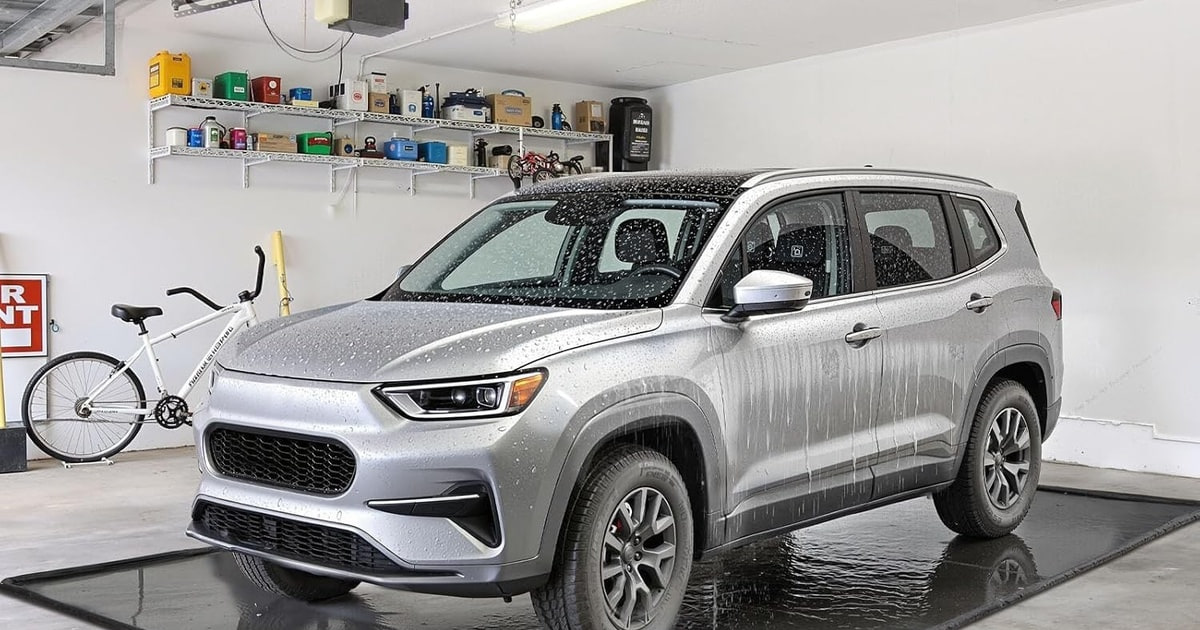
Winter doesn't stay outside. Every time you pull into the garage, your tires and wheel wells carry in slush, road salt and grit, and it all melts into a gray puddle on the concrete. Salt brine is the real problem — it works its way into concrete and causes the pitting and flaking that ruins a slab over a few seasons. A containment mat is the simplest fix. It sits under the car, catches what drips off, and gives you one surface to squeegee or hose instead of a whole floor to mop.
Here's the honest part: no mat does everything. Absorbent fabric mats lie flat, conform to uneven concrete and soak up daily drips beautifully, but they'll saturate and overflow when a truck dumps several gallons of snowmelt at once. Hard-sided mats with raised edges handle that volume, but the same lip that traps water also traps it — you get a shallow puddle sitting under your car until you squeegee it out. And almost every mat here can shift or bunch under tires if you skip the anchoring step.
You also need to buy for your vehicle, not for the picture in the listing. A sedan mat under a crew-cab truck leaves the front bumper hanging over bare concrete, which is exactly where the worst dripping happens. Measure your bay and your car before you shop, and size up when you're between options. We think that the Armor All Garage Floor Mat is the best garage floor containment mat for most people, and that the WELKIN Containment Mat is the one to buy if you park a truck and live somewhere with real winters.
Everything we recommend

Soaks up daily drips and lies flat on imperfect concrete

Real walls and truck-length coverage, if you can lift it
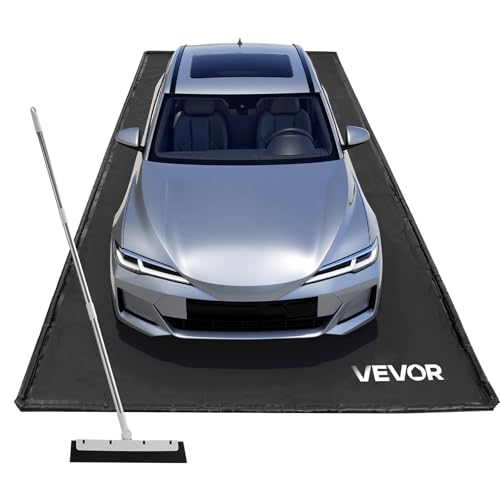
Hard-sided containment for a lot less, in a smaller footprint

The same absorbent build, in a finish that suits a shared space
At a glance
| Product | Coverage Size | Material | Price | |
|---|---|---|---|---|
| WELKIN Containment MatUpgrade pick | 8'5" x 22' | PVC Fabric | $194.99On sale |
| Armor All Garage Floor MatTop pick | 17' x 7'4" | Non-Woven Polyester | $129.99 |
| Drymate Garage Floor MatAlso great | 7'4" x 17' | Non-Woven Polyester | $139.99 |
| VEVOR Containment MatBudget pick | 7'9" x 18' | PVC | $74.90 |
 | BDK Floor MatsAlso in lineup | 4-Piece Set | PVC Rubber | $24.57 |
 | Traxxon by FlooringInc Rubber Gym Flooring RollAlso consider | 4' x 10' | Recycled Rubber | $115.18 |
 | Husky Liners X-act Contour Floor MatsAlso in lineup | 3-Piece Front/2nd Row | DuraGrip Surface | $219.99 |
 | Motor Trend -2 Piece Front Car FloorAlso in lineup | 2pc 27x20in Front | Rubber Polymers | $29.90 |
How we picked
Containment approach. We separated absorbent fabric mats from hard-sided PVC trays and judged each on its own terms. A fabric mat has to keep liquid off the concrete; a containment mat has to hold volume without leaking at the edges, which we assessed from manufacturer edge-height specs and owner reports of overflow.
Size versus vehicle. We compared listed dimensions against real vehicle footprints, since a mat that leaves the front bumper uncovered defeats the purpose. Anything meant as a primary garage mat needed to cover at least a sedan with drip room at both ends.
Staying put. Owner feedback across every listing pointed to the same failure: mats bunching or sliding under tires. We weighted anchoring hardware and backing design heavily, and treated reports of adhesive letting go as a serious mark against a product.
Cleaning and storage. Spec sheets and owner accounts told us how each mat is actually maintained — squeegee, hose, vacuum or washer — and how much it weighs when you want it out of the way. Anything over about 25 pounds becomes a two-person job for seasonal removal.
Cold-weather behavior. PVC stiffens in the cold and rubber generally doesn't, so we checked material claims against what owners report after a full winter. We looked for cracking at fold points and edges that lift in freezing temperatures.
Top pick
Soaks up daily drips and lies flat on imperfect concrete
Armor All Garage Floor Mat
A 17-by-7-foot absorbent fabric mat with a waterproof backing, so nothing reaches your floor. It's thin, it conforms to cracked or sloped concrete, you can trim it with scissors, and it costs a fraction of what refinishing a stained slab does.
$129.99fromAmazonFor everyday garage messes, absorption beats walls. Most of what threatens your floor isn't a flood — it's an air-conditioner drip, a slow oil weep, and slush sliding off the rocker panels. The Armor All's non-woven polyester top wicks that moisture and holds it while a bonded polyolefin backing keeps it off the concrete. Nothing pools, so you don't step in anything, and there's no standing water waiting for you when you open the door.
It's essentially a rug, which turns out to be the point. At about an eighth of an inch thick, it drapes over cracks, minor slopes and the little heaves that older slabs develop. Owners with fresh epoxy tend to buy it for a reason that has nothing to do with liquids: tires yellow and dull epoxy over time, and a mat under the parking spot stops that. If your bay is narrower than seven feet, cut it with scissors and the edges won't fray.
Installation takes one person and about ten minutes. Roll it out, position it, and stick the included double-sided tape underneath along the perimeter. No adhesive to the floor itself beyond the tape, no drilling, nothing permanent — which matters if you rent. Cleaning is just as forgiving. You can vacuum it, hose it off, or power-wash it with mild detergent, then pull the water out with a squeegee or a wet-vac so it dries faster.
It also earns its keep outside of winter. Because the surface is fabric rather than PVC, the same roll works under a home-gym setup, in a workshop, or across a rec-room floor. That's a real advantage over hard-sided trays, which look and feel exactly like what they are.
Flaws but not dealbreakers
The anchoring is the weak point, and it's the complaint that comes up most. On smooth or freshly coated concrete, the tape doesn't always hold, and tires can drag the backing when you shift into gear or climb over a lip at the door. Clean and dry the floor thoroughly first, tape all four edges rather than just the corners, and give the adhesive a day before you park on it.
It ships rolled, so expect wrinkles for the first few days. They relax faster in a warm garage than a cold one, and weighting the corners helps. Once oil soaks in, the stain is permanent — the floor is protected, but the mat looks used. And in a heavy-snow region, fabric alone will saturate during a big melt; that's a job for a raised edge.
Upgrade pickOn sale
Real walls and truck-length coverage, if you can lift it
WELKIN Containment Mat
At 8 feet 5 inches by 22 feet, this covers a full-size pickup with room at both bumpers. Sponge-column edges compress against uneven concrete to hold snowmelt in, and the included squeegee clears the mat in about a minute.
$194.99fromAmazonList priceIf your truck comes home with snow packed in the wheel wells, you need walls, not wicking. A vehicle carrying a heavy load of accumulated snow can shed a few gallons of salty water as it melts, and fabric simply can't hold that. The WELKIN's raised border is a high-elastic sponge column rather than a rigid lip, so it compresses and rebounds against the small dips and slopes older garage floors always have. That flexibility is what keeps the seal honest.
The size is the other reason to pick it. Twenty-two feet swallows a crew-cab pickup or an extended-wheelbase SUV with drip room at the front and rear, which is where mats usually come up short. Owners in New Hampshire and Vermont winters consistently report that it does the one thing they bought it for — the rest of the garage floor stays dry. Several buy a second one for the other bay.
Cleanup is genuinely quick. The heavy-duty PVC fabric surface is smooth enough that the included squeegee pushes slush and grit to one end in a few passes, and it dries fast enough to use again the same day. Adhesive tape squares and alcohol prep pads come in the box for anchoring. It's washable with water when you want a deeper clean at the end of the season.
Flaws but not dealbreakers
It's the heaviest mat here that you'd ever want to move, at close to 30 pounds of rolled PVC. If you plan to pull it out every spring, get a second set of hands or a cart. Left down year-round, the weight is a non-issue.
The edge that contains water also keeps it. Because the border runs all four sides, melted snow sits in a shallow puddle under the car until you squeegee it — you can't just push it out the garage door. A few owners also report that the adhesive corner squares don't stick as well as the instructions promise, and the mat twists slightly over time even when it lies mostly flat.
Budget pick
Hard-sided containment for a lot less, in a smaller footprint
VEVOR Containment Mat
A 7-foot-9 by 18-foot PVC mat with a 30mm raised edge, which is enough to corral snowmelt from a sedan or a crossover. It comes with a squeegee, installs with hook-and-loop squares, and costs far less than the larger containment mats.
$74.90fromAmazonYou don't need truck-sized coverage to get truck-grade containment. The VEVOR gives you a genuine 30mm wall — about an inch and a sixth — around a footprint that fits compact cars and mid-size crossovers comfortably. Owners with larger vehicles report it covering a full-size SUV with drip room on all four sides, though that's tighter than the numbers suggest. The listing offers other sizes if yours runs long.
The PVC is the right material for road salt. Unlike fabric, it doesn't absorb anything, so brine, mud and oil sit on the surface and wipe off. Cleaning is a squeegee job rather than a laundry job, and the smooth surface means grit doesn't grind into the material. If you live somewhere that salts heavily, keeping that brine off bare concrete is the entire point of the purchase.
One person can put it down without tools. Six hook-and-loop squares hold it to the floor, and it flattens out on its own within a day or two if you install it in warm weather. Some owners skip the anchoring entirely and report it staying put — but that depends heavily on how smooth your slab is.
Flaws but not dealbreakers
The included squeegee is flimsy foam, and several owners throw it away and use their own. Budget for a real one if you plan to clear the mat often.
Anchoring is inconsistent, and this is the failure mode to watch. The adhesive pads don't hold reliably for everyone, and a mat that bunches at the front edge under a tire is a genuine tripping hazard when you step out. Owners who drive in and out several times a day are the most likely to see it creep forward. Test it before you trust it, and re-anchor with something better if the supplied pads let go.
A 30mm wall is enough for a moderate winter, not a brutal one. If you're in heavy-snowfall country with a big vehicle, the taller sponge-column edge on the WELKIN is worth the money.
Also great
The same absorbent build, in a finish that suits a shared space
Drymate Garage Floor Mat
Nearly identical to our top pick in size, materials and construction, down to the waterproof polyolefin backing. The charcoal, carpet-like surface hides stains well, which makes it the better choice if the bay doubles as a gym or workspace.
$139.99fromAmazonThe Drymate and the Armor All are close cousins — same 17-by-7-foot-4 dimensions, same absorbent polyester top over a bonded waterproof backing, both made in the USA from largely recycled content. If you've read the case for the Armor All, you've read most of the case for this one. Choose between them on finish, availability and price rather than on performance.
Where it separates itself is appearance over time. The charcoal surface and carpet-like texture hide the discoloration that absorbent mats inevitably collect, so a bay that doubles as a home gym or hobby space doesn't end up looking like a service floor. Owners doing their own oil changes reach for it specifically because a splash lands on the mat instead of the concrete.
It's also a good option for driveway work. Because it lies flat and doesn't absorb through to the underside, people spread it under a car in the street for oil changes and roll it back up afterward. That's not something you'd do with a 30-pound PVC tray.
Flaws but not dealbreakers
It's thinner than some buyers expect, and it's not cheap relative to the nearly identical Armor All — which is the main reason it isn't our top pick.
The real complaint from long-term owners is cleaning. Once the fabric has absorbed months of oil and grime, hosing it doesn't restore it, and there's no practical way to make it look new again. Treat it as a consumable you replace every few years in a high-drip garage, not a permanent floor.
Who this is for
Buy a containment mat if you park indoors in a place that salts the roads, or if anything under your car drips. Concrete is porous, and salt brine causes the surface flaking that turns into an expensive repair. Renters get the most out of these because a mat protects the slab without altering it. If you've already coated your floor with epoxy, a mat is still worth it — it keeps tires from yellowing the finish and keeps a big melt from spreading brine across the whole coating.
Skip it if you park outside, live somewhere that never freezes, and drive something that doesn't leak. This guide covers mats that go on the garage floor under a vehicle, plus a few adjacent products that came up in the same research. Interior floor liners protect your carpet, not your concrete — they're a complement to a garage mat, not a substitute. We don't cover epoxy coatings, interlocking tiles, or drive-on containment trays with rigid plastic walls.
How we picked
Containment approach: We judged absorbent fabric mats on whether liquid ever reaches the concrete, and hard-sided mats on edge height and whether owners report leaks at the border. Size versus vehicle: A mat has to cover the car with drip room at both bumpers, so we checked listed dimensions against real vehicle footprints rather than trusting the category label. Staying put: Sliding and bunching is the single most common owner complaint here, so anchoring hardware and backing grip carried a lot of weight. Cleaning and storage: We looked at how each mat gets cleaned and how heavy it is to move, since anything over about 25 pounds is a two-person job. Cold-weather behavior: PVC can stiffen and crack at fold points in deep cold, so we favored materials that owners report staying pliable through a full winter.
Other garage floor containment mats worth considering
If you want a workshop floor rather than a drip catcher: The Traxxon by FlooringInc Rubber Gym Flooring Roll ($115.18) — The Traxxon rolled rubber is a different tool for a different job. It's quarter-inch commercial recycled rubber, made in the USA, and it's what you want under a workbench, a floor jack or a tool chest — it cushions your knees and feet during long sessions and shrugs off oil and solvents without staining. It cuts cleanly around pillars and walls, and you can buy multiple rolls to cover a full bay. What it gives up is containment: there's no raised edge at all, so snowmelt runs right off. Expect a rubber smell for the first week or two, and know that a 4-by-10 roll is heavy and hard to reposition once it's down. Pair it with a containment mat in the parking area.
The competition
These are the products our research surfaced alongside the picks, not a survey of everything sold. Three of them are vehicle interior liners that share shelf space with garage mats and turn up in the same searches. They're useful, and they solve the other half of the winter problem — what your boots track into the cab — but none of them protects concrete.
The Husky Liners X-act Contour Floor Mats ($219.99) — The Husky Liners X-act Contour set is the best-regarded product in this entire lineup, and it isn't a garage mat. It's a three-piece custom-fit liner for the 2015-and-later F-150 SuperCrew, including the Lightning, laser-scanned to sit flat with no gaps and held down by hundreds of grip nibs. Owners across model years describe the fit as near-perfect and the material as better than the pricier competition. It's also the most expensive thing here, it only fits one cab configuration, and it does nothing for your floor. If you drive that truck through salted winters, run these inside the cab and a containment mat underneath it.
The Motor Trend -2 Piece Front Car Floor ($29.90) — The Motor Trend FlexTough is a two-piece front liner set with deep dish walls and rubberized nibs underneath, trimmable with scissors to fit almost any car. The polymer formula stays flexible in deep cold rather than cracking, which is the usual failure of cheap rubber mats, and the nibs keep it from creeping toward the pedals. Two knocks: it covers only the front footwells, and a fair number of owners report a strong rubber smell that takes a couple of weeks to fade. Again, this protects carpet, not concrete.
The BDK Floor Mats ($24.57) — The BDK four-piece set covers front and rear footwells in thick PVC rubber with deep capture channels, and it's the least expensive interior option here. Owners like the fit across a wide range of cars and the fact that it rinses clean. The channels hold mud and a bit of water, but there's no meaningful liquid capacity and no perimeter wall, so it's not garage protection under any reading. Odor complaints come up here too. Buy it for the cabin if you want four mats cheap; buy something else for the floor.
Installation and upkeep
Start with a clean, dry floor — adhesive and hook-and-loop anchors fail on dust more often than they fail on their own. Roll the mat out, let it sit for a day or two so the shipping wrinkles relax, and do this in warm weather if you can, because both PVC and fabric flatten faster when they're not cold. Tape or anchor all four edges, not just the corners, and pay special attention to the edge nearest the garage door, where tires climb on. For hard-sided mats, squeegee standing water toward one end and rinse with a hose, then let it dry fully before you roll it up. Fabric mats take a vacuum, a hose, or a power wash with mild detergent — never bleach. Pull excess water out with a squeegee or wet-vac to speed drying.
Questions we get
What size mat do I need for my car, truck, or SUV?
Measure your vehicle bumper to bumper and add 18 to 24 inches at each end, then measure the widest point and add about a foot per side. A sedan usually lands around 16 by 7.5 feet; a crew-cab truck needs 20 feet or more. The Armor All and Drymate at 17 by 7 feet 4 inches suit sedans and crossovers, and the WELKIN at 22 feet covers most trucks. When you're between sizes, go bigger — extra mat is harmless, but a short mat leaves the bumper area exposed.
How tall should the containment walls be for a snowy climate?
For a moderate winter, a 30mm edge like the VEVOR's handles most vehicles. For heavy snowfall, or for a truck that carries a lot of packed snow in the wheel wells, look for a taller or sponge-column border like the WELKIN's. Flat absorbent mats have no wall at all, so they can saturate and overflow during a big melt — they're better as everyday drip protection than as your only defense in deep snow country.
Rubber or PVC for oil and chemical spills?
Rubber wins on chemical resistance. It doesn't absorb petroleum products and it holds up against brake fluid, antifreeze and solvents without softening, which is why the Traxxon is the workshop choice. PVC resists most fluids and wipes clean easily, but concentrated chemicals sitting on it for long stretches can degrade it. Absorbent fabric mats will soak up oil and keep it off the concrete, but the stain is permanent.
How do I keep the mat from sliding around?
Anchor it, and anchor all four edges. Clean and dry the concrete first, because tape and hook-and-loop pads fail on dust. The Armor All and Drymate include double-sided tape; the WELKIN and VEVOR use adhesive or hook-and-loop squares. This is the most common complaint across every product here, so check it after a week of driving in and out — if the front edge is creeping, replace the supplied adhesive with something stronger.
Do these work on a sloped or uneven floor?
Fabric mats do better here. They conform to minor imperfections and grades, and tape keeps them anchored. Hard-sided mats want a relatively flat slab, because the uphill edge can lift and let liquid run underneath. The WELKIN's sponge-column border compresses more than a rigid lip does, which helps on mildly uneven concrete, but a noticeably sloped floor still favors an absorbent mat.
Is a mat worth it if I already have epoxy?
Yes, for two reasons. Tires yellow and dull epoxy where they sit, and a mat under the parking spot prevents that — several owners bought one specifically after finishing a floor. A mat also collects a big snowmelt in one place instead of letting brine spread across the whole coating. Think of it as protecting the protection.
How long do these last?
Commercial rubber like the Traxxon has the longest life by a wide margin and holds up under heavy equipment for many years. PVC containment mats last several years before the material starts stiffening or cracking at fold points, which is why storing them rolled rather than folded matters. Absorbent fabric mats have the shortest life — the top layer saturates and the backing eventually degrades at seams, so plan on replacing them periodically in a high-drip garage.
Why you should trust us
For this guide:
- We read the manufacturer specifications and listing details for every mat here, comparing edge heights, dimensions, materials and included anchoring hardware.
- We reviewed owner feedback across all eight listings and looked for patterns — especially recurring reports of mats sliding, adhesive failing, water pooling and odor.
- We compared absorbent fabric and hard-sided PVC designs against published guidance on what road salt and standing brine do to concrete.
- We read owner reviews on every listing, weighted toward the critical ones, because that is where the recurring failures show up.
- We have a systematic way of automatically fetching the latest prices, so the numbers on this page stay current.
- This is a research-focused guide, so the team may not own every product listed — though we often do own the top winners, which gives us extra context for the recommendations.
- We don't accept free products, and the retailer commission never changes which product we recommend.
Sources
Best Garage Floor Mats — This Old House Reviews, This Old House
Best Garage Floor Mats Tested by Bob Vila, Bob Vila
Best Garage Floor Mats — Popular Mechanics, Popular Mechanics
Garage Floor Protection: Mats vs. Epoxy vs. Tiles — The Family Handyman, The Family Handyman
Best Garage Floor Mats for Cars and Trucks — Car and Driver, Car and Driver
Amazon product listings and owner reviews for all 8 products
Manufacturer specification pages for each product
Some passages in this guide may be paraphrased with AI help. Prices are refreshed automatically.
More like this.
Continue exploring home reviews and recommendations.

The Best All-Weather Car Floor Mats
Winter doesn't stay outside. Salt, slush, sand and gravel ride in on your boots and grind into the carpet every time you get in. A good all-weather mat…

The Best Garage Floor Coatings
A garage floor is the hardest-working surface in most houses, and it's the one nobody thinks about until it looks terrible. Bare concrete soaks up oil…

The Best Snow Melting Mats for Walkways
Shoveling a walkway at six in the morning is nobody's idea of a good time, and the ice that forms afterward is worse. A heated mat sidesteps both…

The Best Anti-Fatigue Kitchen Mats
Standing on tile or concrete for an hour does something quietly awful to your body. Your heels ache first, then your knees, then your lower back around…

The Best Tineco Floor Cleaners
If you have hard floors and anything that makes a mess - a dog, a toddler, a partner who cooks - you already know the routine. You vacuum, then you mop,…

The Best Driveway Heating Mats
The worst part of a snowstorm isn't the snow. It's the twenty feet between your door and your car, refrozen into a gray slab by morning. A heating mat…