The Best Snow Melting Mats for Walkways
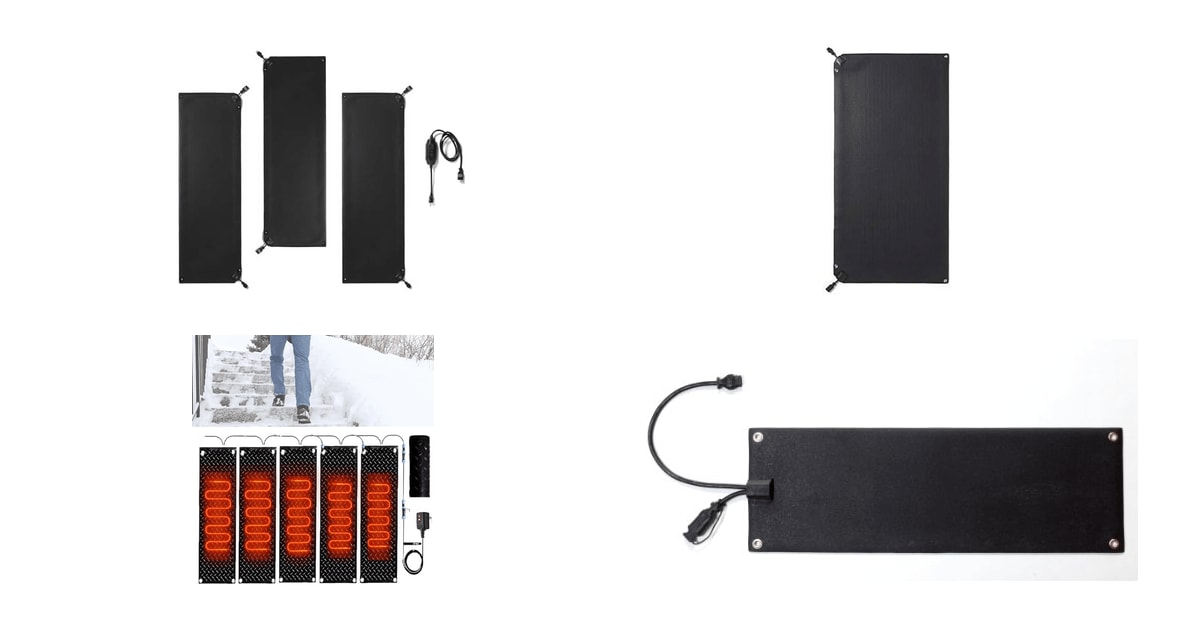
Shoveling a walkway at six in the morning is nobody's idea of a good time, and the ice that forms afterward is worse. A heated mat sidesteps both problems. You roll it out before the first storm, plug it in, and the snow that lands on it turns to water and runs off. No salt, no scraping, no chipping away at a frozen porch step with the edge of a shovel. For anyone with a long entry path, an elderly parent, or a dog who won't wait for you to clear a route, that's a meaningful change to the winter routine.
Here's the honest part: none of these mats clear your whole property, and none of them are cheap to buy or free to run. They melt snow only on the surface they cover, so the twelve inches of walkway on either side stays icy unless you buy more mats. Heavy, fast-falling snow can outpace them. And they all need power, which means an outdoor-rated cord, a circuit with room to spare, and a plan for what happens when a storm knocks out electricity. These are targeted fixes for the paths you actually use, not a replacement for a snowblower.
We looked at portable roll-out mats, stair treads, and one embedded system meant to live under your pavers for good. We think that the HeatTrak Heated Snow Melting Mats Walkway Kit is the best snow melting mat for most people, and that the WarmlyYours PowerMat is the one to buy if you're pouring a new driveway or walkway and want the heat built in permanently.
Everything we recommend

Everything you need in one box, no guesswork

A wider mat for wide steps and generous porches

Purpose-built treads for the steps where falls happen
Permanent, invisible heat under a surface you're already building
At a glance
| Product | Mat Size | Melt Rate | Price | |
|---|---|---|---|---|
| HeatTrak Heated Snow Melting Mats Walkway KitTop pick | 20x60in (x3) | 2in/hr | $689.99 |
| HeatTrak Heated Snow Melting Mats - HeatedAlso great | 30x60in | 2in/hr | $339.99 |
 | Anbomom Heated Snow Melting Mats for WalkwaysAlso in lineup | 10x48in (5pcs) | 2in/hr | $292 |
| HeatTrak Heated Snow Melting Mats for StairsAlso great | 10x30in | 0.7 amps | $109.95 |
| WarmlyYours PowerMat Snow Melting MatUpgrade pick | 2x50ft (100sqft) | 5009W | $980.10On sale |
How we picked
Heat output and melt rate. We compared manufacturer wattage-per-square-foot figures and stated melt rates, since that's what determines whether a mat keeps up with a storm. Anything that couldn't document roughly 40 watts per square foot or a 2-inch-per-hour rate didn't make the cut.
Safety certification. For an electrical product that sits in slush all winter, third-party listing is the floor. We favored products with documented UL, ETL or CSA certification and set aside listings that couldn't show one.
Amp draw and circuit fit. We read the amperage specs for each mat and each power unit to work out how many sections you can chain safely. A 15-amp household circuit tops out around 12 continuous amps, and that limit shapes how long a path you can actually heat.
Cold-weather durability. We looked for corrosion-resistant construction rated to stay outdoors all season and for owner feedback spanning multiple winters. Rubber that stiffens or cracks in deep cold becomes its own trip hazard.
Traction when off. A heated mat should still be safe to walk on when it's unplugged or the power's out. We prioritized textured surfaces that owners describe as grippy wet or dry.
Top pick
Everything you need in one box, no guesswork
HeatTrak Heated Snow Melting Mats Walkway Kit
This kit gives you three 20-by-60-inch mats plus the power unit that runs them, which covers a typical 15-foot front walkway out of the box. HeatTrak rates the mats to melt about 2 inches of snow per hour and to hold a surface roughly 40°F above the air around them.
$689.99fromAmazonThe bundled power unit is the reason to start here. HeatTrak sells its walkway mats individually, and the individual listings say the power unit is sold separately. That trips people up. Buy three loose mats and you'll be hunting for the controller in a second order, probably after the first snow. This kit skips that. You get the mats and the outdoor-rated unit that chains them together, and you can be running before the storm hits.
Three 20-by-60-inch sections give you 15 feet of covered path, which handles most front walks from the sidewalk to the bottom step. The mats link end to end, so you can extend the run later if your path is longer. Just watch your circuit. HeatTrak's own specs put a full walkway configuration at up to 13 amps on one power unit, and a standard 15-amp household circuit shouldn't carry more than about 12 amps continuously.
You can leave these out all season. HeatTrak builds them from corrosion-resistant material meant to sit in slush and road grime from November through March, and the company rates its mats down to -25°F. Owners in Michigan, Wisconsin and Montana describe them coming through full winters intact. That matters more than it sounds. A mat you have to drag in and out after every storm is a mat you'll stop using by January.
The surface has real texture, which does two jobs. It grips when the mat is wet, and it grips when the mat is off. Several owners bought these after someone in the family fell, and the traction is a big part of why they kept them. HeatTrak also covers all of its products with a two-year manufacturer's warranty from the date of shipment, which is longer than most of what's sold in this category.
Flaws but not dealbreakers
These cost a lot for what they are, and owners say so even in otherwise positive feedback. You're paying a premium for the brand and the build, and if your walkway is long you'll feel it again with every additional section.
Reports of a single mat in a chain heating intermittently show up in owner feedback, along with frustration at how hard HeatTrak can be to reach when that happens. It's not common, but a mid-chain failure is annoying to diagnose because the mats on either side keep working.
In a fast, heavy storm the mats can fall behind. The 2-inch-per-hour figure is HeatTrak's own rating, and when snow comes down faster than that you'll still have accumulation on the mat until the weather eases.
HeatTrak covers this kit with a two-year manufacturer's warranty from the date of shipment.
Also great
A wider mat for wide steps and generous porches
HeatTrak Heated Snow Melting Mats - Heated
At 30 by 60 inches, this HeatTrak mat is 10 inches wider than the ones in the kit, which covers a broad landing or a deep step properly. The power unit isn't included, so plan on buying one separately or pairing these with a kit you already own.
$339.99fromAmazonWidth is the whole point. A 20-inch mat leaves bare edges on a wide front step or a generous landing, and bare edges are where people slip. This 30-inch version covers the walking surface more completely. Owners with deep, wide steps report good results, though several needed short extension cords to link mats around corners and across step risers.
The missing power unit is the catch, and it's a real one. HeatTrak's listing is explicit that the outdoor-safe power unit is sold separately, and one unit can safely run a configuration of stair and walkway mats up to 13 amps. If you're starting fresh, the bundled kit is the simpler purchase. If you already have a HeatTrak power unit, these drop straight into your existing chain.
Everything else matches the rest of the HeatTrak line. Same corrosion-resistant construction meant to stay outside all winter, same 2-inch-per-hour melt rate, same 40°F rise above ambient, same two-year warranty. HeatTrak also notes that it's an American company manufacturing in North America, which is a fair tiebreaker when the alternative is an uncertified import.
This is the mat to buy if your problem is a specific wide surface rather than a long path. A back deck by the door where the dog goes out. A landing at the top of the stairs. One 30-by-60 mat solves that better than two narrow ones laid side by side, and it's one less connection to worry about.
Flaws but not dealbreakers
Buying the power unit separately adds cost and a step, and it's easy to miss in the listing. Order the mat alone and you'll have a heated mat with nothing to run it.
Owner feedback includes at least one account of poor performance during a major storm, with the mats keeping up less well than expected. Heavy, wind-driven snow is the weak spot for every mat here, not just this one.
HeatTrak covers this mat with a two-year manufacturer's warranty from the date of shipment.
Also great
Purpose-built treads for the steps where falls happen
HeatTrak Heated Snow Melting Mats for Stairs
Each 10-by-30-inch tread sits on a single stair and draws just 0.7 amps, so you can chain a full staircase onto one power unit. Steps are where winter falls turn serious, and a walkway mat won't fit them.
$109.95fromAmazonStairs are the hazard, and a walkway mat doesn't solve them. A 20-inch-wide mat draped over a step doesn't sit flat, doesn't stay put, and leaves the nosing exposed. These treads are cut to fit a stair. At 0.7 amps each, you can put one on every step of a normal front staircase and still stay well under the 14-amp ceiling HeatTrak lists for a single power unit.
Owner feedback here skews toward longevity, which is unusual for a seasonal outdoor electrical product. People describe using the same treads for four and five winters running, and note that the rubber stays flexible in the cold instead of stiffening into a hazard of its own. One owner has accumulated six of them over several years, which tells you more than a single season's impression would.
The power unit is sold separately, same as the wider walkway mat. That's actually convenient here: one unit runs a mixed configuration of stair treads and walkway mats, so you can heat the steps and the path to them off a single controller. If you're buying the kit as your starting point, these treads extend it.
One practical warning from the instructions that owners take seriously: these aren't designed to have packages sitting on them, even when they're switched off. If your front porch doubles as a delivery drop, put the tread on the steps and leave the landing to something else.
Flaws but not dealbreakers
They're expensive per square foot. Covering a six-step staircase means six mats, and the cost adds up faster than it does on a flat walkway.
Owner reports include a mat underperforming during a heavy Philadelphia storm even with everything set up per the instructions. Snow falling faster than 2 inches an hour will accumulate.
You'll likely need short extension cords to bridge the risers between treads, which means more connections outdoors and more places for a link to come loose.
HeatTrak covers these stair mats with a two-year manufacturer's warranty from the date of shipment.
Upgrade pickOn sale
Permanent, invisible heat under a surface you're already building
WarmlyYours PowerMat Snow Melting Mat
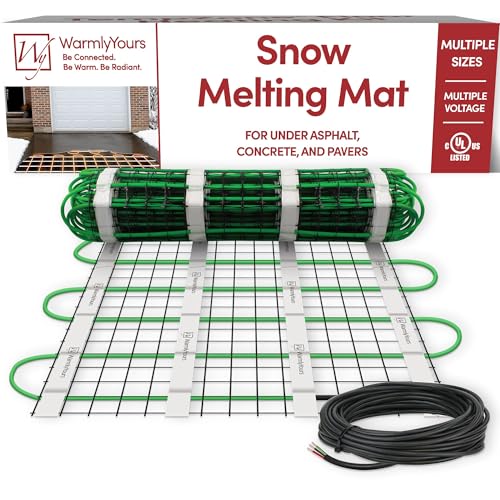
This 2-by-50-foot mat goes under concrete, asphalt or pavers and covers 100 square feet at about 50 watts per square foot. It runs on 240V, needs an electrician, and comes with a 10-year limited warranty.
$980.10fromAmazonList priceThis is a different kind of product from everything else here, and it only makes sense at a specific moment: when you're pouring or repaving anyway. The mat installs at a depth of 3 to 4 inches under the surface and then disappears. No rolling anything out in November, no cords across the yard, no mats to store. Owners who buried theirs under slate pavers and asphalt describe it doing exactly what they hoped through their first winter.
The output is roughly a quarter higher than what portable mats put out. WarmlyYours lists 50.09 watts per square foot against the roughly 40 watts per square foot typical of surface mats, and it draws 20.87 amps at 240V for a total of 5,009 watts across the 100-square-foot mat. That's a dedicated circuit and a licensed electrician, not an outdoor outlet. It's also why it can keep a surface above freezing rather than just melting what lands on it.
The warranty is the standout. Ten years limited, plus lifetime technical support from US and Canadian staff, and WarmlyYours offers a free system design if you send them your layout. Take them up on that. Getting the mat count and circuit plan right before concrete goes down is the difference between a system you forget about and one you can't fix.
One code requirement you can't skip: US NEC 426.28 requires ground-fault protection of equipment for fixed outdoor deicing systems, and Canadian installs follow CSA C22.1 Rule 62-116. WarmlyYours states this in the listing, but at least one owner was caught off guard by the GFEP breaker requirement mid-project. Bring it up with your electrician on day one.
Flaws but not dealbreakers
You can't undo this. Once the mat is under concrete, a failed section stays failed — one owner describes exactly that, with a dead patch buried and unreachable. The portable mats can be swapped out in five minutes.
It's a contractor purchase, not a weekend project. Between the 240V circuit, the GFEP breaker and the pour itself, the installed cost will run well past the mat.
The owner feedback pool is small compared with the HeatTrak products, and it includes complaints about thin installation documentation. Lean on WarmlyYours' design service rather than the box.
WarmlyYours backs this mat with a 10-year limited manufacturer's warranty and lifetime technical support.
Who this is for
Buy one of these if you have a specific stretch of walkway or a set of steps that turns dangerous every winter — the path from the driveway to the front door, the deck stairs the dog uses, the ramp to a side entrance. They're a strong fit if you're older or share a home with someone who is, since a fall on ice is a different kind of event at 75 than at 35. They also make sense if you're trying to get off rock salt, which chews up concrete and irritates dog paws. Renters and apartment dwellers get an extra benefit from the portable mats: nothing is fastened down, so they come with you when you move.
Skip these if what you actually need is a driveway cleared. A heated mat covers the ground it sits on and nothing more, and buying enough sections to cover a two-car drive gets expensive fast — you'd be better served by a snowblower or a plowing service. This guide covers surface-laid walkway and stair mats plus one embedded system for new construction. It doesn't cover roof and gutter de-icing cable, heated door mats meant for indoor use, or the mounting hardware, extension cords and power units that some of these mats need bought separately.
How we picked
We built the shortlist around a handful of things that decide whether a heated mat is worth owning. Heat output: manufacturer wattage-per-square-foot ratings and stated melt rates, with roughly 40 watts per square foot and 2 inches an hour as the working baseline. Safety certification: documented UL, ETL or CSA listing, non-negotiable for an outdoor electrical product sitting in meltwater. Circuit fit: published amp draw per mat and per power unit, so you can tell how many sections you can chain before a 15-amp circuit is maxed out. Cold durability: corrosion-resistant materials rated to live outside all season, backed by owner accounts spanning several winters. Traction: a textured surface that grips even with the power off.
The competition
This is what our research surfaced on Amazon in this category, not a survey of everything sold. Several products we would have liked to compare �� self-regulating cable kits and thermostat-controlled systems among them — weren't available as confirmed listings, so they're not covered here.
The Anbomom Heated Snow Melting Mats for Walkways ($292) — The Anbomom heated snow melting mats come in multi-packs of 10-by-48-inch rubber sections with a built-in timer and a 6-foot cord, and they undercut the HeatTrak mats substantially. The listing claims the same 2-inch-per-hour melt rate but names no safety certification, which is the reason we can't recommend it — UL or ETL listing is the one thing we treat as mandatory for an outdoor electrical product, and there's no meaningful owner feedback yet to fall back on. The listing also mentions connecting up to five mats and keeping total draw under 1,800 watts, which would exceed the safe continuous load on a standard 15-amp circuit. If you want the timer and the lower cost and you're willing to verify the certification yourself before plugging anything in outdoors, it's the alternative here; we'd want to see the listing first.
Installation notes
Lay portable mats on a clear, dry surface before the first storm and leave them there for the season — that's what they're built for, and hauling them in and out is how people end up not using them. Run the cord to a GFCI-protected outdoor outlet, and use an outdoor-rated extension cord if you need to bridge a gap. Before you chain sections together, add up the amps: a HeatTrak power unit tops out around 13 to 14 amps, and a 15-amp household circuit shouldn't carry more than about 12 continuously. Don't stack packages or planters on a mat, even when it's off. When spring comes, sweep off the grit, let the mats dry completely, and roll them loosely rather than folding them, since a hard crease can stress the heating element inside.
Questions we get
How do heated walkway mats work — do they have to stay plugged in all winter?
They're electric resistance heaters in a rubber or polymer mat, and they warm the surface enough to melt snow as it lands. You don't have to leave them powered around the clock. Most people switch them on when snow is in the forecast and off once the path is clear, though leaving them running through a multi-day storm avoids ice forming underneath.
Can I connect several mats together to cover a longer path?
Yes, and that's the main reason to buy into a modular system. HeatTrak mats link end to end and run off a single outdoor power unit, which the company rates for a configuration up to about 13 to 14 amps. Add up the draw of every mat before you chain them, because a standard 15-amp household circuit should carry no more than roughly 12 amps continuously.
What size mat do I need for a standard front walkway?
Measure the width of the path first — most residential walks are 24 to 36 inches. A 20-inch mat leaves bare strips on either side, which is fine if you just want a safe lane to walk in, while a 30-inch mat covers a typical walk edge to edge. For length, count the feet from the sidewalk to your bottom step and buy sections to match.
Are these safe for dogs and cats?
That's one of the better arguments for them. The surface runs warm rather than hot, so it's comfortable underfoot, and using a mat means you're not spreading calcium chloride ice melt that can burn paw pads. Keep the cord routed where a pet won't chew it and use a GFCI outlet, same as any outdoor electrical device.
Do they still work below zero?
HeatTrak rates its mats for use down to -25°F, which covers virtually every populated winter climate in North America. What changes at extreme cold is the melt rate, not whether the mat works. The mats hold a surface roughly 40°F above the surrounding air, so at -10°F you're getting a wet surface rather than a fast melt.
Are heated mats better than rock salt for protecting concrete?
For the concrete itself, yes. Repeated sodium chloride application accelerates surface deterioration significantly over a period of years, according to the Portland Cement Association, and a mat puts no chemicals on the slab at all. The trade-off is upfront cost and electricity, so mats make the most sense on the specific surfaces you care about rather than everywhere.
Why you should trust us
For this guide:
- We read the manufacturer specification sheets for every mat here, comparing wattage per square foot, amp draw, voltage, certification and warranty terms side by side.
- We reviewed published reporting on heated walkway mats, including This Old House's coverage of HeatTrak, along with National Safety Council figures on winter slip-and-fall injuries and Portland Cement Association guidance on salt damage to concrete.
- We read through owner feedback across several winters of use, looking for recurring themes around durability, mid-chain failures, storm performance and customer support rather than individual opinions.
- We read owner reviews on every listing, weighted toward the critical ones, because that is where the recurring failures show up.
- We have a systematic way of automatically fetching the latest prices, so the numbers on this page stay current.
- This is a research-focused guide, so the team may not own every product listed — though we often do own the top winners, which gives us extra context for the recommendations.
- We don't accept free products, and the retailer commission never changes which product we recommend.
Sources
Best Heated Driveway and Walkway Mats (2026) — This Old House, This Old House
Best Snow Melting Mats — Bob Vila, Bob Vila
Best Heated Stair Mats and Walkway Mats — Popular Mechanics, Popular Mechanics
Best Heated Walkway Mats — Good Housekeeping, Good Housekeeping
HeatTrak HR Series — Official Product Specifications and FAQ, HeatTrak Official
EasyHeat ADKS Self-Regulating Heating Cable — Product Data Sheet, EasyHeat / nVent
WarmlyYours Outdoor Snow Melting Systems — Technical Guide, WarmlyYours
Ice Melt Safety for Dogs — American Kennel Club, American Kennel Club
Slip, Trip, and Fall Prevention — National Safety Council, National Safety Council
Retail Electricity Prices — U.S. Energy Information Administration, U.S. Energy Information Administration (EIA)
Effect of Deicing Salts on Concrete Durability — Portland Cement Association, Portland Cement Association
Amazon product listings and owner reviews for all 5 products
Manufacturer specification pages for each product
Some passages in this guide may be paraphrased with AI help. Prices are refreshed automatically.
More like this.
Continue exploring home reviews and recommendations.

The Best Ice Melt Products
Ice melt is one of those things you don't think about until you're standing on the front steps at six in the morning, coffee in hand, doing the penguin…

The Best Pet-Safe Ice Melts for Driveways
If you have a dog, winter changes how you think about your driveway. Every trip outside means paws pressing into whatever you spread on the ice, and then…

The Best Driveway Heating Mats
The worst part of a snowstorm isn't the snow. It's the twenty feet between your door and your car, refrozen into a gray slab by morning. A heating mat…

The Best Garage Floor Containment Mats
Winter doesn't stay outside. Every time you pull into the garage, your tires and wheel wells carry in slush, road salt and grit, and it all melts into a…

The Best Anti-Fatigue Kitchen Mats
Standing on tile or concrete for an hour does something quietly awful to your body. Your heels ache first, then your knees, then your lower back around…

The Best Roof Rakes for Snow Removal
A foot of wet snow on your roof isn't a cosmetic problem. Fresh powder weighs about 3 pounds per cubic foot, but dense, water-logged snow can hit 20…