The Best Electric Garage Heaters
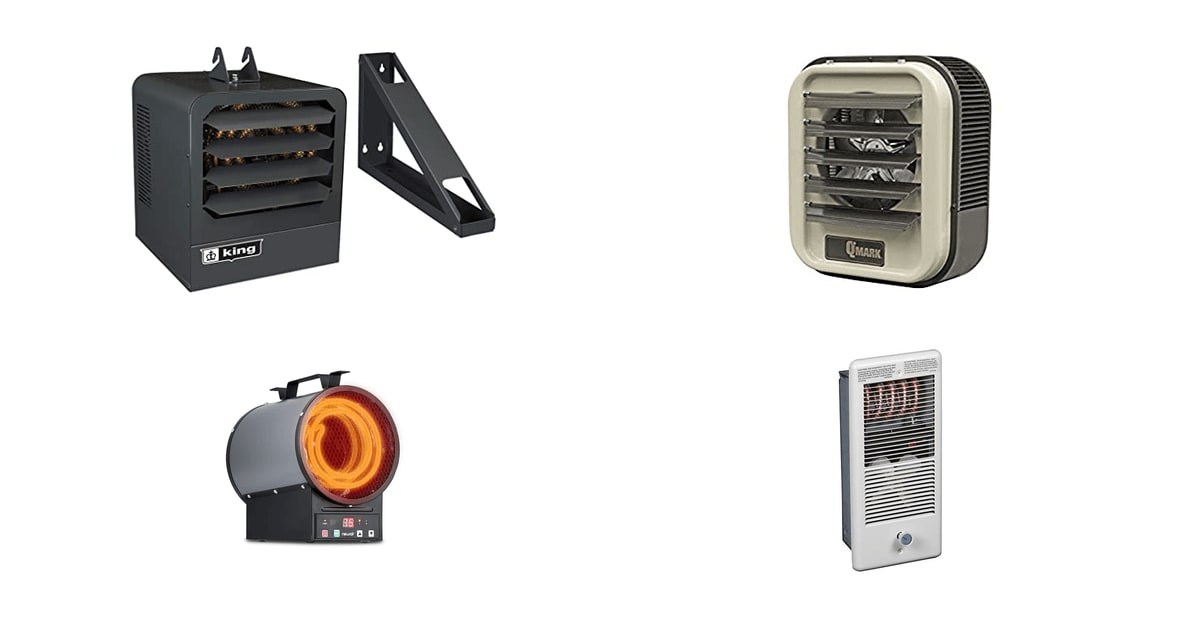
A cold garage isn't just unpleasant. It's the reason your winter projects keep getting postponed, the reason your fingers stop working on a socket wrench in January, and the reason half the country parks a car in a room they never actually use. An electric garage heater fixes that without a gas line, a flue or a combustion safety inspection. You mount it high, wire it to a circuit, set a thermostat, and the space becomes usable. For most people that's the whole appeal: heat you can add to a building that was never designed to have any.
The catch is electricity. These heaters pull serious current, and nearly every worthwhile one needs 240 volts on its own circuit — which usually means an electrician, a breaker and a wire run before you feel any warmth. They also can't beat physics. An uninsulated garage with a leaky door will bleed heat as fast as any of these units can make it, so the honest answer for a drafty two-car space is often insulation first, heater second. And every one of them makes fan noise. There's no silent option here.
We looked at what's actually available, what owners report after a winter or two, and where the specs stop matching the marketing. We think that the Comfort Zone CZ220BK is the best electric garage heater for most people, and that the Newair 4800W is the one to buy if you'd rather plug into a 240-volt outlet than hard-wire anything.
Everything we recommend

Enough heat for a real garage, mounted out of your way

Plugs into a 240-volt outlet, and comes with a remote

Commercial-grade build for a shop you use every day

Serious output for a big or badly insulated space
At a glance
| Product | Wattage | Voltage | Price | |
|---|---|---|---|---|
| KING KB2412-1-T-B2 Electric Unit Heater w/SP ThermostatAlso great | 12.5KW | 240V | $3,143.66 |
| QMark MUH108 Electric Unit HeaterUpgrade pick | — | — | $1,149.75 |
| Newair Electric Garage Heater 240VRunner-up | 4800W | 240V | $189.99 |
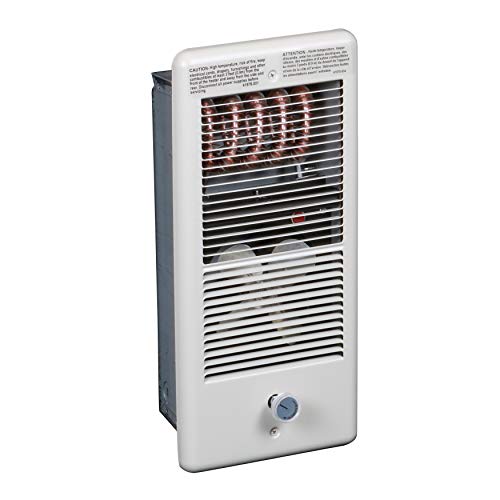 | TPI Corp HF4315TRPW Electric Wall HeaterAlso in lineup | — | — | $286.99 |
| Comfort Zone Hard-Wired Ceiling Mount Garage ElectricTop pick | 5,000-Watt | 240 volt | $96On sale |
How we picked
Real heating capacity. We compared rated wattage against the square-footage claims on each listing and against what owners report in their actual garages. Where the two disagreed, we trusted the owners.
Installation reality. We looked at whether each unit hard-wires or plugs in, what circuit it needs, and whether owners describe the instructions as usable. A heater you can't get installed isn't a heater.
Mounting flexibility. Garage ceilings are crowded and garage floors are full. We favored units that mount overhead or on a wall, with adjustable louvers so you can aim the heat at where you actually stand.
Safety hardware. We checked spec sheets for thermal cutouts, overheat sensors, fan delay and low-voltage control circuits — the features that matter in a dusty, sometimes damp building.
Owner-reported durability. We read owner feedback for patterns rather than one-offs, weighting recurring themes like loose fan hardware or sticking thermostats over isolated complaints.
Top pickOn sale
Enough heat for a real garage, mounted out of your way
Comfort Zone Hard-Wired Ceiling Mount Garage Electric
The Comfort Zone CZ220BK is a hard-wired, ceiling-mounted 5,000-watt heater that puts real warmth into a one- or two-car garage without eating floor space. Heavy steel body, adjustable louvers, a simple two-knob thermostat, and the most consistently positive owner feedback of anything here.
$96fromAmazonList priceThis is the heater that gets the basics right at a size most garages actually need. At 5,000 watts on 240 volts, it's sized for a standard one- or two-car space rather than a closet or a warehouse. Owners describe using it in 20-by-30-foot uninsulated garages with 10-foot ceilings and getting the room comfortable. That's the range where most people are shopping, and a lot of cheaper units quietly fall short of it.
Ceiling mounting matters more than it sounds. A garage floor is already crowded with a car, a mower, bikes and a recycling bin, and a floor-standing heater becomes one more thing to trip over and blow dust around. Bolt this one to a joist or a 2x4 crossmember, angle the bracket, aim the louvers at your workbench, and it heats the space from above where nothing bumps into it. You get your floor back.
Owner feedback is where this one separates itself. People who've run it through full winters report steady heat output and, notably, less fan noise than they expected from something this size. Several mention using it to hold a garage around 45 degrees all season so snow melts off a car and tools don't get frigid. That kind of set-and-forget duty is exactly what a dual-knob thermostat is for.
The construction is plain but sensible. Heavy-gauge steel takes the temperature swings of a poorly insulated building without warping, the louvers let you point the air where you're standing, and there's a thermal cutout that shuts things down if the unit overheats. Nothing here is clever. It's all the stuff that keeps a heater working in year three.
Flaws but not dealbreakers
A recurring theme in owner reports is the fan blade nut working loose in transit or shortly after. Enough people mention it that experienced buyers now pull the fan, clean the factory thread compound off, and add a dab of thread locker before mounting. That's a fifteen-minute job, but it's a fifteen-minute job you shouldn't have to do, and if you skip it you may hear about it later as a rattle or a seized blade.
The instructions are vague. Owners who've installed it describe figuring out the wiring hookup and mounting geometry partly by inspection. If you're comfortable with a 240-volt circuit that's fine; if you're not, you're hiring an electrician anyway, and this is a hard-wired unit with no cord, so there's no plug-and-go option.
It's not silent. Fan-forced heat means a fan running whenever the heater calls for heat, and while owners rate it quieter than expected, you'll hear it over a podcast.
Runner-up
Plugs into a 240-volt outlet, and comes with a remote
Newair Electric Garage Heater 240V
The Newair 4800W is the rare garage heater that arrives with a plug — a 30-amp, three-prong 240-volt cord — so if you already have a suitable outlet you can skip the hard-wiring. It also includes a remote and a digital thermostat, and it can stand on the floor or mount overhead.
$189.99fromAmazonIf you already have a 240-volt outlet in the garage, this is the shortcut. Most heaters in this class are hard-wired, meaning a junction box, conduit and a licensed electrician. The Newair ships with a UL-certified 30-amp plug. Owners who'd previously wired a 240-volt air conditioner or an EV charger describe getting it running the same evening, and several who don't consider themselves electricians say the included wiring information was enough.
The remote and digital thermostat are a genuine convenience, not a gimmick. You can change the temperature, fan speed and timer from across the shop instead of walking over to a knob with cold hands. If the unit ends up ceiling-mounted eight feet up, that's the difference between adjusting it and just leaving it wherever you set it.
It's also small and light — about twelve pounds and roughly the size of a bread box. That makes it easy to put on a workbench, move to a job site, or mount overhead without building a support structure. Owners in well-insulated 500-square-foot shops report holding around 50 to 55 degrees overnight and bringing the space up quickly in the morning.
At 4,800 watts it's very close to our top pick on output, and owners of larger rooms note the air velocity carries across roughly 22 feet and circulates back, which evens out the temperature more than the size suggests. Several were surprised at how quiet it is for a small fan.
Flaws but not dealbreakers
The 500-square-foot rating is optimistic once the space isn't insulated. Owners with standard two-car garages that leak heat report it takes the harsh chill off but doesn't get them to comfortable, and at least one had it professionally installed before concluding it was undersized for the room. Measure your space honestly and be skeptical of the number on the box.
Owner feedback also includes a real share of arrival problems — thermostats that stick and won't shut the unit off, units that don't work correctly out of the carton. Plug it in and run it the week it arrives rather than storing it until the first cold snap, because the return window is easier to use than a warranty claim.
There's no cord in the sense of a long lead. The plug is there, but you'll want the outlet close to where the heater goes.
Upgrade pick
Commercial-grade build for a shop you use every day
QMark MUH108 Electric Unit Heater
The QMark MUH108 is a proper commercial unit heater — copper-clad steel sheath elements with aluminum fins, a pull-through fan design, a linear thermal cutout and a low-voltage control transformer. It's heavier and more serious than the consumer options, and it's built to run for years.
$1,149.75fromAmazonThe design difference is the pull-through fan. Instead of blowing air across the element, this heater draws air through it, so the motor sits in the cooler airstream rather than the hot one. That's the sort of detail that shows up as longevity ten winters later rather than as a number on the box, and it's standard practice on commercial equipment for exactly that reason.
Buy this one if the garage is really a shop. At 35 pounds with a copper-clad steel sheath element and aluminum fins, it's built for a space you heat every day, not one you warm up twice a winter. The element construction sheds heat faster after shutoff, which matters for both safety and element life. The specs read like light industrial equipment because that's what this is.
The safety engineering goes further than the consumer units. A linear thermal cutout protects the entire length of the heating element rather than one sensing point, and most models in this line use a 24-volt control transformer, so the thermostat circuit isn't carrying line voltage. If you're installing controls in a damp garage, that's meaningfully better.
Installation is self-contained: no piping, flues, valves or traps, individually adjustable louvers, and a venturi outlet that gives you the airflow to mount it vertically if a downward throw suits your layout better. That flexibility is worth more than it sounds in a garage with beams, a door track and a garage-door opener already claiming the ceiling.
Flaws but not dealbreakers
This is the most expensive option here, and for a garage you use on weekends the extra money buys durability you may never cash in. A consumer unit that runs a few hundred hours a winter will probably outlast your interest in the garage.
It's also the least consumer-friendly to buy. There's very little owner feedback to draw on compared with the popular models, so you're trusting the engineering and the brand's commercial reputation more than a body of real-world reports. And at 35 pounds you'll want solid mounting and probably a second person.
Also great
Serious output for a big or badly insulated space
KING KB2412-1-T-B2 Electric Unit Heater w/SP Thermostat
The KING KB2412 is a 12.5-kilowatt unit heater — roughly two and a half times the output of our top pick. If you're heating a three-car garage, a pole barn or a workshop that leaks heat everywhere, this is the one with enough capacity to actually win that fight.
$3,143.66fromAmazonOutput is the whole argument for this heater. At 12.5 kilowatts on 240 volts, it's in a different class from everything else here. Where a 5,000-watt unit struggles in a big uninsulated space, this one has the headroom to bring the room up and hold it. If you've already tried a smaller heater and been disappointed, this is what the next step looks like.
That capacity comes with a real electrical requirement. Twelve and a half kilowatts on a single-phase 240-volt circuit is a heavy draw, and you'll need a panel with room for it plus wire sized to match. Price the electrical work before you price the heater, because for some houses the circuit costs more than the unit.
The construction is built for the load. A high-mass steel fin heat exchanger stores and radiates heat rather than glowing and cooling instantly, a built-in fan delay keeps the blower running after the element shuts off so residual heat gets pushed into the room instead of cooking the cabinet, and KING's patented Smart Limit Protection is a manual-reset safety that stays tripped until you deal with whatever caused it.
Controls are simple and self-contained — a built-in thermostat and adjustable louvers, with a mounting bracket in the box. For a heater this size, that's an appealing amount of simplicity. You're not wiring a separate wall stat unless you want to.
Flaws but not dealbreakers
This is far more heater than most garages need, and oversizing has real costs: a bigger circuit, higher instantaneous draw, and short cycling in a small room that never feels evenly warm. If you're heating a standard two-car garage, buying this is a mistake in the expensive direction.
There's almost no owner feedback available for this configuration, so you're going on specifications and the brand's reputation in commercial heating rather than a track record of home installs. And at these power levels, this is not a DIY wiring project for most people.
Who this is for
Buy an electric garage heater if you want to use your garage in winter and don't have — or don't want — gas. That covers most attached and detached residential garages, home workshops, sheds and small studios. It's a good fit if you have panel capacity for a 240-volt circuit, or already have a 240-volt outlet from an air conditioner or EV charger. It's also the right category if you want zero combustion byproducts in a closed space where you might be running a car or working with finishes.
Skip it if your garage is genuinely uninsulated and drafty with a leaky door. Money spent on weatherstripping and door insulation will do more than money spent on watts, and every heater here will lose to an open air gap. Skip it too if your panel is full and an upgrade is out of reach, since 120-volt plug-in heaters — which this guide doesn't cover — won't heat a garage no matter what the box says. We're covering permanently mounted or semi-permanent 240-volt units here, not portable space heaters, radiant tube heaters or gas equipment.
How we picked
Capacity: we matched rated wattage against the square footage each listing claims and against what owners report in real garages, trusting the owners where the two disagreed. Installation: we looked at whether a unit plugs in or hard-wires, what circuit it demands, and whether the instructions are usable by someone who isn't an electrician. Mounting: ceiling and wall mounting with adjustable louvers beat floor-standing, because garage floors are already full. Safety: we checked for thermal cutouts, overheat sensors, fan delay and low-voltage control circuits, which matter in a dusty building. Durability: we read owner feedback for repeated patterns — loose fan hardware, sticking thermostats — rather than isolated complaints.
The competition
This is what our research surfaced in this category, not a survey of everything on the market. Electric unit heaters are a crowded, unglamorous corner of the appliance world, and plenty of capable models from commercial HVAC brands never show up in consumer listings at all. What follows is the one remaining unit we looked at and why it didn't earn a pick.
The TPI Corp HF4315TRPW Electric Wall Heater ($286.99) — The TPI HF4315TRPW is a wall heater, not a garage heater, and that's the whole story. It's a small nine-pound in-wall unit with a single-pole built-in thermostat, explicitly not approved for ceiling mounting, and it's really designed as a like-for-like replacement for an old recessed heater in a bathroom or a hallway. Owners describe using it exactly that way. It does have a genuinely useful trick — it can be positioned for left, right or top discharge, which is why people buy it for awkward retrofits — and if you're replacing an existing wall heater with those dimensions, there aren't many alternatives. But it won't heat a garage, and nothing about it is trying to.
Installation notes
Every heater here except the Newair hard-wires, which means a dedicated 240-volt circuit, correctly sized wire and a breaker to match. Have an electrician size it unless you've done 240-volt work before. Mount high enough that nothing can stack against the intake — owners generally put ceiling units around seven and a half feet up — and leave clearance around the cabinet per the manual, since blocked airflow is what trips thermal cutouts. Before you bolt anything to a joist, run the unit on the ground for a few minutes to confirm the fan spins freely and the thermostat actually cuts out; that's far easier than diagnosing it overhead. Once a year, kill the breaker and vacuum dust off the elements and fan blade. Garage dust is relentless and it's the main thing that makes these heaters smell hot.
Questions we get
Do I need a 240-volt circuit?
For anything that will meaningfully heat a garage, yes. Every pick here runs on 240 volts, and most hard-wire to a dedicated circuit. A 120-volt plug-in heater tops out around 1,500 watts, which is roughly a quarter of what our top pick puts out — fine for a desk, not for a room with a garage door.
How many watts do I need for my garage?
A rough starting point is 10 watts per square foot for an insulated space and closer to 20 for a poorly insulated one. A 400-square-foot two-car garage that's insulated lands near 4,000 to 5,000 watts, which is why the 5,000-watt class dominates this category. If your garage is uninsulated or has high ceilings, size up or expect the heater to run constantly.
Ceiling mount or floor standing?
Ceiling mount, almost always. It frees up floor space you'd otherwise lose, keeps the heater away from cars, dust and spills, and lets you angle the louvers down at where you actually work. The main reason to go freestanding is portability — moving a unit between a shop and a job site, for instance.
Are electric garage heaters expensive to run?
They use a lot of electricity, and there's no way around that. A 5,000-watt heater running continuously uses five kilowatt-hours an hour, so what matters most is how often it cycles. Insulating the space and setting a modest hold temperature — many owners keep their garage around 45 to 50 degrees — cuts running time far more than any efficiency difference between these units.
Is it safe to run one in a closed garage?
Electric heaters don't produce combustion byproducts, so there's no carbon monoxide risk the way there is with gas. That's the main safety advantage of this whole category. Standard cautions still apply: keep flammable liquids, sawdust and rags well clear of the airflow, don't run it near an open fuel container, and make sure the intake isn't blocked.
Why does my new heater smell when I first run it?
Manufacturing oils and dust on the heating elements burn off the first few times a heater runs, and that produces a distinct hot smell for anywhere from a few minutes to an hour. Open the garage door and let it cycle. If the smell comes back months later, it's usually accumulated dust — kill the breaker and vacuum the elements.
Why you should trust us
For this guide:
- We read the manufacturer specifications and listing documentation for every unit here, comparing rated wattage, element construction, mounting options and safety hardware.
- We reviewed owner feedback across hundreds of reports for recurring themes — loose fan hardware, sticking thermostats, and where the square-footage claims break down — rather than isolated complaints.
- We compared each model against how electric unit heaters are specified in commercial HVAC catalogs to judge which builds are genuinely more durable.
- We read owner reviews on every listing, weighted toward the critical ones, because that is where the recurring failures show up.
- We have a systematic way of automatically fetching the latest prices, so the numbers on this page stay current.
- This is a research-focused guide, so the team may not own every product listed — though we often do own the top winners, which gives us extra context for the recommendations.
- We don't accept free products, and the retailer commission never changes which product we recommend.
Sources
Best Garage Heaters – Wirecutter / The New York Times, Wirecutter
Best Garage Heaters – Popular Mechanics, Popular Mechanics
Best Garage Heaters – This Old House, This Old House
Best Garage Heaters – Bob Vila, Bob Vila
Best Garage Heaters – Family Handyman, Family Handyman
Electric Space Heater Safety Guide – U.S. Consumer Product Safety Commission, U.S. CPSC
Electric Resistance Heating – U.S. Department of Energy, U.S. Department of Energy
Residential Electricity Rates – U.S. Energy Information Administration, U.S. EIA
Home Heating Fire Report – National Fire Protection Association, NFPA
King Electric PKB Series Product Specifications, King Electric (Manufacturer)
Fahrenheat FUH54 Product Specifications, Fahrenheat (Manufacturer)
Cost to Install a 240-Volt Outlet – Angi / HomeAdvisor, Angi (2025 Cost Data)
Amazon product listings and owner reviews for all 5 products
Manufacturer specification pages for each product
Some passages in this guide may be paraphrased with AI help. Prices are refreshed automatically.
More like this.
Continue exploring home reviews and recommendations.

The Best 240V Garage Heaters
A cold garage isn't just uncomfortable - it changes what you can do out there. Paint and glue won't cure below about 50°F. Batteries drain faster. And if…

The Best Electric Tankless Water Heaters
Hot water on demand sounds simple. Then you look at the wiring diagram. An electric tankless heater doesn't store anything, so every gallon you use has to…

The Best Pegboard Organizers for Garage Walls
A garage wall is storage you already paid for, and most of us waste it. Tools end up in a drawer, a bucket, or a pile on the workbench, and you spend ten…

The Best Garage Wall Storage Systems
A garage fills up fast. Bikes lean against the car, bags of potting soil slump in a corner, and the snow shovel ends up wherever you dropped it in April.…

The Best Garage Storage Cabinets
A garage cabinet does one job better than any shelf or pegboard: it hides the mess and locks the dangerous stuff away. Open shelving turns into a dust…

The Best Garage Floor Containment Mats
Winter doesn't stay outside. Every time you pull into the garage, your tires and wheel wells carry in slush, road salt and grit, and it all melts into a…