The Best Electric Tankless Water Heaters of 2026
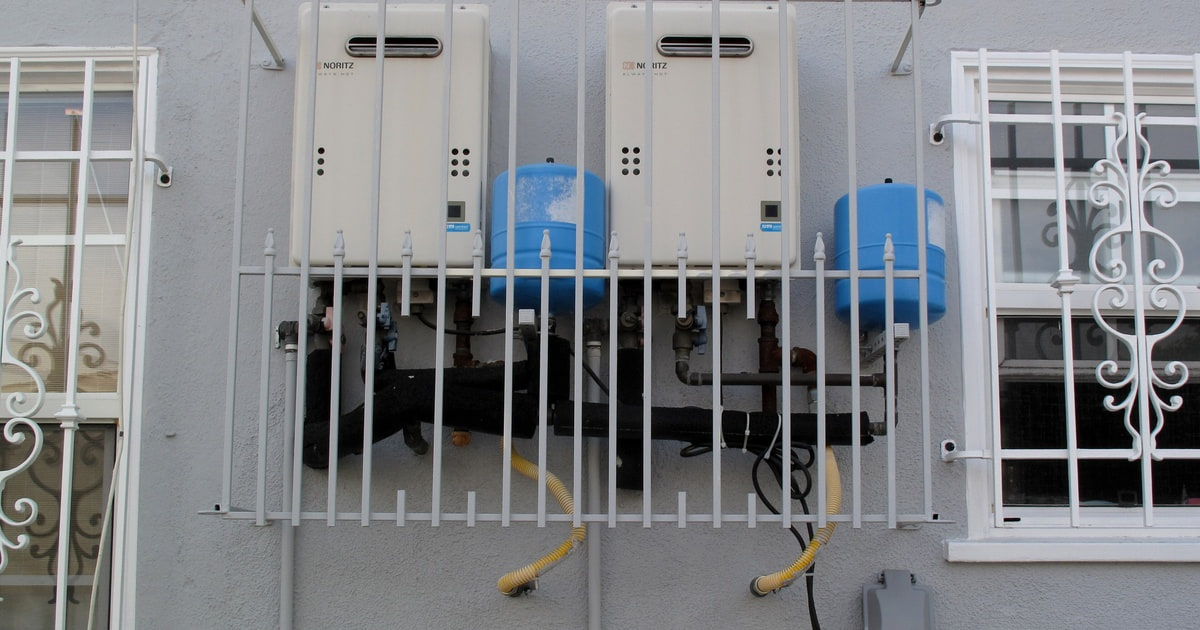
Hot water on demand sounds simple. Then you look at the wiring diagram. An electric tankless heater doesn't store anything, so every gallon you use has to be heated the instant it moves through the pipe. That takes a lot of current. A whole-house unit can pull more power than your dryer, oven and air conditioner combined. The payoff is real, though: you stop paying to keep 50 gallons warm all night, the unit hangs on a wall instead of eating a closet, and nobody gets the cold shower for showering last.
Here's the honest part. No electric tankless heater beats physics. Heating water takes roughly 8.34 BTU per gallon per degree, so your incoming groundwater temperature sets your real flow rate — not the number on the box. A unit that runs two showers in Florida may barely manage one in Minnesota in February. Consumer Reports has noted that electric tankless models often can't keep up with simultaneous demand in cold regions without serious electrical work. And because electricity costs more per BTU than gas, your utility rate decides whether you actually save money.
So the right pick depends less on the heater than on your panel and your climate. We looked at whole-house units, smaller single-bathroom models and tiny point-of-use heaters for a far-off sink, and we leaned hard on the electrical requirements each one states. We think that the Stiebel Eltron Tempra 29 Plus is the best electric tankless water heater for most people, and that the Rheem RTEX-13 is the one to buy if you're heating one bathroom, an apartment or a tiny home.
Everything we recommend

Steady temperature and a sane power draw, for a price

Enough for one bathroom, on a single breaker

A warm-climate unit for modest demand

Three showers at once, if your service can feed it
Prices as of Oct 22, 7:36 AM PT · Details
At a glance
| Product | Power | Electrical draw | Price | |
|---|---|---|---|---|
| Stiebel Eltron Tempra 29 Plus Electric TanklessTop pick | 28.8 kW, 240V | 3 x 40A, 200A service | $756.07 |
| Stiebel Eltron Tempra 36 Plus Tankless WaterUpgrade pick | 36 kW, 240/208V | 150 A, 300A service | Check price |
 | Rheem RTEX-06TAlso consider | 6.5 kW, 240V | — | $174.13 |
| EcoSmart ECO 11 Electric Tankless Water HeaterAlso great | 13 kW, 240V | — | $244.82 |
| Rheem 240V Heating Chamber RTEX-13 Residential TanklessBudget pick | 13 kW, 240V | 54 A | $288.65 |
 | Bosch Thermotechnology Tronic 4000 Electric Tankless WaterAlso consider | 8.5 kW | — | $229 |
 | EcoSmart POU 4T 3.5kW 120v Thermostatic PointAlso consider | 3.5 kW, 120V | — | $146.51 |
Prices as of Oct 22, 7:36 AM PT · Details
How we picked
Electrical honesty. We prioritized units that state amperage, breaker count and minimum service on the listing or spec sheet. A heater that hides its draw sets you up for a surprise electrician bill.
Temperature control. We favored self-modulating or digitally controlled units over fixed-output models, because published reviews and owner feedback consistently tie satisfaction to stable output when a second fixture opens.
Realistic sizing. We checked stated GPM against the temperature rise it assumes, using the roughly 8.34 BTU per gallon per degree relationship. Any unit whose headline flow rate only holds at 70°F incoming water got described that way.
Serviceability. Scale kills electric elements, so we looked for field-serviceable or threaded elements and for owner reports about what happens after a few years on hard water.
Right-sized options. We kept whole-house, single-bathroom and point-of-use units in separate lanes, because a 3.5 kW sink heater and a 36 kW house heater aren't competitors.
Top pick
Steady temperature and a sane power draw, for a price
Stiebel Eltron Tempra 29 Plus Electric Tankless
The Tempra 29 Plus is a whole-house heater with digital control, two temperature presets and a 28.8 kW draw at 240 volts. It needs three 40-amp breakers and 200-amp service, which most newer homes already have — a big deal in this category.
$756.07fromAmazonPrices as of Oct 22, 7:36 AM PT · Details
The electrical requirement is the reason this one wins. It needs three dedicated 40-amp breakers with 8-gauge copper and a minimum of 200-amp service to the house. Plenty of homes built in the last few decades already have 200-amp service, so you may need an electrician and a few breakers rather than a whole new meter base. The 36 kW units in this guide ask for far more. That gap often decides whether this project costs hundreds or thousands.
Temperature stability is the complaint that sinks cheap electric tankless heaters. You turn on the kitchen tap mid-shower and the shower goes lukewarm. Stiebel Eltron's flow control is built to hold output temperature by trimming flow instead of letting the water run cooler, and the brand's reputation among installers rests on exactly that behavior. You also get two temperature memory presets, so switching between a dish-washing temperature and a shower temperature takes one button.
It's a 19-pound box, about 14.5 by 16.6 inches and under 5 inches deep, with no venting. That means you can hang it in a utility closet, a laundry nook or the spot where your old tank used to squat and get the floor space back. If you've been eyeing that closet for a washer-dryer stack or shelving, this is the part of the upgrade you'll notice every week.
On output, be realistic. At 28.8 kW you've got roughly enough power for one shower plus a sink in cold-groundwater regions, and comfortably more than that where incoming water sits near 70°F. The DOE pegs demand-type heaters as 24% to 34% more efficient than tank models in homes using 41 gallons a day or less, and electric resistance tankless units rate around 0.98 to 0.99 UEF. You're not losing energy here. You're just limited by watts.
Flaws but not dealbreakers
It costs considerably more than the EcoSmart and Rheem whole-house units, and the installation isn't cheap either. Three 40-amp circuits mean real copper, real conduit and usually a permit. If your panel is full, add a subpanel to the budget.
Wire it at 208 volts instead of 240 and the maximum draw drops to 21,600 watts, which is a meaningful cut in capacity. That matters in some condos and commercial buildings. Check your actual service voltage before you order.
Owner feedback on Stiebel's larger Tempra units repeatedly circles back to the same lesson: people underestimate the electrical scope. The heater is the easy part.
Budget pick
Enough for one bathroom, on a single breaker
Rheem 240V Heating Chamber RTEX-13 Residential Tankless
The Rheem RTEX-13 is a 13 kW unit drawing 54 amps, with an external digital thermostat accurate to about a degree and copper elements you can service in place. It's rated up to 3.17 GPM and fits a single bathroom, an apartment or a tiny home.
$288.65fromAmazonPrices as of Oct 22, 7:36 AM PT · Details
If you're heating one bathroom, this is the unit to look at first. At 13 kW and 54 amps it needs one circuit, not three, which keeps the electrical work inside what a typical panel can absorb. The listing rates it up to 3.17 GPM — that's a warm-climate number, and you should expect roughly half that where winter groundwater runs cold. For a single shower or a shower plus a low-flow faucet, it's usually enough.
The digital thermostat is the feature that makes it livable. You adjust in one-degree steps on an external display, so dialing in a temperature that's hot enough to clean dishes but not hot enough to scald takes a minute. Self-modulating power control means it only pulls the wattage the current flow needs, instead of running flat out and overshooting. That's the behavior you want when someone flushes mid-shower.
It's a 4-pound box roughly 12.6 by 8.25 inches and under 4 inches deep, with half-inch NPT adapters included and side compression connections. Owners regularly describe straightforward installs in cabins, tiny houses and apartments. The copper immersion elements are threaded and field-serviceable, so a scaled element is a part swap rather than a new heater.
This is also the most widely owned unit in our lineup by a wide margin, which means the failure patterns are well documented. The recurring theme in owner feedback is that hard water shortens element life — a few owners report needing service around the three-year mark. Flush it, or soften your water, and that story changes.
Flaws but not dealbreakers
Thirteen kilowatts is one bathroom's worth of power. You can't run two showers, and in a cold climate you can't reliably run a shower and the kitchen sink at once. Owners in cold-weather cabins say exactly that.
Scale is the known weak point. Several owners describe elements failing after a few years on hard water, and the fix is periodic descaling that many people never do.
Also great
A warm-climate unit for modest demand
EcoSmart ECO 11 Electric Tankless Water Heater
The EcoSmart ECO 11 is a 13 kW, 240-volt heater with self-modulating technology, and EcoSmart configures it for climates where incoming water sits around 60°F. It's a 6.5-pound wall box for a small apartment, condo or warm-region house with light demand.
$244.82fromAmazonPrices as of Oct 22, 7:36 AM PT · Details
Read the one spec that matters here: it's configured for incoming water around 60°F. That's not marketing hedging, it's the sizing assumption. In Florida, Texas, Arizona or coastal California, that's your reality most of the year and this unit does fine for a bathroom. In Michigan in January, incoming water can be 40°F and this heater will struggle. Buy it for the climate it's built for.
Self-modulating control means it ramps power up and down with flow, so a trickle at the bathroom sink doesn't trigger full wattage. For a condo or a small rental where demand is one person at a time, that's the right design. It's also only 6.5 pounds and about 13.5 by 10 inches, so it mounts almost anywhere you can find a stud and a water line.
Compared with the Rheem RTEX-13 at the same 13 kW, the practical difference is control and documentation. Rheem gives you a one-degree external display and published amperage; EcoSmart's listing is thinner on detail. If you want to know exactly what breaker you're buying before the box arrives, the Rheem tells you more.
Flaws but not dealbreakers
The listing is unusually sparse — no stated amperage, no GPM chart, no temperature-rise table. For a device that needs a dedicated high-amperage circuit, that's a real inconvenience; you'll want the manufacturer's install manual before you call an electrician.
It's a one-fixture-at-a-time heater, and in cold-groundwater regions it's a marginal one. Don't buy it hoping to cover a whole house.
Upgrade pick
Three showers at once, if your service can feed it
Stiebel Eltron Tempra 36 Plus Tankless Water
The Tempra 36 Plus is the biggest single-unit residential electric heater here, with digital temperature control and no venting. It draws 150 amps and requires a minimum of 300-amp electric service, so it's for large homes that are already set up for it.
Check priceatAmazonPrices as of Oct 22, 7:36 AM PT · Details
This is the unit for a big house with real simultaneous demand — several bathrooms running at once, a cold climate, or both. At 36 kW it has the headroom that 27 and 28.8 kW units don't. Owners with upgraded service describe running three hot showers at the same time without the temperature sagging. If that's your actual problem, nothing smaller in this guide solves it.
The catch is written right on the listing: it draws 150 amps and needs a minimum of 300-amp service. Most houses have 100 or 200. Upgrading service means the utility, the meter base, a new panel and a permit, and it routinely costs more than the heater. Several owners say plainly that they had to upgrade their service first and that the install outran the unit's price. Price the electrical work before you price the heater.
The hardware itself is simple: digital temperature control, no venting, a 19-pound wall box. Stiebel Eltron's materials claim you'll save at least 15% to 20% on the hot-water portion of your electric bill versus a tank, and the efficiency numbers back the direction of that claim — electric resistance tankless units rate around 0.98 to 0.99 UEF, with no standby loss. Whether it pencils out depends entirely on your utility rate.
One quirk worth knowing: if the power light on the front cover blinks, the unit is telling you it can't heat the flow you're asking for, and the fix is to reduce flow. That's useful feedback, but it also means the heater has a ceiling and will tell you when you've hit it rather than quietly delivering lukewarm water.
Flaws but not dealbreakers
The 300-amp service requirement disqualifies most homes without a major, expensive upgrade. This is the single biggest reason to buy something smaller.
Owners report the flow rate feels restricted compared with a tank heater, which is how flow control maintains temperature. You get consistent hot water, not a firehose.
A few owners report never reaching the high temperatures they expected, especially with cold incoming water and multiple fixtures open. That's the physics of a 36 kW ceiling, but it's a disappointment if you sized by hope rather than by chart.
Who this is for
Buy an electric tankless heater if you're replacing a failing tank in a home with adequate electrical service, if you're outfitting an ADU, cabin, tiny home or garage shop, or if you need hot water at a sink that sits a long pipe run from your water heater. Warm-climate households get the most out of these units, because low temperature rise means high usable flow. If you want your closet back and you don't want to pay to keep 50 gallons hot around the clock, the appeal is obvious.
Don't buy one if you have 100-amp service and no appetite for an upgrade, if you need two showers running simultaneously in a cold climate, or if your electricity rate is high and gas is cheap where you live — a gas tankless or a heat-pump tank may cost less to run. This guide covers residential electric tankless units only: no gas models, no heat-pump or storage tanks, and no commercial multi-unit cascades. We also don't cover whole-house water softeners, though you may want one.
One more scope note: nothing here works during a power outage. If outage-proof hot water matters to you, a tank heater holds its last 40 to 50 gallons and these units hold nothing.
How we picked
We built this guide around the handful of specs that actually determine whether an electric tankless heater works in your house. Electrical draw: we prioritized units that publish amperage, breaker count and minimum service, because a panel upgrade can cost more than the heater. Temperature control: self-modulating and digitally controlled units hold output steady when a second tap opens, and that's what owner feedback ties satisfaction to. Realistic flow: we checked headline GPM figures against the temperature rise they assume, since incoming water temperature can cut available flow by more than half. Serviceability: scale is the main failure mode, so field-serviceable elements and documented maintenance matter. Right-sized lanes: we treated whole-house, single-bathroom and point-of-use heaters as separate jobs rather than ranking them against each other.
Other electric tankless water heaters of 2026 worth considering
If you want hot water at one distant sink with real temperature control: The Rheem RTEX-06T — The Rheem RTEX-06T is a 6.5 kW point-of-use unit with thermostatic control that holds within a degree of your setting, in a 6-by-6-inch, 4-pound box that fits under a sink. It needs a dedicated 240-volt, 30-amp circuit, which is more wiring than a 120-volt plug-in sink heater but buys you better temperature stability and more capacity. Owners are blunt about the limits: when Rheem says two faucets, they mean two low-flow bathroom faucets, not a kitchen sink. Buy it for a guest bath or a casita, not a shower.
If you want a point-of-use unit for low-flow faucets: The Bosch Thermotechnology Tronic 4000 Electric Tankless Water — The Bosch Tronic 4000 is an 8.5 kW under-sink heater that activates at flows as low as 0.55 GPM, which makes it a good match for the aerated low-flow faucets common in offices and public restrooms. Bosch claims 96% thermal efficiency with no standby loss, and there's no venting or water storage to maintain. It's the highest-wattage point-of-use unit here, so it handles a warmer rise than the 3.5 kW models. The downside is a thin ownership record — far fewer owners have weighed in than on the Rheem or EcoSmart units, so the long-term reliability picture isn't clear yet.
If you only need warm water at a handwashing sink: The EcoSmart POU 4T 3.5kW 120v Thermostatic Point — The EcoSmart POU 4T is a 3.5 kW, 120-volt thermostatic heater, small enough at 11 by 11 by 7 inches to tuck in a vanity cabinet. It's the lowest-power unit here and the simplest to wire, though note that owners report it still wants a 30-amp breaker despite running on 120 volts. Be realistic about output: at 3.5 kW you get warm water at a trickle, and owner feedback includes a meaningful number of complaints about temperature and early failures. It's fine for rinsing hands in a utility sink. It's not fine for dishes or anything you'd call a shower.
The competition
Here's what our research surfaced in this category, not everything sold. Electric tankless is a crowded shelf, and every heater that came up repeatedly in shopping research and owner discussion ended up either as a pick above or in the also-consider list — nothing else cleared the bar for a write-up here.
Installation and maintenance notes
Treat the electrical work as the main project. Get the install manual, confirm your service size and panel space, and hire a licensed electrician — permits are usually required, and an inspector will want to see the breaker count and wire gauge the manufacturer specifies. On the plumbing side, install isolation valves with service ports if your unit doesn't include them; they turn descaling into a 45-minute job with a pump and a jug of vinegar instead of a disassembly. Hard water is the main thing that kills these heaters, so plan to flush annually, more often if you've got visible scale on your fixtures. A softener helps more than any maintenance habit. And know your incoming water temperature, since that number, not the GPM on the box, sets what you'll actually get.
Questions we get
Are electric tankless water heaters worth it?
They're worth it if your electrical service can handle one and your demand is modest or your climate is warm. The DOE says demand-type heaters can be 24% to 34% more efficient than storage tanks in homes using 41 gallons a day or less, and they typically last more than 20 years versus 10 to 15 for a tank. But electricity costs more per BTU than gas, so your utility rate decides whether the efficiency turns into savings.
What size electric tankless water heater do I need for a family of four?
In a warm climate, a 24 to 28 kW unit usually covers a family of four. In a cold one, you're looking at 36 kW or a gas tankless. The math is unforgiving: raising 2.5 GPM by 70°F takes about 25.7 kW at perfect efficiency, so a 27 kW unit is already near its ceiling with one showerhead and a faucet running in winter.
How many amps does a whole-house electric tankless water heater need?
A lot. A 27 kW unit at 240 volts draws about 112.5 amps, which is why these typically require three 40-amp double-pole breakers and at least 200-amp service. The 36 kW Tempra draws 150 amps and asks for 300-amp service. Check your panel's capacity and free slots before you shop.
Will my electrical panel support a 27 kW tankless water heater?
Maybe, if you have 200-amp service and room for three double-pole breakers. The practical test is a load calculation that accounts for everything else you run — range, dryer, HVAC, EV charger. An electrician can tell you in one visit, and that visit is cheaper than returning a heater.
Do electric tankless water heaters need to be descaled?
Yes, especially on hard water. Minerals bake onto the heating elements and gradually cut both output and element life. Flushing with a vinegar or descaler solution once a year is the standard recommendation, and owner feedback suggests units that never get flushed on hard water can lose elements in a few years. Isolation valves with service ports make this much easier.
Do electric tankless water heaters work during a power outage?
No. There's no stored hot water and no way to heat without power, so an outage means cold showers immediately. A tank heater at least gives you whatever's left in the tank. If outages are common where you live, factor that in.
Why you should trust us
For this guide:
- We read manufacturer spec sheets and listed electrical requirements for every unit here, and compared stated amperage and breaker counts against standard electrical calculations.
- We reviewed guidance from the U.S. Department of Energy and ENERGY STAR on demand-type heater efficiency, UEF ratings and expected lifespan, plus Consumer Reports' reporting on electric tankless performance in cold regions.
- We read owner feedback across these listings for recurring themes — scale-related element failures, installation scope surprises, and the gap between rated and real-world flow.
- We read owner reviews on every listing, weighted toward the critical ones, because that is where the recurring failures show up.
- We have a systematic way of automatically fetching the latest prices, so the numbers on this page stay current.
- This is a research-focused guide, so the team may not own every product listed — though we often do own the top winners, which gives us extra context for the recommendations.
- We don't accept free products, and the retailer commission never changes which product we recommend.
Sources
Tankless or Demand-Type Water Heaters - U.S. Department of Energy, U.S. DOE
Water Heater Buying Guide / Tankless Water Heaters - Consumer Reports, Consumer Reports
Estimating Costs and Efficiency of Storage, Demand, and Heat Pump Water Heaters - DOE, U.S. DOE
Tempra Plus Series Specifications - Stiebel Eltron, Stiebel Eltron
Rheem Electric Tankless Water Heaters - Rheem, Rheem
EcoSmart Electric Tankless Water Heaters - EcoSmart, EcoSmart
Bosch Tronic 3000 T Mini-Tank/Point-of-Use Specifications - Bosch Thermotechnology, Bosch
Water Heating - ENERGY STAR, ENERGY STAR
Tankless Water Heater Guide - This Old House, This Old House
Tankless Water Heater Reviews - Wirecutter / Popular Mechanics / Family Handyman roundups, Family Handyman
Amazon product listings and owner reviews for all 7 products
Manufacturer specification pages for each product
Some passages in this guide may be paraphrased with AI help.
Product prices and availability are accurate as of the date/time indicated and are subject to change. Any price and availability information displayed on Amazon.com at the time of purchase will apply to the purchase of this product.
More like this.
Continue exploring appliances reviews and recommendations.

The Best Water Heater Insulation Blankets
Your water heater sits there all day keeping 40 or 50 gallons hot, whether you're home or not. If the tank is old, a lot of that heat leaks straight into…

The Best Electric Garage Heaters
A cold garage isn't just unpleasant. It's the reason your winter projects keep getting postponed, the reason your fingers stop working on a socket wrench…

The Best Woks for High-Heat Cooking
A wok does one thing no skillet can: it gets brutally hot and stays hot while you keep the food moving. That's how green beans blister at the edges and…

The Best Fireplace Heaters
A fireplace heater does two jobs at once, and you'll care about both. It warms the room you're actually sitting in, and it gives that room something to…

The Best Ceramic Heaters for Home Offices
A home office gets cold in ways the rest of the house doesn't. You're sitting still for hours, often in a converted bedroom or a garage corner the furnace…

The Best Smart Thermostats for Heat Pumps
A heat pump asks more of a thermostat than a furnace does. It has to know when to run the compressor, when to give up and call for backup strips, and when…