The Best Water Heater Insulation Blankets
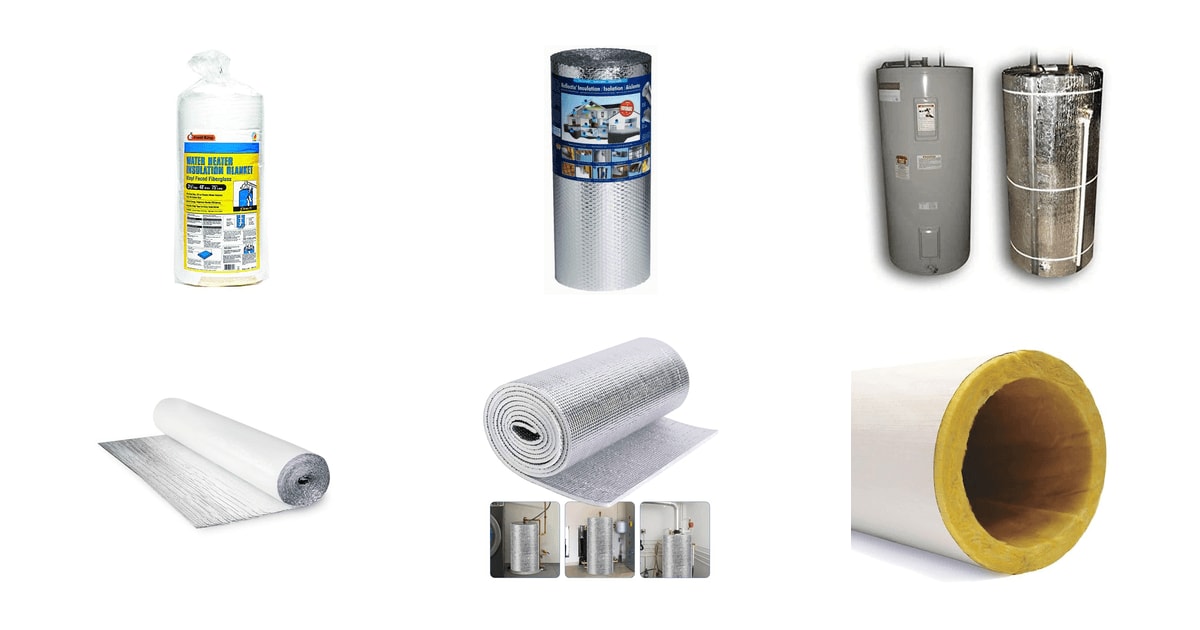
Your water heater sits there all day keeping 40 or 50 gallons hot, whether you're home or not. If the tank is old, a lot of that heat leaks straight into a cold basement. The fix is cheap: wrap the tank in an insulating blanket. The Department of Energy puts the reduction in standby heat loss at 25 to 45 percent on a poorly insulated tank, which works out to a 7 to 16 percent cut in what you spend heating water. It's an hour of work with scissors and tape.
Here's the catch nobody puts on the box. A blanket only pays off if your tank is losing heat in the first place. Water heaters built in the last decade come wrapped in thick foam from the factory, usually R-24 or better, and adding a blanket to one of those buys you almost nothing. There's a simple check: an hour after a heat cycle, press your palm flat against the side of the tank. Warm means you're heating the room. Cool means leave it alone.
The other thing to know is that fit is where these products fail. Tanks vary in height and circumference, blankets come in one size, and owners of both budget wraps and name-brand fiberglass run into coverage that stops short. We think that the Frost King SP57/11C is the best water heater insulation blanket for most people, and that the AES Industries Water Heater Blanket Jacket is the one to buy if you have an 80-gallon tank or you'd rather not handle fiberglass.
Everything we recommend
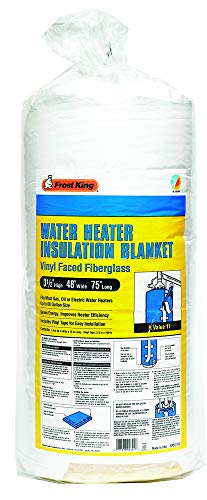
The highest R-value you can buy off the shelf, if you'll wear gloves

Covers big tanks and skips the itch, for a bit less R-value
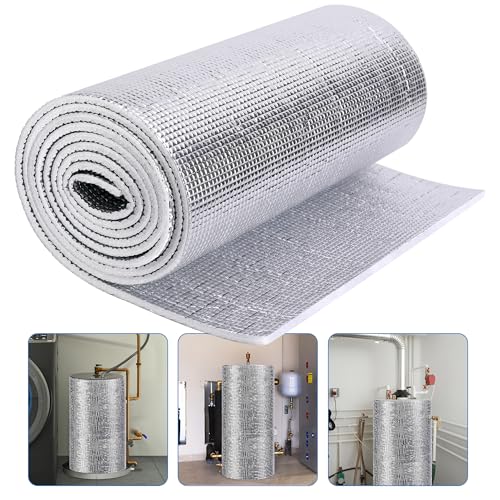
Cheap, easy, and probably too short for a 50-gallon tank

Cut-to-fit reflective roll for tanks nothing else wraps
At a glance
| Product | R-Value | Thickness | Price | |
|---|---|---|---|---|
| Frost King SP57/11C All Season Water HeaterTop pick | R10 | 3" Thick | $32.54 |
| Reflectix BP24025 24-Inch by 25-Feet Bubble PackUpgrade pick | — | — | $29.98 |
| AES Industries Water Heater Blanket Jacket InsulationAlso great | R8.9 | 6mm | $34.12On sale |
 | EcoFoil Double Bubble Insulation Roll 48 InchAlso consider | — | 6.35mm | $93.99 |
| Water Heater Blanket Insulation WrapBudget pick | — | — | $26.99 |
 | Owens Corning Pipe InsulationAlso in lineup | — | 1" Wall | $34.37 |
How we picked
Rated R-value. We looked for a published R-value on the spec sheet and treated R-8 as the floor for mild climates and R-10 as the target for IECC zones 5 through 8. Products without any published number got ranked below rated ones, because there's no way to compare them honestly.
Fit and coverage. We compared stated dimensions against common 40-, 50-, 60- and 80-gallon tank sizes, then checked owner feedback for reports of blankets running short. Coverage complaints are the single most common failure mode in this category.
Gas compatibility. A blanket used on a gas heater has to leave the combustion air intake, the flue collar and the gas control valve clear. We noted which listings state gas compatibility explicitly and which are electric-only in practice.
Installation burden. We weighed whether a product needs gloves, sleeves and a respirator, and whether tape and a cutting tool come in the box. Owner reports on how long the job actually takes carried more weight here than manufacturer claims.
Safety ratings. We favored products with a stated fire rating and non-toxic, non-carcinogenic construction, since this material sits against a hot appliance for a decade or more.
Top pick
The highest R-value you can buy off the shelf, if you'll wear gloves
Frost King SP57/11C All Season Water Heater
The Frost King SP57/11C is 3 inches of vinyl-backed fiberglass rated R10, sized to wrap a 40- to 60-gallon tank. It's the strongest option here for a cold basement or an unheated garage, and it costs less than the softer, easier-to-handle alternatives.
$32.54fromAmazonIf your tank lives somewhere cold, thickness is what matters. Heat leaves a warm steel tank by conduction into the surrounding air, and the only real defense is a lot of insulating material. Three inches of fiberglass at R10 gives you more of that than anything else here. The foil-bubble rolls reflect radiant heat well, but radiant heat isn't your main problem in a 40-degree basement. This is.
The dimensions cover the tanks most people actually own. At 48 by 75 inches, it wraps a standard 40- to 60-gallon cylinder with a little to trim, and the listing covers gas, oil and electric tanks. One owner reports it going around a 67-gallon Rheem with a 63-inch circumference, so there's some margin past the stated range. Measure your tank's height and circumference before you order anyway.
Frost King has been making these for decades, and the design has settled into something predictable. You unroll it around the tank, tape the seam with the roll of tape in the box, and cut openings for the thermostat panel and the pressure relief valve. On an electric unit you leave the top open. On a gas unit you leave the combustion air intake at the bottom and the flue collar at the top completely clear.
The vinyl backing does more than look tidy. Bare fiberglass sheds fibers into the air every time you brush against it, and a garage that goes through freeze-thaw cycles will find its way into unprotected insulation. The backed face keeps the material contained and gives you something to tape against. It also means the finished wrap looks like a product rather than a pile of attic scrap, which matters if the tank is somewhere you see it.
Flaws but not dealbreakers
It's fiberglass, and it behaves like fiberglass. Wear gloves and long sleeves, because the fibers itch on contact and get worse if you scratch. Several owners describe the installation as effective but awkward, especially in a tight utility closet or a sheet-metal shed where there's barely room to get your hands behind the tank. Three inches of bulk needs clearance you might not have.
Quality control isn't perfectly consistent. Most owners get what they expect, but a minority report material that arrived thin and loose, with foil facing that tore during handling. The packaging also arrives tightly folded and rolled with almost no instructions, so plan on a few minutes of figuring out which way it goes.
It stops at 60 gallons. If you have an 80-gallon tank, this isn't the one.
Also greatOn sale
Covers big tanks and skips the itch, for a bit less R-value
AES Industries Water Heater Blanket Jacket Insulation
The AES Industries jacket is rated R8.9 and fits tanks from 40 to 80 gallons, with no fiberglass to handle. It ships with tape and a cutting knife, and owners consistently describe the install as an easy hour in normal clothes.
$34.12fromAmazonList priceThis is the one to buy if your tank is bigger than 60 gallons. Most blankets quietly top out there, which leaves owners of 80-gallon units picking between products that don't fit and rolls they have to cut themselves. AES covers 40, 50, 60 and 80 from one SKU, and it works on both gas and electric. If you manage a couple of rentals, buying one part number for every tank is worth something on its own.
The material is the real draw. There's no fiberglass in it, so you can install this in a T-shirt without gloves or a mask. Owners who've wrestled a fiberglass blanket in a crawl space before are the ones who rave loudest about this. The kit is unusually complete too: tape and a cutting knife come in the box, and people who aren't handy describe finishing in under an hour without stress.
AES builds the jacket to hold a space between the insulation and the tank wall rather than pressing flat against the steel. That air gap is doing some of the work, which is how a thinner product gets to a respectable rated number. The company claims up to 40 percent heat loss reduction. There's no independent lab data backing that figure, so treat it as a manufacturer number rather than a measurement.
Owner feedback on this listing skews strongly positive, and the recurring themes are fit and completeness rather than raw thermal performance. People report enough material to wrap the tank with some left over, clear instructions, and a seller who picks up the phone. That's not nothing in a category where the most common complaint is a blanket that ran out three-quarters of the way around.
Flaws but not dealbreakers
R8.9 is below the Frost King's R10, and it costs more. In a genuinely cold space, the thicker fiberglass will do more per dollar. You're paying for comfort during installation and for the size range, not for better numbers.
It's thinner than the pictures suggest. More than one owner opened the box expecting something substantial and found a fairly slim jacket. It performs because of the air gap design, not because there's much material there, so if you're used to 3-inch fiberglass it will feel insubstantial in hand.
Budget pick
Cheap, easy, and probably too short for a 50-gallon tank
Water Heater Blanket Insulation Wrap
The moonoom wrap uses aluminum foil over a pearl cotton core, cuts with scissors, and installs in minutes with no protective gear. It's a fine low-commitment upgrade over a bare tank in a mild climate, provided you check the length against your own tank first.
$26.99fromAmazonThe appeal here is how little is at stake. It's the least expensive option on this list, it needs no gloves, no knife and no real skill, and if you decide it wasn't worth it you've lost very little. For a renter who can't modify much, or for someone who wants to see whether wrapping the tank changes anything before committing, that's a reasonable trade.
Owners in crawl spaces and uninsulated basements report it doing the basic job through a winter, and a fair number end up using the leftovers somewhere else entirely — attic stairs, a window, a shed wall. It cuts with kitchen scissors. The chevron-textured foil surface holds its shape better than plain foil and gives the finished wrap a tidier look than raw fiberglass.
Understand what you're getting thermally, though. Pearl cotton and foil is a thin sandwich next to 3 inches of fiberglass, and moonoom publishes no R-value at all. That's the honest limit of this product: you can't compare it on paper to an R8.9 or R10 blanket, so it belongs in a mild climate or on a tank that's already reasonably insulated and just needs a little help.
Flaws but not dealbreakers
Length is the recurring problem. At 13 feet by 15 inches, it doesn't reliably go around a 40-gallon tank top to bottom, and owners with 50-gallon tanks report covering only the upper half. Some people wrap it twice around a smaller tank; others end up buying a second roll. Measure your tank's circumference and height, then do the arithmetic before ordering.
The missing R-value isn't a paperwork issue. Without a published number there's no way to know whether this beats or badly trails a rated blanket in your particular basement, and no third party has checked. In IECC zone 4 or colder, spend the extra on something rated.
Upgrade pick
Cut-to-fit reflective roll for tanks nothing else wraps
Reflectix BP24025 24-Inch by 25-Feet Bubble Pack
The Reflectix BP24025 is a 24-inch by 25-foot roll of seven-layer foil and bubble insulation that you cut to any shape with scissors. It's the answer for a tall-boy or otherwise odd tank, and there's enough left over to wrap the first several feet of pipe.
$29.98fromAmazonPre-cut blankets assume your tank is a standard cylinder in a standard size. Plenty aren't. If you have a tall-boy, a bladder tank, a lowboy tucked under a stair, or anything else that a 48-by-75 sheet won't wrap cleanly, a roll you cut yourself solves the problem that no sized product will. Twenty-five feet is a generous amount of material for one tank.
The extra length is the quiet argument for buying this. After you've wrapped the tank body you'll still have material for the first six feet of hot and cold supply lines leaving the heater, which is where a meaningful chunk of distribution loss happens. That turns a tank project into a whole heat-loss project for one purchase, and it's why we'd point most homeowners here rather than at dedicated pipe insulation.
It's genuinely pleasant to work with. Seven layers of foil, polyethylene and bubble, no fibers, no itching, no mask. It weighs about a pound, so you can handle a full roll alone on a stepladder. Owners use it on garage doors, van windows and space-heater surrounds as often as on tanks, and the feedback across all of those uses is unusually consistent.
One installation detail decides whether it works. A radiant barrier needs an air gap facing the reflective surface. Pressed flat against hot steel it becomes a thin conductive layer and most of the benefit disappears. Use standoffs, a loose second wrap, or a slight standoff at the seams so the foil isn't in direct contact all the way around.
Flaws but not dealbreakers
It's less insulation than fiberglass in absolute terms. In a garage that drops into the teens, conduction dominates and 3 inches of glass wool will beat a quarter-inch of foil and bubble, comfortably. Save this for mild climates, pipe runs, or as a supplemental layer over a fiberglass blanket.
A 25-foot roll is more than a single-tank job needs, so you'll have leftovers unless you have somewhere else to put them. And the cutting and fitting takes longer than unrolling a sized blanket — expect to spend real time on the seams.
Who this is for
Buy a blanket if your water heater predates the tighter federal efficiency rules, sits in an unconditioned basement, garage or crawl space, and feels warm to the palm an hour after a heat cycle. That combination is where the payback is fast and obvious. Check the EnergyGuide label too: if the factory R-value is below R-24, you have room to improve. Renters can do this as well, since nothing here is permanent.
Skip it if your heater is new, or if the tank surface feels cool to the touch — modern foam-wrapped tanks give you very little to recover. Skip it entirely if you have a tankless unit, which stores no water and has no standby loss to prevent. And if your tank is past 15 years old, think of a blanket as a bridge rather than a solution; replacing an aging electric resistance heater with a heat pump model cuts water heating energy far more. This guide covers storage-tank blankets and wraps for residential use, not the heaters themselves, and not commercial-scale insulation.
How we picked
We compared spec sheets, manufacturer claims and owner feedback across every product here against five things. R-value: a published number, R-8 minimum in mild climates and R-10 or better where winters get cold. Fit: stated dimensions checked against real 40- to 80-gallon tanks, with owner reports of short coverage weighted heavily. Fuel type: whether the product is rated for gas heaters, where the combustion intake, flue collar and control valve must stay clear. Install burden: whether you need gloves and sleeves, and whether tape and a knife come in the box. Safety: a stated fire rating and fiber-free or contained construction, since this material lives against a hot appliance for years.
Other water heater insulation blankets worth considering
If you want a wider roll with a stated fire rating: The EcoFoil Double Bubble Insulation Roll 48 Inch ($93.99) — The EcoFoil Double Bubble roll is 48 inches wide instead of 24, which means fewer seams on a tall tank, and it carries a Class 1 / Class A fire rating along with a claimed 96 percent radiant reflectivity. It's fiber-free and cuts with scissors like the Reflectix. What gives us pause is the listing itself: a buyer reports material that arrived thinner than described and not the double-bubble construction advertised, and the ratings on this listing are thin enough that we can't tell whether that was a one-off. It also costs considerably more than the Reflectix for the same basic idea. Buy it if the width and the fire rating matter to your install, and check what shows up against the specs.
The competition
This is what our research turned up in a category that's mostly generic wraps and repackaged rolls, not a survey of everything sold. A few listings that come up in searches for water heater insulation aren't really water heater products at all, and we've flagged those separately below rather than pretend they compete.
Installation notes
Turn the thermostat to its lowest setting before you start, and note exactly where the access panel and the pressure relief valve sit. Wrap the body, tape the seam, then cut snug openings for those two — slightly undersized beats too large. On an electric heater, leave the top uncovered so heat can escape the element panels. On a gas heater, three areas stay completely clear: the combustion air intake at the base, the flue collar and draft diverter up top, and the gas control valve on the side. Blocking any of them risks carbon monoxide or fire, so use only a blanket rated for gas. Mark the panel location on the outside with a marker so you can find it later. Check your warranty first, too, since some Rheem and AO Smith documentation notes that aftermarket blankets can affect coverage.
Questions we get
Do water heater blankets actually save money, or are they a waste?
They save real money on older tanks with thin factory insulation. The Department of Energy puts the reduction in standby heat loss at 25 to 45 percent, which translates to roughly 7 to 16 percent off your annual water heating cost. Payback of five to twelve months is realistic at average U.S. electricity rates. On a newer tank rated R-24 or higher, the savings are small enough that you may never recover the cost.
What should I use on a gas water heater?
Use a blanket explicitly rated for gas, with openings you can cut for the combustion air inlet, the flue collar and the gas control valve. The AES Industries jacket states compatibility with both gas and electric heaters and covers 40- to 80-gallon tanks. Never wrap a gas unit in a way that blocks combustion air or the flue — that's a carbon monoxide and fire hazard, not a performance issue. Check your local code before you start.
Can I insulate a tankless water heater?
No. A tankless heater doesn't store hot water, so there's no standby loss for a blanket to prevent. Wrapping one does nothing useful and can interfere with required ventilation clearances or the electronics. If you want to cut heat loss on a tankless system, insulate the hot water supply pipes instead.
What R-value do I need?
R-8 is a reasonable floor for mild climates in IECC zones 1 through 3, and R-10 or better is the target for zones 5 through 8. The Frost King SP57/11C hits R10, which is why we recommend it for cold basements and garages. In a hot climate where the problem is radiant heat off a sun-baked slab, a reflective barrier makes more sense than high-R fiberglass. Avoid anything with no published R-value if you need to compare on performance.
How long does a blanket last?
A fiberglass blanket that stays dry generally holds up 10 to 15 years before the material compresses and loses effectiveness. Foil-bubble products last about as long provided the foil faces stay intact and unpunctured. Replace any blanket that gets wet, moldy, badly compressed or torn. Give it a look once a year when you check the rest of the heater.
Can I just use a moving blanket or some foam board?
No on both. Foam board is a fire risk against a hot appliance and is miserable to cut and seal around a cylinder. Moving blankets insulate almost nothing and carry no rating for use near heat. Stick to products made and rated for water heaters — the safety ratings are the whole point, and unrated material won't deliver the savings that justify the project.
Why you should trust us
For this guide:
- We read the manufacturer spec sheets and listing details for every product here, comparing stated R-values, dimensions and fire ratings against the tank sizes most households own.
- We reviewed published Department of Energy guidance on standby heat loss and payback to sanity-check the savings claims these products make.
- We read through owner feedback for each listing, looking for repeated themes around fit, coverage and material quality rather than one-off complaints.
- We read owner reviews on every listing, weighted toward the critical ones, because that is where the recurring failures show up.
- We have a systematic way of automatically fetching the latest prices, so the numbers on this page stay current.
- This is a research-focused guide, so the team may not own every product listed — though we often do own the top winners, which gives us extra context for the recommendations.
- We don't accept free products, and the retailer commission never changes which product we recommend.
Sources
Water Heating — Energy Saver Guide, U.S. Department of Energy
Insulate Your Water Heater Tank — Do-It-Yourself Savings Project, U.S. Department of Energy
Pipe Insulation for Energy Savings, U.S. Department of Energy
ENERGY STAR Certified Water Heaters, ENERGY STAR / U.S. EPA
Water Heater Buying Guide, Consumer Reports
Amazon product listings and owner reviews for all 6 products
Manufacturer specification pages for each product
Some passages in this guide may be paraphrased with AI help. Prices are refreshed automatically.
More like this.
Continue exploring home reviews and recommendations.

The Best Electric Tankless Water Heaters
A tankless water heater doesn't store anything. It heats water as it flows past, which means you're not paying to keep fifty gallons warm while you're at…

The Best Garage Door Insulation Kits
A bare steel garage door is basically a heat sink bolted to your house. In July it soaks up sun all afternoon and radiates it into the space where your…

The Best Window Insulation Kits and Draft Stoppers
A drafty house doesn't announce itself. You just notice that the room with the big window stays cold no matter how high you set the thermostat, or that…

The Best Spray Foam Insulation Cans
A can of foam is a small fix for one of the biggest problems in your house. Air leakage accounts for 25 to 40 percent of heating and cooling losses in a…

The Best Attic Stair Insulation Covers
A pull-down attic stair is a hole in your ceiling with a thin piece of plywood over it. That panel does almost nothing thermally - think single-pane…

The Best Weighted Blankets
A weighted blanket does one simple thing: it presses down on you, evenly, all night. That steady pressure is called deep pressure stimulation, and the…