The Best Spray Foam Insulation Cans
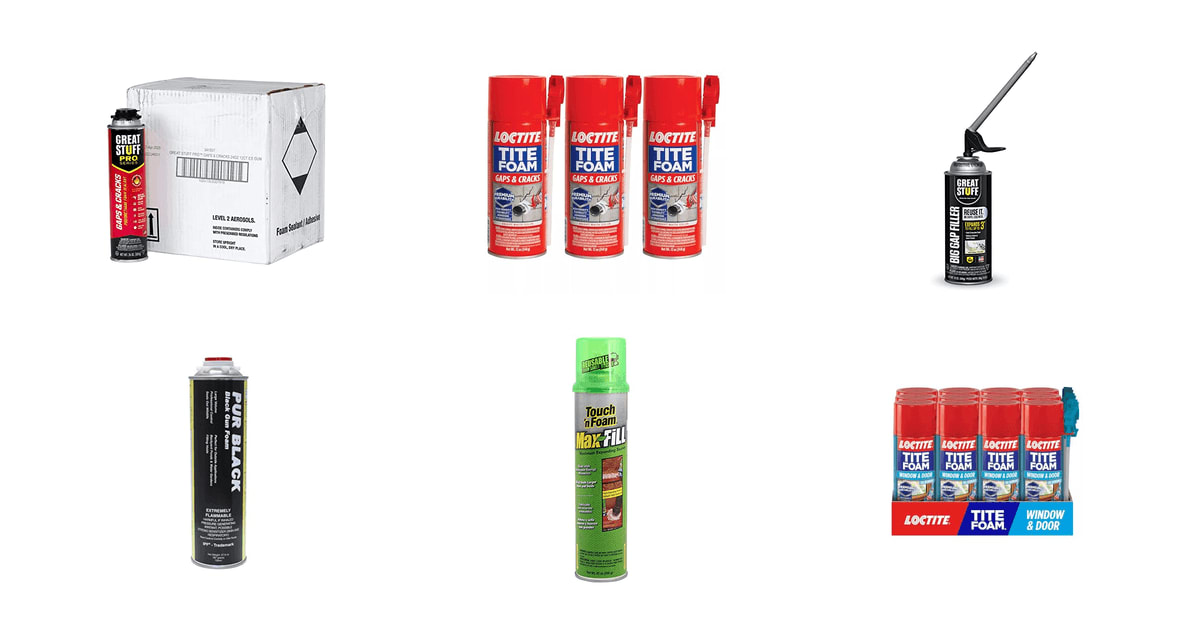
A can of foam is a small fix for one of the biggest problems in your house. Air leakage accounts for 25 to 40 percent of heating and cooling losses in a typical American home, according to Lawrence Berkeley National Laboratory, and most of it sneaks through gaps you could seal in an afternoon. Rim joists. The ragged hole where the dryer vent goes through the wall. The half-inch canyon behind a window jamb. You don't need a contractor for any of that.
Here's the part nobody puts on the label: this stuff is messy, and every can fights you a little. Foam keeps growing after it looks finished, so you'll overfill something and spend an hour trimming it. It sticks to skin far better than it sticks to masonry. Straw-applied cans are basically one-use items, no matter what the reusability claim says. And canned foam isn't a substitute for professionally sprayed foam on a whole wall assembly — it's a gap filler, and it's good at gaps.
So the real question is which can matches your project. A window jamb wants a foam that barely expands. A rim joist wants one that swells to fill a void. A pipe running through a fire-rated floor wants a listed firestop, not either of those. We think that the Great Stuff PRO Gaps & Cracks is the best spray foam insulation can for most people, and that the Loctite Tite Foam Gaps & Cracks is the one to buy if you only have a few small gaps and don't want to own a dispensing gun.
Everything we recommend

The precise, reusable choice once you have more than a few gaps

Simpler and cleaner for a handful of small gaps

One can, big expansion, no tool to buy
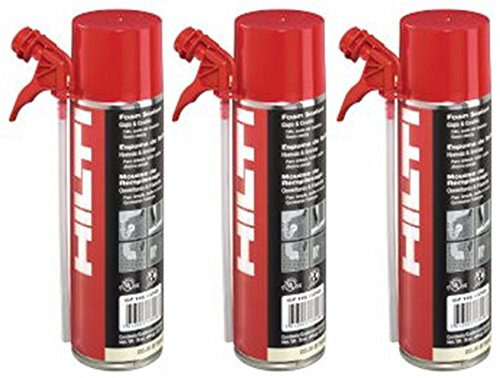
The one to use where code calls for a rated firestop
At a glance
| Product | Max Gap Fill | Can Size | Price | |
|---|---|---|---|---|
| Great Stuff PRO Gaps & CracksTop pick | Up to 3" | 24 oz | $176.82 |
| Loctite Tite Foam Gaps & CracksRunner-up | Up to 1" | 12 oz | $26.97 |
| Great Stuff 99108860 Smart Dispenser Big GapBudget pick | Up to 3" | — | $9.98On sale |
 | Todol Pur BlackAlso consider | — | 750 ml | $26.45 |
 | 6 Pack of 20 oz Dap 20012Also in lineup | — | 20 oz | $100.07 |
 | Loctite Tite Foam Window & DoorAlso consider | — | 12 oz | $99 |
| CF-116 - HILTI InsulatingAlso great | — | — | $69.99 |
How we picked
Expansion matched to gap. We sorted every can by how much it swells, because that single spec decides where it belongs. Minimal expansion for window and door jambs, high expansion for rim joists and voids up to 3 inches.
Cure time and humidity. We compared published tack-free and full-cure times from manufacturer data sheets, and favored moisture-cured formulas that still set properly in a dry winter house or a damp crawl space.
Fire rating. We separated foams that carry a UL-listed, ASTM E814 firestop rating from ones that only claim a fireblock seal. Building code treats these very differently, and so did we.
Dispensing and reuse. We weighted gun compatibility heavily for anyone using three or more cans, and read owner feedback for the recurring failure — nozzles and straws that cure solid after the first session.
Adhesion and finishing. We looked for foams rated to bond to wood, masonry, metal and PVC, and that can be trimmed, sanded and painted once cured so the repair disappears.
Top pick
The precise, reusable choice once you have more than a few gaps
Great Stuff PRO Gaps & Cracks
This is the gun-applied version of the foam you already know, sold as a case of twelve 24-ounce cans. It fills gaps up to 3 inches, sticks to almost every building material, and stays usable on the gun for weeks instead of dying with a clogged straw.
$176.82fromAmazonMost people meet canned foam through a can with a plastic straw taped to the side. You cut the seal, fill one gap, and an hour later the straw is a solid plug. Then you throw away most of a full can. This one threads onto a reusable dispensing gun instead, and owners report leaving a can attached for a month and picking it right back up.
The gun is the whole reason to buy this. A trigger lets you meter the bead. You can lay a thin line along a door jamb and a fat one into a rim joist from the same can, without switching products. You waste less foam, and you spend a lot less time scraping cured blobs off things the straw drifted onto.
It fills gaps up to 3 inches and bonds to wood, metal, masonry, glass and most plastics, which covers just about every seam in a basement or attic. Dow rates it tack-free in around 10 minutes and rigid enough to trim in about an hour. After that you can cut it flush, sand it and paint it, so it disappears behind trim.
Buy the case when the job is a whole basement, not a doorway. Twelve 24-ounce cans is weatherization scale. Published testing by Fine Homebuilding found that two inches of canned foam on a rim joist cut air leakage in that zone by more than 90 percent, and the Department of Energy credits air sealing plus insulation with 15 to 30 percent lower energy bills in existing homes.
Flaws but not dealbreakers
The dispensing gun is sold separately, so your first order costs more than it looks. That math only works out if you're using several cans. For one drafty window, it's overkill.
Guns and cans don't always get along. One owner reported a can that seized their gun on first use, and the failure mode is expensive — you can ruin the tool, not just the can. Thread the can on slowly, keep the cleaner on hand, and don't let cured foam sit in the tip.
The listing describes a fireblock seal, which is not the same thing as a code-rated firestop. If you're sealing a penetration through a fire-rated assembly, this can't do that job. The foam is also cream-colored and degrades in sunlight, so anything outdoors needs to be covered or painted.
Runner-up
Simpler and cleaner for a handful of small gaps
Loctite Tite Foam Gaps & Cracks
A three-pack of 12-ounce cans that seals gaps up to an inch. It cures fast, it's bright white instead of orange, and it needs no tool at all — which makes it the sane pick when your whole project is one afternoon and a caulk-gun-sized list.
$26.97fromAmazonThis is the can for people who don't want a hobby. No gun, no cleaner, no learning curve beyond aiming. Twelve ounces is enough for the gaps behind a few window casings or the hole where cable enters the house, and a three-pack is roughly one house's worth of small stuff.
It sets fast enough that you're not babysitting the work. Henkel lists a tack-free time of 10 to 15 minutes and full cure in about 8 hours at 70 degrees and 50 percent humidity, which is quick for the category. It's also moisture-cured, so damp basement air helps it along rather than stalling it. In very dry conditions, mist the gap lightly first.
The cured foam is dense with a uniform cell structure, and it flexes with the building instead of cracking when a frame moves through a hot summer. It's UV-resistant too. The bright white color matters more than it sounds — it reads as trim rather than as a mistake, so a bead you can't fully hide behind casing still looks deliberate.
Gaps up to an inch is the honest limit. Owners describe it swelling to roughly three times the space they aimed at, which is great in a crack and a problem in a void. If you're filling something wider than a finger, this isn't the can. Use the high-expansion foam below and save this one for the seams around it.
Flaws but not dealbreakers
Treat each can as single-use. The nozzle is the most common complaint by a wide margin: foam cures inside it after the first session, and owners report the second attempt going nowhere. Plan your gaps before you start and empty the can in one go.
The nozzle also has to click fully onto the valve before you pull. When it doesn't, the foam finds its way out somewhere you didn't intend, and there's no cleaning that up gracefully. Wear nitrile gloves and put down a drop cloth you don't care about.
Budget pickOn sale
One can, big expansion, no tool to buy
Great Stuff 99108860 Smart Dispenser Big Gap
Great Stuff's high-expansion foam with the Smart Dispenser straw, sold as a single can. It fills voids up to 3 inches and stops flowing the moment you let go, which makes it the least frustrating straw can for a one-weekend draft hunt.
$9.98fromAmazonList priceThis one expands hard, and that's both the point and the risk. Bob Vila's published review reports it swelling to roughly three times its dispensed volume, ahead of rivals on gaps over an inch. That's exactly what you want in a rim joist bay or a hole through a block wall. It's exactly what you don't want anywhere near a window jamb, where the pressure can bow the frame.
The Smart Dispenser straw is the real upgrade over the old design. There's no tip to cut and no drip when you pause — foam stops when you stop. Great Stuff rates the can as reusable for up to 30 days, and in practice you'll get a second session out of it if you clear the tip. It sticks to wood, drywall, metal, masonry, glass and most plastics.
For a single can, you're getting the same chemistry the pros use without buying a tool first. That's the whole argument. If your list is a mouse hole behind the stove, two gaps at the sill plate and the spot where the AC line set comes through, this covers it and costs a fraction of a twelve-can case.
Flaws but not dealbreakers
Overhead work is rough. One owner described having to hold the trigger for a long stretch before the high-expansion flow really engaged, which is fine pointing down into a joist bay and miserable pointing up at a ceiling penetration.
The expansion also means you should underfill on purpose. Lay a bead about half the depth of the void and walk away. Come back to a bulging mushroom and you'll be sawing it flush, and cured foam does not cut cleanly against drywall.
It's cream-colored and it yellows in sunlight, so outdoor joints need paint or trim over them.
Also great
The one to use where code calls for a rated firestop
CF-116 - HILTI Insulating
Hilti's CF 116 is a single-component firestop foam sold in a three-can set with straw applicators. It's the pick for penetrations through fire-rated floors and walls, where ordinary insulating foam isn't legal no matter how well it seals.
$69.99fromAmazonThere's a category of gap that regular foam cannot fill. IBC Section 714 requires through-penetration firestops tested to ASTM E814 in fire-rated assemblies — the floor between a garage and a bedroom, the wall between attached units, a mechanical chase. Standard polyurethane doesn't meet that standard. An inspector will fail it, and it won't slow a fire down for long either.
The rating is the entire product, and it's specific. Hilti publishes a 4-hour F/T rating for metal pipe penetrations up to 4 inches in diameter through concrete floors, tested to UL 1479 and ASTM E814. Read that sentence carefully before you buy: ratings apply to the exact assembly, pipe type and diameter that were tested. Check the listed system for your situation rather than assuming coverage.
It's straw-applied rather than gun-applied, which is fine given how you'll use it. Most houses have a handful of code-critical penetrations, not a hundred. Three cans is more than most DIYers will ever need, and the foam goes in the same way the others do — bead into the annular space, let it cure, trim if required.
Flaws but not dealbreakers
It costs more per can than anything else here by a wide margin, and it's the wrong tool for ordinary drafts. Sealing a whole basement perimeter with it would be an expensive way to do a job the top pick does better.
Owner feedback is thin — this is a contractor product that reaches homeowners occasionally, so you're leaning on the published listings rather than a large pool of buyers. Documentation is where Hilti is strongest, so read the technical sheet for your assembly before you spray.
Who this is for
Buy a can now if you can feel cold air at an outlet, see daylight around a sill plate, or have a basement rim joist that's never been touched. Those are the highest-return jobs in the house, and they're genuinely beginner-friendly. This guide covers one-part canned polyurethane foam — the kind you buy at a hardware store and apply with a straw or a handheld gun.
It doesn't cover two-part spray foam kits or professional whole-wall application, and canned foam is not a fix for a wall that needs real insulation. If you're filling anything wider than about 3 inches, use rigid foam board or mineral wool and seal the edges with a can rather than trying to foam the whole cavity. And if you're pregnant, asthmatic, or sealing an occupied bedroom, take the ventilation advice below seriously — the EPA recommends vacating the work area for 24 hours after applying spray polyurethane foam.
How we picked
Expansion: the spec that decides everything, so we matched minimal-expanding foams to jambs and high-expanding foams to rim joists and voids up to 3 inches. Cure: we compared published tack-free and full-cure times and favored moisture-cured formulas that still set in dry winter air. Fire rating: we kept UL-listed, ASTM E814 firestops in their own category, because a fireblock claim isn't the same thing. Dispensing: gun compatibility matters enormously once a project runs past three cans, and owner feedback made clogged straws the most common complaint by far. Finishing: we looked for adhesion to wood, masonry, metal and PVC, plus foam you can trim, sand and paint.
Other spray foam insulation cans worth considering
If you want foam that won't bow a window jamb: The Loctite Tite Foam Window & Door ($99) — Loctite's Tite Foam Window & Door uses a no-bow formula built for exactly one job — filling the shim space around windows and prehung doors without pushing the frame out of square. It cures dense and bright white, cuts cleanly with a utility knife, and resists UV. Owners describe getting a 6-by-8-foot French door opening with a deep jamb out of two cans. The catch is that it's sold as a twelve-pack, which is a lot of foam for one window, and it's still sticky enough that you'll want gloves and a drop cloth.
If you want a gun-applied foam that disappears into dark cavities: The Todol Pur Black ($26.45) — Todol's Pur Black is a 750-milliliter gun foam in black rather than cream, which is genuinely useful when the repair will be visible — behind rockwork, in a dark chase, under a deck. Landscape and water-feature builders lean on it for bonding stone and filling voids, and owners report it holding up for years against rodents. It needs a dispensing gun, it's messier than most, and the owner pool is small. If you specifically need a rated firestop, confirm that the exact listing you're buying carries the UL listing rather than assuming the black foam does.
The competition
This is what our research surfaced, not everything on the shelf. Canned foam is a crowded category with a lot of near-identical private-label products, and a can that didn't make the picks isn't necessarily bad — it just lost to something that does the same job with less fuss.
The 6 Pack of 20 oz Dap 20012 ($100.07) — DAP's Touch 'N Foam MaxFill is a maximum-expanding sealant sold as a six-pack of 20-ounce cans, marketed for air and moisture sealing plus rodent exclusion. On paper it's a reasonable rival to Great Stuff's Big Gap Filler at a similar scale. Owner feedback is where it falls down: reports split sharply between people who filled a bay window seam with one can and people who found it expanded far less than expected or arrived cured solid inside. The straw also has a habit of blowing off under pressure. If you're buying several cans anyway and want a bulk case from a brand you can find in any big-box aisle, it's still a defensible choice — just buy from a seller with an easy return path.
Application and safety notes
Wear nitrile gloves and safety glasses, every time. Uncured foam is a serious skin and eye irritant, and once it cures on you, it stays until the skin does — acetone removes it while it's wet and does nothing after. Ventilate the room, and follow the EPA's advice to stay out of the work area for 24 hours after spraying because of isocyanate off-gassing. Check the can's temperature range before a winter job; most foams want the can and the surface warm, so keep spares indoors. Mist a dry gap lightly with water to help moisture-cured foam set. Underfill on purpose — aim for about half the depth — then trim flush with a serrated knife once it's rigid, and paint or cover anything exposed to sun.
Questions we get
What's the difference between minimal-expanding and maximum-expanding foam?
Minimal-expanding foam swells just enough to fill a narrow gap, so it won't push a window or door frame out of square. Maximum-expanding foam can swell to roughly three times its dispensed volume, which is what you want in a rim joist bay or a hole through masonry. Using the wrong one is the most common DIY mistake here. Match the foam to the gap, not to the brand you recognize.
Can I use spray foam around electrical wires and outlets?
Yes, for sealing the gap where a cable passes through a plate or where a box meets drywall. Cured polyurethane isn't conductive, and air-sealing outlet penetrations on exterior walls is a real efficiency win. Don't pack foam inside an electrical box or around a heat-producing fixture like a recessed can that isn't rated for contact. If the penetration goes through a fire-rated assembly, you need a listed firestop instead.
How long does canned spray foam take to cure?
Most foams are tack-free in 10 to 15 minutes and rigid enough to trim in about an hour. Full cure takes longer — Loctite lists roughly 8 hours for Tite Foam at 70 degrees and 50 percent relative humidity. Cold or very dry conditions stretch that out, sometimes considerably. Don't trim or paint until the foam is hard all the way through, or you'll expose uncured goo.
What's the R-value of canned spray foam per inch?
About R-3.7 per inch, according to Consumer Reports, which puts it in the same neighborhood as most rigid foam board. That's respectable, but it's not why you're using it. The real value is air sealing — Lawrence Berkeley National Laboratory attributes 25 to 40 percent of home heating and cooling losses to air leakage. Foam earns its keep by stopping moving air, not by adding R-value in a narrow gap.
Do I really need fire-rated foam around pipes?
If the pipe passes through a fire-rated assembly, yes, and it's not optional. IBC Section 714 requires through-penetration firestops tested to ASTM E814, and ordinary insulating foam doesn't meet that standard even when the label mentions fireblocking. A listed product like Hilti's CF 116 carries a specific rating for a specific tested assembly. For ordinary interior gaps with no fire-rating requirement, standard foam is fine.
How do I get spray foam off my skin and clothes?
Move fast — acetone or nail polish remover takes uncured foam off skin and hard surfaces, but it does nothing once the foam has set. After it cures, your options are pumice, petroleum jelly and patience, and owners routinely report it wearing off over one to two weeks. Clothing that gets foamed is generally finished. This is why gloves and old clothes aren't a suggestion.
Why you should trust us
For this guide:
- We read the manufacturer technical data sheets and Amazon listing specs for every can here, comparing expansion rate, gap capacity, cure time, adhesion claims and dispensing method side by side.
- We drew on published reviews and testing from Bob Vila, Fine Homebuilding and Consumer Reports, plus energy and safety guidance from the Department of Energy, the EPA and Lawrence Berkeley National Laboratory, and code language from ASTM and the IBC.
- We read through owner feedback looking for repeated failure patterns rather than one-off complaints — clogged nozzles, cans that seized dispensing guns, foam that kept growing after it looked finished, and cans that arrived without pressure.
- We read owner reviews on every listing, weighted toward the critical ones, because that is where the recurring failures show up.
- We have a systematic way of automatically fetching the latest prices, so the numbers on this page stay current.
- This is a research-focused guide, so the team may not own every product listed — though we often do own the top winners, which gives us extra context for the recommendations.
- We don't accept free products, and the retailer commission never changes which product we recommend.
Sources
Spray Foam Insulation Types and R-Values — U.S. Department of Energy, U.S. Department of Energy
ASTM E814 Standard Test Method for Fire Tests of Through-Penetration Fire Stops, ASTM International
Great Stuff Pro 14 Technical Data Sheet, Dow / Great Stuff
Loctite TITE FOAM Technical Data Sheet, Loctite / Henkel
Bob Vila — Best Expanding Foam Sealants Tested and Reviewed, Bob Vila
This Old House — How to Use Spray Foam Insulation, This Old House
Family Handyman — Best Spray Foam Insulation Products, Family Handyman
Lawrence Berkeley National Laboratory — Infiltration and Air Leakage in U.S. Homes, Lawrence Berkeley National Laboratory
Fine Homebuilding — Spray Foam at the Rim Joist, Fine Homebuilding
Consumer Reports — Insulation Buying Guide, Consumer Reports
Hilti CF 116 Product Data Sheet, Hilti
EPA — Indoor Air Quality and Spray Polyurethane Foam, U.S. Environmental Protection Agency
Amazon product listings and owner reviews for all 7 products
Manufacturer specification pages for each product
Some passages in this guide may be paraphrased with AI help. Prices are refreshed automatically.
More like this.
Continue exploring home reviews and recommendations.

The Best Garage Door Insulation Kits
A bare steel garage door is basically a heat sink bolted to your house. In July it soaks up sun all afternoon and radiates it into the space where your…

The Best Window Insulation Kits and Draft Stoppers
A drafty house doesn't announce itself. You just notice that the room with the big window stays cold no matter how high you set the thermostat, or that…

The Best Can Openers
A can opener is one of those tools you don't think about until it fails you. Then you're standing over a half-open can of tomatoes, working the wheel back…

The Best Water Heater Insulation Blankets
Your water heater sits there all day keeping 40 or 50 gallons hot, whether you're home or not. If the tank is old, a lot of that heat leaks straight into…

The Best Attic Stair Insulation Covers
A pull-down attic stair is a hole in your ceiling with a thin piece of plywood over it. That panel does almost nothing thermally - think single-pane…

The Best Paint Sprayers
A paint sprayer changes what a weekend can hold. A room that takes an hour with a roller takes minutes with a sprayer, and a fence that used to eat a…