The Best Paint Sprayers
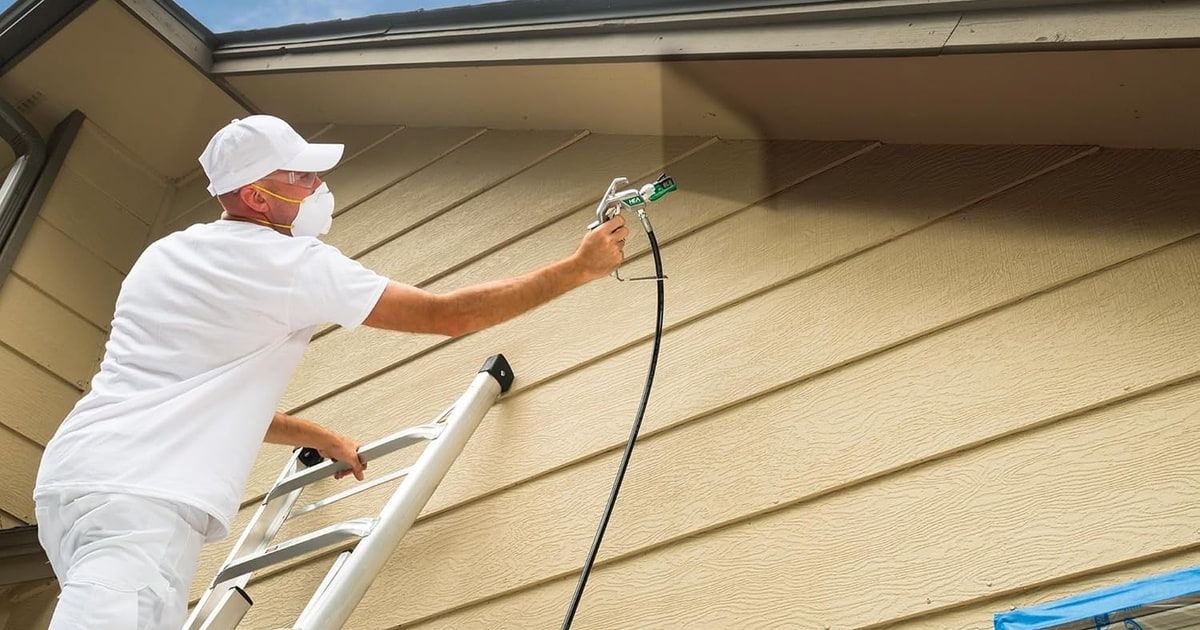
A paint sprayer changes what a weekend can hold. A room that takes an hour with a roller takes minutes with a sprayer, and a fence that used to eat a Saturday gets done before lunch. The finish is different too. Sprayed paint lands as a thin, even film with no brush marks and no roller stipple, which is why cabinet doors and furniture look factory-made when they're sprayed. If you've been putting off a big painting job because of the grind, this is the tool that makes it feel possible.
Here's the part nobody puts on the box: spraying moves the work, it doesn't remove it. You still have to mask everything you don't want painted, and with an airless sprayer that means floors, trim, windows, light fixtures and anything within a few feet of your target. Then you flush the pump, gun and hose, which takes 10 to 20 minutes every single time. On a small job, that overhead can wipe out the time you saved. Sprayers pay off on big, open surfaces, not on one bookshelf.
The other thing to know is that no single sprayer does everything. Turbine HVLP systems atomize beautifully for cabinets and trim, but they choke on thick exterior latex and crawl on siding. Airless rigs devour large surfaces but throw overspray everywhere. So pick for the job you actually have. We think that the Graco Magnum X7 is the best paint sprayer for most people, and that the Fuji Spray Semi-PRO 2 is the one to buy if your projects are cabinets and furniture rather than walls and siding.
Everything we recommend

Bucket-fed airless power with the longest reach here

Furniture-grade atomization, if walls aren't your priority

Airless speed with far less masking and cleanup

Smooth furniture finishes without a big outlay

Low-overspray airless in a small, gravity-fed package
At a glance
| Product | Weight | Hose Length | Price | |
|---|---|---|---|---|
| Graco Magnum 262805 X7 Cart Airless PaintTop pick | 26 lbs | Up to 100 ft | Check price |
| Fuji Spray 2202 Semi-PRO 2 - HVLPAlso great | 25 lbs | 25 ft | $564.84 |
| Titan Tool 0580009 ControlMax 1700 High EfficiencyUpgrade pick | 19.4 lbs | 30 ft (ext 80 ft) | $279 |
| HomeRight C800766Budget pick | 3.1 lbs | — | $56.72 |
| Wagner Spraytech 2467899 Control Pro 130 PowerRunner-up | 9.5 lbs | 25 ft | $239.98 |
 | Graco Magnum 262800 X5 Stand Airless PaintAlso in lineup | 17 lbs | Up to 75 ft | $338.99 |
 | Fuji Spray Q5 Platinum HVLP Sprayer withAlso consider | 40.15 lbs | — | $1,769 |
 | Graco 26D281 TrueCoat 360 Dual Speed PaintAlso consider | 5.64 lbs | — | $219.35 |
How we picked
Right technology per job. We sorted the lineup by what each machine is physically built to do — turbine HVLP for fine finishes, airless for raw coverage, HEA for exteriors with less masking. A sprayer had to be clearly strong in one lane rather than mediocre in all three.
Unthinned material handling. We read spec sheets for maximum pressure, pump type and stated material compatibility to see which units spray thick latex straight from the can. Anything that requires thinning for common wall paint got scoped to finish work instead.
Reach and refill. Hose length and material capacity decide how often you stop working. We compared supported hose runs and cup or hopper size against realistic project sizes, from a single dresser to a two-story exterior.
Cleanup burden. Every sprayer costs you 10 to 20 minutes of flushing per use, so we favored designs that shorten it — gravity feed, garden-hose flush adapters, removable cups. Owner feedback repeatedly points to cleanup as the reason sprayers end up unused in garages.
Parts and support. We checked whether replacement tips are a standard, widely stocked line or a proprietary one, and what warranty terms manufacturers publish. A sprayer with hard-to-source tips is a sprayer you'll stop using.
Top pick
Bucket-fed airless power with the longest reach here
Graco Magnum 262805 X7 Cart Airless Paint
The Graco Magnum X7 is a cart-mounted airless sprayer that pulls unthinned paint straight out of a 5-gallon bucket and pushes it through as much as 100 feet of hose. For a full house exterior, a long fence line, or several rooms in one season, nothing else here keeps up.
Check priceatAmazonIt sprays thick latex without thinning, which saves you the messiest step. The stainless steel piston pump generates enough pressure to atomize paint straight from the can. That matters more than it sounds. Thinning means measuring, stirring, testing viscosity and often getting it wrong, and thinned paint hides less per coat. With the X7 you pop the suction tube into a 1- or 5-gallon bucket and start.
The 100-foot hose capacity is the feature you'll appreciate on day one. Park the cart in the middle of the yard and you can walk the whole perimeter of most homes without dragging the unit behind you. It also reaches second and third stories, so ladder work doesn't mean hauling a pump up with you. Most sprayers in this class support a fraction of that length.
The reversible tip means a clog costs you seconds, not a break. Graco's RAC IV SwitchTip flips backward, you pull the trigger to blow the blockage out, then flip it forward and keep going. Anyone who has stopped mid-wall to soak a nozzle in solvent understands the appeal. Fully adjustable pressure lets you dial down for stain and up for heavy exterior coatings.
Graco rates it for up to 125 gallons a year, so it's built for repeat use. That's a genuinely large amount of paint — a two-story exterior, a fence and a few interior rooms with room to spare. The cart also keeps it stable on lawn, gravel and uneven driveways, which matters when you're working off a ladder and tugging on a hose.
Flaws but not dealbreakers
The cart is clumsy indoors. It stands about three feet tall and rolls on wheels sized for a yard, not a hallway. Working around furniture, in a stairwell or in a small bathroom means constantly repositioning something bulky. If your painting is mostly interior, a stand-mount or handheld unit is easier to live with.
Cleanup is a real commitment. Plan on 10 to 15 minutes of flushing after every session, and the PowerFlush garden hose adapter only speeds part of it. Owners who skip this find out the hard way, because dried paint in a piston pump ruins seals. The pump also wants periodic seal maintenance to stay healthy over years.
It's overkill for small jobs. Setup, priming and flushing add fixed time to every use. For a single dresser or one set of shutters, you'll spend longer servicing the sprayer than you would have spent with a brush.
Also great
Furniture-grade atomization, if walls aren't your priority
Fuji Spray 2202 Semi-PRO 2 - HVLP
The Fuji Spray Semi-PRO 2 is a turbine HVLP system built around a professional non-bleed gun. If you refinish cabinets, doors or furniture and want a surface with no brush marks and no orange peel, this is the tool that gets you there.
$564.84fromAmazonThe non-bleed gun gives you clean starts and stops. Air only flows when you pull the trigger, so the gun doesn't spit or blow dust across a wet panel between passes. On a cabinet door, where every pass overlaps the last one, that control is the difference between a smooth film and a visible seam. The pattern fan control lets you narrow the spray for stiles and widen it for flat panels.
The 1.3mm air cap is sized for the finishes cabinet work actually uses. Water-based enamels, lacquers and stains atomize into a fine, even mist at that orifice. Published reviews of turbine HVLP systems consistently note they hold atomization steady as the cup drains, unlike cheap gravity-fed electric guns that get coarser as the paint level drops. Consistency across a whole door matters more than peak fineness.
The bottom-feed quart cup keeps the gun balanced and your wrist honest. A quart is enough for several doors before a refill, and the cup sits under the gun rather than perched on top, so the gun doesn't get top-heavy as you tilt it. The 25-foot hose includes an air control valve, which lets you trim pressure at the gun to cut bounce-back on tight interior work.
It's a real system, not a toy. The metal turbine case has a gun holder built in, so the gun has somewhere to rest that isn't your workbench. That sounds trivial until you're mid-project with a loaded gun and nowhere to set it down.
Flaws but not dealbreakers
Thick latex needs thinning, usually around 10 to 15 percent. That's the tradeoff for HVLP's fine atomization. If your paint is straight wall latex out of a big-box can, expect to add water, stir and test before you spray anything that matters.
It's slow on big surfaces. A two-stage turbine simply doesn't move the volume an airless pump does. Siding, fences and full-room walls will take far longer than they should, and refilling a quart cup repeatedly gets old fast.
It costs a lot for occasional use. This is the priciest way to paint a single dresser. If you refinish two pieces a year, the gap between this and a basic HVLP gun is hard to justify.
Upgrade pick
Airless speed with far less masking and cleanup
Titan Tool 0580009 ControlMax 1700 High Efficiency
The Titan ControlMax 1700 uses high-efficiency airless technology, which runs at lower pressure and produces a softer spray. You get near-airless throughput on siding and decks while cutting overspray by up to 55 percent, which means less taping and less paint on your shrubs.
$279fromAmazonLess overspray means less of the work you hate. Conventional airless at full pressure atomizes so aggressively that a cloud of paint drifts past your target. HEA drops the pressure and softens the pattern, and Titan puts the reduction at up to 55 percent. In practice that's fewer drop cloths, less plastic sheeting on windows, and less paint settling on the driveway and the neighbor's car.
It still moves paint fast enough to matter. The 0.60 horsepower pump sprays unthinned paints and stains at up to 0.33 gallons per minute, which Titan puts at roughly three times a roller's speed. Max pressure of 1,700 PSI covers standard exterior latex and stains with headroom for heavier-build coatings. You're not giving up much speed for the cleaner spray.
The all-metal gun holds up better than plastic-bodied rivals. Guns get dropped, banged against ladders and soaked in solvent. Metal survives that. Titan also rates the sprayer for up to 300 gallons a year — more than double the top pick — with inlet and outlet valves you can swap yourself to extend its life.
The hose stretches when you need it to. The 30-foot hose that ships in the box handles a deck or a single elevation, and you can extend the run to 80 feet for a full exterior. There's also a free app that suggests settings for your specific paint, which takes some guesswork out of the first setup.
Flaws but not dealbreakers
The stock hose is short for whole-house work. Thirty feet means moving the unit several times around a typical home, and getting to 80 feet costs extra. The top pick supports 100 feet out of the gate.
HEA tips are their own consumable line. You can't grab a generic airless tip off the shelf. Budget for HEA-specific replacements and confirm they're stocked before you commit to the platform.
It's a lot of sprayer for interior rooms. Even with reduced overspray, this is still an airless rig with a hose, a pump and a flush routine. For a bedroom's worth of walls, it's more machine than the job needs.
Budget pick
Smooth furniture finishes without a big outlay
HomeRight C800766
The HomeRight Finish Max is a handheld electric HVLP gun that costs a small fraction of the turbine systems here. It sprays chalk paint, milk paint, stains, polyurethane and thinned latex through a brass tip, and it'll make one dresser look worth the purchase.
$56.72fromAmazonIt gets you a brush-mark-free finish on the first project. Point it at a thrift-store dresser, keep the gun moving, and the paint lands as an even film instead of a series of strokes. That's the whole appeal of spraying, and this is the least expensive way here to get it. Three spray patterns — horizontal, vertical and round — cover flat panels, narrow rails and spindles.
The brass tip is a genuine step up at this level. Most inexpensive sprayers use plastic nozzles that wear and distort within a season, which turns a clean fan into a lopsided spatter. The 2mm precision brass tip and nozzle hold their shape far longer. It's the one component that separates this from the pile of cheap guns it sits next to.
The included viscosity cup prevents the classic beginner mistake. Paint that's too thick clogs the tip and sputters, and new users almost always guess wrong. You fill the cup, time how long it takes to drain, and thin until it's right. It takes two minutes and it's the difference between a good afternoon and a frustrating one.
It handles a genuinely wide range of materials. Thinned chalk paint, milk paint, latex, enamels, primers, clear sealer, polyurethane, stain and varnish all go through it. For someone refinishing furniture, that's most of what you'd ever load into a sprayer.
Flaws but not dealbreakers
The 27-ounce cup runs dry constantly on anything big. One chair, fine. A set of ten cabinet doors means stopping to refill over and over, and each stop is a chance for the finish to flash off unevenly.
Atomization gets coarser as the cup empties. That's the known weakness of electric HVLP guns compared with turbine systems, and it shows up as inconsistent sheen across large flat surfaces. On a small piece you'll never notice. On a tabletop you might.
There's no pressure control, just a flow knob. You adjust how much material comes out, not how hard it's pushed. Combined with the need to thin anything approaching real latex, it means this isn't the tool for walls or siding.
Runner-up
Low-overspray airless in a small, gravity-fed package
Wagner Spraytech 2467899 Control Pro 130 Power
The Wagner Control Pro 130 Power Tank brings the same overspray-cutting HEA technology to a compact hopper-fed design. It holds 1.5 gallons right on the unit, weighs under 10 pounds, and ships with tips for both broad siding work and narrower detail passes.
$239.98fromAmazonGravity feed makes priming and cleanup noticeably less painful. There's no suction tube to prime and no line to clear before paint starts flowing — you pour material into the hopper and go. Flushing is simpler for the same reason. If the thing that keeps your sprayer in the closet is the cleanup ritual, this design shortens it.
The two included tips cover both halves of an exterior job. The 515 lays down a wide fan for siding and large deck boards. The narrower tip handles trim, railings and detail work without swapping to a different setup mid-project. Most sprayers make you buy the second tip separately.
HEA cuts overspray by up to 55 percent, same as the upgrade pick. Less drift means less masking on the front end and less scrubbing on the back end, and it's genuinely useful when you're spraying near landscaping, walkways or a neighbor's fence. Wagner rates it at three times a roller's application speed, so you're not paying for that control with much time.
It's small and light enough to carry one-handed. At 9.5 pounds and roughly the size of a shoebox, it moves between the garage, the deck and the side yard without a cart or a second trip. The 25-foot hose gives you enough slack to work an elevation before repositioning.
Flaws but not dealbreakers
A 1.5-gallon hopper still means refills on a big exterior. Bucket-fed airless sprayers pull straight from a 5-gallon pail and never stop. You'll be walking back to the paint can more than you would with the top pick.
The 25-foot hose is the shortest of the airless options here. Expect to move the unit repeatedly around a house, and check that the reach works for your layout before you count on it for a two-story job.
It's pricier than HVLP alternatives for small work. If your projects are furniture and trim rather than fences and siding, you're paying for throughput you won't use.
Who this is for
Buy a sprayer if you have a big, open surface ahead of you: a house exterior, a fence line, a deck, an empty room, or a stack of cabinet doors. That's where spraying wins decisively, because the fixed cost of setup and cleanup gets spread across a lot of square footage. If you're touching up a hallway or painting one accent wall around furniture you can't move, a brush and roller will beat a sprayer on total time. Be honest about which situation you're in.
This guide covers electric sprayers a homeowner can buy, set up and run without a compressor or a contractor account — turbine HVLP systems, corded airless rigs, HEA units and one handheld. It doesn't cover pneumatic guns that need a shop compressor, gas-powered contractor pumps, or texture and drywall equipment. It also assumes you'll wear a respirator and mask your surroundings, because every machine here will put paint somewhere you didn't intend.
How we picked
Technology fit: We matched each sprayer to the job it's actually engineered for — HVLP turbines for cabinets and furniture, airless for large-surface speed, HEA for exteriors where masking time dominates. Material handling: We read pressure ratings, pump types and published compatibility to see which units spray unthinned latex and which need you to thin first. Reach and refill: Supported hose length and cup or hopper capacity determine how often you stop, so we weighed those against realistic project sizes. Cleanup: Every one of these costs you 10 to 20 minutes of flushing, and we favored gravity-fed and flush-adapter designs that trim it. Parts and support: We checked tip availability and published warranty terms, because a sprayer with orphaned consumables is a sprayer you'll abandon.
Other paint sprayers worth considering
If you want a handheld that sprays at any angle: The Graco 26D281 TrueCoat 360 Dual Speed Paint ($219.35) — The Graco TrueCoat 360 is fully self-contained — no hose, no cart, no bucket. Its stainless steel piston pump sprays unthinned paint or stain, and it works upside down, which is genuinely useful for base molding at the floor, the underside of deck railings and ceiling trim corners where a conventional gun makes you contort. Dual speed lets you dial down for thin stain and up for thicker latex without changing tips. The catch is scope: it's rated for projects up to 2 gallons, so a room's trim package or a set of shutters is about the ceiling. Holding a loaded sprayer at arm's length also gets tiring faster than you'd expect.
If you want the most capable HVLP system here: The Fuji Spray Q5 Platinum HVLP Sprayer with ($1,769) — The Fuji Q5 Platinum is what you buy when finish quality is your livelihood, not your hobby. The GXPC gravity gun sprays at any angle including straight up, so overhead trim and ceiling panels don't require repositioning the work. It handles both waterborne and solvent-based coatings, which matters if your workflow includes lacquer. A heat dissipation chamber addresses the way turbines usually die — motor overheating during long sessions — and it runs about 50 percent quieter than a standard turbine, which is no small thing in a closed shop. For occasional furniture projects it's far more machine than you need, and the settings take real practice to dial in across different viscosities.
The competition
This is what our research surfaced across published reviews, manufacturer specs and owner feedback — not a survey of every sprayer sold. The remaining model here is a solid machine that lost out for a specific reason, and it may still be the right call depending on your project.
The Graco Magnum 262800 X5 Stand Airless Paint ($338.99) — The Graco Magnum X5 is the stand-mounted sibling of our top pick, and it shares the parts that matter most: fully adjustable pressure, unthinned paint and stain capability, and a flexible suction tube that drops into a 1- or 5-gallon bucket. It's lighter at 17 pounds and easier to carry up stairs or through a doorway than the X7's cart. But Graco rates it for projects up to 10 gallons a year against the X7's 125, and it supports 75 feet of hose instead of 100. For a single-story ranch or one big interior job it's plenty. For a two-story exterior that'll swallow 15 to 25 gallons, the X7's extra headroom and reach are worth having — and since the two often sit close together, it's worth comparing them directly before you decide.
Setup and cleanup notes
Always test your pattern on cardboard before you touch the actual surface. Hold the gun 10 to 12 inches away, spray a pass, and look for an even band with no heavy edges or tailing. If the pattern is heavy at the ends and thin in the middle, your tip is worn or your pressure is too low. Three minutes here prevents drips and wasted paint. When you're done, flush immediately — dried paint in a pump destroys seals, and that's the most common way these machines die young. Run clean water through the whole system for latex, or the appropriate solvent for oil-based finishes, until it comes out clear. Airless tips wear as abrasive pigment passes through them, so plan on replacing yours every 40 to 50 gallons of standard latex, sooner with masonry or aggregate-filled coatings.
Questions we get
What's the difference between HVLP and airless sprayers?
HVLP uses a turbine to blow a high volume of air at low pressure, atomizing paint into a fine mist with minimal overspray. That makes it the choice for cabinets, furniture and trim, where finish quality is everything. Airless sprayers force paint through a tiny tip at very high pressure, covering large surfaces far faster and handling thick unthinned latex straight from the bucket. Pick HVLP for detail work and airless for volume.
What is HEA and how is it different?
HEA stands for High Efficiency Airless. It's still an airless pump, but it runs at lower pressure and produces a softer spray pattern, which manufacturers say cuts overspray by up to 55 percent. You keep most of airless speed and the ability to spray unthinned paint, but you mask less and clean up less. It's a different mechanism from HVLP entirely — HEA is best for exteriors, HVLP for fine finishes.
Can I use latex paint in an HVLP sprayer without thinning it?
Usually not. Standard wall latex is too thick for a turbine to atomize cleanly, and you'll typically need to thin it by 10 to 15 percent. Use a viscosity cup to time the flow rather than eyeballing it. Chalk paint, milk paint, water-based stains and thin lacquers often spray fine unthinned, and quality airless sprayers handle thick latex with no thinning at all.
Is a sprayer really faster than a roller for interior walls?
On the spraying itself, yes, dramatically — published comparisons put an average room at under 10 minutes of spray time versus 45 to 60 with a roller. But you have to add 20 to 45 minutes of masking plus 10 to 20 minutes of cleanup. In a room full of trim, windows and furniture you can't move, a roller often wins on total time. Sprayers pull ahead in empty rooms, on smooth ceilings and in open-plan spaces.
How do I pick the right tip size?
Airless tips use a three-digit number like 515. Double the first digit for the fan width in inches, so a 515 gives roughly a 10-inch fan. The last two digits are the orifice size in thousandths of an inch. As a rough guide, thin stains and lacquers want 0.009 to 0.013, latex wall paint 0.015 to 0.019, thick exterior latex 0.019 to 0.021, and elastomeric coatings 0.025 to 0.031. Too large causes runs, too small causes clogging.
What PSI do I need for exterior siding?
Exterior latex on siding generally wants 1,500 to 2,000 PSI with a tip orifice around 0.017 to 0.021 inches. The Titan ControlMax 1700 tops out at 1,700 PSI, which covers most exterior latex and stains. Heavier-build coatings like elastomeric can require 2,500 PSI or more, so check your sprayer's rated pressure before you commit to that kind of material.
Why you should trust us
For this guide:
- We read manufacturer spec sheets for every model here, comparing pump type, maximum pressure, supported hose length, annual gallon ratings and published material compatibility.
- We reviewed coverage from established home-improvement publications on how HVLP, airless and HEA systems differ in atomization quality and overspray.
- We looked at recurring themes in owner feedback, particularly around cleanup burden, tip clogging and pump seal longevity, and used those to shape the flaws sections.
- We read owner reviews on every listing, weighted toward the critical ones, because that is where the recurring failures show up.
- We have a systematic way of automatically fetching the latest prices, so the numbers on this page stay current.
- This is a research-focused guide, so the team may not own every product listed — though we often do own the top winners, which gives us extra context for the recommendations.
- We don't accept free products, and the retailer commission never changes which product we recommend.
Sources
Best Paint Sprayers — Wirecutter (NYT), Wirecutter
Best Paint Sprayers Tested — Popular Mechanics, Popular Mechanics
Best Paint Sprayers — Bob Vila, Bob Vila
Best Paint Sprayers — This Old House, This Old House
Best Paint Sprayers — Family Handyman, Family Handyman
Amazon product listings and owner reviews for all 8 products
Manufacturer specification pages for each product
Some passages in this guide may be paraphrased with AI help. Prices are refreshed automatically.
More like this.
Continue exploring home reviews and recommendations.

The Best HVLP Spray Guns for Automotive Painting
Spraying a car isn't like painting a wall. The gun you hold decides how much of that expensive basecoat lands on the panel instead of drifting into the…

The Best Spray Foam Insulation Cans
A can of foam is a small fix for one of the biggest problems in your house. Air leakage accounts for 25 to 40 percent of heating and cooling losses in a…

The Best Ceramic Coating for Car Paint
A ceramic coating is a thin layer of liquid glass that bonds to your clear coat and changes how your car behaves in the weather. Rain sheets off instead…

The Best Car Paint Protection Film Kits
Paint damage on a car almost never arrives all at once. It shows up as a rash of tiny chips on the leading edge of the hood, a scuff where your kid swings…

The Best Car Wax and Paint Sealants
Wax won't make your car faster or safer. It just keeps the paint from looking tired. A coat of wax or sealant is a sacrificial layer that takes the UV,…

The Best Hose-End Sprayers for Lawn Fertilizer
Liquid fertilizer is the fastest way to green up a lawn, and a hose-end sprayer is what makes it practical. You screw it onto the hose, pour concentrate…