The Best Aluminum Cable Deck Railing Kits

Cable railing sells itself on one thing: you stop noticing the railing and start noticing the yard. Thin horizontal cables block a fraction of the view that four-inch wood balusters do, and that matters most on a hillside lot or a second-story deck. But a cable railing is also a tension system. Every cable pulls hard on the end posts, and the whole run only looks right if the posts are solid, the spacing is even, and the cables stay tight.
No kit here is finished in the box. Every complete system on this list leaves out the top handrail, so you'll place a second order or cut your own wood rail. And every cable railing loosens. The fittings seat into the post face over the first few weeks, tension drops, and you have to walk the run with a hex key and tighten it all again. Then again once a year. Skip that and your cables sag past what an inspector will pass.
Code drives the rest of the decision. Most residential decks need a 36-inch guard, but if the deck sits high or your town has adopted a stricter amendment, 42 inches is the number — and post height isn't something you can fudge after the fact. Cable grade matters just as much: near salt air, T316 is the only grade worth buying. We think that the Muzata 16-20FT Modular Cable Railing Kit is the best aluminum cable deck railing kit for most people, and that the Zylorix 12ft-16ft 42-inch Post Kit is the one to buy if your deck needs a 42-inch guard.
Everything we recommend

The complete kit you can finish with hand tools

Taller posts for stricter code, if you'll use a crimper

Marine-grade fittings that pivot for stairs and level runs
At a glance
| Product | Post Height | Cable Diameter | Price | |
|---|---|---|---|---|
| Muzata 16-20FT Modular Black Cable Railing KitTop pick | 36" | — | $339.99 |
 | Muzata 1000 ft 1/8" Stainless Steel CableAlso consider | — | 1/8" | $129.99 |
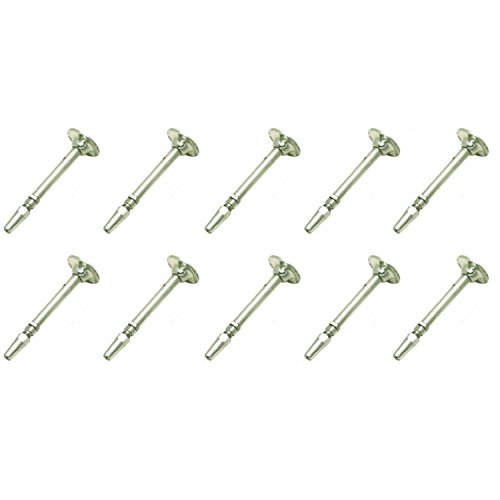 | Atlantis Rail System C0981-1004 Rail Easy CableAlso in lineup | — | — | $248.17 |
| Challcrea Cable Railing HardwareBudget pick | — | 1/8" | $159.99 |
| Zylorix 12ft-16ft Modular Cable Railing Post KitRunner-up | 42" | 1/8" | $249.99On sale |
How we picked
Code compliance. We compared post heights and factory hole spacing against the 4-inch sphere rule and the standard 36- and 42-inch guard heights. A kit had to pass by design, not by careful drilling on your part.
Corrosion grade. We checked the stated alloy for cable, fittings and posts on every listing. T316 with molybdenum is the threshold for anything within a mile of salt water, and we flagged T304 components wherever they show up.
Tools you'll need. We separated swageless systems, which tension with a hex key, from swage systems that require a hydraulic crimper. For a first-time DIY install, that distinction changes the whole project.
What's in the box. We read the parts lists closely to see which kits include cable, terminals and mounting hardware and which leave you sourcing them. Published DIY guides consistently show component builds taking far longer than complete kits.
Long-term adjustability. Cable railing has to be re-tensioned, so we favored fittings you can reach and adjust with the railing assembled. Owner feedback about seized or fiddly tensioners weighed against a product here.
Top pick
The complete kit you can finish with hand tools
Muzata 16-20FT Modular Black Cable Railing Kit
This is the rare cable railing kit that arrives with the posts, the cable, the tensioners and a printed guide all in one box. The swageless fittings tighten with a hex key, so you don't have to rent or buy a hydraulic crimper to finish the job.
$339.99fromAmazonYou can finish this one with hand tools. Muzata's swageless fittings grip the cable with a cone-and-wedge mechanism instead of a factory-crimped sleeve, so a hex key does the work a hydraulic press would otherwise do. That's the single biggest reason cable railing became a weekend project instead of a contractor call. Published DIY guides put a 36-foot swageless run at roughly six to ten hours, and owners of this kit describe getting a balcony done in a day.
The adjustable 16-to-20-foot range spares you a lot of math. Most budget kits come in fixed 6- or 10-foot sections, which means your deck either fits the sections or you buy one more and waste most of it. This kit stretches across the whole range, so a 17-foot run and a 19-foot run both work out of the same box. If your deck turns a corner, Muzata sells a one-post corner unit, the RW39, that handles the transition.
Almost everything you need is in the box. You get five posts, ten swageless tensioners, ten terminal ends and the mounting hardware, plus a paper walkthrough with diagrams. That last part sounds trivial until you're on your knees on a deck with no phone signal. Component-only orders leave you sourcing tensioners, lag screws and end caps from three sellers and hoping the tolerances agree.
Leaving the handrail to you is more freedom than it sounds. The top of the post takes a stainless rail, an aluminum one, a wood cap or an LED rail, so you can match whatever your house already has. Near the coast, Muzata's rust-resistant aluminum handrail is the sensible pairing. If you're matching existing deck framing, a stained wood cap costs less and looks intentional.
Owners consistently report that Muzata answers the phone. The recurring theme in feedback isn't the hardware, it's the support — buyers who opened the box short a piece describe getting a replacement sent quickly. For a product where one missing terminal stops the whole job, that matters more than a spec line.
Flaws but not dealbreakers
There's no handrail, and you'll feel that at checkout. The kit stops at the posts and cables. You'll place a second order, wait for it, and add its cost to your mental budget before you compare this kit against anything sold as a finished system.
The 36-inch posts rule out any deck that needs a 42-inch guard. That's fine for standard residential work, but commercial jobs and some high decks call for the taller height, and you can't stretch a post. Check with your building department before you order, not after.
Plan on more than an afternoon, and check your fasteners. Owners who are happy with the result still describe the install as slow going. And if you're anchoring into concrete rather than wood framing, the included lag bolts won't do — buy the right anchors before you start.
Runner-upOn sale
Taller posts for stricter code, if you'll use a crimper
Zylorix 12ft-16ft Modular Cable Railing Post Kit
The 42-inch posts here are the answer when a high deck or a local amendment rules out a standard 36-inch guard. Cable, terminals and grommets all come in the box, but the swage fittings mean you'll need a crimping tool to finish the terminations.
$249.99fromAmazonList pricePost height is the one thing you can't fix later. These posts stand 41 inches and are built to satisfy both commercial and residential guard requirements, which is what you want if your deck sits well above grade. Each post comes pre-drilled with twelve holes spaced 3-1/8 inches apart, so the cable spacing passes the 4-inch sphere rule by design rather than by your tape measure.
The cable is already in the box — 213 feet of it. That's the component people most often forget to price, and it's enough for a 12-to-16-foot run at twelve cable levels. It's 1/8-inch T316 with 7x7 construction, so the cable itself is marine grade even though the posts aren't. You're not chasing a spool from a second seller.
Grommets protect the cable where it actually wears. Every point where a cable passes through a post is a spot where steel rubs steel for the next twenty years. Zylorix sleeves those penetrations. Most budget kits skip it, and it's the kind of small detail that shows up as a frayed strand long after the install.
Swage terminals trade convenience for margin. Zylorix chose crimped fittings on purpose, and its reasoning is sound: a crimped sleeve deforms the cable into the fitting body and holds more pull-out load than a wedge does. On a 42-inch rail, or on stairs more than about six feet above the landing, that extra margin is worth the tool.
Surface mounting keeps the install honest. The bases bolt to the deck surface over solid framing, which is the fastest attachment method on a wood-framed deck, and the matte black powder coat over stainless looks sharp against composite or stained wood. The post tops take either a wood or a metal handrail.
Flaws but not dealbreakers
The posts are T304, so keep this one inland. The cable and fittings are marine grade, but T304 has less molybdenum and stains with rust in salt air, sometimes within a few years. Zylorix says as much itself and points coastal buyers to its SS316 variant. Within a mile of the ocean, a bay or a tidal inlet, buy that one instead.
You need a crimper the kit doesn't include. Buying or renting one adds cost and a trip, and a bad crimp isn't something you can eyeball. If you want a job that finishes with a hex key, our top pick is the better fit.
No handrail here either. Zylorix sells black rails in several lengths, but it's a separate purchase and a separate delivery.
Budget pick
Marine-grade fittings that pivot for stairs and level runs
Challcrea Cable Railing Hardware
If you already have posts and cable, this bundle of 30 turnbuckle-and-end-fitting pairs covers up to 15 full runs. The bases swivel through a full 180 degrees, so the same hardware works on a level deck section and on a stair pitch.
$159.99fromAmazonOne fitting handles your deck run and your stairs. The base rotates freely until you lock it, so you set the stair pitch by eye and tighten. With fixed-angle fittings you're pre-measuring rake angles and ordering a second set of parts for the stairs. If your project has any stairs at all, this saves you a purchase and a headache.
It's T316 all the way through. That's the grade with molybdenum in the alloy, and it's what holds up against chloride in salt air. Pair these with T316 cable and your fittings and cable age at the same rate, which keeps you from replacing one component years before the other.
The turnbuckles have real travel. They retract to about 7.2 inches and open to 10, which gives you enough take-up to tension a run out to the usual 20-foot maximum and enough left over to snug things back up later. Cable railing needs that reserve, because the first re-tensioning eats some of it.
Thirty pairs matches a real project, not a marketing number. A deck with 36 feet of level railing plus a stair section usually burns 20 to 24 fittings, so you finish with spares instead of a second order. The screws and a multi-function wrench come along too.
Flaws but not dealbreakers
You'll need a hydraulic crimper. These are swage fittings, not swageless ones, so the tool that our top pick lets you skip is mandatory here. Factor a rental into the comparison before you decide this is the cheaper path.
This is hardware only, so expect two or three orders. Cable, posts and the top rail all come from somewhere else, which adds shipping and coordination. Published DIY guides peg component-built runs at roughly twice the hours of a complete kit.
It fits 1/8-inch cable and nothing else. Measure what you have, or what you're buying, before you order. Cable that's a hair over won't seat.
Who this is for
Buy one of these if you're building or replacing railing on a deck where the view is the whole point, and you're willing to spend a careful weekend on it. You need solid framing to bolt posts into, a building department you've actually spoken to, and a tolerance for measuring twice. If your deck is more than 30 inches above grade, most jurisdictions require a permit and an inspection, and some want stamped drawings because cable railing dumps real horizontal load into the end posts.
Skip these if you want a railing that arrives finished. None of them include a top handrail, and none of them install themselves. This guide covers DIY-oriented cable railing kits and the hardware you'd build one from — modular post systems, marine-grade fittings and bulk cable. It doesn't cover glass panel systems, welded custom fabrication, or the professionally installed branded systems that come with an installer and a per-foot quote.
How we picked
We judged every kit on the things that decide whether a cable railing passes inspection and still looks right in ten years. Code compliance: post height and factory hole spacing have to satisfy the 4-inch sphere rule and your local guard height without improvisation. Corrosion grade: T316 stainless is the only sensible choice near salt air, and we noted every T304 component. Tools you'll need: swageless fittings tension with a hex key, while swage terminals mean buying or renting a hydraulic crimper. What's in the box: complete kits cut install time sharply compared with sourcing posts, cable and fittings separately. Long-term adjustability: cable tension drops after installation, so the tensioners have to stay reachable and easy to turn.
Other aluminum cable deck railing kits worth considering
If you want to buy cable by the spool: The Muzata 1000 ft 1/8" Stainless Steel Cable ($129.99) — Muzata's 1000-foot T316 spool is the right buy when cable, not hardware, is your bottleneck. A typical 36-foot residential run with five cable levels eats roughly 180 feet, so one spool covers about six of them — useful if you're doing a deck, a stair run and a porch, or if you install railing for a living. It's 1/8-inch 7x7 construction rated to 1,800 pounds breaking strength, and the 7x7 lay bends around stair angles more willingly than stiffer 1x19 cable. The surface is smooth, which your hands will appreciate. What you give up is everything else: no posts, no tensioners, no terminals. You'll also want a proper cable cutter, since a hacksaw or side cutters leave a frayed end that won't feed into a fitting.
The competition
This is what our research surfaced, not a survey of everything on the market. Cable railing is sold by dozens of brands, plenty of them regional or contractor-only, and the listings below are the ones we could compare on published specifications and owner feedback. A product landing here isn't automatically a bad buy — in one case it's just not a railing kit.
The Atlantis Rail System C0981-1004 Rail Easy Cable ($248.17) — The Atlantis Rail Easy Cable Tensioner comes as a 10-pack, which is a tidy match for five cable levels terminated at both ends. Atlantis Rail is a name contractors know, and these thread onto standard 1/8-inch cable and let you re-tension inline, without pulling the run apart. That's the appeal: the 30-day re-tensioning check becomes a ten-minute walk rather than an afternoon. It lost to our picks for a simple reason — it isn't a railing kit. There's no cable, no posts and no terminals, and per fitting it costs well above the generic alternatives. Buy it if you're replacing tired tensioners on a railing you already own, or if you're building a run where you expect to fuss with tension for years and want hardware that makes that painless.
Installation notes
Set your posts first and get them plumb, because everything downstream inherits their alignment. Thread all the cables loosely through every post before you tension anything, then work from the middle outward so the end posts don't get pulled crooked. Tighten until a cable deflects no more than about an inch under firm hand pressure at midspan. Tighter isn't safer — it just loads your posts harder. Then set a reminder for a month out. The fittings seat into the post face over the first few weeks and tension drops noticeably, so walk the whole run with a hex key and snug everything back up. Repeat once a year after that. Sagging cable is the most common reason a finished railing fails an inspection.
Questions we get
Can I install cable deck railing myself?
Yes, if you're comfortable with a drill, a level and careful measuring. Published DIY guides put a 36-foot swageless run at roughly six to ten hours with ordinary hand tools and a hex key. Building the same run from separately sourced cable and fittings takes closer to twice that, because of the extra cutting and fitting. Watch a couple of installation videos first — the sequence matters more than the skill.
What's the difference between T304 and T316 stainless steel?
T316 adds molybdenum to the alloy, which dramatically improves resistance to chloride corrosion from salt air and spray. T304 has less chromium and nickel and can show visible rust staining within a few years in coastal conditions. If your deck is within a mile of an ocean, bay, estuary or tidal inlet, use T316 for cable, fittings and posts. Inland, T304 is fine and usually costs less.
Does deck railing need to be 36 inches or 42 inches?
Residential code generally calls for a 36-inch minimum guard height. Commercial work, some high decks and jurisdictions with stricter local amendments require 42 inches. The Zylorix kit is the only one here built to the taller height. Confirm with your local building department before you order posts, because it's not a dimension you can adjust later.
How far apart can the posts be?
Four feet on center is the usual maximum for cable railing. Push past that and the cables deflect too much under side load, so you'll need intermediate support posts. Adding posts costs more in material but reduces sag and takes strain off the end posts, which carry all the tension. Some jurisdictions are stricter, so check before you mark your post locations.
What's the difference between 1/8-inch and 3/16-inch cable?
The 1/8-inch size is the standard residential choice for runs up to about 20 feet, with a breaking strength around 1,800 pounds in 7x7 T316 construction. The 3/16-inch size is stiffer and heavier, and it's used for longer commercial spans or where higher tensile capacity is specified. Everything in this guide is built around 1/8-inch cable, which is the right call for nearly every deck.
Are swageless fittings as strong as crimped ones?
Crimped fittings hold more pull-out load before failure, because the cable is mechanically deformed into the fitting body under hydraulic pressure. Swageless fittings use a cone-and-wedge grip and are code-compliant for residential loads. For a normal deck, swageless is plenty and far easier to install. For commercial work, heavy traffic or runs past 20 feet, crimped terminations give you more margin.
Why you should trust us
For this guide:
- We read the manufacturer specifications and installation documentation for every kit here, comparing cable grade, post height, factory hole spacing and exactly what each box contains.
- We checked those claims against published home-improvement and DIY guides covering cable railing installation time, guard height requirements and corrosion behavior in salt air.
- We read owner feedback on each listing to find the problems that surface during and after installation rather than on the spec sheet.
- We read owner reviews on every listing, weighted toward the critical ones, because that is where the recurring failures show up.
- We have a systematic way of automatically fetching the latest prices, so the numbers on this page stay current.
- This is a research-focused guide, so the team may not own every product listed — though we often do own the top winners, which gives us extra context for the recommendations.
- We don't accept free products, and the retailer commission never changes which product we recommend.
Sources
Best Cable Railing Systems 2026 — This Old House Reviews, This Old House
Best Cable Railing 2026 — Bob Vila, Bob Vila
Best Deck Railing Options — Family Handyman, Family Handyman
Best Deck Railing 2026 — Forbes Home, Forbes Home
Cable Railing Installation Cost Guide — HomeAdvisor / Angi, HomeAdvisor / Angi
Amazon product listings and owner reviews for all 5 products
Manufacturer specification pages for each product
Some passages in this guide may be paraphrased with AI help. Prices are refreshed automatically.
More like this.
Continue exploring home reviews and recommendations.

The Best Stains and Sealers for Pressure Treated Decks
A deck stain has one real job: keep water and sun out of the boards. Pressure treated pine takes the worst of both. Rain pools on the flat surfaces, the…

The Best Socket Organizers and Rails
A drawer full of loose sockets costs you time on every single job. You know the routine: you're halfway under the hood, you need a 13mm, and you're…

The Best Outdoor Deck Boxes
A deck box does one boring job well: it keeps your cushions dry and off the ground. That matters more than it sounds. Wet cushions take two days to dry,…

The Best Toilet Safety Rails and Grab Bars
Getting on and off the toilet is one of the most repeated movements in anyone's day, and it's also one of the riskiest. AARP identifies the toilet…

The Best Under-Desk Cable Management Trays
The mess under your desk is the part of your setup nobody photographs. A power strip on the carpet, three adapter bricks piled on top of it, and a knot of…

The Best Cable Machines for Home Gyms
A cable machine is the piece that finally makes a home gym feel complete. Dumbbells and a barbell cover the heavy stuff, but cables give you the angles - …