The Best Socket Organizers and Rails
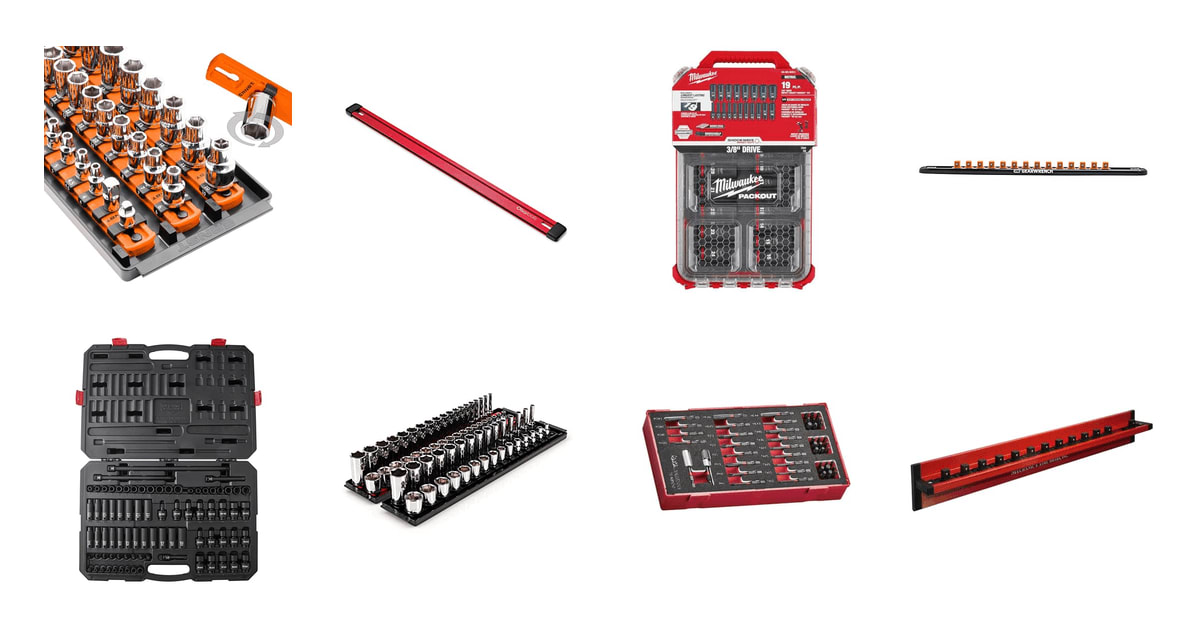
A drawer full of loose sockets costs you time on every single job. You know the routine: you're halfway under the hood, you need a 13mm, and you're sifting through a pile of chrome cylinders that all look the same. A good organizer fixes that by giving every socket one permanent spot you can find without looking. It also keeps sockets from rolling around and chipping each other. And when you close the drawer, everything stays where you put it.
Here's the honest part: no single organizer covers a full collection. Clip openings differ by drive size, so a 1/2-inch socket won't seat on a 1/4-inch rail. Deep sockets and impact sockets have fatter walls than standard chrome, and forcing them into the wrong clips bends the springs permanently. Most people end up buying two or three rails, not one. Anyone selling you a single product as a complete answer is either bundling sockets you already own or ignoring two-thirds of your drawer.
We looked at rails, trays, and socket sets that ship pre-organized, and we weighed clip retention, drive coverage, and how each one holds up in a drawer that gets slammed. We think that the Ernst Manufacturing 8482 Socket Boss 3-Rail is the best socket organizer for most people, and that the GEARWRENCH 3/8" Drive Magnetic Socket Rail is the one to buy if you only work in one drive size or want to start small.
Everything we recommend

All three drive sizes on one tray, and nothing falls off

One drive size, strong retention, and it sticks to metal

A blank rail you configure yourself, one clip at a time

More sockets per inch, for drawers that are already full
At a glance
| Product | Drive Size | Socket Capacity | Price | |
|---|---|---|---|---|
| Ernst Manufacturing 8482 Socket Boss 3-Rail Multi-DriveTop pick | 1/4, 3/8, 1/2" | 57 Sockets | $31.02On sale |
| Olsa Tools Aluminum Socket Organizer Rail -Also great | 1/4, 3/8, 1/2" | — | $12.87 |
 | Milwaukee 4932480946 3/8 Drive Packout Deep ImpactAlso in lineup | 3/8" | 19 Pieces | $145.45 |
| GEARWRENCH 3/8" Drive Magnetic Socket Rail IncludesBudget pick | 3/8" | 14 Clips | $20.30 |
 | SUNEX Tools 80 Piece 3/8 in. DriveAlso in lineup | 3/8" | 80 Pieces | $237.96 |
 | TEKTON 3/8 Inch Drive 6-Point Socket SetAlso consider | 3/8" | 68 Pieces | $175 |
 | Teng Tools Bits Set Impact 50 PiecesAlso consider | 1/4" | 50 Pieces | $112.99 |
| Mechanics Time Saver VLAS38 Socket HolderUpgrade pick | — | — | $36.46 |
How we picked
Clip retention. We favored positive-retention designs — twist locks and ball-bearing detents — over plain friction clips, because friction tension fades with use. Owner feedback about sockets found loose in the bottom of a drawer was a disqualifier.
Drive-size coverage. We checked spec sheets for how many slots each product provides per drive size, and whether one purchase covers 1/4-, 3/8-, and 1/2-inch or only one of them. Products that cover all three in a single unit got extra weight.
Frame material. Spring steel and aluminum frames stay flat under a loaded drawer; plastic-backed rails bow and let sockets lean. We treated frame material as a proxy for how the rail looks after a year of daily opening and closing.
Drawer fit. Standard US tool chest drawers run roughly 18 to 24 inches wide, so we compared listed rail lengths and heights against that range. Low-profile rails that clear shallow drawers scored higher.
Deep and impact fit. Deep sockets and impact sockets have wider bodies than standard chrome, and clip openings sized for chrome bend permanently when you force them. We noted which products state impact or deep compatibility rather than assuming it.
Top pickOn sale
All three drive sizes on one tray, and nothing falls off
Ernst Manufacturing 8482 Socket Boss 3-Rail Multi-Drive
The Socket Boss holds 57 sockets across 1/4-, 3/8-, and 1/2-inch drive on three rails in a single 18-inch tray. Its Twist-Lock clips need a deliberate quarter-turn to release, so a hard drawer slam or a pothole won't scatter your sockets.
$31.02fromAmazonList priceMost organizers solve one drive size; this one solves all three. You get 22 slots for 1/4-inch, 18 for 3/8-inch, and 17 for 1/2-inch, all in one tray that drops into a standard chest drawer. That's the whole practical range of automotive work in a single purchase. Buying three separate single-drive rails to match it usually costs more and eats more drawer space. If you're setting up a chest from scratch, this is the shortcut.
The Twist-Lock clips are the real reason to pick this over a friction-clip rail. Friction clips grip by compression alone, and that tension fades. Ernst's design asks for a quarter-turn to seat and another to release, which means gravity and vibration can't do it for you. Owners who work out of vans and service trucks consistently report that loaded rails survive transport without shedding sockets. That's the failure mode friction rails are known for.
The individual rails lock into the tray and pop out with a button press, so you can pull just the 3/8-inch rail out to the bench and leave the rest in the drawer. Owners describe removing and reseating loaded rails as easy even when they're full. Sockets load drive-end down, which puts the heavy end at the bottom and stops the side-lean you see on cheaper rails once a few deep sockets go on.
It's spring steel, made in the USA, and it holds up. Owner feedback skews strongly positive on durability, and the common complaint isn't that anything broke — it's that people wish they could buy a tray configured for a single drive size instead of the fixed 22/18/17 split. Ernst does sell clips separately, so you can rebalance a rail if your collection leans heavy in one size. ID stickers come in the box for labeling.
Flaws but not dealbreakers
Every rail is the same orange. There's no color-coding between drive sizes, so you identify 1/4-inch from 1/2-inch by position on the tray rather than by a glance at color. That's a small annoyance in good light and a real one under a car with a drop light.
The fixed clip split won't match everyone's collection. If you own 30 sockets in 3/8-inch drive and eight in 1/4-inch, you'll have empty slots on one rail and overflow on another. Several owners report buying multiple trays and swapping rails around to get the layout they actually wanted, which adds cost. There's no magnetic backing either, so it won't stick to a fender or a bench edge.
Budget pick
One drive size, strong retention, and it sticks to metal
GEARWRENCH 3/8" Drive Magnetic Socket Rail Includes
This GEARWRENCH rail covers 3/8-inch drive — the size you reach for most on a car — with 14 clips and an aluminum frame that stays flat. Ball-bearing clips click sockets into place, and the magnetic base lets you park it on the side of a toolbox or a fender.
$20.30fromAmazonIf you're building your first real socket setup, 3/8-inch drive is where most of your work happens. This rail covers that size and stops there, which is why it costs a fraction of a full multi-drive tray. Fourteen clips is enough for a typical shallow metric or SAE run. You can always add a second rail later for deep sockets.
The ball-bearing clips are a genuine step up from plain spring tension. Each clip has a detent, so a socket clicks in and needs a deliberate pull to come off. Owners consistently say sockets stay put — including mobile techs who leave rails out on a truck. That's the same problem the Ernst Twist-Lock solves, handled differently and at a lower cost.
The magnet is the feature people end up liking most. You can stick the loaded rail vertically on the side of your chest, on a fender cover, or on the door of a service van, and it holds without being a fight to remove. That turns it into a bench tool during a job and a storage rail the rest of the time. Rails without magnets can't do that.
The aluminum frame matters more than it sounds. Plastic-backed rails at this price bow in the middle once you load them with deep sockets and then slam a drawer on them a few hundred times. Aluminum keeps the rail straight, so clips stay evenly spaced and sockets keep sitting upright instead of leaning into each other.
Flaws but not dealbreakers
Fourteen clips is a hard ceiling, and the rail is short. Owners with 14-socket sets report that the last one or two don't quite fit, especially with larger sockets that need more spacing. If your 3/8-inch collection runs to shallow and deep in both metric and SAE, you need two or three of these.
It's one drive size only. Covering 1/4-inch and 1/2-inch means buying separate rails, and by the time you've bought three, you're at or past the cost of a multi-drive tray that would have arrived in one box.
Also great
A blank rail you configure yourself, one clip at a time
Olsa Tools Aluminum Socket Organizer Rail -
Olsa sells this anodized aluminum rail without clips, so you decide how many of each drive size go on it. That's the right answer if your collection is lopsided or if you already have a bag of loose clips looking for a home.
$12.87fromAmazonEvery preset rail forces you into somebody else's idea of a socket collection. This one doesn't. You buy the bare track and populate it with 1/4-, 3/8-, or 1/2-inch clips in whatever mix your drawer actually needs. Heavy on 3/8-inch shallow and light on everything else? Build it that way. Owners with odd collections — mostly SAE with a few metric strays — point to this flexibility as the reason they went with it.
It also rescues clips you already own. Multiple owners report using generic third-party clips they'd bought loose, which wouldn't grip a plastic rail but seat fine on this aluminum track. If you've got a bag of orphaned clips in a drawer, this is a way to spend nothing extra and get them working.
The red anodized finish resists corrosion better than bare steel, which matters in a humid garage or an unheated shop. It also makes the rail easy to spot in a crowded drawer. At 17 inches with a low profile, it fits shallow drawers that won't take a taller tray.
Owners also cut these down. Because it's a plain aluminum extrusion, you can shorten one to fit a specific drawer or mount a custom-length section inside a toolbox lid. That's not something you'd do with a molded tray.
Flaws but not dealbreakers
Clips are a separate purchase, so the sticker on the rail isn't the real cost of the setup. Outfit one fully and you can end up spending more than a complete rail set would have cost. It also means planning: you need to count your sockets by drive size before you order.
The end caps are the weak point. Owners report that under the weight of a fully loaded rail, a cap can slide off and let clips escape — the exact failure the caps exist to prevent. Mount the rail so it isn't hanging by an end cap, and check them periodically.
Upgrade pick
More sockets per inch, for drawers that are already full
Mechanics Time Saver VLAS38 Socket Holder
The Mechanics Time Saver VLAS38 packs sockets tighter than a conventional flat rail by angling the clip geometry. It's for professionals with sprawling collections who've run out of drawer space and don't want to add another chest.
$36.46fromAmazonStandard rails hold roughly one socket per inch of length, and that ratio is what fills your drawers. This holder tightens the spacing so more sockets fit in the same footprint. If you own well past a hundred sockets across three drive sizes, that difference compounds across every drawer you own.
This is a capacity solution, not a first organizer. If you've got 30 sockets and room to spare, a conventional rail does the job for less. The math only works in your favor once drawer space is the actual constraint. Buy it when you're deciding between another rail and another toolbox.
It ships individually rather than as a set, which cuts both ways. You add exactly as many units as you need instead of paying for a bundle with a rail you'll never fill. But it means you have to count your collection first and plan the build-out rather than opening one box and being done.
Flaws but not dealbreakers
Owner feedback on this listing is thin — there's very little to go on beyond the manufacturer's description, which is unusual for a product this established. It's also harder to find than a GEARWRENCH or Ernst rail, so you can't walk into a hardware store and grab a replacement.
The sold-individually format means the real cost scales quickly if you're outfitting a whole chest. For a home mechanic, that's a lot of per-unit spending to solve a space problem you may not have.
Who this is for
This guide is for anyone with more sockets than they can find quickly — a home mechanic with a growing collection, a DIYer who just bought a first chest, or a pro whose drawers have turned into a pile. If you own a dozen sockets and a small tackle box, you probably don't need any of this yet. Buy a rail when hunting for the right size starts costing you real minutes on every job.
We cover clip rails and trays for standard chest drawers, plus a few socket sets that arrive pre-organized. We don't cover tool chests themselves, foam-cut drawer liners you make yourself, or wall-mounted pegboard systems, though several of these rails work on pegboard with the right hooks. One thing worth deciding up front: most brands follow the red-for-1/4, green-for-3/8, blue-for-1/2 color convention, and picking rails that respect it makes drive size readable at a glance in a dark engine bay.
How we picked
We compared listing specs, published product information, and owner feedback themes across every product here, weighing five things. Clip retention: positive-detent and twist-lock designs beat plain friction clips, because friction tension weakens and sockets end up loose in the drawer. Drive-size coverage: we counted slots per drive size and rewarded products that handle 1/4-, 3/8-, and 1/2-inch in one purchase. Frame material: spring steel and aluminum stay flat under load; plastic bows. Drawer fit: rails need to clear a standard 18-to-24-inch drawer, and low-profile ones fit shallow drawers others won't. Deep and impact fit: clip openings sized for chrome sockets bend when you force impact sockets into them, so we noted which products say what they accept.
Other socket organizers and rails worth considering
If you're buying sockets and organization together: The TEKTON 3/8 Inch Drive 6-Point Socket Set ($175) — The TEKTON SHD91220 arrives as 68 shallow and deep 3/8-inch sockets already mounted on rails, in both inch and metric. For a first real socket purchase, that removes a whole planning step — you don't have to count sockets, order clips, and retrofit rails later. The size markings are roll-stamped into the chrome rather than printed, so they stay readable for the life of the socket, and TEKTON's replacement warranty is genuinely easy to use by owner accounts. What you give up is flexibility: it's 3/8-inch only, the organizer is plastic rather than metal, and it's not magnetic. A few owners specifically wish the SAE and metric halves shipped in separate trays. If you already own sockets, this is the wrong purchase.
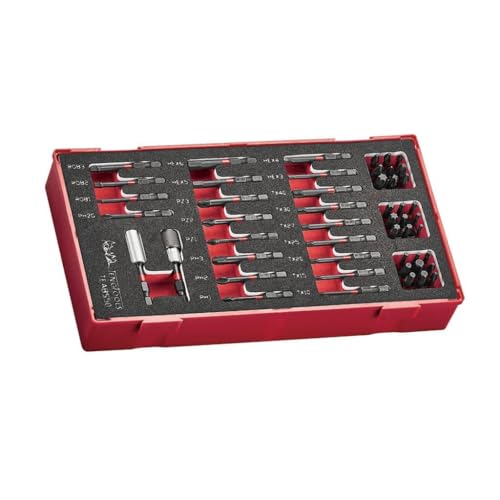
If you want shadow-board accountability for impact bits: The Teng Tools Bits Set Impact 50 Pieces ($112.99) — The Teng Tools TEABS50 is a 50-piece 1/4-inch impact bit set laid into a die-cut EVA foam tray, with 30mm and 50mm lengths plus magnetic and quick-chuck holders. Foam beats clips for finish protection and for auditing — one empty slot is instantly visible, which is why this format shows up in dealership and fleet shops where tools get signed out. The tray also kills rattle in a moving drawer. But it's a bit set, not a socket organizer: the slots are cut for these specific bits, so it does nothing for your 3/8-inch sockets. Buy it as a complement to a rail, not instead of one.
The competition
These are the products our research surfaced in this category, not a map of everything you can buy. Socket organization is a fragmented market — dozens of small brands sell nearly identical extruded rails, and tool truck brands sell versions you can't order online. What follows is what didn't make the picks, and why.
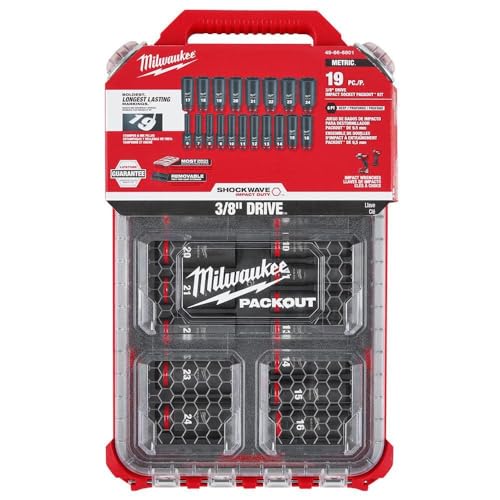
The Milwaukee 4932480946 3/8 Drive Packout Deep Impact ($145.45) — The Milwaukee 4932480946 is a 19-piece 3/8-inch deep impact set covering 6mm through 24mm, sized to drop into PACKOUT drawers without shimming or cutting foam. The Shockwave geometry is built to take impact-driver torque spikes without rounding fasteners. Two things kept it out of the picks. It's a socket set rather than an organizer, so it does nothing for sockets you already own. And a meaningful share of owner complaints are about the listing itself — buyers expecting a PACKOUT case from the photos and receiving sockets without one, with reports going both ways on what actually shows up. If you're already deep in PACKOUT and read the listing carefully, the integration is real. If you're not, you're paying for an ecosystem you don't use.
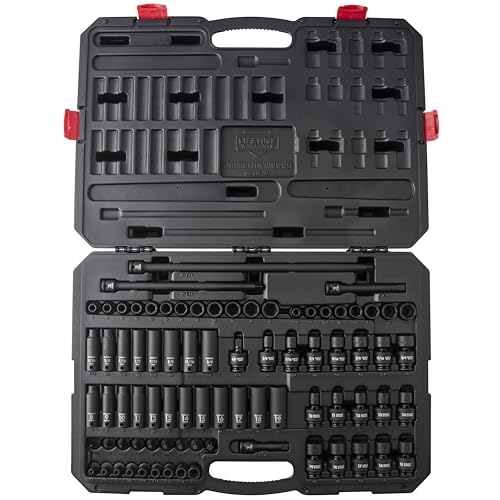
The SUNEX Tools 80 Piece 3/8 in. Drive ($237.96) — The SUNEX 3580 is the most comprehensive 3/8-inch impact collection here: 80 pieces spanning SAE from 5/16 to 3/4 inch and metric from 8 to 19mm, plus star, external star, universal joints, and extensions, all in CR-MO steel with a heavy storage case. Owner feedback on socket quality is about as strong as it gets in this lineup. It lost on category fit rather than quality — this is a socket purchase with a case, not an organizing solution, and if you already own impact sockets it does nothing for your drawer. Two practical notes if you do buy: the metric range stops at 19mm, which several owners hit as a wall on 20mm and 22mm fasteners, and the case doesn't hold sockets tightly in shipping, so expect to sort them on arrival. It's the right answer for someone building an impact set from scratch.
Setup and fit notes
Measure your drawer before you order anything. Most rails run 17 to 19 inches, and standard chests run 18 to 24 inches wide, so a rail that fits one drawer can sit at an angle in another. Check depth too — a tall tray won't clear a shallow drawer. Keep impact sockets off chrome-sized clips: impact walls are thicker, and forcing them spreads the clip spring permanently so it never grips properly again. Give impact sockets their own rail with wider openings. Do the same check for deep sockets and spark plug sockets, which have wider bases than shallow ones. Finally, pick a color convention and stick to it across every rail you buy — red for 1/4-inch, green for 3/8-inch, blue for 1/2-inch is what most brands follow, and mixing schemes defeats the point.
Questions we get
What's the difference between socket rails and socket trays?
Rails are linear bars with individual clips that grip each socket at the drive end, so you can pull one out with one hand. Trays are molded or foam platforms with a shaped slot for each socket. Rails are faster for everyday grabbing and use drawer space more efficiently. Trays protect finishes better and make a missing tool obvious at a glance, which is why fleet and dealership shops prefer them.
What do the colors on socket rails mean?
Red is 1/4-inch drive, green is 3/8-inch, and blue is 1/2-inch. No standards body defines this, but nearly every major brand follows it, so it works as shorthand across manufacturers. The point is grabbing the right drive size without reading labels — useful under a car with greasy hands and bad light. If you mix brands, prioritize ones that respect the convention.
Do I need separate rails for each drive size?
Usually yes, because clip opening diameters differ between 1/4-, 3/8-, and 1/2-inch sockets. A 1/2-inch socket either won't seat on a 1/4-inch clip or will damage it trying. The Ernst Socket Boss gets around this by putting three drive-specific rails in one tray, which is why it's our top pick. A configurable rail like the Olsa lets you mix clip sizes on one track if you'd rather build it yourself.
How do I stop sockets from falling off when I open a drawer?
Switch to positive-retention clips instead of plain friction ones. Ernst's Twist-Lock needs a deliberate quarter-turn, so drawer motion alone can't dislodge a socket. GEARWRENCH's ball-bearing clips give you a similar detent effect for less. Budget plastic-clip rails are the usual culprit here — the tension relaxes over months until the sockets are barely held at all.
How many slots do I need for a full metric and SAE collection?
Plan on 80 to 100 slots minimum, and realistically 100 to 120 if you own shallow and deep in both systems across all three drive sizes. That's roughly 25 to 35 slots per drive size. Most people end up with about one rail set per drawer, three drawers deep. Start with the drive size you use most and expand from there rather than buying everything at once.
Will these rails work on a pegboard wall?
Some will, with pegboard hooks or brand-specific mounting attachments sold separately. Wall mounting makes your whole collection visible, which speeds up selection compared with digging through a drawer. The tradeoff is dust and shop debris settling on everything, plus you can't pick the rail up and carry it to the car. It works best in a permanent shop, not for mobile work.
Why you should trust us
For this guide:
- We compared manufacturer specifications for every product here — clip counts by drive size, rail lengths, frame materials, and stated drive compatibility.
- We read owner feedback across these listings for recurring themes, paying attention to reports of clips loosening, end caps slipping, rails bowing under load, and listings that didn't match what arrived.
- We did not handle, install, or use any of these products, and every claim above comes from published specifications or patterns in owner reports.
- We read owner reviews on every listing, weighted toward the critical ones, because that is where the recurring failures show up.
- We have a systematic way of automatically fetching the latest prices, so the numbers on this page stay current.
- This is a research-focused guide, so the team may not own every product listed — though we often do own the top winners, which gives us extra context for the recommendations.
- We don't accept free products, and the retailer commission never changes which product we recommend.
Sources
Best Socket Organizers — Popular Mechanics, Popular Mechanics
Best Socket Organizers for Your Toolbox — Family Handyman, Family Handyman
Best Socket Organizers to Keep Your Workshop Tidy — This Old House, This Old House
Best Socket Organizers Tested and Reviewed — The Drive, The Drive
Ernst Manufacturing Socket Organizer In-Depth Review — Pro Tool Reviews, Pro Tool Reviews
Amazon product listings and owner reviews for all 8 products
Manufacturer specification pages for each product
Some passages in this guide may be paraphrased with AI help. Prices are refreshed automatically.
More like this.
Continue exploring electronics reviews and recommendations.

The Best Aluminum Cable Deck Railing Kits
Cable railing sells itself on one thing: you stop noticing the railing and start noticing the yard. Thin horizontal cables block a fraction of the view…

The Best Toilet Safety Rails and Grab Bars
Getting on and off the toilet is one of the most repeated movements in anyone's day, and it's also one of the riskiest. AARP identifies the toilet…

The Best Collapsible Trunk Organizers
Your trunk is where order goes to die. A bag of groceries tips over on the first left turn, a jug of washer fluid rolls into the spare tire well, and the…

The Best Car Seat Organizers
A back seat gets messy fast. Tablets slide under the seat, water bottles roll on every turn, and snack wrappers work their way into places you won't find…

The Best Pull-Out Cabinet Organizers
A base cabinet is mostly dead space. You've got 22 inches of depth, and you can comfortably reach maybe 14 of them. Everything past that turns into a…

The Best Pill Organizers
Nobody skips their medication on purpose. You get distracted, the phone rings, and by dinner you can't remember whether you took the morning pill or just…