The Best Stains and Sealers for Pressure Treated Decks
A deck stain has one real job: keep water and sun out of the boards. Pressure treated pine takes the worst of both. Rain pools on the flat surfaces, the sun works on them all afternoon, and bare wood goes gray, then rough, then cracked. The finish you choose decides whether you're back out there next spring or in three years. It also decides how the deck looks — warm and grainy, or flat and painted over. And it decides how much of a weekend you give up.
Here's the part nobody advertises: no stain on a horizontal deck lasts as long as the can implies. Foot traffic, standing water and UV chew through any finish faster on boards than on railings, so plan on recoating the walking surface every couple of years even with the good stuff. Prep is most of the work, too. If you skip the cleaning and brightening, or you stain lumber that's still wet from the treatment plant, the best product here fails about as fast as the worst one.
So the choice comes down to chemistry and being honest about your own habits. Penetrating oils soak into the fiber and fade rather than peel, which makes renewing them easy. Film-forming stain-and-sealers look sharper at first and give you a tougher surface, but they eventually lift at the edges. Water-based formulas have closed most of the gap and clean up in a bucket. We think that the Ready Seal 500 Clear is the best stain for a pressure treated deck for most people, and that the Armstrong Clark Deck and Wood Stain is the one to buy if you want warm color on gray boards.
Everything we recommend
Hard to mess up, but clear won't hide gray boards

More warmth and mildew resistance, for more per gallon

Stain and sealer in one can, but the film can lift later

Longest stretch between coats, if prep doesn't scare you
Soap-and-water cleanup and real UV blocking, less reach
At a glance
| Product | Container Size | Finish Type | Price | |
|---|---|---|---|---|
| Ready Seal 500 ClearTop pick | 5 Gallon | Clear | $178.95 |
| Amteco Twp-120-5 Total Wood Preservative StainUpgrade pick | 5 Gallon | — | $269.99 |
| Armstrong-Clark Armstrong Clark Deck and Wood StainRunner-up | 1 Gallon | Semi-Transparent | $84.95 |
| Defy Extreme Wood Stain Light Walnut 1-gallonAlso great | 1 Gallon | — | $54.54 |
 | Cabot Australian Timber Oil Wood Stain andAlso consider | 1 Gallon | — | $55.98 |
 | VAN VOTZ Waterproofing Stain & Sealer [1-QuartAlso in lineup | 1-Quart | Semi-Transparent | $45.99 |
| Olympic Elite 1 gal. Atlas Cedar Semi-TransparentBudget pick | 1 Gallon | Semi-Transparent | $51.98 |
 | Penofin Deep Penetrating Oil Treatment for ExoticAlso in lineup | 1 Gallon | Transparent | $65.94 |
How we picked
Penetrating over film. On horizontal boards, finishes that soak into the fiber can't peel, while film-formers eventually lift and demand stripping. We weighted penetrating oils heavily and treated any urethane or varnish component as a drawback on walking surfaces.
UV and color holding. Flat deck boards degrade several times faster than railings because they take direct sun all day. We looked for stated UV protection with real mechanism behind it — pigment load or zinc nano-particles — rather than a vague claim on the label.
Mold and mildew. In shade or humidity, mildew ends a finish before fading does. We leaned on published reviews from wood restoration professionals, who consistently separate the multi-year performers from the one-season ones.
Application forgiveness. Most failures are user error: lap marks, over-application, stain on wet wood. We favored products whose own instructions reduce the number of ways a first-timer can go wrong.
VOC compliance. A stain you can't legally buy isn't a recommendation. We checked which formulas are restricted in low-VOC states and made sure the lineup includes strong options that are compliant everywhere.
Top pick
Hard to mess up, but clear won't hide gray boards
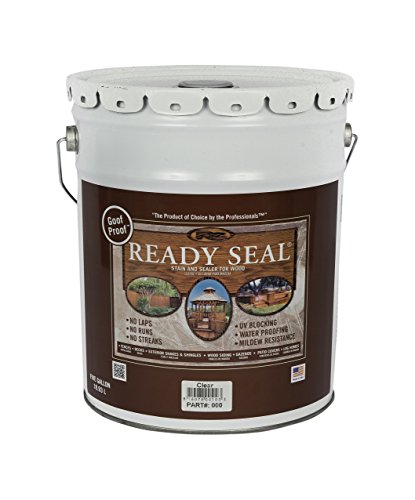
Ready Seal 500 Clear
This penetrating oil goes on wet-on-wet, so you can spray a whole deck without leaving lap marks or back-brushing a single board. It soaks into the fiber instead of sitting on top, which means it can't peel — but the clear version adds no color of its own.
$178.95fromAmazonThe wet-on-wet formula forgives a slow worker. Most deck stain disasters are lap marks — dark stripes where a wet section met a dry one. This one stays workable while you move, so you can start at a corner, take a phone call, and come back without a seam showing. If you've never stained a deck and you're doing it alone on a Saturday, that one property matters more than anything else on the label.
It skips the steps that eat your afternoon. The maker says it needs no primer and no back-brushing, and you can put it on with a pump sprayer, a roller or a brush. That turns a typical deck from a two-day job into one long afternoon. There's no narrow temperature window either, so you're not holding out for the perfect forecast weekend that never quite arrives.
It can't peel, because there's no film to peel. The oil bonds down inside the wood fiber instead of drying into a skin on the surface. Peeling, cracking and chipping are the classic failures on pressure treated pine, and they simply aren't available to this kind of finish. It fades instead. When it's time, you clean the deck and add another coat — no stripping, no sanding, no drama.
The bulk container is sized for an actual deck. Five gallons covers a large deck with enough left over for the railings, and buying at that size costs less per gallon than working through small cans. If your deck runs a few hundred square feet or more, the alternative is a second trip to the store halfway through the job. That's how half-stained decks happen.
Flaws but not dealbreakers
Clear is clear — it won't hide anything. There's no pigment to cover gray, blotches or an old uneven coat, so what you see after cleaning is roughly what you get, just richer and darker. Pigment also carries UV protection. On a deck that bakes in the sun all day, a semi-transparent tone holds up longer than any clear finish, this one included.
It's an oil, with everything that implies. You'll smell it for a day or two, cleanup means mineral spirits rather than the kitchen tap, and the VOC content runs higher than the water-based options here. Rags soaked in penetrating oil can heat up on their own, so spread them flat outside to dry before they go in the trash.
Five gallons is a lot of stain for a small deck. If you've got a landing, a few steps and a short run of railing, most of that jug ends up on a garage shelf. Stored oil stain keeps for a while, but it isn't the size to buy for a balcony.
Runner-up
More warmth and mildew resistance, for more per gallon
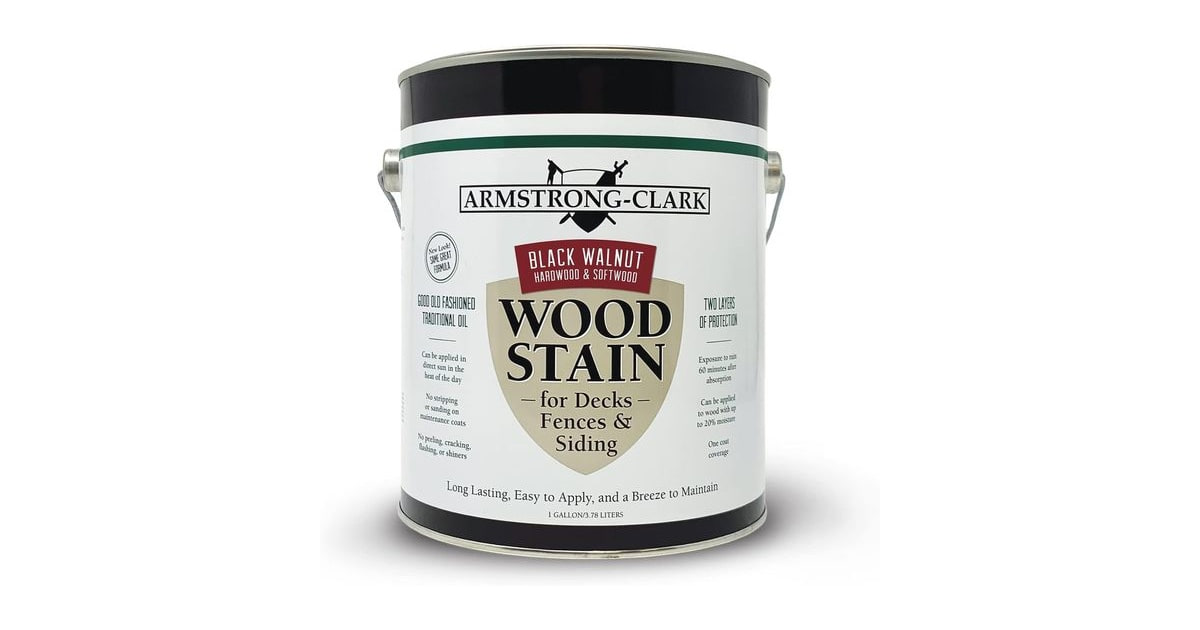
Armstrong-Clark Armstrong Clark Deck and Wood Stain
This is a straight exterior oil stain — no water, no modified resins — in a warm cedar semi-transparent tone that covers graying without burying the grain. It's compliant in every state, and maintenance coats need nothing more than a wash, which makes it easy to keep up year after year.
$84.95fromAmazonIt puts real color on tired boards. The Cedar Semi-Transparent tone warms up southern yellow pine and Douglas fir without turning them into painted lumber. You still see the grain and the knots. On a deck that's a few seasons old and starting to silver, that pigment does double duty: it hides the weathering and it shields the wood from more of it.
You can stain it in the heat of the day. Most oil stains want shade and a mild forecast. This one is rated for direct sun, and the maker says rain an hour after full absorption won't ruin the job. If your deck faces south and your only free time is a July afternoon, that flexibility is the difference between staining this weekend and waiting for a month.
Recoats don't mean starting over. Per the manufacturer, maintenance coats need no stripping, sanding or media blasting — you clean the deck and put more stain on. That's the quiet advantage of a penetrating oil, and it compounds. Every renewal cycle you skip the ugliest part of the job, which makes you far more likely to actually do it on schedule.
It's legal everywhere, so you don't have to look anything up. VOC limits vary by state and sometimes by county, and a few of the best-performing oil stains are simply unavailable in the strict markets. This one isn't restricted. If you're in California or Maryland, or you're freshening up a deck before listing the house, that removes a whole category of hassle.
Published reviews from restoration pros rank it near the top for mold resistance. Shade and humidity, not sun, are what kill a finish in the Pacific Northwest and the Southeast. Wood restoration specialists writing for home-improvement outlets consistently place this stain among the best for holding off mildew across multiple seasons, which is the performance dimension that matters most under trees.
Flaws but not dealbreakers
It's one of the more expensive gallons here. Coverage runs roughly 150 to 250 square feet per gallon on horizontal softwood, so a big deck needs several cans. Do that math before you commit — on a large surface, the difference against a bulk penetrating oil adds up to real money.
The surface has to be clean and bright. Like any traditional oil, it rewards prep and punishes shortcuts. On gray wood you want a sodium percarbonate cleaner followed by an oxalic acid brightener, then a couple of days of drying. Skip that and the color goes on patchy.
The color range is short. Big-box brands offer shelves of tones. Here you get a focused list, and the exotic hardwood guidance points you to just a few specific colors. If you had a particular gray or driftwood look in mind, you may not find it.
Budget pick
Stain and sealer in one can, but the film can lift later
Olympic Elite 1 gal. Atlas Cedar Semi-Transparent
One can handles both jobs — color and sealing — so there's no second product and no guessing about what goes on first. The urethane in it leaves a harder surface than a plain penetrating oil, and the low-VOC formula is legal in every state.
$51.98fromAmazonIt removes the decision that trips up first-timers. Stain, then sealer? Sealer, then stain? Both? This is one product, one pass, one set of instructions. If this is your first deck and you mostly want the job done correctly without a research project attached, that simplicity is worth something real.
The urethane buys you a harder surface. PPG calls it a four-season package: waterproofing plus resistance to cracking and peeling, built around a urethane-fortified formula. In practice that means a tougher skin over the wood than an oil that only soaks in. On a deck that hosts a grill, patio furniture and a dog, that toughness shows up quickly.
Low VOC means you don't have to check anything. It's compliant nationwide, so there's no reading the fine print about your state before you order. That also makes it pleasanter to work with — less fume, easier cleanup, and no worry about staining a deck that wraps close to open windows.
Atlas Cedar is a forgiving color on pine. It's a warm mid-tone with enough pigment to even out the blotchiness pressure treated boards develop as they dry. You get color clarity rather than a muddy overlay, and the grain still reads from a standing height.
Flaws but not dealbreakers
Any film can peel, and this one has a film. Urethane is what makes the surface tough, and it's also what eventually lifts. Expect the first signs at board edges, stair treads and the path from the door to the grill — the places that take the most shoe traffic. Once it starts, the fix is stripping rather than a simple recoat.
Thirsty new wood may want a second coat. Freshly dried pressure treated pine drinks the first pass unevenly. Budget for extra product and an extra day if your boards are new, and check the color once the first coat has dried rather than judging it wet.
Availability wanders. This one goes in and out of stock, and colors don't always come back together. If you're planning a specific look across a deck, railings and stairs, buy all the product you need at once so it's the same run.
Upgrade pick
Longest stretch between coats, if prep doesn't scare you
Amteco Twp-120-5 Total Wood Preservative Stain
Deck contractors reach for this one when they don't want to come back for years; reported longevity runs three to five years on properly prepped wood. It's petroleum-based and high in VOCs, which puts it off the table in California, Maryland and other restricted states.
$269.99fromAmazonLongevity is the whole argument. The manufacturer claims three to five years between reapplications, and contractor communities across different climates report the same range in the field. That's the top of what any of these products promises on a deck floor. If your goal is to touch this project as rarely as possible, this is where the research points.
It's built for the lumber you actually own. Modern pressure treated wood uses ACQ or copper azole preservatives, which replaced the older CCA chemistry for residential use. Those copper systems can interfere with adhesion when the stain isn't formulated for them. This petroleum-based penetrating stain is compatible, which is why it shows up so often on professional deck jobs.
Pecan is the right warmth for aged pine. It's a semi-transparent brown that covers mild graying and evens out sun-bleached boards while leaving the grain visible. On a deck that's been down five or ten years, this reads as restored rather than resurfaced — closer to what you wanted when the boards were new.
The bulk size covers a big deck in one order. Five gallons handles a large surface plus railings and stairs without a mid-project run to the store, and buying at that volume brings the per-gallon cost down considerably from single cans. For a deck big enough to justify the prep work, that's the sensible way to buy.
Flaws but not dealbreakers
The VOC content rules it out in some states. It isn't compliant in California, Maryland or other low-VOC markets, and that's a hard stop, not a preference. Check your state before you get attached to it. If you're restricted, the Armstrong Clark stain is the closest oil-based substitute.
Prep isn't optional here. The three-to-five-year claim assumes a properly cleaned and brightened surface — sodium percarbonate cleaner, then oxalic acid brightener, then full drying. It also benefits from back-brushing to work the oil into open grain, which adds hours compared with a wet-on-wet stain. Cut those corners and you'll be recoating on a two-year cycle like everyone else.
It's the most expensive option here. You're paying up front for years you don't spend staining, which is a reasonable trade for a big deck you plan to keep. On a small deck, or one you'll be leaving behind soon, the math stops working.
Also great
Soap-and-water cleanup and real UV blocking, less reach
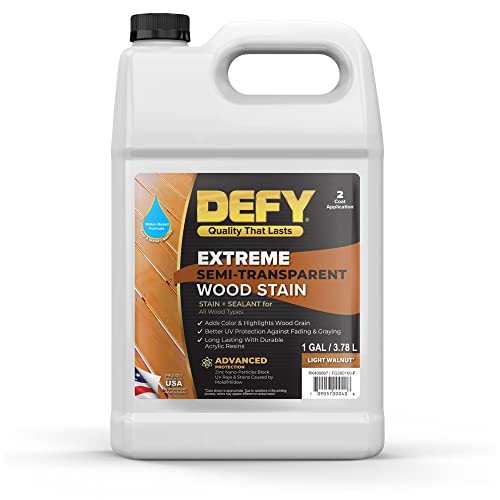
Defy Extreme Wood Stain Light Walnut 1-gallon
Zinc nano-particles physically block UV rather than relying on chemical inhibitors that wear out, which addresses the old weak spot of water-based stains. Cleanup is soap and water, and the low-VOC formula is legal in every state, including the strict ones.
$54.54fromAmazonThe zinc is the point. Traditional water-based deck stains faded because their UV inhibitors broke down under sustained sun. These nano-particles work more like sunscreen — they block the light instead of absorbing the damage. On a deck with no shade, that's the mechanism that keeps color and slows the drift to gray.
Cleanup is a bucket and dish soap. No mineral spirits, no solvent smell in the garage, no special disposal for the brush you forgot about. If the reason you've been putting off this project is the mess at the end of it, this changes the calculation more than any spec on the can does.
It's legal everywhere, and it applies however you like. Low VOC means no state restrictions to check, and you can spray, brush or roll it. It's also rated for fences and outdoor furniture, so leftover product has somewhere useful to go instead of hardening on a shelf.
Light Walnut is a neutral that doesn't fight the wood. It's warm without reading orange, and it stays light enough that it won't go muddy on pale pressure treated pine. On a deck with mixed board ages, that neutrality helps the newer replacements blend with the old ones.
Flaws but not dealbreakers
Coverage is modest. The maker puts it at roughly 100 to 150 square feet per gallon, which is lower than the oil-based options here — and rough-sawn boards land at the bottom of that range. Measure your deck and then buy a gallon more than the math suggests.
On dense, resin-rich boards it won't reach as deep. Older pressure treated lumber that has fully dried and closed up its pores is the hardest case for any water-based formula. If that describes your deck, a penetrating oil will get further into the wood and last longer.
You'll be recoating sooner. The maker's own reapplication signal is when water stops beading and starts soaking in, and on a deck floor that generally comes around faster than it does with the petroleum-based stains here. That's the trade for the easy cleanup.
Who this is for
This guide is for anyone with a pressure treated pine, fir or spruce deck that's either newly dried or a few seasons into going gray. If your boards still bead water, you're not ready — sprinkle water on a board and watch. Beading means wait a few more weeks. Absorbing within ten minutes means you can stain. Air-dried pressure treated lumber usually needs three to six months after installation; lumber stamped KDAT, for kiln-dried after treatment, is ready right away.
It's not for exotic hardwood decks. IPE, cumaru, teak and massaranduba are dense enough that ordinary deck stains sit on the surface, and they want a product formulated for them. It's also not a guide to solid stains or deck paints. Those obscure the grain, behave like exterior paint and eventually need full stripping — fine when the wood is already too damaged to show off, wrong for most pressure treated decks.
How we picked
We started from the way pressure treated decks actually fail and worked backward. Penetration: finishes that bond inside the fiber can't peel, so film-forming products lost ground on horizontal boards. UV: flat surfaces take far more sun than railings do, so we wanted pigment or zinc doing the blocking, not just a chemical inhibitor that burns out. Mildew: in shade and humidity, mold ends a finish first, and published reviews from restoration pros sort the multi-year performers from the rest. Application: we favored formulas that reduce the ways a first-timer can go wrong — no back-brushing, no narrow weather window, no lap marks. Compliance: a stain that's restricted in your state isn't an option, so the lineup includes strong picks that are legal everywhere.
Other stains and sealers for pressure treated decks worth considering
If your deck sits in full sun all day: The Cabot Australian Timber Oil Wood Stain and ($55.98) — Cabot's Australian Timber Oil uses a three-way oil blend built for extreme weather and for getting into dense, resin-rich wood — which is exactly what pressure treated pine becomes once it has fully dried and closed up. It's a staple in Florida, Texas and Arizona for that reason, and it turns up regularly on recommended lists from major home and consumer outlets. Jarrah Brown is a deep, warm tone that pulls a lot of depth out of sun-beaten boards, though it reads darker than most people expect on pale pine, so try it on an out-of-the-way board first. What you give up is longevity: it generally wants recoating sooner than the petroleum-based penetrating stains here.
The competition
This is what our research surfaced, not a census of everything on the shelf. The product below didn't make the picks, but it's the right answer for a specific kind of deck — just not a pressure treated one.
The Penofin Deep Penetrating Oil Treatment for Exotic ($65.94) — Penofin's Deep Penetrating Oil Treatment is formulated for exotic hardwoods — IPE, teak, cumaru and the like — where the grain is so dense that ordinary stains never get in. It carries added UV protection to slow the silvering those woods do in direct sun, plus advanced mildew protection that makes it a favorite in humid climates, and it's used on some very large commercial boardwalks. It lost here on fit, not quality: on standard ACQ pressure treated southern yellow pine, Ready Seal or the TWP stain will penetrate better and give more predictable color. The transparent tone also adds no coverage over gray wood, and it can be slow to ship, so plan ahead. If your deck is tropical hardwood, buy it and ignore the rest of this guide.
Prep and application notes
Two mistakes cause most stain failures, and both happen before you open the can. The first is staining wet wood: pressure treated lumber has to drop below 19% moisture, which takes three to six months of air drying unless the end tag says KDAT. Use the water bead test — sprinkle water on a board, and if it soaks in within ten minutes, you're ready. The second is skipping the wash. Clean with a sodium percarbonate deck cleaner to strip dirt, mildew and oxidation, then follow with an oxalic acid brightener on gray wood to reset the pH and open the pores. Give it 24 to 48 hours to dry completely. Then resist the urge to over-apply; two thin coats on new wood, one on a maintenance recoat, and wipe up anything that hasn't soaked in.
Questions we get
How long do I have to wait before staining new pressure treated wood?
Air-dried pressure treated lumber usually needs three to six months after installation to get below 19% moisture. The exception is KDAT — kiln-dried after treatment — which is ready right away, and the designation is stamped on the board ends. When in doubt, sprinkle water on a board: if it absorbs within ten minutes you're good, and if it beads up, wait a few more weeks and try again.
What should I use on a deck that's already gray and weathered?
Go with a semi-transparent warm tone in a penetrating oil — the Armstrong Clark stain or the TWP Pecan are the two in this guide built for that job. Both soak into existing fiber and put color back rather than covering it up. Prep matters more than usual here: clean with a sodium percarbonate cleaner, then apply an oxalic acid brightener to open the pores. Stain straight over gray wood and the color goes on patchy.
Is oil-based or water-based better for pressure treated wood?
Oil-based penetrating stains generally go deeper and last longer — call it three to five years versus two to three. Water-based formulas have closed much of the gap, particularly on UV protection, and they clean up with soap and water. Choose oil for maximum time between coats. Choose water-based if you're in a VOC-restricted state or you just want the easier day.
How often will I need to reapply?
Deck boards typically want a fresh coat every two to three years, because horizontal surfaces degrade several times faster than vertical ones. Railings and fascia can often stretch to four or five years. The signal is simple: when water stops beading and soaks in within a few minutes across several boards, it's time. Professional-grade penetrating stains push the deck-floor interval toward the long end, but only with thorough prep.
What's the difference between a deck stain and a deck sealer?
A stain carries pigment plus UV inhibitors and wood preservatives. A sealer is mostly a moisture barrier with little or no color. Penetrating oils like the Ready Seal and TWP stains do both jobs at once, and the Olympic Elite combines them explicitly. For pressure treated wood, a penetrating stain with sealing properties is enough — a separate sealer coat on top rarely helps.
Do I really have to clean the deck first?
Yes, and it's the step people regret skipping. Use a sodium percarbonate deck cleaner to lift dirt, mildew and surface oxidation, then a wood brightener if the boards have gone gray. Let everything dry for 24 to 48 hours before you stain. Dirty wood is the second most common reason a finish fails early, right behind staining wood that's still wet.
Why you should trust us
For this guide:
- We read the manufacturer specifications, coverage rates and application instructions for every stain in this guide.
- We compared published reviews from wood-restoration and home-improvement outlets, focusing on which formulas hold up against mildew and UV over multiple seasons.
- We looked for recurring themes in owner feedback — peeling on traffic lanes, blotchy absorption on new boards, color fading faster than promised — when deciding which flaws were worth flagging.
- We read owner reviews on every listing, weighted toward the critical ones, because that is where the recurring failures show up.
- We have a systematic way of automatically fetching the latest prices, so the numbers on this page stay current.
- This is a research-focused guide, so the team may not own every product listed — though we often do own the top winners, which gives us extra context for the recommendations.
- We don't accept free products, and the retailer commission never changes which product we recommend.
Sources
Best Deck Stains of 2026 — Family Handyman, Family Handyman
Best Deck Stain — Bob Vila, Bob Vila
Best Deck Stains Reviewed — This Old House, This Old House
Best Deck Stain and Sealer — Popular Mechanics, Popular Mechanics
Best Deck Stains — Good Housekeeping Institute Testing, Good Housekeeping
Amazon product listings and owner reviews for all 8 products
Manufacturer specification pages for each product
Some passages in this guide may be paraphrased with AI help. Prices are refreshed automatically.
More like this.
Continue exploring home reviews and recommendations.

The Best Aluminum Cable Deck Railing Kits
Cable railing sells itself on one thing: you stop noticing the railing and start noticing the yard. Thin horizontal cables block a fraction of the view…

The Best Door Threshold Seals and Weatherstripping
You can feel a bad door seal before you can see it. Stand near the front door on a cold morning and there's a cool ribbon of air across your ankles. In…

The Best Asphalt Driveway Sealers
Your driveway takes more abuse than any other surface on your property. Sun bakes the binder out of the asphalt, water works into hairline cracks and…

The Best Pet Stain and Odor Removers
Pet accidents never happen at a convenient hour. You find the damp patch on the rug at midnight, or you smell it before you see it, and the clock starts…

The Best Electric Garage Heaters
A cold garage isn't just unpleasant. It's the reason your winter projects keep getting postponed, the reason your fingers stop working on a socket wrench…

The Best Throw Blankets for Your Couch and Living Room
A throw blanket is one of the few things in your living room that you touch every single day. It's the thing you pull over your legs during a movie, the…