The Best Welders for Beginners
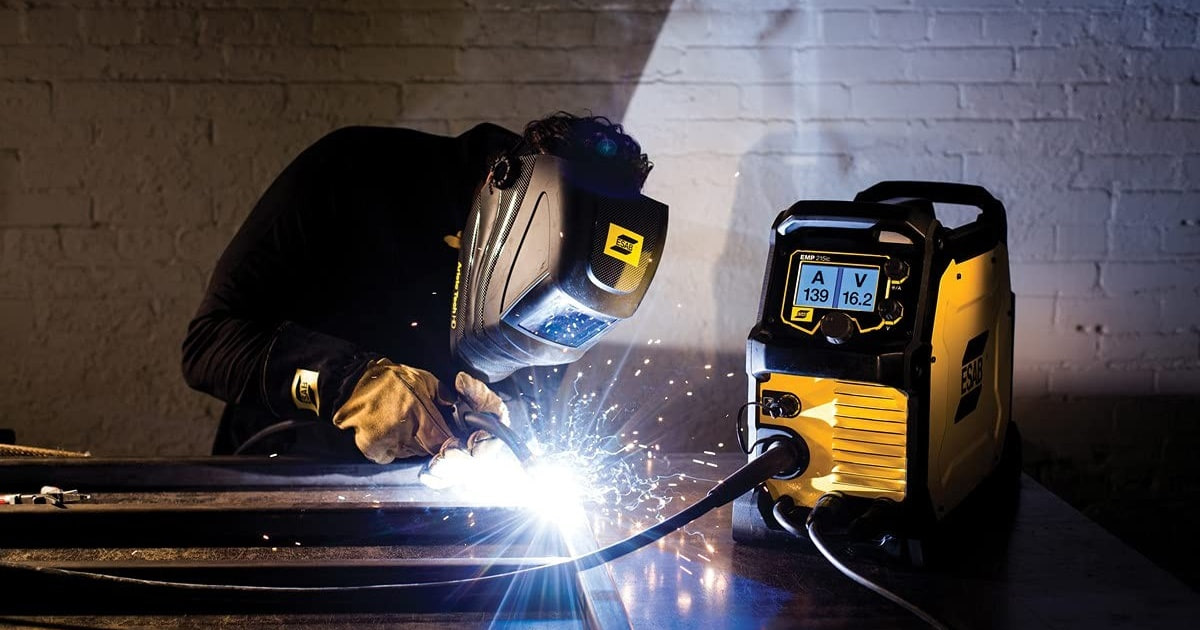
The first thing you learn about welding is that the machine matters less than the settings. Wire speed and voltage have to match the metal in front of you, and if they don't, you get a bead that's either cold and lumpy or blown clean through the panel. That's why the best beginner welder isn't the one with the biggest amp number. It's the one that gets you to a decent bead on day one, plugs into the outlet you already have, and doesn't punish you for a shaky hand.
No welder here does everything well. Flux-core machines skip the gas cylinder but throw spatter and leave slag you'll chip off by hand. Gas MIG lays down cleaner beads but adds a tank, a regulator and a hose to your setup. Anything that welds thick structural steel in one pass needs 230V, which means an electrician and a new circuit. And every machine on this list assumes you'll buy a helmet, gloves and a jacket separately — none of them ship with the gear that keeps sparks out of your forearms.
You'll also spend more hours practicing than shopping. Owners who came to welding cold consistently describe the same arc: functional welds within a few sessions, good-looking welds much later. A forgiving machine shortens that first stretch, but it doesn't skip it. We think that the Hobart Handler 140EZ is the best welder for beginners for most people, and that the FORNEY Easy Weld 140 is the one to buy if you want to learn the fundamentals without paying for a gas setup you might never use.
Everything we recommend

Two dials, a household outlet, and a machine you won't outgrow

No gas, no cylinder, no excuse not to start practicing

One machine for MIG, stick and TIG, on either voltage
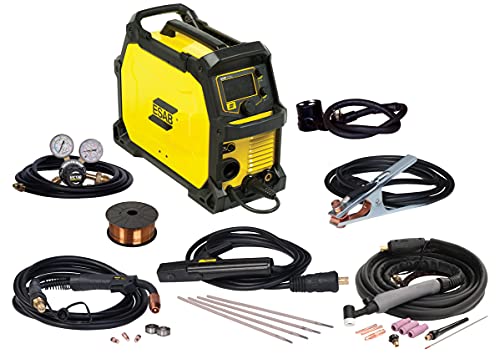
The arc adapts to you, which is a real head start
At a glance
| Product | Amp Output | Input Voltage | Price | |
|---|---|---|---|---|
| Hobart Handler 140EZ 120-Volt Wire Feed WelderTop pick | 30–140 A | 120V | $719.99 |
| Lincoln Electric K4876-1 POWER MIG 215 MPiUpgrade pick | — | 120V/230V | $2,248.99 |
 | Miller Millermatic 252 Electric MIG WelderAlso in lineup | — | 208/230VAC | $5,295 |
| FORNEY Easy Weld 140 Amp 120-Volt Flux-CoredBudget pick | 140 Amp | 120V | $337.99 |
| ESAB Rebel EMP 215ic Multi-Voltage MIG/Stick/TIG Welder-Also great | 5-240A | 120/230V | $2,590.47 |
 | Hobart 770462 6011 StickAlso consider | — | — | $29.99 |
How we picked
Plugs in where you weld. We treated input voltage as the first filter, because a machine that needs a circuit you don't have is a machine you can't use. Anything we recommend for a first purchase runs on a standard 120V outlet with a 20-amp breaker.
Forgiving setup. Published reviews and owner feedback agree that mismatched wire speed and voltage ruin more beginner welds than bad technique does. We favored machines with auto-set modes or infinite adjustment over fixed stepped switches.
Thickness range. We looked for a rated single-pass capacity of at least 3/16-inch steel with the ability to go down to sheet metal, since that span covers auto body, brackets, carts and trailer repair. Machines that only do one end of the range got ranked down.
Room to grow. Spec sheets told us which machines add stick, TIG or 230V operation later, and which are a hard ceiling. That matters for anyone who suspects welding will become a regular hobby rather than a one-project fix.
Support and durability. We compared warranty terms and read owner feedback for patterns in arrival condition, wire drive reliability and service response. Established brands with parts networks got preference over unfamiliar imports at similar output.
Top pick
Two dials, a household outlet, and a machine you won't outgrow
Hobart Handler 140EZ 120-Volt Wire Feed Welder
The Handler 140EZ is a 120V wire-feed welder that sets its own voltage and wire speed once you tell it the metal thickness and wire size. It welds 24-gauge sheet up to 3/16-inch steel, which covers nearly everything a home shop throws at it.
$719.99fromAmazonEZ Mode removes the step where most beginners fail. You pick your material thickness and your wire diameter, and the machine handles voltage and feed speed from there. That's the whole setup. Published reviews of the Handler line keep landing on the same point: mismatched wire speed is the reason first welds come out porous or globby, and taking that decision away from a new welder fixes more bad beads than any amount of practice does in week one.
The 30 to 140 amp range on standard 120V power is the sweet spot for home work. You can tack a bracket, patch a fender, build a shop cart or repair a trailer tongue without thinking about your panel. Above 3/16-inch you'll need multiple passes and good joint prep, and above 1/4-inch you should be looking at a different machine entirely. But most garage projects never get there.
Infinite voltage control matters more than it sounds. Cheaper welders use a stepped switch, so you're choosing between setting 3 and setting 4 with nothing in between — and on thin sheet metal that gap is the difference between a weld and a hole. Here you can creep the voltage down until the arc stops burning through. If you're patching rust on a quarter panel, that fine adjustment is the feature you'll use most.
It also handles aluminum with the optional spool gun, which is unusual at this size. You'll need 100% argon and aluminum wire, and aluminum is genuinely harder to learn than steel — it conducts heat fast and goes from solid to puddle with little warning. Still, having the option means the machine doesn't cap what you can attempt. Hobart covers key components like the transformer and rectifier for five years.
Flaws but not dealbreakers
The ceiling is real. This is a 120V machine with a 3/16-inch single-pass rating, and there's no 240V mode to grow into. If your projects drift toward structural steel, heavy trailer frames or anything over 1/4-inch, you'll be shopping again rather than plugging into a bigger outlet.
It's MIG and flux-core only. No stick, no TIG. And at 53 pounds it's noticeably heavier than the small inverter machines, so it lives on a cart or a bench rather than riding around in your truck bed. This listing is also new enough that owner feedback is thin — most of what's known about it comes from Hobart's track record with the Handler line rather than a deep pool of buyer reports on this exact model.
Hobart covers key components including the transformer and rectifier for five years.
Budget pick
No gas, no cylinder, no excuse not to start practicing
FORNEY Easy Weld 140 Amp 120-Volt Flux-Cored
The Easy Weld 140 runs flux-core wire only, so there's no tank to rent and no regulator to buy. It weighs 19 pounds, welds up to 1/4-inch mild steel, and ships with the gun, clamp and adapter you need to strike an arc the day it lands.
$337.99fromAmazonSkipping shielding gas removes the hidden cost that surprises most first-time buyers. A cylinder deposit, gas refills and a regulator can rival what you paid for a cheap machine. Flux-core wire carries its own shielding in the core, so you plug in and go. Owners repeatedly describe this as the machine that got them welding instead of researching, which is worth something when you're not sure the hobby will stick.
It's genuinely portable in a way the other machines here aren't. At 19 pounds you carry it one-handed to the fence line, the trailer, the back of the barn. Farm owners in particular keep noting that they now fix small things they used to put off, because dragging out a big welder wasn't worth it for a ten-minute repair. Convenience changes what you actually get done.
The controls are separate and infinite — voltage on one knob, wire feed on the other, no fixed steps. That's more adjustment than you'd expect at this level, and it's the same skill you'll use on a nicer machine later. Owners consistently say the learning curve is about finding the amps-to-wire-speed balance, and once it clicks the arc runs steady. It takes 2-pound or 10-pound rolls, so wire stays cheap over time.
Flux-core also works outdoors where gas doesn't. A light breeze blows a gas shield away and leaves you with porous, weak welds; flux-core just keeps going. If your welding happens in an open garage, a driveway or a field, that's not a compromise — it's the right process.
Flaws but not dealbreakers
Flux-core is messy. It throws more spatter than gas MIG, leaves slag you chip off, and produces a rougher bead. For structural work that's cosmetic only, but it makes cleanup part of every job.
You can't add gas later. There's no conversion path, so if you decide you want clean welds on thin automotive sheet, you're buying a second machine. It also runs too hot and messy for precision body panel work. And it needs at least a 20-amp breaker — the included adapter lets it fit a 15-amp outlet, but that doesn't make a 15-amp circuit adequate.
Upgrade pick
One machine for MIG, stick and TIG, on either voltage
Lincoln Electric K4876-1 POWER MIG 215 MPi
The Power MIG 215 MPi welds MIG, flux-core, stick and DC TIG, and runs on 120V or 230V. It's the machine to buy if you already know welding will stick and you'd rather not replace a starter unit in two years.
$2,248.99fromAmazonDual voltage is the argument here. Start on the 120V outlet in your garage today, and when you eventually run a 230V circuit, the same machine steps up to its full 215 amps. That's a real difference — at full output you can put down single-pass welds on material a 140-amp machine can only reach with multiple passes and careful prep.
Process switching is a torch swap and a menu change, nothing more. The TIG solenoid and foot pedal adapter are already built in, so adding DC TIG doesn't mean buying an accessory kit and drilling into the case. You can learn MIG basics, then start practicing TIG on the same welder a year later. That collapses a two-machine plan into one purchase.
The wire drive is the part experienced owners single out. Consistent feeding is what separates a clean bead from a stuttering one, and inconsistent feed is the leading cause of ugly beginner welds regardless of technique. Owners who came from older Lincoln machines describe the presets as good enough to trust for bodywork straight out of the box.
The case is built to be moved. Multiple lift points and a compact footprint mean it goes from garage floor to truck bed without a second person, which matters if your projects happen where the broken thing is rather than where the welder lives.
Flaws but not dealbreakers
There's no auto-setup mode. You dial in parameters yourself, using the chart rather than a two-knob shortcut. That's manageable with a little reading, but it's less forgiving than the Hobart for someone who's never struck an arc.
Shipping damage comes up more than you'd like in owner reports — dented cases and deep scratches on a heavy, expensive box. Inspect it before you sign. A smaller number of owners describe erratic power delivery on units that needed replacing under warranty, so it's worth running it hard early while you're still in the return window.
Also great
The arc adapts to you, which is a real head start
ESAB Rebel EMP 215ic Multi-Voltage MIG/Stick/TIG Welder-
The Rebel EMP 215ic runs MIG, flux-core, stick including 6010 rods, and lift TIG, on 120V or 230V with a 5 to 240 amp range. Its sMIG system adjusts the arc to your travel speed and gun angle as you weld, which smooths over an unsteady hand.
$2,590.47fromAmazonNothing else here corrects for your technique while you're welding. ESAB's sMIG reads arc behavior continuously and adapts to how fast you're moving and how you're holding the gun. Owners who describe themselves as amateurs keep saying the same thing: the machine figures out the parameters and they just weld. If your hands aren't steady yet, that's the difference between a usable bead and starting over.
The process coverage is the widest in this guide. MIG, flux-core, lift TIG, and stick that handles 6010 rods — the deep-penetrating electrode used for pipe and structural work, which many light-industrial machines won't run. On 230V the 5 to 240 amp range spans thin gauge to heavy plate. That's one machine covering the range where most people buy two.
The display is the best of the bunch: bigger, sharper, and loaded with the manual and spare parts list in multiple languages. Sounds like a minor thing. It isn't, when you're standing in a garage trying to remember what wire diameter goes with 1/8-inch plate and the paperwork is somewhere in the recycling.
The build is a five-handle roll cage over unibody steel, so it takes shop abuse and still moves easily. Owners coming from much larger rigs note it handles sheet metal work their old machines were too heavy and too coarse for. ESAB backs it handle-to-handle for three years.
Flaws but not dealbreakers
The adaptive arc cuts both ways. Welding instructors warn that a machine correcting your errors can hide them from you — you produce acceptable welds without learning why they worked, and the gap shows up the moment you pick up a manual machine. Pair it with a class if you can.
It's the most expensive beginner-accessible machine here, and a meaningful share of owner reports describe units that arrived defective and had to go back. Several of those describe a slow, frustrating path through the seller before the manufacturer sorted it out. The three-year warranty is genuine, but plan on the possibility of a return before your first project.
ESAB provides a three-year handle-to-handle warranty.
Who this is for
This guide is for someone buying their first welder for a home garage, farm or small shop — fixing a trailer, patching rust, building a cart, tacking up a fence repair. If that's you, start with a 120V wire-feed machine, budget separately for a helmet, gloves and a jacket, and expect to spend real hours on scrap before you weld anything you care about. If you already weld regularly and know which process you want, you're past what these picks solve.
We don't cover TIG-only machines, engine-driven welders, plasma cutters or the safety gear you'll need alongside any of these. We also don't cover industrial production equipment, though one professional-grade machine appears below as a reference point for what a serious shop setup looks like. Anyone welding aluminum should know it takes a spool gun, argon and more practice than steel — possible on a couple of these machines, but not a beginner's first week.
How we picked
We built the shortlist from spec sheets, published reviews and owner feedback, weighing five things. Power you already have: a machine that runs on a 120V, 20-amp household circuit, because a 230V upgrade means hiring an electrician before you weld anything. Forgiving setup: auto-set modes or infinite voltage and wire-speed control rather than fixed steps, since a mismatched arc is what ruins most first beads. Thickness range: at least 3/16-inch single-pass capacity with the ability to drop down to sheet metal without burning through. Room to grow: dual voltage or added stick and TIG capability for anyone who expects the hobby to stick. Support: warranty terms and owner reports on arrival condition, wire feed reliability and how the manufacturer handles a bad unit.
Other welders for beginners worth considering
If you're learning stick welding for outdoor repairs: The Hobart 770462 6011 Stick ($29.99) — The Hobart 6011 electrodes are the rod to start with, not a machine — but any stick welder is useless without them, so they belong in your first order. The 6011 classification runs on AC or DC, which means it works with nearly every entry-level stick welder including the cheap transformer buzzboxes. More importantly, 6011 burns through surface rust, mill scale and light contamination that would leave other rods full of porosity. That's exactly the condition of most farm equipment, fence posts and trailer frames. At 60,000 PSI tensile strength the welds meet mild steel's own strength. The 5/32-inch diameter here wants real amperage, though — owners run these around 160 amps — so if your machine is smaller or your metal is thinner than 3/16-inch, buy 1/8-inch rods instead. And the beads won't look pretty; 6011 digs deep and leaves a rougher finish than a 6013 rod on clean steel.
The competition
This is what our research surfaced in the beginner-welder space, not a survey of everything for sale. Welding gear moves slowly and the well-known names dominate, so a shortlist like this covers most of what a first-time buyer will actually run into. One machine below is here mainly as a reference point — it's what the top of the market looks like, and knowing that helps you see how much capability you're not paying for.
The Miller Millermatic 252 Electric MIG Welder ($5,295) — The Miller Millermatic 252 is a professional MIG machine, and it's in this guide as a benchmark rather than a recommendation. It puts out 252 amps on 208V or 230V only — there's no 120V mode, so it can't plug into a normal garage at all. At 237 pounds it's wheeled because it has to be. It's built in the United States and owners who weld for a living speak about it the way people speak about tools they've trusted for years. But it's MIG and flux-core only, with no stick or TIG, and everything a home shop typically does — auto restoration, fence work, trailer fabrication, brackets — sits comfortably inside what the Hobart handles. Buy this if you're outfitting a commercial shop or turning welding into a trade, with the dedicated circuit and shop ventilation that implies. Otherwise it's more machine than your projects will ever ask for.
Setup and safety notes
Check your panel before you check your budget. Most residential garages run a 120V, 20-amp circuit, which is the right match for the Hobart and the FORNEY — but not for a machine that needs 230V, where you're paying an electrician to run a new line before you weld anything. Buy your safety gear in the same order: an auto-darkening helmet in the shade 9 to 13 range, gloves rated for your process, a leather jacket or flame-resistant shirt, and closed leather boots. Ventilate — an exhaust fan or an open garage door, always. Keep a fire extinguisher within reach and a welding blanket over anything you'd hate to see catch a spark. Then find some scrap and run beads until they stop looking like caterpillars.
Questions we get
Can I plug a MIG welder into a standard household outlet?
Yes, if it's a 120V machine and the circuit is rated for 20 amps. The Hobart Handler 140EZ and the FORNEY Easy Weld 140 both run on household power; the FORNEY even includes a 20-amp to 15-amp adapter, though that fits the plug rather than making a 15-amp circuit adequate. Dual-voltage machines like the Lincoln and the ESAB will run on 120V at reduced output, but only hit their full amperage on 230V.
Is MIG or stick easier to learn?
MIG, by a wide margin. The wire feeds itself, so you only manage travel speed and gun angle. Stick asks you to hold a consistent arc length while the electrode burns shorter in your hand, which takes more deliberate practice. For home repairs and general fabrication, MIG gets you to usable welds faster.
How thick of steel can a 140-amp welder handle?
On 120V, a 140-amp machine welds from about 24-gauge sheet up to 3/16-inch plate in a single pass. You can go to 1/4-inch with multiple passes and proper joint prep, and the FORNEY is rated to 1/4-inch on mild steel. If you're regularly working at 1/4-inch and above, a 230V machine is the honest answer.
Do I need a gas tank to start welding at home?
No. Flux-core wire generates its own shielding from flux inside the wire, so machines like the FORNEY need nothing but power. Gas-shielded MIG gives you cleaner beads with less spatter, but it adds a cylinder, a regulator and a hose to the setup. Flux-core also works outdoors, where wind would blow a gas shield away.
Is flux-core as strong as gas-shielded MIG?
Yes, when it's done right. Flux-core welds match or exceed gas MIG tensile strength on mild steel. The difference is cosmetic — more spatter, slag to chip off, and a rougher bead. For trailer frames, farm equipment and outdoor fixtures, flux-core strength is fully adequate.
How long does it take to learn basic MIG welding?
Most people produce functional, structurally sound welds within roughly 10 to 20 hours of practice on a forgiving machine. Welds that look clean and consistent take considerably longer — think dozens more hours. A community college class or a manufacturer training program shortens that a lot, mostly because someone tells you what you're doing wrong before you build the habit.
Why you should trust us
For this guide:
- We read manufacturer spec sheets for every machine here, comparing amperage range, input voltage, rated material thickness, weight and warranty terms side by side.
- We reviewed published coverage of beginner welders from established tool and home-improvement outlets, and cross-checked their conclusions against each machine's stated capabilities.
- We read through owner feedback for each listing, looking for recurring patterns in arrival condition, wire feed behavior, setup difficulty and how manufacturers handled defective units.
- We read owner reviews on every listing, weighted toward the critical ones, because that is where the recurring failures show up.
- We have a systematic way of automatically fetching the latest prices, so the numbers on this page stay current.
- This is a research-focused guide, so the team may not own every product listed — though we often do own the top winners, which gives us extra context for the recommendations.
- We don't accept free products, and the retailer commission never changes which product we recommend.
Sources
Best MIG Welders — Wirecutter (NYT), Wirecutter
Best Welders for Beginners — Popular Mechanics, Popular Mechanics
Best MIG Welders Tested — Bob Vila, Bob Vila
Best Welders — Family Handyman, Family Handyman
Hobart Handler 140 Official Specifications — Hobart Brothers, Hobart Brothers
Amazon product listings and owner reviews for all 6 products
Manufacturer specification pages for each product
Some passages in this guide may be paraphrased with AI help. Prices are refreshed automatically.
More like this.
Continue exploring home reviews and recommendations.

The Best Welding Helmets
A welding helmet is the one piece of gear you wear for every minute of arc time. If the lens is blurry or the tint is muddy, you squint. You chase the…

The Best Inflatable Paddle Boards for Beginners
Your first hour on a paddle board is mostly about not falling in. That's why width matters more than length when you're starting out, and why a 32-inch…

The Best Korean Skincare Products for Beginners
Korean skincare gets sold as a ritual: ten steps, a shelf of bottles, glass skin. In practice, the part that changes how your face looks is much smaller.…

The Best Yoga Blocks and Props for Beginners
A yoga block is just a brick you can't fall through, and that's the whole point. When your hamstrings won't let your hand reach the floor in Triangle, a…

A Beginner's Guide to POP MART: Everything You Need to Know About Blind Box Toys (2026)
Discover the captivating world of POP MART blind box collectibles. From understanding the thrill of the chase to choosing your first series, this complete guide helps newcomers navigate the exciting hobby of art toy collecting.

The Best Telescopes for Beginners
The hardest part of owning a telescope isn't the optics. It's finding anything in the dark. You step outside, point the tube at a patch of sky, look…