The Best Toddler Learning Companions and Interactive Books
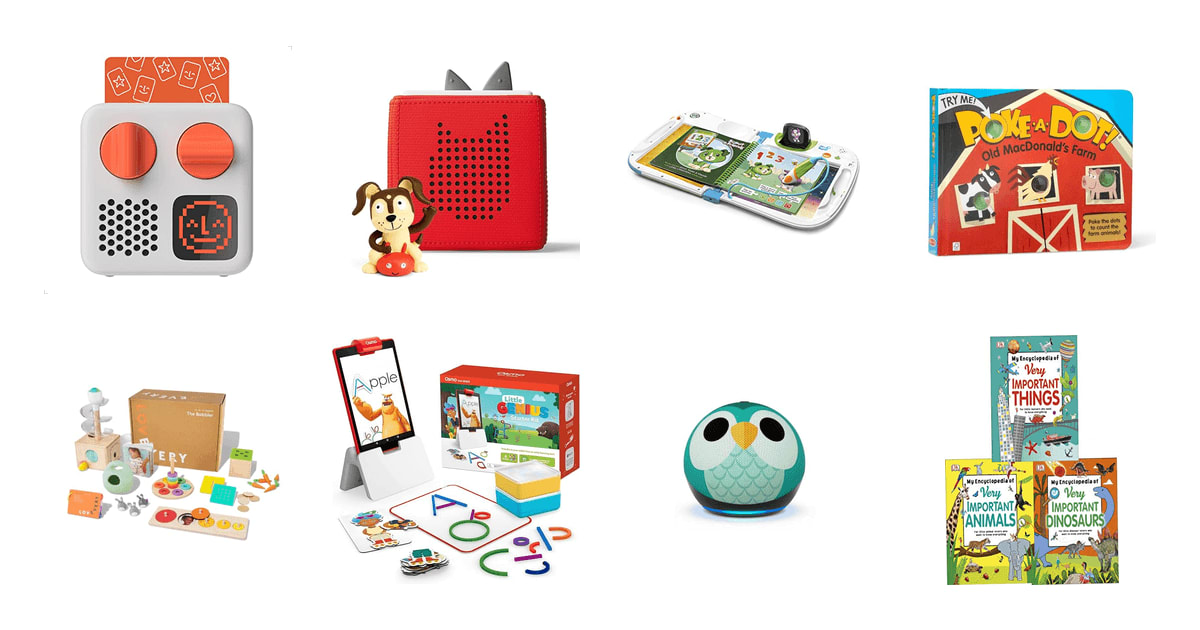
A toddler's day is mostly repetition. The same song, the same page, the same animal noise, forty times. That's not a bug — it's how small kids learn, and it's why the object you hand them matters. A good learning companion survives being dropped, chewed and carried around by one corner. It works the same way every time, so a two-year-old can start it without you. And it gives you something to do together at bedtime that isn't a screen.
Here's the honest part: none of these things teach your child to read. The American Academy of Pediatrics recommends no screen time at all before 18 months apart from video chat, and no more than an hour a day for ages 2 to 5 — which is why screen-free audio boxes have taken off. But Zero to Three research points somewhere less convenient than any gadget. Fifteen minutes of a parent reading aloud, daily, doubles the odds a child starts kindergarten with above-average reading readiness. The adult is the technology.
So think of these as things that make co-play easier, plus something to fall back on during a long car ride. We've grouped them by what they actually do — audio, tactile books, staged play kits, tablet-assisted games — because a one-year-old and a four-year-old need different objects. We think that the Yoto Mini is the best toddler learning companion for most people, and that the Toniebox Starter Set is the one to buy if your child is too young to handle cards.
Everything we recommend

The most content and the longest useful life, in a pocket size

Softer, simpler and easier for a child under two to work

The book toddlers actually reach for, and it costs the least here

Someone else picks the right toys for the exact month you're in

Structured phonics and math that outlasts the toddler stage
At a glance
| Product | Age Range | Screen-Free | Price | |
|---|---|---|---|---|
| Yoto MiniTop pick | Ages 3-12 | Screen-Free | $79.99 |
| Toniebox 1 Audio Player Starter Set withRunner-up | — | Screen-Free | $69.99On sale |
| LeapFrog LeapStart 3D Interactive Learning SystemAlso great | 2 years and up | — | $63.68On sale |
| Melissa & Doug Poke-a-Dot! Old MacDonald’s FarmBudget pick | Ages 3+ | Screen-Free | $13.11On sale |
| LoveveryUpgrade pick | 1 Year Old | — | $120 |
 | Osmo Little Genius KitAlso consider | Ages 3-5+ | — | $34.33On sale |
 | Amazon Echo Dot KidsAlso in lineup | — | Screen-Free | $39.99On sale |
 | My Very Important Encyclopedias Series 3 BooksAlso consider | — | — | $98.44 |
How we picked
Screen-free by default. We weighted AAP guidance heavily, favoring products that need no screen at all for children under two. Anything screen-assisted had to justify itself with something a screen alone can't do.
A toddler can work it. We read owner feedback for reports of children starting and stopping the thing without an adult. One-action interfaces — place a figure, slot a card, press a dot — beat menus every time.
Content that keeps coming. We checked published library sizes and whether new titles are still being added, since a companion with a dead catalog becomes a shelf ornament. Ongoing card, figure or book costs counted against the total.
Survives a toddler. We compared build materials and dimensions on spec sheets against durability themes in owner reviews. Repeated reports of bindings, batteries or units failing early moved a product down.
Room for a grown-up. Research consistently shows co-play produces bigger gains than solo use, so we favored products that give a caregiver something to do — a guide, a song to sing, a story to talk about afterward.
Top pick
The most content and the longest useful life, in a pocket size
Yoto Mini
The Yoto Mini plays audiobooks, music, podcasts and sleep sounds from physical cards a child slots in themselves. It's small enough for a toddler's grip, runs about 14 hours per charge, and has no camera, microphone or ads.
$79.99fromAmazonThe card system is the whole trick. Your child picks a card, pushes it into the slot, and a story starts. Pull it out and it stops. That's the entire interface, and it's the reason a two-year-old can run this without asking you for help. Two dials handle volume and track skipping. There's a small pixel display that shows a simple picture, so it feels like something is happening, but there's nothing to watch.
Yoto's catalog is the deepest reason to pick this over the alternatives. There are more than 1,000 cards — audiobooks, music, free podcasts, radio, soundscapes, sleep timers — and new ones land weekly. Many public libraries now lend Yoto cards, which owners bring up constantly and which quietly changes the math on a card-based system. There's also a Make Your Own card, so a grandparent three states away can record a bedtime story.
Playback works offline once a card is loaded, so a flight or a dead-zone road trip isn't a problem. Battery life runs to roughly 14 hours per charge. The Mini is about 2.8 inches on a side and weighs a bit over half a pound, which is genuinely toddler-portable — owners of one-year-olds report they carry it around by themselves.
It keeps working long after the toddler years. Yoto rates the Mini for ages 3 to 12, and the catalog reflects that: the same box that plays farm animal sounds at eighteen months plays chapter books at eight. It also doubles as an OK-to-wake clock and a white noise machine. Very little else in this guide is still in the room five years later.
Flaws but not dealbreakers
Yoto rates this for ages 3 and up, and cards are small enough to matter for a child who still mouths everything. Plenty of owners start earlier with supervision, but you should be the one loading cards for a young toddler, not them.
The cards add up. The player is only the entry fee, and building a library is an ongoing cost — the library-lending option helps, but not everywhere. Streaming radio also needs WiFi, and owners note occasional lag there; downloaded cards don't have that issue.
Runner-upOn sale
Softer, simpler and easier for a child under two to work
Toniebox 1 Audio Player Starter Set with
The Toniebox plays stories when a child sets a character figure on top and stops when they lift it off. It's a squishy foam cube with no buttons to find, and the starter set includes the box, charging base and a Playtime Puppy Tonie.
$69.99fromAmazonList pricePut a figure on the box, and it plays. Take it off, and it stops. Common Sense Media gave the Toniebox a 5 out of 5 learning rating for ages 2 and up and singled out exactly this — a single-action interface suits kids who can't reliably work a touchscreen. If your child is 14 months old and you want them to start their own music, this is the most reliable choice here.
The figures do a lot of emotional work that a card can't. Kids treat Tonies as toys first and media second — they get carried to bed, lined up on shelves, taken in the car. There are more than 500 licensed characters, including the ones your toddler already knows from daycare. Boxine passed 5 million boxes sold globally by the end of 2024, which is why the character selection keeps growing.
The build is toddler-proof in a way the others aren't. It's a foam-wrapped cube, about 4.7 inches on a side, and it bounces. Volume is set by squeezing the ears; a tap on the side skips a track. Grandparents in the owner feedback report 13- and 14-month-olds figuring it out on their own within a few days.
Flaws but not dealbreakers
You need 2.4 GHz WiFi for the initial setup and again every time you introduce a new Tonie, which downloads its content the first time. Once a figure is loaded it plays offline, but a new Tonie opened in a hotel room won't work.
Owners fairly consistently report the battery falls short of the claimed run time, and there's no power button — you let it idle off or park it on the charger. Tonies also cost more per hour of content than Yoto cards, and each one holds a single story or album.
At about 2.8 pounds it's roughly four times the weight of the Yoto Mini. Fine on a shelf, less fun in a diaper bag.
Each Toniebox comes with a one-year satisfaction guarantee against battery issues.
Budget pickOn sale
The book toddlers actually reach for, and it costs the least here
Melissa & Doug Poke-a-Dot! Old MacDonald’s Farm
Poke-a-Dot: Old MacDonald's Farm is a 20-page board book with chunky buttons on each spread that pop when pressed. Kids count down from ten cows to one rooster while you sing, which builds number recognition and fine motor control at the same time.
$13.11fromAmazonList priceThe appeal is bubble wrap in book form, and it works on children who won't sit for a normal story. That matters more than it sounds. NAEYC research from 2024 found kids using tactile interactive books — lift-the-flap, touch-and-feel, poke-a-dot — showed 23% better narrative comprehension than peers who got the same content on a screen. The popping is what keeps them on the page long enough for the words to land.
It's the best counting introduction in this guide for the money. Each spread has a number of dots to poke and count, so a toddler practices one-to-one correspondence physically instead of hearing numbers recited at them. The buttons make slightly different sounds in places, which owners say kids notice and repeat. Melissa & Doug has sold more than 10 million Poke-a-Dot books, and this farm title is the one most people start with.
The construction is chunky board, roughly 9 by 7 inches and over two pounds, with pages a one-year-old can turn without tearing. It's compact enough for a backpack, and it's the only thing here that needs no charging, no app and no setup. Buy it, hand it over, done.
Flaws but not dealbreakers
The binding is the weak point. Owners who use it daily — and this is a book that gets used daily — report the spine giving out after months of hard love, even with kids who aren't rough on books.
The dots also stop being novel eventually. Melissa & Doug label it ages 3 to 7, though in practice the sweet spot is closer to one to three, and older kids will pop every dot in ninety seconds and move on.
Upgrade pick
Someone else picks the right toys for the exact month you're in
Lovevery
The Babbler Play Kit is Lovevery's box for one-year-olds: eight Montessori-style playthings, a board book, and a guide explaining what each one develops. It targets object permanence, bilateral coordination and early spatial reasoning, all in wood and felt.
$120fromAmazonWhat you're buying is the removal of a decision. Every plaything in the box is matched to a narrow developmental window, so you're not standing in a toy aisle guessing whether your 13-month-old is ready for stacking. Lovevery's 2024 parent impact survey reported 94% of subscribers saw milestone progress within the first four weeks. Take that number for what it is — a company survey of its own customers — but the stage-matching premise is sound.
The Slide & Seek Ball Run is the piece owners name first, and it's a neat demonstration of the approach: a ball disappears into a box and reappears, which is object permanence made physical. The Bunnies in a Felt Burrow work two hands together. The coin bank and carrot lid drill the pincer grasp. Nothing lights up or talks.
The Play Guide is the part parents underrate. It explains why each object exists and how to play with it, which turns the kit into a co-play script rather than a pile of nice wooden things. Given that the research consistently points at caregiver involvement as the active ingredient, a guide that tells you what to do with your hands is worth more than another gadget.
Materials are the other reason to pay up. Solid wood, felt, and finishes meant to be mouthed. These hold up well enough to pass to a second child, which softens the cost if you're planning on one.
Flaws but not dealbreakers
It's by far the most expensive option here per month of use, and it's aimed at a narrow age band — the Babbler covers roughly 11 to 16 months. Your child ages out of it quickly.
The subscription model is the real commitment. Buying a single kit as a birthday gift works fine, but the value proposition only fully makes sense if you stay in for several stages, and that's a standing charge on your card.
It's also toys with one board book, not a book system. If what you want is a library, look at the Yoto or the Poke-a-Dot books instead.
Also greatOn sale
Structured phonics and math that outlasts the toddler stage
LeapFrog LeapStart 3D Interactive Learning System
The LeapFrog LeapStart 3D pairs a stylus with a growing library of curriculum-aligned books covering phonics, counting and problem solving. It's rated for ages 2 and up and runs entirely offline once books are loaded.
$63.68fromAmazonList priceThis is the most school-like option here, and for some families that's the point. Books map to preschool through first grade standards, with more than 50 key skills per grade level and 700-plus activities across a library of 25-plus titles, sold separately. A child taps a word or picture with the stylus and hears it read, with animations reinforcing the concept. Most activities have two difficulty levels, so a book bought at three still works at five.
The stylus is doing quiet developmental work. It's shaped to encourage a proper writing grip, so a child holds it the way they'll eventually hold a pencil. That's a small thing that pays off later, and it's absent from every audio-only option in this guide.
Once books are loaded, everything runs without WiFi or an app — good for cars and planes. It takes two AA batteries, weighs about 2.4 pounds, and owners describe it as genuinely portable. Books being sold separately cuts both ways, but it does mean you can start narrow and add only the subjects your child is into.
Flaws but not dealbreakers
Loading books requires plugging the unit into a computer with an internet connection, which is the single most common owner complaint. If you don't own a laptop, this is a hard no.
Onboard memory is limited enough that owners with large libraries have to swap books on and off rather than keep everything loaded. Reliability is a mixed picture too — a fair number of owners report units failing after a couple of years.
At two years old, most kids will need you sitting alongside. This one earns its keep closer to three or four.
Who this is for
This guide is for parents, grandparents and childcare providers shopping for children roughly six months to four years old who want an alternative to handing over a tablet. If your child is under 18 months, buy for co-play: a tactile book you read together, or an audio box you operate for them. If they're two or three and starting to want control over their own entertainment, an audio player is the single best purchase on this page. Gift-givers should know that the audio systems all require buying content over time, which is worth mentioning to the parents before you wrap the box.
Skip most of this if you already read to your child daily and they're happy with a shelf of board books — you're getting the main benefit already, and no device improves on it. We've also stayed away from kids' tablets, smartwatches and anything with a screen you hand a child to hold, which is a different category with different tradeoffs. Everything here either has no screen at all or, in one case, uses a tablet as a mirror for physical pieces.
How we picked
We built the shortlist around what actually matters in a house with a toddler in it. Screen-free design: we followed AAP guidance and favored products that need no screen for children under two. Toddler-operable: we looked for one-action interfaces that a two-year-old can start and stop alone, drawing on owner reports of independent use. Content library: we compared published catalog sizes and whether new titles keep arriving, plus the ongoing cost of cards, figures or books. Durability: we read spec sheets alongside owner feedback on bindings, batteries and units that failed early. Room for a caregiver: research points at co-play as the active ingredient, so we favored products that give an adult a role rather than replacing one.
Other toddler learning companions and interactive books worth considering
If you want books that grow with your child for years: The My Very Important Encyclopedias Series 3 Books ($98.44) — This DK set collects three My Very Important Encyclopedias — Very Important Things, Dinosaurs, and Animals — in photographic-style illustrations with short, simple text. It's not interactive and a young toddler will mostly point at pictures, which is fine; that's how these get used at two. By four or five the same books are being read properly, and by six they're reference. If your child is obsessed with dinosaurs or animals specifically, this is the best-matched thing on the page. It's a one-time purchase with no cards, batteries or subscription attached — but it also does nothing on its own, so it lives or dies on you sitting down with it.
If you want physical STEM play and already own a Fire tablet: The Osmo Little Genius Kit ($34.33) — The Osmo Little Genius Kit uses a base and reflector so the tablet camera watches physical pieces on the table — silicone sticks and rings for forming letters, cardboard costume pieces for storytelling. PCMag gave it an Editors' Choice, noting gains in spatial reasoning and early letter recognition that touchscreen-only apps didn't match. Four apps cover phonics, more than 300 words, and creative play, and gameplay works without WiFi. Two catches: it's rated ages 3 to 5, so it's not a toddler product, and the Fire tablet isn't included. Setup is also fiddly — owners frequently report needing the adjustable reflector, sold separately, before the camera reads the mat properly.
The competition
This is what our research surfaced across screen-free audio, tactile books, staged play kits and tablet-assisted learning — not a survey of everything sold. The product below is a capable device that lost on age fit and on how it works, not on quality.
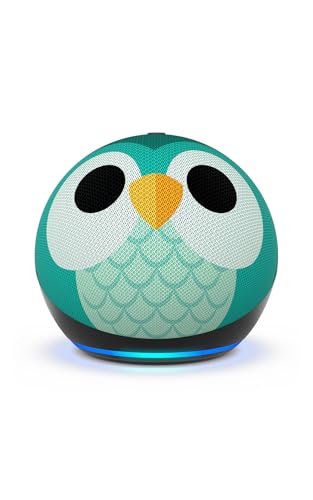
The Amazon Echo Dot Kids ($39.99) — The Amazon Echo Dot Kids is a smart speaker in an owl shell, and it does more than anything else here: Alexa reads audiobooks, answers questions, co-creates stories from a child's own ideas, and runs calming bedtime content from Calm, Headspace and Moshi. A 12-month Amazon Kids+ subscription is included, which opens up thousands of audiobooks including Disney titles and Beverly Cleary. Parental controls filter explicit lyrics and cap daily use from a dashboard. So why isn't it a pick? It needs WiFi and a voice a toddler can't reliably produce — a two-year-old's diction defeats voice assistants regularly, and there's nothing physical to place or slot. It also has a microphone that's always listening, which some parents rule out on principle. Owner feedback skews heavily toward kids five and up. For a four-year-old who already talks in full sentences and a household that's fine with an always-on mic, it's a strong, genuinely useful device — just not the one we'd hand a toddler.
Getting a toddler to actually use these
Attach the thing to a routine rather than a lesson. Audio players work best in the gaps — the car, the bath, the twenty minutes of winding down before lights out — not in a sit-down session you've scheduled. If your toddler won't sit still for books, stop trying to finish them; let them pop dots, name one animal, and close it. That still counts. Keep a small number of titles within reach and rotate the rest out of sight, because a wall of options overwhelms a two-year-old the same way it overwhelms you. And read aloud yourself as often as you can manage. Children read to regularly hear roughly 1.4 million more words before kindergarten than those who aren't, and no box on this page substitutes for your voice.
Questions we get
What's the best learning companion for a 2-year-old?
We'd start with the Yoto Mini if you want the biggest content library and something that still gets used at eight. Go with the Toniebox if you'd rather your child operate it entirely alone, since placing a figure is easier than slotting a card. Both are rated 3 and up, so supervise a two-year-old with the small parts either way.
Is the Yoto Mini or the Toniebox better for a child under two?
The Toniebox, mostly. It's foam-wrapped, it bounces, and the one-action figure interface is the easiest thing here for small hands — Common Sense Media specifically praised that design for kids who can't work touchscreens. The Yoto Mini has the deeper catalog and the longer useful life, but cards are small and better handled by you at that age.
Do pediatricians recommend audio players for children under 2?
The AAP's guidance is about screens, and it's strict: essentially none before 18 months apart from video chat, and up to an hour a day for ages 2 to 5. Audio players sidestep that entirely, which is a large part of why they've grown so fast. Listening isn't a substitute for being read to, though, so treat an audio box as a supplement to your own voice rather than a replacement.
Are Lovevery kits worth the subscription?
They're worth it if the thing you're short on is time and confidence about what your child is ready for. You're paying a premium for stage-matched toys, quality materials and a guide that tells you how to play. If you enjoy choosing toys yourself, or you already have a well-stocked toy shelf, you can get most of the developmental benefit for much less.
Are interactive books actually better than plain board books?
For holding a wriggly toddler's attention, yes. NAEYC research in 2024 found tactile books produced 23% better narrative comprehension than the same content watched on a screen. Against ordinary board books the gap is smaller and depends on the child — a kid who happily sits through a plain story doesn't need buttons. Interactive books mainly help with the ones who won't.
How many books should a toddler have at home?
Fewer than you'd think, in reach, plus a larger set rotated out of sight. Toddlers reread obsessively, so ten to fifteen accessible titles is plenty at any one time. What matters far more than the count is frequency — around 15 minutes of reading together daily is the threshold research keeps pointing to.
Why you should trust us
For this guide:
- We read manufacturer specifications and published library sizes for every audio and book system here, and compared them against guidance from the American Academy of Pediatrics, Zero to Three, NAEYC and Common Sense Media.
- We reviewed published assessments including PCMag's Editors' Choice write-up of the Osmo Little Genius Kit and Common Sense Media's learning rating for the Toniebox.
- We read owner feedback across all eight listings for recurring themes around durability, battery life, setup friction and the ages at which children could work each product alone.
- We read owner reviews on every listing, weighted toward the critical ones, because that is where the recurring failures show up.
- We have a systematic way of automatically fetching the latest prices, so the numbers on this page stay current.
- This is a research-focused guide, so the team may not own every product listed — though we often do own the top winners, which gives us extra context for the recommendations.
- We don't accept free products, and the retailer commission never changes which product we recommend.
Sources
AAP Screen Time Policy Statement: Children Under 5, American Academy of Pediatrics — recommends zero screen time under 18 months (except video chat) and ≤1 hour/day for ages 2–5; drives demand for screen-free learning products
Best Kids Audio Players — Wirecutter, Wirecutter / NYT — head-to-head comparison of Yoto vs. Toniebox vs. Amazon Echo Dot Kids with real-world toddler usability testing
Best Learning Toys for Toddlers 2026 — Good Housekeeping, Good Housekeeping — lab-tested developmental toys with child development expert panel assessments
Toniebox Product Review — Common Sense Media, Common Sense Media — awarded 5/5 Learning rating for ages 2+; notes developmentally appropriate interface for children who cannot reliably navigate touchscreens
Osmo Little Genius Starter Kit Review — PCMag, PCMag — Editors' Choice award; cites superior spatial reasoning gains vs. purely screen-based apps due to physical piece manipulation
Early Literacy and Reading Aloud Research — Zero to Three, Zero to Three — parent-child co-reading 15 min/day doubles likelihood of above-average kindergarten reading readiness scores
Interactive Books vs. Traditional Books for Toddlers — NAEYC, NAEYC — 2024 study finding 23% greater narrative comprehension for tactile/interactive book users vs. passive screen viewers
Lovevery Review: Are the Play Kits Worth It? — Babylist, Babylist — detailed subscription cost-benefit breakdown; 94% parent milestone satisfaction rate cited from Lovevery's 2024 parent impact survey
Best Books for Toddlers 2026 — The Strategist (NYMag), The Strategist / New York Magazine — curated recommendations from pediatric occupational therapists and early childhood educators
Book Reading and Early Childhood Vocabulary — Pediatrics Journal (Ohio State University), American Academy of Pediatrics / Pediatrics Journal — children read to daily accumulate 1.4 million more word exposures than peers by kindergarten entry
Amazon product listings and owner reviews for all 8 products
Manufacturer specification pages for each product
Some passages in this guide may be paraphrased with AI help. Prices are refreshed automatically.
More like this.
Continue exploring lifestyle reviews and recommendations.

The Best Books for Learning Python and Machine Learning
Learning to code and learning machine learning are two different projects, and most people end up doing both at once. You want something you can follow at…

The Best Language Learning Workbooks
A language workbook has to survive your actual week, not your idealized one. That means it needs to work in twenty-minute chunks on a couch, with a pen,…

The Best Interactive Dog Toys
A bored dog will find a job. Usually it's chewing the baseboards, digging the couch cushions apart, or barking at the mail carrier for forty minutes…

The Best Motorcycle Chain Lube And Cleaners
Your chain is one of the least demanding parts of your bike to maintain and one of the most expensive to neglect. A dry, grit-packed chain doesn't just…

The 11 Best Electric Commuter Bikes for City Riding in 2026: Tested & Reviewed
Expert-tested guide to the best electric commuter bikes of 2026, featuring top picks from Specialized, Trek, Rad Power Bikes, Aventon, and Giant.

The Best Cold Water Surfing Wetsuits
Cold water finds every gap. A suit that feels fine in September can turn a February session into ten shivering minutes and a long walk back to the car.…