The Best Outdoor Grills
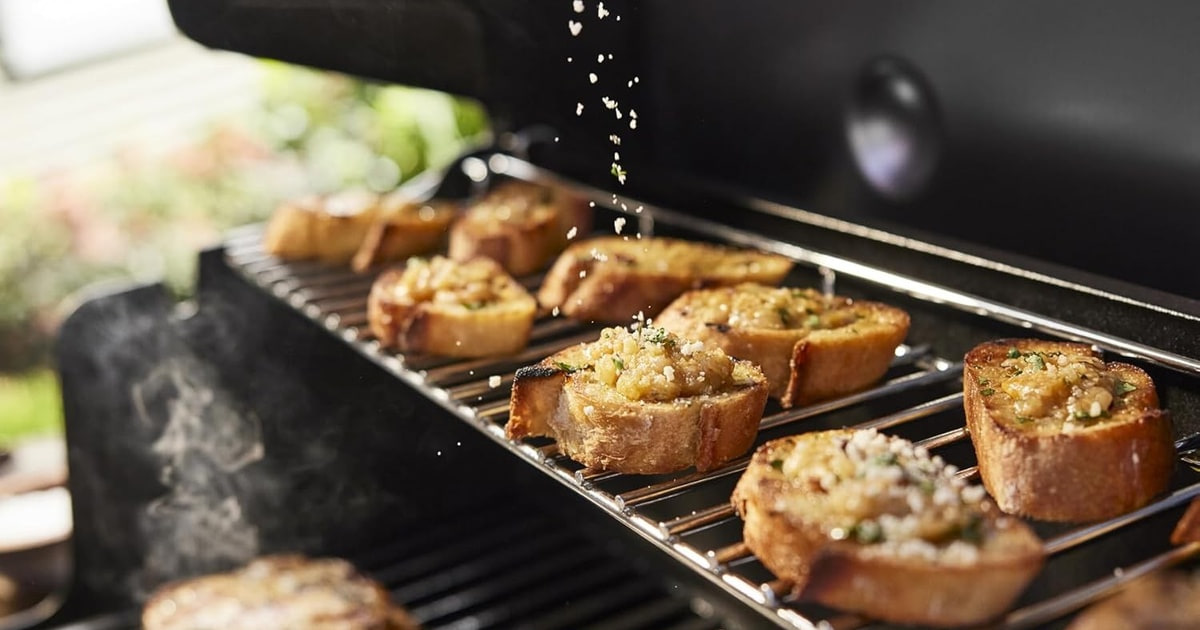
A grill gets used more than almost anything else you keep outside. On a Tuesday you want it hot in ten minutes so the chicken is done before the kids melt down. On a Saturday you want room for a dozen burgers and a tray of peppers, plus a corner where buns can toast without burning. That's the real measure of a grill: even heat, enough space, and a cleanup that doesn't ruin the evening. About three-quarters of U.S. adults own a grill or smoker, and most of those are gas, according to the Hearth, Patio & Barbecue Association.
No grill does everything well. Gas is convenient, and it will never taste like charcoal — Serious Eats' controlled comparisons found charcoal puts noticeably more crust on a steak at the same surface temperature. Charcoal asks for vent fiddling and ash duty in return. Ceramic kamados handle both jobs, but they weigh as much as a refrigerator and don't move once you park them. And nearly everything here arrives in a huge box and takes an afternoon to bolt together. Budget the time.
So the choice comes down to which compromise you want to live with. A family of four needs roughly 450 square inches of primary cooking area to eat at the same time, per Good Housekeeping's sizing guide, and that rules out a lot of small grills. Build quality matters just as much, since 304-grade stainless resists rust far better than the 430-grade used in cheaper models. We think that the Weber Genesis E-325 is the best outdoor grill for most people, and that the Weber Original Kettle Premium 22-inch is the one to buy if you want charcoal flavor without spending much.
Everything we recommend

Even heat and a decade of coverage, in a bulky package
Charcoal flavor from a design that has barely changed, for good reason

More burners, a sear station and a rotisserie, if you'll use them
Smoking, baking and searing in one cooker, if you never move it
At a glance
| Product | Cooking Space | BTU Output | Price | |
|---|---|---|---|---|
| Weber® Genesis E-325 Gas GrillTop pick | — | — | $933.98 |
| Weber® Original Kettle Premium Charcoal GrillBudget pick | 22-Inch | — | $219 |
| Napoleon P500RSIBPSS-3 Prestige 500 RSIB Propane GasUpgrade pick | 500 Sq In | 48,000 BTU | $1,879On sale |
 | Blackstone 36 Inch 4 Burner 60Also in lineup | 36-Inch | 60,000 BTU | $399 |
| Kamado Joe® Classic Joe™ Series III 18-inchAlso great | 18-Inch | — | $1,799.98On sale |
How we picked
Fuel and flavor. We treated fuel type as the first fork in the road, since it decides both convenience and taste. Published comparisons from Serious Eats and industry data from the Hearth, Patio & Barbecue Association shaped how we weighed gas against charcoal and ceramic.
Heat and cooking area. We compared burner counts, BTU ratings and primary cooking area from manufacturer specification sheets, and looked for even heat distribution rather than raw output. Anything meant as a family grill had to clear roughly 450 square inches of primary space.
Materials and rust. We favored 304-grade stainless, porcelain-enameled cast iron and thick ceramic over the 430-grade steel common in budget grills. Owner feedback about rust, warping and peeling after a few seasons carried heavy weight here.
Cleanup and grease. We looked for pull-out grease trays, covered ash catchers and burner designs that keep debris out of the ports. A grill you dread cleaning is a grill you stop using by August.
Warranty and parts. We checked stated warranty terms and how easily replacement burners and grates can be bought. A ten-year term means something in a category where cheaper grills often fail within three to five years.
Top pick
Even heat and a decade of coverage, in a bulky package
Weber® Genesis E-325 Gas Grill
A three-burner propane grill with enough room to cook a whole dinner at once, cast-iron grates that sear properly, and a grease tray you can empty in seconds. Weber backs it for ten years, which is the longest term in the gas category.
$933.98fromAmazonA grill this size fits the way most families actually cook. Three burners put out 39,000 BTUs across 513 square inches of primary cooking space, clearing the 450-inch benchmark for feeding four people at once. The tapered PureBlu burners spread flame across the grate instead of concentrating it in the middle. You get a hot sear zone on one side and gentle indirect heat on the other, which covers almost everything you'll cook.
Porcelain-enameled cast iron grates hold heat, so a cold steak keeps sizzling when it lands instead of steaming. Underneath, Flavorizer bars catch dripping juice, vaporize some of it back into the food, and funnel the rest away from the burners. That's the part that keeps chicken thighs from going black over a grease fire. Owners consistently describe quick preheats and even results corner to corner.
Cleanup is where you'll notice the design. The grease tray slides out from under the cookbox, so you're not reaching into a hot cabinet with a putty knife. Raised flame openings keep debris from dropping into the burners and clogging them, which is the usual reason a cheap grill starts cooking unevenly after two summers. The warming rack handles buns and sides while the main food finishes below.
The warranty is why we'd take this over a similar-looking grill that costs less. Weber covers the Genesis for ten years, and Consumer Reports' multi-year owner surveys have ranked Weber at the top of the gas category for satisfaction and long-term durability. Cheaper grills often rust or warp within three to five years. Parts stay available too, so a failed burner means a burner, not a new grill.
Flaws but not dealbreakers
It's big and it's heavy. At nearly five feet wide and 188 pounds assembled, this needs a real patio spot, not a balcony corner, and you won't be tucking it into a shed for winter. Assembly eats an afternoon — owners commonly report an hour and a half or more — and the packaging fills a recycling bin.
A handful of owners have received bent or badly drilled frame pieces and found Weber's support hard to reach past the automated layers. That's not the common experience, but it happens. And this is still a gas grill: no wood smoke, and no app or WiFi probe if you want to watch a pork butt from the couch.
Weber covers the Genesis E-325 with a 10-year warranty, the longest term in the gas grill category.
Budget pick
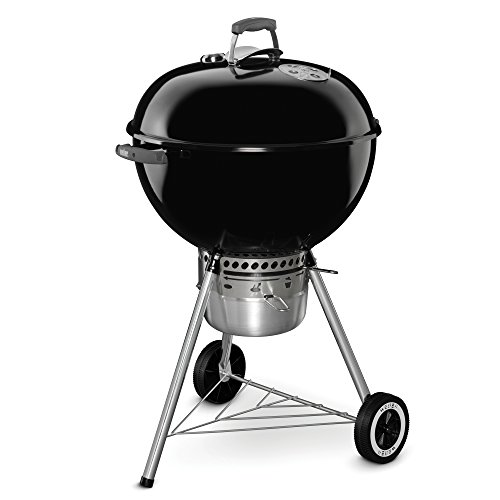
Charcoal flavor from a design that has barely changed, for good reason
Weber® Original Kettle Premium Charcoal Grill
The 22-inch kettle is the simplest way to cook over real charcoal, and the Premium version adds a covered ash catcher that makes cleanup painless. It holds about 13 burgers and weighs 32 pounds, so you can move it or store it anywhere.
$219fromAmazonThis is the grill most people picture when they picture a grill, and the shape has survived decades because it works. A domed lid, a deep bowl and two dampers give you more control than you'd expect: crack the bottom vent for low, slow heat, open both wide for a hard sear. It holds around 13 burgers, which covers a normal weekend cookout with room for a few ears of corn.
It's the least fussy way to get real charcoal flavor. Wirecutter's long-term reporting named the 22-inch kettle the top charcoal grill for most people, crediting the porcelain-enameled bowl and lid that resist rust and won't peel. Serious Eats' comparisons found charcoal produces markedly more browning on beef than gas at matched surface temperatures. You can taste that on a burger, and it's the whole reason to put up with the ash.
The Premium version earns its name with the ash catcher. A one-touch lever sweeps ash down into a covered aluminized bin that lifts off, so you're not tipping a bowl of gray dust into the wind. Add the built-in lid thermometer, the hook that hangs the lid on the side rail, and glass-reinforced nylon handles that won't rust, and most of the small annoyances of charcoal quietly disappear.
At 32 pounds, it's genuinely portable. You can roll it across the deck on all-weather wheels, lift it into a truck for a campsite, or stand it in a garage corner all winter. For a small patio, or as a second grill for the nights you want smoke, it takes up almost no room and asks nothing of you when it's idle.
Flaws but not dealbreakers
You are the thermostat. There's no knob — you bank coals to one side, work two dampers, and learn what your grill does in wind and cold. Expect a few mediocre cooks while you figure that out. Lighting takes 15 to 20 minutes with a chimney starter, so this isn't the grill for a spontaneous weeknight.
Space is tight and there's nowhere to put anything. Thirteen burgers is fine for a family and short for a party, and there are no side tables, so you'll want a cart or a nearby surface for platters and tongs. The plated steel cooking grate also doesn't hold heat the way the cast iron on our top pick does.
Upgrade pickOn sale
More burners, a sear station and a rotisserie, if you'll use them
Napoleon P500RSIBPSS-3 Prestige 500 RSIB Propane Gas
Four stainless burners, an infrared side burner that reaches searing heat in about half a minute, and an infrared rear burner with a rotisserie kit in the box. It's the most capable gas grill here and the most expensive one.
$1,879fromAmazonList priceThis is the grill for someone who cooks outside all year and wants options. Four stainless main burners put out 48,000 BTUs across 500 square inches of main cooking space, with another 260 inches on the warming rack. Layered stainless sear plates spread heat rather than let it pool under one burner. Napoleon's Accu-Probe gauges let you see what each zone is doing instead of guessing from the lid.
The infrared side burner is the party trick that turns out to be useful. It reaches 1800°F in about 30 seconds, which is steakhouse territory and a crust a normal grate can't produce. The 18,000 BTU infrared rear burner drives the rotisserie, and Napoleon includes the heavy-duty rotisserie kit with the grill. A whole chicken turning for an hour is a genuinely different dinner.
Ignition is a small thing you notice every single time. Each main burner gets its own Jetfire igniter, and a back channel between burners lets them light off each other if one igniter goes stubborn. Owners several years in describe the burners, grates and cookbox as holding up hard, and Consumer Reports' surveys put Napoleon alongside Weber at the top for long-term owner satisfaction.
You're paying for capability, not a badge. Between the main burners, the sear station and the rotisserie, this does more than any other gas grill here, and it's the one to buy if grilling is a hobby rather than a chore. If your cooking is burgers and hot dogs, our top pick handles that just as well for considerably less. Be honest about which one you are.
Flaws but not dealbreakers
The cabinet doesn't match the rest of the grill. Several owners report the doors and lower panels feel thin and less carefully finished than the cookbox, grates and burners, which is an odd place for a premium grill to economize. It's also close to 200 pounds and more than five feet wide, so pick the spot before it shows up.
Assembly is a real project. One person can do it in an afternoon, but the heavy pieces go much faster with two. And since this is the most expensive grill in this guide, the sear burner and rotisserie need to be features you'll genuinely use, not ones you admire.
Also greatOn sale
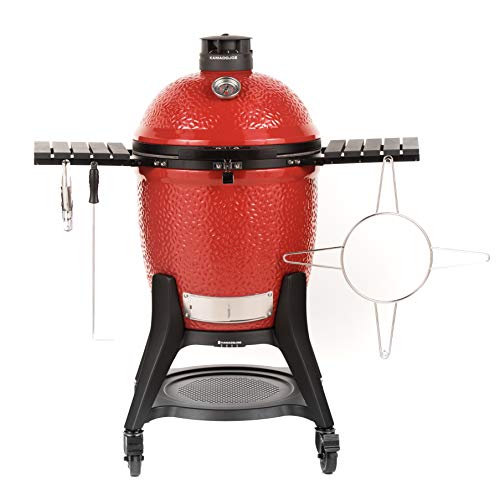
Smoking, baking and searing in one cooker, if you never move it
Kamado Joe® Classic Joe™ Series III 18-inch
An 18-inch ceramic kamado that runs steady at smoking temperatures and climbs to searing heat in the same session. The SlōRoller baffle and three-tier grate system make it far more flexible than a plain charcoal grill, and it comes on a rolling cart.
$1,799.98fromAmazonList priceOne cooker that smokes, bakes, roasts and sears is a real thing, and this is it. Thick ceramic walls hold heat like a brick oven, so the Classic III will sit at 225°F for a brisket and then climb for steaks without a fight. The Kontrol Tower top vent keeps your airflow setting when you open the dome, so you're not re-dialing the temperature every time you peek.
The SlōRoller is the reason we'd point most people here rather than to a plain ceramic cooker. It's a baffle that pushes smoke and heat around the chamber in rolling waves instead of letting it rise straight past the food. Kamado Joe says that produces more even distribution across the grate than a conventional deflector plate, and owners describe temperatures that hold steady through long cooks.
The three-tier Divide & Conquer system does more for weeknight cooking than the smoking features do. Half-moon grates sit at different heights, so you can sear sausages low and direct while peppers ride high and gentle on the other half. It also ships with a rolling cart, side shelves, a grate gripper and an ash tool, which is a stack of accessories you'd otherwise buy one at a time.
Charcoal efficiency is the quiet advantage here. A ceramic cooker sips fuel compared with a metal kettle, and a single load holds smoking temperatures long past the point where a thin-walled grill needs a refill. That matters if you want to put a pork shoulder on before bed and sleep through the night instead of setting alarms to feed the fire.
Flaws but not dealbreakers
It weighs 286 pounds. The cart has locking wheels and rolls fine on flat pavers, but this is furniture, not equipment — you won't take it camping or shift it for a party. Ceramic chips, and it can crack if you hit a hot cooker with cold water.
The 18-inch grate shrinks fast once the SlōRoller and a deflector are in place, so a big crowd means cooking in shifts. Kamados are also slow to change their minds; coming down from searing heat to smoking heat takes patience and planning. And a few owners have run into shipping or assembly trouble with a heavy, fragile item.
Who this is for
This guide is for anyone shopping for a backyard grill they'll keep for years — a first-time buyer who wants something that just works, a family that needs to feed six at once, or a weekend cook who's ready to smoke a brisket. If you already own a grill that heats evenly and isn't rusting through, you don't need a new one; a set of fresh grates and a burner cleaning will usually buy you a few more seasons.
We cover freestanding gas, charcoal and ceramic cookers you'd park on a patio or deck. We don't cover built-in outdoor kitchens, small tabletop travel grills, or electric grills for balconies where open flame is banned — if your building forbids charcoal and propane, none of these will work for you. Pellet grills are the fastest-growing category, up about 40% between 2020 and 2024 per the Hearth, Patio & Barbecue Association, but our research didn't turn up a pellet model we can recommend here.
How we picked
We built the shortlist around a handful of things that decide whether you still like a grill three summers in. Fuel and flavor: gas for speed, charcoal and ceramic for the browning that published comparisons credit to higher radiant heat. Heat and cooking area: even distribution across at least 450 square inches of primary space for a family of four, judged from specification sheets rather than headline BTU numbers. Materials and rust: 304-grade stainless, porcelain enamel or thick ceramic instead of the 430-grade steel that fails early. Cleanup and grease: pull-out trays, covered ash catchers and burner ports that don't clog. Warranty and parts: a long stated term and replacement burners you can still buy years later.
The competition
This is what our research surfaced, not a survey of everything on the market. We concentrated on models with enough specification detail, published coverage and owner feedback to judge fairly, which means plenty of decent grills simply aren't here.
The Blackstone 36 Inch 4 Burner 60 ($399) — The Blackstone 36-inch griddle station isn't really a grill, which is the only reason it isn't a pick. Four independently controlled burners put 60,000 BTUs under 756 square inches of cold-rolled steel that comes up to cooking temperature in roughly eight to ten minutes. There are no grates, so no sear marks, no drippings hitting flame, and no lid for indirect cooking or smoke. What you get instead is a huge flat surface for smash burgers, breakfast for a dozen people, fried rice and quesadillas — food a grate can't hold. It folds down onto wheels, weighs about 119 pounds, and owners are unusually enthusiastic about it. If you already own a grill, this is the second outdoor cooker to buy. You'll need to season the steel and keep it oiled, or it will rust.
Care and maintenance
Most grills die of neglect, not use. Burn the grates clean at high heat for ten minutes after you cook, then brush them while they're still hot — baked-on marinade comes off in seconds and turns to concrete overnight. Empty the grease tray or ash catcher on a schedule rather than when it overflows, since standing grease is both a fire risk and the fastest route to rust. Check gas burner ports every spring and clear anything clogging them with a wire. Season cast iron and steel surfaces with a thin coat of oil. Cover the grill when it's not in use, but let it cool and dry first, because a cover over a damp grill traps moisture and does more harm than leaving it bare.
Questions we get
What's the best outdoor grill for a beginner?
A three-burner gas grill like the Weber Genesis E-325 is the easiest place to start. You turn a knob, wait ten minutes, and cook — there's no fire to build and no ash to manage. If you care more about flavor than convenience, the Weber Original Kettle is simple in a different way, though it asks you to learn how the vents behave.
Is a kamado grill like the Kamado Joe worth the money?
It's worth it if you'll use the range. A ceramic cooker smokes at 225°F, bakes bread and pizza, and sears steaks, all from one charcoal load that lasts far longer than a kettle's. If you mostly cook burgers on a Saturday, you'll pay a lot for capability you won't touch, and you'll be stuck with 286 pounds you can't move.
How long should a good grill last?
A well-built grill that's cleaned and covered should run ten years or more, and Weber backs the Genesis for exactly that long. Cheaper grills made from 430-grade steel commonly rust or warp within three to five years. The difference is mostly materials and grease management, not brand loyalty.
What size grill do I need for a family of four?
Aim for at least 450 square inches of primary cooking area, the benchmark Good Housekeeping uses for feeding four at one cookout. The Genesis clears it at 513 square inches, and the Napoleon Prestige 500 has 500 inches plus a large warming rack. A 22-inch kettle sits below that but still handles about 13 burgers, which is usually enough.
How do I keep my grill from rusting over the winter?
Deep-clean it first: scrape the grates, empty the grease tray, and wipe the inside of the lid. Coat cast iron and steel grates in a thin film of cooking oil to seal out moisture. Then cover the grill once it's completely dry, or store it somewhere sheltered if it's light enough to move. If you have a propane tank, disconnect it and leave it outdoors, never in a garage or basement.
Do I need WiFi and app control on a grill?
Only if you smoke for long stretches. Remote monitoring is genuinely useful when something's been on for eight hours and you'd rather not stand outside checking it. For burgers, steaks and weeknight chicken, you'll be standing right there anyway, and none of our picks needs an app to cook well.
Why you should trust us
For this guide:
- We read manufacturer specification sheets for every grill here and compared burner counts, cooking area, materials and stated warranty terms against the criteria above.
- We reviewed published coverage from Consumer Reports, Wirecutter, Serious Eats and Good Housekeeping, along with industry data from the Hearth, Patio & Barbecue Association.
- We read through owner feedback on each listing for repeated themes — assembly headaches, rust, support experiences — rather than one-off complaints.
- We read owner reviews on every listing, weighted toward the critical ones, because that is where the recurring failures show up.
- We have a systematic way of automatically fetching the latest prices, so the numbers on this page stay current.
- This is a research-focused guide, so the team may not own every product listed — though we often do own the top winners, which gives us extra context for the recommendations.
- We don't accept free products, and the retailer commission never changes which product we recommend.
Sources
Best Grills of 2026 — Wirecutter, Wirecutter
Grill Ratings & Reliability Surveys — Consumer Reports, Consumer Reports
Best Gas Grills Tested — Good Housekeeping, Good Housekeeping
Best Pellet Grills Tested — Popular Mechanics, Popular Mechanics
2025 State of the Barbecue Industry Report — HPBA, Hearth, Patio & Barbecue Association
Best Charcoal Grills Ranked — Serious Eats, Serious Eats
Kamado Joe Classic III In-Depth Review — The Spruce Eats, The Spruce Eats
Best Flat Top Grills & Griddles — Forbes Vetted, Forbes Vetted
Weber Warranty Policy — Weber Official, Weber
Traeger Ironwood XL Official Specifications — Traeger, Traeger
Big Green Egg Large — Official Specifications, Big Green Egg
Best Grills Under $500 — America's Test Kitchen, America's Test Kitchen
Amazon product listings and owner reviews for all 5 products
Manufacturer specification pages for each product
Some passages in this guide may be paraphrased with AI help. Prices are refreshed automatically.
More like this.
Continue exploring lifestyle reviews and recommendations.

The Best Outdoor Grills and BBQ Smokers
Most of the cooking you'll do on a grill isn't brisket. It's burgers on a Tuesday, chicken thighs before the kids melt down, a couple of steaks when…

The Best Gas Grills for Outdoor Entertaining
A grill that's fine for two pork chops on a Tuesday falls apart when twelve people show up. You need enough grate space to get everything off at once,…

The Best Backyard Gas Grills
A gas grill earns its keep on a Tuesday, not just on the Fourth of July. You want it to light on the first try, get hot enough to sear a steak, and hold a…

The Best Wireless Bluetooth Grill Thermometers
A wireless thermometer changes how you cook more than almost any other grill accessory. You stop lifting the lid every ten minutes. You stop cutting into…

The Best Portable Grills for Camping and Tailgating
A portable grill lives a hard life. It rides in a trunk, gets set up on a picnic table that wobbles, and has to make dinner before everyone gets cranky.…

The Best Pellet Grills
A pellet grill runs on compressed hardwood and a small electric brain. An auger feeds pellets into a firepot, a fan pushes the heat around, and a…