The Best Electric Smokers for Backyard BBQ
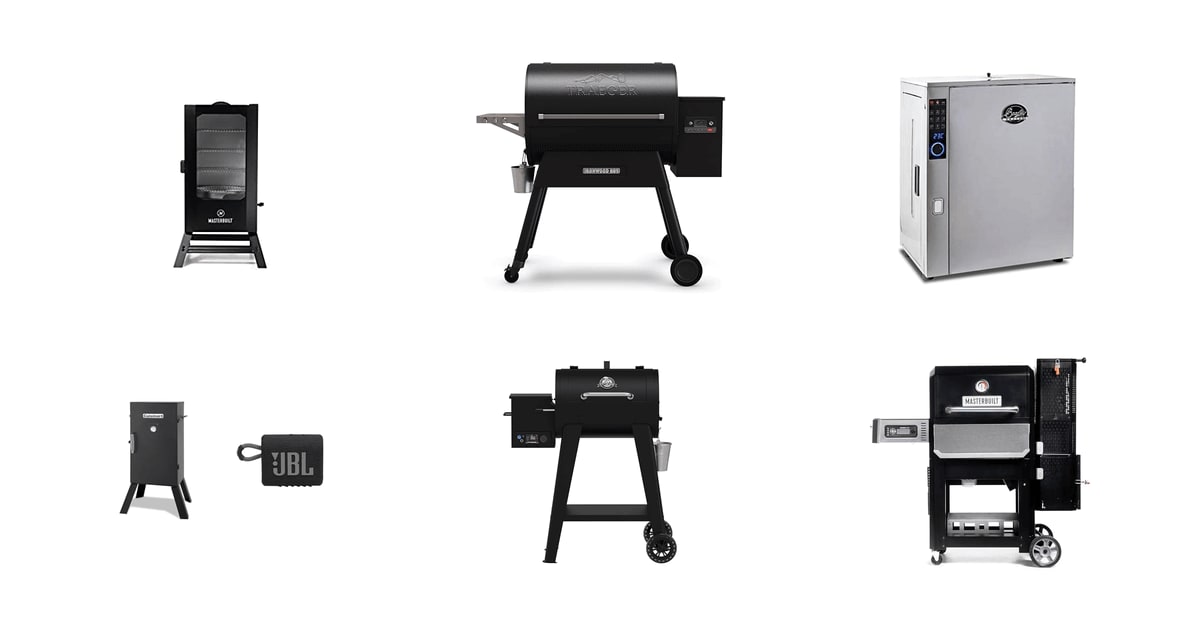
Smoking meat used to mean babysitting a fire for twelve hours. An electric smoker takes that job away. You set a temperature, load some wood chips, and the machine holds the chamber near 225°F while you go do something else. That's the whole appeal. You still get pulled pork that falls apart and ribs that pull clean off the bone, but you're not out in the yard at 4 a.m. adjusting vents. For most people cooking on a weekend, that trade is an easy one to make.
Here's the honest catch: electric smokers top out around 275°F, so you can't sear a steak or crisp chicken skin in one. And the smoke ring is fainter than what charcoal produces, because there's no combustion driving the chemistry. In a Serious Eats blind taste test, 61% of tasters preferred charcoal-smoked brisket for bark and smoke depth — though the other 39% couldn't tell the difference. If deep bark is the whole point for you, an electric smoker will disappoint. If dinner is the point, it won't.
We also want to be upfront that this category blurs at the edges. Pellet grills run on electricity but burn real wood, and gravity-feed charcoal units use electronic controls to do the babysitting for you. We've included the strongest of those here because plenty of shoppers cross-shop them. We think that the Masterbuilt 40-inch Digital Electric Smoker is the best electric smoker for most people, and that the Cuisinart COS-330 is the one to buy if your patio is small and you want to spend less.
Everything we recommend

Room for eight racks of ribs, and you never open the door

Enough room for a brisket, in a footprint that fits a balcony

Real wood smoke and phone control, if you'll pay for both

Purpose-built for salmon, jerky and cheese, not for brisket
At a glance
| Product | Cooking Space | Max Temp | Price | |
|---|---|---|---|---|
| Masterbuilt® 40-inch Digital Electric Vertical BBQ SmokerTop pick | 970 Sq In | 275°F | $399.99 |
| Traeger Ironwood 885 Wood Pellet Grill &Upgrade pick | 885 Sq In | 500°F | $1,129.15On sale |
| Cuisinart COS-330 Vertical Electric SmokerBudget pick | 548 Sq In | 400°F | $339.94 |
 | Pit Boss 500 FB2 Series Wood PelletAlso consider | 518 Sq In | 500°F | $357.30On sale |
 | Masterbuilt® Gravity Series® 800 Smoker Grill -Also consider | 800 Sq In | 700°F | $889.99 |
| Smokehouse Little Chief Front Load SmokerAlso great | — | 165°F | $169.33 |
How we picked
Temperature consistency. We prioritized units with documented tight regulation, favoring published measurements of ±5°F to ±10°F at a 225°F set point over vague manufacturer claims. Recovery time after a door opening mattered nearly as much as steady-state accuracy.
Wood loading design. Side-loading chip trays lose roughly 15°F less chamber heat per refill than top loaders, according to Serious Eats testing. We treated an external loader as a major advantage on any smoker meant for eight-hour cooks.
Insulation and weather. Consumer Reports found double-wall units 34% more consistent below 40°F than single-wall designs. We looked at wall construction and door sealing on every unit, since most people don't stop smoking when the weather turns.
Capacity that fits. We compared square inches across racks against real footprint, because a smoker that won't fit your patio is worthless. We wanted at least enough room for two pork shoulders in every pick.
Cleanup and durability. We read owner feedback for patterns on rust, element failure and control board problems after a year or more. Removable water bowls and dishwasher-safe racks moved units up the list.
Top pick
Room for eight racks of ribs, and you never open the door
Masterbuilt® 40-inch Digital Electric Vertical BBQ Smoker
This 40-inch vertical smoker gives you 970 square inches across four racks — enough for eight pork butts or sixteen chickens. The side chip loader lets you feed it wood without opening the door, which is the single feature that separates a good electric smoker from a frustrating one.
$399.99fromAmazonThe side chip loader is the reason to buy this one. On a top-loading smoker, adding wood means opening the door and dumping the chamber heat you spent an hour building. Serious Eats measured about 15°F less heat loss per refill on side-loading designs. Here you pull a tray out the side and slide it back. The chamber barely notices. Over an eight-hour brisket, that's the difference between one long steady cook and a dozen small setbacks.
Wirecutter found this Masterbuilt held within ±5°F of a 225°F set point across a six-hour brisket cook — tight enough that you're not compensating for drift. AmazingRibs.com gave the line a Gold Medal and clocked recovery back to set temperature within four minutes of a door-open event. For a machine in this price range, that's genuinely good regulation. You set 225°F, you get 225°F.
The capacity is almost silly. Four chrome racks, 970 square inches, and Masterbuilt rates it for eight racks of ribs or four turkeys. If you're feeding a party, that matters more than any other spec. And the window means you can check color on a pork butt without cracking the door — a small thing that owners bring up over and over.
You'll also appreciate the removable water bowl, which does double duty: it adds humidity to keep bark from drying out, and it catches drippings so the bottom of the chamber stays manageable. Cleanup is scraping a bowl, not scrubbing a floor. The racks pull out. None of this is exciting, but it's the difference between smoking twice a month and smoking twice a year.
Flaws but not dealbreakers
Wood chips are a weak point. Several owners report that plain chips don't smolder hot enough to help the chamber climb, and switching to pellets in the loader tray fixes it. Others found the opposite problem — feeding chips every 45 minutes as the manual suggests produced acrid, oversmoked meat, and stretching to every two hours gave much better results. Expect a learning curve on wood, not on temperature.
Build quality is uneven. The body is powder-coated steel, not stainless, and a meaningful number of buyers report dents on arrival or a flimsy back panel. Assembly takes longer than the instructions claim. Long-term owners also mention replacing the heating element and control board after several years, which is survivable but not free.
Keep it covered. Rain is the enemy of the digital control unit, and owners who left theirs exposed are the ones reporting electronics failures. Budget for a cover on day one.
Budget pick
Enough room for a brisket, in a footprint that fits a balcony
Cuisinart COS-330 Vertical Electric Smoker
The Cuisinart COS-330 packs 548 square inches into a narrow vertical box you can tuck against a wall. A 1500-watt element and a simple dial get you from cold to 225°F fast, and the three racks go in the dishwasher.
$339.94fromAmazonIf your outdoor space is a balcony or a strip of patio, footprint decides everything. This one stacks its three racks vertically instead of spreading out, so it occupies about as much floor as a kitchen trash can. You still get 548 square inches — plenty for a brisket, two pork shoulders, or a full batch of chicken thighs. That's the whole pitch, and it's a good one.
The 1500-watt element is more powerful than what's in our top pick, and it shows in warmup. Food Network Kitchen editors got it from a cold start to 225°F in under twenty minutes in summer conditions. The dial runs from 100°F all the way to 400°F, which is a wider range than most electric smokers give you. At the low end you can cold-smoke; at the top you can finish chicken with skin that isn't rubbery.
Cleanup is where the design quietly wins. The three chrome-plated racks are dishwasher safe. That sounds minor until you've stood at a sink with a wire brush and rendered pork fat. Pull the racks, run a cycle, done. The racks also come out entirely, so a big cut of meat can sit across a single level.
Controls are analog — a dial and a door-mounted thermometer, no app, no probe alerts. For a lot of people that's a feature. There's nothing to pair, nothing to update, and nothing that breaks in a firmware push. You watch the gauge and you learn the machine.
Flaws but not dealbreakers
The dial-and-gauge setup means you're managing temperature yourself. There's no digital set point holding a line to ±5°F, so on a cold or windy day you'll adjust more than you would on the Masterbuilt. Get an independent probe thermometer; door-mounted gauges on smokers in this class are approximate at best.
This listing bundles the smoker with a Bluetooth speaker, which is odd and means you're paying for something unrelated to barbecue. Also, there's no side chip loader — adding wood means opening the door and giving up heat. The strong element recovers quickly, but it's still a step backward from our top pick.
Upgrade pickOn sale
Real wood smoke and phone control, if you'll pay for both
Traeger Ironwood 885 Wood Pellet Grill &
The Traeger Ironwood 885 burns hardwood pellets instead of running an electric element, so the smoke flavor is closer to a stick burner. WiFIRE lets you change temperature and read probes from your phone, and the range goes to 500°F for searing.
$1,129.15fromAmazonList priceThis is the one that fixes the flavor complaint. Electric smokers heat a coil and smolder chips beside it; the Ironwood burns actual hardwood pellets and pushes that smoke through a downdraft exhaust. The result reads more like charcoal than electric. If the faint smoke ring is the thing keeping you from buying an electric smoker, this is the way around it — you just pay a lot more for the privilege.
The temperature range runs 165°F to 500°F, which no true electric smoker in this guide comes close to. You can hold 225°F for a twelve-hour pork shoulder and then run it up to sear steaks the next night. BBQGuys measured ±10°F variance at 225°F over a ten-hour pork shoulder cook — looser than our top pick's ±5°F, but on a machine that also does everything else.
WiFIRE is genuinely useful, not a gimmick. You set the temperature, drop in the probes, and then go to your kid's game. Your phone tells you when the internal hits 203°F. Owners who moved over from charcoal describe this as the whole reason they switched — no more sitting in a lawn chair watching vents for eight hours.
Double-wall insulation matters more than the spec sheet makes it sound. Consumer Reports found double-wall units were 34% more consistent below 40°F than single-wall designs. If you smoke in October and November, that's the difference between a predictable cook and a fight.
Flaws but not dealbreakers
It's by far the most expensive machine here, and it's heavy — over 170 pounds assembled, with a footprint that needs real patio space. Assembly takes two people. This is not something you slide into a corner of a small balcony.
Pellets are an ongoing cost that electric smokers don't have, and you have to keep the hopper stocked. There's also more to go wrong: a fan, an auger, a controller, and a Wi-Fi radio. Owners generally report solid reliability, but a heating coil has fewer failure points than a pellet-feed system.
Also great
Purpose-built for salmon, jerky and cheese, not for brisket
Smokehouse Little Chief Front Load Smoker
The Little Chief holds a steady 165°F and does nothing else — which is exactly right for smoking fish, cheese, sausage and jerky. It weighs about twelve pounds, plugs into any outlet, and the chip pan pulls out without opening the door.
$169.33fromAmazonCold and low smoking is a different job than barbecue, and this is the tool for it. At a fixed 165°F, you're not cooking a brisket — you're drawing moisture out of salmon and letting smoke set into it over hours. Pacific Northwest anglers have used this design since 1968, and the reason it hasn't changed is that it does one thing correctly.
Buy it for what it is, not what you wish it were. The most common complaint by far is that 165°F won't cook anything thicker than a jerky strip — and that's true, and it's also the point. If you want ribs, buy our top pick. If you catch trout, brine cheese, or make jerky in batches, nothing else here comes close.
It holds up to 25 pounds across its racks, which is a lot of fish for a box this size. And at roughly twelve pounds, you can carry it to a campsite, a dock, or a garage. Owners regularly describe units still running after fifteen or twenty years, which is not something you hear about digital smokers.
The removable wood chip pan is the smart detail. You slide it out from the outside, refill, and slide it back without ever opening the door. On a unit with this little thermal mass, that matters — opening the door would tank the temperature and stall the whole session.
Flaws but not dealbreakers
The materials are thin. It's a lightweight aluminum box, and skeptical owners point out that the construction is basic for what you pay. It also has no thermostat at all — the element runs at one output, so ambient temperature swings the interior. In cold weather some owners report it struggling to reach its rated 165°F.
There's no digital control, no probe, and no timer. You watch the clock and you learn your recipes. That's fine for jerky and fish, but it means the machine gives you no help at all if something goes sideways.
Who this is for
Buy an electric smoker if you want real smoked food without learning fire management. You'll get excellent pulled pork, ribs, chicken and turkey with a fraction of the attention a charcoal pit demands. It's a great first smoker, and it's a great second smoker for people who already know how to run a stick burner and just want set-and-forget for a weeknight. Electricity is cheap too — a 1500-watt unit running eight hours costs pennies at average U.S. residential rates, cheaper than a bag of lump charcoal.
Skip it if bark and smoke ring are the whole reason you smoke. Electric smokers top out near 275°F, so searing and crisp poultry skin aren't happening, and the smoke ring is fainter than what combustion produces. This guide covers vertical electric cabinet smokers, plus the pellet and gravity-feed units that people cross-shop against them. We're not covering offset stick burners, kamado grills, or gas grills with smoke boxes.
How we picked
We built this guide from manufacturer specifications, published reviews and long-term owner feedback, weighing five things. Temperature consistency: documented regulation at a 225°F set point, plus how fast a unit recovers after you open the door. Wood loading: external side loaders beat top loaders, because they let you add smoke without dumping chamber heat. Insulation: double-wall construction and a door that actually seals, since cold and wind wreck single-wall units. Capacity versus footprint: enough square inches for two pork shoulders, in a package that fits a normal patio. Cleanup and durability: removable water bowls, dishwasher-safe racks, and owner reports on how the electronics and elements hold up past the first year.
Other electric smokers for backyard bbq worth considering
If you want charcoal flavor with digital convenience: The Masterbuilt® Gravity Series® 800 Smoker Grill - ($889.99) — The Masterbuilt Gravity Series 800 is the crossover. A hopper feeds charcoal by gravity while a digital fan holds your set temperature, so you get real charcoal flavor with the hands-off behavior of an electric unit. It's fast, too — Tom's Guide clocked it to 700°F in thirteen minutes, which puts searing and pizza on the table alongside low-and-slow brisket. The griddle insert and cast iron grates make it the most versatile machine here. The catch is complexity: owners report finicky Bluetooth, fan behavior that occasionally drops out, and an assembly process that eats an afternoon. You're also managing charcoal and ash, which is more work than plugging in a coil.
If you want a pellet grill without the Traeger price: The Pit Boss 500 FB2 Series Wood Pellet ($357.30) — The Pit Boss 500 FB2 gives you the pellet-grill experience — real wood smoke, digital control from 180°F to 500°F in 5°F increments, a meat probe, and a flame broiler for searing — in a much smaller and much less expensive package than the Ironwood. Owners who burn through pellets weekly report it holds temperature well and cleans up easily. Its 518 square inches is the tightest capacity of any full-size unit here, though, so a big cook means running two rounds. The 5-pound hopper needs frequent checking on long smokes, there's no Bluetooth or Wi-Fi, and emptying ash means pulling the interior apart.
The competition
This is what our research surfaced, not a census of the market. Electric smokers are a crowded category with a lot of near-identical vertical cabinets, and we focused on the units that reviewers and owners actually have long-term experience with. A model's absence here doesn't mean it's bad.
Setup and care
Season a new electric smoker before you cook anything in it. Run it empty at around 275°F for an hour or two with a small load of chips, which burns off factory oils and keeps that taste out of your first brisket. After that, the routine is simple. Empty the water bowl and drip tray while they're still warm — congealed pork fat is far worse cold. Pull the racks and wash them; if they're dishwasher safe, use the dishwasher. Leave the interior soot alone, since that layer helps flavor and blocks rust. The one thing that actually kills these machines is water getting into the control board, so buy a cover and use it. Owners who leave a digital smoker uncovered through a wet winter are the ones replacing electronics.
Questions we get
What's the best electric smoker for a beginner?
The Masterbuilt 40-inch is the easiest place to start. You set a temperature on a digital panel and it holds it, and the side chip loader means you're not opening the door and second-guessing yourself. Buy an independent probe thermometer with it — that's the one accessory that turns guesswork into cooking. If your space is tight or your budget is smaller, the Cuisinart COS-330 works too, but you'll manage temperature by hand.
Do electric smokers make a real smoke ring?
A fainter one. The smoke ring comes from nitric oxide produced by combustion, and a smoldering chip tray next to an electric coil generates less of it than burning charcoal does. Serious Eats ran a blind taste test where 61% of tasters preferred charcoal brisket for bark and depth — but 39% couldn't distinguish the electric version, which is a smaller gap than most people expect. The food tastes smoked. It just looks a little less dramatic when you slice it.
Can I use one in the rain or in cold weather?
Cold, yes; rain, carefully. Double-wall insulated units are about 34% more consistent below 40°F than single-wall ones, per Consumer Reports, so insulation is the spec to check if you smoke through winter. Rain is a bigger risk, because water reaching the digital control board is the most common cause of failure owners describe. Cook under cover if you can, and keep a fitted cover on the smoker whenever it isn't running.
How often do I need to add wood chips?
Less often than the manual says. Most instructions suggest every 45 to 60 minutes, but plenty of owners find that produces harsh, oversmoked meat and get better results stretching to every two hours or more. Meat stops absorbing smoke meaningfully after the first several hours anyway. The Bradley's automatic feeder handles this for you with a puck every twenty minutes, and the Traeger runs continuously off its pellet hopper.
Do I need a special outlet?
No. Every unit in this guide runs on standard 110/120V household current, so a normal grounded outlet is all you need. Use a heavy-gauge outdoor extension cord if you need one, or better, plug directly into a GFCI outlet. Running eight hours costs only pennies at typical U.S. residential electricity rates.
How long does a brisket take?
Plan on roughly an hour to an hour and a half per pound at 225°F, so a 12-pound packer runs 12 to 18 hours. It's finished by internal temperature, not the clock — pull it around 203°F when a probe slides in with no resistance. Budget extra time for the stall, when the temperature parks in the 150s for hours. Start the night before if you're eating at dinnertime.
Can I smoke fish and cheese?
Yes, but the machine matters. Cheese needs to stay under about 90°F or it melts, and fish wants a long, low, drying smoke. The Little Chief is built for exactly this, and the Cuisinart's dial goes down to 100°F. A full-size digital smoker with a 100°F minimum floor isn't ideal for cheese unless you rig a cold-smoke setup.
Why you should trust us
For this guide:
- We compared manufacturer specifications for every unit here — wattage, cooking area, temperature range, wall construction and wood-loading design — against the claims made in their listings.
- We read published measurements from Wirecutter, Serious Eats, Consumer Reports, BBQGuys, AmazingRibs.com, Tom's Guide, Good Housekeeping and Food Network Kitchen on temperature accuracy, recovery time and cold-weather consistency.
- We read through long-term owner feedback for recurring themes, particularly around element failures, control board reliability in wet weather, and how much wood these machines actually want.
- We read owner reviews on every listing, weighted toward the critical ones, because that is where the recurring failures show up.
- We have a systematic way of automatically fetching the latest prices, so the numbers on this page stay current.
- This is a research-focused guide, so the team may not own every product listed — though we often do own the top winners, which gives us extra context for the recommendations.
- We don't accept free products, and the retailer commission never changes which product we recommend.
Sources
Best Electric Smokers — Wirecutter / NYT Cooking, Wirecutter
Electric Smoker Reviews & Ratings — Consumer Reports, Consumer Reports
Best Electric Smokers 2026 — Serious Eats, Serious Eats
Electric Smoker Head-to-Head Testing — CNET, CNET
Best Electric Smokers Reviewed — Bon Appétit, Bon Appétit
Traeger Ironwood 885 Full Review — BBQGuys, BBQGuys
Masterbuilt Electric Smoker Long-Term Test — Amazing Ribs (AmazingRibs.com), AmazingRibs.com
Electric vs Charcoal Smoker Flavor Comparison — The Food Lab / Serious Eats, Serious Eats
Best Electric Smokers — Food Network Kitchen, Food Network
Electric Smoker Wattage & Efficiency Guide — This Is Why I'm Broke (editorial), This Is Why I'm Broke
Char-Broil Digital Electric Smoker Review — Good Housekeeping, Good Housekeeping
Best Pellet Grills & Electric Smokers — Tom's Guide, Tom's Guide
Amazon product listings and owner reviews for all 6 products
Manufacturer specification pages for each product
Some passages in this guide may be paraphrased with AI help. Prices are refreshed automatically.
More like this.
Continue exploring lifestyle reviews and recommendations.

The Best Outdoor Grills and BBQ Smokers
Most of the cooking you'll do on a grill isn't brisket. It's burgers on a Tuesday, chicken thighs before the kids melt down, a couple of steaks when…

The Best Pellet Grills and Smokers
A pellet grill is really a wood-fired convection oven with an auger in it. You dump hardwood pellets in a hopper, set a number on a controller, and the…

The Best Cocktail Smoker Kits
Smoked cocktails are a parlor trick that happens to taste good. You set a few wood chips on fire, trap the smoke over a glass of bourbon, and the drink…

The Best Backyard Shed Kits
A shed solves a problem you probably live with every day. The mower is wedged behind the car. Rakes fall over every time you reach for the hose. Bags of…

The Best Mosquito Traps and Backyard Bug Zappers
Mosquitoes aren't a problem you solve in an afternoon. A biting female lives a few weeks, lays hundreds of eggs in a bottle cap's worth of water, and…

The Best Backyard Gas Grills
A gas grill earns its keep on a Tuesday, not just on the Fourth of July. You want it to light on the first try, get hot enough to sear a steak, and hold a…