The Best Countertop Stainless Steel Microwaves
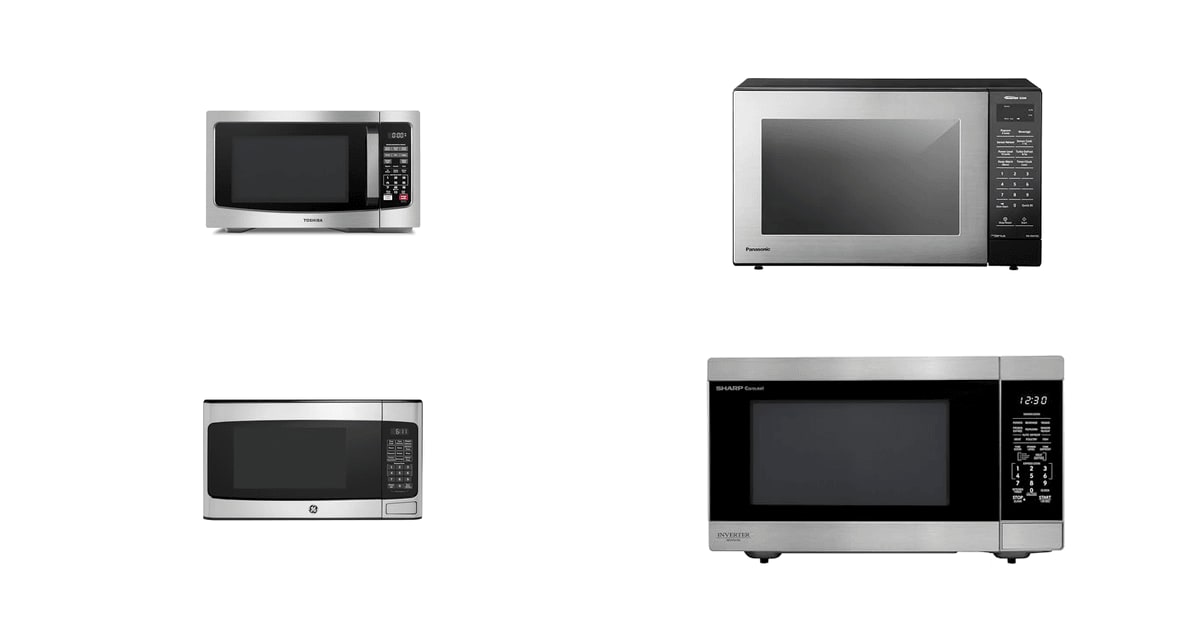
A microwave is the appliance you touch every single day and think about almost never — until it dies. Then you discover how much of your routine runs through it: the coffee you forgot on the counter, the leftover chili, the frozen burrito at 11 p.m. What separates a good one from a bad one isn't horsepower. It's whether the edges of your lasagna come out molten while the middle stays cold, whether the door feels solid after two years, and whether the beeping drives you up the wall.
Here's the honest part. No countertop microwave heats food perfectly evenly, and none of them lasts the way your grandmother's did. AHAM puts the average replacement cycle at roughly nine to ten years, and plenty of owners across every brand here report doors, latches and magnetrons giving out well before that. Child-lock mechanisms are a common complaint too, since they're now standard. You're buying an appliance with a real failure rate, so weight your decision toward the features you'll use daily rather than the ones that sound impressive.
We looked for models that handle the boring stuff well: reheating without hot spots, defrosting without cooking the edges, and fitting on a counter without swallowing it. Capacity, sensor cooking and inverter power did most of the sorting. We think that the Panasonic NN-SN67QS is the best countertop stainless steel microwave for most people, and that the Sharp SMC2266KS is the one to buy if you cook for a full house and need room for a casserole dish.
Everything we recommend

Even reheating in a footprint that won't eat your counter

Room for a 9x13 dish, and it runs quiet

Inverter heating and a 1.6 cu ft box, at a middle size

Sensor cooking without the price of the fancy ones
Prices as of Oct 27, 8:28 AM PT · Details
At a glance
| Product | Capacity | Wattage | Price | |
|---|---|---|---|---|
| TOSHIBA Countertop Microwave OvenBudget pick | 1.2 Cu.Ft. | 1000W | $149.99 |
| Panasonic Countertop Microwave OvenTop pick | 1.2 Cu.Ft. | 1250W | $299.95 |
 | GE Countertop Microwave OvenAlso consider | 1.1 Cu.Ft. | 950W | $132.99On sale |
| Sharp SMC2266KS 2.2 cu. ft. 1200W StainlessAlso great | 2.2 Cu.Ft. | 1200W | $252.99 |
| TOSHIBA ML-EM45PITRunner-up | 1.6 Cu.Ft. | 1250W | $212.99 |
Prices as of Oct 27, 8:28 AM PT · Details
How we picked
Even heating. We prioritized inverter power delivery and sensor cooking, since both address the hot-and-cold-spot problem that drives most microwave complaints. Consumer Reports' lab protocol scores sensor models higher on heating evenness than manual-timer models.
Real capacity. We compared interior dimensions against the 9x13-inch dish benchmark that Good Housekeeping applies, which generally requires a 1.6-cubic-foot interior or larger. Below that, a microwave is a reheater rather than a cooker.
Counter footprint. We checked external width and depth against Bob Vila's ranges and against the 3 inches of side clearance manufacturers require. A microwave that doesn't fit under your cabinets is not a candidate.
Durability signals. We read owner feedback for repeated failure patterns — door latches, child locks, magnetrons — rather than counting complaints. Consistent themes across many owners mattered more than isolated bad units.
Daily usability. We looked at control panels, mute options, turntable removability and quick-start buttons. These are the things you interact with every day, and they separate a microwave you tolerate from one you like.
Top pick
Even reheating in a footprint that won't eat your counter
Panasonic Countertop Microwave Oven
The NN-SN67QS pairs Panasonic's Inverter power delivery with Genius Sensor cooking in a 1.2-cubic-foot body that's under 21 inches wide. It reheats leftovers more evenly than the on/off cycling microwaves most people own, without demanding family-size counter space.
$299.95fromAmazonPrices as of Oct 27, 8:28 AM PT · Details
Inverter technology is the one spec here that actually changes how your food comes out. A conventional magnetron only runs at full blast. When you select 50% power, it's really just switching on and off — full power, nothing, full power, nothing. Panasonic's inverter supplies a steady stream at whatever level you pick. Panasonic says that cuts the overcooked edges during defrost and low-power reheating, and that difference is the main reason it leads this guide.
Genius Sensor handles the guesswork. Instead of you picking three minutes and hoping, the microwave reads the moisture coming off your food and decides when to stop. Consumer Reports' lab protocol scores sensor-equipped models higher on heating evenness than manual-timer models, which lines up with what you'd expect. In practice it means fewer trips back to add thirty seconds.
At 1250 watts, this is the most powerful compact unit in the lineup. PCMag's benchmarks show wattage matters most at full power — a 1200-watt unit boils a cup of water noticeably faster than a 900-watt one. The gap shrinks at the half-power settings where most reheating happens. So treat the wattage as a bonus for boiling and softening, not the headline.
The size is the quiet win. At 20.75 inches wide and just under 16 deep, it fits under standard upper cabinets with room for the 3 inches of side clearance these units want. Bob Vila's measurements put compact microwaves at 17 to 20 inches wide and family-size at 21 to 24. This one sits at the top of the small tier — 1.2 cubic feet holds a dinner plate and most casserole dishes, but it won't dominate a galley kitchen.
Flaws but not dealbreakers
The door latch is the weak point, and it comes up often enough in owner feedback that you should know about it going in. Some buyers report the child lock engaging on its own and refusing to release, leaving the door stuck shut. Others describe the door-release button feeling flimsy out of the box. There's a key sequence to disable the child lock, and most people who find it stop having problems. But it shouldn't take a workaround.
This is a newer listing without the long feedback history of the older Panasonic models, so there's less accumulated evidence about how it holds up after a few years. If you want a track record over a bet, the Sharp and the Toshiba both have far more owners behind them.
Also great
Room for a 9x13 dish, and it runs quiet
Sharp SMC2266KS 2.2 cu. ft. 1200W Stainless
The Sharp SMC2266KS is a full 2.2 cubic feet with a 16.5-inch carousel, which means a standard 9x13 baking dish sits flat instead of wedged at an angle. It also has inverter cooking and sensor cook, so you're not trading evenness for size.
$252.99fromAmazonPrices as of Oct 27, 8:28 AM PT · Details
If you cook for four or more, capacity is the spec that actually limits you. Good Housekeeping treats the ability to fit a 9x13 dish flat on the turntable as the benchmark for family-size utility, and a 1.6-cubic-foot interior is roughly where that becomes possible. At 2.2 cubic feet with a 16.5-inch carousel, this Sharp clears that bar with room left over. Your Pyrex goes in flat. Your dinner plates rotate without clipping the walls.
Sharp packed the good features into a big box, which is rarer than it sounds. Large-capacity microwaves often skip inverter power and sensor cooking to hit a size target. This one has both, plus 10 power levels, two-stage cooking, weight and time defrost, and a melt/soften function for butter and chocolate. Express Cook gets you up to six minutes with a single press.
Owners repeatedly describe it as quiet — quiet enough that it stands out against the GE and older units people replaced. That matters more than you'd think in an open kitchen or a small apartment, where a loud fan cycle competes with conversation and the TV. The stainless build reads as solid rather than tinny, and the gray interior with LED lighting makes it easier to see whether something boiled over.
Sharp's Carousel system has been around long enough to have generational owners, and several people buying this one are replacing a Sharp that ran for decades. That's not a guarantee, but reputation built over that many years is worth something when you're choosing between machines you can't inspect first.
Flaws but not dealbreakers
It's genuinely big — 24.4 inches wide and 19.6 deep, before you add the clearance these units need on the sides and back. Measure your counter and the depth under your cabinets before you order. Several owners were surprised by the footprint even after reading the specs.
The control panel is the common gripe. It's smaller and harder to read than on Sharp's previous large models, and there's no dedicated 30-second button, which is the shortcut most people use twenty times a week. You get Express Cook instead, which works but takes retraining.
A handful of owners report failures inside the first year or two — the turntable stopping, or the unit running with the door open, which is alarming. That's true across this category, but it's worth registering the product so you have a warranty path if it happens.
Runner-up
Inverter heating and a 1.6 cu ft box, at a middle size
TOSHIBA ML-EM45PIT
The Toshiba ML-EM45PIT(SS) splits the difference: 1.6 cubic feet and 1250 watts with inverter technology, in a body narrower than the big Sharp. A 13.6-inch removable turntable fits a 12-inch pizza, and you can mute the beeping entirely.
$212.99fromAmazonPrices as of Oct 27, 8:28 AM PT · Details
Forbes Vetted's value analysis found the price-per-cubic-foot of interior space drops sharply between 1.2 and 1.6 cubic feet, which makes 1.6 the most efficient capacity step for most households. This Toshiba sits right at that sweet spot. You get real room — a 12-inch pizza, most casserole dishes — without the 24-inch-wide counter commitment the 2.2-cubic-foot models require.
The mute function is the feature people don't know they want until they have it. Hold the 8 key for a few seconds and the buzzer goes silent. If you reheat coffee at 6 a.m. while someone's still asleep, or you've just gotten a baby down, that's worth more than an extra hundred watts. There's also an Eco mode and a child safety lock.
Inverter power puts it in the same technical class as our top pick, and owners who've switched from cycling microwaves describe the heating as more consistent. The removable turntable is a small practical thing that pays off every time something spills: it comes out and goes in the sink instead of you crouching to wipe the cavity floor.
It's also quiet. That comes up again and again in owner feedback, often from people comparing it directly against louder units they replaced.
Flaws but not dealbreakers
Quality control is the real concern. Owner feedback includes a meaningful share of units that arrived not heating properly or failed within a couple of years, and the overall satisfaction pattern is weaker than the Sharp's or the compact Toshiba's. Toshiba's support has a good reputation for replacing failed units, which softens the risk — but doesn't remove it.
The control panel isn't backlit, so it's harder to read in a dim kitchen. And the door takes a firm pull; several owners note you have to push harder on the release than feels natural. Neither is a dealbreaker, but both are things you'll notice daily.
Budget pick
Sensor cooking without the price of the fancy ones
TOSHIBA Countertop Microwave Oven
The Toshiba EM131A5C-SS is 1.2 cubic feet and 1000 watts with Smart Sensor Technology, six preset menus and 10 power levels. It's one of the most widely owned countertop microwaves in the U.S., and it does the everyday jobs without fuss.
$149.99fromAmazonPrices as of Oct 27, 8:28 AM PT · Details
Sensor cooking used to be a premium feature, and this is the clearest proof it isn't anymore. Wirecutter's reporting found sensor cooking has become common in the budget tier, a feature that was reserved for far more expensive models five years ago. That's the whole argument for this Toshiba: you get the function that most improves reheating results, in the least expensive unit here.
The basics are all present. Ten power levels, weight and time defrost, a clock and kitchen timer, six presets for pizza, vegetables and sensor reheat, plus one-touch start that runs one to six minutes at full power. A 12.4-inch glass turntable handles dinner plates and most everyday containers. Nothing exotic. Nothing missing either.
At 1000 watts it's the least powerful pick, and you'll notice it when boiling water or cooking something from raw. For reheating — which is what most people do most of the time — the difference is small, because reheating happens at reduced power where wattage matters less anyway. Owners consistently describe it as running quietly and heating faster than whatever they replaced.
The sheer number of people using this thing is its own kind of evidence. It's accumulated tens of thousands of verified Amazon reviews, one of the largest volumes for any countertop microwave in the U.S., and the feedback has stayed broadly positive across all those owners. That doesn't mean yours won't fail. It does mean the failures aren't hiding.
Flaws but not dealbreakers
No inverter. Power levels below 100% work by cycling the magnetron on and off, so defrost and low-power reheating won't be as even as on the Panasonic or either inverter Toshiba. If you defrost meat regularly, spend up.
The countdown kitchen timer blocks the microwave from being used while it's running, which trips people up. And door cracking shows up in owner feedback often enough to mention — sometimes with no impact at all, sometimes after a few years of normal use.
Who this is for
Buy one of these if your current microwave has died, is close to it, or predates sensor cooking. Given that most units get replaced somewhere around the nine- or ten-year mark, an older machine without a moisture sensor is leaving real convenience on the table. This guide covers countertop stainless steel models only — the kind you set on a counter and plug into a standard outlet. Over-the-range units, built-in trim-kit installations and drawer microwaves are different purchases with different fit and installation requirements.
Skip the upgrade if your existing microwave still heats evenly and you mostly warm coffee and single plates. The gains here are real but incremental, and none of these will transform your cooking. If you specifically want convection or air fry from a microwave, none of the units in this lineup offers it — you'd need a combo model, which is a separate category with its own tradeoffs in size and price.
How we picked
Even heating: we weighted inverter power delivery and moisture-sensor cooking heavily, since uneven reheating is the complaint that drives people to replace a microwave in the first place. Capacity: we checked interiors against the 9x13-inch dish benchmark, which generally means 1.6 cubic feet or more for a family. Footprint: we checked external dimensions and the clearance manufacturers require, because a microwave that doesn't fit under your cabinets isn't an option. Durability: we read owner feedback for repeated failure patterns rather than tallying complaints. Daily usability: control panels, mute functions, removable turntables and quick-start buttons — the details you touch every day.
Other countertop stainless steel microwaves worth considering
If you want a familiar brand in a small space: The GE Countertop Microwave Oven — The GE countertop microwave is 1.1 cubic feet and 950 watts, with one-touch express settings, six convenience cook programs, and manual and auto defrost. It's the most compact unit here, and GE throws in a microwave pasta cooker. But there's no moisture sensor and no inverter, so you're back to setting times manually and living with cycled power at reduced levels. Owners also describe it as noticeably loud, and the stainless frame shows fingerprints easily. It's a reasonable choice for a dorm, an office or a second kitchen where the footprint matters more than the features.
The competition
This is what our research surfaced in the countertop stainless steel category, not a survey of everything on the market. Several models we'd have liked to compare — LG's EasyClean units and the larger GE models with 16-inch turntables among them — weren't available in this lineup, so we can't speak to how they stack up here.
Care and installation notes
Give a countertop microwave the clearance it asks for: most manufacturers want about 3 inches on each side and above, an inch at the back, and nothing blocking the bottom vents. Crowding one against a backsplash or under a shelf makes the fan work harder and shortens its life. For cleaning, the trick is steam — heat a bowl of water for a couple of minutes, let it sit with the door closed, then wipe. Baked-on splatter comes off without scrubbing. Stainless interiors show streaks more than enamel does, so wipe with the grain and dry with a soft cloth. On the outside, fingerprints are the price of stainless; a damp microfiber cloth handles them. If your unit has a removable turntable, pull it and the roller ring out every few weeks and wash them in the sink.
Questions we get
What does Panasonic Inverter technology actually do differently?
A standard microwave magnetron only runs at full power. When you set 50%, it cycles on and off to average out to half. An inverter supplies a continuous stream of energy at the level you picked instead, which Panasonic says reduces overcooked edges during defrost and low-power reheating. It's the difference you'll notice most when thawing meat.
Is 1100 watts or 1200 watts better for everyday reheating?
For reheating specifically, the difference is small. PCMag's benchmarks show higher wattage boils water measurably faster at full power, but the gap narrows a lot at the 50% settings where most reheating happens. Wattage matters more if you cook raw food or boil liquids often. Otherwise, prioritize sensor cooking and inverter power over the wattage number.
What size countertop microwave do I need for a family of four?
Aim for at least 1.6 cubic feet. That's roughly the threshold where a standard 9x13-inch baking dish fits flat on the turntable, which Good Housekeeping treats as the family-size benchmark. Forbes Vetted's analysis also found 1.6 cubic feet is the most cost-efficient capacity step, with diminishing returns above 2.0 for households under five people.
Are stainless steel interiors harder to clean than painted ones?
Somewhat. Stainless shows water spots and streaks more readily than enamel or painted-steel interiors, so it takes an extra pass with a dry cloth. The upside is that it doesn't chip the way painted interiors do after years of use. Steam-cleaning with a bowl of water handles most messes on either surface.
What's the difference between sensor cooking and manual time settings?
Sensor cooking measures the moisture your food gives off and decides when to stop. Manual settings run for however long you told them to, whether the food is ready or not. Consumer Reports' lab protocol scores sensor-equipped models higher on heating evenness. In practice it means fewer rounds of adding thirty seconds and checking again.
How long should a countertop microwave last?
AHAM puts the average replacement cycle at roughly nine to ten years, and over 90% of U.S. households own one. That's an average, though — owner feedback across every brand in this guide includes units that failed inside a year and units still running after decades. Keeping the vents clear and not running it empty helps.
Why you should trust us
For this guide:
- We compared manufacturer specifications, published reviews from Consumer Reports, Good Housekeeping, PCMag, Wirecutter, Forbes Vetted and Bob Vila, and recurring themes in owner feedback for each model.
- We weighted repeated failure patterns in owner reports — door latches, child locks, early magnetron failures — more heavily than isolated complaints.
- We read owner reviews on every listing, weighted toward the critical ones, because that is where the recurring failures show up.
- We have a systematic way of automatically fetching the latest prices, so the numbers on this page stay current.
- This is a research-focused guide, so the team may not own every product listed — though we often do own the top winners, which gives us extra context for the recommendations.
- We don't accept free products, and the retailer commission never changes which product we recommend.
Sources
Best Microwaves 2026 — Wirecutter/NYTimes, Wirecutter
Microwave Oven Ratings & Reviews — Consumer Reports, Consumer Reports
Best Microwaves 2026 — CNET, CNET
Best Microwave Ovens 2026 — Good Housekeeping Institute, Good Housekeeping
Best Microwaves 2026 — Tom's Guide, Tom's Guide
Best Countertop Microwave Reviews — Reviewed (USA Today), Reviewed.com
Best Microwave Ovens — PCMag, PCMag
Best Microwaves — Forbes Vetted, Forbes Vetted
Panasonic Inverter Technology Overview — Panasonic Official, Panasonic
Best Countertop Microwaves — Bob Vila, Bob Vila
Microwave Oven Shipment & Replacement Data — AHAM, AHAM (Association of Home Appliance Manufacturers)
GE JES2051SNSS Product Specifications — GE Appliances, GE Appliances
Amazon product listings and owner reviews for all 5 products
Manufacturer specification pages for each product
Some passages in this guide may be paraphrased with AI help.
Product prices and availability are accurate as of the date/time indicated and are subject to change. Any price and availability information displayed on Amazon.com at the time of purchase will apply to the purchase of this product.
More like this.
Continue exploring appliances reviews and recommendations.

The Best Stainless Steel Colanders and Strainers
A colander sits in the cabinet until the moment you need it most: one hand on a hot pot, steam in your face, a pound of spaghetti sliding toward the…

The Best Stainless Steel Cat Water Fountains
Cats are terrible drinkers. They evolved in dry places, they get most of their water from prey, and a bowl of still tap water just doesn't register as…

The Best Insulated Stainless Steel Water Bottles of 2026
A good insulated bottle is the rare thing you use every single day and barely think about. You fill it with ice water in the morning, forget it in a hot…

The Best Stainless Steel Chimney Caps
A chimney cap is a small piece of metal doing an unglamorous job. It keeps rain out of your flue, keeps squirrels and birds from nesting in it, and keeps…

The Best Stainless Steel Mixing Bowl Sets
A mixing bowl is the thing you grab before you've decided what you're making. You crack eggs in it, toss a salad in it, let dough rise in it, then wash it…

The Best Countertop Microwave Ovens
A countertop microwave is the appliance you touch most and think about least. You reheat last night's chili, soften butter, steam a bag of green beans,…