The Best Stainless Steel Chimney Caps
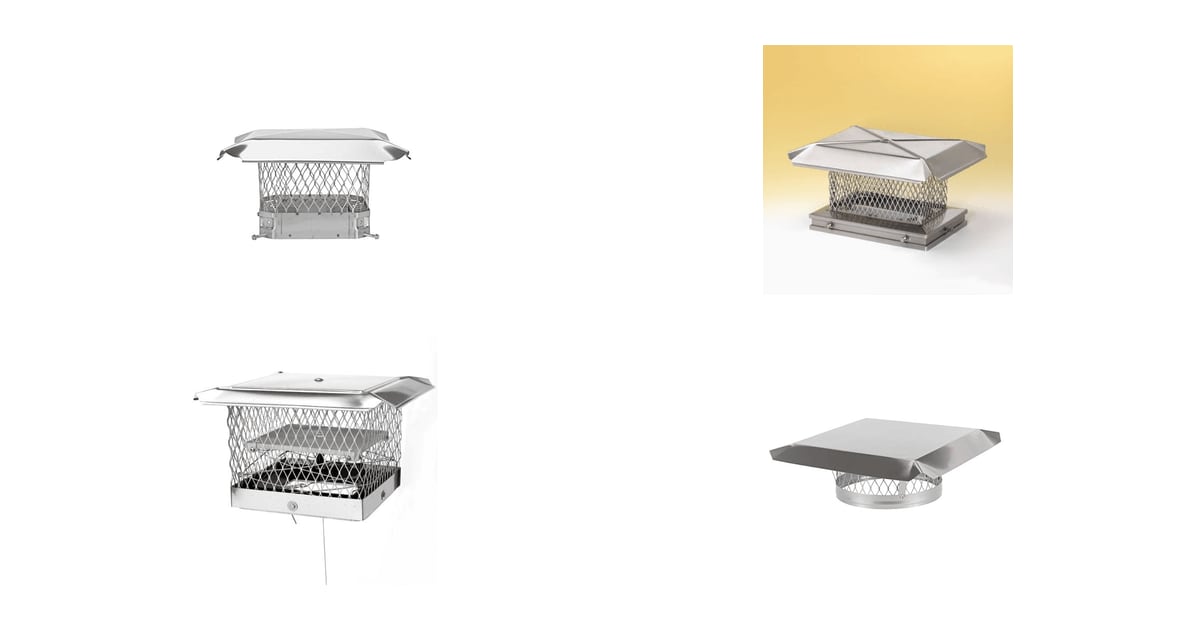
A chimney cap is a small piece of metal doing an unglamorous job. It keeps rain out of your flue, keeps squirrels and birds from nesting in it, and keeps sparks off your roof. The CSIA calls moisture the single greatest cause of chimney deterioration, and a cap is the simplest way to stop most of it. Uncapped flues also collect dried nesting material, which NFPA fire research links to residential chimney fires. You'll look at yours maybe twice a decade. It has to hold up alone.
Here's the honest part: no cap fits every chimney, and sizing is where most people go wrong. Caps clamp or bolt to the outside of the flue tile, so you measure the tile's outside dimensions, not the opening you see down. Miss by an inch and the cap won't seat. Stainless isn't one material either. Standard 304 handles inland weather fine, but if you live within a few miles of saltwater, chlorides will pit it, and 316 is the better call.
Gauge matters more than the marketing does. The Spruce found that 26-gauge and lighter stainless caps warped and separated at the welds after a single winter of freeze-thaw cycling, while 24-gauge held its shape. That's the floor worth shopping to. Everything below clears it. We think that the Draft King SS99U is the best stainless steel chimney cap for most people, and that the Lock-Top II is the one to buy if you want the cap to seal your flue shut when you're not burning.
Everything we recommend

Solid 24-gauge stainless that bolts on and stays put

Seals the flue shut when you're not burning

For round metal flues, where a square cap won't fit
At a glance
| Product | Cap Size | Mounting Type | Price | |
|---|---|---|---|---|
| Draft King SS99U Bolt On Stainless SteelTop pick | 9" x 9" | Bolt-On | $61.10 |
 | 8" x 17" Gelco Stainless Steel ChimneyAlso in lineup | 8" x 17" | — | $157.22 |
| Lock-Top II 8" x 17" Chimney Cap/damperUpgrade pick | 8" x 17" | — | $592.20 |
| HY-C LC11 Round Stainless Steel Clamp onAlso great | 11" Round | Clamp-On | $97.98 |
 | Copperfield Chimney Supply 9-Inch Round 304 StainlessAlso consider | 9" Round | Friction Fit | $246.61 |
How we picked
Steel grade and gauge. We treated 304 stainless at 24 gauge as the entry point, based on The Spruce's finding that lighter caps warped and separated at the welds after one freeze-thaw winter. For homes near saltwater, we noted where 316 with its molybdenum content is the better material.
Mesh opening. NFPA 211 requires spark-arrestor openings between ¾ and 1 inch, and the CSIA points at ¾ inch. We favored caps whose spec sheets state a ¾-inch mesh in stainless rather than plated wire.
Fit and flue type. We separated caps by what they actually mount to — square clay tile, round metal prefab flue, or relined stainless pipe — and checked each manufacturer's stated size range against common residential flue dimensions.
Mounting hardware. We compared bolt-on, band-clamp, and friction-fit designs against Bob Vila's installer findings on how many people each takes to put up, and looked for assembled-in-the-box construction over kits.
Warranty and parts. Stainless caps commonly carry 10 to 25 year coverage against one to three years for galvanized. We gave weight to lifetime limited terms and to manufacturers that still sell the individual pieces.
Top pick
Solid 24-gauge stainless that bolts on and stays put
Draft King SS99U Bolt On Stainless Steel
The Draft King SS99U is a 24-gauge stainless hood with ¾-inch stainless mesh that bolts to the outside of a square clay flue tile. It covers the most common residential tile sizes, and the mesh tucks inward at the base so nothing squeezes in around the edges.
$61.10fromAmazonGauge is the spec that decides how long a cap survives on your roof. The SS99U uses a 24-gauge stainless hood, which is the threshold The Spruce identified as holding its shape through freeze-thaw cycling when lighter caps warped and split at the welds. This Old House reported galvanized caps surface-rusting within 18 months of weathering, while 304 stainless showed no structural degradation over an equivalent decade of simulated exposure.
The ¾-inch mesh is the size codes and sweeps actually ask for. NFPA 211 requires spark-arresting openings between ¾ and 1 inch — tighter chokes your draft, wider lets embers out onto the shingles. The CSIA points at ¾ inch specifically. This cap uses 18-gauge stainless expanded metal at that opening, so it stops sparks going up and squirrels coming down.
Mounting outside the tile is the detail you'll appreciate later. The mesh turns inward at the base so the cap rests flat on the tile and closes the gaps around the rim. Slotted hex-head bolts clamp it to the tile exterior rather than wedging inside the flue, which leaves more free air space for smoke to leave. Fitted right, it blocks the direct rain that erodes mortar joints and cracks liners.
It fits the flue sizes most houses have. The 9-by-9 model covers outside tile dimensions from 7.5 by 7.5 up to 9.5 by 9.5 inches, which takes in a large share of standard square clay tiles. It's made in the USA and carries a lifetime limited warranty — a different league from the one-to-three-year coverage typical of galvanized caps.
Flaws but not dealbreakers
One cap, one size range, masonry only. This model works on square clay flue tiles from 7.5 to 9.5 inches outside, and HY-C is explicit that it isn't for metal chimneys. If you have a prefab round flue, a long rectangular tile, or an oversized tile, this specific cap won't seat and you need a different shape entirely.
Bolt-on mounting asks for a light hand. You're tightening steel hardware against clay, and clay cracks if you crank on it. Snug is enough. Plan on a nut driver, a stable ladder, and a slow pass around all four bolts rather than one hard pull on each.
It covers a single flue. If your chimney carries two flues, Family Handyman found that one multi-flue cap runs 30 to 40 percent less than buying and installing two single-flue caps, so two of these isn't the efficient answer.
The SS99U carries a lifetime limited warranty.
Upgrade pick
Seals the flue shut when you're not burning
Lock-Top II 8" x 17" Chimney Cap/damper
The Lock-Top II is a cap and a top-sealing damper in one. A silicone gasket presses the lid against the flue when it's closed, and a stainless cable running down to a handle at the firebox lets you open it from inside before you light a fire.
$592.20fromAmazonA leaky damper is a hole in your house you never see. The Department of Energy compares an open or poorly sealed fireplace damper to a 48-square-inch opening in your exterior wall. That's conditioned air leaving all winter and again all summer. Sealing at the top of the flue instead of the throat closes that path, which is why this is the pick if your heating bills bother you.
Throat dampers stop sealing long before they stop working. Old House Journal reports that standard throat dampers warp with heat cycling and rarely close tight even when the handle says shut. You can't really fix that cast-iron plate. A top-sealing cap sidesteps it by moving the seal to the flue termination, where a silicone rubber gasket does the work instead of metal meeting metal.
It arrives assembled with the parts you need. The kit includes a sweeps ring, silicone sealant, 30 feet of stainless cable, and hardware, so you're not sourcing bits mid-install. Construction is stainless steel and cast aluminum with the silicone gasket. Olympia backs it with a lifetime manufacturer warranty.
It still does the ordinary cap jobs. Closed, it keeps rain, snow, and animals out completely, which matters most in the months your fireplace sits idle. That's exactly when moisture and nesting debris do their damage, and both show up in CSIA and NFPA findings on chimney deterioration and chimney fires.
Flaws but not dealbreakers
It's the most expensive and heaviest option here. At roughly 19 pounds, this isn't a cap you carry up a ladder in one hand. Getting it positioned, sealed, and cabled takes longer than a slip-on hood, and plenty of owners hand this one to a sweep.
The cable is another thing to maintain. A top-sealing damper only helps if the cable stays intact and the gasket stays clean. Soot and creosote build on the seal over time, and a cable that's kinked or corroded means a lid that won't open when you want a fire.
Sizing is unforgiving. This is the 8-by-17-inch version for a masonry flue of that outside tile dimension. Measure the tile exterior before ordering, because a top-sealing cap that doesn't sit flat gives you neither the seal nor the savings.
The Lock-Top II comes with a lifetime manufacturer warranty.
Also great
For round metal flues, where a square cap won't fit
HY-C LC11 Round Stainless Steel Clamp on
The HY-C LC11 is a welded 304 stainless cap for round metal chimneys, the kind on factory-built fireplaces. A gear-drawn clamp band tightens around the pipe, and it ships fully assembled with a lifetime limited warranty.
$97.98fromAmazonPrefab chimneys are a different problem, and most caps ignore them. If your fireplace is factory-built, the flue is round metal pipe, not clay tile, and a square masonry cap has nothing to grip. HY-C makes this one specifically for metal chimney terminations and says plainly that it isn't for masonry flues. That clarity saves you a return.
The clamp band is a genuinely secure attachment. A 1.5-inch gear-drawn band pulls tight around the pipe, which resists wind lift better than a cap that just rests on top. Wind is the usual reason caps go missing off roofs, and a band that draws down evenly around a round flue is hard to work loose.
It's welded and assembled, not a kit. The whole cap is 304 stainless with welded construction, so there are no seams held by fasteners that back out over seasons of expansion and contraction. You take it out of the box and put it on. HY-C makes it in the USA and covers it with a lifetime limited warranty.
Stainless is the right material for a metal flue. Round prefab flues sit high and take weather from every direction. Against galvanized, 304 stainless is the difference between surface rust in the first couple of years and a cap that still looks square a decade on, per This Old House's weathering comparison.
Flaws but not dealbreakers
A band clamp usually wants two people. Bob Vila's installer panel found that adjustable slip-fit caps go on solo in under half an hour, while band-clamp round caps typically need a second person on the roof — one to hold it level, one to draw the band. Budget the help.
The size window is narrow. This model fits outside diameters from 10.5 to 11.5 inches. Round flues come in a range of sizes, so measure the pipe's outside diameter before you order rather than guessing from the fireplace opening.
It won't work on masonry. There's no tile-clamping hardware here at all. If your chimney has clay flue tiles, this cap has nothing to attach to.
The LC11 carries a lifetime limited warranty.
Who this is for
Buy a cap now if your flue is open to the sky, if your current cap is galvanized and showing rust, or if you've heard scratching above the firebox. Those are the three situations where waiting costs you real money — the CSIA identifies moisture as the single greatest cause of chimney deterioration, and NFPA fire research ties dried nesting material in uncapped flues to chimney fires. A cap is cheap insurance against spalled brick and cracked liners.
This guide covers stainless caps for single flues: square clay tile, round metal prefab, and relined stainless pipe. It doesn't cover multi-flue caps that span several tiles at once, custom fabricated chase covers, or draft-inducing caps. If your chimney carries two flues, look at a single wide multi-flue cap instead — Family Handyman found that route runs 30 to 40 percent less than two separate caps installed. And if you're within a few miles of saltwater, hold out for 316 marine-grade, which has roughly twice the chloride-pitting resistance of 304.
How we picked
Steel grade and gauge: 304 stainless at 24 gauge or heavier, since lighter caps warp and split at the welds after a winter of freeze-thaw, with 316 called out for coastal homes. Mesh: a ¾-inch stainless spark arrestor, the opening NFPA 211 permits and the CSIA recommends — tight enough for embers and squirrels, open enough not to choke your draft. Fit: a stated size range that matches real flue dimensions, measured on the outside of the tile or pipe. Mounting: hardware you can actually work with on a roof, and a cap that ships assembled. Warranty: ten years at minimum, with lifetime limited terms preferred and replacement parts still available.
Other stainless steel chimney caps worth considering
If you're capping a relined or class-A stainless flue: The Copperfield Chimney Supply 9-Inch Round 304 Stainless ($246.61) — The Copperfield Guardian slides inside the pipe on a friction fit rather than clamping outside it, which is the right approach for reline and solid-pack class-A work. It's UL listed for use with Home-Saver Flex relining pipe and works with Heat-Fab rigid stainless as well, so if a sweep just relined your chimney, this is the cap that matches the job. It's 304 stainless with a 17-inch lid, 6 inches high, and ¾-inch mesh, and it now ships pre-assembled. What you give up is the mechanical certainty of a clamp band — a friction fit depends on the installer getting it right, and it's the wrong choice on a plain clay tile.
The competition
This is what our research surfaced in stainless chimney caps, not a survey of everything sold. Plenty of good caps come through chimney supply houses and sweeps rather than retail listings, and custom fabricators handle odd flue shapes that no stocked cap covers.
The 8" x 17" Gelco Stainless Steel Chimney ($157.22) — The Gelco 13305 is a stainless cap sized 8 by 17 inches, which suits the long rectangular clay tiles you'll find on older masonry chimneys where a square cap simply won't span the opening. Gelco has a solid reputation in the trade, and at nearly 10 pounds this isn't flimsy metal. It lost to our picks on documentation rather than construction: the listing states no gauge, no mesh opening, and no warranty term, and those are the three specs we leaned on hardest. If your flue tile measures near 8 by 17 on the outside and you want a fixed lid rather than the Lock-Top II's damper, it's worth a look — just confirm the gauge and mesh size with Gelco before you buy.
Sizing and installation notes
Measure the outside of the flue tile, not the opening. Nearly every cap here clamps or bolts to the tile exterior, so the inside dimension is the wrong number and it's the mistake that sends most caps back. Take length and width at the top of the tile, and take a diameter instead if you have round metal pipe. Then check that figure against the manufacturer's stated range before ordering. On the roof, work off a stable ladder with a helper on the ground, and tighten bolts against clay gradually — snug beats cranked, because clay cracks. Once it's up, look at the mesh each fall. Soot and pollen clog it over time, and a blocked screen restricts your draft as surely as an undersized mesh would.
Questions we get
What size stainless steel chimney cap do I need?
Measure the outside dimensions of your clay flue tile at the top of the chimney, or the outside diameter if you have round metal pipe. Match that to the manufacturer's stated fit range. Our top pick covers square tiles from 7.5 by 7.5 to 9.5 by 9.5 inches, and HY-C's adjustable-leg caps stretch from 3.5 to 11.5 inches. Don't measure the opening you can see down the flue — that number is smaller and it won't work.
What's the difference between 304 and 316 stainless?
316 contains 2 to 3 percent molybdenum, which gives it roughly twice the chloride-pitting resistance of 304. For most inland homes, 304 is plenty and it's what nearly every quality cap uses. If your chimney is within about five miles of saltwater, salt air will eventually pit 304, and 316 marine-grade is worth the upgrade.
Can I install a chimney cap myself?
Often, yes. Bob Vila's installer panel found that adjustable slip-fit caps go on in under 30 minutes by one person on a standard masonry chimney. Band-clamp round caps usually need a second person to hold the cap level while you draw the band. Top-sealing damper caps are the fussiest, since you also route a cable down the flue — many owners hand that one to a sweep.
What gauge stainless should I look for?
Twenty-four gauge is the practical minimum. The Spruce found that 26-gauge and lighter caps showed visible warping and lid separation at the welds after a single winter of freeze-thaw cycling, while 24-gauge held its dimensions. Heavier 22- and 20-gauge caps exist and last longer still, but 24 gauge in 304 stainless is enough for most homes.
How long does a stainless cap last compared to galvanized?
Much longer. This Old House reported galvanized caps beginning to surface-rust within 18 months of outdoor weathering, while 304 stainless showed no structural degradation across an equivalent decade of simulated exposure. That's reflected in the warranties: stainless caps commonly carry 10 to 25 years or lifetime limited terms, against one to three years for galvanized.
Does a top-sealing damper cap really cut heating bills?
It can. The Department of Energy compares an open or poorly sealed fireplace damper to a 48-square-inch hole in your exterior wall, and Old House Journal notes that throat dampers warp over time and rarely seal completely even when closed. A top-sealing cap moves the seal to the top of the flue, where a silicone gasket closes it. The savings depend on your climate and how leaky your existing damper is.
Will a cap reduce my fireplace draft?
Not if the mesh is the right size and stays clean. NFPA 211 sets spark-arrestor openings between ¾ and 1 inch precisely because anything tighter restricts airflow. A ¾-inch screen is the CSIA's recommendation and it won't hurt a healthy draft. Clogged mesh will, though, so clear soot and debris off the screen once a year.
Why you should trust us
For this guide:
- We read manufacturer specification sheets for every cap here, comparing stated steel grade, gauge, mesh opening, fit range, and warranty terms side by side.
- We drew our thresholds from published guidance and evaluations by the CSIA, NFPA 211, This Old House, The Spruce, Bob Vila, Family Handyman, and Old House Journal.
- We reviewed recurring themes in owner feedback — sizing mistakes, wind lift, and clogged mesh — and used them to shape the flaws and caveats above.
- We read owner reviews on every listing, weighted toward the critical ones, because that is where the recurring failures show up.
- We have a systematic way of automatically fetching the latest prices, so the numbers on this page stay current.
- This is a research-focused guide, so the team may not own every product listed — though we often do own the top winners, which gives us extra context for the recommendations.
- We don't accept free products, and the retailer commission never changes which product we recommend.
Sources
Chimney Caps: What They Are and Why You Need One — CSIA, Chimney Safety Institute of America (CSIA)
NFPA 211 Standard for Chimneys, Fireplaces, Vents, and Solid Fuel-Burning Appliances, National Fire Protection Association (NFPA)
Best Chimney Caps of 2026 — This Old House Reviews Team, This Old House
Best Chimney Caps Reviewed — Bob Vila, Bob Vila
How to Choose a Chimney Cap — The Spruce, The Spruce
Chimney Cap Installation Cost Guide 2026 — Angi, Angi
Best Chimney Caps — Family Handyman, Family Handyman
Chimney Cap Buying Guide — Old House Journal, Old House Journal
Stainless Steel Grade 304 vs. 316 — Outokumpu Technical Guide, Outokumpu (Stainless Steel Manufacturer)
Chimney Fire Statistics — NFPA Research, NFPA Research
HY-C Company Shelter-Line Product Specifications, HY-C Company (Manufacturer)
Energy Savings from Top-Sealing Chimney Dampers — Department of Energy, U.S. Department of Energy
Amazon product listings and owner reviews for all 5 products
Manufacturer specification pages for each product
Some passages in this guide may be paraphrased with AI help. Prices are refreshed automatically.
More like this.
Continue exploring home reviews and recommendations.

The Best Stainless Steel Mixing Bowl Sets
A mixing bowl is the thing you grab before you've decided what you're making. You crack eggs in it, toss a salad in it, let dough rise in it, then wash it…

The Best Stainless Steel Colanders and Strainers
A colander sits in the cabinet until the moment you need it most: one hand on a hot pot, steam in your face, a pound of spaghetti sliding toward the…

The Best Countertop Stainless Steel Microwaves
A microwave is the appliance you touch every single day and think about almost never - until it dies. Then you discover how much of your routine runs…

The Best Insulated Stainless Steel Water Bottles
A good insulated bottle is the rare thing you use every single day and barely think about. You fill it with ice water in the morning, forget it in a hot…

The Best Stainless Steel Cat Water Fountains
Cats are terrible drinkers. They evolved in dry places, they get most of their water from prey, and a bowl of still tap water just doesn't register as…

The Best Chimney Draft Stoppers and Flue Dampers
A fireplace you never light is still a hole in your roof. On a cold night you can stand a few feet away and feel the air slide down and pool around your…