The Best Chimney Draft Stoppers and Flue Dampers
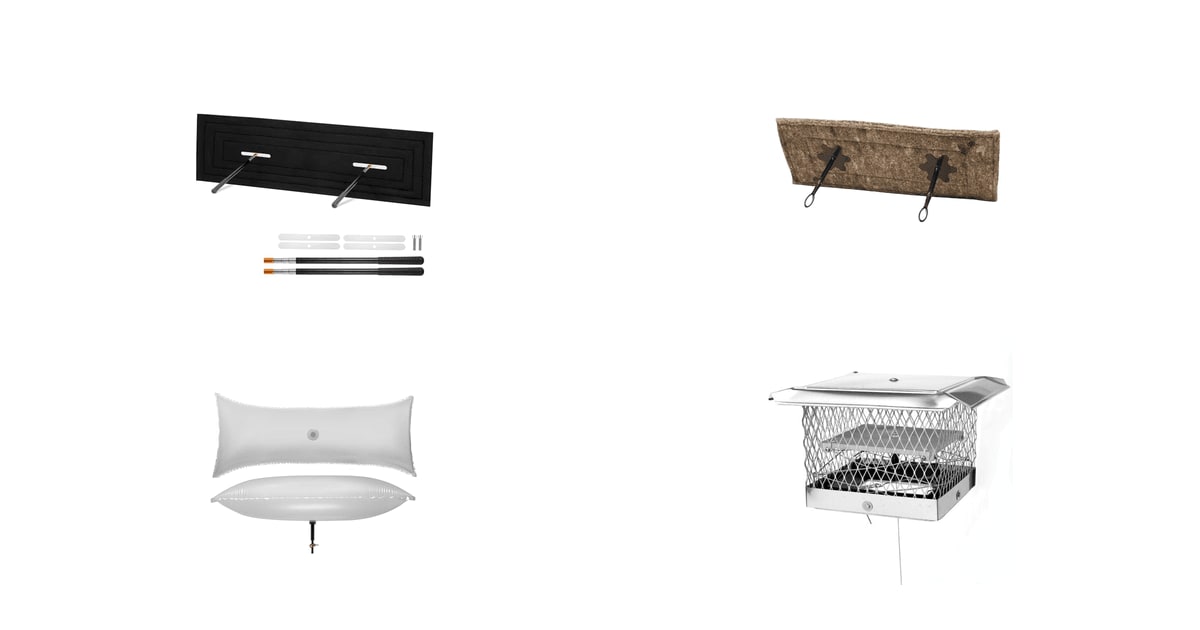
A fireplace you never light is still a hole in your roof. On a cold night you can stand a few feet away and feel the air slide down and pool around your ankles. In summer it runs the other way, and a faint sooty smell drifts back into the room every time the kitchen fan pulls. Lawrence Berkeley National Laboratory air-sealing research puts fireplaces and chimneys at the top of the leak list, at roughly 14% of a typical home's total infiltration.
None of these are set-and-forget devices, though. The soft plugs — wool, felt, inflatable — have to come out before you light a fire, every single time, and that's a real hazard rather than a theoretical one. None of them are safe with an active vented gas log set. The rigid top-sealing dampers seal better and stay put, but you'll be up on the roof or paying someone who is. And all of them depend on you measuring your flue correctly first.
So the answer depends on your fireplace, not on which product is cleverest. If you never light a fire and just want the draft and the smell gone, a plug pressed in above the firebox handles it in minutes. If the flue is out of arm's reach, or you want rain and squirrels blocked too, a damper at the top of the stack makes more sense. We think that the Flueblocker is the best chimney draft stopper for most people, and that the Chimney Balloon 34x9 Max is the one to buy if your flue opening is narrow or awkwardly shaped.
Everything we recommend

Wool that breathes, holds its shape, and never needs inflating

The easiest fit for a narrow or oddly shaped flue opening

A felt panel with a pole, for flues you can't easily reach

Seals at the top of the stack and keeps rain and squirrels out
At a glance
| Product | Flue Size | Material | Price | |
|---|---|---|---|---|
| avvkfcmn Chimney Flue Plug for 8" xBudget pick | 8" x 32" | Fire-Resistant Felt | $48.99 |
| Flueblocker for 13"x35" Chimney - Draft StopperTop pick | 13" x 35" | 100% Herdwick Wool | $109.99 |
| The Chimney Balloon 34x9 Max 2-Ply FireplaceRunner-up | 34" x 9" | — | $46.99 |
| Lock-Top II 8" x 17" Chimney Cap/damperUpgrade pick | 8" x 17" | — | $592.20 |
 | HY-C LC6 Round Stainless Steel Clamp onAlso in lineup | 6 Inch | 304 Stainless Steel | $87.38 |
How we picked
How well it seals. We prioritized designs that press or clamp against a full perimeter rather than resting loosely in the opening. Published airflow work from Energy Conservation Products and CSIA field data on leaky throat dampers set the bar.
Fit and measuring. Old flues are rarely square, so we looked for products that compress, inflate or trim to fit. We flagged anything sold in a single fixed size that leaves no margin for error.
Install effort. We separated no-tool plugs you can fit from inside the firebox from roof-mounted dampers that need ladder work. Owner feedback about awkward reach and missing hardware counted heavily here.
Safety and reminders. Any plug that sits in a live flue has to be obvious before someone strikes a match. We favored designs that leave a visible handle, tab or valve hanging into the firebox.
Durability. We compared materials against their environment: stainless steel and silicone for roof-mounted parts, dense wool and fire-resistant felt for interior plugs. Owner reports of sagging, slow leaks and corrosion informed the ranking.
Top pick
Wool that breathes, holds its shape, and never needs inflating
Flueblocker for 13"x35" Chimney - Draft Stopper
A dense slab of Herdwick wool that you press into the flue above the firebox. It blocks drafts and fireplace odor without hardware, without air pressure, and without the slow leak that eventually deflates a balloon.
$109.99fromAmazonWool is the right material for this job. It's dense enough to block moving air, but it still breathes, so damp that works its way down the flue can dry out instead of sitting against cold masonry. That matters in older, unlined chimneys where trapped moisture does real damage. Chimney Sheep reports up to a 90% reduction in heat loss through an unused open chimney in thermal testing on standard nine-inch square flues.
Installing it takes about as long as changing a lightbulb. You push it up into the flue just above the firebox and the pressure fit holds it — no brackets, no adhesive, nothing to inflate. It works whether your damper is functioning, broken, or gone entirely, which is the common situation in older houses. Pulling it back out is one tug.
Sizing is the part to slow down on. This model covers rectangular openings up to 13 by 35 inches, and the wool itself is cut an inch larger in each direction so it compresses into place. Measure the width and depth of the opening just above the firebox, then pick a size at least an inch bigger than both numbers. If it's slightly long, you can trim it with scissors.
It also fixes the smell, which is often the real complaint. Owners repeatedly describe the sooty fireplace odor that shows up when a range hood or air handler pulls the house into negative pressure and drags air back down the chimney. A plug in the flue stops that, summer and winter. At 2.6 pounds of packed wool, it holds its shape across seasons rather than sagging into a limp rag.
Flaws but not dealbreakers
The most common owner complaint is slippage. If the fit isn't tight enough, the wool works its way loose and eventually drops into the firebox, and once it's compressed it may not grip as well the second time. Measure carefully, and size up rather than down.
It costs meaningfully more than an inflatable balloon, and it's the same basic idea done in a nicer material. And like every soft plug here, it can't be used with an active vented gas log set — the gas logs have to be fully disabled or removed first.
Runner-up
The easiest fit for a narrow or oddly shaped flue opening
The Chimney Balloon 34x9 Max 2-Ply Fireplace
A two-ply inflatable plug that goes in deflated and expands to fill the flue. It's the most forgiving option for openings that aren't a clean rectangle, and it deflates in seconds when you want the fireplace back.
$46.99fromAmazonThis one solves the problem a rigid plug can't. You slide it up soft, then inflate it by mouth or with an air bed pump until it presses against every side of the flue. Old masonry is rarely square, and a stiff panel will leave gaps at the corners where a balloon simply pushes into them. This size covers rectangular flues from roughly 28 by 5 inches up to 34 by 9.
It's the fastest fix on this list, by a wide margin. There's nothing to trim, nothing to mount, and no hardware to lose. Family Handyman reported that chimney balloon installations dropped cold-downdraft complaints to zero across five homes over a winter, compared with a dozen complaints per home the season before. Owners in hot climates use it the same way in July, to stop conditioned air from climbing the stack.
Deflating it is just as quick, which makes it the sane choice if you actually light fires a few times a season. Pull the valve, squeeze it down, pull it out, and store it. That's a genuine advantage over a top-sealing damper, which needs a cable pull and a trip to the roof if anything goes wrong with it.
Every unit ships with a two-foot inflation tube and a seven-inch handle valve, so the valve hangs below the plug where you can reach it. Keep that tail visible. It's the only reminder you'll get that there's something in your chimney, and you need to see it before you strike a match.
Flaws but not dealbreakers
It leaks, slowly. Several owners report having to top it up more often than they expected, and a plug that has gone soft isn't sealing much of anything. Soot and rough tile edges can also nick the material over time.
The reach is a recurring problem. If your damper area sits deep, the short valve tube can end up out of arm's reach once the plug is in position, which turns a two-minute job into an awkward one with your head in the firebox. Check how far up your flue narrows before you buy.
Budget pick
A felt panel with a pole, for flues you can't easily reach
avvkfcmn Chimney Flue Plug for 8" x
Fire-resistant felt on a telescoping metal pole that extends from 16 to 60 inches. The pole props the panel in place instead of relying on friction alone, which helps in tall smoke chambers where a pressure-fit plug tends to slip.
$48.99fromAmazonThe panel measures about 9 by 33 inches and has three sewn-in loops, so you can trim it down to seal a flue of 8 by 32 or smaller. Cut it a little larger than the opening you're covering. The felt compresses into corners well enough that owners describe the draft stopping outright, not just easing.
The pole is the actual reason to choose this one. Wool and inflatable plugs both depend on side pressure to stay up, and side pressure is exactly what fails in a wide or tall smoke chamber. Here a metal pole extends underneath and holds the panel against the flue, which takes the guesswork out of a fit that's slightly loose. Owners with problem chimneys tend to be the ones who like it most.
It works in both directions, like the other soft plugs. In winter it keeps heated air from climbing out and cold air from tumbling in. In summer it keeps your air conditioning downstairs and keeps the sooty smell from riding back down when the house goes negative. And it's the least expensive way here to seal a large rectangular opening.
Flaws but not dealbreakers
Installation is the weak point. If your damper plate and handle are still in place, you may have to cut a slit in the felt for the handle or pull the handle and cotter pin out entirely, and doing that overhead in a sooty firebox is unpleasant. Budget more than the ten minutes the listing implies.
A few buyers received units missing the small screws that assemble the pole, which leaves you at the hardware store before you can install anything. And like the wool and balloon plugs, it can't be used with an active vented gas log set.
Upgrade pick
Seals at the top of the stack and keeps rain and squirrels out
Lock-Top II 8" x 17" Chimney Cap/damper
A cast-aluminum lid with a silicone gasket that clamps to the top of the flue tile and closes against the weather. You open it from inside the firebox with a stainless cable, so nothing has to be removed before you light a fire.
$592.20fromAmazonA seal at the top of the chimney beats a seal at the throat. Energy Conservation Products airflow testing credits top-sealing dampers with cutting chimney air infiltration by 85 to 90% compared with a traditional throat damper. That gap exists because cast-iron throat dampers warp and corrode; CSIA field data puts the leakage of a closed one at 15 to 30 CFM. A gasketed lid at the top doesn't have that problem.
You get the whole assembly in the box — the lid, sweeps ring, silicone sealant, a 30-foot stainless cable and the hardware, shipped assembled. It's built from stainless steel and cast aluminum with a silicone rubber gasket around the rim, and it's made in the USA. This particular unit fits an 8 by 17 inch flue tile, so measure the tile outside dimensions on the roof before ordering.
It doubles as a chimney cap, which is worth more than it sounds. Closed, it keeps rain out of the flue and stops squirrels, birds and nesting debris from getting in — the two problems that usually mean buying a separate cap. So the upfront cost covers two jobs, and there's one less seam on your chimney crown to fail.
Because it's operated by a cable running down to a handle in the firebox, you don't have to remember to remove anything. Pull to open, release to close. That's the argument for spending more here if your fireplace still gets used: there's no plug to forget, and no way to accidentally light a fire against a sealed flue.
Flaws but not dealbreakers
Installing it means getting on the roof with a 19-pound assembly and sealing it to the flue tile, which is genuinely not a job for everyone. If your roof is steep or tall, factor in a chimney professional.
It's sold by exact flue size rather than as an adjustable frame, so a mismeasurement means a return. And the silicone gasket is a wear part — expect to replace it once a decade or so to keep the seal tight.
Lock-Top backs the Lock-Top II with a manufacturer's lifetime warranty.
Who this is for
Buy one of these if you have a masonry fireplace you rarely or never light and you can feel the draft, smell the soot, or both. That covers most decorative fireplaces, most rentals with a sealed-off hearth, and most houses where the throat damper has warped shut-but-not-really over decades of heating seasons. The Department of Energy estimates that an open or poorly sealing damper can account for up to 8% of a home's winter heating energy loss, and Building Science Corporation research puts an open flue at 100 to 600 CFM of conditioned air leaving the house.
Skip the soft plugs entirely if you have a gas fireplace or gas insert with an active vented gas log set. Blocking that flue is dangerous, and the manufacturers say so plainly — a top-sealing damper or a manufacturer-approved solution is the only safe route. This guide also covers chimney draft stoppers and flue dampers rather than fireplace inserts, glass doors or full chimney relining, all of which fix the problem differently and cost far more.
How we picked
We weighed five things. Seal quality: the product has to press against a full perimeter, because a closed cast-iron throat damper still leaks 15 to 30 CFM according to CSIA field data. Fit: old flues aren't square, so anything that compresses, inflates or trims to size beat anything sold in one rigid shape. Install effort: we separated the no-tool plugs you fit from the firebox from the dampers that need roof access. Safety: a plug in a live flue needs a visible handle or valve so nobody lights a fire against it. Durability: stainless and silicone up top, dense wool or fire-resistant felt down below, and owner reports of sagging or slow leaks held against them.
The competition
This is what the research turned up in a category that's much larger than what's easy to buy online. Plenty of top-sealing dampers are sold through chimney sweeps rather than retail, and flue sizes vary enough that the right model for your house may simply not be listed here.
The HY-C LC6 Round Stainless Steel Clamp on ($87.38) — The HY-C LC6 is a clamp-on chimney cap, not a damper — it keeps rain, animals and debris out of a six-inch metal liner, but nothing about it seals the flue against airflow. It's well made: 304 stainless throughout, welded, with a lifetime limited warranty, and HY-C's stainless caps and integrated damper units are independently tested to ASTM E136 and UL 127 standards. Buy it if you have a metal chimney that needs a cap, not if you're chasing a draft. It won't fit a masonry flue, and owners note the edges can be sharp enough to cut a hand, so wear gloves.
Installation and safety notes
Measure before you order. For a plug, that means the width and depth of the flue opening just above the firebox, taken at the narrowest point — then buy a size at least an inch larger in both directions. For a top-sealing damper, measure the outside dimensions of the flue tile on the roof. Leave the handle, tab or valve of any soft plug hanging visibly into the firebox, and hang a note or the supplied tag on the fireplace so nobody in the house lights a fire against it. Pull the plug out before every fire, without exception. If you have gas logs, don't use a plug at all until they're fully disabled or removed. On a top-sealing damper, plan to swap the silicone gasket roughly every decade to keep the seal tight.
Questions we get
What's the best chimney draft stopper for a fireplace I never use?
For a fireplace that stays cold year-round, a wool or felt plug pressed in above the firebox is the simplest fix, and the Flueblocker is our pick. If you'd also like rain and animals kept out, a top-sealing damper like the Lock-Top II does both jobs in one unit. The tradeoff is that the damper needs roof access to install.
Do chimney balloons actually stop cold air?
Yes, when they're sized right and stay inflated. Family Handyman reported that chimney balloon installs eliminated cold-downdraft complaints across five homes over a winter, against a dozen complaints per home the season before. The catch is slow deflation — check the plug every few weeks and top it up when it goes soft.
What happens if I light a fire with a plug still in the chimney?
Smoke backs up into the room, and depending on the material you may get a fire hazard rather than just a mess. Every plug in this guide is meant to be removed first, and none of them are rated to sit in a working flue. Leave the handle or valve hanging into the firebox and hang a note on the fireplace so it's impossible to miss.
What's the difference between a throat damper and a top-sealing damper?
A throat damper is the cast-iron flap just above the firebox that came with most older masonry fireplaces. It warps and corrodes, and CSIA field data shows a closed one still leaks 15 to 30 CFM. A top-sealing damper mounts on the flue tile at the roofline with a gasketed lid, and Energy Conservation Products testing credits that design with 85 to 90% less infiltration.
Can I install a top-sealing damper myself?
If you're comfortable working on your roof, yes. The Lock-Top II arrives fully assembled with sealant, cable and hardware, and the job is clamping and sealing it to the flue tile, then running the cable down to a handle in the firebox. Skip it if your roof is steep or tall, or if you can't confidently measure the flue tile from up there.
Are these safe with a gas fireplace or gas insert?
Soft plugs are not. Wool, felt and inflatable plugs all carry the same warning: they can't be used with an active vented gas log set, and the logs must be fully disabled or removed first. If you have a working gas appliance, a permanently installed top-sealing damper or a manufacturer-approved solution is the only safe route.
Why you should trust us
For this guide:
- We read the manufacturer spec sheets, sizing charts and installation instructions for every plug and damper covered here.
- We compared published guidance from the CSIA, the Department of Energy, Building Science Corporation and Lawrence Berkeley National Laboratory on how much air a chimney actually leaks and what sealing it saves.
- We read through owner feedback on each listing, looking for repeated themes around fit, sagging, slow deflation and missing hardware.
- We read owner reviews on every listing, weighted toward the critical ones, because that is where the recurring failures show up.
- We have a systematic way of automatically fetching the latest prices, so the numbers on this page stay current.
- This is a research-focused guide, so the team may not own every product listed — though we often do own the top winners, which gives us extra context for the recommendations.
- We don't accept free products, and the retailer commission never changes which product we recommend.
Sources
Fireplaces – U.S. Department of Energy Energy Saver, U.S. Department of Energy
Chimney Dampers – Chimney Safety Institute of America, Chimney Safety Institute of America (CSIA)
How to Stop a Fireplace Draft – This Old House, This Old House
Top-Sealing Dampers vs. Throat Dampers – Bob Vila, Bob Vila
Draught-Proofing Your Home – Energy Saving Trust (UK), Energy Saving Trust
Best Chimney Draft Stoppers – Family Handyman, Family Handyman
How to Seal a Fireplace to Prevent Heat Loss – Houselogic, HouseLogic / National Association of Realtors
Chimney Damper Types and When to Replace Them – Old House Journal, Old House Journal
Air Sealing Your Home – Lawrence Berkeley National Laboratory, Lawrence Berkeley National Laboratory (LBNL)
Chimney and Fireplace Energy Loss – Building Science Corporation, Building Science Corporation
Fireplace Damper Inspection and Repair Costs – Angi, Angi
Amazon product listings and owner reviews for all 5 products
Manufacturer specification pages for each product
Some passages in this guide may be paraphrased with AI help. Prices are refreshed automatically.
More like this.
Continue exploring home reviews and recommendations.

The Best Window Insulation Kits and Draft Stoppers
A drafty house doesn't announce itself. You just notice that the room with the big window stays cold no matter how high you set the thermostat, or that…

The Best Door Draft Stoppers
Cold air doesn't need much of an opening. A 1/8-inch gap under a standard 36-inch door moves about as much air as a 2.4-square-inch hole punched in your…

The Best Stainless Steel Chimney Caps
A chimney cap is a small piece of metal doing an unglamorous job. It keeps rain out of your flue, keeps squirrels and birds from nesting in it, and keeps…

The Best Chimney Sweep Brushes
If you burn wood, your chimney collects creosote - the sticky, flammable residue that builds up on flue walls every time you light a fire. Cleaning it out…

The Best Ergonomic Office Chairs for Back Pain
Your chair decides how your lower back feels at 4 p.m. If you sit six to ten hours a day, that's not a small thing. The spine has a natural inward curve…

The Best Biscuit Joiners
A biscuit joiner does one job, and it does it better than almost anything else in the shop: it keeps two boards flush while the glue dries. You cut a…