The Best Biscuit Joiners
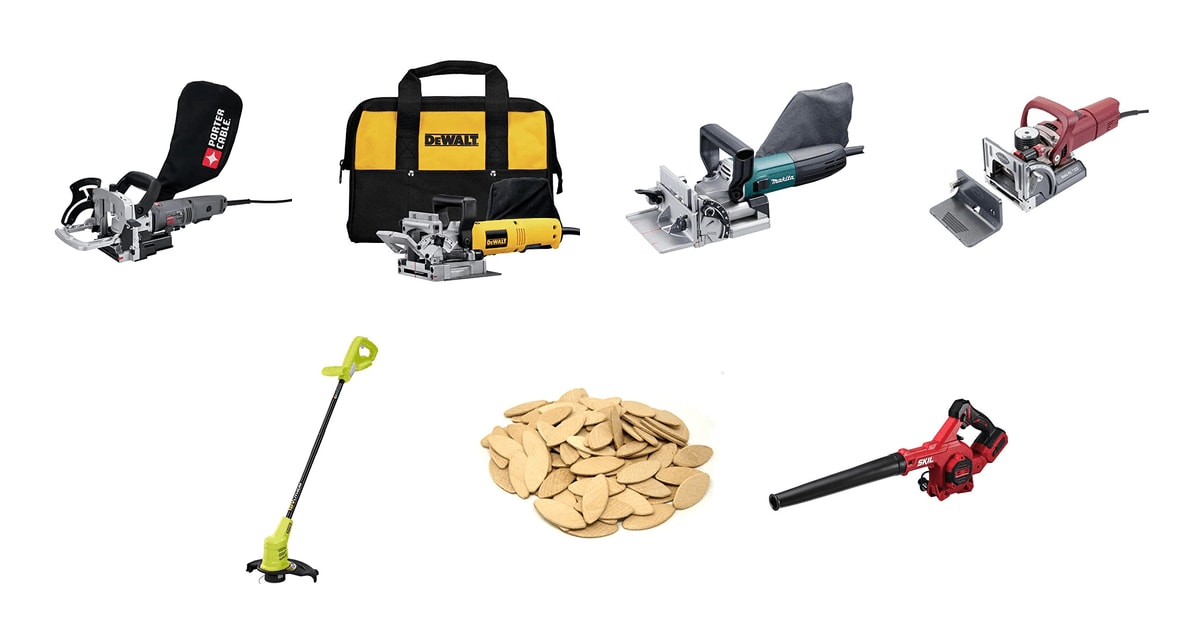
A biscuit joiner does one job, and it does it better than almost anything else in the shop: it keeps two boards flush while the glue dries. You cut a shallow oval slot in each mating edge, drop in a compressed wood biscuit, and the biscuit swells the moment it meets water-based glue. That's the whole trick. If you've ever glued up a tabletop and then spent an hour sanding out the ridge where two boards slipped past each other, you already know why people buy one.
Here's the honest part. No biscuit joiner makes a joint much stronger than plain glue and good clamps. Published reviews in the woodworking press have made this point repeatedly — the glue carries the load, and the biscuit just holds everything in register while it cures. So don't buy one expecting chair rails that survive a decade of leaning back. Every tool here also throws a lot of chips, and dust collection ranges from decent to genuinely annoying no matter which one you pick.
Which joiner you want comes down to two things: how dense your lumber is, and how often you'll move the fence. Softwood and plywood barely tax any motor. White oak and hard maple punish the small ones. And if you're cutting the same joint all day, a fence that stays parallel matters more than raw amps do. We think that the PORTER-CABLE 557 is the best biscuit joiner for most people, and that the DEWALT DW682K is the one to buy if you cut the same joint hundreds of times a week.
Everything we recommend
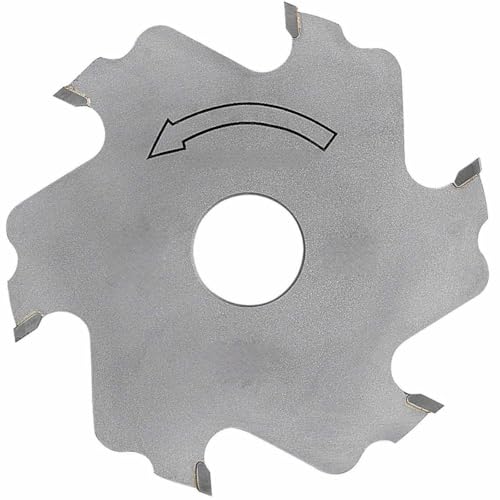
The most motor and the widest fence range here

A fence that stays square, cut after cut
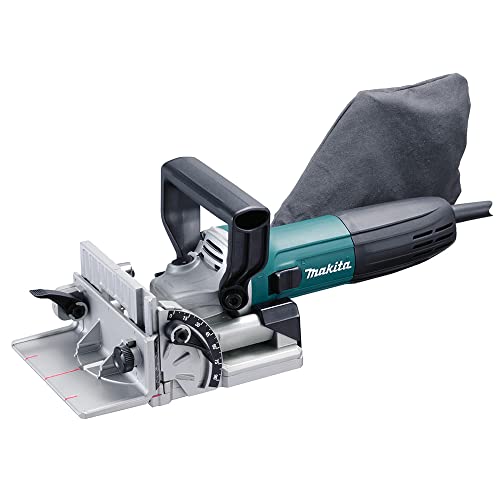
Cleaner slot walls and less weight, with fewer amps
At a glance
| Product | Price | |
|---|---|---|
| Replacement for a Porter Cable 5558 4'Top pick | $187.88 |
| DEWALT Biscuit JoinerRunner-up | $229.99 |
| Makita PJ7000 Plate JoinerAlso great | $259 |
 | Lamello 101402DS Zeta P2 Biscuit Joiner withAlso in lineup | $2,175 |
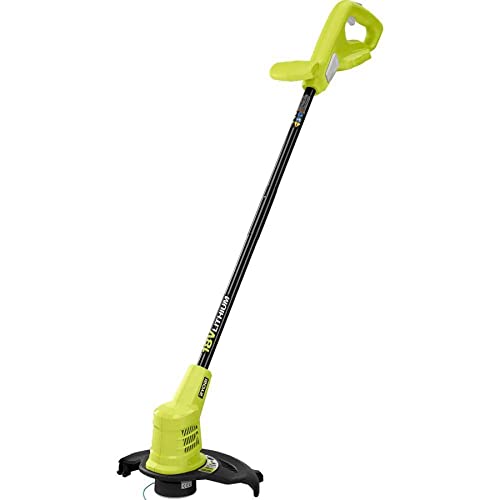 | RYOBI ONE+ 18 Volt 10 in. CordlessAlso in lineup | $94.99 |
 | SKIL PWRCore 20 Brushless 20V 110CFM JobsiteAlso in lineup | $64 |
 | WEN 20 Birch Wood Biscuits for WoodworkingAlso in lineup | $9.52 |
How we picked
Motor under load. Spec sheets give you amps and rpm, but owner feedback tells you whether a joiner actually holds its speed in oak. We looked for tools whose owners consistently report no audible slowdown in hardwood, and treated anything under roughly 5 amps as a softwood-and-plywood tool.
Fence accuracy. A fence needs positive stops you can trust at 0, 45 and 90 degrees, and geared adjustment is better still because it keeps the blade parallel through every height change. Published reviews and owner reports both point to fence drift as the single biggest source of joints that won't close.
Slot quality. Slot wall cleanliness decides how tightly the biscuit fits and how much glue squeezes out. We weighted blade speed and blade quality here, and noted where owners report having to replace the factory cutter early.
Chips and dust. A joiner that buries your layout line is a joiner that cuts in the wrong place. We preferred a vacuum port that takes a standard hose over a bag, and checked owner feedback for reports of the chip chute packing up.
Parts and service. These are corded tools people keep for decades, so replacement blades and a real service network count. We favored brands with widely stocked parts over ones that are hard to get serviced outside major metros.
Top pick
The most motor and the widest fence range here
Replacement for a Porter Cable 5558 4'
This is the joiner that doesn't much care what you feed it — oak, maple, plywood and MDF all cut at the same steady speed. The fence swings all the way to 135 degrees, and the dust port takes a shop vac hose without an adapter.
$187.88fromAmazonSeven amps is the whole argument here. Feed it white oak and it holds its speed. Feed it plywood and nothing changes. That consistency matters more than it sounds like it should, because a motor that bogs mid-plunge cuts a shallower slot at the end than at the start, and that's exactly how a biscuit ends up bottoming out. Owners moving up from smaller joiners describe the difference as the tool simply not noticing the wood.
The fence tilts from flat all the way to 135 degrees, with a firm positive stop at 90. Most of your work happens at 90, so that stop earns its keep more than the range does. But the range is there when you're joining an obtuse corner on a cabinet return or a splayed box side. It's the one thing the DeWalt can't do at all.
Chip handling is better than it has any right to be on a design this old. The 1-inch dust port takes a standard shop vac hose directly — no adapter, no tape, no wrestling. Hook it up and you can actually see your layout line while you cut, which sounds like a small thing right up until you've put a slot an inch off because sawdust buried the pencil mark.
Buy it for the service network as much as the tool. These joiners have been in cabinet shops for decades, blades and parts are easy to find, and the design hasn't churned through a redesign every couple of model cycles. That's worth real money on a corded tool you might keep for twenty years. Owners tend to keep them running long past the point where a hobby-grade joiner would be in the trash.
Flaws but not dealbreakers
The blade it ships with is the weak spot. Owners regularly report it going dull sooner than they'd like and swapping in a better one early on. It takes standard 4-inch joiner blades, so it's an easy fix — but it's an irritating one on a tool at this level.
It's also heavy, close to two pounds more than the Makita, and you'll feel that cutting slots overhead inside a cabinet or working off a ladder. And there's no rack-and-pinion fence. When you move the fence, you're trusting the lock rather than a geared mechanism to keep it parallel. That's fine across a weekend project, less ideal across a production run.
Runner-up
A fence that stays square, cut after cut
DEWALT Biscuit Joiner
The dual rack-and-pinion fence keeps the blade and the fence parallel every time you change height, which is what you want when you're cutting the same joint all day. It gives up a little motor and won't tilt past 90 degrees.
$229.99fromAmazonThe dual rack-and-pinion fence is why cabinet shops buy this one. Both sides of the fence ride on gear teeth and move together, so the blade and the fence stay parallel wherever you set the height. On a tool without it, you square the fence, cut ten joints, nudge something, and don't find out until a glue-up refuses to close. Over hundreds of cuts, that's the difference between fussing and just working.
The retractable 45-degree notch is a small feature that saves real time. Set the tool against the outside face of a mitered corner and it indexes the cut for you — no measuring, no marking. The heavy aluminum shoe is flat, non-marring, and meant to be clamped down, so you can fix the joiner in place and bring small parts to it instead of the other way around.
At 6.5 amps it gives up a little to the Porter-Cable on paper. In practice, owners cutting oak and maple report no audible drop in speed, which tracks — half an amp isn't much, and the tool sits steady enough that you're not muscling it through the cut. Push it fast and it'll load up. That's true of every joiner here.
Flaws but not dealbreakers
The fence tilts from 0 to 90 degrees and stops there. If your work regularly involves obtuse angles, this isn't the tool for it.
Chip ejection is the recurring gripe. Owners describe the discharge packing up, usually when they plunge quickly, and the workaround is to slow down or plunge twice to clear the slot. A few owners also report units failing early in their life, though DeWalt's service has a good reputation for making that right.
Also great
Cleaner slot walls and less weight, with fewer amps
Makita PJ7000 Plate Joiner
This is the one for fine work: 11,000 rpm leaves noticeably tidier slot walls, and it's the lightest full-size joiner here. You pay for that with the smallest motor of the three, so dense hardwood asks for a slower feed.
$259fromAmazonThe trade here is blade speed instead of amps. At 11,000 rpm the cutter takes smaller bites, and smaller bites tear out less fiber along the walls of the slot. On figured maple or a veneered panel — where a ragged slot edge shows up as a dark line once you put finish on it — that's the difference between a joint you're happy with and one you're sanding.
It's also the lightest joiner in the group by a couple of pounds, which you notice by the end of a long glue-up. The fence adjusts on a rack-and-pinion system with big cam locks you can work by feel, and six one-touch depth stops cover #0, #10 and #20 plus a couple in between. Owners who cross-shopped it against the DeWalt often land on fit and finish as the reason they kept it.
Where it costs you is under load. 5.6 amps is the lowest of the three full-size joiners here, and in thick hardwood you'll be feeding it more slowly than you would the Porter-Cable. For panel glue-ups and face frames, which is most of what a joiner ever does, that's a non-issue. For a full afternoon of slots in 8/4 white oak, it's a real one.
Flaws but not dealbreakers
The motor is the obvious limitation. It's the least forgiving of a heavy hand, and if you rush it in dense stock you'll get inconsistent slot depth rather than a clean stall you'd notice.
Service is the less obvious one. Makita's authorized network is thinner in some regions than Porter-Cable's or DeWalt's, and that matters more on a corded tool you expect to own for a long time. It also costs more than the DeWalt without matching its fence hardware for repeat production work.
Who this is for
Buy a biscuit joiner if you glue up panels — tabletops, cabinet sides, wide shelves — or build face frames and boxes and want them to come out flat without a fight. It's an alignment tool first, and it pays for itself the first time a tabletop closes dead flush instead of stepped. If everything you build is joined on hidden faces with pocket screws, you can skip it. And if you need joints that carry real mechanical stress, like chair rails, you want mortise-and-tenon or a loose-tenon machine instead.
This guide covers corded plate joiners for woodworking. It doesn't cover loose-tenon systems, cordless joiners, or the biscuits and connectors themselves, which are consumables you'll buy separately. Worth saying plainly: the lineup we looked at doesn't include a true entry-level joiner, so we can't point you at a good first-tool pick here. If your budget is tight, wait rather than buying an underpowered joiner — a motor that struggles through hardwood cuts inconsistent slots, which is worse than no biscuits at all.
How we picked
We weighed five things. Motor under load: enough amps to hold speed in oak and maple, not just in pine and plywood, judged from spec ratings against what owners report. Fence accuracy: positive stops you can trust, and ideally geared adjustment that keeps the blade parallel through every height change. Slot quality: blade speed and cutter quality, since clean slot walls decide how tightly the biscuit seats. Chips and dust: a vacuum port that takes a standard hose beats a bag, and a chute that packs up is a daily annoyance. Parts and service: these are tools you keep for decades, so blades and repair coverage need to be easy to find.
The competition
This is what our research surfaced, not a survey of every plate joiner on the market. Plenty of capable joiners exist that we didn't look at here, and a few of the tools people cross-shop most often are older models that are hard to buy new. What follows is the one remaining joiner in this lineup and why it didn't end up as a pick for most people.
The Lamello 101402DS Zeta P2 Biscuit Joiner with ($2,175) — The Lamello Zeta P2 is the most capable tool in this group and the one we'd least recommend to most readers. It cuts P-System slots, which accept Clamex and Tenso connectors — joints that lock with a screwdriver turn and come apart again without glue. That makes it a knock-down furniture system, not just a joiner, and the diamond cutter holds an edge far longer than carbide. It also costs several times what the other three do, the connectors add cost to every single joint forever, and the workflow takes real time to learn. If you build high-end casework that has to ship flat and assemble on site, it's the right tool and the only one here that does the job. Everyone else should buy the Porter-Cable and spend the difference on lumber.
Setup and technique
Two habits make biscuit joints come out flush. Always reference off the same face of both boards — flip one and your slots won't line up, no matter how good the fence is. And support the shoe fully against the work before you plunge. Owners who report sloppy slots are usually letting the tool hang out over an edge. Go easy on the glue, too. A biscuit that gets soaked swells hard, and on thin panels that shows up later as a faint ridge telegraphing through the finish. Keep slots at least 3/8 inch back from the show face, and use a #10 instead of a #20 in stock under an inch thick. Finally, swap the blade when cuts start feeling ragged — a fresh cutter fixes most complaints about slot quality.
Questions we get
What is a biscuit joiner actually for?
It cuts a matching oval slot in two pieces of wood so a compressed biscuit can bridge them. The biscuit swells when it hits water-based glue and locks the two faces in register. The point is alignment — keeping a tabletop flat or a face frame square while the clamps do their work. The glue provides the strength.
Are biscuit joints strong, or just for alignment?
Mostly alignment. Published testing in the woodworking press has found that biscuits add little mechanical strength beyond a well-glued butt joint. For panels, shelves and face frames that's completely fine, because the glue surface carries the load anyway. Use mortise-and-tenon or a loose-tenon joint anywhere the connection takes real stress, like chair legs and rails.
Which biscuit size should I use?
Use #20 for wide panel glue-ups and tabletops — they're the biggest, so they give the most alignment contact. #10 is the everyday size for face frame rails and medium panels. #0 is for small miters like picture frames and narrow stock. Match the biscuit to the narrowest piece in the joint, never wider.
Do I still need a pocket hole jig?
They solve different problems, and most people end up with both. Pocket screws are faster for face frames and carcass joints where the holes will be hidden. Biscuits are what you want on exposed edge-glued panels, where a pocket hole would show. Neither one replaces the other.
Do biscuit joiners work on plywood and MDF?
Yes, and arguably better than on solid wood. Sheet goods are dimensionally consistent, so slot depth stays predictable across the whole cut. MDF soaks up glue fast, so spread it and assemble promptly. Plywood's cross-layered construction also resists the splitting that can happen at miters in solid stock.
Can I cut picture frame miters with one?
Yes — #0 biscuits are sized for exactly that. Set the fence to 45 degrees and cut both mating pieces from the same reference face, or you'll get a step in the joint. The DeWalt's retractable 45-degree notch registers off the outside face of the miter and makes batch work faster. The Porter-Cable handles the same angle from the other direction with its 135-degree fence range.
Why you should trust us
For this guide:
- We read manufacturer spec sheets for every joiner in this guide and compared motor ratings, blade speeds, fence ranges and depth-stop counts side by side.
- We went through published reviews from woodworking and tool outlets that have put these joiners through their own shop work.
- We read owner feedback on each listing and looked for the complaints that repeat — factory blades going dull early, chip chutes packing up, and fences that drift out of parallel.
- We read owner reviews on every listing, weighted toward the critical ones, because that is where the recurring failures show up.
- We have a systematic way of automatically fetching the latest prices, so the numbers on this page stay current.
- This is a research-focused guide, so the team may not own every product listed — though we often do own the top winners, which gives us extra context for the recommendations.
- We don't accept free products, and the retailer commission never changes which product we recommend.
Sources
Best Plate Joiners (Biscuit Joiners) — Tool Box Buzz, Tool Box Buzz
Best Biscuit Joiner Reviews — Pro Tool Reviews, Pro Tool Reviews
Biscuit Joiner Tool Tests — Fine Woodworking, Fine Woodworking
Best Biscuit Joiners — Popular Woodworking, Popular Woodworking
Biscuit Joiner Reviews and Ratings — Wood Magazine, Wood Magazine
Amazon product listings and owner reviews for all 7 products
Manufacturer specification pages for each product
Some passages in this guide may be paraphrased with AI help. Prices are refreshed automatically.
More like this.
Continue exploring home reviews and recommendations.

The Best Toilet Flapper Replacement Kits
A running toilet is easy to ignore. It's a hiss behind a closed door, a refill that kicks on at 2 a.m., a water bill that creeps up without explanation.…

The Best Pull-Out Cabinet Organizers
A base cabinet is mostly dead space. You've got 22 inches of depth, and you can comfortably reach maybe 14 of them. Everything past that turns into a…

The Best Tool Backpacks
A tool backpack solves a problem a tote never will: it puts both your hands free on a ladder. That matters when you're climbing into an attic in July, or…

The Best Vacuums for Pet Hair
Pet hair is the hardest thing you can ask a vacuum to do. Long strands wind around a brush roll until it barely spins. Dander is small enough to slip out…

The Best Furniture Sliders and Mover Pads
Moving a loaded dresser across a room is one of those jobs that seems trivial until you're halfway through it. Bare furniture legs catch on carpet pile…

The Best Metal Lathes for Hobbyist Machinists
A metal lathe is the machine that lets you make a part instead of ordering one. You chuck up a piece of steel or brass, and a few minutes later it's a…