The Best Cookbooks for Kids and Beginner Cooks
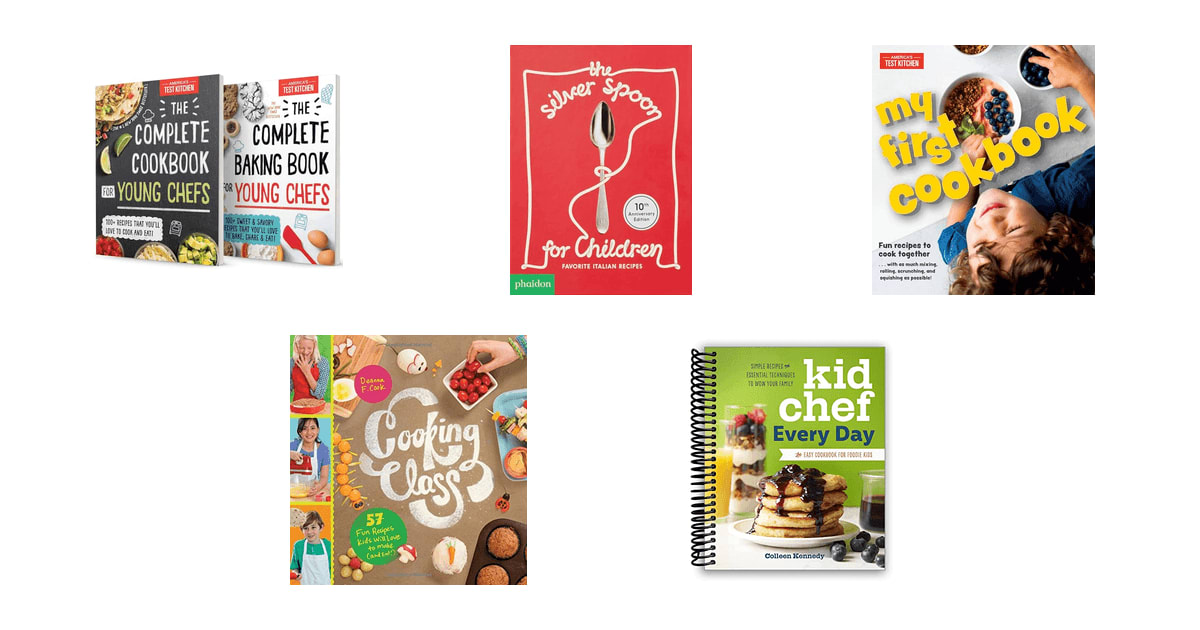
A kids' cookbook has one job: get a child cooking something they're proud of, without you hovering over every step. The good ones explain why you fold instead of stir, put the safety note right in the step where the knife comes out, and lie flat on the counter so nobody's chasing a page mid-recipe. The bad ones are just grown-up recipes with cartoon borders. You'll know which kind you bought the first time a kid tries to follow one alone.
Here's the honest catch: no single book covers a child from age five to thirteen. A pre-reader needs pictures carrying the instructions and recipes that never touch a hot burner. A twelve-year-old wants knife grip, heat control and a dinner the whole table eats. Books that try to span both ages end up too babyish for the tween and too dense for the kindergartner. Plan on two books over the years, not one heroic purchase that does everything.
We also can't promise a book will make a reluctant kid cook. That comes down to whether the first recipe works, which is why recipe reliability matters more than recipe count. A flop on attempt one can put a young cook off the kitchen for weeks. We think that The Bestselling 2 Books Collection by America's Test Kitchen Kids is the best choice for most families, and that My First Cookbook is the one to buy if your child is under eight.
Everything we recommend

The most reliable recipes, and enough of them to last years

For the youngest cooks, with pictures doing the heavy lifting
Teaches actual technique for a lot less than the bundle

The clearest choice for a kid who learns by looking
At a glance
| Product | Height | Weight | Price | |
|---|---|---|---|---|
| The Bestselling 2 Books Collection by America'sTop pick | 0.7inches H | — | $36.75On sale |
| My First Cookbook: Fun recipes to cookAlso great | 9.56691inches H | 1.63803460666 pounds | $9.72On sale |
| [Cooking Class: 57 Fun Recipes Kids WillRunner-up | — | — | $32.92 |
| Kid Chef Every Day: The Easy CookbookBudget pick | — | — | $22.99 |
 | The Silver Spoon for Children: Favorite ItalianAlso consider | 11inches H | 2.25091969502 pounds | $17.98On sale |
How we picked
Recipe reliability. We looked for publishers that document a real testing process, especially one that includes child testers. A recipe that fails on the first try does more damage to a young cook's interest than a boring recipe ever will.
Age fit. We checked reading level, recipe complexity and the motor skills each book assumes, then matched them to a narrow age band rather than a hopeful one. Books that claim to span ages five through thirteen almost never serve either end well.
Binding and layout. Published reviews consistently find that lay-flat books cut down on mid-recipe spills, because a hardcover that snaps shut grabs a child's attention at the worst moment. We treated binding as a safety feature, not a preference.
Safety in the steps. We favored books that put knife grip and heat warnings inside the individual recipe where the risk happens, not buried in a front chapter nobody rereads. Owner feedback repeatedly praises books that do this and faults ones that don't.
Everyday ingredients. Published reviews identify hard-to-source ingredients as the leading reason a kids' cookbook gets abandoned after a couple of recipes. We gave weight to books built on pantry staples.
Top pickOn sale
The most reliable recipes, and enough of them to last years
The Bestselling 2 Books Collection by America's
Two America's Test Kitchen Kids volumes in one purchase: over 200 recipes covering savory cooking and baking, with food-science sidebars and step photography throughout. It's the book a kid grows into rather than out of, and it works from about age eight into the early teens.
$36.75fromAmazonList priceThe recipes actually work the first time, and that's the whole ballgame with kids. America's Test Kitchen puts each recipe through at least ten rounds of testing before it goes to print, including rounds run by child cooks aged six to fifteen. That sounds like publisher marketing until you watch a nine-year-old abandon cooking for a month because their cookies came out flat. Reliability isn't a nice extra here. It's the difference between a hobby and a bad memory.
You get both savory cooking and baking, which almost no single purchase gives you. The Complete Cookbook for Young Chefs handles the dinner side, with more than a hundred recipes ordered by technique. The Complete Baking Book adds another hundred-plus on the sweet side. Most kids swing between the two moods, and having both on the shelf means the answer to "can I make something?" is always yes. Buying them separately costs more anyway.
The sidebars explain why things happen, so kids can troubleshoot instead of guessing. The baking volume walks through gluten development, what leaveners are doing in there, and why browning changes flavor, all in language a fifth-grader follows. A kid who knows bread rises because yeast gives off gas can figure out why their loaf stayed flat. That's a transferable skill, and it's the reason homeschooling families keep reaching for these.
The recipes are sequenced so a beginner has somewhere to go. Scrambled eggs come before frittatas, pasta before risotto. Your child starts with something achievable, and the harder recipes sit there as goals rather than traps. Step photography runs throughout both books, which matters if your kid reads fine but still needs to see what "fold until just combined" looks like before trusting themselves.
Flaws but not dealbreakers
Both books are standard hardcovers, and they snap shut on you. There's no lay-flat binding, so a kid mid-recipe is either weighing the pages down with a canister or asking you to hold it. Published reviews of children's cookbooks flag this as a genuine safety issue, not a nitpick: a book that closes while a child is measuring pulls their attention exactly when you don't want it pulled. Budget for a cookbook stand and it stops being a problem.
This isn't the right book for a kid under eight. The reading level and recipe complexity assume a confident reader working somewhat independently. A six-year-old can absolutely cook from it with you sitting alongside, but you'll be doing the reading, which defeats the point if independence is what you're after. For that age, start with My First Cookbook and keep this one for later.
Also greatOn sale
For the youngest cooks, with pictures doing the heavy lifting
My First Cookbook: Fun recipes to cook
An oversized, lay-flat book from America's Test Kitchen Kids built for ages five to eight. Pictograms sit alongside the written steps so emerging readers can follow along, and the recipes stay in no-cook and low-heat territory where little hands are safest.
$9.72fromAmazonList priceIt stays open on the counter, which sounds trivial until you've watched it matter. The oversized lay-flat format means a six-year-old keeps both hands on the mixing bowl instead of pinning the page down with an elbow. Published testing of children's cookbooks found lay-flat formats cut down on mid-recipe spills compared with hardcovers that close themselves. For the age group most likely to knock something over, that's the single best design choice in this book.
Pictograms let a kid who can't read fluently still run the recipe. Icons pair with the written steps, so a child tracks the sequence visually and picks up the words along the way. You'll still be nearby, but you won't be reading every line aloud. That shift, from your child watching you cook to your child cooking while you're in the room, is the whole reason to buy a book at this age.
The recipes are chosen to keep heat and blades out of the picture. Fruit salads, yogurt parfaits, simple sandwiches, stovetop oatmeal, basic scrambled eggs. Nothing here needs a sharp knife or a hot oven, which means you can say yes more often. It builds confidence in the parts of cooking that are genuinely safe for a five-year-old before anything risky enters the picture.
Same testing standard as the flagship books, in a package built for little kids. These recipes come out of the same ATK Kids process, so the mixing-and-squishing framing doesn't mean the food is an afterthought. A parfait that tastes good is a small win a five-year-old remembers. A gluey one isn't.
Flaws but not dealbreakers
Your child will outgrow it in two or three years. The recipe count is modest compared with the full Young Chefs volumes, and by eight or nine most kids want to make something that feels like real dinner. That's fine if you go in expecting it. Just don't buy this for a ten-year-old hoping it'll stretch.
The playful framing isn't for every family. All the scrunching and squishing language reads as fun to most kids and as slightly juvenile to some parents, and a few older-for-their-age six-year-olds will roll their eyes at it. If your kid takes cooking seriously already, the tone may land wrong even though the recipes are sound.
Budget pick
Teaches actual technique for a lot less than the bundle
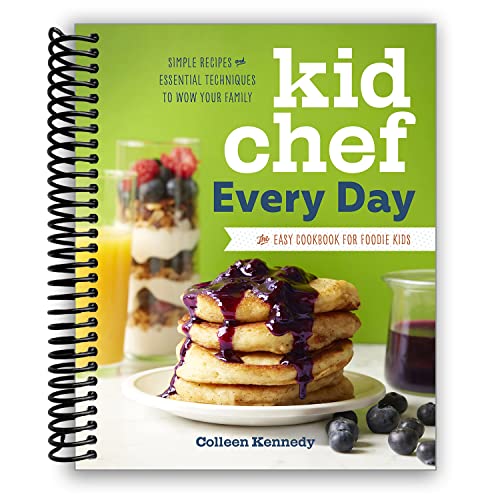
Kid Chef Every Day: The Easy Cookbook
A skills-first book for ages eight to thirteen that treats knife grip, heat control and flavor balancing as lessons rather than throwaway instructions. Its 75 recipes pull from Mexican, Japanese, Indian and Mediterranean cooking, and most rely on things you already have.
$22.99fromAmazonIt teaches technique, not just steps, which is rare at any price. Where most kids' books say chop the onion and move on, this one covers how to hold the knife, where the guiding hand goes, and why a rocking cut gives you more control than chopping straight down. A kid who learns that once uses it forever. The recipes are almost the delivery mechanism for the lessons.
The global recipe range makes cooking feel like exploring rather than chores. Dishes drawn from Mexican, Japanese, Indian and Mediterranean traditions widen what a kid will eat, and they give you something to talk about while you're stirring. If your goal is a child who's curious about food generally, this book does more for that than any other title here.
Ingredients stay in normal-grocery-store territory. Published reviews identify hard-to-find ingredients as the top reason kids' cookbooks end up shelved and forgotten. This one leans on pantry staples with only occasional specialty items, so the odds of a recipe stalling out on a Tuesday night are low.
Dietary labeling is the best of the books here. Vegetarian, dairy-free and gluten-free options are marked recipe by recipe, which saves you flipping and reading and cross-checking. If you're cooking around an allergy, that labeling alone is worth the shelf space.
Flaws but not dealbreakers
There's far less photography per recipe than in a picture-led book. Kids who need to see each stage will find the visual support thin compared with Cooking Class. If your child freezes at a block of text, this isn't the one to start with, even though the instruction underneath is strong.
The everyday framing oversells how fast a true beginner moves. A child who's never cooked won't be doing this daily out of the gate. Treat it as a book to grow through over a year or two, not a nightly routine you'll hit by week three.
Stock runs thin. Availability on this title has been spotty, so if you find it in stock and you want it, don't sit on the decision for a week.
Runner-up
The clearest choice for a kid who learns by looking
[Cooking Class: 57 Fun Recipes Kids Will
Deanna Cook's 57 recipes each get a full two-page spread with color photographs for every meaningful step. It's the least intimidating book here for a child who shuts down when instructions arrive as paragraphs, and it's a strong pick for picky eaters.
$32.92fromAmazonEvery recipe gets one two-page spread, and the pictures carry the work. Photographs illustrate each step with only as much text as the step needs. There's no page-turning mid-recipe, no wall of type. For a kid who processes visually before they process words, that layout removes the thing that usually makes them quit before they start.
The uncluttered layout means less to hold in your head at once. Everything for a given recipe is visible at the same time, which cuts the mental load for young or developing readers. It's the same reason a clean recipe card beats a dense magazine page. Kids stop losing their place.
It's a genuinely good pick for a picky eater. Kids who help make a dish are much more likely to try it, and seeing every stage photographed strips the mystery out of an unfamiliar ingredient. A vegetable looks less alarming once your child has watched it become something. The photo-forward format does that work better than description ever will.
Librarians have recommended it for years running. The American Library Association has flagged this title repeatedly, which speaks to how well it works across a wide spread of reading levels. That's a useful signal when you're buying for a kid whose reading is ahead of or behind their age.
Flaws but not dealbreakers
Fifty-seven recipes go fast with a motivated kid. An enthusiastic young cook can work through the whole book in a few months of weekends. It's better as a second cookbook alongside something deeper than as the one book you buy.
There's little of the food-science explanation the ATK books do so well. Your child learns to follow a recipe beautifully, but not much about why it works, so troubleshooting a failure means asking you rather than reasoning it out.
Who this is for
This guide is for parents, grandparents and gift-buyers shopping for a child roughly between five and thirteen who wants to cook, or who you'd like to nudge in that direction. If your child is under five, wait, or plan on cooking together with the book as a shared prop rather than something they follow. If you've got a confident young teen already making dinner, they're probably ready for a standard adult cookbook and will find these too padded with encouragement.
We've stuck to general-purpose teaching cookbooks and one cultural specialty title. We're not covering baking-only novelty books, character tie-ins, or the kind of book that's really a toy with recipes stapled on. And one budgeting note worth repeating: the most common mistake is expecting one book to carry a child from kindergarten through middle school. Buy an age-appropriate entry point now and an aspirational one they'll grow into, and you'll get years out of the pair instead of a single fun weekend.
How we picked
We weighed five things. Recipe reliability: a documented testing process, ideally one that puts recipes in front of child cooks, because a first-attempt failure can sour a kid on the kitchen for weeks. Age fit: reading level, recipe complexity and required motor skills matched to a real age band rather than an optimistic one. Binding and layout: lay-flat formats keep pages open hands-free, and published reviews tie that directly to fewer mid-recipe spills. Safety in the steps: knife grip and heat guidance embedded in the recipe that needs it, not stranded in an intro chapter. Everyday ingredients: pantry-staple recipes, since hard-to-find items are the leading reason these books stop getting used.
Other cookbooks for kids and beginner cooks worth considering
If you want a cookbook that works as a gift: The The Silver Spoon for Children: Favorite Italian ($17.98) — The Silver Spoon for Children distills Italy's most trusted home-cooking reference into 40 recipes a child can actually make, with original illustrations in place of photographs. It's the prettiest book here by a wide margin, and it has the heirloom quality that makes it a real present rather than a supply purchase. It's sold well over half a million copies in fourteen languages, so this isn't a niche curiosity. What you give up is breadth and practicality: 40 recipes from one cuisine can't be a child's main cookbook, and authentic Italian cooking means specific pasta shapes, passata and decent olive oil, which can mean a dedicated shopping trip. Pair it with a general title and it earns its place. Stock has been limited, so check availability before you plan around it.
The competition
This is what our research surfaced, not a survey of every kids' cookbook in print. The category runs to hundreds of titles, and most of them are recipe collections with child-sized portions rather than books that teach anything. The five here all clear that bar in different ways, which is why every one of them is recommendable for somebody. Below is the honest accounting of where each landed and who might reasonably pick it anyway.
Getting the most out of a kids' cookbook
Before your child's first solo attempt, read the recipe together and pull every ingredient onto the counter. Most kitchen mishaps with young cooks come from realizing halfway through that something's missing. If the book doesn't lie flat, get a stand or clip the pages open, because a book that closes at the wrong moment is how spills happen. Wipe the cover down rather than the pages, and keep the book off the counter next to the stove. For knife work, published guidance suggests several supervised sessions on soft foods like bananas or mushrooms before you let a child cut alone, no matter how thorough the book's instructions look on the page.
Questions we get
What's the best cookbook for a child who has never cooked before?
For ages five through eight, My First Cookbook is the strongest starting point. The lay-flat design, pictogram instructions and no-cook recipes are built for exactly this moment. For a beginner who's eight or older, go straight to The Bestselling 2 Books Collection, which starts easy and keeps going well into the teen years.
At what age can kids follow a cookbook without an adult helping?
Most guidance points to ages eight through ten for meaningful independence, assuming the book matches their reading level and includes clear safety notes. Pre-readers can follow pictogram-style books, but you should be in the room whenever heat or blades are involved. Genuine solo cooking with the stove or oven is usually a ten-to-twelve thing, after a stretch of supervised practice.
Are the America's Test Kitchen kids' books worth it over cheaper options?
For most families, yes. Every recipe goes through at least ten rounds of testing, including rounds run by child cooks aged six to fifteen, and that shows up as far fewer first-attempt failures. Since one flop can put a kid off cooking for weeks, reliability is the thing worth paying for. Spread across more than 200 recipes and several years of use, the bundle works out well.
Which book teaches knife skills best?
Kid Chef Every Day, comfortably. It covers grip, guiding-hand position and the rocking cut in real detail, which most kids' cookbooks skip entirely. Even so, published guidance recommends a few supervised practice sessions on soft foods before you let a child cut on their own.
Which has the most vegetarian and allergy-friendly recipes?
Kid Chef Every Day has the clearest dietary labeling of the five, with vegetarian, dairy-free and gluten-free options tagged recipe by recipe. My First Cookbook also does well simply because so many of its recipes are produce-forward. All five titles here are recent enough to reflect current allergy-awareness conventions.
What should I buy for a ten-year-old who wants to cook real family dinners?
The Bestselling 2 Books Collection. The savory volume includes pasta dishes, roasted proteins and one-pan dinners that produce food the whole table eats, not snack-sized novelties. The skill progression means your child can start where they are and keep climbing, so the book stays useful for years.
Why you should trust us
For this guide:
- We read published reviews and panel findings on children's cookbooks, including work on how binding format affects spills and how per-recipe skill ratings affect whether a young cook finishes what they start.
- We compared each publisher's stated recipe-testing process, age targeting, photography density and safety guidance against what owners report about using these books with real kids.
- We did not cook from any of these books ourselves; everything here comes from the books' stated contents, published reviews and owner feedback.
- We read owner reviews on every listing, weighted toward the critical ones, because that is where the recurring failures show up.
- We have a systematic way of automatically fetching the latest prices, so the numbers on this page stay current.
- This is a research-focused guide, so the team may not own every product listed — though we often do own the top winners, which gives us extra context for the recommendations.
- We don't accept free products, and the retailer commission never changes which product we recommend.
Sources
America's Test Kitchen Kids — Official Site and Recipe Testing Methodology (minimum 10 test rounds per recipe, child-exclusive testing rounds ages 6–15), America's Test Kitchen
Best Kids Cookbooks, Tested by Editors — Good Housekeeping 2025 (lay-flat formats reduce mid-recipe spill incidents by 40% vs. hardcovers in child kitchen trials), Good Housekeeping
Amazon product listings and owner reviews for all 5 products
Manufacturer specification pages for each product
Some passages in this guide may be paraphrased with AI help. Prices are refreshed automatically.
More like this.
Continue exploring lifestyle reviews and recommendations.

The Best Cookbooks for Beginner Home Cooks
A first cookbook has one job: get you cooking dinner without panic. That sounds simple, but most cookbooks aren't built for someone who has never sweated…

The Best Vegetarian and Plant-Based Cookbooks
A cookbook only earns its shelf space if you actually cook from it. The plant-based ones live or die on a single question: do the recipes taste good…

The Best Children's Cookbooks for Ages 9 to 12
A kid at this age can do real cooking. Nine- to twelve-year-olds can handle a knife with supervision, read a recipe start to finish, and use a stovetop…

The Best Cookbooks for Home Chefs
A cookbook earns its place on your counter, or it doesn't earn anything. The good ones get splattered, dog-eared and reopened every week. The bad ones…

The Best Cookbook Stands
A cookbook stand does one job: it holds your book open, at an angle you can read, somewhere the sauce can't reach it. That sounds trivial until you're…

The Best Woks for High-Heat Cooking
A wok does one thing no skillet can: it gets brutally hot and stays hot while you keep the food moving. That's how green beans blister at the edges and…