The Best Fishing Gear for Beginners
Fishing asks less of you than almost any other outdoor hobby. You need something to cast with, something to tie on the end, and a place to stand. But the tackle aisle doesn't make it feel that way. Rods run from four feet to twelve, reels come in three mechanically different families, and the lure wall alone holds a few thousand choices. What actually matters for your first season is narrow: a rod that survives a car door, a reel that doesn't tangle, and a small box of hooks and sinkers you can find in a hurry.
Here's the honest part. No beginner setup is built to last forever, and the ones that are cost enough that you'd rather not hand them to a nine-year-old. Entry-level reels use simple drag stacks that get grabby after a couple of seasons in the sun. Rods that claim to be unbreakable still snap when a kid yanks a snagged lure out of a tree branch — owners of nearly every combo in this guide report exactly that. Expect to replace the reel before you replace the rod, and expect at least one broken tip along the way.
We looked at combos, storage and starter tackle together, because a rod without hooks doesn't catch anything. We think that the Ugly Stik GX2 combo is the best fishing gear for beginners for most people, and that the Zebco 33 two-pack is the one to buy if you're teaching kids or fishing with a partner.
Everything we recommend

Tough, sensitive, and it packs into a bag
Two push-button rods, near-impossible to tangle

Buy this if you'd rather not upgrade in two years
Four trays of tackle, sorted and easy to reach
At a glance
| Product | Reel Type | Rod Length | Price | |
|---|---|---|---|---|
| Ugly Stik GX2 Spinning Reel and 6'Top pick | Spinning | 6', 4-Piece | $89.95 |
| Zebco 33 Spincast Reel and Fishing RodBudget pick | Spincast | 5'6", 2-Piece | $64.99 |
| Penn Battle IV Spinning Reel and FishingUpgrade pick | Spinning | — | $194.99 |
| Plano Guide Series StowAway 4-By Rack SystemAlso great | — | — | $55.99On sale |
 | TCMBY Fishing Lures Bait Tackle Kit SetAlso consider | — | — | $13.99 |
How we picked
Forgiving to learn on. We favored gear that tolerates the mistakes new anglers actually make — snags, high-sticking, over-tightened drag. Published beginner guides and owner feedback both point to the same failure modes, and we weighted combos that survive them.
Ready to fish. A setup that needs three extra purchases before the first trip is a setup that sits in a closet. We looked for combos and kits that get you to the water with the fewest additional steps, and we flag it clearly where line isn't included.
Drag that holds. Drag smoothness matters more than maximum drag rating for a beginner, since a grabby drag snaps line the moment a fish surges. We compared manufacturer drag specs and read owner reports of break-offs on light line.
Durability over seasons. We read long-term owner feedback looking for what fails and when — corroded bearings, cracked ferrules, snapped tips. Products with a clear pattern of early failure didn't make the picks.
Storage that scales. Tackle collections grow. We preferred organization built on the 3700-series standard so trays carry over into any bag upgrade rather than becoming dead weight.
Top pick
Tough, sensitive, and it packs into a bag
Ugly Stik GX2 Spinning Reel and 6'
A four-piece graphite-and-fiberglass spinning combo with the Clear Tip design Ugly Stik is known for. It breaks down into a cloth travel bag, so it rides in a backpack or a trunk without taking over the space, and it handles the abuse a first season involves.
$89.95fromAmazonUgly Stik built its name on rods that survive people who aren't careful yet. The GX2 uses a graphite and fiberglass composite blank rather than pure carbon, which trades a little weight for a lot of forgiveness. That's the right trade when you're new. You'll high-stick a fish, close a tailgate on the tip, and lean the rod against a truck bumper before you learn not to. A stiffer, lighter blank punishes all three.
The travel format is the real difference from the standard GX2. This version breaks into four pieces and comes with a cloth sleeve, so it fits in a duffel or a carry-on instead of riding diagonally across your back seat. Owners who fly to fishing trips call that out specifically — a packable rod that still feels like a real rod is unusual. Multi-piece rods usually go soft at the ferrules, and reviewers say this one doesn't.
The Clear Tip section is more than marketing. The top few inches of the blank are a clear, solid insert rather than a hollow tube, and the point is bite detection. Beginners lose most of their fish by never noticing the bite at all. A bluegill mouthing a worm moves the tip maybe half an inch. Owners consistently mention feeling small fish they'd have missed on a stiffer rod, which is exactly the feedback loop a new angler needs.
Six feet is a sensible length for what you'll actually do. It's short enough to cast from a dock without hooking the person behind you, long enough to reach past shoreline weeds, and it fits a boat. The reel that comes with it is smooth enough for panfish and bass on a lake. Not a lifetime reel — but you'll want to replace the reel before the rod on any combo at this level anyway.
Flaws but not dealbreakers
It ships without line on some configurations, which surprises people who bought it expecting to fish the day it arrives. Buy a spool of 8-pound monofilament at the same time and spool it before your first trip. That's fifteen minutes of work, but it's fifteen minutes you didn't plan for.
Indestructible is a brand promise, not a physical law. At least one owner snapped this rod on an early outing, and a four-piece blank has three more joints than a one-piece rod does. Check that the ferrules are seated fully before every trip — a partly-joined section is the most common way multi-piece rods break, and it's entirely preventable.
It's heavier than a comparable all-graphite rod. On a full day of casting a spinner every thirty seconds, your forearm will notice. For bobber fishing or an evening on a dock, it's a non-issue.
Budget pick
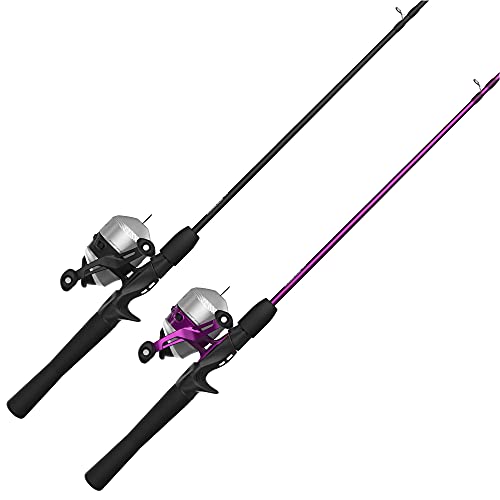
Two push-button rods, near-impossible to tangle
Zebco 33 Spincast Reel and Fishing Rod
A pair of Zebco 33 spincast combos on 5-foot-6 two-piece fiberglass rods. The push-button reel skips the finger-and-bail routine that frustrates new casters, and getting two means you can hand one to a kid and still fish yourself.
$64.99fromAmazonThe push-button cast is the shortest path from never-fished to catching something. Press the button, swing forward, let go. There's no bail to flip, no line to pinch against the blank, and nothing to time. Field & Stream and other beginner guides have recommended the Zebco 33 for children for years for exactly this reason. A first-timer gets a workable cast in about five minutes.
The line lives inside a closed cone, so it can't puff out into the bird's nest that ends so many first sessions. That matters more than casting distance for a beginner. Every minute spent picking apart a tangle is a minute a kid spends deciding fishing is boring, and the untangle-to-cast ratio is what quietly kills enthusiasm.
Getting two changes what this purchase is for. One goes to a kid or a friend, one stays in your hands, and you're not passing a single rod back and forth. Owners buying for grandkids describe exactly that setup. The two colors help too — pink and black means nobody argues about whose rod is whose, which sounds trivial until you're on a dock with two children.
Fiberglass rods and closed reels forgive rough handling. The blanks flex a long way before anything gives, and the enclosed reel keeps sand and grit off the spool. Owners report landing surprisingly heavy fish on these, including some inshore saltwater catches well beyond what the gear is rated for. That's not the plan, but it tells you the drag holds.
Flaws but not dealbreakers
The enclosed design costs you casting distance, and it limits lure weight — much past 3/8 ounce and the cast falls apart. If you want to throw a heavier crankbait across a windy point, this isn't the tool.
Owners report broken rod tips, usually on a snag. A child pulling straight back against a lure hooked in a tree branch is the classic way it happens. Teach them to point the rod at the snag and pull with the line instead, and most of those breaks never occur.
Rethreading line through the cone if the spool empties out is more work than restringing an open spinning reel. Keep an eye on how much line is left, and top it off before it strips down to the knot.
Upgrade pick
Buy this if you'd rather not upgrade in two years
Penn Battle IV Spinning Reel and Fishing
A Penn Battle IV spinning reel matched to a rod, built around a full metal body and sealed bearings. It handles saltwater piers and inshore work that would corrode an entry-level reel, and owners describe the retrieve as noticeably smoother than anything at the beginner tier.
$194.99fromAmazonMost beginner combos are built to a price, and the reel is where the money gets saved. The Battle IV goes the other way. A full metal body means the frame doesn't flex when a fish loads it up, so the gears stay in alignment under pressure. Owners who fish piers describe the retrieve staying smooth in exactly the conditions — salt spray, sand, wet hands — that turn a cheap reel gritty inside a season.
Drag quality is the single spec that decides whether you land fish or break off. Penn's HT-100 carbon fiber drag washers give a smooth, progressive curve rather than the stick-then-lurch of a felt stack. That protects you from your own mistakes. New anglers panic and clamp down on a running fish; a good drag slips gradually instead of snapping the line, and that's the difference between a fish in hand and a story.
This is the pick if you're near the coast. Sealed stainless bearings and corrosion-resistant construction mean you can fish a pier or the surf without watching the reel die over one summer. A freshwater-only combo taken to salt water is essentially a disposable purchase. Rinse this one with fresh water after each trip and it'll keep going for years.
It's also more reel than a first-season angler strictly needs, and we'd say that plainly. If you're fishing a neighborhood pond for bluegill, the extra capability is money you didn't have to spend. But if you already suspect this hobby is going to stick — or you know you'd rather buy once — the arithmetic favors this over replacing a cheaper combo twice.
Flaws but not dealbreakers
The metal body adds real weight. On an all-day casting session you'll feel it in your wrist and shoulder in a way you wouldn't with a lighter graphite-bodied reel.
Shipping damage comes up more here than it should. Owners report rods arriving with bent guides, and one received a resale unit missing a rod section entirely. Open the box and check the guides and ferrules the day it arrives, while a return is still simple.
The feature set outruns what a true beginner will notice in the first season. You won't appreciate the drag until the day a fish runs hard, and that day may be months out.
Also greatOn sale
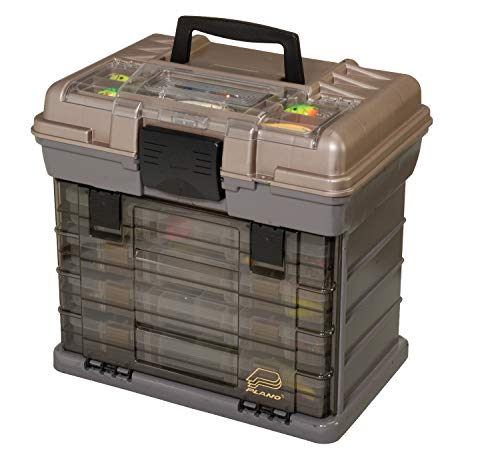
Four trays of tackle, sorted and easy to reach
Plano Guide Series StowAway 4-By Rack System
A hard case that holds four 3700-series utility boxes plus loose gear in a top compartment. The 3700 size is the industry standard, so trays you buy for this will fit any bag or backpack you move up to later.
$55.99fromAmazonList priceDisorganized tackle is a quieter reason people quit fishing than bad gear is. Hooks tangle together, sinkers roll into corners, and you spend the golden half-hour before sunset digging through a bag. This box gives every category a fixed home. Pull the tray you need, snap it back, move on.
The 3700 dimensions are the reason to buy Plano specifically. Plano set that form factor decades ago, and virtually every soft-sided tackle bag and backpack made since accepts 3700 trays. So when you graduate to a shoulder bag, the trays come with you. Nothing you buy today gets orphaned.
Owners keep these for a long time. Multiple people describe buying a second one after a decade with the first, which is roughly the review pattern you want on a plastic box. The dividers slide, so you can build wide slots for spoons and narrow ones for hooks instead of forcing your tackle into fixed compartments.
The top compartment under the clear lid is where the pliers, line clippers, spare spool and sunscreen go. That sounds minor. It isn't — the items you reach for most are the ones you otherwise lose in the bottom of a bag.
Flaws but not dealbreakers
It's heavier and bulkier than new buyers expect. Several owners say they leave it in the truck and carry a smaller box down to the water, which is a reasonable way to use it but not what the photos suggest.
The lid doesn't seal watertight. Rain, spray, or a kayak deck will get water inside, so hooks left wet will rust. Open it up and let it dry after a wet trip.
Soft plastics stored against hard baits will bleed color into them over months. Give the plastics their own tray rather than mixing categories.
Who this is for
This guide is for anyone assembling a first fishing setup — for themselves, for a kid, or as a gift. If you've never held a rod, or you tried once, spent the afternoon untangling line, and gave up, start here. We're aimed at freshwater ponds, lakes and slow rivers, where the fish are abundant and forgiving and the gear doesn't need to fight corrosion. Panfish and bass are where you build the habit. Trout streams and inshore salt are a step past this, though one pick here handles the salt.
You should skip this if you already own a working combo. Upgrading a rod you haven't outgrown is the most common way beginners spend money without catching more fish. Buy line, hooks and a bobber instead, and get on the water more often. We also don't cover baitcasting reels at all — they're genuinely harder to cast, and a season of backlashes will sour you on the whole hobby. Come back to those later, if ever.
How we picked
We built the shortlist around what actually stops beginners. Forgiveness: the rod and reel have to survive snags, car doors and a heavy hand on the drag, so we weighted composite blanks and closed or sealed reels over light, fragile builds. Readiness: we favored combos that need the fewest extra purchases before your first cast, and we say so where line isn't in the box. Drag: smoothness beats a big maximum number, since a grabby drag breaks light line the instant a fish runs. Durability: we read owner feedback across seasons for the specific things that fail — corroded bearings, cracked ferrules, snapped tips. Storage: we preferred the 3700-series standard, because trays bought now still fit whatever bag you upgrade to later.
Other fishing gear for beginners worth considering
If you want tackle sorted out for you: The TCMBY Fishing Lures Bait Tackle Kit Set ($13.99) — The TCMBY starter kit answers the question that freezes people in the tackle aisle: what do I put on the hook? It bundles crankbaits, spoons, jig heads, hooks and weights in a small plastic case, so you can pair it with any combo here and be fishing the same afternoon. Owners buying for kids and teenagers say the variety is the point — a young angler gets to pick a lure, which keeps them interested. The components are basic. Hooks are entry-grade, some of the clips aren't worth using, and everything runs small, which is fine for panfish and thin for bass. It's still cheaper than buying the same pieces one at a time, and the case alone keeps hooks from finding your fingers.
The competition
This is what our research surfaced across beginner combos, tackle kits and storage — not a survey of everything sold. Beginner fishing gear is an enormous, thinly differentiated market, and plenty of decent combos from other brands never made the shortlist. The products below all have real arguments in their favor; they just lost out to a pick for a specific reason, and in a couple of cases the reason is fit rather than quality.
Care and setup
Two habits will double the life of anything here. First, rinse the reel with fresh water after every trip and let it dry before it goes in a bag — salt is obvious, but pond grit and sunscreen chew up bearings too. Second, back the drag off when you store a reel. Leaving it cranked tight compresses the washers and gives you the grabby, line-snapping drag you were trying to avoid. Respool with fresh monofilament each spring; old line takes a memory from the spool and casts in coils. Check ferrules on multi-piece rods before every outing, since a half-seated joint is the most common way those rods break. And when you snag, point the rod straight at the lure and pull with the line, never with the rod tip.
Questions we get
What fishing gear do I actually need to start?
A rod-and-reel combo with line on it, a few hooks in sizes #4 to #10, some split-shot sinkers, and a couple of bobbers. That's it. A state fishing license is legally required in most U.S. states once you're 16 or older. Everything else — a net, polarized sunglasses, a tackle box — makes the day nicer but won't determine whether you catch anything.
Spinning reel or spincast reel for a beginner?
A spinning reel is the better long-term choice: more casting distance, a wider range of lure weights, and it's what you'll want as your technique develops. A spincast reel is dramatically easier on day one because push-button casting needs no timing or finger work. If you're buying for a child under twelve, or for an adult who already quit once over tangles, start with spincast and move to spinning later.
What line should I use, and what pound test?
Monofilament, in 8-pound test, for essentially all freshwater beginner fishing. It knots easily with an improved clinch or Palomar, stretches a little so hooks don't tear free, and it's cheap enough that respooling isn't a decision. Fluorocarbon is stiffer and pricier; braid is strong but demands careful spooling and specific knots. Skip both until you've got a season in.
What's the best setup for a ten-year-old?
A spincast combo like the Zebco 33, a bobber, a split-shot sinker, and a worm on a small hook. Target bluegill at a stocked pond rather than bass. Kids build enthusiasm on volume, not on trophy fish, and a slow afternoon chasing something difficult is how a child decides fishing is boring. Expect to retie a lot, and bring more hooks than you think you need.
Do I need a fishing license for a local pond?
In most U.S. states, yes — any public water, including municipal ponds and lakes, requires a state license once you turn 16. You can buy one online from your state's fish and wildlife agency in a few minutes. Children under 16 are usually exempt, and most states run a handful of free fishing days each year. Some species, like trout and salmon, need an extra stamp, so check your state's rules before you go.
What are the best lures for a beginner?
Honestly, a worm under a bobber outfishes almost anything else for a new angler. Set the bobber twelve to eighteen inches above a #6 hook with one split shot between them. After that, a small inline spinner retrieved at a steady pace works on bass, trout and pike, and a two-inch soft plastic grub on a light jig head dragged along the bottom catches nearly everything. Start with those three.
Why you should trust us
For this guide:
- We read published beginner-gear guidance from outdoor titles alongside manufacturer specifications for each combo, focusing on blank material, reel construction and drag design.
- We compared owner feedback across all five listings, looking for repeated failure patterns — snapped tips, shipping damage, missing line — rather than isolated complaints.
- We cross-checked storage compatibility against the 3700-series standard to confirm that trays bought now carry over to other bags.
- We read owner reviews on every listing, weighted toward the critical ones, because that is where the recurring failures show up.
- We have a systematic way of automatically fetching the latest prices, so the numbers on this page stay current.
- This is a research-focused guide, so the team may not own every product listed — though we often do own the top winners, which gives us extra context for the recommendations.
- We don't accept free products, and the retailer commission never changes which product we recommend.
Sources
Best Fishing Rods for Beginners — Wirecutter / NYT, Wirecutter / New York Times
Best Fishing Combos for Beginners 2025 — Outdoor Life, Outdoor Life
Best Fishing Gear for Beginners — Field & Stream, Field & Stream
Fishing Gear Reviews & Buyer's Guides — BassFishin.com, BassFishin.com
Ugly Stik GX2 Spinning Combo Review — Wired2Fish, Wired2Fish
Fishing Participation Report 2024 — American Sportfishing Association (ASA), American Sportfishing Association
Penn Battle III Spinning Combo Review — Salt Water Sportsman, Salt Water Sportsman
Best Beginner Fishing Gear — Gear Junkie, Gear Junkie
Amazon product listings and owner reviews for all 5 products
Manufacturer specification pages for each product
Some passages in this guide may be paraphrased with AI help. Prices are refreshed automatically.
More like this.
Continue exploring lifestyle reviews and recommendations.

The Best Ice Fishing Tip-Ups and Hard-Water Gear
Tip-up fishing is a waiting game you play with your feet up. You set a baited line under the ice, walk away, and watch for a flag. When one pops across…

The Best Fishing Rod and Reel Combos for Beginners
Your first fishing combo has one job: get you to the water without a fight. That means a reel that doesn't tangle when your cast goes sideways, a rod that…

The Best Fish Tank Starter Kits for Beginners
A fish tank is the rare pet that asks for a little work every week instead of a lot every day. But the equipment you start with decides how pleasant that…

The Best Pickleball Gear for Beginners
Pickleball is easy to start and hard to shop for. You show up at a public court, borrow somebody's spare paddle, have a great time, and then discover…

The Best Breathable Fly Fishing Waders
Waders are the difference between fishing the good water and standing on the bank wishing you could. Breathable ones fixed the old problem: a shell that…

The Best Fly Fishing Rod Combos for Trout
Most trout fishing happens closer than you'd think. Trout Unlimited points out that the majority of American trout water is a stream under 30 feet wide,…