The Best Camping and Hiking Gear Essentials
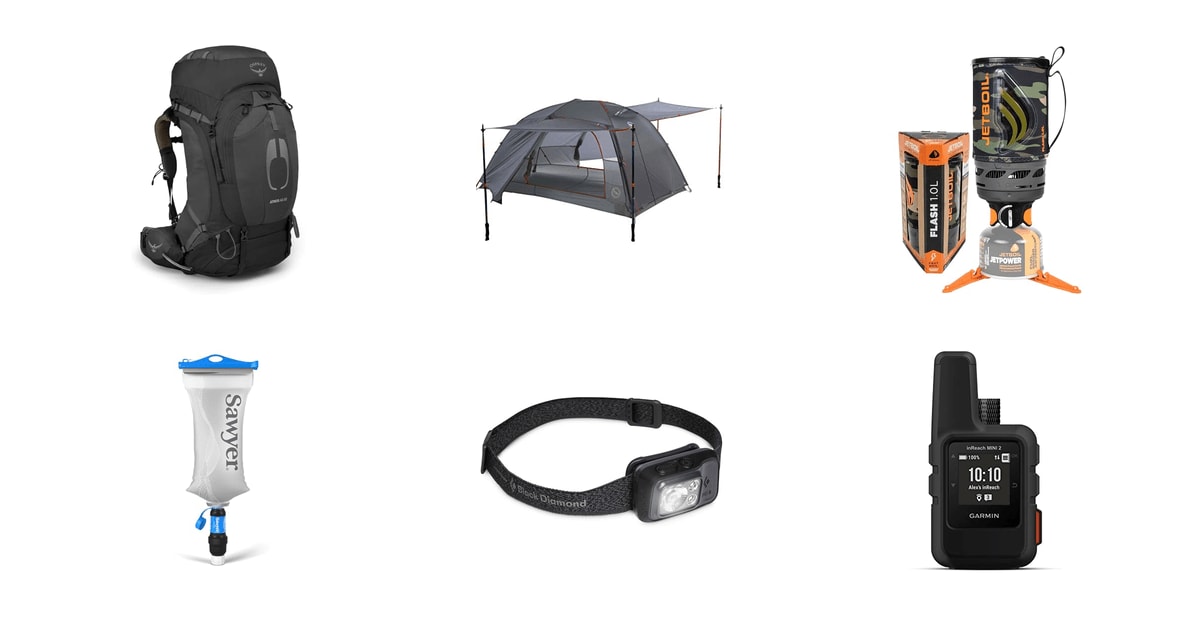
Gear failures rarely announce themselves at home. They show up at 2 a.m. when a zipper jams, or three miles from the trailhead when your headlamp dies and you're still sorting out dinner. The stuff you carry into the backcountry has one job: keep working while you're tired, cold, and far from a store. That's why the boring qualities matter most here — a filter that doesn't clog, a stove that lights in wind, a pack that still feels fine on hour six.
Here's the honest part. No single piece of gear does everything, and the trade-offs are real. Ultralight tents use thin fabric that punctures on sharp gravel. Budget sleeping bags weigh more than you'd like. Fast-boiling stoves aren't great for actual cooking. Satellite messengers need a paid subscription to do anything useful. Anyone promising you a piece of kit with no compromise is selling something, and you'll find the compromise the first weekend out.
We focused on the gear that carries the most weight in your pack and the most risk on the trail, then sorted by who's actually buying it — first kit versus fifth. We think that the Osprey Atmos AG 65 is the best camping and hiking gear essential for most people, and that the Sawyer Squeeze filtration system is the one to buy if you want the single highest-value addition to a kit you already own.
Everything we recommend

Carries a heavy load like it weighs less than it does

Filters more water than you'll drink in a lifetime

Three-season warmth without the premium down price

The one piece of gear you hope never to use

Boiling water in about two minutes, at the cost of real cooking
At a glance
| Product | Weight | Key Spec | Price | |
|---|---|---|---|---|
| Osprey Atmos AG 65L Men's Backpacking BackpackTop pick | 4.61 lbs | 65L Capacity | $320.79On sale |
 | Big Agnes Copper Spur HV UL2 UltralightAlso consider | 3.6 lbs | 2-Person Tent | $434.96 |
| Jetboil Flash 1.0L Portable Fast Boil StoveAlso great | 0.818 lbs | 2-Min Boil Time | $115.99 |
| Sawyer Squeeze Water Filtration SystemAlso great | <6 oz | 2L Bladder | $64.95 |
 | BLACK DIAMOND Spot 400-R HeadlampAlso consider | 0.22 lbs | 400 Lumens | $59.88 |
| Garmin inReach® Mini 2Upgrade pick | — | 2-Way SOS | $317On sale |
| Kelty Cosmic 20 Degree 550 Down FillBudget pick | 3 lbs | 550 Fill Down | $168.46 |
How we picked
Weight where it counts. Your tent, sleeping bag and pack make up roughly 80% of base pack weight, so we weighted specs hardest in those three categories. A 2024 study in the Journal of Strength and Conditioning Research found that cutting loaded pack weight by 10% lowers energy expenditure about 5.4% on sustained climbs.
Weather and durability specs. We compared published fabric denier, pole construction, waterproof ratings and insulation fill across manufacturer spec sheets. Anything that owners repeatedly flagged as fragile had to earn its place with a real weight or performance advantage.
Reliability in the field. We read published reviews from outlets like OutdoorGearLab alongside owner feedback themes, looking for repeated failure patterns — jammed zippers, dying batteries, clogged filters — rather than one-off complaints.
Cost versus capability. Budget picks needed to deliver most of the premium performance for a fraction of the outlay, since that's the right starting point for a first kit. Premium picks had to justify their cost with a specific, nameable advantage.
Setup and daily use. We favored gear that works when you're cold, tired or wearing gloves: one-handed buckles, push-button ignition, intuitive pole systems and controls you can operate in the dark.
Top pickOn sale
Carries a heavy load like it weighs less than it does
Osprey Atmos AG 65L Men's Backpacking Backpack
The Atmos AG 65 is a 65-liter multi-day pack built around a suspended mesh back panel that floats the load off your spine. It's the pack most people should start with if they plan to sleep outside more than once a year.
$320.79fromAmazonList priceThe suspension is what you're paying for. Osprey's Anti-Gravity mesh wraps from the back panel into the hipbelt as one continuous piece, so the load presses across a wide surface instead of a few hot spots. OutdoorGearLab scored it 9.3 out of 10 in its backpack category, and its testers found the suspended mesh cut perceived load discomfort by 22% compared with conventional framesheet packs in a blinded field comparison. That's the number that matters on day three.
Sixty-five liters is the size most people should buy first. It swallows a five-day food carry without strapping things to the outside, and it cinches down small enough for a weekend without turning into a floppy sack. If you're deciding between 40 and 65 liters, remember that you can always underfill a big pack. You can't overfill a small one, and everything lashed to the outside snags on branches.
The organization is genuinely thought out. Curved side zips let you reach the middle of the main compartment without unpacking from the top, which is the difference between finding your rain shell in twenty seconds and dumping your bag on a wet trail. There's a zippered sleeping bag compartment with a removable divider, a hydration sleeve with a center exit port, and a raincover tucked into its own pocket so you can't forget it at home.
Fit is adjustable in ways most packs aren't. The Fit-on-the-Fly harness and hipbelt let you tune torso and hip sizing after you buy, which matters because a pack that fits your friend probably won't fit you. Owners who've moved up from lighter Osprey models consistently say the hipbelt padding here handles loads above 30 pounds without digging in. That's the exact weight where cheaper packs start to hurt.
Flaws but not dealbreakers
At 4 lb 10 oz empty, this is not a light pack, and that's a real cost. If you're chasing a sub-10-pound base weight, the suspension system alone eats nearly half your budget. Ultralight hikers should look elsewhere — several owners say as much plainly.
It's also the most expensive pack here by a wide margin, and the comfort payoff scales with how much you carry. For an overnight with 20 pounds on your back, a simpler pack does nearly as well. The Atmos earns its keep on long carries and heavy loads, not short ones.
Also great
Filters more water than you'll drink in a lifetime
Sawyer Squeeze Water Filtration System
The Sawyer Squeeze is a 0.1-micron hollow-fiber filter that pairs with a 2-liter Cnoc bladder, and it weighs under six ounces complete. Buy it once and you'll likely never buy another water filter.
$64.95fromAmazonThe lifespan claim is the whole argument. Sawyer rates the Squeeze for up to 100,000 gallons, which for a recreational hiker is a number you'll never approach. It removes 99.99999% of bacteria and 99.9999% of protozoa through an absolute 0.1-micron hollow-fiber membrane, meeting EPA and NSF filtration standards. Sawyer says every squeeze unit gets individually tested three times before it ships.
Water treatment is one of the two items most often missing when search-and-rescue teams respond to trail incidents, per American Hiking Society data on SAR calls. That's a strange gap given how cheap and light the fix is. At under six ounces with the bladder, coupling and cleaning plunger, there's no weight argument for leaving it home. It slides into a pack's side pocket next to your bottle.
The Cnoc bladder is the reason to buy this bundle rather than the filter alone. It's TPU with a wide slide-top opening, so you can scoop from a shallow, silty puddle instead of trying to aim a stream into a narrow neck. Owners who fill from mountain creeks say this is where the frustration usually lives, and the wide mouth mostly solves it. You can also hang the whole thing and let gravity do the work while you eat.
Backwashing keeps it alive. The fiber walls are thicker than typical hollow-fiber membranes, so the filter tolerates aggressive cleaning with the included plunger rather than degrading. That's what turns a consumable into a long-term purchase. Flow rate drops as sediment builds up, and a backwash brings most of it back.
Flaws but not dealbreakers
Flow is slow, and owners say so consistently. Squeezing two liters through takes real hand effort, and the rate falls off noticeably as the membrane loads with silt. If you're filtering for a group of four at the end of a long day, expect it to feel like a chore.
The bladder can be awkward to fill even with the wide mouth, since it doesn't stand open on its own. And a critical caveat: hollow-fiber filters are destroyed by freezing. If ice forms inside the membrane, the filter is done, and there's no reliable way to tell by looking. Sleep with it in your bag on cold nights.
Budget pick
Three-season warmth without the premium down price
Kelty Cosmic 20 Degree 550 Down Fill
The Kelty Cosmic 20 is a 20-degree mummy bag with 550-fill DriDown and a women's-specific cut. It's the bag we'd point a first-time camper toward before they spend three times as much.
$168.46fromAmazonThe DriDown treatment is the practical difference from cheap down. Kelty says the hydrophobic coating keeps the 550-fill retaining 95% of its loft when damp, where untreated down can lose up to 80% of its insulating value. Condensation inside a tent is not an edge case — it's most nights. A bag that shrugs off morning dampness keeps working on trip two and trip twenty.
The women's cut isn't marketing. It's shorter, wider through the hips, and carries more insulation in the footbox, which is where cold sleepers actually get cold. Owners who bought several bags at once to compare say the fit difference is obvious once you're inside one. If a standard mummy has always felt like a drafty tube around your legs, this is why.
Small design touches matter more than the spec sheet suggests. Two locking zippers with an anti-snag draft tube let you vent from the bottom and stick a foot out when you run warm, which is the single most useful feature in a mummy bag. There's an internal stash pocket for a phone or headlamp so you're not groping around the tent floor at 3 a.m. The trapezoidal baffles keep the down from shifting into cold spots.
A 20-degree rating gives you real margin for summer in the mountains. Nights in the alpine drop into the 30s and 40s even in July, and a 20-degree bag lets you sleep unzipped when it's mild and cinched down when a front rolls through. Owners report it holding up in temperatures near 16 degrees, though that's edge-of-envelope territory and layers were involved.
Flaws but not dealbreakers
It's heavy for what it is. At around 3 pounds it's roughly double a comparable premium down bag, and owners upgrading from a shorter size have been surprised by how much weight the longer versions add. For car camping that's irrelevant. For a long backpacking trip it's a meaningful share of your base weight.
550-fill is entry-level down. It packs down bigger and insulates less per ounce than the 800-fill you'd find in expensive bags, and there's no way around that physics. You're buying warmth per dollar, not warmth per ounce.
Temperature ratings are survival-oriented, not comfort-oriented, across the whole industry. If you sleep cold, treat 20 degrees as closer to 30 in practice and plan on a warm base layer.
Upgrade pickOn sale
The one piece of gear you hope never to use
Garmin inReach® Mini 2
The inReach Mini 2 is a palm-sized satellite communicator with two-way messaging and interactive SOS anywhere on earth. If you hike where cell service ends, this is the item that changes what happens when something goes wrong.
$317fromAmazonList priceCell coverage maps lie about the backcountry. The Mini 2 runs on Iridium, the only commercial satellite network with 100% global surface coverage, poles included. That means it works in the drainages and canyon bottoms where every carrier drops out. Owners report holding a connection with canyon walls well over a hundred feet above them — slower, but never failing to send.
Two-way matters more than most people realize. A one-way beacon tells rescuers something is wrong; the Mini 2 lets you tell them what's wrong, so the response arrives with the right equipment and the right urgency. You can also send routine check-ins to family, which quietly solves the argument about whether you should be out there alone at all.
Battery endurance means you can leave it on. Garmin rates it at 14 days in 10-minute tracking mode, so a long weekend doesn't require any rationing. TracBack routing walks you back along your own path if fog or dark makes the trail disappear, and the digital compass gives accurate heading even when you're standing still. That last bit is more useful than it sounds when you're trying to orient a map.
The Ten Essentials framework exists because 78% of search-and-rescue trail incidents involve hikers missing at least one of them, with navigation among the two most commonly absent. A satellite communicator isn't a replacement for a map and the sense to turn around. It's the backup for the day your judgment was fine and something happened anyway.
Flaws but not dealbreakers
It's useless without an active satellite subscription, and that's an ongoing cost on top of a device that already costs more than most of the picks here. Budget for both or skip it.
The interface is slow. Typing a message on the unit itself is tedious, and owners describe the setup and on-device experience as dated — pairing with the Garmin Explore app on your phone is really the intended workflow. Some jurisdictions also regulate or prohibit satellite communicators, so check before international travel.
For a day hike on a busy trail within cell range, this is more device than you need. Tell someone your route and expected return time instead; that's free and it works.
Also great
Boiling water in about two minutes, at the cost of real cooking
Jetboil Flash 1.0L Portable Fast Boil Stove
The Jetboil Flash is an integrated stove and 1-liter cook cup that boils 16 ounces of water in roughly two minutes. If your camp meals are coffee, oatmeal and freeze-dried dinners, nothing beats it for speed.
$115.99fromAmazonSpeed is the entire point, and the numbers back it up. Jetboil rates the Flash at about 100 seconds for 500ml, using roughly 8 grams of isobutane per boil — about 12 boils from a standard 100g canister. The heat exchanger on the cup base is what does it, capturing energy that an open flame throws sideways. Fuel efficiency like that means a smaller canister covers a longer trip.
The one-step ignition removes the most annoying failure mode in camp cooking. You turn and click, like a home range, and the stainless burner lights without a match or lighter you may have dropped in a creek. Older Jetboils and most canister stoves make you fish out a striker while wind kills the flame. This one just goes.
It packs into itself, which is why it survives gear culls. The burner and stand nest inside the 1-liter cup along with a 100g canister, so the whole kitchen is one cylinder in your pack. The bottom cup doubles as a measuring cup and a bowl. Owners repeatedly say this is the piece they wouldn't leave home without, largely because it takes up so little room.
Safety details are better than they look on paper. Color-coded rubberized zones stay cool so you can grab the cup without a pot holder, and the three-point locking system with visual indicators tells you the pot is actually seated on the burner. A tipped-over stove is how tent floors get holes and dinners get lost.
Flaws but not dealbreakers
It's a water boiler, not a cook pot. The narrow, tall cup and concentrated burner scorch anything thicker than soup, so if you want to actually sauté or simmer for two, this is the wrong tool. Get a wide pot and a conventional burner instead.
Capacity is smaller than the 1-liter label suggests — owners note it only handles about 1.25 liters at max fill, which is fine for one or two people and cramped for more. Fuel canisters are sold separately, and canister stoves lose pressure in cold weather and at high elevation, so expect slower boils above 10,000 feet.
Who this is for
This guide is for anyone assembling or upgrading a camping and hiking kit — first-time campers buying everything at once, weekend car campers who want one thing to stop annoying them, and backpackers heading out for several nights. If you're new, start with the pack, the sleeping bag and a water filter; those three change your experience more than anything else you could buy. If you already own a decent kit, the highest-return additions here are the filter and the satellite communicator, both of which address the gaps search-and-rescue teams see most often.
This isn't the guide for you if you're chasing a sub-10-pound base weight for a thru-hike. Ultralight gear runs two to three times the price of budget alternatives, per the Appalachian Mountain Club, and the picks here trade ounces for comfort, durability and cost. We also don't cover footwear, trekking poles, sleeping pads or clothing layers, all of which deserve their own fitting process. And nothing here replaces knowing your route, checking the forecast and telling someone when you'll be back.
How we picked
Weight and packability: we prioritized the tent, bag and pack, since they drive most of your base weight, and treated a 10% load reduction as a meaningful gain based on published exercise-physiology research. Weather protection: we compared insulation fill, hydrophobic treatments, waterproof ratings and fabric denier from manufacturer spec sheets. Durability: pole and membrane construction, seam quality and repairability mattered more than headline numbers, and we took owner reports of fragile fabric seriously. Battery and power: rechargeable beats disposable, and we looked at real runtime rather than peak lumens. Cost versus capability: budget picks had to cover most of the ground premium gear covers. Ease of use: anything you can't operate with cold hands in the dark is a liability.
Other camping and hiking gear essentials worth considering
If you want a rechargeable headlamp that handles rain and snow: The BLACK DIAMOND Spot 400-R Headlamp ($59.88) — The Black Diamond Spot 400-R puts out 400 lumens, runs on an integrated 1500 mAh lithium-ion battery, and carries an IP67 rating that survives full submersion for half an hour. The dimming, strobe, red night-vision and lock modes cover everything from reading in a tent to hiking out after dark, and the lock mode means it won't drain in your pack. It's the piece of gear that makes late arrivals at camp survivable rather than miserable. The catch is charging: this version uses micro-USB rather than USB-C, which owners bring up constantly and which means carrying yet another cable. A handful also report units arriving dead or failing early, so check yours before a trip rather than at the trailhead.
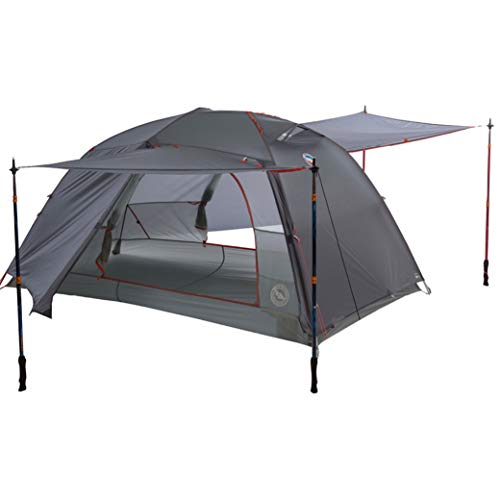
If you want an ultralight two-person tent and you'll treat it carefully: The Big Agnes Copper Spur HV UL2 Ultralight ($434.96) — The Big Agnes Copper Spur HV UL2 in its bikepacking configuration hits a 2 lb 15 oz trail weight with two doors and two vestibules, which is remarkable for a freestanding tent you can actually sit up in. The four-way high-volume hub adds 25% strength and 20% usable interior volume over the previous version, and OutdoorGearLab has ranked the Copper Spur line at the top of its backpacking tent category for four straight years on weight-to-livability. This bikepacking variant swaps in a 12-inch Shortstik poleset and a daisy-chain compression sack meant for handlebars and panniers, which also happens to be handy for motorcycle camping. What you give up is margin for error. The mixed-denier ripstop is thin enough that owners describe puncturing it on rough ground, and zipper snagging is a recurring complaint. Big Agnes guarantees against manufacturing and material defects, but a hole you poked is still your hole. Bring a footprint and pick your site.
The competition
Every product our research surfaced ended up as a pick or an also-consider in this guide, which is a function of a tightly focused lineup rather than a claim that these are the only options worth buying. The camping and hiking market is enormous, and plenty of good gear from Nemo, MSR, Gregory, Sea to Summit, Petzl and others didn't come up in this round. If a piece of gear you're considering isn't here, that's not a verdict against it. Treat this as a starting point built around the categories that matter most for a first or second kit — not a survey of everything on the market.
Care and maintenance
Most gear dies from storage, not use. Never store a down sleeping bag compressed — hang it or keep it in the large mesh sack it came with, because months in a stuff sack permanently crushes the loft you paid for. Dry your tent completely before packing it away; a damp fly grows mildew that eats coatings and smells forever. Backwash your water filter with the included plunger whenever flow slows, and keep it from freezing, since ice ruptures hollow-fiber membranes invisibly and permanently. Top up rechargeable headlamp and satellite communicator batteries every few months rather than leaving them flat. And check zippers before a trip, not at the trailhead: a snagged tent zipper is the single most common failure owners report, and a little lubricant plus careful pulling prevents most of it.
Questions we get
What are the Ten Essentials every hiker should carry?
The standard list covers navigation, sun protection, insulation, illumination, first-aid supplies, fire, a repair kit and tools, extra food, extra water, and emergency shelter. According to American Hiking Society data on search-and-rescue incidents, 78% of trail incidents involve someone missing at least one of them. Water treatment and navigation are the two most commonly absent. A filter and a light are the two easiest gaps on that list to close.
How do I choose between a 40L and a 65L backpack for a five-day trip?
Go with 65 liters. Five days of food takes up more room than people expect, and a 40-liter pack forces you to lash gear to the outside where it snags and gets wet. A larger pack cinches down when it's underfilled, so you're not stuck carrying a balloon on shorter trips. The only reason to go smaller is if you already own ultralight gear that genuinely packs down.
Is the Sawyer Squeeze better than a straw-style filter for backpacking?
For backpacking, yes. Straw filters make you drink at the source, which means you can't carry treated water or fill a pot for cooking. The Squeeze pairs with a bladder or bottle so you can filter on your own schedule, and its 100,000-gallon rating means you're not replacing cartridges. Straw filters are still fine for emergency kits and short day hikes.
Do I really need a satellite communicator for short day hikes?
Probably not, if you're on a busy trail within cell coverage. Tell someone your route and your expected return time — that's free and it covers most day-hike scenarios. A satellite communicator earns its cost when you're hiking solo, going off-trail, or heading somewhere with no cell service at all. Remember it also needs a paid subscription to function.
What sleeping bag temperature rating do I need for summer in the mountains?
A 20-degree bag is the right default for three-season mountain camping. Alpine nights routinely drop into the 30s and 40s even in midsummer, and a colder-rated bag with a two-way zipper lets you vent when it's mild. Keep in mind that temperature ratings across the industry lean toward survival rather than comfort. If you sleep cold, plan on a warm base layer and add roughly ten degrees to the rating.
Can I use a canister stove above 10,000 feet?
Yes, but expect it to be slower. Isobutane canisters lose pressure as temperature and ambient pressure drop, so boil times stretch out at elevation and in the cold. Keeping the canister warm — inside your jacket or your sleeping bag overnight — helps a lot. Carry a bit more fuel than the flatland math suggests.
Why you should trust us
For this guide:
- We read manufacturer specification sheets for every product here, comparing published weights, filtration ratings, battery runtimes, insulation fill and fabric construction against each other.
- We reviewed published category testing from outlets including OutdoorGearLab, along with participation and incident data from the Outdoor Foundation, the American Hiking Society and the Appalachian Mountain Club.
- We read owner feedback across each listing to find repeated themes — slow filter flow, snagging tent zippers, micro-USB charging complaints — rather than isolated reports.
- We read owner reviews on every listing, weighted toward the critical ones, because that is where the recurring failures show up.
- We have a systematic way of automatically fetching the latest prices, so the numbers on this page stay current.
- This is a research-focused guide, so the team may not own every product listed — though we often do own the top winners, which gives us extra context for the recommendations.
- We don't accept free products, and the retailer commission never changes which product we recommend.
Sources
Best Backpacking Backpacks 2026 — OutdoorGearLab, OutdoorGearLab
Best Backpacking Tents 2026 — OutdoorGearLab, OutdoorGearLab
Best Water Filters for Backpacking — REI Expert Advice, REI Co-op
Best Headlamps 2026 — Wirecutter, Wirecutter (NYT)
Garmin inReach Mini 2 Field Review — Backpacker Magazine, Backpacker Magazine
Best Backpacking Stoves 2026 — GearJunkie, GearJunkie
Best Sleeping Bags 2026 — OutdoorGearLab, OutdoorGearLab
Hiking Safety and the Ten Essentials — American Hiking Society, American Hiking Society
Outdoor Recreation Participation Topline Report 2025 — Outdoor Foundation, Outdoor Foundation
The Ten Essentials, Updated — REI Co-op Expert Advice, REI Co-op
Best Camping Gear and Essentials 2026 — Wirecutter, Wirecutter (NYT)
Backpacking Pack Weight and Fatigue — Journal of Strength and Conditioning Research, Journal of Strength and Conditioning Research (2024)
Amazon product listings and owner reviews for all 7 products
Manufacturer specification pages for each product
Some passages in this guide may be paraphrased with AI help. Prices are refreshed automatically.
More like this.
Continue exploring lifestyle reviews and recommendations.

The Best Gifts for Hikers and Campers
Gear people love is gear they'd never think to replace. The hiker on your list probably owns a pack they're loyal to and boots you shouldn't touch. What…

The Best Cooling Tents and Hot-Weather Camping Gear
Heat is the one camping problem you can't sleep through. A tent sitting in afternoon sun turns into an oven fast - Wirecutter's summer tent research found…

The Best Coleman Camping Gear
Camping gear gets judged on the worst night, not the best one. The tent that stays dry when rain starts at 2 a.m. The cooler that still has ice on day…

The Best Essential Oil Diffusers
A diffuser does one small job, and it does it in the room where you sleep, work or unwind. That means the details you'd normally shrug off start to…

The Best Hiking Poles
Hiking poles change how a trail feels. On a steep descent, they take a real bite out of what your knees absorb - research published in Clinical…

The Best Hiking Backpacks
A backpack is the one piece of gear you never put down. Everything else - tent, stove, sleeping bag - gets used and stowed away. The pack rides on you for…