The Best Waterproof Hiking Boots
Wet feet ruin a hike faster than a steep climb does. A creek crossing, an hour of rain, a morning of soaked grass — any of them will leave you squelching for miles if your boots can't keep water out. Good waterproof boots buy you dry socks and, with them, fewer blisters and warmer toes. They also need to grip slick rock, cushion your knees on the way down, and hold your heel steady when the trail turns to loose scree. That's a lot to ask from one piece of gear, and most boots do some of it well and the rest just okay.
Here's the honest part: no waterproof boot breathes the way a mesh trail runner does. A membrane that blocks rain also slows down the sweat trying to escape, so your feet run warmer and damper on a hot afternoon than they would in ventilated shoes. Water that comes in over the collar — deep puddles, a misjudged step in a stream — stays in, because the same membrane works both directions. And the water-repellent finish on the outside wears off with miles and washes, so the upper starts soaking up water and feeling heavy even while the liner still keeps your socks dry.
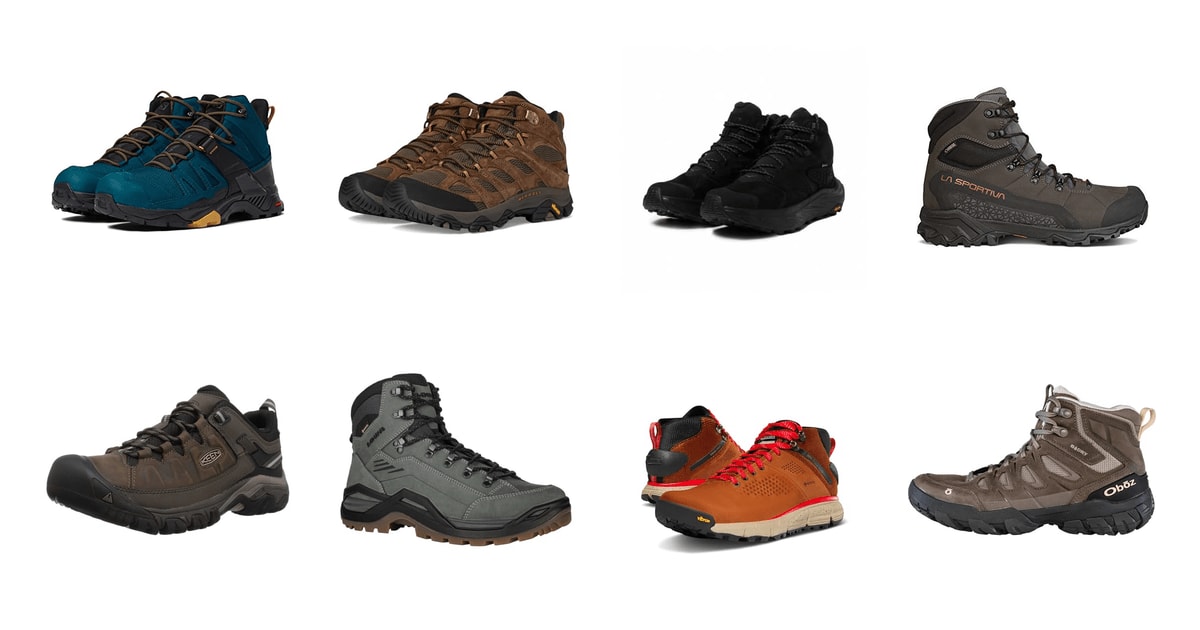
The other thing worth knowing is that fit beats technology every time. A boot with the finest membrane made will still wreck your feet if the toe box pinches or your heel slides. Sizing up about a half size helps on long descents, and toe room matters more than the logo on the tongue. We think that the Salomon X Ultra 4 Mid GTX is the best waterproof hiking boot for most people, and that the Merrell Moab 3 Mid Waterproof is the one to buy if you want a comfortable, proven boot without spending much.
Everything we recommend

Light enough for long days, steady enough for rough ground
Comfortable out of the box, and it costs a fraction of the rest
Maximum cushioning for aching knees and long pavement-to-trail days

Serious grip and breathability for rocky, technical ground

The one to carry weight in, if you don't mind the heft
At a glance
| Product | Weight | Waterproofing | Price | |
|---|---|---|---|---|
| Salomon X Ultra 4 Mid GTX HikingTop pick | — | GTX | $200 |
| Merrell Men's Moab 3 Mid Waterproof HikingBudget pick | 1.5 lbs | Waterproof Membrane | $171.24 |
| Hoka Men's Anacapa 2 Mid GTX® BlackAlso great | 1.5 lbs | GTX | $219 |
| La Sportiva Mens Nucleo High II GTXUpgrade pick | 3.2 lbs | Gore-Tex Surround | $196.92 |
 | KEEN Men's TARGHEE III WP WIDEAlso consider | 2 lbs | KEEN.DRY | $170 |
| LOWA Men's Renegade EVO GTX Mid HikingRunner-up | 2.6 lbs | GORE-TEX | $279.95 |
 | DannerAlso consider | 3 lbs | Gore-Tex | $229.95 |
 | Oboz Women's Sawtooth X Mid B-DRY HikingAlso consider | 1 lb | B-DRY | $200 |
How we picked
Real waterproofing. We looked for boots with a full waterproof membrane — Gore-Tex or a credible proprietary equivalent like KEEN.DRY or B-DRY — rather than a water-resistant treatment alone. Manufacturer specifications and owner feedback both had to point the same direction on wet-weather performance.
Traction on wet rock. Vibram compounds, particularly Megagrip, are independently tested for slip resistance on wet stone, so we favored boots using them or a comparable branded outsole. Generic rubber was a mark against a boot on technical or alpine terrain.
Weight per boot. We compared published weights closely, because three or four ounces per boot compounds into real fatigue over a ten-mile day. The lineup spans roughly 11 to 18 ounces per boot, and that gap is a deliberate trade against stability.
Fit and toe room. Published reviews and owner feedback themes told us which boots run narrow, which run small, and which suit wide feet. Recurring complaints about heel rub or a pinched toe box counted heavily, since fit drives comfort more than any single technology.
Support under load. For backpacking picks we looked for stiffening frames, dense midsoles and mid-or-higher collars. Podiatric guidance points toward ankle support once loads pass roughly twenty pounds on uneven ground.
Top pick
Light enough for long days, steady enough for rough ground
Salomon X Ultra 4 Mid GTX Hiking
The X Ultra 4 Mid GTX is a light mid-cut boot with a Gore-Tex liner, a grippy Contagrip outsole and a chassis that keeps your foot from rolling on uneven trail. It's the boot we'd hand to a hiker who wants one pair for everything from park loops to a weekend with a pack.
$200fromAmazonThis is the boot that does the most things well. Salomon lists it at roughly 15.9 ounces per boot in a men's size 9, which puts it among the lighter mid-cut waterproof boots you can buy. That matters more than it sounds. Every ounce on your foot gets lifted thousands of times in a day, so a lighter boot leaves you with more left in the tank at mile ten. You still get a Gore-Tex membrane and a real outsole, not a running shoe pretending to be a boot.
The Advanced Chassis is the piece most people never think about and then miss when it's gone. It's a frame between the midsole and outsole that resists side-to-side flex, which is what keeps your ankle from rolling when a rock shifts under your heel. Combined with the mid-cut collar, it gives you support without the stiff, planted feel of a heavy backpacking boot. You can still move quickly on smooth trail.
Gore-Tex is the reference point for waterproof footwear, and Gore says its footwear membranes are tested to survive more than a million flex cycles without losing waterproof integrity. In practice that means the liner outlasts the rest of the boot. Rain, wet brush, shallow crossings — the membrane handles all of it. What eventually fails is the outer finish that keeps the upper from soaking up water, and that you can refresh yourself.
Salomon's Quicklace system is divisive, and you should know which camp you're in. Instead of standard laces you get a cord and a pull tab, which cinches the whole boot in about two seconds and never comes untied. Some hikers love it. Others want to tune the tension differently over the forefoot and the ankle, and this system doesn't let you. If you have a high instep or a bony ankle, that's a real consideration.
Flaws but not dealbreakers
The X Ultra runs narrow. Salomon builds on a fairly snug last, and if you've been happy in a roomy toe box you'll likely find this one tight across the ball of the foot. Try before you commit if you can, and size up a half size regardless.
The single-pull lacing is fast but inflexible. You can't loosen the forefoot and keep the ankle tight, which is exactly what some people need on long descents. And the lace cord is a proprietary part, so a break on the trail is more annoying to improvise around than a snapped shoelace.
This is a day-hiking and light-backpacking boot, not a load hauler. Under a heavy multi-day pack the relatively soft, light build gives up some of the underfoot stiffness and lateral stability you'd get from a heavier boot.
Salomon does not publish a warranty term in the listing information we were given.
Budget pick
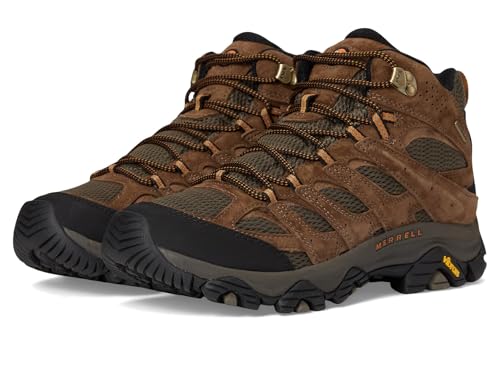
Comfortable out of the box, and it costs a fraction of the rest
Merrell Men's Moab 3 Mid Waterproof Hiking
The Moab 3 Mid pairs a Vibram TC5+ outsole with Merrell's own waterproof membrane in a boot that most people can wear straight out of the box. It's roomier than almost everything else here, which makes it the easy choice for wide feet and sensitive ones.
$171.24fromAmazonThe Moab line has sold more than eight million pairs, which tells you something. A boot doesn't reach that number by being clever; it reaches it by fitting a lot of different feet and not hurting them. Owners regularly describe walking straight out of the box onto a trail with no break-in at all, which is rare in a leather-and-mesh boot. If you hike a handful of times a year and don't want to spend a month training your feet into new footwear, start here.
The toe box is the real reason to buy this boot. It's genuinely wide, and owners with neuropathy, bunions and just plain broad feet keep landing on the Moab after returning narrower options. Merrell also offers actual wide sizing on top of that. Pair it with the Air Cushion heel and you get a boot that's forgiving in the two places that most often go wrong: the front, where toes need to splay, and the back, where a hard landing travels up your leg.
Traction is better than the price suggests. The Vibram TC5+ outsole is a real Vibram compound made for Merrell, not generic rubber with a logo, and owners report solid footing on snow and loose rock. The waterproof membrane is Merrell's own rather than Gore-Tex, and for rain, puddles and wet grass it holds up fine. Keep in mind that no membrane helps once water pours in over the collar in a marsh.
You give up weight for all of this. The Moab is a chunky boot compared with the Salomon or the Danner, and several owners say so plainly — comfortable, but heavy. Over a five-mile loop you won't care. Over a fifteen-mile day, you will. That's the trade this boot asks you to make, and for most weekend hikers it's the right one.
Flaws but not dealbreakers
Longevity is middling. Owner feedback points to the Moab wearing out faster than pricier leather boots, particularly if you wear it daily rather than on weekends. It's a boot you replace, not one you resole.
It's heavy for what it is. The extra ounces are noticeable on long days and on climbs, and they're the main reason this is our budget pick rather than our top one.
Sizing runs snug in width once you add thick socks. Several owners went up a half size specifically to make room for heavier hiking socks, so factor that in when you order.
Also great
Maximum cushioning for aching knees and long pavement-to-trail days
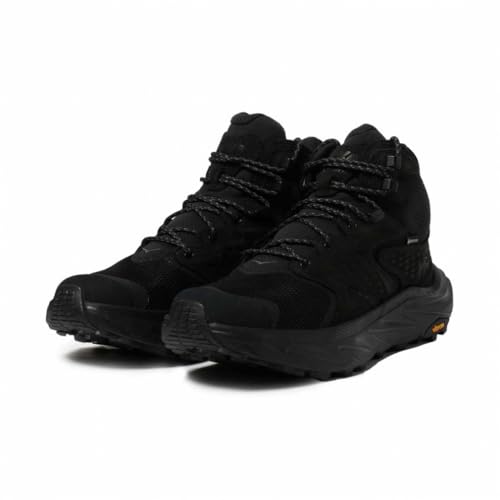
Hoka Men's Anacapa 2 Mid GTX® Black
The Anacapa 2 Mid GTX puts a thick HOKA midsole under a Gore-Tex-lined boot with a Vibram Megagrip outsole. If your knees, heels or plantar fascia complain after a long day on your feet, this is the boot in the lineup built specifically for that problem.
$219fromAmazonIf your feet hurt, this is the boot to look at first. HOKA's whole approach is a tall, soft midsole that spreads out impact instead of letting your heel absorb it. On a long descent, or on the mixed pavement-and-trail walking that fills most people's weeks, that cushioning is the difference between finishing comfortable and finishing sore. Owners dealing with neuropathy and heavy body weight consistently single this boot out for how little their feet hurt at the end of the day.
The Vibram Megagrip outsole is the good stuff. It's a compound engineered for wet-surface grip and independently tested for slip resistance on wet stone, which is exactly the situation where cheap rubber gets scary — a slick granite slab after rain, a wet root crossing the trail. Paired with the Gore-Tex lining, you get a boot that handles a soggy day without asking you to think about your footing.
It's more versatile than it looks. Because the upper is largely textile and the cushioning is generous, plenty of owners wear this as an all-day work boot and not just a weekend hiker. If you want one pair that covers a shift on your feet and a Saturday on the trail, the Anacapa handles both better than a stiff leather boot would.
The trade is stability. All that foam sits between you and the ground, and a tall soft stack is inherently less stable on off-camber rock than a low, firm platform. On maintained trail it's a non-issue. On a technical scramble with a loaded pack, you'll feel the boot moving under you in a way the La Sportiva or the Lowa never do.
Flaws but not dealbreakers
Owner reports on durability are mixed. Some describe months of hard daily wear with no issues; at least one reports an eyelet snapping almost immediately. It's a lighter-built boot than the leather options here, and it isn't priced like a light boot.
It runs stiff and a bit small for some. Several owners recommend going up a size, and a few found the boot stiffer than HOKA's reputation for plush comfort led them to expect.
The tall heel and bulky silhouette aren't for everyone, aesthetically or functionally. On narrow, rocky trail the extra stack height puts your ankle further from the ground.
Upgrade pick
Serious grip and breathability for rocky, technical ground
La Sportiva Mens Nucleo High II GTX
The Nucleo High II GTX is a nubuck-leather boot with Gore-Tex Surround, which vents air around and under the foot instead of just through the top. Its Vibram sole and stiffening insert make it the pick for scrambles, scree and long days with a pack.
$196.92fromAmazonMost waterproof boots vent through the top of the membrane and nowhere else, which is why your feet cook in July. Gore-Tex Surround routes airflow a full 360 degrees around the foot, including through the outsole, and it's designed specifically to lower the temperature inside the boot compared with standard construction. If you've written off waterproof boots because they turn into saunas, this is the one that addresses that complaint directly.
On rock, this boot is in a different class. The Vibram Nano XS-Trek sole has large, well-placed lugs that bite into loose scree and hold on slabs, and the stiffener insert in the EVA midsole gives you a platform firm enough to stand on a small edge without your arch collapsing. That stiffness is what you want when the trail stops being a trail. It's also what makes the boot feel like overkill on a flat towpath.
La Sportiva's 3D Flex ankle hinge is a genuinely useful piece of design. It lets the collar move with your ankle as the ground tilts, so you get high-cut protection without the plank-like feel of a traditional stiff boot. Owners repeatedly note that break-in is short — some report multi-day trips within the first week with no blisters, which is not the norm for a leather high-cut.
The nubuck upper is the durability story. Leather takes abrasion from rock and brush far better than mesh does, and owners describe getting years out of a pair. It does need care. Conditioning the leather and refreshing the water-repellent finish is part of owning this boot, not an optional extra.
Flaws but not dealbreakers
It runs narrow and small. This comes up over and over in owner feedback, even in the wide version — plan on ordering a half size up, and try them with the socks you actually hike in.
It's heavy and it's expensive. At roughly 16.8 ounces per boot it's not the anchor some backpacking boots are, but it's well above the Salomon or the Danner, and the price sits near the top of this lineup.
A few owners report the flexible panels at the sides of the upper starting to split after heavy mileage. That's the usual failure point on a boot that trades some material for breathability.
Runner-up
The one to carry weight in, if you don't mind the heft
LOWA Men's Renegade EVO GTX Mid Hiking
The Renegade EVO GTX Mid uses Lowa's PU Monowrap frame and a dense polyurethane midsole to stay stable under a loaded pack. It's a handcrafted European boot with a Gore-Tex lining, built for multi-day trips rather than quick after-work loops.
$279.95fromAmazonHeavy packs are where this boot earns its keep. The Monowrap frame is a single piece that wraps from heel to toe, and it's engineered specifically to resist the boot rolling sideways under load. That's the failure mode that turns an awkward step into a sprained ankle when you're carrying thirty or forty pounds. The American Podiatric Medical Association recommends mid- or high-cut footwear with ankle support once your load passes twenty pounds, and the Renegade is the clearest expression of that idea here.
The midsole material matters as much as the frame. Lowa uses a double-injection polyurethane rather than the EVA foam in most of these boots. PU is heavier, but it resists compressing flat over consecutive long days, so the boot feels the same on day four as it did on day one. EVA is lighter and softer and gives up more of its cushion as the miles pile on.
Two-zone lacing with locking hooks is the small feature you'll use constantly. You can keep the forefoot loose to let toes spread on a climb, lock the tension at the ankle, then flip it on the descent to stop your foot sliding forward into the toe box. On a long downhill with a pack, that adjustment is what saves your toenails.
This is a boot with a long track record. Owners describe running through several pairs over more than a decade on trails like the Appalachian Trail, and treating the leather with oil to stretch the lifespan further. The nubuck upper uses a reduced-seam design, which means fewer stitch lines to rub and fewer places for water to work in.
Flaws but not dealbreakers
It runs narrow, and owner feedback suggests even the wide version stays snug. Some hikers report blisters over the little toe that persist through repeated break-in attempts, which is the kind of fit problem no amount of patience fixes.
The sole isn't replaceable. For a boot at this price, built to this standard, that's a genuine frustration — when the outsole wears through, a cobbler can't refresh it and the boot is done.
It's the heaviest feel in the lineup, and it isn't cheap. If you mostly do day hikes on maintained trail, you're paying for stability you'll never use and carrying the weight for nothing.
Who this is for
Buy waterproof boots if you hike where the ground stays wet: the Pacific Northwest, the Appalachians, the UK uplands, or anywhere spring runoff turns the trail into a stream. They're also worth it for shoulder-season hiking, when cold, wet feet stop being an annoyance and start being a safety problem. And if you carry a pack, the ankle support that comes with a mid-cut boot is a reason to buy one even on dry trails.
Skip them if you hike mostly in hot, dry places. A ventilated non-waterproof trail shoe breathes better, dries faster after the occasional crossing, and costs less. This guide covers mid- and high-cut hiking and backpacking boots for three-season use. It doesn't cover insulated winter boots, mountaineering boots that take crampons, or low-cut trail runners, and none of these boots are a substitute for those.
How we picked
Waterproofing: we required a genuine membrane — Gore-Tex or a well-regarded proprietary version — not a surface treatment that washes off. Traction: branded outsole compounds tested for wet-rock grip, with Vibram Megagrip the benchmark. Weight: published per-boot weights, because a few ounces compound badly over a long day. Fit: owner feedback themes about toe box width, heel hold and break-in, which predict comfort better than any spec. Support: stiffening frames, midsole material and collar height, judged against the loads and terrain each boot is meant for.
Other waterproof hiking boots worth considering
If you want the roomiest toe box you can get: The KEEN Men's TARGHEE III WP WIDE ($170) — The KEEN Targhee III Mid WP is built on KEEN's Original Fit last, which gives your toes noticeably more room to spread than almost anything else here. Owners with bunions, neuropathy and simply broad feet keep coming back to it after returning narrower boots. You get KEEN.DRY waterproofing, a bruise plate underfoot, a rubber toe guard and 4mm multi-directional lugs that hold in mud. What you give up is weight and agility — owners describe it as heavy and a little clumsy, closer to an old-school work boot than a nimble hiker. A few also report the heel lining wearing through after a couple hundred miles. For walking, standing and moderate trails, it's hard to beat on comfort.
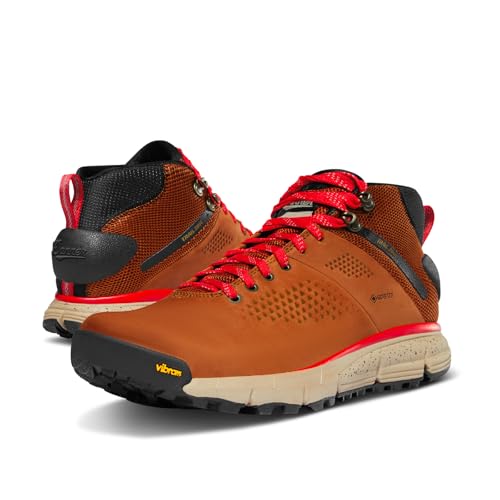
If you want the lightest waterproof boot here: The Danner ($229.95) — The Danner Trail 2650 Mid GTX comes in around 11 ounces per boot in a men's size 9 — roughly 30 percent lighter than the Lowa. It's a full Gore-Tex boot with a Vibram sole, a triple-layer OrthoLite footbed and an external heel counter that locks your foot in place. It feels much more like a trail runner than a boot, which is the point. That lightness means less protection and less stiffness under a heavy pack, and the boot runs small with a snug ankle, so sizing up is close to mandatory. Owners with plantar fasciitis single out the footbed. If you count ounces and mostly hike unloaded, this is the one.
If you want a stable boot with a genuinely good insole: The Oboz Women's Sawtooth X Mid B-DRY Hiking ($200) — The Oboz Sawtooth X Mid B-DRY is the sleeper here. Oboz's reputation rests on its molded insole, shaped to each specific boot rather than dropped in as a generic afterthought, and it's better than what most brands include. B-DRY waterproofing is seam-sealed above the outsole welt, and the dual-density rubberized EVA midsole gives you a firm, stable platform without a punishing ride. Owners describe it as supportive and steady over long international trips. It runs small and narrow — several people sized up a full size — and a few report the collar rubbing at the ankle before break-in. Narrow-footed hikers should look at it first.
The competition
This is what our research turned up, not a census of every waterproof boot for sale. The category is enormous, brands revise models constantly, and plenty of good boots simply weren't in this lineup. Everything below is worth a look for the right person; it just lost out to a pick on fit, weight, or how well it matched what most hikers need.
Care and re-waterproofing
The membrane inside your boots will almost certainly outlast the finish on the outside. That outer coating is what makes rain bead up and roll off, and it wears down with miles and washing — REI's guidance is to reapply after roughly 20 to 30 wash cycles, or at the start of each heavy season. You'll know it's time when the upper darkens and soaks through instead of shedding water. Brush off dried mud first, since grit abrades the fabric and clogs the pores that let sweat out. Then clean with a footwear-specific wash and apply a spray or wax made for your upper material — wax for full leather, spray for mesh and nubuck blends. Dry boots at room temperature, never on a radiator or by a fire, which cooks the adhesives and cracks the leather. Pull the insoles out to speed it up.
Questions we get
Are Gore-Tex hiking boots worth paying extra for?
For most hikers, a good proprietary membrane like KEEN.DRY or Oboz B-DRY performs comparably in rain, puddles and wet grass. Gore-Tex earns its premium in durability — Gore says its footwear membranes are tested past a million flex cycles without losing waterproof integrity. If you hike hard in consistently wet conditions and want the boot's waterproofing to outlast the sole, it's worth it. For occasional weekend hikes, it isn't the deciding factor.
Can waterproof boots still get water inside?
Yes, and it happens more than people expect. The membrane stops water coming through the material, but nothing stops water pouring in over the top of the collar in a deep puddle or a stream crossing. Sweat is the other source — a membrane slows moisture escaping, so on a hot day your socks can end up damp from the inside. Gaiters help with the first problem; nothing fully solves the second.
Should I buy mid-cut or low-cut boots?
Mid-cut works for the large majority of hiking. REI's guidance is that mid-height boots suit everything from moderate trail to light off-trail travel, with high-cut adding meaningful protection mainly when packs exceed about 30 pounds or the terrain is unmaintained. Podiatric guidance points the same way: once you're carrying more than 20 pounds on uneven ground, ankle support reduces your risk of a lateral sprain. Low-cut shoes are lighter and cooler but leave your ankle exposed.
What size should I order?
Go at least a half size up from your street shoes. Backpacker's gear team recommends this specifically to prevent toenail bruising on sustained descents, which gets worse under a pack. You want a thumb's width of room in front of your longest toe, zero heel lift when you walk, and no pinching across the width. Try them with the socks you'll actually hike in — thick socks eat more room than people expect.
Are waterproof boots too hot for summer?
They run warmer than ventilated shoes, no way around it. The same membrane that blocks rain slows down the sweat trying to get out. If summer heat is your main concern, look at La Sportiva's Gore-Tex Surround construction, which routes airflow 360 degrees around the foot including through the outsole to lower the temperature inside. Otherwise, consider a non-waterproof trail shoe for dry-season hiking and keep the boots for wet months.
Do new boots need breaking in?
It depends heavily on the boot. Merrell's Moab is famous for being wearable straight out of the box, and La Sportiva's 3D Flex ankle hinge cuts break-in short on the Nucleo. Stiffer full-leather boots take longer. Regardless of the model, wear them around the house and on a few short walks before you commit to a long day — a hot spot at mile two becomes a blister at mile eight.
Why you should trust us
For this guide:
- We read manufacturer specifications from Salomon, Merrell, HOKA, La Sportiva, KEEN, Lowa, Danner and Oboz, comparing published per-boot weights, membrane types and outsole compounds side by side.
- We reviewed published testing protocols and rankings from outdoor gear publications, along with guidance from REI's expert advice, Backpacker's gear team and the American Podiatric Medical Association.
- We read through owner feedback for every boot here, looking for repeated themes about fit, break-in, heel rub and long-term durability rather than one-off complaints.
- We read owner reviews on every listing, weighted toward the critical ones, because that is where the recurring failures show up.
- We have a systematic way of automatically fetching the latest prices, so the numbers on this page stay current.
- This is a research-focused guide, so the team may not own every product listed — though we often do own the top winners, which gives us extra context for the recommendations.
- We don't accept free products, and the retailer commission never changes which product we recommend.
Sources
Best Hiking Boots 2026 — Wirecutter (NYT), Wirecutter
Best Hiking Boots 2026 — OutdoorGearLab, OutdoorGearLab
Best Waterproof Hiking Boots — Switchback Travel, Switchback Travel
Best Hiking Boots 2026 — Backpacker Magazine, Backpacker Magazine
Best Waterproof Hiking Boots — GearJunkie, GearJunkie
Best Hiking Boots — REI Expert Advice, REI Co-op
Best Hiking Boots 2026 — Outside Magazine, Outside Magazine
Gore-Tex Footwear Technology Overview, W.L. Gore & Associates
Vibram Megagrip and Outsole Technology, Vibram
How to Waterproof Hiking Boots and Shoes — REI, REI Co-op
Amazon product listings and owner reviews for all 8 products
Manufacturer specification pages for each product
Some passages in this guide may be paraphrased with AI help. Prices are refreshed automatically.
More like this.
Continue exploring lifestyle reviews and recommendations.

The Best Hiking Boots
A hiking boot has one job: get you back to the car with your feet intact. That sounds simple, but it's mostly about fit and friction. A boot that's a hair…

The Best Hiking Boots and Trail Running Shoes
Footwear is the one piece of hiking gear you feel with every single step. A boot that rubs at mile two can ruin a whole weekend, and a sole that slides…

The Best Waterproof Breathable Rain Jackets
A rain jacket earns its keep on the days you'd rather stay home. You're twenty minutes from the car when the sky opens, or you're walking to the office…

The Best Waterproof Outdoor Bluetooth Speakers
A speaker that lives outdoors leads a rough life. It gets set down in wet sand, splashed by a cannonball, knocked off a picnic table, and left in a hot…

The Best Waterproof Motorcycle Covers
A motorcycle parked outside takes a beating you don't see happening. Sun bleaches the paint and dries out rubber seals, rain finds its way into…

The Best Hiking Poles
Hiking poles change how a trail feels. On a steep descent, they take a real bite out of what your knees absorb - research published in Clinical…