The Best Hiking Boots and Trail Running Shoes
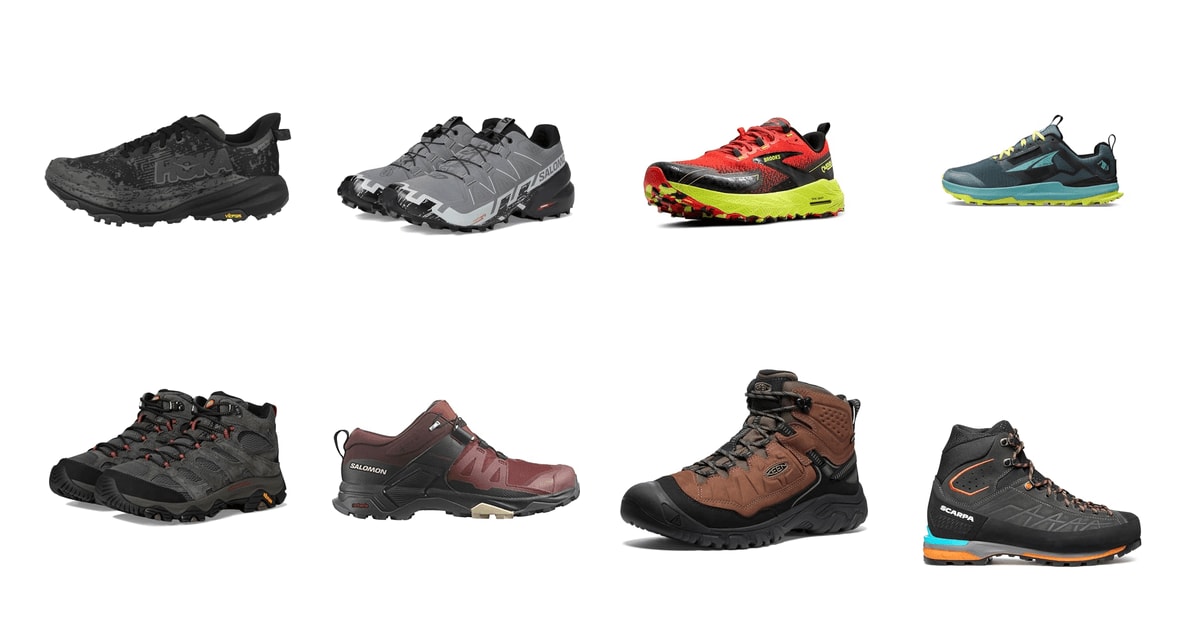
Footwear is the one piece of hiking gear you feel with every single step. A boot that rubs at mile two can ruin a whole weekend, and a sole that slides off a wet root can end a trip early. Most of us aren't shopping for one perfect shoe, either. You want something that handles a muddy Saturday loop, a dusty summer climb, and a long drive home without falling apart. Fit, grip, and weight matter far more than the logo on the side.
Here's the honest part: nothing in this category does everything. A waterproof membrane keeps creek splashes out, but it traps heat too. REI's experts found that Gore-Tex-lined boots ran roughly 8 to 12 degrees warmer inside than equivalent non-waterproof models, which you'll notice on any hot afternoon. Deep lugs that bite into mud feel clumsy on hard-packed dirt. Soft, grippy rubber wears out faster than hard rubber. Every shoe here gives something up, so pick the trade-off you can live with.
The bigger shift is that plenty of hikers have stopped buying boots at all. Trail runners now account for close to two in five of the shoes REI sells in its hiking and trail category, up from about a quarter not long ago. A lighter, more flexible shoe is simply easier on your legs over a long day. Boots still earn their keep on rocky, loaded, or technical trips. We think that the HOKA Speedgoat 6 GTX is the best trail shoe for most people, and that the Brooks Cascadia 18 is the one to buy if you want a firmer, more protective ride with better ground feel.
Everything we recommend

Deep cushion and serious wet grip, in a narrow shoe

Firmer and more protective, with better feel for the trail

A waterproof mid-cut boot that fits almost everybody

Stiff, armored, and ready for real mountain terrain

Unbeatable in mud, a little awkward on hard-packed dirt
At a glance
| Product | Waterproof Membrane | Cushioning / Drop | Price | |
|---|---|---|---|---|
| Hoka Men's Speedgoat 6 GTX Black/Outer OrbitTop pick | GTX | — | $136On sale |
| Salomon Mens Speedcross 6 Quiet Shade/Black/Pearl BlueAlso great | — | — | $141.17On sale |
| Brooks Men’s Cascadia 18 Mountain Trail RunningRunner-up | — | DNA LOFT v2 | $145.50 |
 | ALTRA Men's Lone Peak 8 Trail RunningAlso consider | — | Zero Drop, 25mm Stack | $99.99On sale |
| Merrell Men's Moab 3 Mid GTX® BelugaBudget pick | GORE-TEX | Super Rebound Compound | $194.95 |
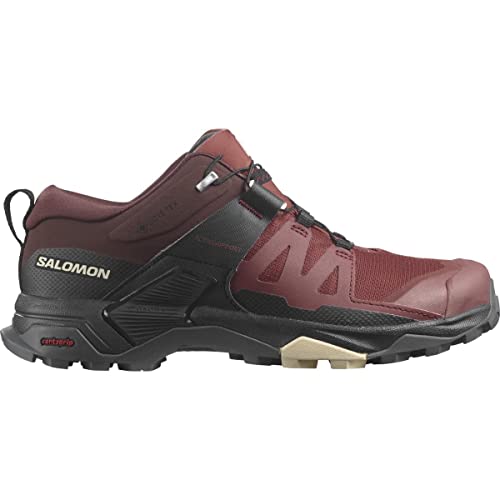 | Salomon X Ultra 4 GTX Madder Brown/Black/BleachedAlso in lineup | GTX | — | $169.99 |
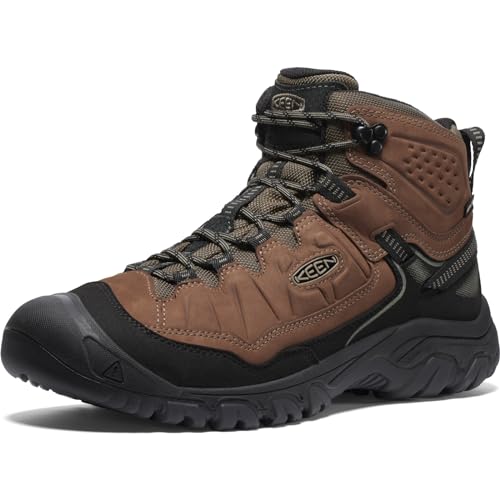 | KEEN Targhee IV Mid WP Bison/Black 12Also consider | KEEN.DRY | Long-lasting Cushioning | $155.49On sale |
| SCARPA Men's Zodiac Tech GTX Hiking BootsUpgrade pick | GORE-TEX | — | $398.95 |
How we picked
Traction on wet ground. We weighted outsole compound and lug geometry heavily, leaning on independent wet-traction comparisons and Vibram's own lab data on Megagrip. A shoe had to hold on wet rock and roots, not just dry dirt, to make the picks.
Weight and cushioning. We compared manufacturer stack heights, drops, and per-shoe weights across the lineup, since fatigue over a long day tracks closely with what's on your feet. Anything heavy had to justify it with protection or stability.
Waterproofing trade-off. We treated a membrane as a feature with a cost, using REI's finding that lined boots run notably warmer inside. We only recommend waterproof models where wet conditions make the heat penalty worth paying.
Fit and toe box. We read owner feedback across hundreds of reports looking for recurring complaints about width, sizing, and hot spots. Consistent blister or pressure themes moved a shoe down or into a narrower recommendation.
Durability reports. We looked at published long-term wear findings, including Switchback Travel's mileage figures, plus owner reports of upper delamination and outsole wear. A shoe that fails early is expensive no matter what it costs.
Top pickOn sale
Deep cushion and serious wet grip, in a narrow shoe
Hoka Men's Speedgoat 6 GTX Black/Outer Orbit
The Speedgoat 6 GTX is a maximally cushioned trail runner with a Vibram Megagrip outsole and a waterproof membrane. It's light enough to run in, protective enough to hike a long day in, and it's the shoe most reviewers keep putting at the top of the pile.
$136fromAmazonList priceThis is the rare shoe that works for both trail running and day hiking. HOKA lists the Speedgoat 6 at about 9.6 ounces in a men's 9, with a 37mm heel and 33mm forefoot stack and a 4mm drop; the waterproof version here runs a bit heavier. OutdoorGearLab ranked the Speedgoat 6 as its top overall trail running shoe after comparing more than 40 models. That's a lot of cushion for the weight.
Grip is the reason it keeps winning. The outsole uses Vibram Megagrip, and Vibram's own lab work put it about 30% better than standard carbon rubber on wet surfaces. Owners hiking humid eastern forests describe unusually confident footing on slick rock and roots, and that matches what published reviews say about its traction on both wet and dry ground. If you hike where it rains, this is the compound you want.
The stack height pays off late in the day. Descending five miles with a loaded pack is where your feet start to ache, and the thick midsole takes the edge off pounding on rocky trail. It doesn't feel mushy, either, because the shoe is fairly firm underfoot for its height. Owners routinely report putting several hundred miles on a pair across mixed running and hiking.
Choose the Gore-Tex version only if your trails are genuinely wet. The membrane keeps out creek crossings and morning dew, and it makes the shoe far more useful in shoulder-season slop. But REI's experts measured lined boots running meaningfully warmer inside than unlined ones, and above about 65 degrees that heat is real. In a dry summer climate, the non-waterproof Speedgoat is the smarter buy.
Flaws but not dealbreakers
It's narrow. Owner after owner mentions a snug toe box, and several say they wish they'd ordered a half size up. If you have a wide forefoot or your feet swell on long days, try the Altra or the KEEN below before you commit to this one.
Durability reports are mixed. Most owners get a long, uneventful life out of a pair, but a handful describe the upper pulling away from the sole after only a few months. Buying through a marketplace seller can also complicate a warranty claim with HOKA, so check who's actually shipping the shoe.
Runner-up
Firmer and more protective, with better feel for the trail
Brooks Men’s Cascadia 18 Mountain Trail Running
The Cascadia 18 pairs a full-length rock shield with moderate DNA LOFT v2 cushioning, so you feel the trail without feeling every rock. Wirecutter picked it as the best trail running shoe for people who want protection and ground feel in the same shoe.
$145.50fromAmazonIf the Speedgoat feels like too much shoe, this is your answer. Brooks lists the Cascadia 18 at 10.8 ounces in a men's 9, with a 4mm lug TrailTack Green outsole and an articulated ballistic rock shield running the length of the midsole. You get real underfoot protection, but the shoe still flexes and lets you read the ground beneath you. On rooty, technical singletrack, that feedback is worth a lot.
The stability is the part that surprises people. Brooks builds the midsole with zonal outsole pods and what it calls the Trail Adapt System, which is a long way of saying the platform doesn't roll around under you on off-camber ground. Hikers who move fast on uneven terrain tend to like this shoe more than plusher options. It also dries quickly, since the upper is plain breathable mesh rather than a membrane.
The details hold up over a long trip. A TPU mudguard and toecap block the gravel and sticks that otherwise find their way in, and the overlays sit where trail rock actually scuffs a shoe. Owners hiking mixed dirt, rock, and mud report grip that holds on wet surfaces and an upper that survives real abuse. It's also a genuinely comfortable shoe on the drive home.
Flaws but not dealbreakers
That rubber toecap causes trouble for some feet. Several owners with shorter toes or a high toe profile found it pressed uncomfortably, and the common fix is going up a half size. Order from somewhere with easy returns.
There's no waterproof membrane, which is deliberate but worth saying out loud. Your feet will get wet in a real creek crossing. The upside is that they dry fast and stay cooler in summer.
Budget pick
A waterproof mid-cut boot that fits almost everybody
Merrell Men's Moab 3 Mid GTX® Beluga
The Moab 3 Mid GTX is the default hiking boot for good reason: Gore-Tex waterproofing, a Vibram TC5+ outsole, and a shape that suits an unusually wide range of feet. It's the boot to buy for your first multi-day trip.
$194.95fromAmazonNo hiking boot has satisfied more people than a Moab. Merrell has sold more than 10 million pairs of the line, making it the best-selling hiking boot family in North America. That scale matters to you in a practical way: the last is forgiving, the sizing is predictable, and a huge number of hikers already know how it fits. If you're buying your first real boot without a store nearby, this is the safe pick.
The build is straightforward and proven. A pig suede and mesh upper wraps a Gore-Tex membrane, the Super Rebound Compound midsole absorbs shock without feeling dead, and the Vibram TC5+ outsole handles gravel roads, packed dirt, and wet rock. The mid cut supports your ankle on rocky ground, which matters more than it sounds: a study in the Journal of Sports Sciences found hikers in mid-cut boots had 22% fewer lateral ankle sprains than those in low-cut shoes.
It also works past the trailhead. Owners on their fifth or tenth pair describe wearing these on job sites and long days on concrete, not just weekend hikes. The removable Kinetic Fit ADVANCED footbed makes swapping in your own orthotic easy if you need arch support. For a boot at this end of the market, that's a lot of usefulness.
Flaws but not dealbreakers
It's heavy and it's warm. This is a leather-and-Gore-Tex boot, so you're carrying real weight on your feet and running hot on a summer afternoon. Over a long day, that adds up in a way a trail runner doesn't.
Expect a break-in period, and don't assume this pair will feel exactly like your last one. A few longtime Moab owners note that the toe padding on newer pairs feels different from boots they bought years ago. Walk them around the house before you commit to a trip.
Upgrade pick
Stiff, armored, and ready for real mountain terrain
SCARPA Men's Zodiac Tech GTX Hiking Boots
The Zodiac Tech GTX is a three-season mountain boot with a full rubber rand, Gore-Tex lining, and semi-automatic crampon compatibility. Scarpa lists it at 1 pound 8.7 ounces for a single size 9 boot, which is light for what it can handle.
$398.95fromAmazonBuy this when the trail stops being a trail. Scrambling on talus, kicking steps in spring snow, and edging on rock all ask for a stiff sole and a boot that won't fold under you. The Zodiac Tech is built for exactly that, with semi-automatic crampon compatibility for early-season routes. It's made in Italy and priced accordingly, so it only makes sense if your days actually go there.
The full rubber rand is the standout feature. It wraps the entire boot rather than just capping the toe, which is what keeps rock from chewing through the upper when you jam a foot into a crack or drag it across granite. Scarpa's Sock-Fit construction joins the tongue to the ankle collar in one piece, so there's less bunching and fewer hot spots on long approaches.
It still walks reasonably well, which is the hard part. A boot this protective usually feels like a brick on the miles of dirt before the fun starts, and this one is light enough that the approach doesn't wreck you. Gore-Tex Performance Comfort keeps out snowmelt and wet brush. The early owner feedback is thin but positive, including from a hiker with wide feet.
Flaws but not dealbreakers
It's overkill for most hiking. On rolling, maintained trails, the stiff sole feels wooden and you'll wish you were in a trail runner. Don't buy this as a general-purpose day boot.
It's the most expensive option here by a wide margin, and there isn't much long-term owner feedback yet compared with the Merrell or the KEEN. You're buying on Scarpa's reputation and the spec sheet.
Also greatOn sale
Unbeatable in mud, a little awkward on hard-packed dirt
Salomon Mens Speedcross 6 Quiet Shade/Black/Pearl Blue
The Speedcross 6 uses 6mm chevron lugs in Contagrip TA rubber, and it grips soft ground better than anything else here. If your trails are wet clay, snow, or churned-up singletrack, this is the shoe that keeps you upright.
$141.17fromAmazonList priceNothing else in this guide handles mud like the Speedcross. Those 6mm chevron lugs are deeper than anything on the trail runners above, and they're spaced to shed muck instead of packing it in. OutdoorGearLab rated it best in class for traction on soft, muddy, and wet terrain in its trail shoe roundup, and RunRepeat's aggregation of user reviews put it first in the mud and soft-terrain category. Owners running snow and ice say much the same.
The fit is the other half of the appeal. Salomon builds this shoe snug and locked-down, with the Quicklace system pulling the upper tight in one motion. On a steep, greasy descent, your foot doesn't slide forward into the toe. It's a precise, secure feeling that people either love or find restrictive, so it's worth knowing which camp you're in before you buy.
It's more durable than aggressive-lug shoes usually are. Owners who've cycled through several generations of the Speedcross point to the current rubber formulation as the toughest yet, and the upper holds up to repeated soakings. Plenty of people wear these well beyond running, from farm chores to shooting sports, which tells you something about the traction.
Flaws but not dealbreakers
Those deep lugs are a liability on dry, hard-packed trail and pavement. You'll feel the individual lugs under your feet, and the ride gets vague and tippy on rock slabs. If your local trails are firm dirt, get the Speedgoat or the Cascadia instead.
The snug last doesn't suit every foot. Some owners with wide forefeet find it too tight, and the Quicklace system gives you less fine control over pressure across the top of the foot than regular laces do.
Who this is for
This guide is for anyone walking or running on unpaved ground: day hikers on maintained trails, weekend backpackers, road runners moving to dirt, and hikers who scramble on rock. If you mostly walk on sidewalks and gravel paths, you don't need any of this — a comfortable pair of running shoes will do. And if you already own boots that fit and haven't worn through the lugs, keep wearing them.
We've stuck to three-season footwear here. That means no insulated winter boots, no full mountaineering boots for ice and technical alpine climbing, and no approach shoes built primarily for climbing. We also cover men's sizing on these particular listings; most of these models come in women's versions with different lasts, and the fit notes won't transfer exactly. If you have a diagnosed foot condition, treat this as a starting point and talk to someone who can look at your feet.
How we picked
Traction: we prioritized outsole compound and lug depth for the terrain each shoe targets, using independent wet-grip comparisons rather than marketing claims. Weight: we compared listed per-shoe weights and stack heights, because what's on your feet is what tires you out. Waterproofing: we treated a membrane as a trade, since lined boots run measurably warmer inside and cost you breathability on hot days. Fit: we read owner feedback for repeated complaints about width, sizing, and pressure points, and we flag every shoe that runs narrow or small. Durability: we weighed published long-term mileage findings and owner reports of uppers separating or outsoles wearing early.
Other hiking boots and trail running shoes worth considering
If you want a waterproof boot with room for wide feet: The KEEN Targhee IV Mid WP Bison/Black 12 ($155.49) — The KEEN Targhee IV Mid WP is the boot to try when nothing else fits. KEEN's Original Fit gives your toes genuine room to spread, and owners with wide feet regularly describe it as the first hiking boot that didn't pinch. You get a KEEN.DRY membrane, an all-terrain rubber outsole tuned for mud, a bruise plate underfoot, and a big rubber toe guard. Owners who wear these five days a week report a year of hard use with the soles still intact. What you give up is refinement: the stock insole is firm enough that some hikers swap it immediately, and the waterproof membrane isn't Gore-Tex, so it's a slightly different bet than the Merrell.
If you want a zero-drop shoe and a genuinely wide toe box: The ALTRA Men's Lone Peak 8 Trail Running ($99.99) — The Altra Lone Peak 8 has no heel-to-toe drop at all and a FootShape toe box that Altra's commissioned testing puts roughly 18% wider at the toes than a traditional trail last. For hikers with flat, wide feet who blister on long days, that extra room is the whole point. The MaxTrac outsole with TrailClaw lugs grips well, and the 25mm stack keeps it comfortable without feeling like a barefoot shoe. Two warnings. Zero drop asks more of your calves and Achilles, so transition slowly — one owner who switched abruptly reported serious calf pain. And owners consistently say the outsole wears faster than the competition, a trade most Lone Peak loyalists accept for the fit.
The competition
This is what our research surfaced, not a survey of every shoe on the market. Plenty of good trail footwear didn't make it into this lineup simply because it wasn't part of what we looked at.
The Salomon X Ultra 4 GTX Madder Brown/Black/Bleached ($169.99) — The Salomon X Ultra 4 GTX is a low-cut waterproof hiking shoe that splits the difference between a trail runner and a boot, with a Gore-Tex lining and a Contagrip outsole. Its case is durability: Switchback Travel's long-term wear found it going past 600 trail miles before outsole wear became a real problem, roughly 40% longer than the category average of about 425 miles. It lost to the Speedgoat on cushioning and grip, and to the Merrell on price and ankle support. Owner feedback is also more divided than we'd like — most people praise the fit, light weight, and waterproofing, but a minority report sizing that runs oddly large and tread that underwhelms in winter. Consider it if you want a low-cut waterproof hiker that lasts.
Fit and sizing
Buy hiking footwear a half size larger than your street shoes, and try it on at the end of the day when your feet are swollen. On a long descent your foot slides forward, and if your toes hit the front you'll lose toenails. Wear the socks you actually hike in when you check the fit. Several shoes here need extra attention: the Speedgoat runs narrow and small, and the Cascadia's rubber toecap presses on some feet. Once you own them, rinse mud off the outsole and let boots dry at room temperature — never next to a heater or a fire, which cooks the adhesives and stiffens leather. Reproof the outer fabric on waterproof models when water stops beading up, since a soaked outer kills breathability even when the membrane still works.
Questions we get
What's the difference between hiking boots and trail running shoes?
Boots are usually mid- or high-cut, stiffer underfoot, and heavier, with more ankle support and more protection. Trail runners are low-cut, more flexible, lighter, and better ventilated, so they're faster and cooler but leave your ankle exposed. The gap has narrowed a lot as trail runners have added rock plates and grippier rubber. For most day hiking on decent trail, a trail runner is plenty.
Boots or trail runners for backpacking?
It depends on your load and your terrain. If you're carrying a heavy pack over rocky, uneven ground, a mid-cut boot helps — a study in the Journal of Sports Sciences found 22% fewer lateral ankle sprains in mid-cut boots than in low-cut shoes on that kind of terrain. For lighter loads on established trail, plenty of experienced backpackers use trail runners and never look back. Start with what your ankles have handled before.
Is Gore-Tex worth it, or should I buy non-waterproof?
Get waterproof if you hike in rain, wet brush, snowmelt, or shoulder-season mud. Skip it if your trails are hot and dry. REI's experts found Gore-Tex-lined boots stayed dry in every wet scenario but ran 8 to 12 degrees warmer inside than unlined equivalents, which is uncomfortable above roughly 65 degrees. A membrane also slows drying once water gets in over the collar.
How many miles do hiking shoes last?
Figure somewhere around 400 to 500 miles for a typical trail shoe before the outsole and midsole are noticeably done, though it varies a lot with terrain and your weight. Switchback Travel's long-term wear put the Salomon X Ultra 4 GTX past 600 miles, about 40% better than the roughly 425-mile category average. Watch the lugs and the midsole creases rather than counting miles exactly. If the cushioning feels flat or the tread is smooth, replace them.
What should I buy if I have wide feet?
Start with the Altra Lone Peak 8 or the KEEN Targhee IV Mid WP. Altra's FootShape last is roughly 18% wider at the toes than a traditional trail shoe, and KEEN's Original Fit is famously generous. Both come up repeatedly in owner feedback from people who couldn't find a comfortable hiking shoe anywhere else. Avoid the Speedgoat and the Speedcross, which both run narrow.
Can I use trail running shoes for scrambling and off-trail routes?
For easy scrambling on dry rock, yes — a sticky rubber outsole like Vibram Megagrip actually edges well, and the low weight helps. For sustained technical terrain, spring snow, or anything needing crampons, you want a stiff boot like the Scarpa Zodiac Tech GTX. Soft trail shoes flex too much to edge reliably and offer no protection when you drag a foot across rock.
Why you should trust us
For this guide:
- We read manufacturer spec sheets for every shoe here, comparing listed weights, stack heights, drops, lug depths, and outsole compounds side by side.
- We reviewed published findings from OutdoorGearLab, Switchback Travel, REI, Wirecutter, RunRepeat, and a study in the Journal of Sports Sciences on ankle support.
- We read through owner feedback on each listing for recurring themes around fit, sizing, traction, and how these shoes hold up over months of use.
- We read owner reviews on every listing, weighted toward the critical ones, because that is where the recurring failures show up.
- We have a systematic way of automatically fetching the latest prices, so the numbers on this page stay current.
- This is a research-focused guide, so the team may not own every product listed — though we often do own the top winners, which gives us extra context for the recommendations.
- We don't accept free products, and the retailer commission never changes which product we recommend.
Sources
Best Trail Running Shoes 2026 — OutdoorGearLab, OutdoorGearLab
Best Hiking Boots 2026 — OutdoorGearLab, OutdoorGearLab
Best Trail Running Shoes — Wirecutter (NYT), Wirecutter
Best Hiking Boots and Shoes — Wirecutter (NYT), Wirecutter
Best Hiking Boots 2026 — Backpacker Magazine, Backpacker Magazine
How to Choose Hiking Boots vs. Trail Runners — REI Expert Advice, REI Co-op
Best Hiking Shoes and Boots — Switchback Travel, Switchback Travel
Trail Running Shoe Reviews — iRunFar, iRunFar
Trail Running Shoe Reviews — Trail Runner Magazine, Trail Runner Magazine
Salomon Speedcross 6 Aggregated Review — RunRepeat, RunRepeat
Vibram Megagrip Technology Overview — Vibram, Vibram
Ankle Stability in Hiking Footwear — Journal of Sports Sciences, Journal of Sports Sciences
Amazon product listings and owner reviews for all 8 products
Manufacturer specification pages for each product
Some passages in this guide may be paraphrased with AI help. Prices are refreshed automatically.
More like this.
Continue exploring lifestyle reviews and recommendations.

The Best Hiking Boots and Trail Shoes
Your feet do all the work on a hike, and the wrong shoe makes that obvious fast. A boot that pinches at mile two becomes a blister at mile five and a limp…

The Best Running Shoes for Flat Feet
If your arches collapse when you stand, you already know what mile 18 feels like. The inside edge of your foot rolls in, your knee follows, and by the end…

The Best Running Shoes for Plantar Fasciitis
Plantar fasciitis announces itself the same way for almost everyone: those first few steps out of bed feel like stepping on a stone. The band of tissue…

The Best Running Shoes for Men and Women
A running shoe is the only piece of gear that touches you on every single stride. Over an hour-long run that's thousands of landings, and a shoe that's…

The Best Waterproof Hiking Boots
Wet feet ruin a hike faster than a steep climb does. A creek crossing, an hour of rain, a morning of soaked grass - any of them will leave you squelching…

The Best Hiking Boots
A hiking boot has one job: get you back to the car with your feet intact. That sounds simple, but it's mostly about fit and friction. A boot that's a hair…