The Best Waterproof Breathable Rain Jackets
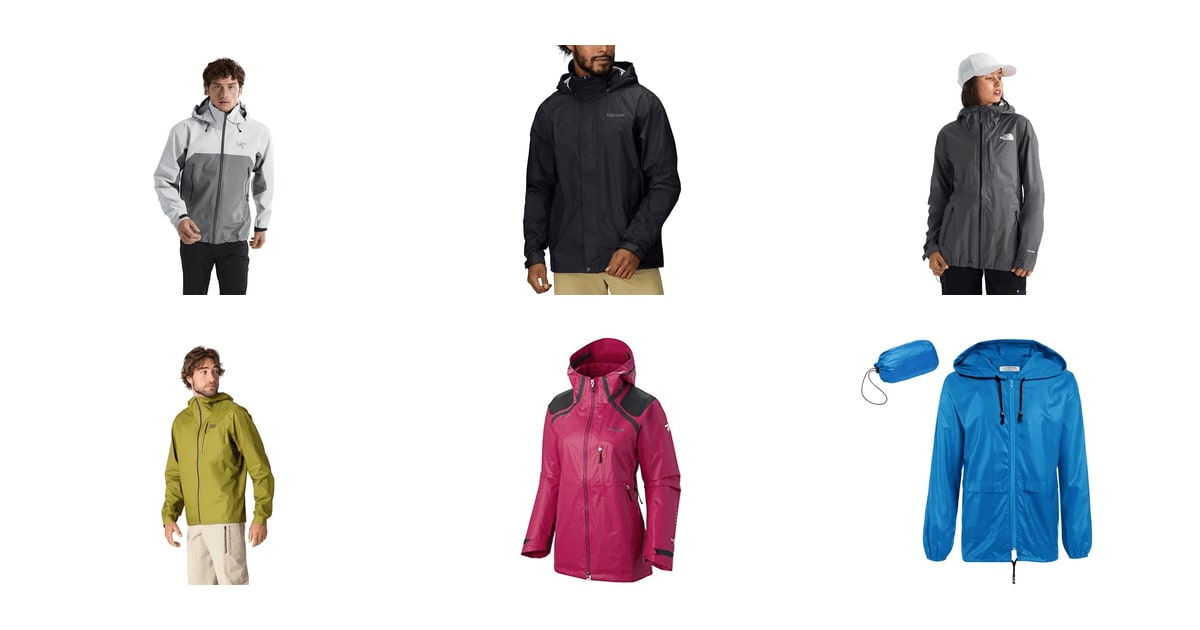
A rain jacket earns its keep on the days you'd rather stay home. You're twenty minutes from the car when the sky opens, or you're walking to the office and the forecast lied again. What matters isn't the number printed on the hangtag — it's whether the hood stays put in wind, whether the sleeves ride up when you reach, and whether you can stuff the thing into a daypack without thinking about it. A jacket you leave at home because it's bulky protects nobody.
No rain jacket breathes the way you want it to. Push hard uphill in a downpour and you'll get damp from the inside, no matter what membrane you bought. Brands publish breathability numbers that aren't measured the same way, so comparing them across companies is close to meaningless. The water-repellent finish on the outer fabric also wears off, and once the face fabric soaks through, the jacket feels clammy even though it isn't leaking. Pit zips and honest expectations do more than any spec.
So the question isn't which jacket breathes best. It's which one matches the weather you actually walk into and the way you move. Someone doing dawn patrol in the Cascades needs a different shell than someone dodging showers in a city. We think that the Arc'teryx Beta AR is the best waterproof breathable rain jacket for most people who spend real time outside, and that the Marmot PreCip Eco is the one to buy if you want reliable protection without spending much.
Everything we recommend

The most protective shell here, if you can pay for it

Nearly all the protection for a fraction of the outlay

The one to wear when you need to reach overhead
At a glance
| Product | Weight | Waterproof Tech | Price | |
|---|---|---|---|---|
| Arc'teryx Beta AR Men's JacketTop pick | 0.6 lbs | Gore-Tex Pro | $650 |
| MARMOT Men's PreCip Eco Lightweight & WaterproofBudget pick | 0.67 lbs | NanoPro | $135 |
 | The North Face Women's Alta Vista RainAlso consider | — | DryVent | $160 |
 | Columbia Women's Outdry Ex Diamond Shell JacketAlso in lineup | — | Outdry Ex Diamond | $399.99 |
 | COOFANDY Men's Waterproof Hiking Travel Shell BreathableAlso in lineup | — | — | $19.99On sale |
| BLACK DIAMOND Men's Fineline Stretch Rain JacketAlso great | — | BD.dry | $148.88On sale |
How we picked
Waterproof construction. We required fully taped seams and a genuine waterproof membrane, not just a water-repellent finish, based on manufacturer spec sheets. Critically taped jackets went to the competition section.
Breathability under load. Published MVTR numbers aren't comparable across brands, so we leaned on field comparisons from OutdoorGearLab and Switchback Travel plus owner reports about clamminess on climbs. Mechanical venting counted as much as membrane specs.
Weight and packability. CleverHiker's reader surveys found packability ranks above waterproof rating for thru-hikers choosing a shell. We favored jackets that stuff into their own pocket and stay under about 400 grams.
Hood and fit. We looked for adjustable hoods that turn with your head and articulation that keeps the hem down when you reach. Owner feedback about sizing surprises weighed heavily here.
Materials and treatment. We preferred PFC-free DWR, recycled shell fabric and bluesign or Fair Trade certification where brands document it. EU PFAS restrictions are pushing the whole industry this way regardless.
Top pick
The most protective shell here, if you can pay for it
Arc'teryx Beta AR Men's Jacket
The Beta AR pairs a three-layer Gore-Tex Pro laminate with fully taped seams and a helmet-compatible hood. It's built for sustained mountain weather rather than a walk to the train, and it's the one jacket here that won't feel outmatched in a genuinely bad day.
$650fromAmazonThis is the jacket you buy when the weather isn't optional. Gore-Tex Pro carries a guaranteed minimum of 28,000mm hydrostatic head and 25,000 g/m²/24h breathability — the highest published spec of any major membrane. OutdoorGearLab's Pacific Northwest field work, which put 22 jackets through more than 30 hours of rain, scored the Beta AR a 9.5 out of 10 for waterproofing. If you're out for hours in steady rain, that margin is the whole point.
The three-layer build is why it holds up. OutdoorGearLab found 3L Gore-Tex shells outperformed 2.5-layer jackets by 15 to 20 percent in real-world breathability, even when the spec sheets claimed similar numbers. You feel it as a fabric that doesn't stick to your arms when you sweat. It's also just tougher — a 2.5L jacket's inner coating scuffs off under a pack strap over a few seasons, and there's no inner coating here to lose.
Arc'teryx built the hood for a climbing helmet, with an internal collar and a laminated brim that holds shape in wind. That sounds like a niche feature. It isn't. A hood sized for a helmet also fits over a beanie and still turns with your head, which is the difference between seeing the trail and staring at your own shoulder. There's an embedded RECCO reflector too, which matters if you spend time in avalanche country.
Owners describe it as noticeably thick and stiff compared to lighter shells, and that's fair — it's a shell built for abrasion, not for stuffing in a purse. It packs down, but not to fist size. If your rain is mostly a fifteen-minute walk from a parking lot, you're buying more jacket than you need.
Flaws but not dealbreakers
It costs far more than anything else here, and for a lot of people that money buys durability they'll never use up. If you hike a dozen days a year in mild rain, the Patagonia or the Marmot will keep you just as dry.
Sizing is the recurring complaint. Owners with broad shoulders report the shoulders binding at their usual size, while taller buyers say the sleeves run long enough to cover the knuckles. Fit is generous through the torso for layering, which throws off the sleeve-to-body proportion for some builds. Try it on if you can, and expect a possible exchange if you can't.
It's a loud fabric. The stiff Gore-Tex Pro face rustles with every arm swing, and a few owners find that grating on a quiet trail.
Arc'teryx does not state a warranty term in this listing.
Budget pick
Nearly all the protection for a fraction of the outlay
MARMOT Men's PreCip Eco Lightweight & Waterproof
The PreCip Eco weighs about 298 grams, seals every seam, and stuffs into its own pocket. It costs a small fraction of the Beta AR and keeps you just as dry in the rain most people actually walk through.
$135fromAmazonMarmot uses a PFC-free NanoPro membrane under a 100% recycled, bluesign-approved shell, with 100% seam-taped construction rather than the critical-taped shortcut cheaper jackets take. Fully taped seams are what let a jacket handle a sustained downpour instead of just a passing shower. OutdoorGearLab called it the lightest fully waterproof jacket in its budget category. For most people, that combination is the whole job.
Pit zips are the feature that makes this jacket work. No membrane keeps up with you on a climb, so the practical fix is a vent you can open. The PreCip Eco has them, and owners bring them up constantly — one describes wearing it through 29-degree drizzle without overheating. A DriClime-lined chin guard keeps the collar from chafing your neck, which sounds trivial until you've zipped a jacket to your jaw for three hours.
It stuffs into its own right-hand pocket and comes out about the size of a small loaf. That's the reason it ends up in so many carry-ons. Owners report taking it through Europe and the Grand Canyon and mostly forgetting it was in the bag until they needed it.
The trade-off against the pricier picks is fabric feel and lifespan. It's thin, and it rustles. Under a loaded pack, the inner coating will eventually wear at the shoulders. But it's inexpensive enough that replacing it in a few years still costs less than one premium shell.
Flaws but not dealbreakers
The fabric is light enough that you'll notice it in humid heat — sweat has nowhere to go, and the jacket clings. Open the pit zips and slow down, or accept being damp.
Build quality is good but not flawless. A few owners report the hook-and-loop cuff closures separating from the fabric after regular use. Marmot has honored warranty claims on this, but it's a hassle.
Marmot does not state a warranty term in this listing.
Also greatOn sale
The one to wear when you need to reach overhead
BLACK DIAMOND Men's Fineline Stretch Rain Jacket
Black Diamond's Fineline uses a stretch face fabric bonded to a waterproof membrane, so it moves with you instead of fighting you. If you scramble, climb, or just hate the cardboard feeling of a hardshell, this is the pick.
$148.88fromAmazonList priceMost waterproof jackets are built from fabric that doesn't give. Raise both arms and the hem climbs to your ribs. Black Diamond's documentation on its stretch rain shells claims roughly 40 percent more shoulder range of motion than non-stretch hardshells of similar weight and waterproof rating. Whether that exact figure holds for you, the direction is right — the difference is obvious the first time you reach for a hold in the rain.
Stretch matters most when the weather is bad and the terrain isn't easy. Scrambling a wet ridgeline, sorting gear at a belay, pulling a pack on and off — that's when a stiff shell turns into a straitjacket. BD.dry keeps the waterproofing intact while the face fabric flexes, and the jacket compresses small enough to live in a pack as an emergency layer.
It's also a reasonable everyday shell. One owner who's tall and slim notes the sleeves stay long enough to keep wrists covered even while reaching overhead, which is unusual and genuinely useful in cold rain. Nothing about it screams technical apparel, so it doesn't look strange over jeans.
This is a newer jacket with a thin track record, so we're relying more on the construction and Black Diamond's documentation than on accumulated owner reports. That's a real limitation, and it's part of why it isn't the top pick.
Flaws but not dealbreakers
Sizing runs tight. Owners at the upper end of a size report the underarms binding with no room for a midlayer underneath, so consider going up a size if you plan to layer.
The hood is oversized relative to the rest of the jacket, and owners describe it swallowing their heads even after cinching. It's adjustable, but it's not a precise fit.
There's far less owner feedback here than for the Marmot or the Arc'teryx, so long-term durability is largely unknown.
Who this is for
Buy one of these if you spend real time outside in wet weather — day hikes, dog walks in November, travel where you can't wait out a forecast. A dedicated rain shell isn't warm, and it isn't supposed to be. It blocks water and wind so the layers underneath can do their job. If your idea of rain protection is a hooded softshell or a treated windbreaker, this is the upgrade that actually changes your day.
Skip this category if you mainly need warmth, or if your rain exposure is a dash from the car to the door. An insulated jacket with a water-resistant face will serve you better and cost less. We've focused on shells built for hiking, climbing and travel, so we're not covering ski jackets, cycling-specific rainwear, or full rain suits. Sizing across these brands is inconsistent enough that we'd buy from somewhere with easy returns.
How we picked
Waterproofing: fully taped seams and a real membrane, verified against manufacturer spec sheets rather than marketing copy. Breathability: judged from field comparisons and owner reports about clamminess under load, not from MVTR numbers that brands measure differently. Packability: a jacket that stuffs into its own pocket and disappears into a daypack, since surveys show that's what buyers prioritize first. Hood and fit: adjustable hoods that track with your head, plus articulation that keeps the hem in place when you reach overhead. Materials: PFC-free finishes, recycled fabric and third-party certification where the brand documents it.
Other waterproof breathable rain jackets worth considering
If you want a women's-cut shell for travel and day hikes: The The North Face Women's Alta Vista Rain ($160) — The North Face Alta Vista uses DryVent with seam-sealed construction, pit zips and 100% recycled fabric, and it stuffs into its own pocket. Owners who've taken it through weeks of European spring rain report staying dry, and the pit zips get called out often. It's thinner than the Marmot, though, and several owners feel the price doesn't match the hand feel of the fabric. It's also a rain shell only — there's no warmth in it. Fit runs slightly small, so check the measurements rather than ordering your usual size.
The competition
These are the jackets our research surfaced alongside the picks, not a survey of everything sold. A few are strong shells that lost on a specific point; one is here mainly because it turns up constantly in searches for cheap rain gear.
The Columbia Women's Outdry Ex Diamond Shell Jacket ($399.99) — Columbia's OutDry Ex Diamond Shell is the most interesting jacket here technically. OutDry Extreme bonds the waterproof membrane to the outer face of the shell instead of hiding it inside, so there's no face fabric to soak through and no DWR to degrade — it can't wet out, period. For long days of steady rain, that's a real advantage over every other jacket on this list. It lost on everything else: the outward-facing membrane looks and feels like a slick coated shell rather than fabric, it's heavier than the packable options, and this particular listing has almost no owner feedback to draw on. If you live somewhere it rains for hours at a stretch and you're tired of jackets that feel clammy after year two, it's worth a look.
The COOFANDY Men's Waterproof Hiking Travel Shell Breathable ($19.99) — The COOFANDY packable raincoat is the inexpensive option that shows up in every search, and it's honest about what it is — a very light shell with a taped waterproof layer, an adjustable hood and a carrying pouch. Owners consistently say it packs tiny and keeps rain off. They're equally consistent that the fabric is extremely thin and won't survive hard use; one describes it as somewhere between silk and plastic wrap. There's no mention of fully taped seams or a named membrane, which is why it isn't a pick. Buy it as a spare to keep in a car or a suitcase, not as the jacket you rely on.
Care and maintenance
The most common rain jacket failure isn't a leak — it's the outer finish wearing off, so the face fabric soaks up water and the jacket feels clammy even though the membrane is fine. Wash it more often than you think, with a technical-fabric detergent, never fabric softener. Then dry it. Wirecutter's long-term panel found that 20 minutes in a low-heat dryer restores most of the water-shedding performance on both PFC-free and older fluorinated finishes. PFC-free treatments start declining after roughly 15 to 20 wash cycles, versus 25 to 30 for the fluorinated versions they replaced, so plan on a spray-on re-treatment sooner than you would have with an older jacket. Store it hanging and unzipped, not stuffed in its pocket for months.
Questions we get
What's the difference between waterproof and water-resistant?
Water-resistant means a fabric has a repellent finish that beads light rain off for a while, then gives up. Waterproof means there's an actual membrane laminated into the fabric and the seams are taped so water can't sneak through the stitch holes. Everything we picked here is waterproof with taped seams. If a jacket doesn't mention seam taping, treat it as water-resistant.
Is Gore-Tex worth the extra cost?
Sometimes. Gore-Tex Pro carries the highest published waterproof and breathability specs of any major membrane, and it's the most durable option for alpine use — that's the case for the Beta AR. But for a few days of rain a year, a good in-house membrane like Marmot's NanoPro or Patagonia's H2No keeps you every bit as dry for far less. The gap shows up in longevity and sustained bad weather, not in whether you get wet on a two-hour hike.
What do 2-layer, 2.5-layer and 3-layer mean?
It's how the membrane is protected. A 2.5-layer jacket sprays a thin protective coating on the inside — light and cheap, but that coating scuffs off over time. A 3-layer bonds a real inner fabric to the membrane, which is tougher and feels less clammy; OutdoorGearLab found 3L shells outbreathed 2.5L ones by 15 to 20 percent in the field despite similar claimed numbers. Three-layer costs more and adds roughly 100 to 200 grams.
Are PFC-free jackets as waterproof as the old fluorinated ones?
The waterproofing itself is unaffected — that's the membrane, not the coating. What changes is the surface finish that makes water bead up, and PFC-free versions do wear out faster: measurable decline after about 15 to 20 washes versus 25 to 30 for fluorinated. The fix is re-treating more often. It's also becoming moot, since EU PFAS restrictions are pushing every major brand to fluorine-free anyway.
Do I really need pit zips?
If you hike uphill or move fast in the rain, yes. No membrane moves sweat vapor as quickly as your body produces it when you're working, so the only reliable way to dump heat is to open a vent. Pit zips let you do that without taking the jacket off or exposing your torso to rain. If you're mostly walking on flat ground or commuting, you can skip them.
What should I look for in a rain jacket for running or fast hiking?
Prioritize venting and weight over waterproof rating. A jacket with pit zips and a light face fabric will feel far better at effort than a burly shell with a bigger hydrostatic head number. Ignore cross-brand breathability specs — brands measure them differently, so they're not comparable. Look for field comparisons from reviewers who ran or climbed in the jacket instead.
Why you should trust us
For this guide:
- We read manufacturer spec sheets and technical documentation from Gore, Patagonia, Marmot, The North Face, Columbia and Black Diamond for membrane ratings, seam construction and materials claims.
- We compared published field reviews from OutdoorGearLab, Switchback Travel, CleverHiker and Wirecutter, including multi-week thru-hike reports and rain-exposure comparisons across dozens of jackets.
- We read owner feedback across each listing for recurring themes around sizing, hood fit, venting and how these jackets hold up over seasons.
- We read owner reviews on every listing, weighted toward the critical ones, because that is where the recurring failures show up.
- We have a systematic way of automatically fetching the latest prices, so the numbers on this page stay current.
- This is a research-focused guide, so the team may not own every product listed — though we often do own the top winners, which gives us extra context for the recommendations.
- We don't accept free products, and the retailer commission never changes which product we recommend.
Sources
Best Rain Jackets of 2026 — Wirecutter, Wirecutter
Best Rain Jackets 2026 — OutdoorGearLab, OutdoorGearLab
Best Rain Jackets — Switchback Travel, Switchback Travel
How to Choose a Rain Jacket — REI Expert Advice, REI
Gore-Tex Technology Overview — W.L. Gore & Associates, W.L. Gore & Associates
Best Rain Jackets for Hiking — Backpacker Magazine, Backpacker Magazine
Best Rain Jackets 2026 — Outside Magazine, Outside Magazine
Best Rain Jackets for Backpacking — CleverHiker, CleverHiker
PFC-Free DWR: What It Means for Your Gear — Patagonia Environmental, Patagonia
PFAS Restrictions and Outdoor Apparel — European Chemicals Agency, European Chemicals Agency (ECHA)
Amazon product listings and owner reviews for all 6 products
Manufacturer specification pages for each product
Some passages in this guide may be paraphrased with AI help. Prices are refreshed automatically.
More like this.
Continue exploring lifestyle reviews and recommendations.

The Best Breathable Fly Fishing Waders
Waders are the difference between fishing the good water and standing on the bank wishing you could. Breathable ones fixed the old problem: a shell that…

The Best Rain Barrels
A rain barrel is one of the few garden upgrades that pays you back every summer. Point a downspout into one and you'll capture water you already paid for…

The Best Packable Down Jackets for Travel
A packable jacket earns its place in your bag by disappearing. You want something that squashes down to the size of a loaf of bread, sits in the bottom of…

The Best Car Window Rain Guards and Vent Visors
Cracking a window is the simplest air conditioning there is. The problem shows up the moment it rains, or the moment you park in a lot and don't want an…

The Best Dog Life Jackets
A dog who swims well in a calm pool can still get into trouble in a lake. Cold water, boat wakes, a current that wasn't there an hour ago, a steep bank…

The Best Motorcycle Jackets And Gloves
Gear is the part of riding you notice every day, long before you ever need it. A jacket that's too warm stays on the hook, and gloves that pinch turn a…