The Best Packable Down Jackets for Travel
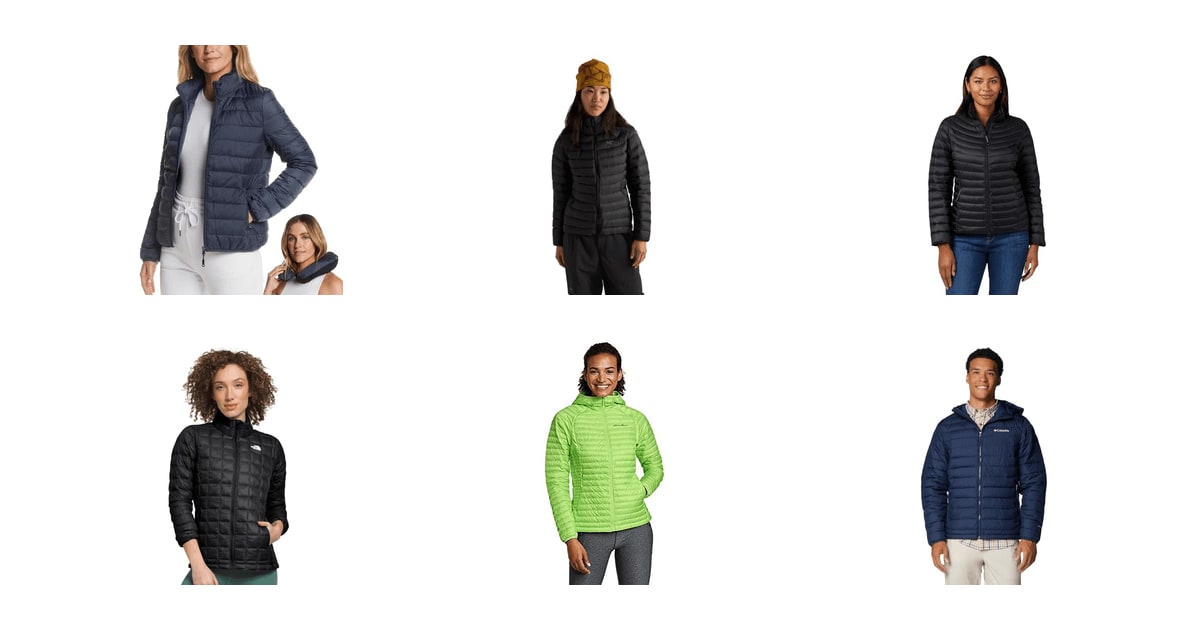
A packable jacket earns its place in your bag by disappearing. You want something that squashes down to the size of a loaf of bread, sits in the bottom of a daypack all afternoon, and still lofts back up when the sun drops behind a building and the temperature falls ten degrees. That's the whole job. The rest — how it looks, whether it has a hood, how the zipper feels — matters, but it matters less than warmth per ounce and how small the thing gets when you're fighting for space in a carry-on.
Here's the honest part. No packable jacket does everything. Down gives you the best warmth for the weight and the smallest packed size, but it wilts in sustained rain unless the fill itself is treated. Synthetic keeps working when it's damp, but it's heavier and bulkier for the same warmth, and that's physics, not a design flaw any brand can engineer around. Ultralight shells snag on zippers and bag hardware. Tougher shells don't compress as flat. Pick your compromise before you pick your jacket.
We looked at six jackets across a wide range — genuine down at entry prices, treated down in the middle, and technical layers at the top — and the gap in everyday travel performance is narrower than the price spread suggests. We think that the Eddie Bauer Women's MicroTherm 2.0 Down Hooded Jacket is the best packable down jacket for travel for most people, and that the 32 Degrees Heat Women's Ultra-Light Down Packable Jacket is the one to buy if you want real down warmth without spending much.
Everything we recommend
Treated down that keeps working when the sky opens up

Real down for very little, if you skip the rain and the hood

Synthetic warmth that survives a genuinely wet week

The lightest, most compressible option, at a serious cost
At a glance
| Product | Weight | Fill | Price | |
|---|---|---|---|---|
 | Weatherproof Women's Packable Puffer Jacket with TravelAlso consider | — | Down Alternative | $59.99 |
| Arc'teryx Cerium Hoody Women'sUpgrade pick | — | Down | $400 |
| 32 Degrees Heat Women’s Ultra-Light Down PackableBudget pick | 0.54 Pounds | 650 Fill Power | $35.99 |
| The North Face Women's ThermoBall Eco JacketAlso great | 1.01 Pounds | ThermoBall Synthetic | $182.32 |
| Eddie Bauer Women's MicroTherm 2.0 Down HoodedTop pick | — | 800 Fill Down | $111.17 |
 | Columbia Mens Powder Lite II Insulated HoodedAlso consider | 1.48 Pounds | — | $115.50 |
How we picked
Fill type and power. We compared manufacturer fill specifications across the lineup, treating 650 fill power as the floor for a down jacket worth carrying and 800 as the mark for genuinely cold destinations. Where a listing used synthetic fill, we looked at whether the brand documented wet-weather performance rather than just claiming it.
Wet-weather honesty. We separated shell water repellency from treatment applied to the fill itself, since only the latter protects loft once rain gets through the fabric. Jackets that explicitly treat the down scored higher for travel to unpredictable climates.
Packed size and weight. We compared listed weights, shell denier and stow-pocket details to judge how small each jacket gets and how much it costs you in pack space. Jackets that compress into their own pocket got credit for eliminating a stuff sack you'd otherwise lose.
Shell durability. We favored shells in the 20D range over ultralight fabrics for travelers who check bags or shove a jacket into a crowded overhead bin. Owner feedback about tears and leaking fill fed directly into how we ranked this.
Fit and sizing accuracy. We read owner feedback for patterns in how each jacket actually fits versus its size chart, since a packable layer that won't go over a sweater or swims on you is useless on the road. Recurring sizing complaints counted against a jacket.
Top pick
Treated down that keeps working when the sky opens up
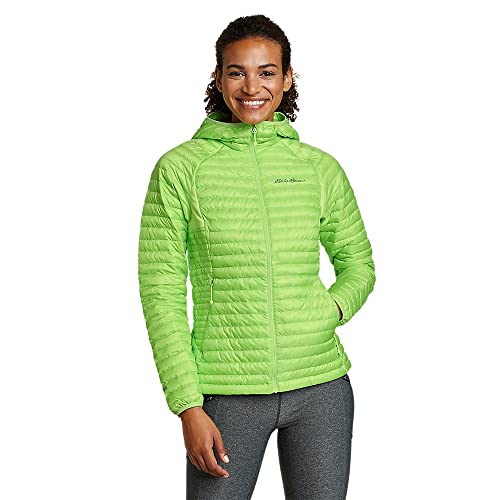
Eddie Bauer Women's MicroTherm 2.0 Down Hooded
The MicroTherm 2.0 pairs 800-fill goose down with a water-shedding treatment applied to the fill itself, not just the shell. That combination gives you down's packability and warmth without the usual panic when it starts to drizzle on the walk back to your hotel.
$111.17fromAmazonMost down jackets protect the outside and hope for the best. This one treats the fill. Eddie Bauer applies its StormRepel Super DWR finish to the 800-fill goose down clusters themselves, so individual filaments shed moisture before they clump. That's the difference between a jacket that goes flat halfway through a rainy afternoon and one that keeps a good chunk of its loft. It's the only jacket here that explicitly treats the fill, and for travel that's the spec we'd pay for.
The shell is a windproof recycled 20D ripstop polyester, which is a deliberate middle ground. Ultralight jackets use 10D fabric that feels like tissue paper and catches on every zipper pull and bag buckle. The 20D here has some substance to it. You can shove it into an overhead bin, drag it out of a stuffed backpack, or wear it on a scrubby trail without wincing every time it brushes something.
Eddie Bauer calls the construction MicroTherm — a micro-channel design that uses narrow fill chambers to cut down on cold spots and keep the whole thing compressible. In practice that means a jacket that layers cleanly. It's got a hood, which matters more than people expect, since an unhooded jacket leaves your neck and head exposed in exactly the conditions where you notice it most.
The sourcing is the most transparent in this group. The down is Responsible Down Standard certified via Control Union 851564, and Eddie Bauer publishes supply information on the garment itself. If you care about where the down came from — and more people do every year — this is the clearest paper trail here. Nobody else in this lineup names a certifying body.
Flaws but not dealbreakers
Treated down is better in the wet, not immune to it. Push through a long, heavy rain with no shell over the top and the fill will eventually soak, clump and go flat. If your itinerary is genuinely wet — think a week in the Pacific Northwest in spring — synthetic is the safer bet, or you pair this with a waterproof shell.
The 20D shell that makes this durable also means it won't squash down as flat as the thinnest jackets here. If you're counting cubic inches in a 40-liter bag, that's a real trade. Stock and color availability on this listing also tend to be thin, so you may have to hunt for your size.
Budget pick
Real down for very little, if you skip the rain and the hood
32 Degrees Heat Women’s Ultra-Light Down Packable
The 32 Degrees Ultra-Light uses genuine 650-fill down in a light nylon shell, not synthetic fill dressed up with down-sounding marketing. It handles three-season travel well and packs remarkably flat for what it costs.
$35.99fromAmazonGenuine down at this price is the whole story. Plenty of budget puffers use synthetic fill and language that sounds down-adjacent. This one lists actual down at 650 fill power, which is the practical floor for a down jacket worth owning. Below that, the weight and packing advantage over synthetic mostly evaporates. At 650, you still get most of what makes down worth carrying.
It weighs a bit over half a pound and packs down small enough that you'll forget it's in your daypack. Owners who bought it as a lightweight layer for spring trips consistently describe it doing exactly that job — warm enough for cool evenings, thin enough to wear under something else. The water-repellent shell handles a light drizzle for a while, though the untreated fill means you shouldn't push your luck.
The cut is semi-fitted and runs generously, which the brand states outright — it's designed to fit over a hoodie or sweater. That's genuinely useful for travel, where the same jacket has to work as a standalone layer in mild weather and a mid-layer when it gets cold. Side zip pockets keep a phone and a passport secure, and the stand collar seals the neck without adding a hood's bulk.
Because it costs so little relative to everything else here, the math on losing it changes. Leave it on a train in a country you're not returning to and it stings for an afternoon, not a month. For a lot of travelers, that's a genuinely freeing quality in a piece of gear.
Flaws but not dealbreakers
The sizing is the recurring complaint. It runs large by design, and owners who ordered their usual size often found it roomier than expected — sometimes dramatically so in the larger sizes. If you want a trim fit or plan to wear it under a shell, size down and check the chart rather than guessing.
There's no hood and no hydrophobic treatment on the fill, so this is a dry-and-cool-weather jacket. In sustained cold it'll feel thin next to an 800-fill jacket. The listing also ships on a several-day lead time, so order it a week or more before you leave rather than the night before.
Also great
Synthetic warmth that survives a genuinely wet week
The North Face Women's ThermoBall Eco Jacket
The ThermoBall Eco 2.0 uses synthetic clusters shaped to mimic down loft, so it keeps insulating when it's damp. If you're headed somewhere that rains sideways for days, this is the safer choice than any down jacket here.
$182.32fromAmazonDown's one real weakness is water, and this jacket is built specifically around that problem. ThermoBall clusters are round synthetic bundles designed to trap air the way down clusters do, and unlike down they don't collapse when they get wet. For a trip to Ireland, the UK, coastal Oregon or a Southeast Asian rainy season, that's the difference between a jacket that works and one you carry as dead weight.
It's the most environmentally deliberate jacket in this lineup. The shell and fill are 100% recycled polyester, and the DWR finish is Non-PFC, meaning it skips the PFAS chemistry that most water-repellent coatings still rely on. That's a real engineering choice with a cost attached, not a marketing line. It's also machine washable, which sounds minor until you're three weeks into a trip with a hostel laundromat as your only option.
The fit is slim — closer to a running jacket than a traditional puffer — and it packs into its own stow pocket. That combination makes it a clean mid-layer under a rain shell, and it looks like a normal jacket in a city rather than like expedition gear. Owners consistently describe it as thin but surprisingly warm, and mention getting compliments on it, which is not nothing when it's the only jacket you brought.
Flaws but not dealbreakers
Synthetic insulation is heavier and bulkier than down for the same warmth, full stop. This is the heaviest jacket here after the Columbia, and it won't compress as small as either down option. If your priority is minimum packed volume, look elsewhere.
That slim fit cuts both ways. It's elegant over a T-shirt and tight over a thick fleece, so if you layer heavily, consider sizing up. A handful of owners have also reported the shell developing a small hole and leaking fill within the first couple of months, which is worth knowing given how much this costs relative to the synthetic alternative below.
Upgrade pick
The lightest, most compressible option, at a serious cost
Arc'teryx Cerium Hoody Women's
The Cerium Hoody is Arc'teryx's lightweight down layer, built around a high warmth-to-weight ratio and a minimalist cut. It disappears under a shell and in a pack better than anything else here, and it costs accordingly.
$400fromAmazonNothing here matches its warmth for the space it takes up. Arc'teryx builds the Cerium around highly efficient natural down and a construction that strips out excess fabric rather than adding warmth through bulk. The result weighs under two-thirds of a pound and compacts to a genuinely small bundle. If you fly carry-on only and count every ounce, that efficiency is the entire argument.
The cut is where the money shows. It's streamlined and close to the body, so it slides under a hardshell without bunching at the shoulders or fighting your collar. Mid-range puffers almost always fail this test — you feel the fabric bind when you reach up. Owners describe it as warmer than they expected and note that the torso runs shorter than typical down jackets, which some people will find is exactly the fit they've been looking for.
It's produced in a Fair Trade Certified facility, which is a labor standard rather than a down-sourcing one, and it's the kind of thing Arc'teryx tends to document rather than imply. Build quality is the brand's whole reputation. If you'll wear this across many trips over many years rather than a couple of vacations, the cost per use looks very different than the sticker suggests.
Flaws but not dealbreakers
There's no listed hydrophobic treatment on the fill, which is a genuine gap at this price. The MicroTherm 2.0 costs a fraction as much and does treat its down. If you won't also carry a waterproof shell, the Cerium's value argument gets hard to defend on a rainy trip.
Sizing runs small, particularly through the hips, according to multiple owners. This is a fitted technical layer, not a relaxed puffer, so read the size chart carefully and consider sizing up if you plan to wear anything substantial underneath.
Who this is for
This guide is for people who travel and want one warm layer that doesn't eat their luggage. That's a broad group — carry-on-only flyers, backpackers heading into shoulder season, anyone who's stood shivering outside a restaurant in a city that was supposed to be warm. If you want a jacket that compresses into a corner of a bag and lofts back up when you need it, everything here qualifies.
It's not a guide to winter parkas. A packable down jacket worn alone is fine for a Western European winter in calm conditions, but it isn't enough for a Canadian January — there you'd use it as a mid-layer under something heavier. It also isn't a substitute for a rain shell. If your trip involves sustained downpours, plan on carrying a waterproof outer layer regardless of which jacket you pick. We also stuck to jackets sold as packable travel layers, which means no expedition down and no everyday fashion puffers that don't compress.
How we picked
We built this guide from manufacturer specifications, published reviews and patterns in owner feedback, weighted toward the things that actually change a trip. Fill: genuine down at 650 fill power or better, or synthetic that documents how it behaves when wet. Wet weather: treatment on the fill counts far more than a coating on the shell, because loft is what you lose in the rain. Packed size: listed weight, shell denier and whether the jacket stuffs into its own pocket instead of a separate sack. Durability: a shell tough enough for overhead bins and pack straps, with owner reports of tears and leaking fill taken seriously. Fit: sizing that matches its own chart, with enough room to layer for travelers who'll wear it over a sweater.
Other packable down jackets for travel worth considering
If you want synthetic warmth without the technical-brand premium: The Columbia Mens Powder Lite II Insulated Hooded ($115.50) — The Columbia Powder Lite II covers most of the same ground as the ThermoBall for meaningfully less. Its Thermarator synthetic fill keeps working when damp, the Omni-Shield finish sheds light rain and stains, and the Omni-Heat reflective lining adds noticeable warmth in still, cold air without adding thickness. It's machine washable and Columbia's retail footprint makes exchanges easy almost anywhere. What you give up is compression — it's the heaviest and bulkiest jacket here — and the fit and finish aren't as refined. It's also cut for men, so women should look at the women's Powder Lite line instead. Owners who bought it for genuinely cold winters describe it as warmer than its thickness suggests.
If you want one item that's both a jacket and a neck pillow: The Weatherproof Women's Packable Puffer Jacket with Travel ($59.99) — The Weatherproof packable puffer folds into its own collar compartment and converts into a neck support, which is a clever answer to the pillow you always leave at home. The water-resistant cire shell blocks wind better than most thin budget shells, and elastic cuffs and a fitted hem seal out drafts. Owners who bought it for flights are broadly happy with it as a light, warm travel layer. But the fill is a down alternative, not real down, so its cold-weather ceiling is low — treat it as a plane-and-mild-weather jacket. The pillow conversion also draws the most criticism: some owners find the jacket hard to stuff into the collar pocket tightly enough, and it takes a bit of fiddling to position. The cut runs tight through the underarms.
The competition
This is what our research turned up in this category, not a survey of every packable jacket sold. All six jackets here compress small enough for carry-on travel and all of them would keep you warm on a cool evening. The differences that decided the ranking are narrower than the price spread implies: how the fill behaves when wet, how much pack space the jacket costs you, and whether the sizing does what the chart says it will.
Care and storage between trips
The fastest way to ruin a down jacket is to leave it compressed. Loft loss from long-term packing is cumulative and only partly reversible, so unpack it when you get home and hang it loosely in a closet or keep it in a large mesh bag. To bring it back after a trip, tumble it on low heat with two clean tennis balls for twenty to thirty minutes, pulling clumped clusters apart by hand every ten. When it needs washing, use a down-specific detergent — regular detergent strips the natural oils out of the clusters — and dry it completely, since leftover moisture invites mildew. Synthetic jackets are easier: a gentle cold cycle and a low-heat dry, following the label, is routine maintenance and won't hurt the fill.
Questions we get
Can you bring a packable down jacket in a carry-on?
Yes. Every jacket here compresses to roughly the size of a large paperback or a wide water bottle. The ones that stuff into their own pocket are the most convenient, since you're not tracking a separate sack. Tuck the packed jacket inside a shoe or a packing cube to claw back a bit more space.
What fill power should I look for?
For fall, spring and mild winter travel, 650 fill power is enough — that's what the 32 Degrees jacket uses. For destinations that drop below the mid-30s Fahrenheit, aim for 800 or better, like the Eddie Bauer MicroTherm 2.0. Fill power measures how much space an ounce of down occupies, so a higher number means more warmth for less weight.
Is down or synthetic better for travel?
Down is lighter and packs smaller for the same warmth, which makes it the better default. Synthetic keeps insulating when it's wet, so it wins for rainy destinations. The best compromise is treated down — the MicroTherm 2.0 applies a water-shedding finish to the fill itself, which buys you down's packability with much better behavior in a drizzle.
Can I wear a packable down jacket in the rain?
It depends on the jacket. The synthetic options — the ThermoBall Eco 2.0 and the Powder Lite II — hold their warmth when damp and are the safest choices. The MicroTherm 2.0 handles light to moderate rain thanks to its treated fill. The Cerium Hoody and the 32 Degrees use untreated down, so pair either with a waterproof shell if rain is likely.
What is RDS certification, and does it matter?
The Responsible Down Standard is a third-party certification verifying that down came from birds that weren't live-plucked or force-fed, with a documented supply chain. It's close to a baseline expectation from major outdoor brands now. The Eddie Bauer MicroTherm 2.0 lists Control Union 851564 as its certifying body, which is the most specific sourcing claim in this lineup.
Is a packable jacket warm enough for a European or Canadian winter?
For Western European cities hovering around freezing, a packable down jacket works as a standalone layer in calm conditions — the MicroTherm 2.0 or the Cerium Hoody are the strongest picks there. For a Montreal or Toronto January, it isn't enough on its own; wear it as a mid-layer under a parka or insulated shell. Plan around the coldest overnight temperature, not the daytime average.
Why you should trust us
For this guide:
- We compared manufacturer specifications across all six jackets, focusing on fill type and power, shell denier, and whether water-repellent treatment was applied to the shell, the fill, or both.
- We read published product information and owner feedback for recurring themes around sizing accuracy, shell durability and how each jacket behaves in damp weather.
- We did not test, wear, wash or travel with any of these jackets; every claim here traces back to a specification, a published description, or patterns in what owners report.
- We read owner reviews on every listing, weighted toward the critical ones, because that is where the recurring failures show up.
- We have a systematic way of automatically fetching the latest prices, so the numbers on this page stay current.
- This is a research-focused guide, so the team may not own every product listed — though we often do own the top winners, which gives us extra context for the recommendations.
- We don't accept free products, and the retailer commission never changes which product we recommend.
Sources
Best Down Jackets 2026 — Wirecutter, Wirecutter
Best Down Jackets — OutdoorGearLab, OutdoorGearLab
Best Packable Down Jackets — Outside Online, Outside Online
Best Packable Down Jackets — Gear Junkie, Gear Junkie
Down Jacket Buying Guide — REI Expert Advice, REI
Amazon product listings and owner reviews for all 6 products
Manufacturer specification pages for each product
Some passages in this guide may be paraphrased with AI help. Prices are refreshed automatically.
More like this.
Continue exploring lifestyle reviews and recommendations.

The Best Waterproof Breathable Rain Jackets
A rain jacket earns its keep on the days you'd rather stay home. You're twenty minutes from the car when the sky opens, or you're walking to the office…

The Best Pull-Down Kitchen Faucets
A kitchen faucet is the thing you touch most and think about least. You grab it with wet hands, greasy hands, a stockpot hooked in one arm. A pull-down…

The Best Dog Life Jackets
Most dogs can swim a little. Almost none can swim for long. A life jacket buys you time - time to turn the boat around, time to reach the ladder, time to…

The Best Motorcycle Jackets And Gloves
Gear is the part of riding you notice every day, long before you ever need it. A jacket that's too warm stays on the hook, and gloves that pinch turn a…

The Best Travel Blankets for Airplanes
Cabin air runs cold. You're sitting still for hours in thin clothes, usually next to a window that's a lot colder than the seat, and the vent above you…

The Best Contigo Travel Mugs
Most travel mugs fail in the same boring way. You toss one in a bag, and an hour later your laptop sleeve smells like coffee. Contigo built its name on…