The Best Breathable Fly Fishing Waders
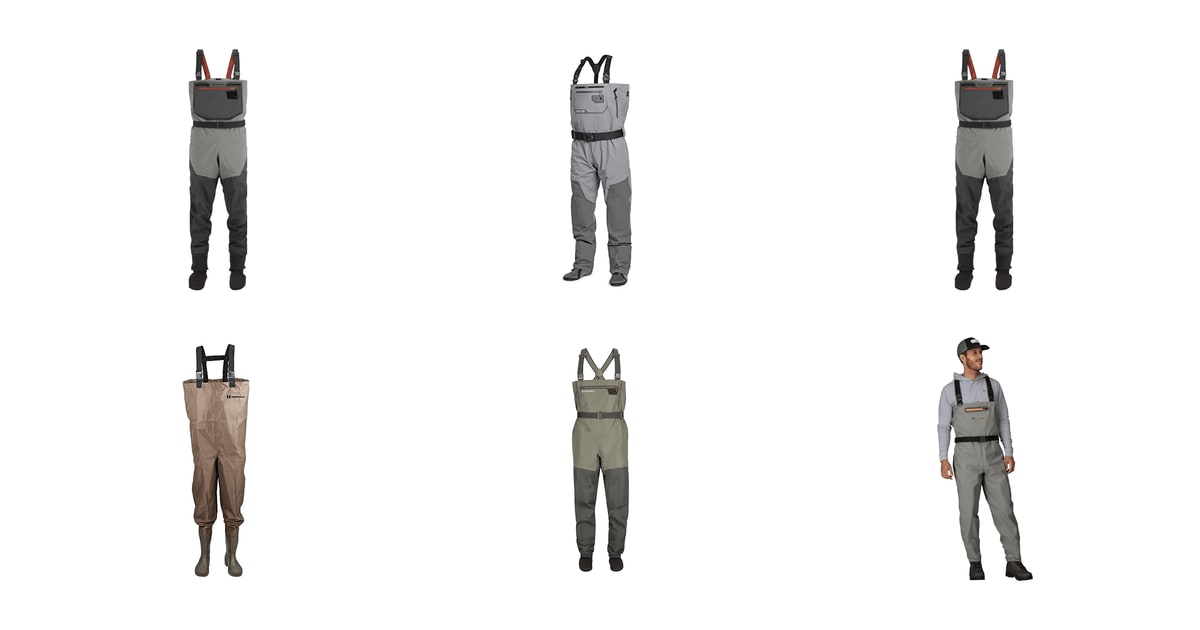
Waders are the difference between fishing the good water and standing on the bank wishing you could. Breathable ones fixed the old problem: a shell that keeps river water out while letting your sweat escape means you can hike a mile of trail, wade a warm summer riffle, and not cook yourself doing it. They now account for the overwhelming majority of waders sold in the U.S., with neoprene pushed off to ice fishing and genuinely frigid water. For nearly everyone reading this, breathable is the only sensible choice.
Here's the part nobody likes to say out loud: every pair of breathable waders leaks eventually. The fabric is a membrane, and membranes wear out. Seams take sweat from the inside, brush and barbed wire take shots from the outside, and the joint where the neoprene bootie meets the fabric leg is a known weak point across brands and price tiers. Owners of budget waders and premium waders both report pinholes. Better waders just take longer to get there, and they're worth repairing when they do.
So the real question isn't which pair lasts forever. It's how many days a year you fish, how rough your water is, and how long you want to go before the first leak. Someone wading a rocky freestone river three days a week needs a different wader than someone who steps into a warm pond four times a summer. We think that the Simms Freestone is the best breathable wader for most people, and that the Simms Tributary is the one to buy if you're buying your first pair.
Everything we recommend

Guide-grade durability in a wader you'll wear every weekend

A real entry-level wader, with entry-level fabric to match

Heavier, tougher, and cut for people who fish for a living
Dry enough for occasional days, if you don't ask too much
At a glance
| Product | Layers | Weight | Price | |
|---|---|---|---|---|
| Simms Men's Freestone Stockingfoot Fishing WadersTop pick | 4-Layer | — | $450 |
| Orvis Men's PRO Wader - ShortUpgrade pick | 4/5-Layer | — | $522.95 |
| Simms Men's Freestone Stockingfoot Fishing WadersAlso consider | 4-Layer | — | $449.95 |
 | Hodgman MACKCBC13 Mackenzie Nylon and PVC CleatedAlso in lineup | — | 8.25 lbs | $72.64 |
| Simms Tributary Stockingfoot Fishing WadersBudget pick | 3/4-Layer | — | $279.95On sale |
| FROGG TOGGS Canyon II Breathable Waterproof StockingfootAlso great | 4-Ply Nylon | 0.6 lbs | $119.99 |
How we picked
Fabric and layers. We compared layer counts and face fabrics across every wader here, using manufacturer spec sheets and published reviews. More layers in the legs and seat is the single best predictor of how long a wader survives rocky water.
Seams and waterproofing. Fully-taped seams cover every seam in the wader; critically-taped construction only covers what sits below the waterline, leaving chest and shoulder seams to soak up sweat until they delaminate. We favored fully-taped and heat-welded builds, and looked for hydrostatic head ratings well past the 10,000mm waterproof threshold.
Fit and layering room. We looked at gusseted crotches, seat panels, stockingfoot shaping, and how many size cuts each brand offers. A wader has to hold a fleece mid-layer in cold water without binding when you take a long step.
What owners report later. We read owner feedback for recurring themes rather than one-off complaints — where leaks show up, how sizing runs, and what fails first. Cuff and bootie seams came up again and again, across price tiers.
Belt, guards, and pockets. A wading belt is safety equipment, so we noted which waders include one and how securely it mounts. Gravel guards and fleece handwarmer pockets were tiebreakers between otherwise similar models.
Top pick
Guide-grade durability in a wader you'll wear every weekend
Simms Men's Freestone Stockingfoot Fishing Waders
The Freestone wraps you in Simms' four-layer Toray QuadraLam fabric, with fleece-lined handwarmer pockets, a chest pocket array, and a stretch wading belt in the box. It's the pair we'd hand to anyone who fishes most weekends and wants waders that survive brush, gravel bars, and the occasional hard fall.
$450fromAmazonFour layers of fabric is the whole argument here. Most mid-range waders use three, and the difference shows up exactly where you drag yourself over rocks and push through willows. Simms builds the Freestone from Toray QuadraLam throughout, and owners who've put full seasons on them describe the shell holding up to hard river use. It isn't Gore-Tex Pro, but it's a real step up from entry-level laminates.
Fit is the quiet reason people stay with Simms. Owner feedback skews heavily toward true-to-size sizing, including from taller and heavier anglers who usually fight bunching at the waist and legs that stop short. The cut isn't bulky, so you can still layer fleece underneath in late fall without feeling stuffed into a sausage casing. Suspenders and belt adjust without digging into your shoulders.
The details are the kind you notice on cold mornings. Micro-fleece hand-warmer pockets actually warm your hands, the stretch-woven chest pocket swallows tippet and a phone, and there's a built-in fly patch so you're not stabbing flies into your chest. A 38mm stretch wading belt comes included, along with dual rear belt loops, which matters more than it sounds like it should.
They convert to waist-highs in about ten seconds. Drop the suspenders, cinch the belt, and you've got waist waders for a hot afternoon on a small creek. That flexibility is why this one pair covers so much of the year for so many anglers: chest-high and layered in early spring, waist-high and vented in midsummer, and comfortable enough either way that you forget you're wearing them.
Flaws but not dealbreakers
The most common complaint is a specific one: leaks at the cuff, where the neoprene bootie is joined to the fabric leg. A minority of owners report it showing up inside a single season, which is frustrating on a wader built to this standard. It's fixable — a bootie-seam leak is a repair job, not a write-off — but it's the thing to watch for early.
There's no front zipper, so a bathroom break means peeling the whole thing down. And the four-layer shell that makes these tough also makes them warmer than a lightweight travel wader. On a still, muggy day, you'll notice.
Budget pickOn sale
A real entry-level wader, with entry-level fabric to match
Simms Tributary Stockingfoot Fishing Waders
The Tributary pairs a three-layer upper with a reinforced four-layer lower, so the parts that take the abuse get the thicker fabric. You get fleece-lined handwarmer pockets, built-in gravel guards, and a wading belt — the essentials, without the extras you probably won't miss.
$279.95fromAmazonList priceSimms put the fabric where it matters. The lower legs and seat — the parts that scrape rocks, sit on tailgates, and take the brunt of wading — get four layers, while the upper stays at three to hold down weight and cost. It's a sensible compromise rather than a corner cut, and it's why this pair tends to hold up better than a typical first wader.
This is the pair to buy if you're not certain you'll stick with fly fishing. Anglers moving up from big-box waders describe the fit and the dryness as a clear step change. Simms' sizing chart is unusually specific, and the stockingfeet are shaped to fit inside real wading boots instead of vaguely approximating a shoe size. That alone saves you a lot of blisters.
The small stuff is handled well. The reach-through handwarmer pocket is genuinely warm on a frosted morning, the zippered stash pocket keeps a phone dry, and the integrated gravel guards keep grit out of your boots. That last one isn't cosmetic — the fastest way to wear out a stockingfoot is to let sand grind against it all day.
Flaws but not dealbreakers
The wading belt setup is the weak spot. There's a single rear loop, so the belt can wander around your waist as you move, and owners have noticed. It's an easy fix with a better belt, but it's an odd place to economize.
Some owners also report damp legs after long days. That's usually condensation from a cotton base layer rather than a leak, but the thinner three-layer upper does breathe less than a premium shell, and it shows on warm afternoons.
Upgrade pick
Heavier, tougher, and cut for people who fish for a living
Orvis Men's PRO Wader - Short
Orvis builds the PRO from four-layer Cordura up top and five layers in the lower legs, with removable OrthoLite knee pads for anglers who spend time kneeling on gravel. It's the pair to buy if you're hard on gear and tired of replacing waders every couple of seasons.
$522.95fromAmazonCordura is the point. It's the abrasion-resistant fabric used in motorcycle gear and heavy packs, and Orvis stacks five layers of it below the knee — right where a freestone river spends all day filing away at your legs. If getting to your run means bushwhacking through blackberry and sliding down a clay bank, this is the shell built for that walk.
The knee pads are more useful than they sound. They're removable OrthoLite inserts, and they earn their keep if you kneel to net a fish, work a low bank, or crawl into casting position on a spring creek. Most waders give your kneecaps nothing but a layer of fabric between them and the rocks.
Orvis also cuts this wader in more sizes than most brands bother with, including short and long variants. That's the difference between a wader that fits and one you tolerate. A gusseted crotch and low-profile seams keep the fabric from binding when you take a big step up onto a boulder — and if you've ever blown out a crotch seam stepping over a log, you already know why that's worth paying for.
The gravel guard is a small, smart piece of design: PU-reinforced mesh that drains instead of collecting water, so you're not lifting a cup of river with every stride. Add the kangaroo-style fleece handwarmer pocket and you get a wader that feels considered rather than assembled from a parts bin.
Flaws but not dealbreakers
All that fabric adds weight and costs you breathability compared with a lightweight travel wader. This isn't the pair you want for a long, hot hike-in. It's also the most expensive wader here, which only pays off if you fish enough days to wear out something cheaper first.
This particular listing is the short cut, and Orvis sizing is specific enough that guessing is a bad idea. Check the inseam and torso measurements before you commit, because a short in the wrong length is worse than no wader at all.
Also great
Dry enough for occasional days, if you don't ask too much
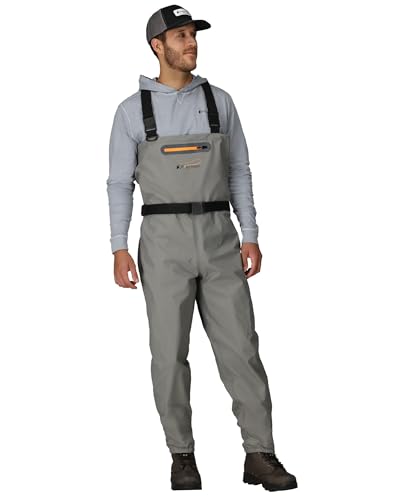
FROGG TOGGS Canyon II Breathable Waterproof Stockingfoot
The Canyon II gets you a 4-ply nylon shell, 4mm neoprene booties, a zippered chest pocket, gravel guards, and a wading belt in one inexpensive package. For a handful of trips a year — or a kid who'll outgrow them anyway — it's plenty of wader.
$119.99fromAmazonWaterproofing isn't where budget waders fall down. Frogg Toggs' entry-level fabrics rate around 30,000 to 35,000mm of hydrostatic head, far past the 10,000mm mark that outdoor apparel needs to clear to count as waterproof. Straight out of the bag, these keep river water out about as well as waders costing several times more. What you're giving up is how long that lasts.
You get the whole kit in the box. Adjustable Y-back suspenders with quick-release buckles, attached gravel guards with lace hooks, a splash-proof zippered chest pocket, and a wading belt all come along for the ride. Nothing here is refined. But nothing essential is missing either, and the 4mm booties are thick enough for genuinely cool water.
Owner feedback splits along predictable lines. Anglers who fish a handful of days a season describe pairs lasting years and taking falls without much complaint. Anglers who fish hard describe pinholes in the feet within weeks. Both groups are probably telling the truth. Treat these as waders that owe you a season or two of casual use, not a decade of service.
Flaws but not dealbreakers
Durability is the real limit. The feet and lower legs go first, and reports of leaks after only a few outings aren't rare enough to ignore. If you fish more than a dozen days a year, you'll likely be shopping again soon.
There's also very little warmth here. In cold water you'll need to layer aggressively underneath — the cut is roomy enough to allow it, at least. And support after a failure is thin, so buy these understanding that a bad pair is mostly your problem to solve.
Who this is for
This guide is for anyone buying stockingfoot chest waders for fly fishing in fresh water — your first pair, or a replacement for a pair that finally gave up. If you fish 15 to 40 days a year, our top pick is aimed squarely at you. If you're brand new and unsure how deep this hobby is going to go, start with the budget pick and put the difference toward boots and a decent base layer. If you guide or fish several days a week on hard water, skip straight to the upgrade pick.
It's not for everyone, though. If you sit in a duck blind in freezing water and never walk far, insulated neoprene or a bootfoot rig still makes more sense than anything here. Serious winter anglers below 40°F should be shopping for interior room and a 5mm stockingfoot, not the thinnest shell they can find. And we don't rank wading boots in this guide, even though every stockingfoot wader here needs a pair — sole choice and boot fit deserve their own conversation.
How we picked
We ranked these waders on the things that decide whether a pair lasts. Fabric: layer count and face fabric denier, with extra weight in the legs and seat where rocks do their damage. Seams: fully-taped or heat-welded construction, since critically-taped seams leave the chest exposed to sweat saturation and eventual delamination. Waterproofing: hydrostatic head well beyond the 10,000mm threshold, which every wader here clears. Fit: gusseted crotches, honest size cuts, and enough interior room for a fleece mid-layer in cold water. Stockingfeet: anatomically shaped booties that fit inside real wading boots, with neoprene thickness matched to the water you actually fish. Owner reports: recurring themes in long-term feedback, especially the cuff and bootie seams that fail first on almost every brand.
Other breathable fly fishing waders worth considering
If you need the extra-large cut: The Simms Men's Freestone Stockingfoot Fishing Waders ($449.95) — This is the same Simms Freestone we picked as our top choice, listed in extra-large. Everything above still applies — the four-layer Toray QuadraLam shell, the fleece-lined handwarmer pockets, the wading belt, the quick conversion to waist-highs. Larger anglers in owner feedback describe the sizing running true, with enough torso length to avoid the shoulder-strap tug that ruins bigger sizes from other brands. Buy whichever listing matches your measurements; there's no performance difference between the two.
The competition
This is what our research surfaced, not a survey of everything on the market. Plenty of well-regarded waders from other brands aren't in this lineup, and a few product types that turn up in wader searches aren't waders at all. Here's the one remaining pair we looked at and why it didn't make the cut.
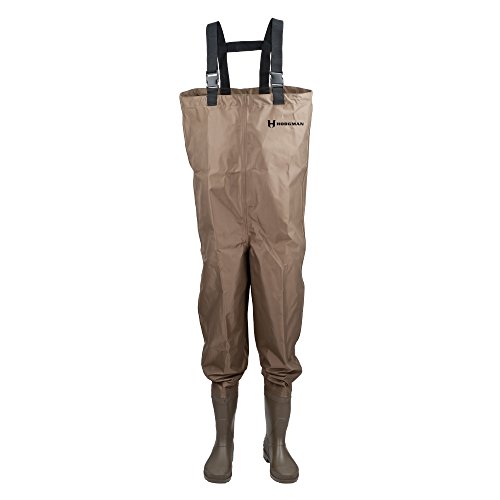
The Hodgman MACKCBC13 Mackenzie Nylon and PVC Cleated ($72.64) — The Hodgman Mackenzie is a nylon-and-PVC bootfoot chest wader with cleated boots attached — a different animal from everything else here. It isn't breathable, so your sweat has nowhere to go, and you'll get clammy on any warm day or long walk in. What it gives you is speed and simplicity: step in, buckle the suspenders, and you're fishing, with no separate boots to buy or size. Owners describe it as light for a bootfoot rig and fine for waterfowl blinds and short cold-water outings, though reports of small holes appearing early are common enough to note. If you want one simple, low-cost setup for standing in cold water, it makes sense. For fly fishing, a stockingfoot wader with dedicated boots will grip better, fit better, and breathe on the days you need it to.
Care and maintenance
Breathable waders usually die of neglect, not abuse. Rinse them in fresh water after every trip, especially after salt or muddy water, and hang them upside down to dry inside and out before they go anywhere near storage — a damp wader folded into a hot car trunk is how delamination starts. Wash them a couple of times a season with a technical-fabric detergent, never fabric softener, and reapply a DWR treatment once water stops beading off the face fabric. Store them hanging, not stuffed in a bag. When a pinhole turns up, turn the waders inside out and spray rubbing alcohol on the suspect area; a dark wet spot marks the hole. Patch it from the inside with wader repair adhesive and give it a full night to cure. Most leaks are a fifteen-minute fix.
Questions we get
Are breathable waders worth it over neoprene?
For almost everyone, yes. Breathable waders now make up the large majority of waders sold in the U.S., and neoprene has been pushed back to ice fishing and extreme cold. Neoprene traps your sweat, which soaks your layers and makes you colder once you stop moving. Layer properly under a breathable shell and you'll be warmer in cold water and far more comfortable in warm water.
What should I wear under breathable waders?
A moisture-wicking synthetic or merino base layer against your skin, then a lightweight synthetic fleece mid-layer when it's cold. Never cotton — it soaks up sweat, stays wet, and pulls heat out of you. This layering matters as much as the waders themselves, because the sweat-chill cycle is what makes people think their breathable waders leak when they don't.
How long do breathable waders last before they leak?
It depends far more on days on the water than on years owned. A weekend angler can get many seasons out of a mid-range pair, while someone fishing several days a week through brush and rock will find pinholes much sooner. Cuffs, feet, and the seat wear first. Rinsing, drying, and patching small leaks promptly extends the life of any pair substantially.
Stockingfoot or bootfoot for a beginner?
Stockingfoot, in almost every case. You buy wading boots separately, which means real ankle support, a fit tuned to your foot, and the ability to change soles for different water. Bootfoot waders are faster to pull on and warmer in frigid, low-movement fishing, but the attached boots fit loosely and grip poorly by comparison. All of our picks are stockingfoot.
Felt or rubber soles on my wading boots?
Felt grips algae-slick freestone rock better than anything else, which is why it survives at all. But felt holds water and carries invasive organisms between watersheds, so several Western states — including California and Oregon — and all national park waters ban it. Check your local regulations first. If you fish in multiple states, rubber lugged soles with studs, or an interchangeable sole system, will keep you legal everywhere.
Do I really need a wading belt?
Yes. Trout Unlimited classifies a wading belt as mandatory safety equipment, not an accessory. Snugged at the waist, a belt can cut water ingress by as much as 60% if you go down, which slows your wader legs from filling and buys you time to get your feet under you. Every wader we picked includes one — wear it every single time.
Why you should trust us
For this guide:
- We read manufacturer spec sheets and technical documentation on membrane breathability, hydrostatic head ratings, and seam construction methods for every wader in this lineup.
- We compared published gear roundups from outlets that run multi-season wader evaluations, along with industry data on how the breathable wader market has shifted.
- We read through owner feedback looking for recurring themes rather than isolated complaints — where leaks appear first, how sizing runs for taller and heavier anglers, and which components fail early.
- We read owner reviews on every listing, weighted toward the critical ones, because that is where the recurring failures show up.
- We have a systematic way of automatically fetching the latest prices, so the numbers on this page stay current.
- This is a research-focused guide, so the team may not own every product listed — though we often do own the top winners, which gives us extra context for the recommendations.
- We don't accept free products, and the retailer commission never changes which product we recommend.
Sources
Best Waders for Fly Fishing — OutdoorGearLab (2025 Updated), OutdoorGearLab
Best Fly Fishing Waders of 2025 — Switchback Travel, Switchback Travel
Waders Gear Reviews and Buying Guide — MidCurrent, MidCurrent
Best Fly Fishing Waders Tested by Editors — Field & Stream, Field & Stream
How to Choose Fly Fishing Waders — Orvis Learning Center, Orvis
Gore-Tex Fabric Technology and MVTR Specifications, W.L. Gore & Associates
AFFTA Participation and Industry Data Report 2024–2025, American Fly Fishing Trade Association (AFFTA)
Wading Safety: How to Wade a River Safely — Trout Unlimited, Trout Unlimited
How to Care for and Repair Your Waders — Simms Fishing Blog, Simms Fishing Products
Wader and Felt Sole Regulations by State — Fly Fisherman Magazine, Fly Fisherman Magazine
Korkers OmniTrax 3.0 Interchangeable Sole System — Korkers, Korkers Footwear
Patagonia Swiftcurrent Waders Environmental Responsibility Page, Patagonia
Amazon product listings and owner reviews for all 6 products
Manufacturer specification pages for each product
Some passages in this guide may be paraphrased with AI help. Prices are refreshed automatically.
More like this.
Continue exploring lifestyle reviews and recommendations.

The Best Fly Fishing Rod Combos for Trout
Most trout fishing happens closer than you'd think. Trout Unlimited points out that the majority of American trout water is a stream under 30 feet wide,…

The Best Waterproof Breathable Rain Jackets
A rain jacket earns its keep on the days you'd rather stay home. You're twenty minutes from the car when the sky opens, or you're walking to the office…

The Best Ice Fishing Tip-Ups and Hard-Water Gear
Tip-up fishing is a waiting game you play with your feet up. You set a baited line under the ice, walk away, and watch for a flag. When one pops across…

The Best Paddleboard Fishing Accessories
Paddleboard fishing works because the setup is simple. You stand, you spot fish before they spot you, and you slide into water a boat can't reach. But a…

The Best Fishing Rod and Reel Combos for Beginners
Your first fishing combo has one job: get you to the water without a fight. That means a reel that doesn't tangle when your cast goes sideways, a rod that…

The Best Surf Fishing Rods
Surf fishing asks a lot of a rod. You're standing in moving water, throwing a heavy sinker into wind, and trying to keep your line above the breakers so…