The Best Ice Fishing Tip-Ups and Hard-Water Gear
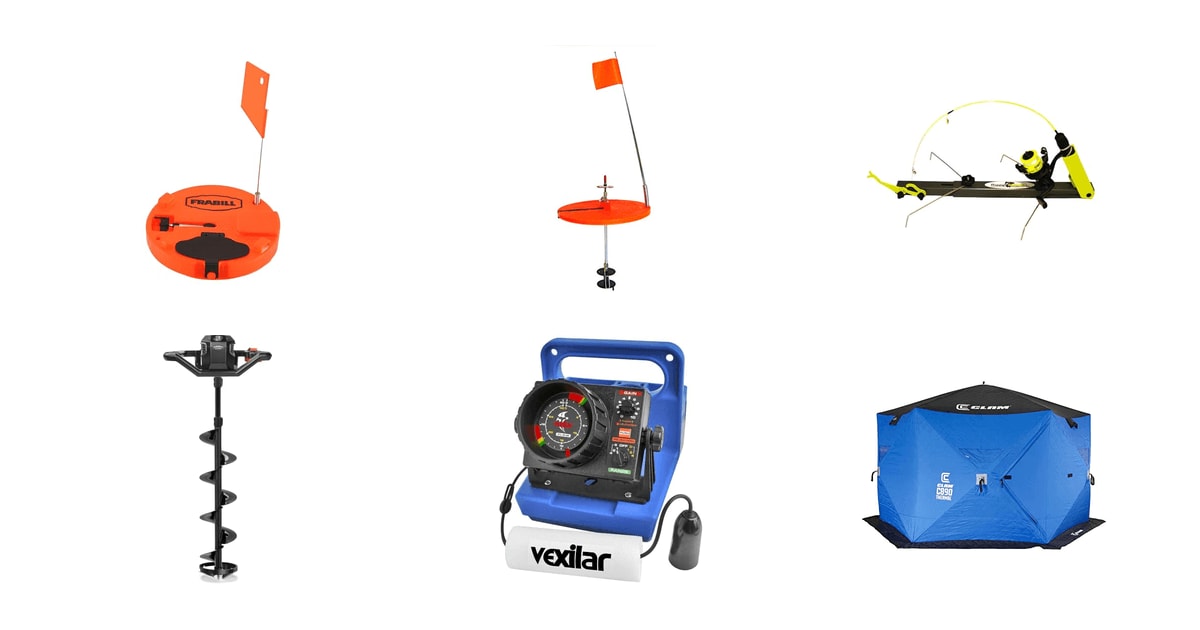
Tip-up fishing is a waiting game you play with your feet up. You set a baited line under the ice, walk away, and watch for a flag. When one pops across the lake, you run. The catch is the cold. A hole starts skimming over within minutes once the air drops into single digits, and a frozen hole means a jammed spool and a fish that spits the bait. That's why the hub design matters far more than the flag color or the frame material.
No tip-up beats physics. A thermal hub slows freeze-up, but in a hard wind at twenty below you'll still be out there skimming slush every half hour. None of them tells you where the fish are either, so you're guessing at depth until something trips. And most states cap you at two or three lines per angler, which means a six-pack is often more than you can legally fish by yourself. Buy for the number of holes you can actually watch.
Most people do better with three or four solid tip-ups than one showpiece, then add an auger, sonar and a shelter as the seasons stack up. The gear below covers that arc, from a first bucket to a full hard-water kit. We think that the Frabill Pro Thermal Original Tip-Up is the best ice fishing tip-up for most people, and that the HT Enterprises Polar Therm Tip-Up is the one to buy if you're outfitting a family or filling a sled with spares.
Everything we recommend

An insulated hub that keeps your hole open when it's brutal

Basic freeze protection and a flag you can spot far off

Quiet, light drilling that saves your back and your lungs

It sets the hook while you're three holes away
At a glance
| Product | Gear Type | Cold-Weather Rating / Power | Price | |
|---|---|---|---|---|
| Frabill Pro Thermal Original Tip-UpTop pick | Tip-Up | Insulated | $24.68On sale |
| HT Enterprises Polar Therm Tip-UpBudget pick | Tip-Up | Polar Therm | $35.99 |
| Ice Fishing Automatic Hook Setter with AdjustableAlso great | Automatic Hook Setter | ABS Plastic | $64.99 |
| StrikeMaster Lithium 40V Maven Ice AugerUpgrade pick | Ice Auger | 40V Brushless Motor | $579.99 |
 | Vexilar FL-8SE 19 Ice-Ducer Fish FinderAlso consider | Fish Finder | Battery Powered | $313.72 |
 | CLAM C-890 Thermal Ice Fishing Hub ShelterAlso consider | Hub Shelter | Thermal | $579.99 |
 | Celsius CE010A/CE24L 24" Lt Ice ComboAlso in lineup | Ice Combo | — | $26.78 |
How we picked
Freeze-up resistance. We weighted enclosed thermal hubs over open frames, because published field testing puts the reduction in freeze-ups at roughly 70 to 80 percent below zero. Anything that leaves the hole exposed had to be exceptional elsewhere to make the cut.
Flag and trip. A flag has to be visible from a few hundred yards and sensitive enough to show a light bite without firing in a gust. We favored designs with adjustable trip settings or unusually tall flag arms.
Spool and line. Spool capacity had to match the fish. Shallow perch and walleye water asks little, while deep lake trout runs eat line fast, so we noted where a modest spool becomes a real limit.
Weight and packing. Most people walk their gear onto the ice. We looked for pieces that stack in a bucket or sled and don't punish you on a long haul back in the dark.
Cold-weather durability. We read owner feedback for the specific failures that show up in hard cold: cracked plastic, seized spools, frozen mechanisms and stripped hardware. Serviceable parts counted in a product's favor.
Top pickOn sale
An insulated hub that keeps your hole open when it's brutal
Frabill Pro Thermal Original Tip-Up
The Frabill Pro Thermal Original covers a 10-inch hole with an insulated base, so the water underneath stays open while you're off checking another flag. It folds into a five-gallon bucket, the trip has light and heavy settings, and the shaft can be re-greased instead of replaced.
$24.68fromAmazonList priceThe insulated hub is the whole point. The base sits over a 10-inch hole and traps the water below it, so the hole stays open long after a bare one would skin over. Field testing published by In-Fisherman found that enclosed thermal designs cut freeze-up incidents by roughly 70 to 80 percent below zero compared with open wooden frames. That's the difference between a clean run and a spool that won't turn.
It also solves the storage problem. The whole thing drops into a five- or six-gallon bucket, which is how most people haul gear anyway. You can stack a few in there with your bait, a skimmer and a spare spool, then carry the lot in one hand. If you sled your kit out a half mile in the dark, that flat profile matters more than you'd guess.
The trip is adjustable, and you'll want that. There are light and heavy settings, so you can set it soft for a fussy walleye or stiff enough that a gust doesn't fire the flag. Owners who fish open water consistently say false flags stop being a problem once the setting is dialed in. Chasing phantom flags across a windy lake gets old in a hurry.
The shaft ships pre-lubed with a low-temperature grease, and the shaft-in-shaft design lets you re-grease it yourself rather than replace the unit. Ice gear lives in a wet bucket eight months of the year, and a spool that binds is almost always a lubrication problem, not a broken one. A dab each fall keeps these turning for many seasons.
Flaws but not dealbreakers
The flag trips easily out of the box. Owners note you have to back the crank off a turn or two to give the flag arm enough grip, or it'll pop while you're still setting the line. It's a five-second fix once someone tells you, and nobody does.
It's built around a 10-inch hole. With a 6- or 8-inch auger the base still covers things fine, but you lose some of the insulating water underneath. The round base also eats more sled space than a folded wooden stick tip-up.
Budget pick
Basic freeze protection and a flag you can spot far off
HT Enterprises Polar Therm Tip-Up
The Polar Therm is a molded plastic tip-up with a thermal base and an unusually tall flag, which makes it easy to read from across a bay. It costs a fraction of what a premium tip-up runs, so it's the one to stack four deep in a sled.
$35.99fromAmazonThis is the tip-up you buy several of. The base is molded ABS with a thermal design that covers the hole and keeps it from skinning over, which is the one job that actually matters at ten below. It weighs about two pounds and lies flat, so a stack of them rides in a sled without a fight.
The flag sits noticeably higher than most. That's the trade HT made, and it's a good one when your spread covers a bay and you're watching from inside a shelter. Owners do mention you have to retrain your eye a little. If you're used to a short flag, a taller one reads differently at distance, especially against brush on the far shore.
Where it gives ground is refinement. There's no dual trip setting, no re-greasable spindle, and the spool is modest. That's fine for perch, walleye and shallow pike, and thin if you're chasing lake trout in a hundred feet of water. For the depths where most people fish, none of it comes up.
The math is what sells it. State rules commonly hold you to two or three lines, so a small set is usually all you can legally run, and buying that set at this price leaves money for an auger. If one cracks, you replace it and move on.
Flaws but not dealbreakers
Published owner feedback on this listing is thin, so we're leaning on the spec sheet and HT's long-running thermal line rather than a deep pool of reports.
Plastic gets brittle in deep cold. Drop one on hard ice and you can crack the base. Treat it as a part you'll replace every few seasons instead of an heirloom you hand down.
Upgrade pick
Quiet, light drilling that saves your back and your lungs
StrikeMaster Lithium 40V Maven Ice Auger
The Maven pairs a 40-volt brushless powerhead with an 8-inch Lazer bit, so it cuts pike-sized holes without fumes, noise or a pull cord. Reverse flushes slush out of the hole, and the composite build keeps it light enough to carry from spot to spot.
$579.99fromAmazonElectric augers have quietly won. A 40-volt lithium powerhead cuts without a pull cord, without exhaust, and without the ritual of coaxing a two-stroke to life at dawn. Strikemaster's specs put a comparable lithium unit around 12 pounds, against 18 to 22 for gas augers of the same size. You'll feel that difference in your shoulders somewhere around the tenth hole.
The 8-inch bit is the right size for the fish most people want. Six inches is plenty for panfish, but an eight gets a thick-shouldered pike or a lake trout through the ice without a wrestling match at the worst possible moment. It's also narrow enough that a thermal tip-up base still covers the hole with room to spare.
Reverse is the underrated part. Instead of hauling a slush-packed bit out by hand, you back it out and let the flighting clear the hole for you. On a day when you're punching twenty holes to find a weed edge, that saves real time and keeps your gloves out of the water.
It's quiet enough to run right next to the shelter. Gas augers push exhaust you don't want inside a hub, and they're loud enough to push fish off a shallow flat. A brushless motor is close to silent by comparison, so you can re-drill a few feet from where you're sitting without clearing the spot.
Flaws but not dealbreakers
This is the most expensive thing here by a wide margin, and it's the piece a first-season angler can most easily skip. A hand auger cuts early ice fine, and plenty of people never move past one.
Lithium packs lose runtime in deep cold, so keep the battery inside your jacket between holes. This listing is also new enough that there's very little owner feedback to lean on, which means we're going on the spec sheet and Strikemaster's track record rather than a long history of reports.
Also great
It sets the hook while you're three holes away
Ice Fishing Automatic Hook Setter with Adjustable
This automatic hook setter holds a 28- to 34-inch rod under spring tension and drives the hook home the instant a fish trips the trigger. Two adjustments let you tune it from panfish-light to pike-stiff, and the whole thing sets up with gloves on.
$64.99fromAmazonA tip-up flags a bite. This one sets the hook. The rod sits cocked in the holder under tension, and when a fish pulls the trigger, the rod snaps up and buries the hook whether you're standing there or not. If you're fishing alone across five holes, that's the gap between a flag you reached late and a fish on the ice.
The adjustable trigger is what makes it usable. Dual controls set rod tension and sensitivity, so a crappie mouthing a waxworm can fire it, or you can crank it stiff enough that only a committed pike does. It takes rods from 28 to 34 inches, which covers nearly every ice rod you're likely to already own.
It's built for cold hands. Setup is pin-free, so there's no dropping a tiny part into the snow at dusk, and the ABS body with stainless stabilizers won't rust or seize. Owners consistently report that it resets fast and doesn't freeze up, which is the exact failure you'd worry about with anything spring-loaded sitting on ice all day.
Flaws but not dealbreakers
It arrives with essentially no instructions. More than one owner has opened the box unsure how the rod is meant to be held down. Watch a setup video before you drive out, or you'll burn twenty minutes of daylight puzzling over it in the wind.
It's a rod holder, not a tip-up, but it still counts as a line under state rules. And a rod sitting cocked in the open collects wind and blowing snow that an enclosed tip-up shrugs off.
Who this is for
This guide is for anyone fishing hard water in the northern tier, from a first bucket-and-two-tip-ups outing to a full seasonal kit. Roughly 2.5 million Americans ice fish each year, and Minnesota, Wisconsin and Michigan alone account for more than 60 percent of them, so most of what's here is built for the conditions in that belt. If you're a beginner, start with tip-ups and a hand auger. Add sonar next, then a shelter.
If you fish thin early ice or a short season where the air rarely drops below the twenties, you can skip the thermal premium and get by with a simple open frame. Check your state DNR rules before you buy a multipack, too: Minnesota holds anglers to two lines, Wisconsin and Michigan to three, and a six-pack of tip-ups is decoration if you can only legally run three. We cover tip-ups, augers, sonar, shelters and hook setters here, and we don't get into ice houses, augers over 8 inches, or full electronics suites with mapping.
How we picked
Freeze-up resistance: we favored enclosed thermal hubs, since published field testing shows they cut freeze-ups by 70 to 80 percent in subzero air. Flag and trip: the flag has to read from across a bay and fire on a light bite without popping in a gust, which is why adjustable trip settings earned points. Spool and line: capacity had to match the target, from shallow perch water to deep lake trout runs. Weight and packing: everything here should stack in a bucket or sled, because most people walk their gear out. Cold-weather durability: we read owner feedback for cracked plastic, seized spools and frozen mechanisms, and we gave credit to anything you can service yourself.
Other ice fishing tip-ups and hard-water gear worth considering
If you want to see fish before you commit a line: The Vexilar FL-8SE 19 Ice-Ducer Fish Finder ($313.72) — A flasher changes how you fish, and the Vexilar FL-8SE with the 19-degree Ice-Ducer is the version most people land on. You get a live picture of your jig, the bottom, and anything rising to look, all updating instantly instead of scrolling past like it does on a mapping unit. In one reader survey of experienced ice anglers, 68 percent ranked a sonar flasher as the single most impactful upgrade they'd made, ahead of every other gear category. What it gives up is everything modern: no GPS, no maps, no screen recording, and a battery-and-case setup that's bulky next to a phone-sized unit. It's also of limited use with tip-ups, which fish themselves. Buy it if you jig.
If you want a shelter big enough for the whole group: The CLAM C-890 Thermal Ice Fishing Hub Shelter ($579.99) — The Clam C-890 is an 11.5-by-11.5-foot thermal hub, which is a lot of room. Families report fitting five people plus gear with space to move, and the insulated fabric holds heat well enough that a small propane heater keeps things comfortable in serious cold. The trade is weight and hassle: it's around 78 pounds packed, and while the marketing says solo setup is easy, owners regularly say it's a two-person job in wind. The fabric pulls so tight when it's staked out that the door zipper can be a struggle, and the windows are sewn in rather than opening. Anchor it every time, without exception. A gust will move a hub this size.
The competition
Here's what else turned up in the research for this category. It isn't every ice fishing product on the market, just the listings we looked at closely enough to have an opinion about and that didn't earn a spot above.
The Celsius CE010A/CE24L 24" Lt Ice Combo ($26.78) — The Celsius 24-inch light combo is a rod, reel and line sold as one cheap package, aimed at someone who wants to try jigging without committing. As an idea it's sound, and a short ultralight is genuinely the right first ice rod for perch and bluegill. But owner feedback flags rough shipping and rods arriving broken, which is a bad first impression when the whole appeal is low risk. It's also not a tip-up, so it doesn't compete with our picks so much as sit next to them. If you want a jigging setup for a kid, buy one you can inspect in a store.
Care and cold-weather setup
Two habits keep tip-ups working. First, re-grease the spool shaft with a low-temperature lubricant each fall, and rinse the salt and grit off before storage so nothing seizes over the summer. Second, carry a skimmer and clear each hole on your rounds, because even a thermal hub only slows the ice, it doesn't stop it. Set your trip on the heavy setting when it's windy and back it off when fish are picky. For leaders, fluorocarbon shows 15 to 20 percent less underwater than mono and sinks faster, which makes it the default for walleye and lake trout in clear water. Switch to a steel or titanium leader for pike, or you'll get bitten off. Before any of that, check the ice: the Army Corps of Engineers cold regions lab calls for at least 4 inches of clear blue ice for one person on foot.
Questions we get
How many tip-ups can you use at once?
That's set by your state, not by the gear. Minnesota allows two lines per licensed angler, and Wisconsin and Michigan each allow three, with rules varying by water body in some cases. Check your DNR regulations before you buy a multipack, because the limit usually counts jigging rods and tip-ups together.
What's the difference between a thermal tip-up and an open-frame one?
A thermal tip-up has a solid base that covers the entire hole and traps a layer of water and air underneath, so the hole stays open. An open-frame model, usually a wooden cross or stick, leaves the hole exposed to the air. Field testing published by In-Fisherman found the enclosed designs cut freeze-ups by roughly 70 to 80 percent below zero. Below about 10 degrees, that gap is worth the extra money.
What line and leader should I use for walleye?
Run heavy braided or Dacron tip-up line on the spool so you can grip it with cold hands, then tie on a fluorocarbon leader of around 8-pound test. Fluorocarbon is 15 to 20 percent less visible underwater than mono and sinks faster, which matters in the clear water walleye tend to live in. If pike are around, switch to a 15- to 20-pound steel or titanium leader or expect bite-offs.
How do you keep tip-ups from freezing in extreme cold?
Start with a thermal hub design that covers the hole, then keep the base seated flat so no gap lets cold air down. Skim each hole every time you make the rounds, and use a low-temperature grease on the spool shaft rather than standard oil, which thickens up and binds. Piling slush around the outside of the base adds a surprising amount of insulation.
Is an automatic hook setter worth it?
It depends on how you fish. If you're alone and covering five or more holes, a hook setter converts flags you can't reach in time into landed fish, which is the whole argument for it. If you fish with a group or sit on two holes, you'll set the hook yourself just as well. It also counts as a line under state limits, so it doesn't let you fish more water.
How thick does the ice need to be?
The Army Corps of Engineers cold regions lab recommends a minimum of 4 inches of clear blue ice for one person walking, 5 to 7 inches for a snowmobile, and 8 to 12 inches for a light passenger vehicle. Those numbers assume solid, clear ice, not the white or honeycombed stuff, which is much weaker. Check thickness as you go, and stay off current, springs and pressure ridges entirely.
Why you should trust us
For this guide:
- We read manufacturer specifications for every product here, along with published gear coverage from In-Fisherman, Field & Stream, Outdoor Life and Wired2Fish.
- We compared owner feedback across each listing for the failure patterns that repeat in hard cold: cracked plastic, seized spools, false flags and setup headaches.
- We checked ice safety thresholds against U.S. Army Corps of Engineers guidance and line limits against the Minnesota, Wisconsin and Michigan DNR regulations.
- We read owner reviews on every listing, weighted toward the critical ones, because that is where the recurring failures show up.
- We have a systematic way of automatically fetching the latest prices, so the numbers on this page stay current.
- This is a research-focused guide, so the team may not own every product listed — though we often do own the top winners, which gives us extra context for the recommendations.
- We don't accept free products, and the retailer commission never changes which product we recommend.
Sources
Best Ice Fishing Tip-Ups Tested and Reviewed — Outdoor Life, Outdoor Life
Ice Fishing Gear Guide: What You Actually Need — Field & Stream, Field & Stream
Best Electric Ice Auger Buying Guide — In-Fisherman, In-Fisherman
Vexilar FL-18 Flasher In-Depth Review — Wired2Fish, Wired2Fish
Ice Thickness Safety Guide — U.S. Army Corps of Engineers CRREL, U.S. Army Corps of Engineers Cold Regions Research and Engineering Laboratory
Best Portable Ice Shelters Field Tested — Game & Fish Magazine, Game & Fish Magazine
How to Ice Fish: Complete Beginner's Guide — Take Me Fishing, Take Me Fishing / Recreational Boating & Fishing Foundation
Jaw Jacker Automatic Hook Setter — Bass Pro Shops Product Page, Bass Pro Shops
Clam X400 Hub Shelter Official Specifications — Clam Outdoors, Clam Outdoors
Strikemaster Lithium 40V Electric Auger Specs and Testing — Strikemaster, Strikemaster
National Survey of Fishing, Hunting, and Wildlife-Associated Recreation — USFWS, U.S. Fish & Wildlife Service
Ice Fishing Regulations Overview by State — Minnesota DNR, Minnesota Department of Natural Resources
Amazon product listings and owner reviews for all 7 products
Manufacturer specification pages for each product
Some passages in this guide may be paraphrased with AI help. Prices are refreshed automatically.
More like this.
Continue exploring lifestyle reviews and recommendations.

The Best Cordless Ice Fishing Augers
Drilling a hole through 20 inches of ice used to mean yanking a starter cord in the dark with cold hands, then breathing two-stroke exhaust for the rest…

The Best Fishing Gear for Beginners
Fishing asks less of you than almost any other outdoor hobby. You need something to cast with, something to tie on the end, and a place to stand. But the…

The Best Mindfulness and Meditation Books
Learning to meditate from a book sounds backwards, but it's how most people actually start. You don't need a teacher or a retreat to begin. You need…

The Best Chapter Books For Early Readers Ages 6 To 8
The jump from picture books to chapter books is where a lot of kids stall out. One night they're happily reading about a duck, and the next you hand them…

The Best Geocaching GPS Handhelds
Geocaching starts out as a phone hobby. Then you chase a cache into a hemlock stand, your blue dot starts drifting in lazy circles, and your battery…

The Best Backpacking Water Filters
Clean water is the one thing you can't carry enough of. A liter weighs about two pounds, so on any trip longer than an afternoon you're going to be…